Neuroscientists confirm Plato: Consciousness Is Everywhere!

Standard


According to the theories of neurology, consciousness is an inherent property of everything around us, just as gravity is. These theories are not formulated for the first time. They exist in several ancient Eastern beliefs and religions, but also in ancient philosophical writings. One of the first to make such a reference was Plato 2300 years ago.

In 2008, Giulio Tononi, a neuroscientist at the University of Wisconsin-Madison Center, developed the ” Intelligence Integrity Theory (IIT) ” theory, which at this time gives the most acceptable explanation for what consciousness is.

One of the central points of the theory is that, in order to be conscious, it must have some effect on itself. In other words, in order for something to exist, it should be able to produce an outcome. It should be able to cause a change to something else.

” Consciousness exists for itself and derives from itself. So she should have a cause and a cause for herself, “ said Melanie Boly, a neurologist at the University of Wisconsin School of Medicine and Public Health. She points out that, well before this explanation for consciousness was given by modern scientists, the philosopher Plato expressed the idea that for something to exist, it must itself be able to exert an influence. And so consciousness (the “being,” for Plato) is nothing more than a divine one.

In the dialogue “Sophistus” or  Or ” about the “logical”, written in 360 BC, Plato wrote:

“So I say that what, by nature, has 
any power, either to act in any way on 
another, or to suffer even the slightest of the slightest 
the thing, even for once, all that 
is real” to be “. That is to say, to 
define the “beings”, how these are nothing more than just 
 (Translation by D. Glynou, Ed. I. Zacharopoulos)

Another neuroscientist, Christof Koch says, “The heart of consciousness is the feeling. How can a part of matter, like the mind, be able to feel something?”. Koch studied and researched a theoretical level on how eastern religions and especially Buddhism are approaching the concept of consciousness.

“What impressed me most was the belief of these societies in what we in the West call” bullying “that leads them on the path of compassion to reduce the pain of every conscious creature.”

The Pampsychia, the idea of universal consciousness, was prominent in the thinking in some sectors of ancient Greek philosophy. And until recently it has, to a large extent, been rejected by modern science.

In his study of consciousness, Koch worked with Giulio Tononi, whom we mentioned at the beginning, and as we have said, he is the father of the most popular contemporary consciousness theory, the “Intelligence Integrating Theory of Consciousness (IIT) which Koch regards as the only truly promising fundamental theory of consciousness.

Tononi’s theory suggests that consciousness appears in physical systems that contain many different and complex interconnected pieces of information. Based on this hypothesis, consciousness can be a measured quantity, with the unit of measure ‘fi’ (‘phi’), whose symbol is the capital of Greek ‘Φ’.

Tononi attempted to measure “Φ” (the amount of consciousness) in a human brain. The method that followed was similar to a bell stroke. A magnetic pulse was sent to a human brain and watched that pulse echo among the neurons. The greater and clearer the resonance, the higher the value of the consciousness. Using this method, Koch and Tononi were able to ascertain whether a patient was awake, sleeping, or anaesthetized (data for verification).

The need to measure consciousness is imperative both for practical reasons and for ethical reasons. Doctors and scientists could use the unit of measurement ‘Φ’ to determine when a person, in a plant state, has left life, the cognitive ability of a person suffering from dementia, how and when consciousness develops to an embryo, what and how the animals perceive and whether a computer can feel emotions.

As Koch claims, “We are in the age of the birth of artificial intelligence and very critical questions arise: Can a machine be conscious? Can she feel something? And if he has feelings, will he be entitled to legal rights and will have moral obligations? Such questions can not be avoided. “

The IIT theory also combines these practical applications with more profound ideas. The theory says that every object with a “φ” greater than zero has consciousness. This may mean that animals, plants, cells, bacteria, and perhaps even the protons in an atomic element are conscious beings.

Koch believes this theory is promising because it provides an understanding of the ideas of ancient philosophy, matching them with modern science. Koch and Tononi treat consciousness as an intrinsic, fundamental property of reality.

On the other hand, critics of the Tononi theory argue that this theory does not explain the origin of consciousness. The scientific writer John Horgan argues that “we can not explain consciousness by saying it consists of information, because the information exists only in relation to consciousness.”

Understanding the origin of consciousness is an extremely difficult obstacle, but Koch is optimistic. He says, “Our ultimate goal is to understand the universe and the best way to do that is to look deep into our minds. ” This can lead us to philosophical thinking again and update it.

source: http://share24.gr/

Joseph Campbell: …the Sumerian myth of the goddess Inanna’s descent to the nether world.

Standard

Naked, she was brought before the throne. She bowed low. The
seven judges of the nether world, the Anunnaki, sat before the
throne of Ereshkigal and they fastened their eyes upon Inanna—
the eyes of death.

via https://carljungdepthpsychologysite.blog/

The oldest recorded account of the passage through the gates of metamorphosis is the Sumerian
the myth of the goddess Inanna’s descent to the netherworld.

From the “great above” she set her mind toward
the “great below,”

The goddess, from the “great above” she set her
mind toward the “great below,”

Inanna, from the “great above” she set her mind
toward the “great below.”

My lady abandoned heaven, abandoned earth,
To the netherworld, she descended,
Inanna abandoned heaven, abandoned earth,
To the netherworld, she descended,
Abandoned lordship, abandoned ladyship,
To the netherworld, she descended.

She adorned herself with her queenly robes and jewels.

Seven divine decrees she fastened at her belt.

She was ready to enter the “land of no return,” the netherworld of death and darkness,
governed by her enemy and sister goddess, Ereshkigal.

In fear, lest her sister should put her to death, Inanna instructed Ninshubur,
her messenger, to go to heaven and set up a hue and cry for her
in the assembly hall of the gods if after three days she should
have failed to return.

Inanna descended.

She approached the temple made of lapis lazuli, and at the gate was met by the
chief gatekeeper, who demanded to know who she was and why she had come.

“I am the
queen of heaven, the place where the sun rises,” she replied.

“If thou art the queen of heaven,” he said, “the place where the sun
rises, why, pray, hast thou come to the land of no return”?

On the road whose traveller returns not, how has thy heart led thee?”

Inanna declared that she had come to attend the funeral rites of
her sister’s husband, the lord Gugalanna; whereupon Neti, the
gatekeeper, bid her stay until he should report to Ereshkigal.

Neti was instructed to open to the queen of heaven the seven
gates, but to abide by the custom and remove at each portal a
part of her clothing.

To the pure Inanna he says:

“Come, Inanna, enter.”
Upon her entering the first gate,
The Shugurra, the “crown of the plain” of her head, was removed.
“What, pray, is this?”

“Extraordinarily, O Inanna, have the decrees of the
netherworld has been perfected,
0 Inanna, do not question the rites of the netherworld.”

Upon her entering the second gate,
The rod of lapis lazuli was removed.
“What, pray, is this?”
“Extraordinarily, 0 Inanna, have the decrees of
the netherworld has been perfected,
O Inanna, do not question the rites of the netherworld.”

Upon her entering the third gate,
The small lapis lazuli stones of her neck were removed.
“What, pray, is this?”
“Extraordinarily, 0 Inanna, have the decrees of
the netherworld has been perfected,
0 Inanna, do not question the rites of the netherworld.”

Upon her entering the fourth gate,
The sparkling stones of her breast were removed.
“What, pray, is this?”
“Extraordinarily, O Inanna, have the decrees of
the netherworld has been perfected,
0 Inanna, do not question the rites of the netherworld.”

Upon her entering the fifth gate.
The gold ring of her hand was removed.
“What, pray, is this?”
“Extraordinarily, 0 Inanna, have the decrees of
the netherworld has been perfected,
O Inanna, do not question the rites of the netherworld.”

Upon her entering the sixth gate,
The breastplate of her breast was removed.
“What, pray, is this?”
“Extraordinarily, O Inanna, have the decrees of
the netherworld has been perfected,
O Inanna, do not question the rites of the netherworld.”

Upon her entering the seventh gate,
All the garments of ladyship of her body were removed.
“What, pray, is this?”
“Extraordinarily, 0 Inanna, have the decrees of
the netherworld has been perfected,
0 Inanna, do not question the rites of the netherworld.”

Naked, she was brought before the throne. She bowed low. The
seven judges of the netherworld, the Anunnaki, sat before the
throne of Ereshkigal and they fastened their eyes upon Inanna—
the eyes of death.

At their word, the word which tortures the spirit,
The sick woman was turned into a corpse,
The corpse was hung from a stake.

Inanna and Ereshkigal, the two sisters, light and dark respectively,
together represent, according to the antique manner of
symbolization, the one goddess in two aspects; and their confrontation
epitomizes the whole sense of the difficult road of trials.

The hero, whether god or goddess, man or woman, the figure in a
myth or the dreamer of a dream discovers and assimilates his opposite
(his own unsuspected self) either by swallowing it or by
being swallowed.

One by one the resistance is broken.

He must put aside his pride, his virtue, beauty, and life, and bow or
submit to the absolutely intolerable.

Then he finds that he and his opponents are not of differing species, but one flesh.

The ordeal is a deepening of the problem of the first threshold
and the question is still in balance: Can the ego put itself to death?

For many-headed is this surrounding Hydra; one head cut off, two
more appear—unless the right caustic is applied to the mutilated
stump.

The original departure into the land of trials represented only the beginning of the
long and really perilous path of initiator)’ conquests and moments of illumination.

Dragons have now to be slain and surprising barriers passed—again, again, and again.

Meanwhile, there will be a multitude of preliminary victories, unretainable
ecstasies, and momentary glimpses of the wonderful land. ~Joseph Campbell,
Hero with a Thousand Faces, Pages 86-88

to the netherworld.

From the “great above” she set her mind toward
the “great below,”

The goddess, from the “great above” she set her
mind toward the “great below,”

Inanna, from the “great above” she set her mind
toward the “great below.”

My lady abandoned heaven, abandoned earth,
To the netherworld, she descended,
Inanna abandoned heaven, abandoned earth,
To the netherworld, she descended,
Abandoned lordship, abandoned ladyship,
To the netherworld, she descended.

She adorned herself with her queenly robes and jewels.

Seven divine decrees she fastened at her belt.

She was ready to enter the “land of no return,” the netherworld of death and darkness,
governed by her enemy and sister goddess, Ereshkigal.

In fear, lest her sister should put her to death, Inanna instructed Ninshubur,
her messenger, to go to heaven and set up a hue and cry for her
in the assembly hall of the gods if after three days she should
have failed to return.

Inanna descended.

She approached the temple made of lapis lazuli, and at the gate was met by the
chief gatekeeper, who demanded to know who she was and why she had come.

“I am the
queen of heaven, the place where the sun rises,” she replied.

“If thou art the queen of heaven,” he said, “the place where the sun
rises, why, pray, hast thou come to the land of no return”?

On the road whose traveller returns not, how has thy heart led thee?”

Inanna declared that she had come to attend the funeral rites of
her sister’s husband, the lord Gugalanna; whereupon Neti, the
gatekeeper, bid her stay until he should report to Ereshkigal.

Neti was instructed to open to the queen of heaven the seven
gates, but to abide by the custom and remove at each portal a
part of her clothing.

To the pure Inanna he says:

“Come, Inanna, enter.”
Upon her entering the first gate,
The Shugurra, the “crown of the plain” of her head, was removed.
“What, pray, is this?”

“Extraordinarily, O Inanna, have the decrees of the
netherworld has been perfected,
0 Inanna, do not question the rites of the netherworld.”

Upon her entering the second gate,
The rod of lapis lazuli was removed.
“What, pray, is this?”
“Extraordinarily, 0 Inanna, have the decrees of
the netherworld has been perfected,
O Inanna, do not question the rites of the netherworld.”

Upon her entering the third gate,
The small lapis lazuli stones of her neck were removed.
“What, pray, is this?”
“Extraordinarily, 0 Inanna, have the decrees of
the netherworld has been perfected,
0 Inanna, do not question the rites of the netherworld.”

Upon her entering the fourth gate,
The sparkling stones of her breast were removed.
“What, pray, is this?”
“Extraordinarily, O Inanna, have the decrees of
the netherworld has been perfected,
0 Inanna, do not question the rites of the netherworld.”

Upon her entering the fifth gate.
The gold ring of her hand was removed.
“What, pray, is this?”
“Extraordinarily, 0 Inanna, have the decrees of
the netherworld has been perfected,
O Inanna, do not question the rites of the netherworld.”

Upon her entering the sixth gate,
The breastplate of her breast was removed.
“What, pray, is this?”
“Extraordinarily, O Inanna, have the decrees of
the netherworld has been perfected,
O Inanna, do not question the rites of the netherworld.”

Upon her entering the seventh gate,
All the garments of ladyship of her body were removed.
“What, pray, is this?”
“Extraordinarily, 0 Inanna, have the decrees of
the netherworld has been perfected,
0 Inanna, do not question the rites of the netherworld.”

Naked, she was brought before the throne. She bowed low. The
seven judges of the netherworld, the Anunnaki, sat before the
throne of Ereshkigal and they fastened their eyes upon Inanna—
the eyes of death.

At their word, the word which tortures the spirit,
The sick woman was turned into a corpse,
The corpse was hung from a stake.

Inanna and Ereshkigal, the two sisters, light and dark respectively, together represent, according to the antique manner of symbolization, the one goddess in two aspects; and their confrontation epitomizes the whole sense of the difficult road of trials.

The hero, whether god or goddess, man or woman, the figure in a myth or the dreamer of a dream, discovers and assimilates his opposite
(his own unsuspected self) either by swallowing it or by being swallowed.

One by one the resistance is broken.

He must put aside his pride, his virtue, beauty, and life, and bow or
submit to the absolutely intolerable.

Then he finds that he and his opponents are not of differing species, but one flesh.

The ordeal is a deepening of the problem of the first threshold and the question is still in balance: Can the ego put itself to death?

For many-headed is this surrounding Hydra; one head cut off, two more appear—unless the right caustic is applied to the mutilated stump.

The original departure into the land of trials represented only the beginning of the
long and really perilous path of initiator)’ conquests and moments of illumination.

Dragons have now to be slain and surprising barriers passed—again, again, and again.

Meanwhile, there will be a multitude of preliminary victories, unretainable ecstasies, and momentary glimpses of the wonderful land. ~Joseph Campbell, Hero with a Thousand Faces, Pages 86-88


https://carljungdepthpsychologysite.blog/category/hero-with-a-thousand-faces/

https://carljungdepthpsychologysite.blog/category/joseph-campbell/

Wouldn’t it Be Nice?

Standard

Niall O'Donnell's avatarEnglish-Language Thoughts

About a day before the time of writing, President Donald Trump, of the United States of America, said the following, in relation to meddling in the 2016 election:

View original post 1,306 more words

Vasilisa and The Fiery Skull 💀🔥

Standard

Nifty Buckles Folklore's avatarVal is a writer of enchanted tales, folklore and magic. Once chased by Vampire Pumpkins!

Vasalisa and The Fiery Skull in Russian Folklore.

A merchant and his first wife had a single daughter, who was known as Vasalisa the Beautiful. Vasilisa’s mother died when Vasilisa turned eight years old. Her mother on her deathbed, gave Vasalisa a small, wooden doll with instructions to give it a bit to eat and a bit to drink if she were in need, and then it would help her.

When her mother died, Vasalisa gave it a bit to drink and a bit to eat, and it comforted her. Over time, her father remarried; his second wife was a woman with two daughters. Vasilisa’s stepmother was mean and vicious towards her, with her doll’s aid, she was able to perform all the tasks forced upon her. When young males came courting, the stepmother dismissed them all because it was not proper for the younger to marry before the older…

View original post 618 more words

A Slice of Cake with the Marquis

Standard

Cakeordeath's avatarcakeordeathsite

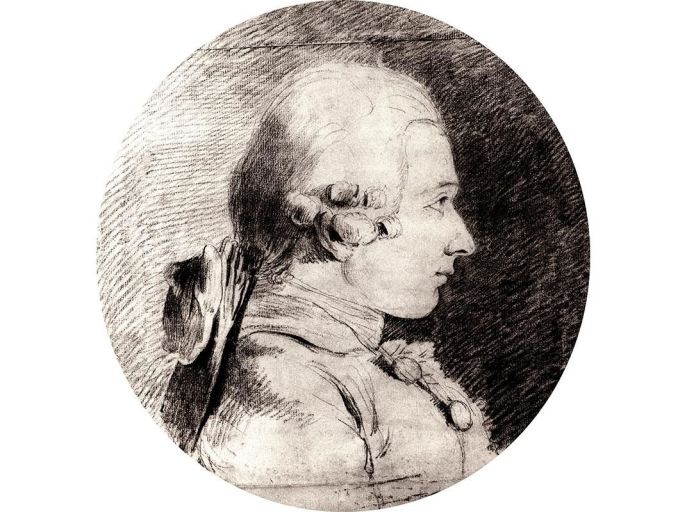
Portrait of the Marquis De Sade Aged 19-Van Loos 1760 Portrait of the Marquis De Sade Aged 19-Van Loo 1760
I wish it to be a chocolate cake, and of chocolate so dense that it is black, like the devil’s ass is blackened by smoke.’ Marquis De Sade in a letter to his wife Renée-Pélagie from Vincennes prison, May 9, 1779.

During his many years of imprisonment, the Marquis De Sade would bombard his wife, Renée-Pélagie, a woman who expands the definition of long-suffering, with letters containing requests for books, clothes (De Sade was quite the dandy), prestiges (a code word for dildos, to avoid the prison censors redactions) and food. Especially sweets, all kind of sweets.

A typical letter asks for the following in the fortnightly care package sent by Renée-Pélagie, ‘…four dozen meringues, two dozen sponge cakes (large); four dozen chocolate pastille candies-with vanilla-and not that infamous rubbish you sent me in the way of sweets last time.’  Locked…

View original post 587 more words

A Heresy for the 21st Century: The Gnosticism of Modernity

Standard

Cakeordeath's avatarcakeordeathsite

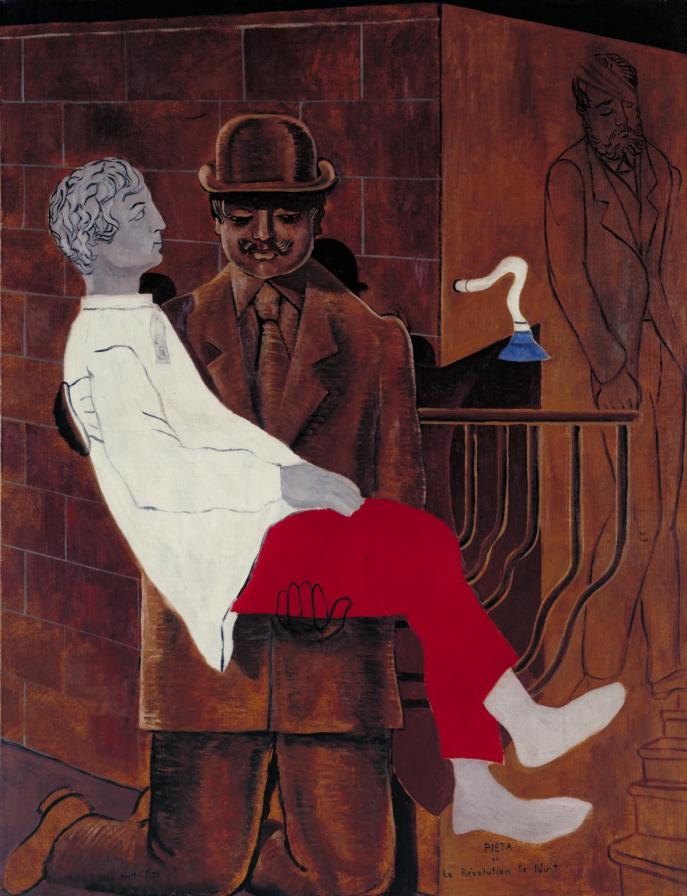
Pieta or Revolution by Night 1923 by Max Ernst 1891-1976 Pieta or Revolution by Night 1923 Max Ernst

Before progressing further with the study of Gnostic influences in the 20th and 21st Century, we must first consider what elements of a heresy formulated in the 1st Century AD hold relevance today, two millennia later, in an increasingly secular world with an unprecedentedly advanced technology. Obviously a Gnosticism divorced from its ancient and medieval religious milieu is going to be markedly different from the original, indeed on a number of occasions is it avowedly atheist and secular, however this adaptability is a sign of its continued power to haunt the imagination.

  • Paranoia-the worldview of Gnosticism is deliriously paranoid. The whole universe is a vast cosmic conspiracy concocted by a deluded and evil Demiurge, who employs archons to make sure we keep in line and don’t realise the horrific truth. Through gnosis you could achieve awareness that you were trapped inside…

View original post 452 more words

How to Grow Old: Bertrand Russell on What Makes a Fulfilling Life

Standard

As I getting towards the door of 64, it’s nice to have a look at what the philosophy tells about it. I feel somehow experienced as a look back in my life in which I had got so many traces. They aching now and then but also I perceive them as my acknowledgement.

via; https://www.brainpickings.org/

“The worldviews of people in the first half of life are generally rooted in the external world. In contrast, the worldviews of people in the second half of life tend to be rooted less in the physical or mundane and increasingly in the nonphysical or metaphysical (or spiritual).” Dr Carl Gustav Jung

“Make your interests gradually wider and more impersonal, until bit by bit the walls of the ego recede, and your life becomes increasingly merged in the universal life.”

How to Grow Old: Bertrand Russell on What Makes a Fulfilling Life

“If you can fall in love again and again,” Henry Miller wrote as he contemplated the measure of a life well lived on the precipice of turning eighty, “if you can forgive as well as forget if you can keep from growing sour, surly, bitter and cynical… you’ve got it half licked.”

Seven years earlier, the great British philosopher, mathematician, historian, and Nobel laureate Bertrand Russell (May 18, 1872–February 2, 1970) considered the same abiding question at the same life-stage in a wonderful short essay titled “How to Grow Old,” penned in his eighty-first year and later published in Portraits from Memory and Other Essays (public library).

bertrandrussell3
Bertrand Russell

Russell places at the heart of a fulfilling life the dissolution of the personal ego into something larger. Drawing on the longstanding allure of rivers as existential metaphors, he writes:

Make your interests gradually wider and more impersonal, until bit by bit the walls of the ego recede, and your life becomes increasingly merged in the universal life. An individual human existence should be like a river — small at first, narrowly contained within its banks, and rushing passionately past rocks and over waterfalls. Gradually the river grows wider, the banks recede, the waters flow more quietly, and in the end, without any visible break, they become merged in the sea, and painlessly lose their individual being.

In a sentiment which philosopher and comedian Emily Levine would echo in her stirring reflection on facing her own death with equanimity, Russell builds on the legacy of Darwin and Freud, who jointly established death as an organizing principle of modern life, and concludes:

The man who, in old age, can see his life in this way, will not suffer from the fear of death, since the things he cares for will continue. And if, with the decay of vitality, weariness increases, the thought of rest will not be unwelcome. I should wish to die while still at work, knowing that others will carry on what I can no longer do and content in the thought that what was possible has been done.

Portraits from Memory and Other Essays is an uncommonly potent packet of wisdom in its totality. Complement this particular fragment with Nobel laureate André Gide on how happiness increases with age, Ursula K. Le Guin on aging and what beauty really means, and Grace Paley on the art of growing older — the loveliest thing I’ve ever read on the subject — then revisit Russell on critical thinkingpower-knowledge vs. love-knowledgewhat “the good life” really meanswhy “fruitful monotony” is essential for happiness, and his remarkable response to a fascist’s provocation.

“Behold, I am the prophet of the lightning!”

Standard

C.P. Cavafy: The Horses of Achilles – A New Translation by Kathleen Vail

Quote

via C.P. Cavafy: The Horses of Achilles – A New Translation by Kathleen Vail

A Heresy for the 21st Century: Nobodaddy

Standard

Cakeordeath's avatarcakeordeathsite

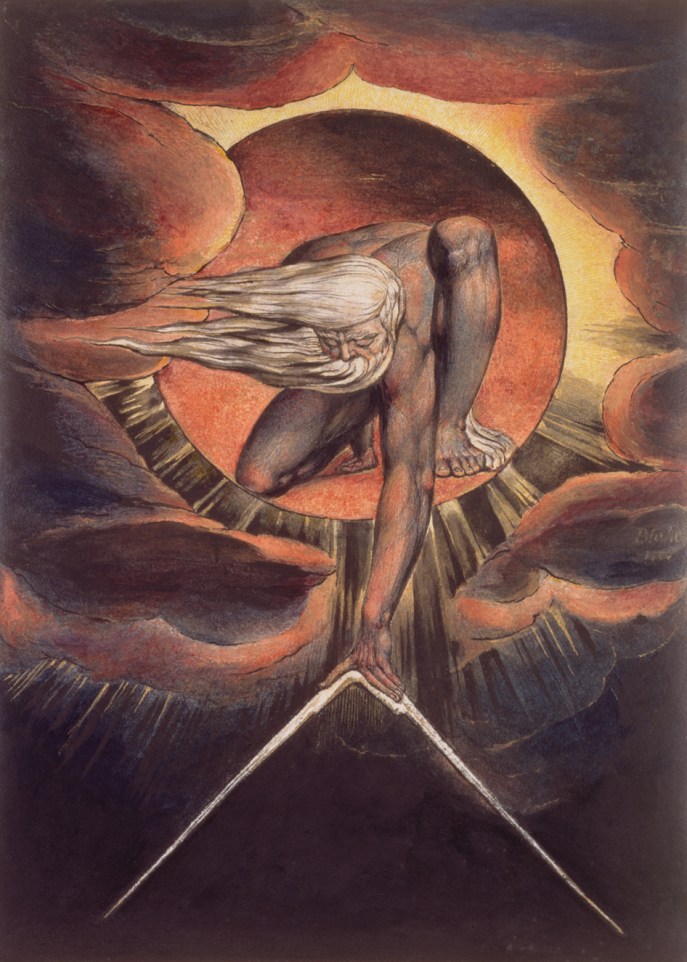
The_Ancient_of_Days-William Blake 1794 The_Ancient_of_Days-William Blake 1794

The strange, visionary genius of the English poet and painter William Blake, one of the touchstones here and the feature of a number of posts including The Marriage of Heaven & Hell, Proverbs of Hell, Auguries of Innocence and Tyger Tyger, is of such depth and complexity that it has invited any number of interpretations, including, somewhat improbably in my opinion, becoming a standard bearer for atheistic humanism. That Blake espoused an idiosyncratic, Hermetic form of humanism is beyond dispute, however Blake was deeply religious, albeit in a unorthodox and heretical fashion, and was vehemently opposed to the materialistic atheism that was beginning to emerge during the Enlightenment, a period where quantity began to supplant quality.

Suggestions for possible sources of Blake’s dense and highly personal mythology have ranged from Neo-Platonism to Buddhism and although Gnosticism is mentioned in the melange, it has been…

View original post 361 more words