
Animus/Anima archetypes in Jungian psychology, excerpt from “A World of Dreams”, a three-part series of films produced by PBS, on the life and works of the great thinker and psychiatrist Carl Gustav Jung.
Month: June 2018
Ostana
Gallery
Ba mhór an onóir dom inniu glacadh le duais liteartha Ostana na hIodáile, ar son mo chuid leabhair Résheoid, Dúlasair agus Oighear.
What a joy it was to be awarded an Ostana literary award today, in recognition of my 3 books in Irish: Résheoid, Dúlasair and Oighear.
Buíochas ó chroí le m’aistritheoir Valentina Musmeci, agus le mo chairde nua go léir in Ostana. La ringrazio tanto!
My gratitude to my translator, Valentina Musmeci, and to all my new friends in Ostana.
Roinnt grianghraf thíos – some photos below, including poets Bob Holman (USA) and Juan Gregorio Regino (Nación Mazateca, México).
Bella Italia!
Searching The Meaning Of Life! (STMOL) June 14, 2018, Heraclitus: The World – The Fire
Standard
Ancient Greek philosopher Iraklitos argued that the beginning of the world is fire. Starting from the thought of contemporary philosopher K. Axelos, let’s take a look at what Heraclitus meant, and let’s think what they might mean for today’s time.
Thalis says everything comes from the water.
Anakimandros captures the perpetual motion in which the opposites, the hot and the cold, the liquid and the dry, produce cosmic phenomena.
Anakisimis gives priority to the air.
Pythagoras dedicates himself to cosmic harmony, studying the figures and forms, and his spirit is geometric and mathematical.
Xenophanes is turning to the earth as a primary secular element.
Heraclitus is the great unifying spirit. Water and earth, air and fire, obey and constitute the cosmos. Harmony is not separate from the conflict. The importance of opposites within the perpetual motion of the world is crucial.
The universe consists of all the beings and things that exist within the space and time they contain. Our space contains but we can not contain it because it sucks us. Then he conceives the thought of time and promotes him in the order of his first becoming of the world.
Heraclitus captures a cosmology that wants to overcome the cosmogenic stage. This cosmology, because it treats “symbols” to express the physical forces and attributes a power to these symbols, is associated with mythology and becomes a creator of myths. Of course, the concept of the cosmic game is an act of calculus.
What does Heraclitus say about the universe? -This world that is for all, no god or man did it, but it was always and is and will be eternal fire, lit up in a measure and extinguished in measure (from 30) -This is always exchanged with fire and with all the fire, like things with gold and gold with things- (cf. 90) -The fire is living the death of the earth and the air is living the death of the fire, the water is living the death of the air and the earth of water – (cf. 76) – The cold is heated, the heat is cooled, the liquid is dried, the dry is moaning –
The world has no beginning. Mythological cosmogonies, Homer and Hesiod, are dethroned. We are following the passage from the world-world to the world. The world was never created, it is and will be. The universe is the universe, that is, the ordered totality.
World eternal and eternal fire obey one another. Let’s try to discern who their bond is. Fire is about the world that is a river in terms of human life. They both change incessantly in the permanence of his being. The fire is even more magnificent than the river. The fire obeys measures. And the gold shines, it has the colour and the value of the fire, it imposes a measure and changes things. The fire can be compared to gold.
Is fire the essence? Let us not forget that the cosmic powers that the first Greek thinkers think of the world with their own help are not “material”. Thales’ water is nothing more than a fundamental permanence, neither material nor ideal. The air of Anaximenes and the infinity of Anaximander are far from being substances. Heraclitus fire is even less of a substance, which does not mean it has any physical and specific appearance. But it is not even a logical principle.
The first Greek thinkers capture their fundamental intuitions but not as substances. Ideality and reality are inseparable. The question of whether the principles are true or not, can not be answered because there is no answer to this question.
Thus, the Heraclean fire is the “beginning” that directs the flow and conception of things, the obscure and obvious truth of the visible and invisible phenomena.
According to Heidegger “The Greek word principle must be understood in its full meaning. This word calls what you get something like a starting point. But this (taking it as a starting point), with the acquisition of the way out, is not left behind. The beginning has to do with what the “Veral” says – that is, it does not cease to dominate. “This is a keyword.
Diogenis Laertios says:
“What Heraclitus believed in general is: everything is made of fire and is consumed in it. Everything happens according to the Hallowed, and the assembly of beings takes place with the endeavor … As for the details of these theories, they see what they have. Fire is an element and everything is exchanged with fire and is done by thinning and thickening. Nothing, however, makes it clear. Everything is done with the opposite and rolling like a river. The totality is something finite and the world one. This world is born out of the fire and is once again burning fire, and this happens alternately, in the whole of the century. This happens according to the shame. On the contrary, what leads to generation is called war and war, and that which leads to ignition, unity and peace, and change is a way that goes up and down, and the universe is made according to this change. Because when the fire thickens, it becomes fluid, and when it gets, it becomes water. The water when it cools changes to earth-that road goes down. The land is reborn, and the water and all the rest are made of water. Because it says everything almost comes from the excitement that comes out of the sea – and that’s the way up. The fumes come from both the earth and the sea, other shiny and clean and other dark. The brightness increases with the fire and the others with the humidity. As for the content it does not reveal what it is. ” it becomes fluid, and when it gets, it becomes water. The water when it cools changes to earth-that road goes down. The land is reborn, and the water and all the rest are made of water. Because it says everything almost comes from the excitement that comes out of the sea – and that’s the way up. The fumes come from both the earth and the sea, other shiny and clean and other dark. The brightness increases with the fire and the others with the humidity. As for the content it does not reveal what it is. ” it becomes fluid, and when it gets, it becomes water. The water when it cools changes to earth-that road goes down. The land is reborn, and the water and all the rest are made of water. Because it says everything almost comes from the excitement that comes out of the sea – and that’s the way up. The fumes come from both the earth and the sea, other shiny and clean and other dark. The brightness increases with the fire and the others with the humidity. As for the content it does not reveal what it is. ” Because it says everything almost comes from the excitement that comes out of the sea – and that’s the way up. The fumes come from both the earth and the sea, other shiny and clean and other dark. The brightness increases with the fire and the others with the humidity. As for the content it does not reveal what it is. ” Because it says everything almost comes from the excitement that comes out of the sea – and that’s the way up. The fumes come from both the earth and the sea, other shiny and clean and other dark. The brightness increases with the fire and the others with the humidity. As for the content it does not reveal what it is. ”
The fire for Heraclitus is an energy power. It takes a specific form without ending up with a flame. Substrate, element and supreme principle, powerful transport, fire is all that and it is not.
In the heartbreaking question of what is the world? Heraclitus answers eternal live fire.
The four elements, ruler of one of them, the fire, run through a path that goes up and down. The road that rises (from the heaviest to the highest) leads from the earth to the water, and from the air to the earth. The hot and the cold, the fluid and the dry (flowing from the four elements) oppose each other and fit into the circle that is regulated by the union of conflict and harmony.
The cosmic process – fire, air, water, earth, water, air, fire – must be conceived as something circular, not as a rectilinear course or as a vertical ascension and descent. The secular movement is circular, which is why the ascending and descending road is the same. So it is possible to choose from the beginning and finally the water, the earth, the air or the fire. But the fire is the one thing that makes the circle spin, it keeps him on the move. Wholeness is a great sequence of transformations that returns to itself. This is the image of the snake biting his tail.
What is the role of Time, which is the rhythm of the great space? Aethios tells us that according to Heraclitus “the world is born not according to time but according to thought.” According to Heraclitus, the world is not born and time is not separated from thought. Time is tied with thought, that is, with speech. According to Sexton the Empire, Heraclitus had identified the Onus and the Time. A correct interpretation must be given in this testimony. The Word and the World, Time and Fire, are deeply connected to one another, but they are not confused. The reason expresses the harmony and contrast of the opposites, within the Universe, which is an event, with the power of fire all this through Time. Heraclean dialectics teaches the unity of unity and non-unity (ie, multiplicity). Time is one and multiple makes the eternal true word temporal, harmonizes the violent cosmic changes and unites with the fire without being identified with it. The universe as a class of disorder, as a whole containing its elements, obeys the rhythm of Time.
The cosmic happening becomes evident in time. The fire animates this process that obeys a rhythm. The fire obeys the measures of its exchanges and its transformations. For, the great cosmic powers that are water, earth, and air can appear more in space and dominate the ever-visible horizon of things in the world, but the fire animates, illuminates and throbs all the space, gives it its direction in the making, causes profound changes, generates and transforms into ashes everything that is. The course of time is not straight but circular, a course made of alternations and periods. The unceasing change is a constant of the universe. Of course, the change takes place within the space and is necessarily limited to one place. However, every constraint in one place is only a “moment” of the spatial extent, and this extent is subordinated to the temporal extent. The measures of exchanges ensure the order of the world and protect the things that are happening from falling into chaos. It is true that natural things are shifting, but above all they become “other” within time, remaining at the same time. The fire is governing these changes and obeying the measures.
Thanks to the fire, the one and finite universe unfold within space-time. The rhythm of the changes in fire is the rhythm of the world, and this rhythm is rigorous and righteous. With the pace of exchanges and changes, “quantity” changes and becomes “quality”. Fire is the basis of time movement and measures the world in its entirety. Time is the move, which is both the moment and the great year (10,800 solar years). Even the big year can be captured within a moment, being a minute of thought.
Heraclitus externalized with his speech on the universe the inner rhythm of this universe. He taught that in the circumference of a circle the beginning and the end coincide, that the road that is uphill and descending is the same, that war is universal and righteous discord. At some point, the earth (over which we live and move), after it became water and wind, becomes a fire. However, this stage is by no means the end of the cosmic tragedy that has not ended. The fire re-emerges air, air water, water land. We are again on the earth. Measures of time are measures of eternity. The cyclical movement of cosmic evolution follows, that is, its own rhythm that is made of alternations and periods.
The fire of the world is both “inherent” and “transcendent”. He is in the world and governs him. All lightning governs (verses 64). The thunderbolt expresses the most martial and the most divine side of the fire, in addition, it is the weapon of Jupiter’s lightning. However, the fiery light does not overflow the universe and it does not burn out because the cosmic fire is the same judge of itself as it contains its own measures, which are the measures of secular time. The lightning strikes and strikes every peculiarity, but remains trapped in the totality that contains both its “existence” and its “overcoming”. The dialectic movement blocks the absolute beginning and the ultimate end, without again, for that reason, to support the movement that starts with a relative principle and ends in a relative end. This dialectic movement is the dialectic of totalitarian and infinite motion that constitutes the ultimate. The Heracletic World is eternal and eternal is the Fire and the Word.
The fire, which is the deep truth of the world, is also its meaning, and in this way is the wisdom of the universal happening. This wisdom is not at all entertaining, the thoughtful wisdom, but a cosmic wisdom that is the wisdom of the totality. The fire is thunderbolt and divine, warrior and wise. It is united with the word and with the deity. It expresses the cosmic discourse (the wisdom) and seals the natural world.
Fire, however, is not the cause of the government of the Universe. The government of the world is in the world. The world is not a boat that boater has the fire. The cosmic fire obeys its own measures and counts the exchanges of cosmic elements. Its inner necessity pushes her into change, because this need is a shortage, weighs her need with perpetual changes, and rests with her transformation. So the fire is what it does itself, that is, change and rest, hidden harmony and lightning. The world also contains this fire, which is not the cause of the government of the universe, but its own government, within its contents. The fire illuminates the world and makes it transparent. So how can it not be Wisdom?
To sum up, we can say that the Eternal World is revealed in the Time, and Fire as its lightning and wisdom secures its vigour, glow and coherence. War is necessary, it is harmony, and the whole rhythm of the cosmos is its ultimate fate, the ruling Unity that contains and continues everything that is in time.
Link to Part I: Heraclitus, His life and philosophy.
Link to Part C: Heraclitus, About God.
M.M.
The text was written from excerpts from Kostas Akselos’s book Heraclitus and philosophy.
Source: http://www.ekivolos.gr/ (We read it: http://www.e-zine.gr/ )
From Material World Towards The Truth
Standardजनाज़ा
StandardJanaza
APRIL 13, 2018 ~ GAGAN NAGRA
Now dead is ours,
There is no misfortune about death,
On the shoulders are the means of conscience,
Staying in the side ऒ no longer,
Janja has the band Baja,
No noise, no noise,
Let us also burn with a conscience,
When there is no conscience, then we do not…
Pythagoras on the Purpose of Life and the Meaning of Wisdom
Standardvia; https://brainpickings.us2.list-manage.com/track/click?u=13eb080d8a315477042e0d5b1&id=22b9cfcdc3&e=8f1053d3a7
This is the man I call a philosopher for although no man is completely wise in all respects, he can love wisdom as the key to nature’s secrets.
a very fascinating Philosopher as I believe in! And interesting to know the world’s first known woman astronomer; Hypatia of Alexandria 🙂
Abiding insight into the aim of human existence from the man who revolutionized science and coined the word “philosopher.”
BY MARIA POPOVA

The Greek polymath Pythagoras (c. 570–c. 495 BC) ignited the golden age of mathematics with the development of numerical logic and the discovery of his namesake theorem of geometry, which furnished the world’s first foothold toward the notion of scientific proof and has been etched into the mind of every schoolchild in the millennia since. His ideas went on to influence Plato, Copernicus, Descartes, Kepler, Newton, and Einstein, and the school he founded made the then-radical decision to welcome women as members, one of whom was Hypatia of Alexandria — the world’s first known woman astronomer.
Alongside his revolutionary science, Pythagoras coined the word philosopher to describe himself as a “lover of wisdom” — a love the subject of which he encapsulated in a short, insightful meditation on the uses of philosophy in human life. According to the anecdote, recounted by Cicero four centuries later, Pythagoras attended the Olympic Games of 518 BC with Prince Leon, the esteemed ruler of Phlius. The Prince, impressed with his guest’s wide and cross-disciplinary range of knowledge, asked Pythagoras why he lived as a “philosopher” rather than an expert in any one of the classical arts.

Pythagoras, quoted in Simon Singh’s altogether fascinating Fermat’s Enigma: The Epic Quest to Solve the World’s Greatest Mathematical Problem (public library), replies:
Life… may well be compared with these public Games for in the vast crowd assembled here some are attracted by the acquisition of gain, others are led on by the hopes and ambitions of fame and glory. But among them there are a few who have come to observe and to understand all that passes here.
It is the same with life. Some are influenced by the love of wealth while others are blindly led on by the mad fever for power and domination, but the finest type of man gives himself up to discovering the meaning and purpose of life itself. He seeks to uncover the secrets of nature. This is the man I call a philosopher for although no man is completely wise in all respects, he can love wisdom as the key to nature’s secrets.
Complement with Alain de Botton on how philosophy undoes our unwisdom then revisits other abiding mediations on the meaning and purpose of life from Epictetus, Toni Morrison, Walt Whitman, Richard Feynman, Rosa Parks, Fyodor Dostoyevsky, and Martha Nussbaum.
Subversion of the Image
Gallery
 The Birds Are Following You-Paul Nouge-Subversion des Images 1968
In late 1929-early 1930 the poet, photographer, theoretician and co-founder of the Belgian Surrealist Group Paul Nougé created a series of 19 photographs that were collected and published as Subversion des Images in 1968. The series lives up to the title, subverting and questioning perception in the manner of his friend and fellow co-founder Rene Magritte, who is featured in several of the images.
Had Sonja met Dolochov moeten trouwen?
Standardvia Had Sonja met Dolochov moeten trouwen?
Had Sonja to marry Dolochov?

In the famous Tolstoy, War and Peace novel, villain Dolochov makes a marriage proposal to dear Sonja. She saves the proposal, but one of my readers wondered if she did well.
Sonja
Sonja is the poor niece of the Rostovs. She was admitted to the family after her parents passed away. She is very beautiful, sweet, and has a strongly developed sense of justice. She is the dearest friend of Natasja and very much in love with Nikolaj. Tolstoy describes her as a promising pussy.
Dolochov
Dolochov is a handsome officer, infamous card player and duelist. He has no money or connections. Most people find him cruel and insensitive. Actually, the only one who does think he has a heart of gold is his mother. It is one of the most enigmatic characters in War and Peace. He seems disappointed in the world and has an excessive need to avenge himself.
Offers
He tells Nikolaj that he sacrifices everything for the people he loves, but we do not see any evidence of that; au contraire: he says to be Nikolaj’s friend, but tries to take his girl away and if that does not work, he punishes Nikolaj for him by 43000 rubles (exactly 43 thousand, because 43 is the sum of Sonja’s and his age) in a card game . This way he ruins the Rostovs financially.
Sonja, however, sacrifices herself: she puts her friendship with Natasja on the line to prevent Natasja from ruining herself by letting Anatole chess. Later she writes a letter to Nikolaj telling him to forget his promise to marry her and that he is free to marry Marja.
Why?
Why did Dolochov want to marry Sonja anyway? I tend to think that he was jealous. In his head, people like Pierre and Nikolaj get everything on a silver platter because they have nobility, connections and money. And for those same reasons they come away with everything. * He understood that Sonja loved Nikolaj and he could not have it.
During the recovery from the injuries he sustained in the duel with Pierre, Nikolaj regularly visits him. Dolochov takes him into trust and tells him that he is looking for “divine purity and devotion” in a woman. He needs a woman who “regenerates, purifies and lifts him to a higher level”. It is technically possible that he saw those qualities in Sonja, but it is equally possible that he tried to win the sympathy of Nikolai.
Anyway, Sonja has certainly done well to reject him. His mother might have been blinded by the love for her child, our Sonja was a sensible girl, who had a flawless sense of good and bad. She involuntarily uses Nikolaj as an excuse, optimistic thinking that Dolochov will at least be happy for his friend. Her euphoric state immediately after the proposal speaks volumes: she has acted correctly.
Better happy alone
In nineteenth-century terms, Dolochov was indeed a good candidate for Sonja. The old countess, who did not yet see a marriage between Sonja and Nikolaj, thought she should have accepted Dolochov’s proposal. But Sonja will never marry and live with Nikolai and Marja together with the countess. As a cat, Tolstoy writes, she had not attached herself to the people, but to the house.
Revenge
And Dolochov and his need for a woman who will improve him? It is not up to anyone to do that, let alone a sweet girl of seventeen. He shows his true character and punishes Nikolaj mercilessly for the love of his niece: first by letting him lose a fortune and later by doing nothing to prevent the tragic death of the little Petja. Tolstoy does not tell us in the epilogue whether he ever found the wife of his dreams.
* at the beginning of War and Peace Dolochov, Pierre and Anatole tie a bear to a policeman and then throw them into the Neva. As a punishment, Dolochov is returned to rank as a soldier. Anatole, who has money and connections, remains an officer. Pierre is a citizen and avoids his punishment because his extremely wealthy father is dying.
Nikolaj also seems to have everything: he is a count, everyone likes him and he comes from a warm, close family. He also enjoys the protection of his name and avoids the penalty of being second in a duel (between Pierre and Dolochov), he even gets a promotion shortly thereafter.
Have you read War and Peace? And do you think Sonja should have married Dolochov?
© Elisabeth van der Meer
Old Russian illustration from War and Peace
The Greek Day of the Dead: the Anthesteria of Dionysus
StandardA Short History of Maligned Women by Mary Sharratt
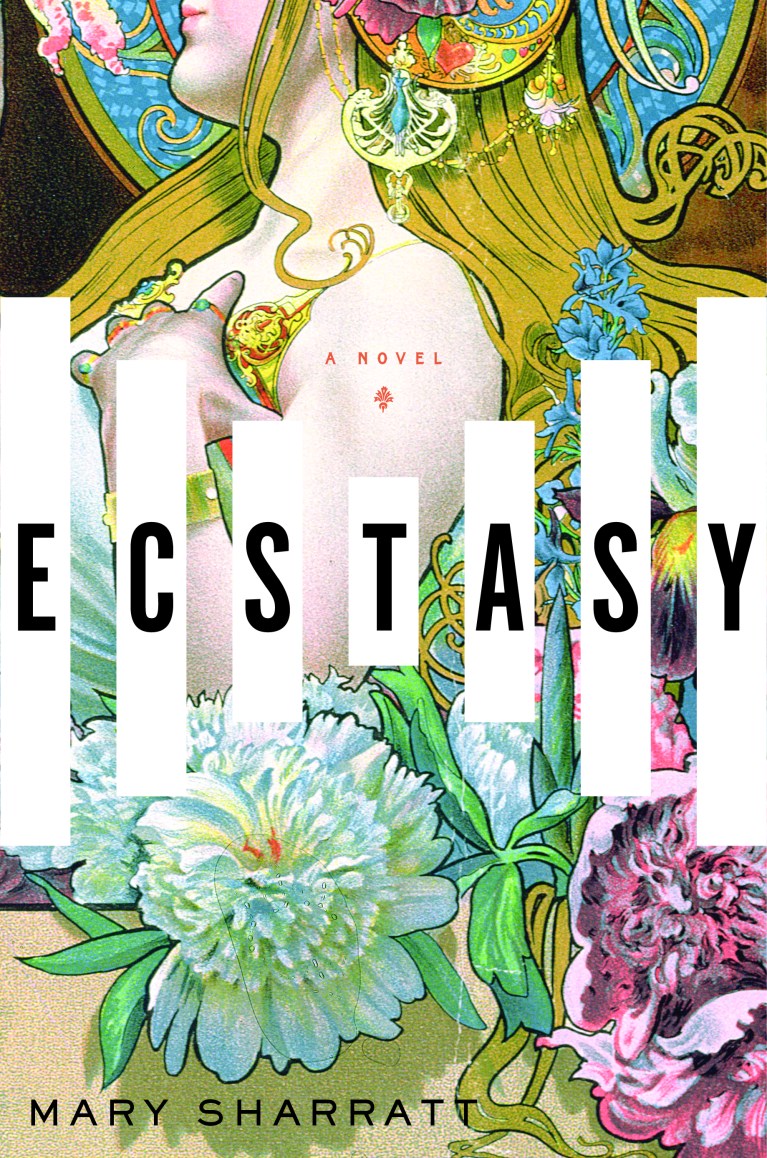


Women who stand out and dare to seize their power have been maligned throughout history. Even today many people are uncomfortable about the very idea of a powerful woman. Witness how Hillary Clinton was demonized in the 2016 presidential campaign. What other U.S. presidential candidate has been called “nasty” by their opponent or had their opponent literally looming over them during a live televised debate? Even women who would never dream of running for political office face every day misogyny and threats of violence for daring to speak out on the internet. It doesn’t matter what the woman has to say—the fact that she has spoken out at all has made her a target.
I certainly encountered the “such a nasty woman” phenomenon while researching Alma Schindler Mahler, the protagonist of my new novel Ecstasy. Born in Vienna in 1879, Alma Maria Schindler was an accomplished pianist and…
View original post 1,670 more words
 lampmagician
You must be logged in to post a comment.