The Qing dynasty (1644–1912) was the last imperial dynasty of China. It was officially founded in 1636 in what is now Northeast China,. The dynasty had been successful in most respects and was wealthy, relatively stable and feeling secure within the confines of the Middle Kingdom and beyond.
On 08 August 1775, there was an impressive Annular Solar Eclipse, the path of which was easily seen in Southern China, Hong Kong and Macau, then continued across Vietnam on its way to the eastern regions of the Bay of Bengal. Probably the most striking feature was its relatively long duration, estimated to be more than 4 mins.
If we look towards 1779, four years later, there were momentous events which are some of the most remarkable in military history. Moreover, what happened is sometimes compared to the Tet offensive in the Viet Nam War of the 1960s and early 1970s. While they are not by any means…
According to Orlando Figes in Natasha’s Dance, it was so for the revolution that Saint Petersburg was a city to work in and Moscow a city to live in. Peter the Great founded the famous window to the West, and the western influence was clearly felt. But it was also a formal city, with an unfavourable climate. Although it was a new city, Saint Petersburg soon became the subject of legends and ghost stories, such as De Bronzen Ruiter (Pushkin) and De Petersburg’s Verhalen (Gogol).
Moscow was much more provincial and had more eastern influences. The Muscovites were further removed from the Tsar and consequently more anarchist than the inhabitants of St. Petersburg. They did not give themselves over to Napoleon in 1812; they left the city empty and burnt down for Napoleon, who was forced to turn around soon because his troops would not survive the harsh Russian winter in an uninhabited and unstressed city. When the Muscovites returned, they rebuilt their city as ants ( War and Peace ). In Russian style, with wooden houses and ornaments.
Anna Karenina is largely based on three different locations: Moscow, St. Petersburg and the countryside. For now, I focus on the first two, and I try to find out to what extent Tolstoy used the cities to emphasize the character of his protagonists.
Anna
Although Anna’s childhood remains rather mysterious, we may assume that she is originally from Moscow, just like her brother Oblonski. When we get to know her she is married to a respected politician from St. Petersburg and she moves in the highest circles there. She comes to Moscow to save her brother’s marriage. The local beauties are rather provincial against her beautiful appearance and modern clothing. It soon becomes clear that her life is not as perfect as it seems, and in Moscow, she realizes that she hates her life in Petersburg: it seems so distant and cold compared to the warmth she feels in Moscow.
Wronski
It is not surprising then that she falls madly in love with Wronski: just like Anna he probably originates from Moscow, and now he lives in St. Petersburg, where he makes a brilliant career as an officer. When he is in Moscow, he also feels the difference between the cities: in Moscow, the girls are sweet and innocent, and social life in Moscow is much warmer. He gets carried away and although he lived in a man’s world in St. Petersburg, he is now looking for the company of ladies. He falls in love with Kitty first, but when he meets Anna, who is so completely different in Moscow, he is lost.
Oblonski and Karenin
Oblonski and Karenin are opposing characters from Moscow and St. Petersburg, respectively. Oblonski is a real bon-vivant, exuberant, does not work too hard and loves everything that makes life fun. Karenin works very hard lives according to religious rules and does not go public any more than at least is expected of him. Although Oblonski is a real Muscovite, he retains its radiant character as in St. Petersburg, Karenin is much less at ease in Moscow. Oblonski has friends everywhere, but Karenin’s “best friends” are his secretary and his doctor.
Lewin and Kitty
Tolstoy emphasizes that both Lewin and Kitty come from old, noble Moscow families. And although Lewin prefers his estate, he is strongly connected to Moscow. All important events in the lives of Lewin and Kitty take place in Moscow: their skating, both marriage requests, their wedding in the beautifully lit church, and the birth of their first son.
However, Moscow is Saint Petersburg
And so in Anna Karenina, we get the feeling that real life is happening in Moscow, and that life in St. Petersburg is unreal. If Anna had stayed in Moscow, instead of marrying a Petersburg politician, she might have been happy.
“She undressed and entered the bedroom, but the liveliness, which, when she was in Moscow, so unstoppable in her smile and in her eyes sprang up, was now gone. It even seemed as if the fire had been extinguished in her or hidden deep inside her. “
“The thing that we need in the world today is a group of men and women who will stand up for right and to be opposed to wrong, wherever it is. A group of people who have come to see that some things are wrong, whether they’re never caught up with. And some things are right, whether nobody sees you doing them or not.”
~ The Rev. Dr. Martin Luther King, Jr., in his sermon Rediscovering Lost Values, Detroit’s Second Baptist Church (28 February 1954)
This week in the U.S., the groundswell of men and women standing up for right, for decency, reached a tipping point that forced a reversal on a grotesquely cruel and inhumane ‘zero tolerance’ policy concerning individuals fleeing violence and crossing the borders into the U.S.
It’s a groundswell that’s been building for weeks; that met with a macho defense of what, to people…
I just have to back to me, my inner, when I feel somehow depressive! No wonder when I look back at my own life in which had a very strange and lonely childhood (surely among some others), though, with the help of my brother I found, slowly but surely, staying on my own feet again. and afterwards, when I was hounded out of my homeland, leaving all I had built up for the future and begin from the zero, it’s enough to get depression. But anyway, thank goodness, I’d find the way out of being a loser when I knew that I’m not the winner! As I said; my brother had helped me much and I must also thank Dr Jung for his”;
“here is no coming to consciousness without pain. People will do anything, no matter how absurd, to avoid facing their own soul. One does not become enlightened by imagining figures of light, but by making the darkness conscious.~ Carl Gustav Jung”
by Gregg Prescott, M.S. Founder, Webmaster, & Editor, In5D.com
At some point in your life, you will experience the ‘Dark Night of the Soul’ where it seems that everything that can possibly go wrong, will go wrong. What many people fail to realize is that this is a true blessing.
The ‘Dark Night of the Soul‘ occurs when your life appears to hit rock bottom. You may experience a plethora of ‘bad breaks’ in your personal life, financially, mentally and/or physically.
What typically happens during the ‘Dark Night of the Soul’ is that we get so pounded by all of these experiences that we end up reflecting on “Why did this happen to me?”
When The Cleansing Begins
At first, you may feel hatred towards those who contributed to your ‘Dark Night of the Soul‘. You might question the Creator and feel as though your spirit guides and guardian angels have failed you. This couldn’t be further from the truth.
Eventually, you realize that you needed to experience everything that you went through in order to grow spiritually.
In time, you will end up surrendering yourself and your ego to whatever the Universe has in store for you as if it is all now in the “Creator’s hands”. This is where the cleansing begins.
There is no coming to consciousness without pain. People will do anything, no matter how absurd, to avoid facing their own soul. One does not become enlightened by imagining figures of light, but by making the darkness conscious.~ Carl Gustav Jung
Your Soul Contract, Guides and Guardian Angels
Before you incarnated here, you made a soul contract that involved everyone who led you to your ‘Dark Night of the Soul‘. When you were on the other side of the veil, you specifically chose these people to help you grow spiritually. Some of these people may have also had previous karmic relationships with you in which you both needed to try to resolve in this incarnation.
Your spirit guides and guardian angels are with you every second of your life. When you feel pain and sorrow, they do too. As much as they want to see you happy, they also realize that you need to experience certain life situations in order to grow spiritually. Every day, you are being guided in the right direction towards fulfilling your life’s purpose and that guidance includes experiencing the ‘Dark Night of the Soul’.
Letting go of our images of God can be terrifying. It is often the result of an experience of suffering in our lives, when our previous understanding is no longer adequate to give meaning to what has happened to us. When my mother died suddenly in my early thirties, I was thrust into the desert. All of my certainties about God and life were stripped away and I was left raw and frightened. Many people offered trite words and shallow comfort in my grief, they were not willing to sit with me in the darkness, but only hoped to rush me through to a place of light.
This is the mystical experience of the “dark night of the soul,” when old convictions and conformities dissolve into nothingness and we are called to stand naked to the terror of the unknown. We must let the process move through us—one which is much greater than we can comprehend. We can never force our way back to the light. It is only in this place of absolute surrender that the new possibility can emerge. We don’t just have one dark night in our lives, but again and again, as we are called to continue releasing the images we cling to so tightly.
~ Christine Valters Paintner
A Blessing In Disguise
The true blessing of the ‘Dark Night of the Soul’ is the spiritual cleansing that you receive. When you have reached the ‘Dark Night of the Soul,’ you have reached your lowest point in this incarnation. To that, I say, “Congratulations!” From this day forward, your life will take on a new meaning as you begin to understand why everything HAD to happen the way it did. Once you come out on the other side of the ‘Dark Night of the Soul’ you will gain a new perspective and appreciation of what you had to go through and these experiences will exponentially magnify your spiritual progression.
Typically, many people will experience the loss of ego for the first time in their life during the ‘Dark Night of the Soul’. This can be a very humbling experience. We typically associate a title or our accomplishments with who we are but fail to see that ultimately, we are spiritual beings having a human experience. When we lose our ego, we can finally connect to our spiritual essence because we are no longer associating ourselves with society’s preconception (or our own preconception) of who we are.
The ‘Dark Night of the Soul’ gives us a new sense of appreciation for all that is good in life and shows us how little we truly need to be happy.
But the most important aspect gained through the ‘Dark Night of the Soul‘ is the connectedness we receive through our transformation of consciousness. It’s as if you are given a new lease on life. You stop blaming other people and begin to look within for answers. You learn forgiveness and gratitude. You realize that you needed to have these experiences in order to get you pointed in a new direction that will facilitate your spiritual growth and life purpose.
“It is precisely because we resist the darkness in ourselves that we miss the depths of the loveliness, beauty, brilliance, creativity, and joy that lie at our core.”
~ Thomas Moore, Dark Nights of the Soul
If You Are Currently Experiencing The Dark Night Of The Soul
If you are currently experiencing the ‘Dark Night of the Soul,’ I can assure you that there are much happier and fulfilling days ahead of you. At some point, you should put your faith in the Creator’s hands and know that you are always being divinely guided toward your life purpose.
Look at where your life has taken you and what direction you are being shown to go. Try to forgive those who have led you to your ‘Dark Night of the Soul’ as well as forgiving yourself.
Don’t try to force any immediate changes because they will come to you when you are ready. Sometimes during the dark night of the soul, the best thing to do is nothing and just live in the “now”.
While it may not seem like it right now, the people who led you to this point are most likely part of your soul group. On the other side of the veil, they loved you so much that they volunteered to lead you into the ‘Dark Night of the Soul’ if you ever got to the point of where you were veering from your life’s purpose… even if it meant that they would no longer be part of your life during this incarnation.
The best way to look at the dark night of the soul is to compare it to a butterfly. Before your dark night, you were a slow moving caterpillar who was limited to a small area because of your lack of mobility. You didn’t realize how much more you were capable of doing until you spun your cocoon. Once you emerged from your cocoon, you transformed yourself into a beautiful butterfly whose boundaries were limitless! In this analogy, the cocoon is where you do “nothing” except going within. You are on the verge of a spiritual transformation, so let go of your ego, surrender to the Universe and soon you’ll be spreading your wings in flight!
During Litha a fire festival is held to revere the Summer Solstice. The sun along with its energy and life gives warmth. It is an ancient pagan ritual and celebration welcoming the sun at its’ longest day of the year. The ancient Celts would light a wheel or ball of straw on fire and roll it down a hill. They also had bale fires. Fire, being magical in the pagan world, represents the sun and spiritual cleansing. A new beginning, a time of growth and prosperity. This was in honor of their Sun god or goddess to bless them with bountiful crops for the year. The element of fire in ancient times was used for divination to see future events.
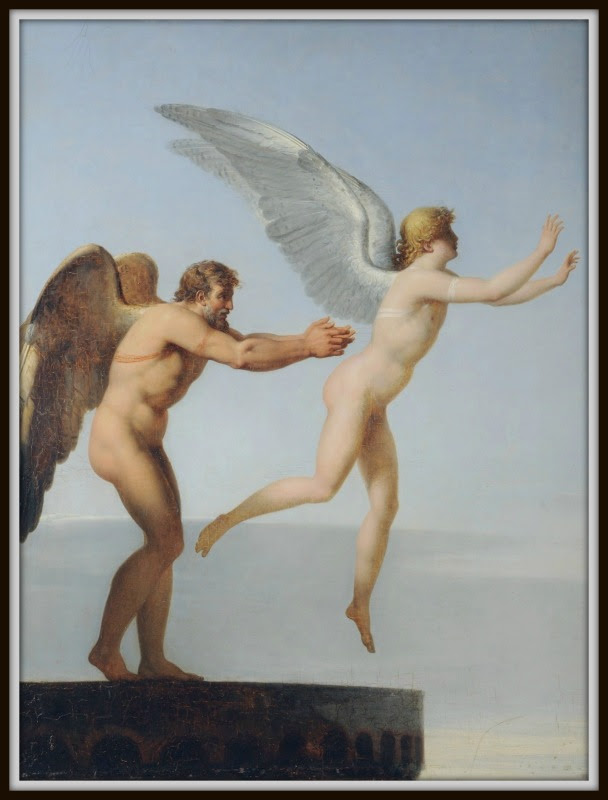
Icarus’s father Daedalus, an athenian craftsman, built the Labyrinth for King Minos of Crete near his palace at Knossos to imprison the Minotaur, a half-man, half-bull monster born of his wife and the Cretan bull. Minos imprisoned Daedalus himself in the labyrinth because he gave Minos’ daughter, Ariadne, a or ball of string in order to help Theseus , the enemy of Minos, to survive the Labyrinth and defeat the Minotaur.
Daedalus fashioned two pairs of wings out of wax and feathers for himself and his son. Daedalus tried his wings first, but before taking off from the island, warned his son not to fly too close to the sun, nor too close to the sea, but to follow his path of flight.
If he were to do so, Daedalus explained, the wax that held his wings together…
The Scot and The Fatalist – When Fiction Becomes Reality
A comparison between Pushkin’s story Het Schot (The Belkin Stories 1830) and Lermontov’s story The Fatalist (A Hero of Our Time 1838).
These dramatic stories from the Romantic genre belong to the absolute top of Russian literature, and both stories are a harbinger of the dramatic fate of both writers.
I challenge the one who has read both De Fatalist and Het Schot to remember in which story ‘the Serbian’ belongs and in which story a certain ‘Silvio’? Both figures are outsiders with a passion for cards and pistols. One is fighting in a duel and the other is playing Russian roulette …
The same starting point
Indeed, both stories are as Russian as can be. They start with a regiment that is stationed in a small village. The officers play cards in the evening. Both Silvio and the Serbian like to keep a bank. In both stories, a cap with a bullet hole appears. But the agreements end there.
The shot
In Pushkin’s story, Silvio is insulted by a young officer and he challenges him to a duel. The young officer arrives, carelessly eating cherries. Silvio decides he can not shoot at someone who gives nothing to live and postpones his shot to a moment to be determined. He practices with his pistol every day until he hears years later that his opponent is about to get married. He leaves for the young man and wants to use his turn to shoot. Again his conscience stops him: he can not shoot at an unarmed man and organizes a new duel. The young man, now married and trembling with nerves, misses, the bullet drills into a painting on the wall. His wife enters her husband’s room and throws herself at Silvio’s feet. Silvio sees the real fear in the eyes of his opponent and is satisfied. Instead of shooting at the man, he shoots at the hole in the painting, his bullet next to the other.
The Fatalist
The Fatalist Serb uses the theory that it is impossible to die before it is your predestined time to die. To prove his theory, he starts a bet with Petsjorin (the protagonist from A Hero of Our Time). He takes a random pistol from the wall of the house of the host, points it to his sleep, and shoots. Although the gun was indeed loaded, no bullet was fired. He won the bet. Petsjorin, who has been in the army for some time and has seen many men die, is convinced that he sees a sign on the face of the Serb that he will soon die. And indeed, that same night, the Serb meets a drunken idiot who kills him. Petsjorin decides to put his own theory to the test, and convinces that it is not yet his time,
Self-determination or Lot?
Pushkin lets Silvio take control of fate; he had the chance and (to defend his honour) the full right to shoot at his opponent. And since he was the best shooter the narrator ever met, he would certainly have killed his opponent. The young man realizes that too well. This is a story about honour, respect and satisfaction.
Lermontov allows the fate to take control. Petsjorin enters the bet with the Serbian without moral objections. The Serbian puts his life at risk for a bet and Petsjorin does not feel guilty, even though, and perhaps precisely because he sees death on the face of the Serbian. This story is about predestination. Precisely because he is fatalistic, Petsjorin can be brave.
You have to wonder how both writers felt when they themselves were confronted with the bullet their name was on.
Lermontov, who until the last moment was convinced that the game would be called off. He arrives nonchalantly at the agreed place, we can almost imagine he is eating cherries. He is being killed. After all his anger at Pushkin’s death, and himself the impish successor of Pushkin. Did he see death on his own face when he looked in the mirror that morning?
Pushkin, who no longer felt any control over the situation. Forced to a duel with a trained officer. All too aware of the fact that he was mortal, and that he had four children and a wife. He also practised. His bullet hit d’Anthès, but the fate let the bullet hit on a metal uniform knot, and d’Anthès remained alive. He touched Pushkin in the belly and Pushkin died two days later. Two days in which he had enough time to think about his approaching death, there on the leather sofa in his study.
In 2010, Pushkin’s sofa was investigated by experts and indeed Blood Traces of Pushkin were found. Just before he died, he said to his friend Dal: “I dreamed that we climbed on these books, high on the shelves, and I became dizzy”.
Photos: illustrations from the stories combined by myself, the waistcoat that Pushkin wore during the duel (Wikipedia) and the sofa in his study (The Moscow Times)
Read books: the two stories and Pushkin’s Button by Serena Vitale.
You can read these great stories online here in English:






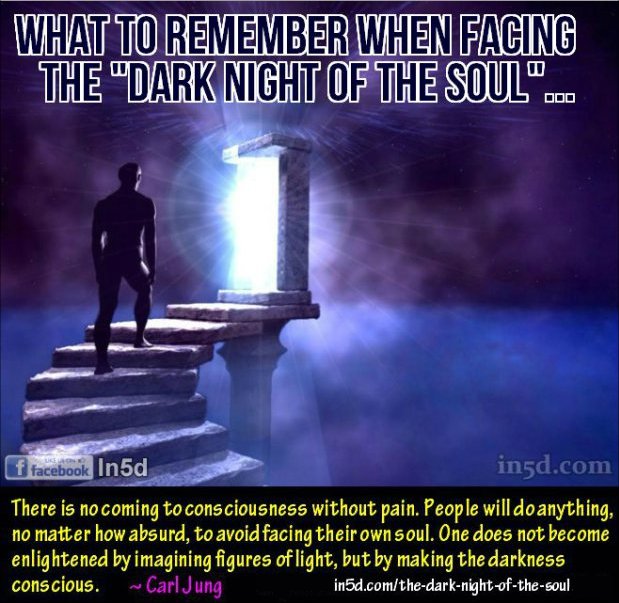
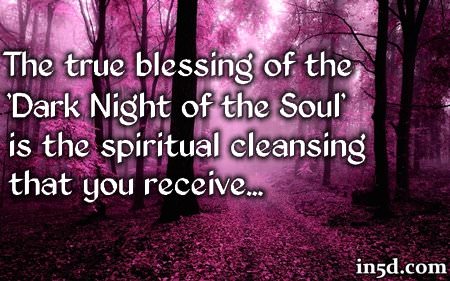


 Photo by Pixabay on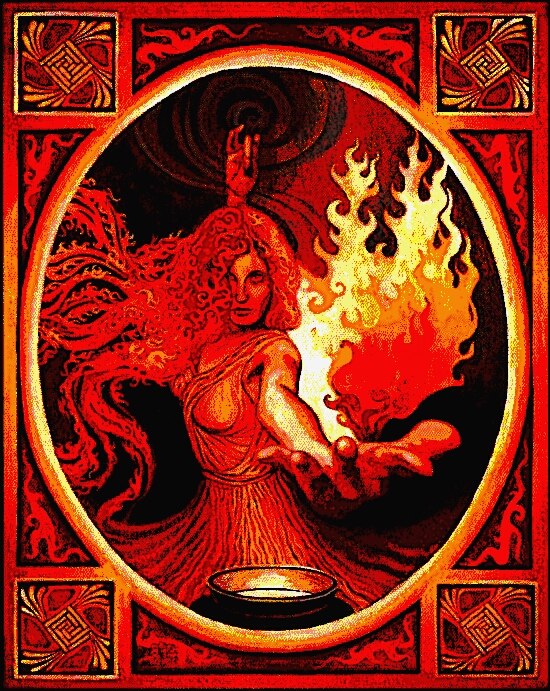



 Posted with Blogsy
 lampmagician
You must be logged in to post a comment.