Κάρολαιν Χέρσελ: Όσα δεν ξέρετε για την Caroline Herschel “Carolina Hershel: What you do not know about Caroline Herschel”

Standard

via Κάρολαιν Χέρσελ: Όσα δεν ξέρετε για την Caroline Herschel

6fc6c-ce91ce9dcea9ce98cea1cea9cea3ce9acea9

Caroline Lucretia Herschel was born on March 16, 1750, and died on January 9, 1848. She was a German astronomer, sister and longtime assistant to her brother, also famous astronomer, William Herschel.

One of her most important contributions to the science of astronomy was the discovery of several comets, including the 35P / Herschel-Rigollet comet, which also bears its name.
She was the first female scientist to be recognized by almost all the major academies of her time for her contribution to science. The Caroline Herschel, sister of William Herschel, and she was an astronomer. Her father trained her, though her mother did not approve it.

Caroline Hershel ‘s natural appearance was spoiled by the pox and the typhoon that she spent when she was still a child, so Williams’s brother showed her there was more in life than being a maid just because she would probably never get married. William Herschel, systematically working in the courtyard of his home, succeeded where the rich royal starfish of Europe had failed. His sister, Carolina HershelHis assistant, played a decisive role in his success. She dedicated himself to William’s support, and as a brilliant astronomer, she discovered eight comets during her career. She assisted her brother in the laborious construction of new telescopes, while the frozen nights, alert, recorded his remarks. As he noted: “We used every minute to continue the work that was in progress; we did not waste time either to change clothes. Many lace dresses were torn or dirty from the pitch … I really had to feed him with the teaspoon while he continued his job. ”

The pitch reported by Carolina Hershel was used by her brother in the construction of tools for grinding mirrors. In fact, Hersle was very proud to build his telescopes himself. Although self-taught, at that time he was building the world’s best telescopes. One of them gave magnification of 2,010 times, while the best telescope of a Royal Astronomer only reached up to 270 times.

Sir William Herschel was a British astronomer and musician, of German origin. He was Knight of the Royal Horn of the Horn of Hanover and a partner of the Royal Society. He was born in Hanover and was son of a musician. At a young age he settled in London and dedicated himself to the study of Mathematics and Astronomy. In 1774 he constructed a mirror telescope and in 1781 he discovered the planet Uranus, a discovery that made him famous. The following year he was appointed personal astronomer of King George III. In 1789, under the auspices of the King, he built a stronger telescope with which he discovered two satellites of Saturn, Mima and Enceladus. Hearse studied the nebulae and wrote a relevant catalog containing 2,500 nebulae, a work that was continued by his son, John Herschel, who also became a famous astronomer. He classified the stars, doubles and magazines, and gave a general picture of the Universe. He discovered that the Sun does not remain motionless, but moves, pointing to a point in the constellation of Hercules, around the center of the Milky Way, dragging along with it the entire Solar System. He also discovered infrared radiation in 1800 using a thermometer and prisms. For his contribution to science he was knighted in 1792. using a thermometer and prisms. For his contribution to science he was knighted in 1792. using a thermometer and prisms. For his contribution to science he was knighted in 1792.

Source: http://www.newsit.gr/

‘Tracing Rivers’ and other poems by Ilyana Kuhling

Standard

Iran: All about one thing

Standard

beetleypete's avatarREDFLAGFLYING

The last few months (years, let’s face it) have seen a lot of antagonism focused on Iran. That country can’t seem to do anything right, in the eyes of others. Ever since the hostage crisis that ended in 1981, it has been vilified as the cause of so many problems, not only in that region, but the world over. If they couldn’t actually pin anything on the Iranians directly, they complained about the use of ‘Iranian-supplied weapons’, or ‘Iranian-backed troops’.

They didn’t mention all the Western-supplied weapons, or Western-backed troops. Oh no.

Remember the long war Iran fought against Iraq? It was from 1980-1988, to jog your memory. During that war, we all thought the Iraqis should win, and wanted the Ayatollahs in Iran to be defeated. Our governments did, anyway, and told us that was the preferred outcome. So we supported Iraq with weapons, advisers, and probably money too…

View original post 253 more words

Άτιτλο ποίημα του Αλέξανδρου Σεργκέγιεβιτς Πούσκιν

Standard

via Άτιτλο ποίημα του Αλέξανδρου Σεργκέγιεβιτς Πούσκιν

Untitled poem by Alexander Sergeyevich Pushkin

performance: Vasilis M. Militsis


Exegi Monumentum*

For me a monument I was preparing for a manoeuvre
that the walked grass road would not get out
of Alexander the obelisk unrelenting **
higher raised his head.

No, I will not lose myself, thanks to my lyre the renowned
my soul the spot will overtake and my rot will be extinguished,
and I will be famous in the world,
even a poet if I live.

My reputation will be spread out in the rugged country of Russia,
and every tongue that speaks for it will make a subject,
and the proud descendant of Slav, and the son of Finland,
and the primitive Tungus, and Kalik, the steppe hog.

For a long time, I will be so beloved that I will stand up for the right people
as much as with my Lyra feelings of good alight wake-up,
as in our hard age the freedom I will prize
and the indulgence of the blame I will ask for.

In the divine commandment, my muse, obey,
insult not afraid, laurels do not ask,
pause and censure indifferent to listen and to the heresy of the holy never to miss.
(1836)

Monument erected (Latin): An outline from the works of Horatius (65-8 BC).
Alexander’s Column: A column in honor of King Alexander I in St. Petersburg Square.

The Alexander Pushkin Sergkegievits (1799-1837) glorified early in life as a poet and is among the writers who have renewed Russian literature. He lost his life by his heavy injury to a duel.

 source: http://diastixo.gr /

Jazz Age Wednesdays ― Hullaba Lulu 8

Standard

Three Studies for Figures at the Base of a Crucifixion

Standard

Cakeordeath's avatarcakeordeathsite

Francis-Bacon-Three-Studies-for-Figures-at-the-Base-of-a-Crucifixion-c.1944[1] Francis-Bacon-Three-Studies-for-Figures-at-the-Base-of-a-Crucifixion-c.1944 In 1936 the painter and art dealer Roland Penrose (also later the husband of Lee Miller) and the art critic Herbert Read, who were organising the International Surrealist Exhibition at the New Burlington Galleries, decided to pay a visit to the studios of the Irish born painter Francis Bacon in Chelsea. Bacon showed them four large canvases but the visitors were underwhelmed, to say the least. Penrose declared that they were insufficiently surreal to be included and is reported to have told Francis, “Mr. Bacon, don’t you realise a lot has happened in painting since the Impressionists?”.

However much this must have stung, Francis Bacon apparently agreed with Penrose’s assessment as he would later, when very famous, ruthlessly suppress any pieces that pre-dated his breakthrough painting Three Studies for Figures at the Base of a Crucifixion of 1944; that is to say, that any painting produced before he had…

View original post 203 more words

A #Carys Update: May 2018 A Good Night’s Sleep

Standard

via A #Carys Update: May 2018 A Good Night’s Sleep

Celtic Myth, Moon Blood, and the White Beauty Standard by Marisa Goudy

Standard

Guest Contributor's avatarFeminism and Religion

My woman’s body is entering the dark time of the moon, even with blinding white snow lashing the windows, even with a full moon tracing its way far above thick clouds. My mood is black and soon I’ll be flowing red, and the snow will just drive on white, white, white.
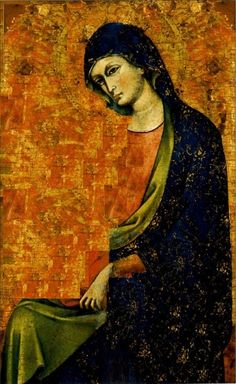
In The White Goddess, Robert Graves tells us: “…the New Moon is the white goddess of birth and growth; the Full Moon, the red goddess of love and battle; the Old Moon, the black goddess of death and divination.”

The Celt in me feels cradled by this imagery, even if, as Judith Shaw and Carol P. Christ have pointed out elsewhere on this site, the idea of maid, mother, and crone is a modern invention, not gift from the past. I agree with Christ:  “My suggestion is that we give up the idea that the details of contemporary…

View original post 985 more words

Guest Post: Learning Ancient Greek Medicine from Homer by Rachel Hajar, MD

Standard

via Guest Post: Learning Ancient Greek Medicine from Homer by Rachel Hajar, MD

Appreciation to the Tribe of Invisible Mothers

Standard

Sophia's Children's avatarSophia's Children

Yes, Mother’s Day, and a happy one, with best wishes, for traditional mothers everywhere.

There is another tribe of mothers, though …

… probably several … that go unseen and unsung in our culture. It’s this tribe — my tribe — that I’m rippling “seeing and song,” homage and appreciation to today.

My Motherhood tribe is part of a tribe made up of about 20-percent of women (sometimes a bit more, sometimes a bit fewer, depending on the country and culture), so no small group of people. Just less visible, or actually invisible.

A Music Party, 1861, Arthur Hughes.

First though, a quickie look at the origins of Mother’s Day.

Turns out, that Mother’s Day in the U.S. was seeded in 1908 when Virginian Anna Marie Jarvis held a memorial service for her own mother, Anna Reeves Jarvis.

In the U.K. tradition of Mothering Sunday, the fourth Sunday of…

View original post 1,269 more words