Is Death An Illusion? Study Suggests YES!

Standard

An amazing report on an amazing issue 🙂 ❤

via http://in5d.com/illusion-death/

Is Death An Illusion? Study Suggests YES!

by Robert Lanza

After the death of his old friend, Albert Einstein said “Now Besso has departed from this strange world a little ahead of me. That means nothing. People like us … know that the distinction between past, present and future is only a stubbornly persistent illusion.”

New evidence continues to suggest that Einstein was right – death is an illusion.

Our classical way of thinking is based on the belief that the world has an objective observer-independent existence. But a long list of experiments shows just the opposite. We think life is just the activity of carbon and an admixture of molecules – we live awhile and then rot into the ground.

We believe in death because we’ve been taught we die. Also, of course, because we associate ourselves with our body and we know bodies die. End of story. But biocentrism – a new theory of everything – tells us death may not be the terminal event we think. Amazingly, if you add life and consciousness to the equation, you can explain some of the biggest puzzles of science. For instance, it becomes clear why space and time – and even the properties of matter itself – depend on the observer. It also becomes clear why the laws, forces, and constants of the universe appear to be exquisitely fine-tuned for the existence of life.

Until we recognize the universe in our heads, attempts to understand reality will remain a road to nowhere.

Consider the weather ‘outside’: You see a blue sky, but the cells in your brain could be changed so the sky looks green or red. In fact, with a little genetic engineering we could probably make everything that is red vibrate or make a noise, or even make you want to have sex like with some birds. You think its bright out, but your brain circuits could be changed so it looks dark out. You think it feels hot and humid, but to a tropical frog it would feel cold and dry. This logic applies to virtually everything. Bottom line: What you see could not be present without your consciousness.

In truth, you can’t see anything through the bone that surrounds your brain. Your eyes are not portals to the world. Everything you see and experience right now – even your body – is a whirl of information occurring in your mind. According to biocentrism, space and time aren’t the hard, cold objects we think. Wave your hand through the air – if you take everything away, what’s left? Nothing. The same thing applies for time. Space and time are simply the tools for putting everything together.

Consider the famous two-slit experiment. When scientists watch a particle pass through two slits in a barrier, the particle behaves like a bullet and goes through one slit or the other. But if you don’t watch, it acts like a wave and can go through both slits at the same time. So how can a particle change its behavior depending on whether you watch it or not? The answer is simple – reality is a process that involves your consciousness.

Or consider Heisenberg’s famous uncertainty principle. If there is really a world out there with particles just bouncing around, then we should be able to measure all their properties. But you can’t. For instance, a particle’s exact location and momentum can’t be known at the same time. So why should it matter to a particle what you decide to measure? And how can pairs of entangled particles be instantaneously connected on opposite sides of the galaxy as if space and time don’t exist? Again, the answer is simple: because they’re not just ‘out there’ – space and time are simply tools of our mind.

Death doesn’t exist in a timeless, spaceless world. Immortality doesn’t mean a perpetual existence in time, but resides outside of time altogether.

Our linear way of thinking about time is also inconsistent with another series of recent experiments. In 2002, scientists showed that particles of light “photons” knew – in advance – what their distant twins would do in the future. They tested the communication between pairs of photons. They let one photon finish its journey – it had to decide whether to be either a wave or a particle. Researchers stretched the distance the other photon took to reach its own detector. However, they could add a scrambler to prevent it from collapsing into a particle. Somehow, the first particle knew what the researcher was going to do before it happened – and across distances instantaneously as if there were no space or time between them. They decide not to become particles before their twin even encounters the scrambler. It doesn’t matter how we set up the experiment. Our mind and its knowledge is the only thing that determines how they behave. Experiments consistently confirm these observer-dependent effects.

Bizarre? Consider another experiment that was recently published in the prestigious scientific journal Science (Jacques et al, 315, 966, 2007). Scientists in France shot photons into an apparatus, and showed that what they did could retroactively change something that had already happened in the past. As the photons passed a fork in the apparatus, they had to decide whether to behave like particles or waves when they hit a beam splitter. Later on – well after the photons passed the fork – the experimenter could randomly switch a second beam splitter on and off. It turns out that what the observer decided at that point, determined what the particle actually did at the fork in the past. At that moment, the experimenter chose his past.

Of course, we live in the same world. But critics claim this behavior is limited to the microscopic world. But this ‘two-world’ view (that is, one set of physical laws for small objects, and another for the rest of the universe including us) has no basis in reason and is being challenged in laboratories around the world. A couple years ago, researchers published a paper in Nature (Jost et al, 459, 683, 2009) showing that quantum behavior extends into the everyday realm. Pairs of vibrating ions were coaxed to entangle so their physical properties remained bound together when separated by large distances (“spooky action at a distance,” as Einstein put it). Other experiments with huge molecules called ‘Buckyballs’ also show that quantum reality extends beyond the microscopic world. And in 2005, KHC03 crystals exhibited entanglement ridges one-half inch high, quantum behavior nudging into the ordinary world of human-scale objects.

We generally reject the multiple universes of Star Trek as fiction, but it turns out there is more than a morsel of scientific truth to this popular genre. One well-known aspect of quantum physics is that observations can’t be predicted absolutely. Instead, there is a range of possible observations each with a different probability. One mainstream explanation, the “many-worlds” interpretation, states that each of these possible observations corresponds to a different universe (the ‘multiverse’). There are an infinite number of universes and everything that could possibly happen occurs in some universe. Death does not exist in any real sense in these scenarios. All possible universes exist simultaneously, regardless of what happens in any of them.

Life is an adventure that transcends our ordinary linear way of thinking. When we die, we do so not in the random billiard-ball-matrix but in the inescapable-life-matrix. Life has a non-linear dimensionality – it’s like a perennial flower that returns to bloom in the multiverse.

“The influences of the senses,” said Ralph Waldo Emerson “has in most men overpowered the mind to the degree that the walls of space and time have come to look solid, real and insurmountable; and to speak with levity of these limits in the world is the sign of insanity.”

About the authorRobert Lanza has published extensively in leading scientific journals. His book “Biocentrism: How Life and Consciousness are the Keys to Understanding the True Nature of the Universe” lays out the scientific argument for his theory of everything.

See EXCLUSIVE In5D videos and ad free articles on Patreon for a minimal donation! https://www.patreon.com/in5d

Follow In5D on InstagramFacebookYouTubeTwitterWG1WGAPatreon, and OnStellar

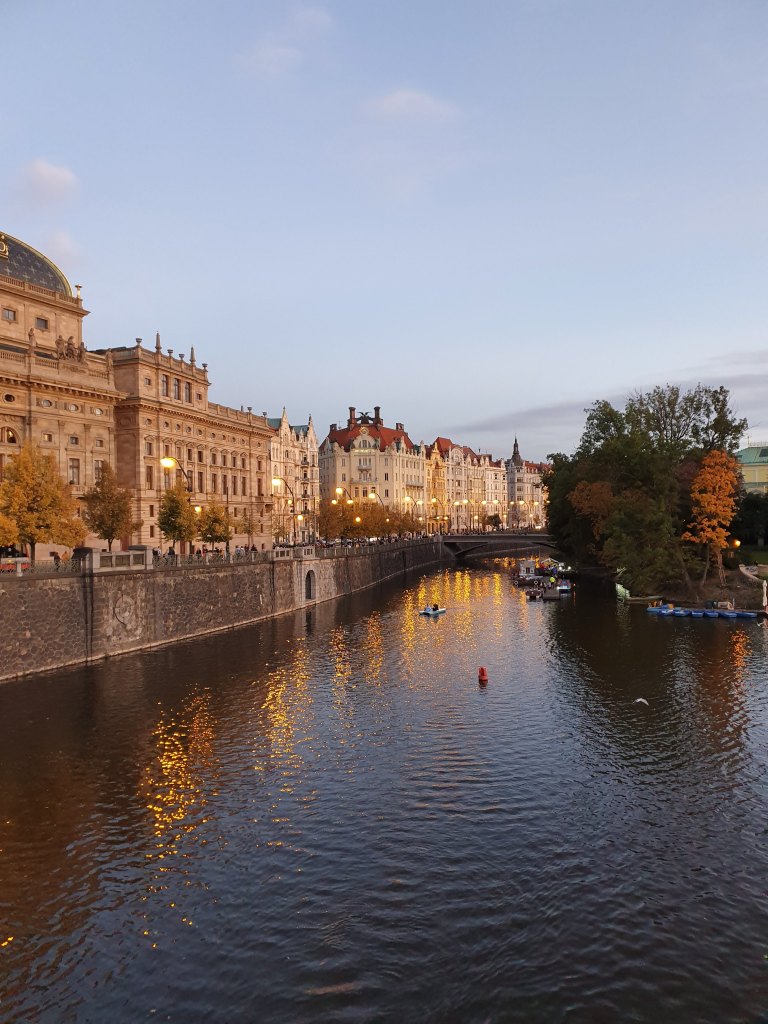
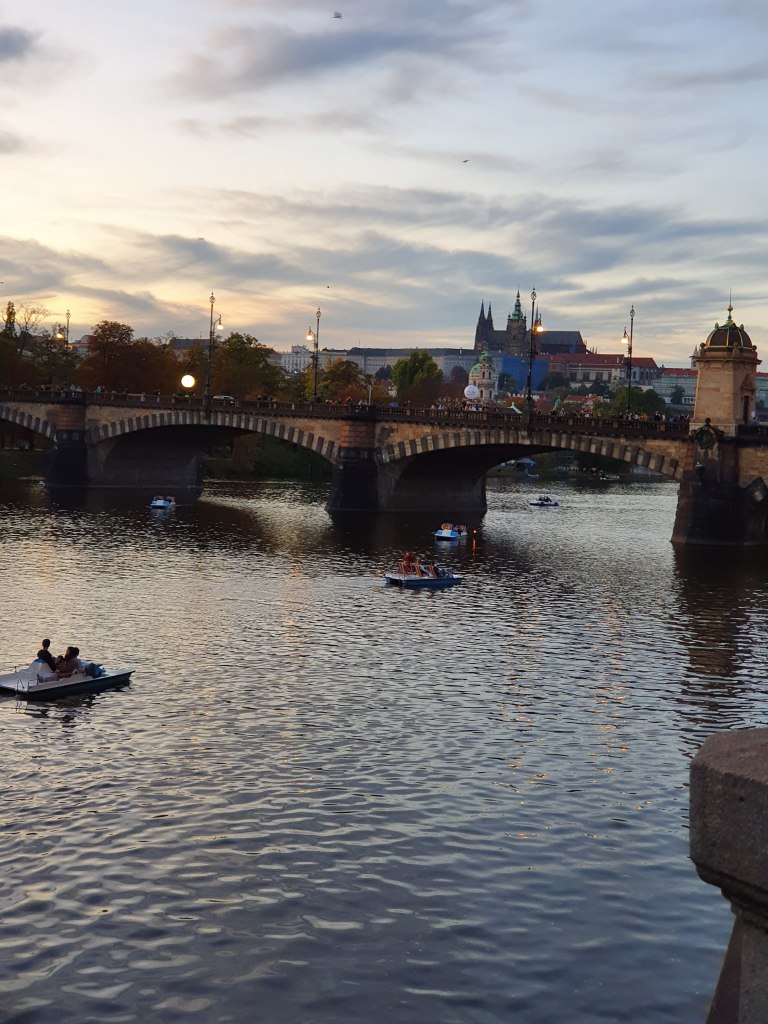
Praha (Prague) 2

Standard

The Freiberger Mulde (CzechFreiberská Mulda, also called the Östliche Mulde or Eastern Mulde) is the right-hand, 124-kilometre-long (77 mi) headstream of the river Mulde, whose catchment covers an area of 2,981 km2 (1,151 sq mi) in the Czech Republic and Germany in central Saxony. It has a volumetric flow of 35.3 m3/s (1,250 cu ft/s) which is greater than that of the other headstream, the Zwickauer Mulde (or Westliche Mulde or Western Mulde) who flow is about 26.4 m3/s (930 cu ft/s),[2] which is nevertheless the longer stream.

The source of the river is in the Ore Mountains, near Moldava, in the Czech Republic. It runs northwest, crossing the border with Germany after a few km, to Freiberg (hence the name), and further northwest through NossenDöbeln and Leisnig. A few km north of Colditz, the Freiberger Mulde is joined by the Zwickauer Mulde to form the Mulde. The Mulde is a tributary of the Elbe. via; https://en.wikipedia.org/wiki/Freiberger_Mulde

I just have to think of a lovely river-song which I loved and used to play on the streets in the youngest times 😉

That is really one of the most beautiful and calm rivers as I’ve ever seen. As I walked along with this marvellous streaming, my mind was floating with Smetana’s Vltava (The Moldau), great Czech composer. http://Bedřich Smetana – Wikipedia

this piece fulfilled my soul as I’s watching the sparkles on the water surface.

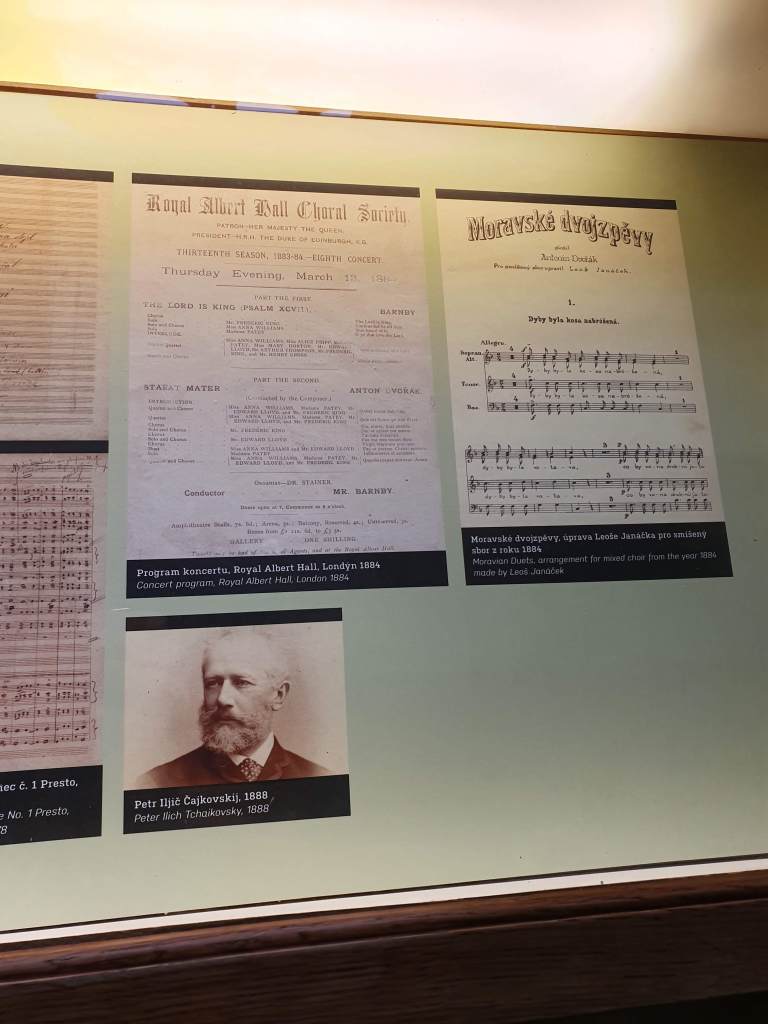
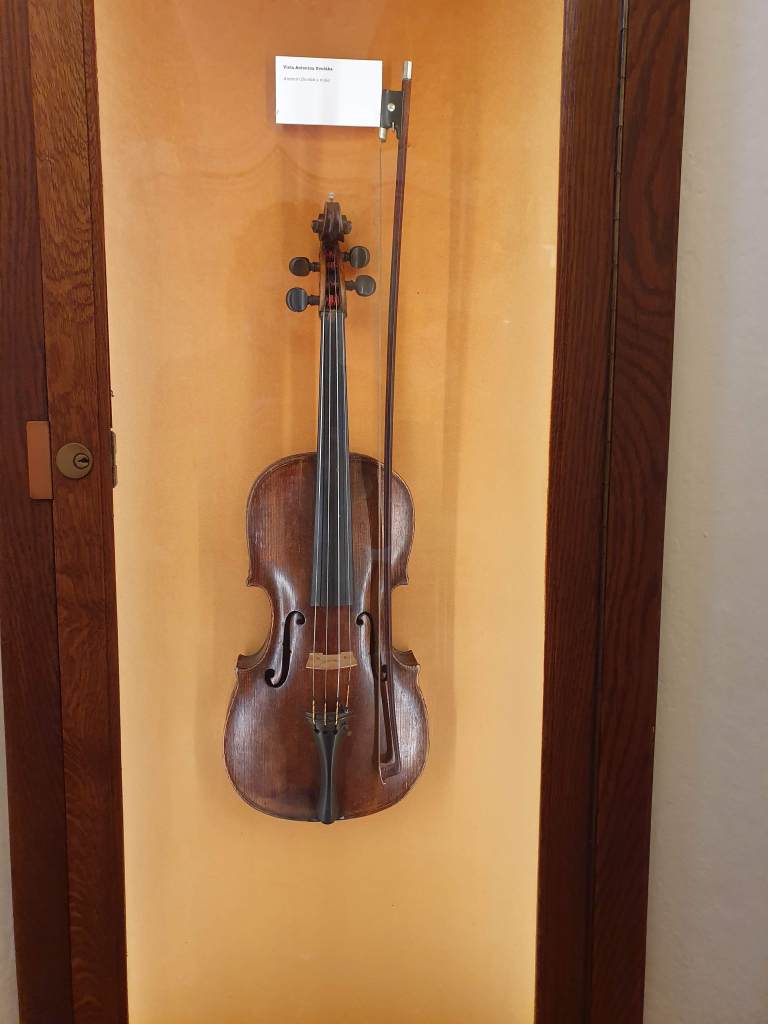
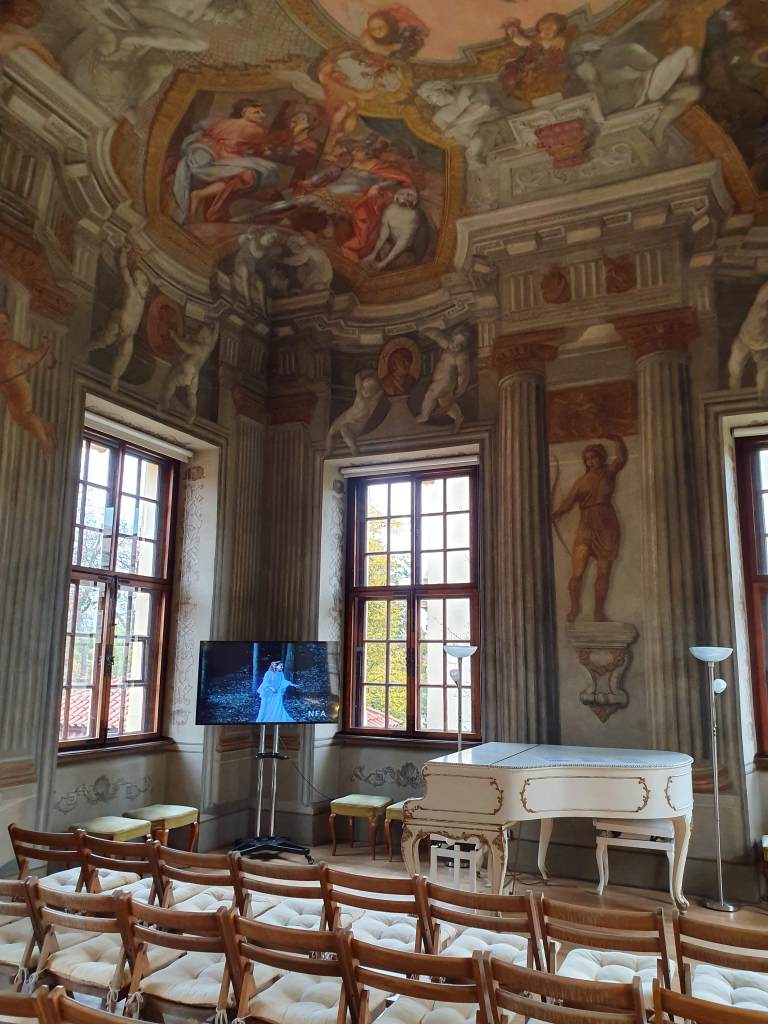
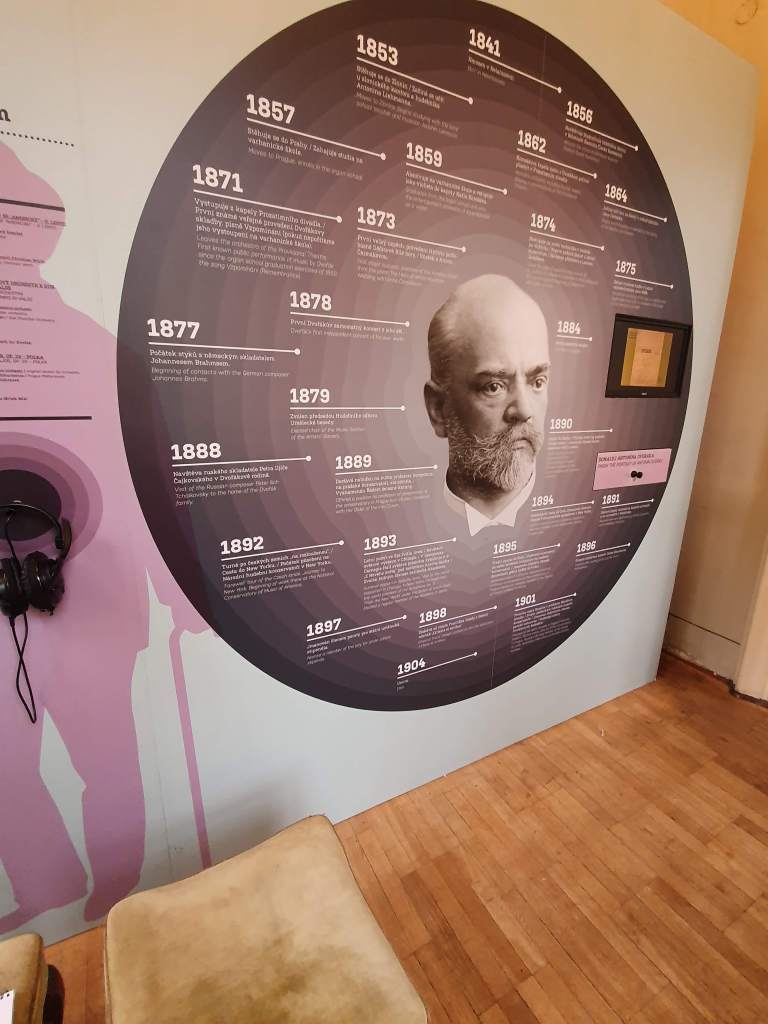
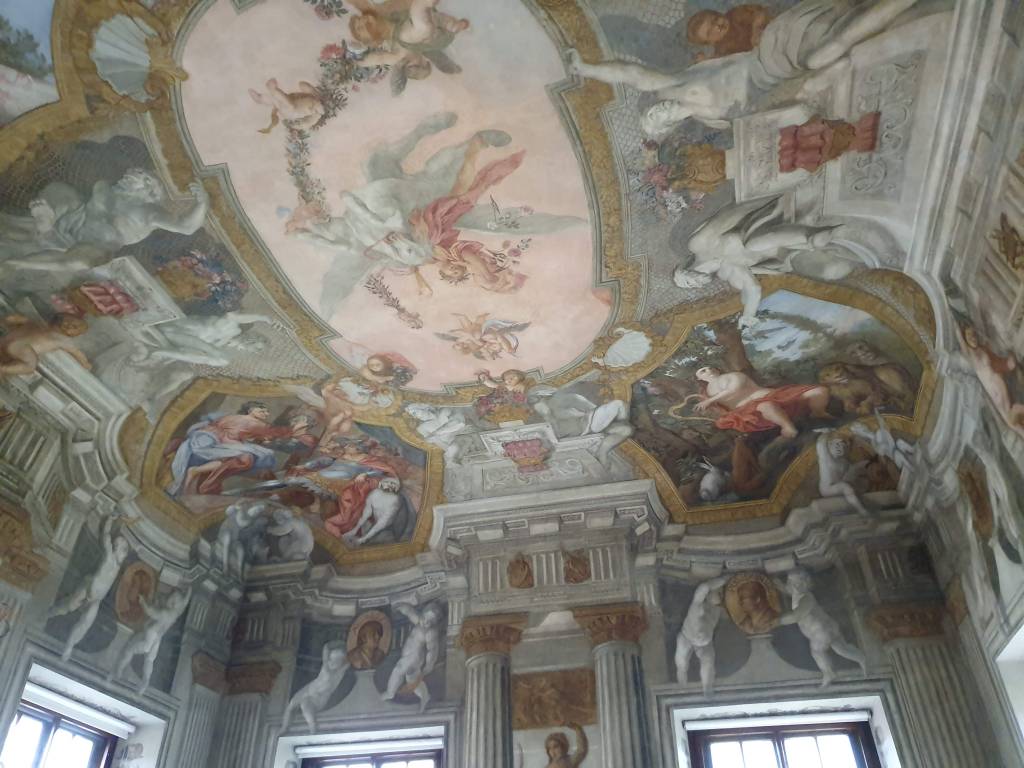
Yes, Prague is identical with its Art. As we went to the house of Antonín Dvořák, one of the greatest musician in the world it was an amazing experience. https://en.wikipedia.org/wiki/Anton%C3%ADn_Dvo%C5%99%C3%A1k

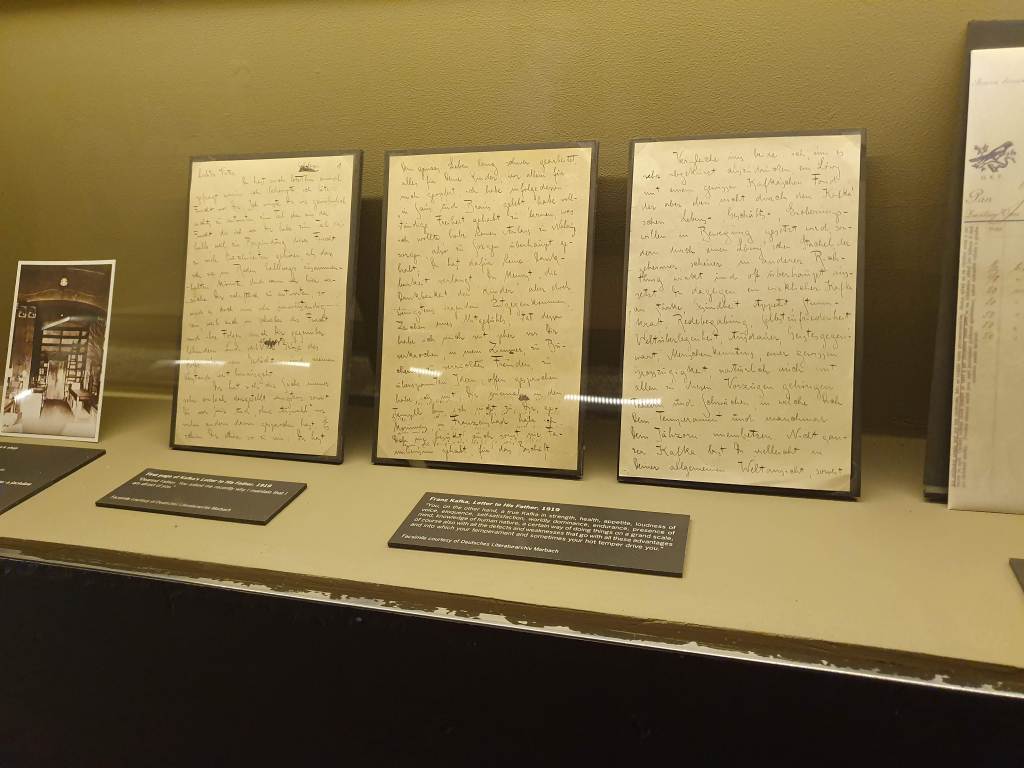
I have lost much time to search for one piece by Dvorak which I love but couldn’t find it.. damn!! Anyway, I have not share yet my favourite piece; Franz Kafka, and I will try next weekend to do it s, then; to be continued 😉 . Thank you all lovely friends and wish you a wonderful weekend ❤ ❤

Praha (Prague) 1

Standard

A short introduction;

I don’t really lament or as in German we say; jammern (yammer) but I’m really to be deplored! I have had planed since Wednesday when I came back from Prague trip to write a journal and the Saturday is for me the only chance but the God of luck wasn’t agreed to give me the chance and I had to fight all my morning and forenoon to get the pictures into my PC!! I have used a lot of tricks and ways which I knew but finally just could get them in an afternoon!

Anyway, let me try at least to begin it if I should make it as some partitions. As I still believe that I’m not a writer (as a professional at least) I need a longer time to write a story; (with a confess that I type with one finger each hand 😀 )

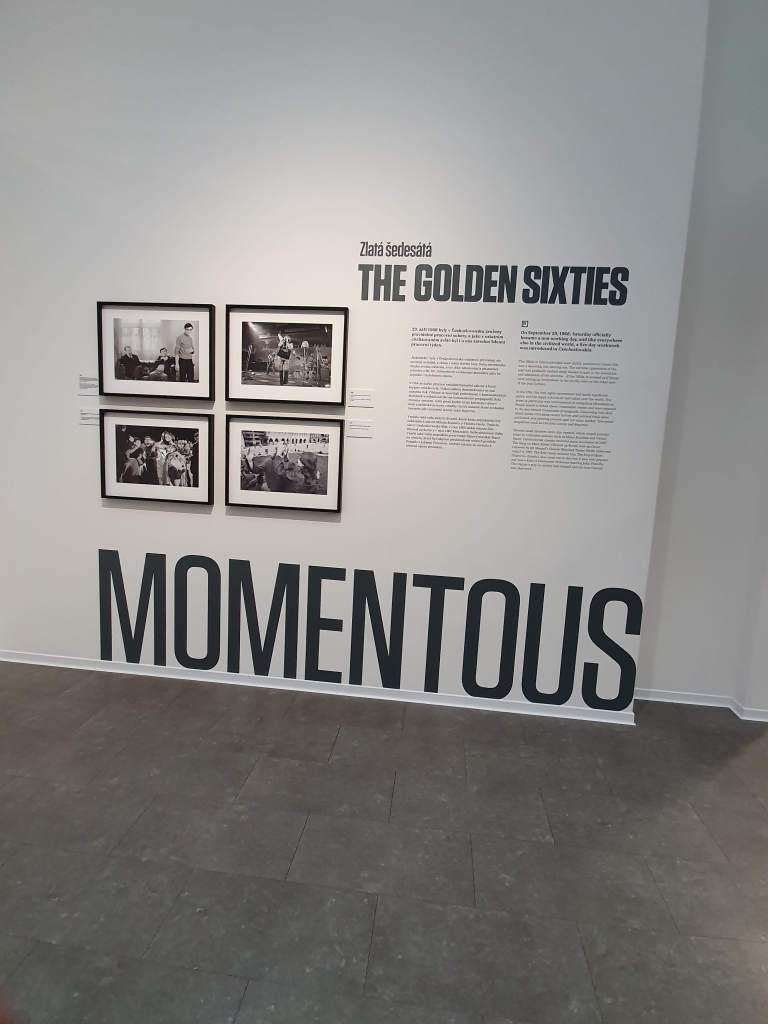
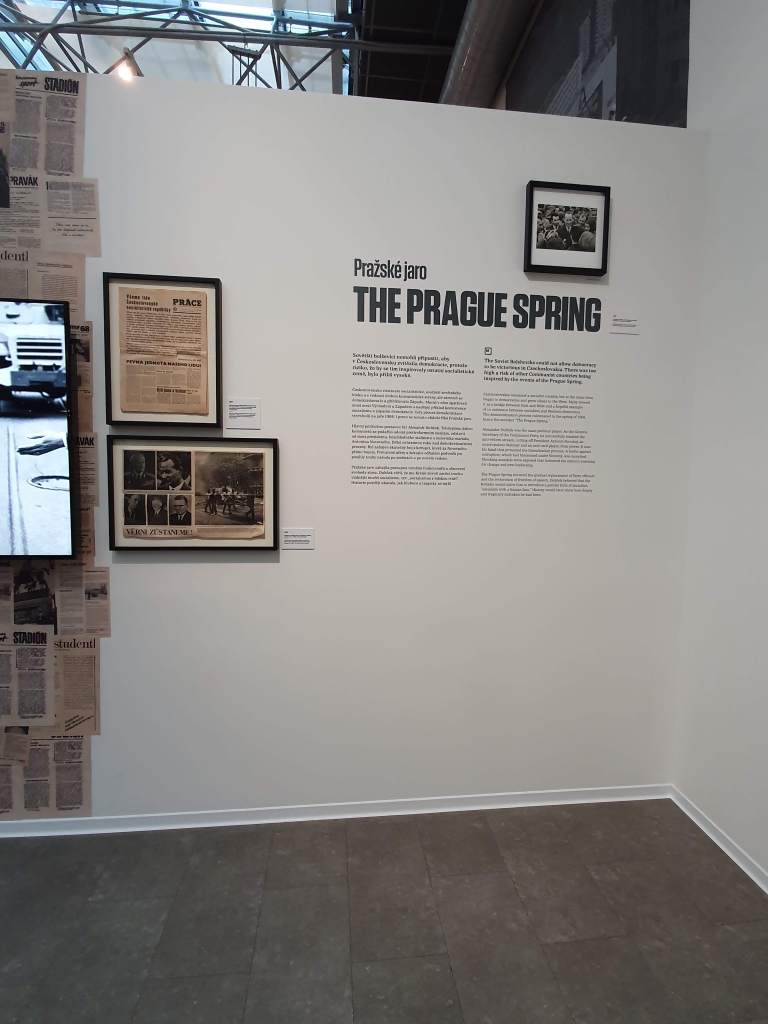
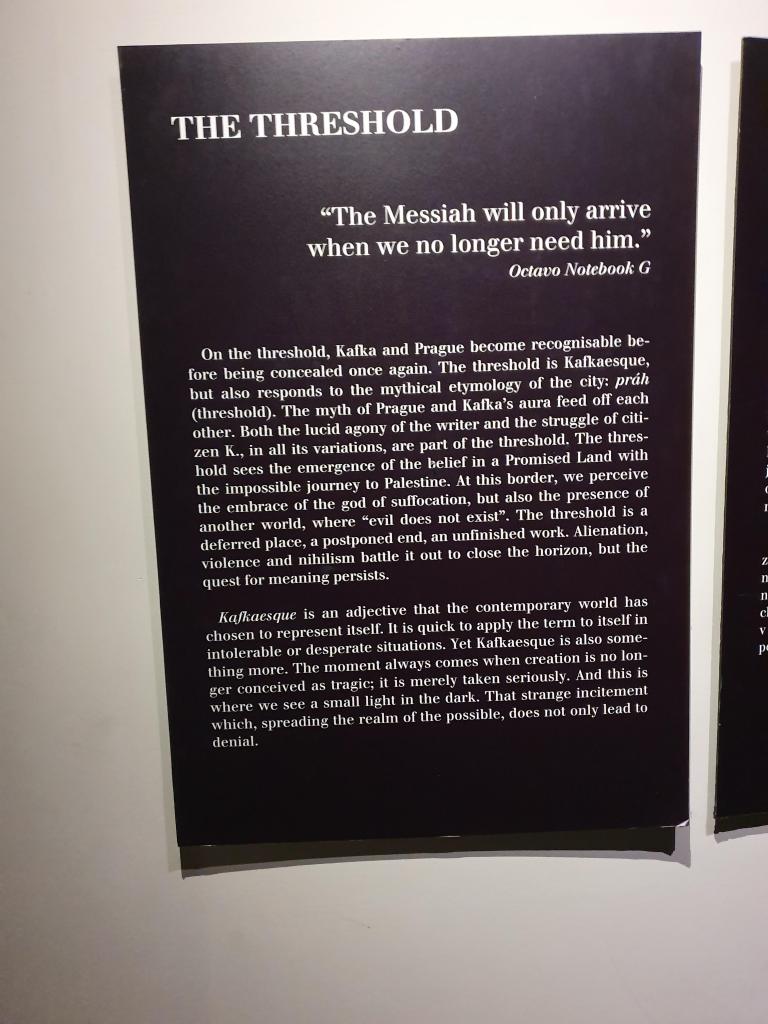
So; I wanted to see Prague because of my long but not lost interest since my youth. I know the city from its intelligence!; As I have heard of so many artists history and scene in the legendary pops; especially Franz Kafka’s tells. And also the 68’s Prague Spring with Alexander Dubček which it failed by the inversions USSR. https://en.wikipedia.org/wiki/Alexander_Dub%C4%8Dek

Alexander Dubček

Thanks my adorable wife, as she is caring for me and my wishes, arranged this short but amazing trip to see my idol(s). She knows me well as she might think that I have not so much time and must not take my all wishes with me into the grave. Please don’t think I’m exaggerating something; if you’d live in a country of the “so-called”; third world but have a brain on the beat, you’d surely have many wishes!

Before I share the pictures I want to show my appreciations to this; Czechoslovakia or these countries; Czech Republic & Slovakia for their separation in a peaceful condition which is unique in the human’s history. The Dissolution of Czechoslovakia https://en.wikipedia.org/wiki/Dissolution_of_Czechoslovakia

we can really recognize the whole city as a museum ❤

to be continued ❤ ❤

Achoo, Ahem 🤧

Standard

Yes dear friends, it has caught me a cough!!

I don’t know how it goes with you but in this situation. I am almost empty and there’s no energy inside my head but a lunatic!

Paul Simon might help me to get calm 😉 Have a great WE. And stay healthy and tuned ❤ ❤

Can an Artist do with politics?

Standard

It is a really interesting question; I’d answer: Yes!

As we might know and history would show us, it is so and it has been all the time. We are all involved with the social fact as we are living in the mass of public!

…The cause of human-being coming to exist, however, is not clear. The only clearness is that this form of existence seems not to be what was required to be. This would be a case to discuss about, if we made a general consideration of human behavior and the path of indulgence and trespass that he has gone through his chronicle, in a serious way. To make it possible, the undeniable hostility between mankind and nature in general (in the order that one’s life means the other’s death), seems to be a proper clue for getting into a process which began when the first ape, if ever, in quest for meat climbed down his home-tree, and while missing his body hair and the other animal means, his mutation began. But this, either because of his mental disability or gradual lack of all necessary outfits (strong instinct and proper quality of senses, claws, teeth and body-cover) should have gone as a chaotic beginning, where our poor descending predecessor had no way but to somehow regain his missing necessary strength for survival. And since there was no natural way remained for this recovery process, he began to manipulate as well as to imitate nature, or in other words, he commenced to run for an unnatural life. It is simple to conceive that an abrupt fear took the new creature totally up, so that he felt himself defenseless and naked in confrontation with his apparently brutal and cruel environment. This is most likely that another result could or even had to be obtained if this misfortune in Man’s initial touch with nature had not obstructed the process. And this is also possible that a project had once been planned to create a special and extraordinary species to be able to engender an intellectual kind of harmony among the natural parts and elements on this planet.

This is a part of a roman “The Season of Limbo” which, my brother Al wrote in the 90’s.

Of course, it isn’t the whole of the article but, as you should mention it; it is something social therefore political. I mean; as we all once decided to live safety together as a social community on this almost unfamiliar terrain, we have chosen the communion way of life and as the art in us, is the communion way of our expression only as an idea to make it better!

As I lived in Iran, the great Political Idols for me were the artists in countries like: In the south Americas, or and so on!

finally; long talk short sense, I think the artists are growing up in the very society as they live, therefore, their arts come from their soul and I think that is the main point; Creation by one’s soul.

truly, I found this article and the memories of those days in which we were fighting against the dictatorship of the Shah’s regime (it wasn’t so fur worst as it is now!) and these activities like; Neruda, Garcia Marques, Milan Kundera, Ernest Hemingway, even Shakespeare were all the political activist. We all are Artists, who are trying to make a reason for our beings.

http://www.openculture.com/2019/07/an-introduction-to-chilean-poet-pablo-neruda.html

An Introduction to Chilean Poet Pablo Neruda: Romantic, Radical & Revolutionary

Does politics belong in art? The question arouses heated debate about creative freedom and moral responsibility. Assumptions include the idea that politics cheapens film, music, or literature, or that political art should abandon traditional ideas about beauty and technique. As engaging as such discussions might be in the abstract, they mean little to nothing if they don’t account for artists who show us that choosing between politics and art can be as much a false dilemma as choosing between art and love.

In the work of writers as varied as William Blake, Muriel Rukeyser, James Baldwin, and James Joyce, for example, themes of protest, power, privilege, and poverty are inseparable from the sublimely erotic—all of them essential aspects of human experience, and hence, of literature. Foremost among such political artists stands Chilean poet Pablo Neruda, who—as the TED-Ed video above from Ilan Stavans informs us—was a romantic stylist, and also a fearless political activist and revolutionary.

Neruda won the Nobel Prize for Literature in 1971, and, among his many other literary accomplishments, he “rescued 2,000 refugees, spent three years in political exile, and ran for president of Chile.” Neruda used “straightforward language and everyday experience to create lasting impact.” He began his career writing odes and love poems filled with candid sexuality and sensuous description that resonated with readers around the world.

Neruda’s international fame led to a series of diplomatic posts, and he eventually landed in Spain, where he served as consul in the mid-1930s during the Spanish Civil War. He became a committed communist, and helped relocate hundreds of fleeing Spaniards to Chile. Neruda came to believe that “the work of art” is “inseparable from historical and political context,” writes author Salvatore Bizzarro, and he “felt that the belief that one could write solely for eternity was romantic posturing.”

Yet his lifelong devotion to “revolutionary ideals,” as Stavans says, did not undermine his devotion to poetry, nor did it blinker his writing with what we might call political correctness. Instead, Neruda became more expansive, taking on such subjects as the “entire history of Latin America” in his 1950 epic Canto General.

Neruda died of cancer just weeks after fascist dictator Augusto Pinochet seized power from elected president Salvador Allende in 1973. Today, he remains a beloved figure for activists, his lines “recited at protests and marches worldwide.” And he remains a literary giant, respected, admired, and adored worldwide for work in which he engaged the struggles of the people with the same passionate intensity and imaginative breadth he brought to personal poems of love, loss, and desire.

Related Content:

Pablo Neruda’s Historic First Reading in the US (1966)

Pablo Neruda’s Poem, “The Me Bird,” Becomes a Short, Beautifully Animated Film

The Lost Poems of Pablo Neruda: Help Bring Them to the English Speaking World for the First Time

Hear Pablo Neruda Read His Poetry In English For the First Time, Days Before His Nobel Prize Acceptance (1971)

Josh Jones is a writer and musician based in Durham, NC. Follow him at @jdmagness.

How worthy is Life?

Standard

It is really an interesting question; I think that the answer is somehow relative! I said this because I have tasted the two different world to praise one’s life and it is different. The picture above is the girl or woman, who burned herself before the “Judge” because she disguised herself as masculine to get into the football stadium as in Iran the women are not allowed to watch the half-naked men!! It might be a laughingly easy joke for the world, but actually, I asked myself after shockingly read this news, how much worth is one’s life;

This question once become in my head when I left Iran, a so-called third world country, in Germany. There I’d see how life could be worthy.

In Iran we have taken it much easier when someone died, it sounded so naturally, but here in Germany, I mentioned that it isn’t!

Here, as C.G.Jung says; It is the point; We are all individual in a self-living insistence: Cogito, ergo sum as René Descartes had said;

This is an idea of thought, which isn’t current in the “Third words” The mass of people is the main thing and not their individuality.

Anyway, my wonder has begun with the self-burning of a Tunisian at the beginning of the “so-called Arabic Spring”! But that was; in my opinion, a radio in an almost hot situation which had brought almost nothing in the end.

at the end; long talk short sense; I think the life every individual is worthy, but unfortunately this girl’s life has been lost into an unworthiness. I hope her soul will be blessed by all goodness.

Sources;

https://www.ft.com/content/2e379f74-d499-11e9-8367-807ebd53ab77

https://www.bbc.com/news/world-middle-east-49646879

Amor Fati

Standard

As I try to take the benefit of my golden Saturday, minute by minute, let me show my deeply feeling for this fascinating complex of the soul; Fredric Nietzsche. Stunningly, I’m knowing him again and again as a Macho, about at the beginning to an opened minded man as new!

the first record;

And the second record;

I fell in love with the philosophy as I might once write, was a book which I’ve got in hand from my brother named; The History of the Philosophy. Plato’s Socrates Socrates · ‎Republic (Plato) was not new for me but there were some new ones: Spinoza Baruch Spinoza was my first love, and it went further with Schopenhauer  Arthur Schopenhauer , Nietzsche  Friedrich Nietzsche , Kant Kant , Russel ‎Bertrand Russell, Sartre Sartre  etc.

To put it bluntly, I think that philosophy is the door to open the dark side of the soul, to recognize the self, to think: Cogito ergo sum;;

And the last but not least;

Here is a nice animation to introduce him in another line; Acceptance! The Acceptance is not to give up! 🙂 ❤

An Animated Introduction to Friedrich Nietzsche’s Philosophical Recipe for Getting Over the Sources of Regret, Disappointment and Suffering in Our Lives

By http://www.openculture.com/ in Philosophy | January 16th, 2018

The idea of acceptance has found much, well… acceptance in our therapeutic culture, by way of Elisabeth Kübler-Ross’ five stages of grief, 12-step programs, the wave of secular mindfulness practices, the body-acceptance movement, etc. All of these interventions into depressed, bereaved, guilt-ridden, and/or anxious states of mind have their own aims and methods, which sometimes overlap, sometimes do not. But what they all share, perhaps, for all the struggle involved, is a general sense of optimism about acceptance.

One cannot say this definitively about the Stoic idea of amor fati—the instruction to “love one’s fate”—though you might be persuaded to think otherwise if you google the term and come up with a couple dozen popularizations. Yes, there’s love in the name, but the fate we’re asked to embrace may just as well be painful and debilitating as pleasurable and uplifting. We cannot change what has happened to us, or much control what’s going to happen, so we might as well just get used to it, so to speak.

If this isn’t exactly optimism in the sense of “it gets better,” it isn’t entirely pessimism either. But it can become a grim and joyless fatalistic exercise. Yet, as Friedrich Nietzsche used the term—and he used it with much relish—amor fati means not only accepting loss, suffering, mistakes, addictions, appearances, or mental and emotional turbulence; it means accepting all of iteverything and everyone that causes both pain and pleasure, as Alain de Botton says above, “with strength and an all-embracing attitude that borders on a kind of enthusiastic affection.”

“I do not want to wage war against what is ugly,” he wrote in The Gay Science, “I do not want to accuse; I do not even want to accuse those who accuse.” Readers of Nietzsche may find themselves picking up any one of his books, including The Gay Science, to see him doing all of the above, constantly, on any random page. But his is never a systematic philosophy, but an expression of passion and attitude, inconsistent in its parts but, as a whole, surprisingly holistic. “My formula for greatness in a human being,” he writes in Ecce Homo, “is amor fati


That one wants nothing to be different, not forward, not backward, not in all eternity. Not merely bear what is necessary, still less conceal it… but love it.

Although the concept may remind us of Stoic philosophy, and is very often discussed in those terms, Nietzsche saw such thought—as he understood it—as gloomy, ascetic, and life-denying. His use of amor fati goes beyond mere resignation to something more radical, and very difficult for the human mind to stomach, to use a somewhat Nietzschean figure of speech. “It encompasses the whole of world history (including the most horrific episodes),” notes a Leiden University summary, “and Nietzsche’s own role in this history.” Above all, he desired, he wrote, to be a “Yes-sayer.”

Is amor fati a remedy for regret, dissatisfaction, the endlessly restless desire for social and self-improvement? Can it banish our agony over history’s nightmares and our personal records of failure? De Botton thinks so, but one never really knows with Nietzsche—his often satirical exaggerations can turn themselves inside out, becoming exactly the opposite of what we expect. Yet above all, what he always turns away from are absolute ideals; we should never take his amor fati as some kind of divine commandment. It works in dialectical relation to his more vigorous critical spirit, and should be applied with a situational and pragmatic eye. In this sense, amor fati can be seen as instrumental—a tool to bring us out of the paralysis of despair and condemnation and into an active realm, guided by a radically loving embrace of it all.


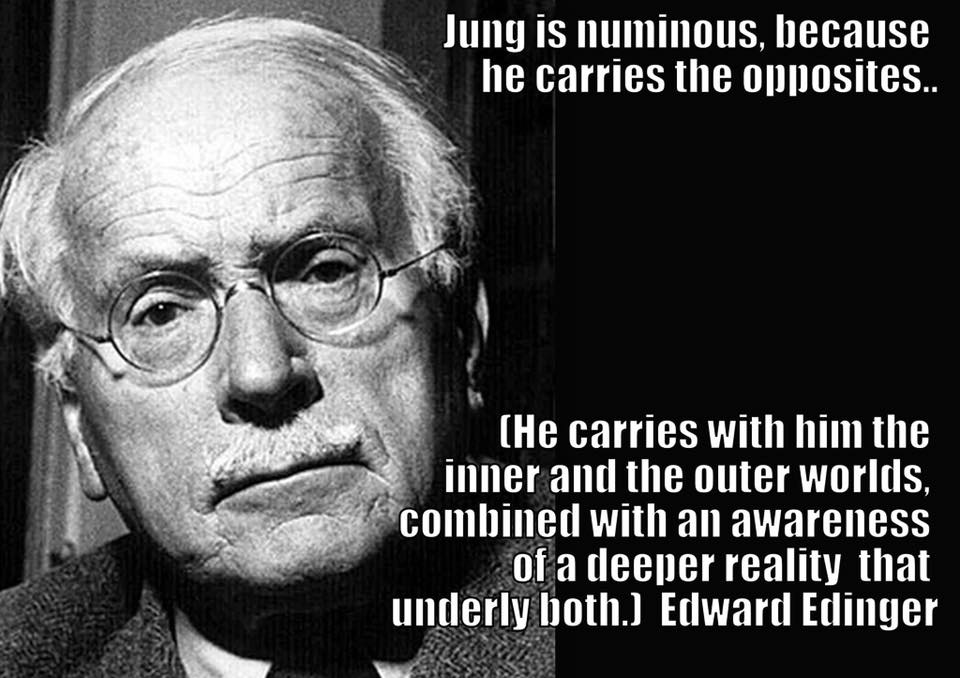
Carl Jung: Forever Jung

Standard

Oh yes! Forever Jung (Young) as the name says by itself!

A great article here about a man who stays standing still all through the generations. ❤

via https://www.vision.org/themes/custom/sophia/img/vision-logo.png

by Gina Stepp

FALL 2011Society and CultureBIOGRAPHY

Carl Gustav Jung is best known as one of the fathers of modern psychotherapy alongside his erstwhile associates Sigmund Freud and Alfred Adler. He introduced such terms as introversion and extraversionthe collective unconsciousarchetypes and synchronicity into the popular vocabulary. But beyond that, most people today probably know little about the man. Understanding something of his profound influence, however, is critical for anyone who wants to better understand the current state of Western culture.

After his departure from Freud’s Vienna Psychoanalytic Society in 1910, Jung founded an approach he named Analytical Psychology, many tenets of which have not only led some to refer to him as a “founding father of the New Age” but also prevented much of the scientific community from taking him seriously.

Stung by his lack of acceptance as a scientist, Jung hated being called a mystic, a label which nevertheless clung to him throughout his life and beyond. Even his secretary, Aniela Jaffé, acknowledged that “the clear analogies that exist between mysticism and Jungian psychology cannot be overlooked,” although she insisted that “this fact in no way denies its scientific basis.”

Likewise Gary Lachman notes in his 2010 biography that despite Jung’s assertion to the contrary, “he would, by his own definition, be a mystic.” He openly admitted to having paranormal experiences and participating in séances. Lachman also attributes the psychologist’s reputation as a mystic to the fact that he claimed special, secret knowledge or gnosis “not obtained through the normal methods of cognition.” In fact, “Jung’s link to Gnosticism was so significant,” observes Lachman, “that one of the Gnostic scrolls making up the [Nag Hammadi] library was purchased by the Jung Foundation in 1952 and named the ‘Jung Codex’ in honor of the man many saw as a modern Gnostic.”

“Recollection of the outward events of my life has largely faded or disappeared. But my encounters with the ‘other’ reality, my bouts with the unconscious, are indelibly engraved upon my memory.” C.G. JUNG, MEMORIES, DREAMS, REFLECTIONS (1961)

Jung’s use of religious terms has sometimes encouraged the misconception that his idea of spirituality is somehow compatible with a biblical view; but in Jung’s writings, the subjects of God, Christ and religion in general were invariably presented as mythology.

So who was this ambitious loner? Most biographies focus on the relational history of their subjects—the families into which they are born and the later encounters that influenced their development, but a sketch of Carl Gustav Jung’s life, by necessity, is bound to have a slightly different focus. The experiences that had the most profound effect on him were, by his own account, those that occurred within himself; people and the physical trappings of everyday life were relatively uninteresting to him.

“The very things that make up a sensible biography,” said Jung in the autobiography he dictated to Jaffé, had become for him mere “phantasms” compared to one’s inner developments. These consisted of his experiences in the form of dreams, visions (some might characterize them as hallucinations), interplay between his two inner “selves” (one of which, dubbed “No. 2,” he described as an authoritative 18th-century character with a white wig, who traveled in a coach and wore buckled shoes), and other active imaginings that formed inner pathways to what he would later term “individuation,” or the process of becoming who we are by integrating the conscious with the unconscious.

Nevertheless some aspects of a sensible biography of Jung can be collected and narrated. His birth on July 26, 1875, for instance, was certainly no phantasm, at least so far as his mother, Emilie Preiswerk Jung, must have been concerned. Carl was her fourth child, but two daughters had been stillborn and another son had died soon after birth. The children’s father, Paul, was a Protestant minister, but he was unhappy both in his profession and in his marriage, which could not have been pleasant for his wife either. Described as depressed, and more interested in the occult than in showing any affection to her son, Emilie had to be hospitalized for a period after suffering a breakdown when Carl was about three, an event that made a lasting impression on him. Jung records that he was never able to trust women again.

He grew up essentially an only child, and the arrival of his sister Gertrude when he was 9 changed little. Jung says, “I played alone, and in my own way. Unfortunately I cannot remember what I played; I recall only that I did not want to be disturbed.” Lachman observes that this preference for isolation “stayed with Jung throughout his life.” Albert Oeri, a lifelong friend, remarked retrospectively that he and Jung were initially brought together to play because their fathers were “old school friends” and both men hoped their sons would also form a close relationship. This hope was at first dashed, however; Carl continued to concentrate on his solitary pursuit, refusing to notice Albert. “How is it that after some fifty-five years I remember this meeting at all?” Oeri mused. “Probably because I had never come across such an asocial monster before.”

Even after his marriage to Emma Rauschenbach and his ensuing fatherhood, Jung retained his general disinterest in others. In A Life of Jung, Ronald Hayman notes that while Jung sometimes went sailing with his son Franz (perhaps more out of a love of sailing than out of any particular interest in his son), he generally kept his daughters at arm’s length. On one rare occasion when he included them on a boat trip, he bought them a treat. “Look,” exclaimed eight-year-old Marianne to her mother, “Franz’s father bought me a little cake!” Emma took advantage of the occasion to explain to her daughter that Jung was her father too.

Jung’s wife and five children learned to accustom themselves to the wide range of his eccentricities. In addition to being required to accept one of his mistresses as a member of the household, they also lived with the paranormal phenomena which seemed to increase in the household when Jung would shut himself away in privacy to practice “active imagination”—inducing a state somewhere between waking and sleeping (hypnagogia), in which he would commune with his inner voices in order to resolve any conflicts between the conscious and the unconscious. Jung’s autobiographical descriptions of the visions he experienced in this state might come across as somewhat bizarre to many readers, particularly considering the fact that his ambition was to be seen as a man of science.

“It seems to me as if that alienation which so long separated me from the world has become transferred into my own inner world, and has revealed to me an unexpected unfamiliarity with myself.” C.G. JUNG, MEMORIES, DREAMS, REFLECTIONS (1961)

However, his apparent affinity with the spirit world had a long and even familial history. His mother was the daughter of a Hebrew scholar who maintained a chair in his study for the convenience of his dead first wife’s ghost. He was visited by other figures as well, and it was Emilie’s job to shoo them away so he could work on his sermons. Eventually Emilie herself developed “mediumistic powers,” including a second personality who was observed regularly by young Carl in the years leading up to the apparent emergence of his own “No. 2.” Jung records that between his eighth and eleventh year, “the nocturnal atmosphere” at home “had begun to thicken.” Describing the events as “incomprehensible and alarming,” Jung says: “From the door to my mother’s room came frightening influences. At night Mother was strange and mysterious. One night I saw coming from her door a faintly luminous, indefinite figure whose head detached itself from the neck and floated along in front of it, in the air, like a little moon. Immediately another head was produced and again detached itself. This process was repeated six or seven times.”

Considering such experiences together with Jung’s subsequent interests and practices throughout his life—including his clearly Gnostic late-life work, Answer to Job (1952)—one assertion Lachman records him as having made in a 1957 interview seems extraordinary. On that occasion Jung declared, “Everyone who says that I am a mystic is just an idiot.”

But then, by his own estimation, Jung was not the best one to summarize his life. “I am incapable of determining ultimate worth or worthlessness,” his autobiography records; “I have no judgment about myself and my life. There is nothing I am quite sure about. I have no definite convictions—not about anything, really. I know only that I was born and exist, and it seems to me that I have been carried along.” Despite his uncertainty on this issue, Jung nevertheless expressed his conviction of some kind of continuity of being, whether through reincarnation or something else. Many of the concepts he coined for his particular philosophy, at any rate, do seem destined to remain a part of the popular vocabulary.

SELECTED REFERENCES

  1. Ronald Hayman, A Life of Jung (1999).
  2. Aniela Jaffé, Was C.G. Jung a Mystic?and Other Essays (1989).
  3. C.G. Jung, Memories, Dreams, Reflections, recorded and edited by Aniela Jaffé, (1961, 1995).
  4. Gary Lachman, Jung the Mystic: The Esoteric Dimensions of Carl Jung’s Life and Teachings (2010).
  5. AlbertOeri, “Some Youthful Memories,” in C.G. Jung Speaking: Interviews and Encounters, edited by William McGuire and R.F.C. Hull (1977).

Related content;


How Joni Mitchell Wrote “Woodstock,” the Song that Defined the Legendary Music Festival, Even Though She Wasn’t There (1969)

Standard

You know what?: I have enough of the Fu,,,ng stuff called; trademark!

As I remember, in the end of the 60’s I was about 17th years old and was one a few western companion of the “Hippy-time in that period, in which the Shah’s regime tried to keep the relationship to the west but in a controlled way.

in this situation, I got the moving in the west; Love. Peace, Freedom.

I had a hard way to look after it and also to fight against the mute people around. we were a few in those days but very powerful!

Anyway, I know this song by the C. S. N&Y and I get to know that it is written by another one. I really don’t care though, I am happy it is written by a woman ❤

So, in my opinion there is not the matter of who take the winner card. It is a wonderful song which described us all:

We are stardust, we are golden
We are billion year old carbon
And we got to get ourselves back to the garden

Via ; http://www.openculture.com/

http://www.openculture.com/2019/08/how-joni-mitchell-wrote-woodstock.html

Among the slew of iconic late-60s acts who played Woodstock 50 years ago, one name stands out conspicuously for her absence: Joni Mitchell. Was she not invited? Did she decline? Was she double-booked? Mitchell was, of course, invited, and eagerly wanted to be there. The story of her non-appearance involves alarming headlines in The New York Times and an appearance on The Dick Cavett Show the day after the festival that her manager, Elliot Roberts and label head David Geffen, decided she simply couldn’t miss.

Her significant other at the time, Graham Nash, reached the upstate New York festival with CSNY, “by helicopter and a stolen truck hot-wired by Neil Young,” reports the site Nightflight. But Geffen and Mitchell, seeing the headline “400,000 People Sitting in Mud,” and a description of the roads as “so clogged with cars that concertgoers were abandoning them and walking,” decided they shouldn’t take the risk. (She described the scene as a “national disaster area.”) Instead, they watched news about the mud-splattered event from Geffen’s New York City apartment (other accounts say they holed up in the Plaza Hotel).

So how is it Mitchell came to write the definitive Woodstock anthem, with its era-defining lyric “we’ve got to get ourselves back the garden”? In the way of all artists—she watched, listened, and used her imagination to conjure a scene she only knew of secondhand. CSNY’s version of “Woodstock” (live, below, at Madison Square Garden in 2009) is the one we tend to hear most and remember, but Mitchell’s—her voice soaring high above her piano—best conveys the song’s sense of youthful hippie idealism, mystical wonder, and just a touch of desperation. (At the top, she plays the song live in Big Sur in 1969.) David Yaffe, author of Reckless Daughter: A Portrait of Joni Mitchell describes the song as “purgation. It is an omen that something very, very bad will happen with the mud dries and the hippies go home.”

Mitchell did make the Cavett Show gig, alongside Stephen Stills, David Crosby, and Jefferson Airplane, all just returning from the festival. But she didn’t have much to say. Instead, the gregarious Crosby does most of the talking, describing Woodstock as “incredible, probably the strangest thing that’s ever happened in the world.” Surveying the scene from a helicopter, he says, was like seeing “an encampment of a Macedonian army on a Greek hill crossed with the biggest batch of gypsies you ever saw.” Later on the show, Mitchell played “Chelsea Morning” and other songs, after performances by Jefferson Airplane.

“The deprivation of not being able to go,” she remembered, “provided me with an intense angle” on the festival. “Woodstock, for some reason, impressed me as being a modern miracle, like a modern-day fishes-and-loaves story. For a herd of people that large to cooperate so well, it was pretty remarkable and there was tremendous optimism. So I wrote the song ‘Woodstock’ out of these feelings, and the first three times I performed it in public, I burst into tears, because it brought back the intensity of the experience and was so moving.”

She did finally get the chance to play “Woodstock” at Woodstock, in 1998 (above, on electric guitar), for an appreciative long-haired, tie-dyed audience—many of them nostalgic for a moment they missed or were too young to have experienced. The performance highlights the “sense of longing that became essential to the song’s impact,” as Leah Rosenzweig writes at Vinyl Me, Please. “Sure, it was the irony of the century”: the song that best captured Woodstock for the people who weren’t there was written by someone who wasn’t there. “But it was also a perfect recipe for Mitchell to do what she did best: draw humans together while remaining completely on the sidelines.”

Related Content:

Watch Joni Mitchell’s Classic Performances of “Both Sides Now” & “The Circle Game” (1968)

See Classic Performances of Joni Mitchell from the Very Early Years–Before She Was Even Named Joni Mitchell (1965/66)

Young Joni Mitchell Performs a Hit-Filled Concert in London (1970)

Josh Jones is a writer and musician based in Durham, NC. Follow him