“I was very happy, very. But as years went on, my dear boy would have wearied of his child-wife. He would have been more and more sensible of what was wanting in his home. She wouldn’t have improved. It is better as it is.
Oh, Dora, dearest, dearest,do not speak to me so. Every word seems a reproach!“
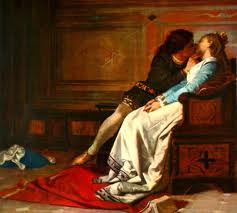
I was reading from Charles Dickens’ David Copperfield as I sat at the bed where my brother Al was lying; almost in a coma, I could only hear he’s breathing. We were in a hospital in a small town and doctors told me that there’s no chance because the tumour in his head was very vicious and predominant. I had no choice just sitting there beside him and read from one of his favourites…
“No, not a syllable! She answered, kissing me. “Oh, my dear, you never deserved it, and I love you far too well, to say a reproachful word to you, in earnest; it was all the merit I had, except being pretty– or you thought me so. Is it lonely, downstairs,Doady?“very! very!”Don’t cry! Is my chair there? “In its old place. ”
“Oh, how my poor boy cries! Hush, Hush! Now, make me one promise. I want to speak to Agnes. When you go downstairs, tell Agnes so, and send her up to me…….
“Agnes is downstairs when I go into the parlour, and I give her the message. She disappears, leaving me alone with Jip. His Chinese house is by the fire, and he lies within it, on his bed of flannel, querulously trying to sleep. The bright moon is high and clear. As I look out on the night my tears fall fast, and my undisciplined heart is chastened heavily, heavily.”
“I sit down by the fire, thinking with blind remorse of all those secret feelings I have nourished since my marriage, I think of every little trifle between me and Dora and feel the truth, that trifles make the sum of life. Ever rising from the sea of my remembrance, is the image of the dear child as I knew her first, graced by my young love, and by her own, with every fascination wherein such love is rich. Would it, indeed, have been better if we have loved each other as a boy and girl, and forgotten it? Undisciplined heart replayed!”
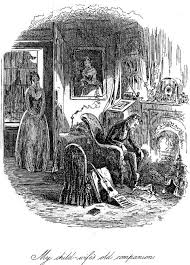
“How the time wears, I know not; until I am recalled by my child-wife’s old companion (Jip) more restless than he was, he crawled out of his house, and looks at me, and wanders to the door and whines to go upstairs. “Not tonight Jip, not tonight!” He comes very slowly back to me, licks my hand and lifts his dim eyes to my face; “Oh Jip, it may be, never again!“
“He lies down at my feet, stretched himself out as if to sleep, and with plaintive cry is dead… Oh Agnes! (she’s come down) Look, look here!”
“That face, so full of pity and of grief, that rain of tears, that awful mute appeal to me, that solemn hand upraised towards heaven! Agnes?”
“It’s over, darkness comes before my eyes, and for me a while, all things are blotted out of my remembrance.”
I began my tribute with a masterpiece from Dickens’ book not only because of its brilliance and impressive power of his literature but also for Al’s loved it so much and I add this as a present and am sure that he’d like it. I read this book the whole of the ten days in which we were both in this hospital till the time had come. At the end of the book, we were separated.
It’s thirteen years ago on this day as Al passed away and left this earth but strangely, I have a feeling that I have got much nearer to him as before. Am I closer to the line to change the level too? I don’t know but anyway, I am very happy about this closeness, it helps me to remember more and more about our time we were living and fighting together through those over fifty years of our life.
I wish you all you dear a leisure and peaceful weekend 💖🙏💖
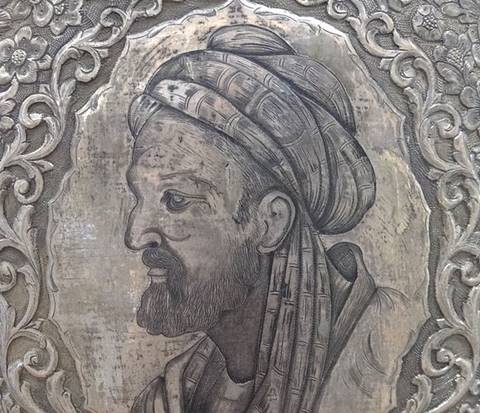
Avicenna was born in 980 in Samarkand and was the son of a Persian tax collector. A child still showed exceptional abilities and, at the age of ten, as it is said, was able to recite the entire Qur’an from his chest.
Abu-Ali- Sina or Avicenna (I’d prefer the latter) is famous enough, I think, but as I have seen and read the article of my Greek friend I was surprised about all treasures which had been come out from the orient into the west and how they were developed further in Europe but forgotten in the orient!
I am not wrong when I am just hearing from the most doctors here in the western countries that they have studied Avicenna and how genius was he.
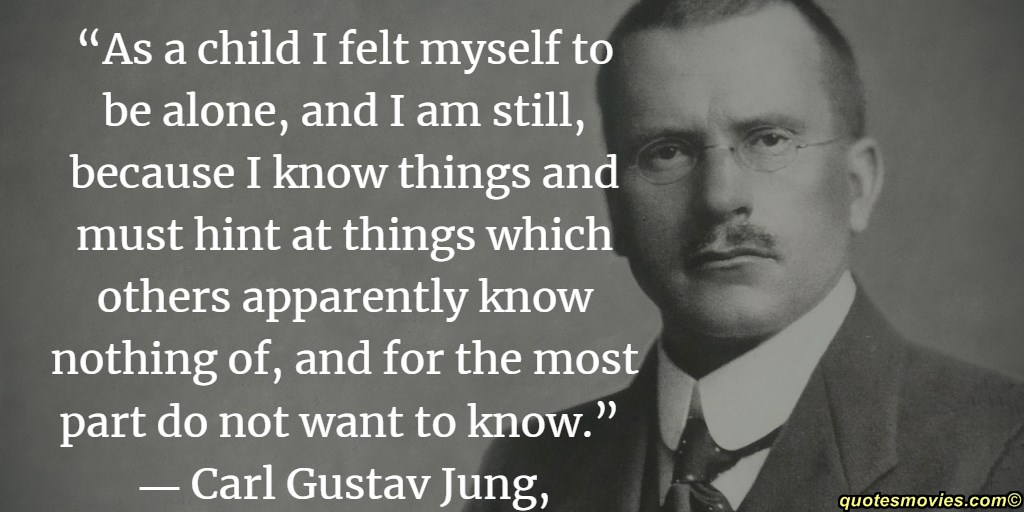
Anyway, I think my self that the Islam had done only a good thing; at the beginning, they ( the Arabs) were very tolerant, they wanted to have so many Muslims as the could have; therefore, they did put just a rule for everyone: say Allah is great and Mohamad is his prophet. that’s all. after it, all were free to do what they wanted. And that’s why so many recoveries happened in the orients. As Dr Jung says;
There’s all about the matter of thinking and thinking, again and again. No matter what the rulers or the religion rulers try to prove, you just have to let your mind fly freely, it finds a concept to know its way going forwards.
The article begins with; this one is after… I don’t know who’s first and who’s next but the main thing is; what remains.
His intellectual abilities quickly aroused interest and, after studying in Isfahan and Tehran, he was hired by various Muslim rulers, often with the office of vizier. This “profession” has almost always been extremely dangerous, especially at the time of the decline and fragmentation of the Arab Empire.
Avicenna experienced the usual professional dangers posed by political life in the Middle East: more than once he escaped the death penalty (hair), fell victim to ransom for ransom, and spent several periods of his life in dungeons or hiding.
Back then, however, as today, there were rewards: Avicenna spent a life in fame, wealth, countless women and, of course, countless wives. Despite the ban on wine by the Qur’an, it is said that Avicenna greatly benefited from wine during his lifetime.
It remains a mystery how, in the midst of all this, he managed to steal time for his in-depth and in-deeply spiritual pursuits. Perhaps, then, the prime ministers who lived a long life did not pretend to be dying at work.
In his scientific writings, Avicenna argued that a body, to the extent that no external force is exerted on it, remains motionless at the same point or continues to move in a straight line at the same speed. This is the first law of motion, and was formulated six hundred years before Newton.
He also pointed out the inextricable links between movement and time, using evocative poetic images. If every single object in the world was immovable, then time would be meaningless. (Einstein had to appear to prove mathematically the interconnection of space with time.)
In medicine, Avicenna is considered to be the greatest physician after Galen, the greatest intellectual of Roman times in this field, and Harvey, who was to discover the blood circulation in the seventeenth century.
Avicenna’s expertise was derived directly from the occult alchemical knowledge he had inherited from al-Razi, as well as from his own alchemical research. He believed, like al-Razi, that medicine was a science. In his view, chemical or mineral medicines were far superior to the herbs and superstitions that have prevailed since time immemorial. Avicenna had compiled a long list of chemicals, their effect when administered as drugs, and the diseases they were able to cure. This pharmaceutical company (in Greek it passed – with the name “Kanon”) soon became accepted as the standard project in relation to this subject.
Avicenna’s scientific and philosophical work was at times limited by political events. Being a vizier, he fell into disfavor with the Shah of Persia, but managed to save his life by hiding. He reappeared only when the shah became seriously ill and the doctors in the courtyard, in despair, claimed that only Avicenna could save his life. Thus, the presence of Avicenna was now very important and he received assurances of his safety.
When the shah was defeated in the state war, Avicenna’s mind was seen as an integral part of the spoils and, despite having led the Persian war effort, he was immediately forced to work for the enemy. (This is an early example of a tradition that did not cease to flourish until World War II, when Russians and Americans tried to capture and employ Germans who were researching missile science, despite their cooperation with the Nazis.)
In the meantime, he continued to expand his philosophical thinking as best he could. This, like his chemistry, was based on Aristotle’s misconceptions. It encountered some additional obstacles due to the theoretical schemes imposed by the ever-strengthening Islamic Orthodoxy. Without this narrow corset, Avicenna might well have developed a truly original philosophy. His thirst for philosophical and scientific knowledge was driven by a very modern sense of existential “question”, as evidenced by his poetry:
I wish I could find out who I am,
In the world what is what I ask for.
Although he invokes ignorance, Avicenna was not one of those who gladly tolerate stupidity, and the sharpness of his character did not give him many friends. He even dismissed his medical mentor, Al-Razi, claiming that his author would have done better if he had been limited to “urine and faecal analysis.”
Avicenna died in 1037, probably poisoned.
Within a few years, Avicenna’s philosophical and medical works were widely circulated throughout the Arab world. A copy of his Canon was found very far away, in the great library of Toledo, when the Spaniards recaptured the state from the Arabs in 1095.
But even earlier, his secrets had been smuggled into Europe by Constantine the African – one of those figures who abruptly invaded the stage of history and their name is associated with a remarkable act, as well as a few events that are alluded to, but also many more, leaving us to imagine the novel of a lifetime.
Constantine the African was probably born as a Muslim in Carthage and studied in Baghdad. One fine morning, mysteriously, he appeared at Salerno Medical School, carrying with him a copy of Avicenna’s pharmacy. After translating the work into something Latin without many claims, he became a Christian monk in Monte Cassino, where he died in 1087. In the following centuries, Avicenna’s work was to be the most widely read medical text in Europe, a work in progress. as a forerunner for modern pharmaceutical science.
Excerpt from Paul Strathern’s book “Mendeleev’s Dream.”
Happy Summer Solstice to all you dear friends. It’s surely a fiesta which we can find in many forms in many different cultures. I want to tell you a little about the Persians ceremony.
Tishtrya is the God of Summer Solstice of the Persian Paganism and also named Tir (in English: Arrow) that is the fifth month in the Persians calender and the first month of Summer. Tishtrya[pronunciation?] (Tištrya) or Roozahang is the Avestan language name of a Zoroastrian benevolent divinity associated with life-bringing rainfall and fertility. Tishtrya is Tir in Middle- and Modern Persian. As has been judged from the archaic context in which Tishtrya appears in the texts of the Avesta, the divinity/concept is almost certainly of Indo-Iranian origin. via; https://en.wikipedia.org/wiki/Tishtrya
Statue of Tir on Mt. Nemrut, present day Turkey. http://WikiPagan
Tir was a messenger of Aramazd (or Ahuramazda) The good or bright side of the Persians Gods (Ahriman was the dark side.) He was a fortune-teller and a guide of the dead person’s soul. Another name for Tir was Grogh (meaning writer or scribe), though this might be a fusion of two originally distinct deities.
But the Persian celebration is actually is in 13th of the month Tir, (the first July) called Tirgan; the midsummer festival.
The first month of summer is called Tir in the Persian language which translates into English as an arrow. Choosing this name was not an accident. There are many customs associated with the month of Tir, which itself is associated with the legend of the arrow.
Tirgan, the summer solstice celebrates the life of Arash Kamangir. Arash is an ancient Persian name which means bright and shining in English, and Kamangir in the Persian language means one who gets the arch. Arash was the Persian national hero who sacrificed his life to preserve the territorial integrity of Iran. (Look into; http://www.payvand.com/news/06/jul/1038.htmlThe Legend of Tir and the First Month of Summer in Persia, by Soudabeh Sadigh.)
Anahita; the Goddess of Water; Anahita is the ancient Persian goddess of fertility, water, health and healing, and wisdom. Owing to her association with life-giving properties, she also came to be connected with ancient Persian warfare as soldiers would pray to her for their survival before the battle.
Anahita/ɑːnəˈhiːtə/ is the Old Persian form of the name of an Iranian goddess and appears in complete and earlier form as Aredvi Sura Anahita (Arədvī Sūrā Anāhitā), the Avestan name of an Indo-Iranian cosmological figure venerated as the divinity of “the Waters” (Aban) and hence associated with fertility, healing and wisdom.There is also a temple named Anahita in Iran. Aredvi Sura Anahita is Ardwisur Anahid or Nahid in Middle and Modern Persian, and Anahit in Armenian.[1] An iconic shrine cult of Aredvi Sura Anahita was – together with other shrine cults – “introduced apparently in the 4th century BCE and lasted until it was suppressed in the wake of an iconoclastic movement under the Sassanids.”[2] via https://en.wikipedia.org/wiki/Anahita
On my search in the net, I came across an interesting Dame (a Jungian analyst) who connects this with the archetype in woman, by the goddess Anahita.
She is a Jungian Analyst who works with people (Anima, Feminine) more info; https://www.faranakmirjalili.net/about And here is her tell about the Persians Summer Solstice, the Goddess Anahita and her interpretations of her dreams.
Tishtriya: God of Summer Solstice in Persian Paganism
SUMMER SOLSTICE
AND THE ARCHETYPE OF TIR IN PERSIAN PAGANISM
‘Reverence be to the Star, Tishtriya, radiant and glorious whom the cattle and the beasts of burden and men eagerly remember when they happen to be deceived in their yearnings. Tishtriya travels to the holy sea – Vouru-kaŝa to soak the vapours for the rain clouds in the guise of a horse – magnificent, with yellow ears and golden decorative harness.’
– Tishtrya: Tir Yasht 8.5 in the sacred book of Zoroastrian religion
I find the symbol of a white horse is a wonderful idea, don’t you think so? http://Faranak Mirjalili
Remember how she said that we’ll meet again some sunny day…
Dame Vera Margaret Lynn CH DBE OStJ (née Welch; 20 March 1917 – 18 June 2020) was a British singer, songwriter and entertainer whose musical recordings and performances were largely popular during the Second World War. https://en.wikipedia.org/wiki/Vera_Lynn
I have got the news yesterday that Vera Lynn has been passed away. Honestly, I didn’t know she’s still alive although, she had lived very hidden from society.
Of course, she is a famous and very beloved singer and I’d say she was also one of the great helpers to win WWII with her encouragement and wonderful voice. Though, we have known her by Pink Floyd’ album “The Wall” as Roger Waters sang about her and one of her beautiful encouraging song; “We will Meet Again Some Sunny Day”
From that time we loved and appreciated her voice and have listened to her songs lovingly.
She was and is an Adorable Dame and will stay in our hearts forever 💖💖
Anyway, She died in her 103rd of her life and it is a good age for saying farewell. RIP dear Vera Lynn, I wish your soul calmness and blessing 🙏💖
Here I like to share this great song again because it is timeless. 😊💖
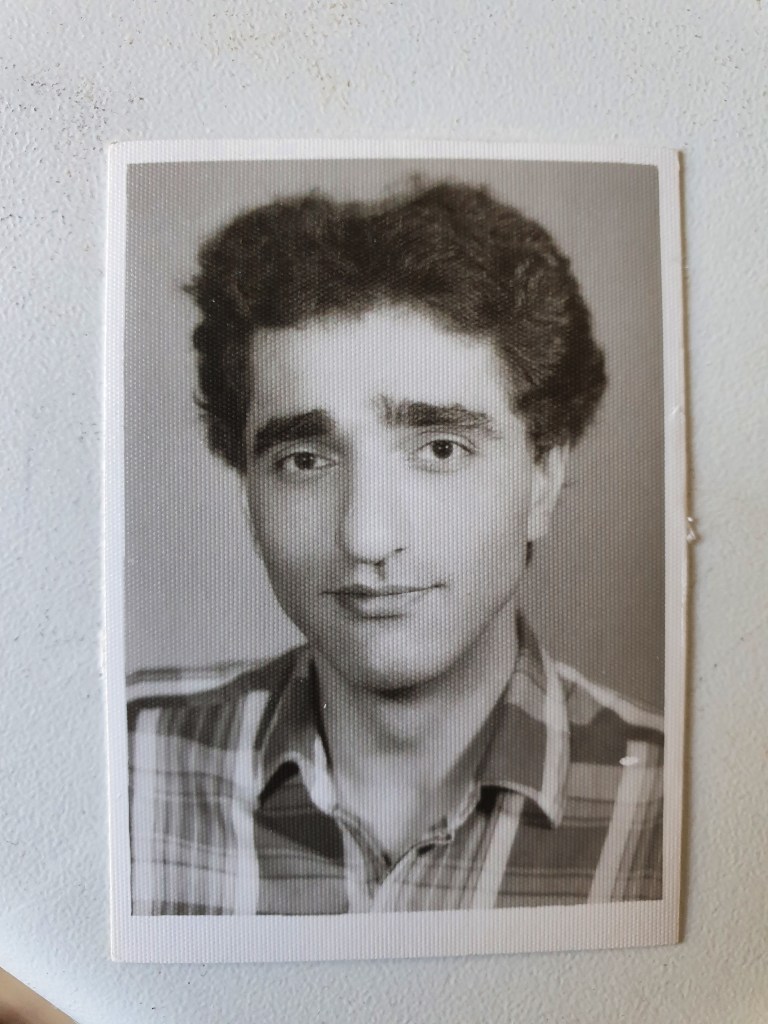
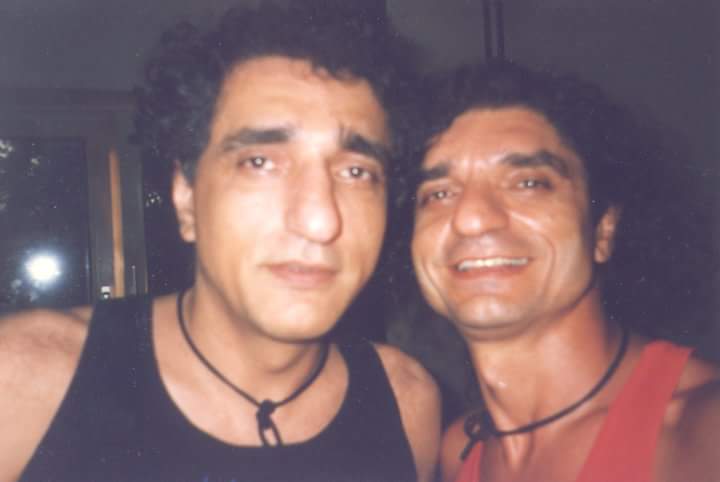
Let’s begin with this and its meaning; Love You! What would we mean to say these words? You have surely said it at least once in your life, don’t you? There might be some who deny it as I do believe I haven’t told this till I became convinced what it really meant; to me and the one whom it’s been meant. Al, my brother (sorry that I can’t write or think anything without thinking of him as he’s always by my sides.) He called me Data, in the memory of the robot; Data, in the TV series; Star-trek, Next Generation. Because he was a key for mankind to be able to control its feelings, though, he wished to be or at least can feel the human’s soul, he was the coolest creature in this series. You know, Al was an artist and totally sensitive as any genius artist is, therefore, he stunned about my coolness through my behaviour towards others. I am sure he liked my reactions, he was aware of his high sense of feelings and he had missed this coolness, he was very happy to have a couple to put this in when it’s needed.
Here he, on the left, trying his best to be cool
I must confess that it wasn’t so easy to be so cool, but I had to find the missing points in our way to handle with the outer world, society. It could actually be named love, don’t you think so? I have offered and sacrificed all my wishes to my brother, my love.
So but to see it essentially we must go back to the ancient thoughts; Greece. In history, if we begin with Greece, in a philosophical way, The Greeks had a third word for love: agape (ἀγάπη) unconditional love, charity. This can be best translated as a charitable love. … Having these three words to hand – eros (Body’s Lust), philia (a brotherly familiar love?) and agape (the charity)– powerfully extends our sense of what love really is. The Ancient Greeks were wise in dividing the blinding monolith of love into its constituent parts. Here are the seven kinds of love according to the ancient Greeks. Eros: Love of the body. Eros was the Greek God of love and sexual desire. … Philia: Love of the mind. … Ludus: Playful love. … Pragma: Longstanding love. … Agape: Love of the soul. … Philautia: Love of the self. … Storge: Love of the child. there’s a famous theory about why did Zeus split humans in half? how isn’t surely important! But it is an idea which can be thinkable; you are all in the search of our lost couple, trying to find someone whose smell, face, or even the voice remember you of some trusted lost one.
I myself, after so many searches on Love, finally came to this that Love means passion, forgiveness, wishing well; the all best one can do for one’s loving, not owning or occupying, just giving and enjoy the other’s happiness. Al would surely drop between and say; logical till to the end! It might be so, why not? Why we won’t consider love logically? I am sure that is possible; You love somebody it’s okay but what you want to earn by that, is it a negotiation for us or it is something else? To put it bluntly, I have a feeling sometimes that the peoples don’t love but to try to sell and earn something; negotiations!!
Just be honest, don’t you expect your lover gives you back what you give in? that is in my opinion Negotiations! And I have found out the Love is; not negotiations but just give without expectations… and send your love in her/his own way for fortune. Let’s Love wins 😊💖💖🙏
Na, what do you mean, if we just love, only love and nothing else, just love the happiness which we see in the expression of the one we love.
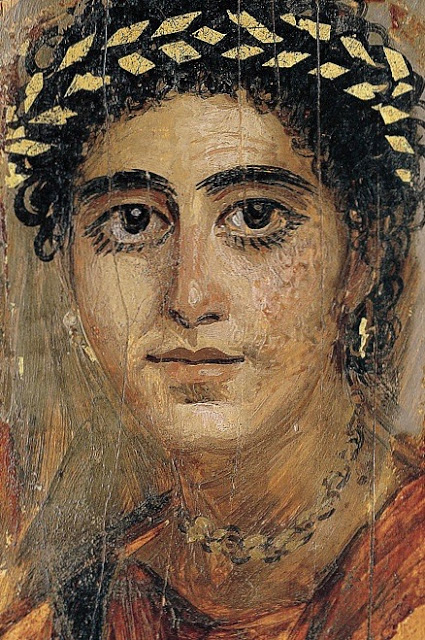
Portrait called “du Fayoum” representing a young woman in red Roman Egypt – 90 – 120 AD – Encaustic painting on the lime tree, gold leaf Acquired by the Metropolitan Museum of Art – Credit Line: Rogers Fund, 1909 – Accession Number: 09.181.6 at the antique dealer Maurice Nahman in Cairo in 1909 – Photo du Met
There’s no doubt that we men, might accept the loos comparing to women. Because, if we consider being on the same level with the female side, we can’t hold out with their beauty. Here another wonderful description of this beauty. by http://Marie Grillot
The features of this beautiful young woman are unquestionably “contemporary” … and yet, she lived over 19 centuries ago, when Egypt was “Roman” …
Her face is beautiful, interesting, it seems to question us beyond time … The slits which cross it, the cracks which gangrene the left cheek in no way tarnish its softness, nor alter its “presence”.
The complexion is treated in light tones … The mouth, with its slight asymmetry of the upper lip, is nicely drawn. The chin is barely bulging, the nose is thin…
As is often the case with this kind of portrait, our gaze is captivated by the gaze, animated by large almond-shaped eyes. The white of the cornea with its transparency so special is perfectly rendered, we almost seem to detect the outline of a tear … The dark iris and the pupil, very round, are marked with concentric circles. The expression of the look is serious but so alive …
Portrait called “du Fayoum” representing a young woman in red Roman Egypt – 90 – 120 AD – Encaustic painting on lime tree, gold leaf Acquired by the Metropolitan Museum of Art – Credit Line: Rogers Fund, 1909 – Accession Number: 09.181.6 at the antique dealer Maurice Nahman in Cairo in 1909 – Photo du Met
This gravity is accentuated by the dark arch of the thick eyebrows which faithfully follows the shape of the eyes. The lower lashes are materialized by fine, spaced and black lines that stand out against slightly grey rings. The upper edge of the eye is underlined with a line of “kohol” but the eyebrows are not treated individually. As for the corner of the eye, it is affirmed by a touch of fleeting paint.
The brown hair is styled in a multitude of fine, tight curls, which are a little freer at the level of temples and ears. A precise study of the hairstyles was made in order to refine the dating of these portraits of Fayoum; thus: “Loose loops around the face with corkscrew loops in front of the ears suggest a date of around 100-120 AD” (source “Ancient Faces”).
Portrait called “du Fayoum” representing a young woman in red Roman Egypt – 90 – 120 AD – Encaustic painting on the lime tree, gold leaf Acquired by the Metropolitan Museum of Art – Credit Line: Rogers Fund, 1909 – Accession Number: 09.181.6 at the antique dealer Maurice Nahman in Cairo in 1909 – Photo du Met
The hair is adorned with a golden crown, perfectly rendered by flat areas of gold leaf, which take the form of rectangles or diamonds.
The earrings, also covered with gold leaf, are difficult to identify … It could be two or three spaced pearls, arranged on an oblong rod, in gold, a model in fashion at that time … Quant its necklace, choker, it is made up of large gold links, round or oval …
She is dressed in a “clavi tunic” which must have been a vermilion red but whose hue has faded over time. We can see the drape of a coat, in the same tones. The lines of paint skillfully suggest the folds of the clothes as well as their superimposition.
“This portrait is painted in the Greek style: the head is seen in a three-quarter view with indications of volume and depth, and with reflections and shadows that suggest a single source of light. From the middle of the first About the same century, portraits of panels of this style were sometimes inserted on the faces of mummies. The custom was particularly widespread in the region of Fayoum in Egypt, where the population had a strong mixture of “Greek” “analysis” The Year One: Art of the Ancient World East and West “.
Dated from the very beginning of the Christian era (90 – 200 AD), this portrait is exhibited at the Metropolitan Museum of Art in New York (Accession Number: 09.181.6.) On their site, it is thus described: “The background of this portrait was originally gilded, underlining the divine status of the deceased young woman. She looks at the viewer with large serious eyes, accented by long eyelashes. A mass of loose curls covers her head and some strands fall along the nape of the neck on the left side. Framed by black hair, deeply shaded neck and dark red tunic, his brightly lit face is distinguished by an attractive youth, an impression which is accentuated by the crown of and sparkling jewellery “. Time has made the gilding go…
In the Louvre book “Portraits of Roman Egypt”, it is specified that: “The presence of gold on portraits painted on wood must reconcile divinity and individuality, consequently gold is never applied to the face. Thus, it can cover the frame surrounding the head of the deceased assimilated to Osiris-Dionysos, or cover the background on which the portrait stands out. Gold leaf is sometimes applied in contact with the skin, on the line which shares women’s hair or on their throats. “
Portrait called “du Fayoum” representing a young woman in red Roman Egypt – 90 – 120 AD – Encaustic painting on the lime tree, gold leaf Acquired by the Metropolitan Museum of Art – Credit Line: Rogers Fund, 1909 – Accession Number: 09.181.6 at the antique dealer Maurice Nahman in Cairo in 1909 – Photo du Met
This portrait is painted “encaustic”, on a linden plank with a height of 38.1 cm and a width of 18.4 cm.
The technique of this type of painting was as follows: the surface of the wood (lime, or even fig, cedar, sycamore) was previously smoothed and coated; the sketch was then executed in red or black. “Then the portrait was made using mineral and vegetable pigments linked with heated wax (encaustic), which allows a slow and meticulous work resulting in small close touches for the face, the neck and the hairstyle, the clothing being treated with large brush strokes. “
“Tempera” which uses a binder based on vegetable gum is also used. “It gives a flat and graphic character to the portrait and translates the model by a network of fine cross-hatching.” Sometimes the two techniques are wisely combined by the painter. The colours generally used are white, black, red, two ochres. Gold leaf is often applied, sometimes in the hair, sometimes in background colour and always to make the shine of adornments and jewellery.
The artists who produced these portraits were “itinerant” and never signed them; so they remained anonymous… but there is no doubt that the one who painted it was an excellent portrait painter!
We know almost nothing about this beautiful lady who lived in Fayoum during the 1st century AD. AD, except that it had to belong to a wealthy class because only the wealthy could afford quality funeral rituals… At that time, after being Greek, Egypt became Roman and cosmopolitan, mixing Egyptians, Greeks and Romans. The new “masters of the country” adopted the funeral customs of Pharaonic Egypt and the Romans introduced the art of portraiture.
How did she get into the great New York museum? This indicates that this man did it, thanks to the Rogers Fund in 1909 and also, it had been bought, the same year, in Cairo, by Maurice Nahman…
Maurice Nahman posing in front of his gallery in Cairo in the 1940s (photo from Galerie L’Ibis)
The “Who was Who in Egyptology” informs us that this man was born in Cairo in a line of bankers and that he will follow the family’s professional path. His retirement will then allow him to devote himself to his passion: antiques and, from 1890 to their trade. His reputation will be excellent and, in 1913, he will open a gallery at 24 Madebergh Street (now Sherif Street) in Cairo, where the biggest museums will come to stock …
This is how this beautiful lady from the old world set out for the New World…
Greetings from somehow deep in my retirement chair, I just wanna say; I’m getting used to it! Actually, these all days which have been passing by, I was a little confused on how to arrange all my time as a retired man but it seems that I get the thread in the hole. 😉
Let’s first update my situation; I could get my screws in my gums with no problems and got alive out of doctor’s office! Now I have to get some cover on these screws to be able to chew, but let it be this theme. (I don’t want to show any pics thereabout!) 😏😅🤣🤣
Anyway, my lovely daughter in law with some great help (not just a little as you will see) from my son (her desired man) was born a little sweet beautiful (what else😉) boy named Ilias.
Ilias
Although, these times were a hard test for us, grandma and grandpa, because, we had to care of Mila, the latter child; almost one and a half-year-old, and sometimes you will recognize how old you have become. At days playing all possibilities and at nights waking up by being called; Opa, Opa, (the German word for grandpa.) but I will do it again because I love her so that I want sometimes to eat her (also, she has to hurry up to grow!!) 😅😂😂
And the story of the birth; it was about 4;30 o’clock in the morning of Sunday 31th of May that the Telephone ringing woke us up and my son told that it seems he’s coming! My wife as she always is got quickly ready to take there for help. I (after some sitting with my close friend Jack Daniel’s, stayed at home😁) thought it would be all right and they’d get to the hospital but after about two hours, she came back with Mila and told me excitedly; the baby has been born!!
I was naturally stunned and asked; how could it be possible? She said that when she came in, the birth pangs had already begone and the mother just shouting “it comes!!” My son has just done something remarkable, he had called emergency and they guided him to give birth to the baby himself till they come. And I am very proud of my son Raphael, who very cool, as my wife described, had operated the action.
Now I have two grandchildren and also retired but to put it bluntly, I don’t feel like as…
Opa + Ilias + Mother in the background
So! This video, in the matter of fact. Regina, my adorable wife, had sent me this video clip as she knew by herself that sometimes the retired men need some rest for nothing to do… she is really fair, though /// 😉🤣😍💖🙏
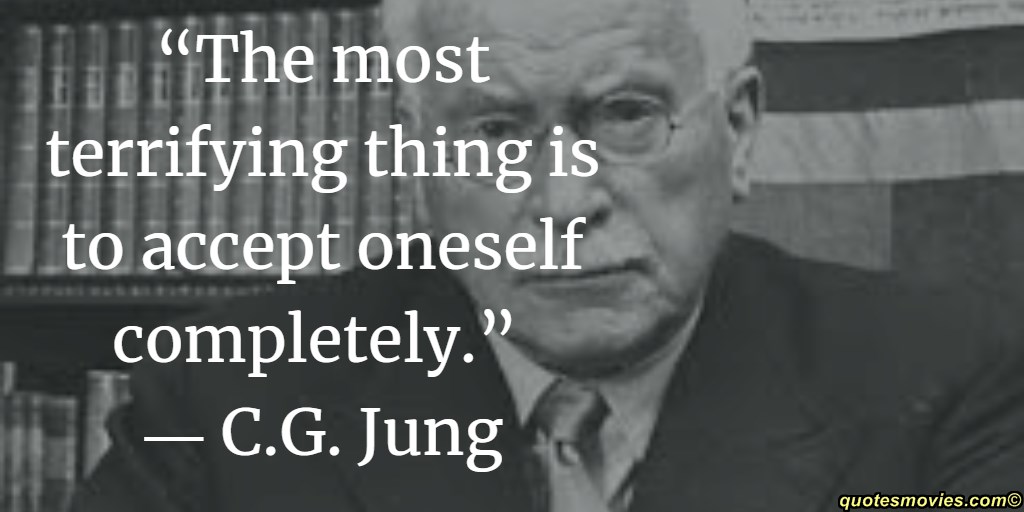
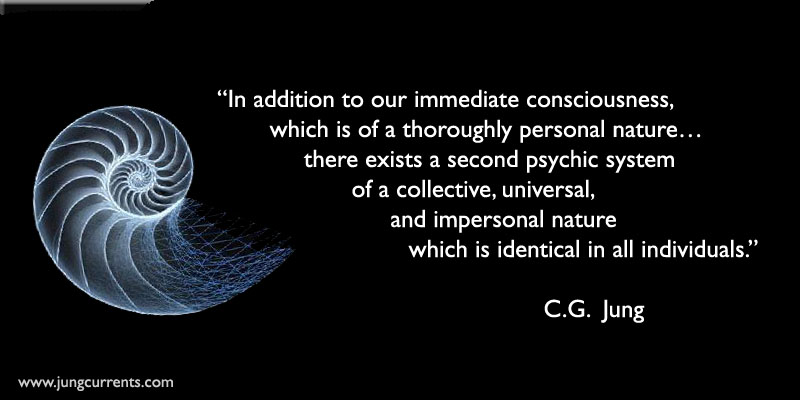
Dr Carl Gustav Jung on this day, in the year of 1961, has left the earth. it is surely not something new for his admirers. I have become one of them in my youth, of course with a little help from Al, my brother.😉🙏💖
Those days, we were both interested in psychology which had been founded by Sigmund Freud and thereafter, as we got to know Jung and his open-minded theories, were much more fascinated.
There is no doubt that what has this genius done in the way of knowing our inner soul is not less than any pioneer humanistic.
Jung believed that the collective unconscious is made up of instincts and archetypes, that manifest basic and fundamental pre-existing images, symbols or forms, which are repressed by the conscious mind. Humans may not consciously know of these archetypes, but they hold strong feelings about them. via https://www.verywellmind.com/what-is-the-collective-unconscious-2671571
Here I share one of his latest interviews about the Believe and the Death. He will always remain a great teacher for me. Thank you. 🙏💖💖🙏
The audio might be not hearable, here is the text of his words to read; with Thanks 🙏🙏 This dialouge was written down by kierah16. She has her own channel here on youtube. Thank you very much, Kierah16. Interviewer: I know that you say death is psychologically just as important as birth and like it is an integral part of life, but surely, it can’t be like birth if it is an end. Can it? Jung: Yes. If it is an end and there we are not quite certain about this end because we know that there are these pecular faculties of the psyche- that it isn’t entirely confined to space and time. You can have dreams or visions of the future. You can see around corners and such things. Only igonrants deny these facst (ja – german). Its quite evident that they do exist and have existed always. Now these facts show that the psyche- in part, at least- is not dependent on these confinements. And then what? When the psyche is not under that obligation to….live in time and space alone- and obviously, it doesn’t. Then, in .. to that extent, they psyche is not submitted to those laws and that means a..a practical continuation of life of a sort of psychical existence beyond time and space. Interviewer: Do you- yourself believe that death is probably the end or do you believe…. Jung: Well, I can’t say – wissen Sie ? (german translated wold be: you see ?)- the word “believe” is a difficult thing for me. I don’t “believe”; I must have a reason for a certain hypothesis. Either I know a thing; and when I KNOW it, I don’t need to believe it. If I- I don’t allow myself, for instance, to believe a thing just for sake of believing it. I can’t believe it! But when there are sufficient reasons for a certain hypothesis, I shall accept these reasons naturally. And to say “We have to recon with the possibility of [so and so].” You know? Interviewer: Well…now you told us that we should regard death as being a goal and to stray away from it is to evade life and life’s purpose. What advice would you give to people in their later life to enable them to do this when most of them must, in fact, believe that death is the end of everything? Jung: Well…you see I have treated many old people and its quite interesting to watch what their conscious doing with the fact that it is apparantly threatened with the complete end. It disregards it. Life behaves as if it were going on and so I think it is better for old people to live on…to look forward to the next day; as if he had to spend centuries and then he lives happily, but when he is afraid and he doesn’t looks forward; he looks back. He petrifies. He gets stiff and he dies before his time, but when hes living on, looking forward to the great adventture that is ahead, then he lives. And that is about what your concious is intending to do. Of course it is quite obvious that we’re all going to die and this is the sad finale of everything, but never-the-less, there is something in us that doesn’t believe it, apparently, but this is merely a fact, a psychological fact. Doesn’t mean to me that it proves something. It is simply so. For instance, I may not know why we need salt, but we prefer to eat salt too because we feel better. And so when you think in a certain way, you may feel considerably better. And I think if you think along the lines of nature, then you think properly.
As I can remember me; at the beginning of WWW at the end of 80’s in Germany, there was an exciting on the way. For me, unfortunately, there was not much opportune to be busy with this newcomer because, I had to work to get money for all these costs but Al, my brother was fully employed with this phenomenon and I had to say it; it was my goal.
It was the time of running slowly and take your time! The time of running modem in the taking of 53 KB. and try to get the music Napster… I will never forget how Al complained; It is damn slow!!
Anyhow, in those days, He had shown me once a shit of paper about the; Philosophical view of the religious way of thinking. this paper I have lost or couldn’t find, but I could gather together something similar to share here, might the force be with you, enjoy:
The story of “Strawberry Fields Forever” is more or less the story in miniature of the Beatles’ reinvention after they swore off touring in 1966 and disappeared into the studio to make their most innovative albums. It was not, as some Beatles fans might remember, an easy transition right away. Some of their fans, it turned out, were fickle, easily swayed by gossip as the latest TV trends. “While unsubstantiated break-up rumors swirled, some music fans became disenchanted with the group,” writes Ultimate Classic Rock. “You need only watch a 1967 clip from American Bandstand to see how many teenagers in the audience thought the Beatles were has-beens.”
Eager to get something out and fight the whims of fashion, Parlophone and Capitol both released John Lennon’s latest, “Strawberry Fields Forever,” with Paul McCartney’s “Penny Lane” as the B-side, in 1967. Since the band no longer toured, they were “directed to make film clips to accompany each song and promote the single.”
Here, they debuted their new psychedelic look, and in the singles they demonstrated the new direction their music would go. Thematically, both songs are nostalgic trips through childhood, with Lennon taking a mystical, psych-rock approach and McCartney diving headlong into his sentimental music hall ambitions.
“Strawberry Fields Forever” also firmly established the band as studio wizards, thanks to the wizardry, primarily, of George Martin. In the video at the top from You Can’t Unhear This, we learn just what a marvel—as a technical achievement—the band’s new single was at the time, containing “the craziest edit in Beatles history.” The song itself went through a very lengthy gestation period, as Colin Fleming details in Rolling Stone, from sketchy, ghostly early acoustic demoes called “It’s Not Too Bad” (below) to the wild cacophony of crashing rhythms and looping melodies it would become.
Recording take after take, the band spent 55 hours in the studio working on “Strawberry Fields Forever.” Nothing seemed to satisfy Lennon, though he was leaning toward a darker, heavier take, Fleming notes:
This was a version approaching proto-metal. Lennon couldn’t decide if he wanted to go the ethereal route, or the stomping one, and famously told George Martin to combine the two versions. This was less than practical.
“Well, there are two things against it,” Martin informed Lennon. “One is that they’re in different keys. The other is that they’re in different tempos.”
But for a man who had started his most personal, honest musical journey, within the parameters of a single song, back in Spain, this was merely part of the process.
“You can fix it, George,” Lennon concluded, and that was that, with Martin now tasked with finding a solution to a problem that seemingly violated the laws of musical physics.
Martin’s solution involved slowing one version down and speeding up the other until they were close enough in pitch that “only a musicologist, really, would know that there was that much of a difference,” Fleming writes. Speeding up and slowing down tracks was common practice in the studio, and is today, but given the incredible number of instruments and amount of overdubbing that went into making “Strawberry Fields,” the endeavor defied the logic of what was technologically possible at the time.
While the time spent on the song might seem extravagant, we should consider that these days bands can pluck the sounds they want, whatever they are, from pull-down menus, and splice anything together in a matter of minutes. In the mid-60s, Brian Jones, Brian Wilson, Jimi Hendrix, the Beatles and other studio pioneers dreamed up sounds no one had heard before, and brought together instrumentation that had never shared space in a mix. Producers and engineers like Martin had to invent the techniques to make those new sounds come together on tape. Learning the ins-and-outs of how Martin did it can give even the most die-hard Beatles fans renewed appreciation for songs as widely beloved as “Strawberry Fields Forever.”









:format(jpeg):mode_rgb():quality(90)/discogs-images/A-377937-1494516540-8984.bmp.jpg)










 lampmagician
You must be logged in to post a comment.