There’s no doubt that any thinker is somehow fascinated over this man; Nietzsche. As I once in my youth was interested in Philosophy, after struggling to understand Socrates by Plato, got a book about the story of philosophy; by Will Durant ” William James “Will” Durant ” of course translated in Persian, by Abbas Zirab-Khuii, a great historian and translator in Iran, from Plato to the new world philosophers like William James. You can imagine the situation for a young man about 20 years old, to handle all these new thoughts (for me of course!) and to process with.
Anyway, one of these highly recommended geniuses was Friedrich Nietzsche, who got my not only thoughts but also soul occupied or more engaged to keep thinking about him and to understand this madness!
I adore Socrates and I love Espinoza and I’d stared in front of Schuppenhauer but Nietzsche makes me crazy!! his determination over “Selbstüberwindung” overcome self, or “übermensch” Superman. or his desperation about God’s creation;
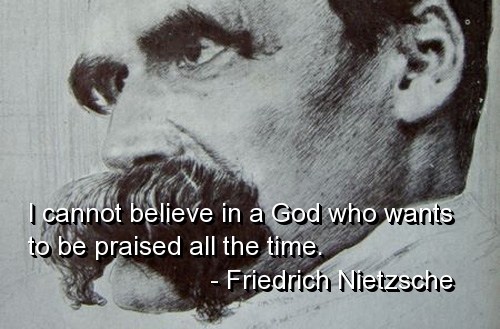
or his doubt of a God who wants to be adored;
or “Sklavenmoral” slave morality. especially the latest; I was and am also against this term; Moral or Morality, this is a social problem! as history tells us, the moral has been changing all through the time especially, in the time of wars in according with the situation. I prefer to use “Conscience” as in German: “Gewissen”; that has nothing to do with the mass, it is individual, it is the self; you with you yourselves conscience, and nobody else.
There’s no shame if you’ve never known how to pronounce Friedrich Nietzsche’s name correctly. Even less if you never remember how to spell it. If these happen to be the case, you may be less than familiar with his philosophy. Let Alain de Botton’s animated School of Life video briefly introduce you, and you’ll never forget how to say it: “Knee Cha.” (As for remembering the spelling, you’re on your own.) You’ll also get a short biography of the disgruntled, dyspeptic German philosopher, who left a promising academic career at the University of Basel in his mid-20s and embarked to the Swiss Alps to write his violently original books in solitude before succumbing to a mental breakdown at 44 when he saw a cart driver beating a horse.
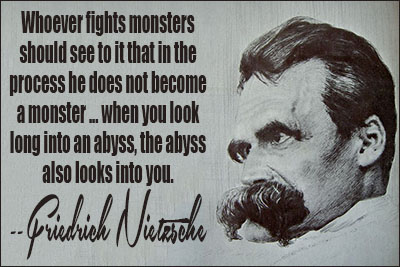
Nietzsche died after remaining almost entirely silent for 11 years. In these years and after his death, thanks to the machinations of his sister Elizabeth, his thought was twisted into a hateful caricature. He has since been rehabilitated from associations with the Nazis, but he still calls up fear and loathing for many people because of his relentless critiques of Christianity and reputation for staring too long into abysses. Maybe we can’t help but hear fascistic overtones in his concept of the ubermensch, and his ideas about slave morality can make for uncomfortable reading. Those steeped in Nietzsche’s thought may not feel that de Botton’s commentary gives these ideas their proper critical due.
Likewise, Nietzsche himself is treated as something of an ubermensch, an approach that pulls him out of his social world. Important figures who had a tremendous impact on his personal and intellectual life—like Arthur Schopenhauer, Richard and Cosima Wagner, Lou Salomé, and Nietzsche’s sister—don’t even receive a mention. But this is a lot to ask from a six-minute summary. De Botton hits some of philosophical highlights and explains some misconceptions. Yes, Nietzsche held no brief for Christianity at all, but this was because it caused tremendous suffering, he thought, by making people morally stunted and bitterly resentful.
Instead, he argued, we should embrace our desires, and use so-called sinful passions like envy to leverage our ambitions. Nietzsche is not a seducer, corrupting the youth with promises of greatness. You may very well fail, he admitted, and fail miserably. But to deny yourself is to never become who you are. Nietzsche scholar Babette Babich has described this aspect of the philosopher’s thought as the ethics of the supportive friend. She quotes David B. Allison, who writes that Nietzsche’s advice comes to us “like a friend who seems to share your every concern—and your aversions and suspicions as well. Like a true friend, he rarely tells you what you should do.”
Except that he often does. Babich also writes about Nietzsche as educator, and indeed he considered education one of the highest human goods, too precious to be squandered on those who do not appreciate it. His philosophy of education is consistent with his views on culture. Since God is Dead, we must replace scripture and liturgy with art, literature, and music. So far, so many a young Nietzsche enthusiast, pursuing their own form of Nietzschean education, will be on board with the philosopher’s program.
But as de Botton also explains, Nietzsche, who turned Dionysus into a philosophical ideal, might have issued one prescription too many for the average college student: no drinking. If that’s too much to stomach, we should at least take seriously that stuff about staring into abysses. Nietzsche meant it as a warning. Instead, writes Peter Prevos at The Horizon of Reason, “we should go beyond staring and bravely leap into the boundless chasm and practice philosophical base jumping.” No matter how much Nietzsche you read, he’s never going to tell you that means. We only become who we are, he suggests, when we figure it on our own.
Reducing an artist’s work to their biography produces crude understanding. But in very many cases, life and work cannot be teased apart. This applies not only to Sylvia Plath and her contemporary confessional poets but also to James Joyce and Marcel Proust and writers they admired, like Dante and Cervantes.
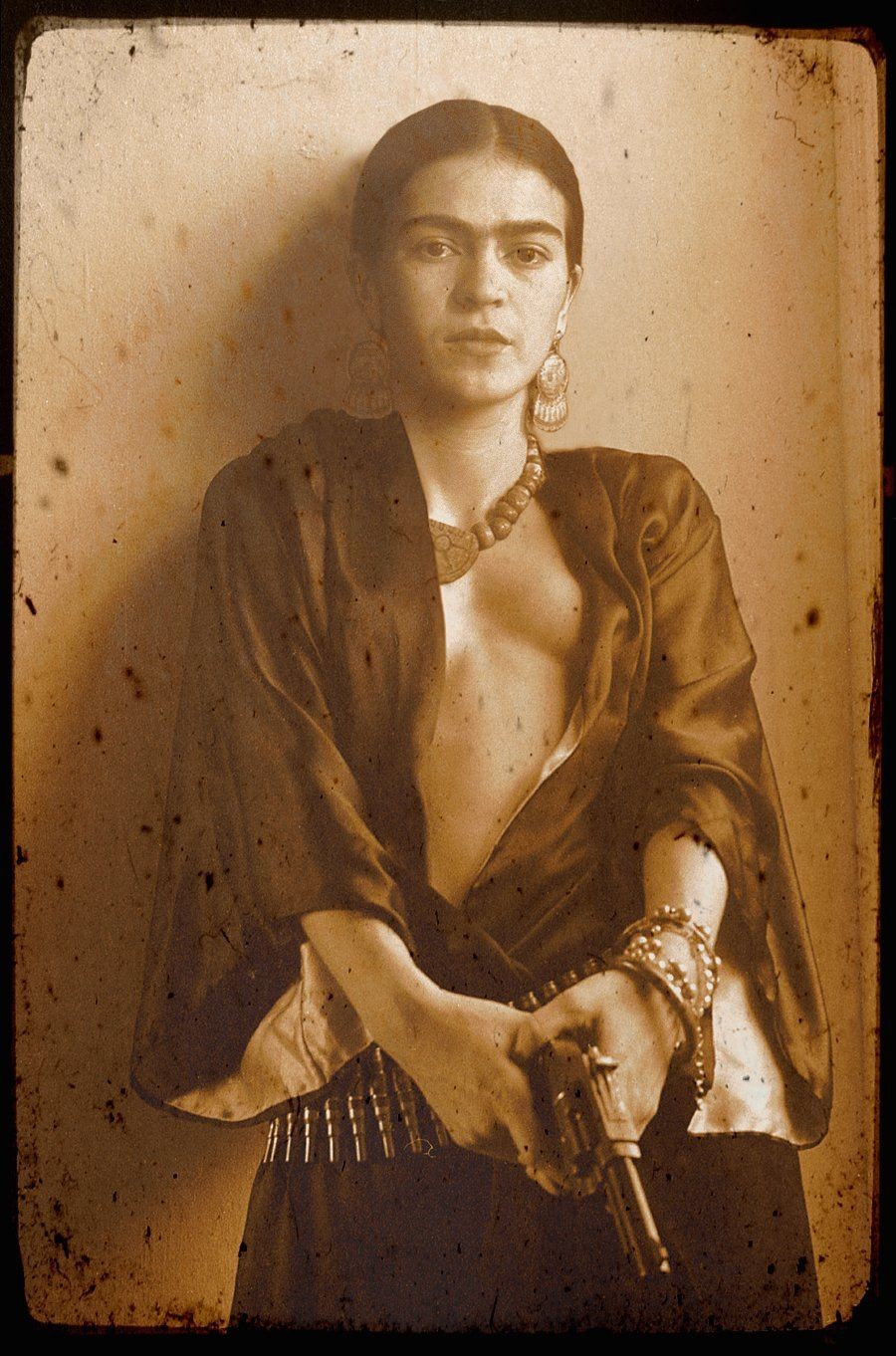
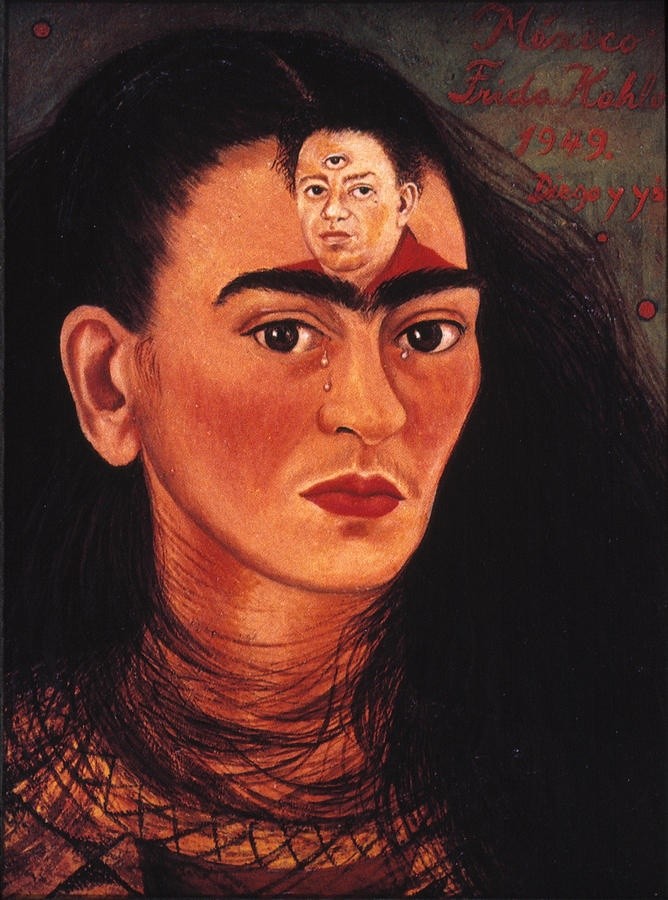
Such an artist too is Frida Kahlo, a practitioner of narrative self-portraits in a modernizing idiom that at the same time draws extensively on tradition. The literary nature of her art is a subject much neglected in popular discussions of her work. She wrote passionate, eloquent love poems and letters to her husband Diego Rivera and others, full of the same kind of visceral, violent, verdant imagery she deployed in her paintings.
More generally, the “obsession with Kahlo’s biography,” writes Maria Garcia at WBUR, ends up focusing “almost voyeuristically—on the tragic experiences of her life more than her artistry.” Those terribly compounded tragedies include surviving polio and, as you’ll learn in Iseult Gillespie’s short TED-Ed video above, a bus crash that nearly tore her in half. She began painting while recovering in bed. She was never the same and lived her life in chronic pain and frequent hospitalizations.
Perhaps a certain cult of Kahlo does place morbid fascination above real appreciation for her vision. “There’s a compulsion that’s satiated only through consuming Kahlo’s agony,” Garcia writes. But it’s also true that we cannot reasonably separate her story from her work. It’s just that there is so more to the story than suffering, all of it woven into the texts of her paintings. Kahlo’s mythology, or “inspirational personal brand,” ties together her commitments to Marxism and Mexico, indigenous culture, and native spirituality.
Like all self-mythologizing before her, she folded her personal story into that of her nation. And unlike European surrealists, who “used dreamlike images to explore the unconscious mind, Kahlo used them to represent her physical body and life experiences.” The experience of disability was no less a part of her ecology than mortality, symbolic landscapes, floral tapestries, animals, and the physically anguished experiences of love and loss.
Generous approaches to Kahlo’s work, and this short overview is one of them, implicitly recognize that there is no need to separate the life from the work, to the extent that the artist saw no reason to do so. But also, there is no need to isolate one narrative theme, whether intense physical or emotional suffering, from themes of self-transformation and transfiguration or experiments in re-creating personal identity as a political act.
Or; I believe every Artists: Male or Female, need a Guardian Angel 😉
a happy end? I couldn’t imagine in the life of the great genius; Dostoyevsky, as I almost have grown up with his works (among the others 😉 ) I felt that he was, almost in his life, trying to focus the dark side of the human being;
“Happy? But I haven’t had any happiness yet. At least, not the kind of happiness I always dreamed of. I am still waiting for it.”
For example; when I read the Charles Dickens works, I got to know his abilities and his observation on the humans, that is genial knowledge over their soul but he was not so pointing on the dark side of us as Dostoyevsky tried to explore. I have learned a lot about my dark side as I read his book
Here I have the presence of light side, which it happens in his true life, and of course with the help of a wonderful woman “what else” who understood him better than any others. I knew just a few great artists who were so lucky to find their Guardian Angel; among Charles Dickens, my father was also so lucky; a pity that he had noticed it deeply at his last night on this Earth and how I wish if my brother could be so as well… what a pity!
Anyway, let’s read this wonderful story with the stunnishing happy end. 🙂
In the summer of 1865, just after he began writing Crime and Punishment, the greatest novelist of all time hit rock bottom. Recently widowed and bedevilled by epilepsy, Fyodor Dostoyevsky (November 11, 1821–February 9, 1881) had cornered himself into an impossible situation. After his elder brother died, Dostoyevsky, already deeply in debt on account of his gambling addiction, had taken upon himself the debts of his brother’s magazine. Creditors soon came knocking on his door, threatening to send him to debtors’ prison. (A decade earlier, he had narrowly escaped the death penalty for reading banned books and was instead exiled, sentenced to four years at a Siberian labour camp — so the prospect of being imprisoned was unbearably terrifying to him.) In a fit of despair, he agreed to sell the rights to an edition of his collected works to his publisher, a man named Fyodor Stellovsky, for the sum of his debt — 3,000 rubles, or around $80,000 in today’s money. As part of the deal, he would also have to produce a new novel of at least 175 pages by November 13 of the following year. If he failed to meet the deadline, he would lose all rights to his work, which would be transferred to Stellovsky for perpetuity.
Only after signing the contract did Dostoevsky find out that it was his publisher, a cunning exploiter who often took advantage of artists down on their luck, who had purchased the promissory notes of his brother’s debt for next to nothing, using two intermediaries to bully Dostoyevsky into paying the full amount. Enraged but without recourse, he set out to fulfil his contract. But he was so consumed with finishing Crime and Punishment that he spent most of 1866 working on it instead of writing The Gambler, the novel he had promised Stellovsky. When October rolled around, Dostoyevsky languished at the prospect of writing an entire novel in four weeks.
Portrait of Fyodor Dostoyevsky by Vasily Perov, 1871
His friends, concerned for his well-being, proposed a sort of crowdsourcing scheme — Dostoyevsky would come up with a plot, they would each write a portion of the story, and he would then only have to smooth over the final product. But, a resolute idealist even at his lowest low, Dostoyevsky thought it dishonourable to put his name on someone else’s work and refused.
There was only one thing to do — write the novel, and write it fast.
On October 15, he called up a friend who taught stenography, seeking to hire his best pupil. Without hesitation, the professor recommended a young woman named Anna Grigoryevna Snitkina. (Stenography, in that era, was a radical innovation and its mastery was so technically demanding that of the 150 students who had enrolled in Anna’s program, 125 had dropped out within a month.)
Twenty-year-old Anna, who had taken up stenography shortly after graduating from high school hoping to become financially independent by her own labor, was thrilled by the offer — Dostoyevsky was her recently deceased father’s favorite author, and she had grown up reading his tales. The thought of not only meeting him but helping him with his work filled her with joy.
The following day, she presented herself at Dostoyevsky’s house at eleven-thirty, “no earlier and no later,” as Dostoyevsky had instructed — a favorite expression of his, bespeaking his stringency. Distracted and irritable, he asked her a series of questions about her training. Although she answered each of them seriously and almost dryly, so as to appear maximally businesslike, he somehow softened over the course of the conversation. By the early afternoon, they had begun their collaboration on the novel — he, dictating; she, writing in stenographic shorthand, then transcribing at home at night.
For the next twenty-five days, Anna came to Dostoyevsky’s house at noon and stayed until four. Their dictating sessions were punctuated by short breaks for tea and conversation. With each day, he grew kinder and warmer toward her, and eventually came to address her by his favorite term of endearment, “golubchik” — Russian for “little dove.” He cherished her seriousness, her extraordinary powers of sympathy, how her luminous spirit dissipated even his darkest moods and lifted him out of his obsessive thoughts. She was touched by his kindness, his respect for her, how he took a genuine interest in her opinions and treated her like a collaborator rather than hired help. But neither of them was aware that this deep mutual affection and appreciation was the seed of a legendary love.
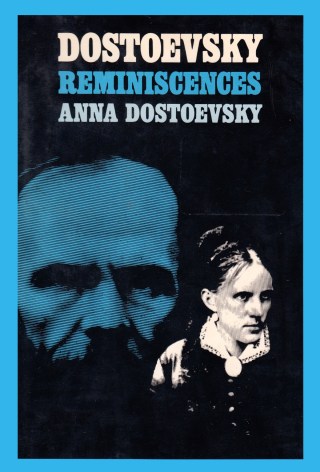
In her altogether spectacular memoir of marriage, Dostoevsky Reminiscences(public library), Anna recounts a prescient exchange that took place during one of their tea breaks:
Each day, chatting with me like a friend, he would lay bare some unhappy scene from his past. I could not help being deeply touched at his accounts of the difficulties from which he had never extricated himself, and indeed could not.
[…]
Fyodor Mikhailovich always spoke about his financial straits with great good nature. His stories, however, were so mournful that on one occasion I couldn’t restrain myself from asking, “Why is it, Fyodor Mikhailovich, that you remember only the unhappy times? Tell me instead about how you were happy.”
“Happy? But I haven’t had any happiness yet. At least, not the kind of happiness I always dreamed of. I am still waiting for it.”
Little did either of them know that he was in the presence of that happiness at that very moment. In fact, Anna, in her characteristic impulse for dispelling the darkness with light, advised him to marry again and seek happiness in family. She recounts the conversation:
“So you think I can marry again?” he asked. “That someone might consent to become my wife? What kind of wife shall I choose then — an intelligent one or a kind one?”
“An intelligent one, of course.”
“Well, no… if I have the choice, I’ll pick a kind one, so that she’ll take pity on me and love me.”
While we were on the theme of marriage, he asked me why I didn’t marry myself. I answered that I had two suitors, both splendid people and that I respected them both very much but did not love them — and that I wanted to marry for love.
“For love, without fail,” he seconded me heartily. “Respect alone isn’t enough for a happy marriage!”
Their last dictation took place on November 10. With Anna’s instrumental help, Dostoyevsky had accomplished the miraculous — he had finished an entire novel in twenty-six days. He shook her hand, paid her the 50 rubles they had agreed on — about $1,500 in today’s money — and thanked her warmly.
The following day, Dostoyevsky’s forty-fifth birthday, he decided to mark the dual occasion by giving a celebratory dinner at a restaurant. He invited Anna. She had never dined at a restaurant and was so nervous that she almost didn’t go — but she did, and Dostoyevsky spent the evening showering her with kindnesses.
But when the elation of the accomplishment wore off, he suddenly realized that his collaboration with Anna had become the light of his life and was devastated by the prospect of never seeing her again. Anna, too, found herself sullen and joyless, her typical buoyancy weighed down by an acute absence. She recounts:
I had grown so accustomed to that merry rush to work, the joyful meetings and the lively conversations with Dostoyevsky, that they had become a necessity to me. All my old activities had lost their interest and seemed empty and futile.
Unable to imagine his life without her, Dostoyevsky asked Anna if she would help him finish Crime and Punishment. On November 20, exactly ten days after the end of their first project, he invited her to his house and greeted her in an unusually excited state. They walked to his study, where he proceeded to propose marriage in the most wonderful and touching way.
Dostoyevsky told Anna that he would like her opinion on a new novel he was writing. But as soon as he began telling her the plot, it became apparent that his protagonist was a very thinly veiled version of himself, or rather of him as he saw himself — a troubled artist of the same age as he, having survived a harsh childhood and many losses, plagued by an incurable disease, a man “gloomy, suspicious; possessed of a tender heart … but incapable of expressing his feelings; an artist and a talented one, perhaps, but a failure who had not once in his life succeeded in embodying his ideas in the forms he dreamed of, and who never ceased to torment himself over that fact.” But the protagonist’s greatest torment was that he had fallen desperately in love with a young woman — a character named Anya, removed from reality by a single letter — of whom he felt unworthy; a gentle, gracious, wise, and vivacious girl whom he feared he had nothing to offer.
Only then did it dawn on Anna that Dostoyevsky had fallen in love with her and that he was so terrified of her rejection that he had to feel out her receptivity from behind the guise of fiction.
Is it plausible, Dostoyevsky asked her, that the alleged novel’s heroine would fall in love with its flawed hero? She recounts the words of literature’s greatest psychological writer:
“What could this elderly, sick, debt-ridden man give a young, alive, exuberant girl? Wouldn’t her love for him involve a terrible sacrifice on her part? And afterwards, wouldn’t she bitterly regret uniting her life with his? And in general, would it be possible for a young girl so different in age and personality to fall in love with my artist? Wouldn’t that be psychologically false? That is what I wanted to ask your opinion about, Anna Grigoryevna.”
“But why would it be impossible? For if, as you say, your Anya isn’t merely an empty flirt and has a kind, responsive heart, why couldn’t she fall in love with your artist? What if he is poor and sick? Where’s the sacrifice on her part, anyway? If she really loves him, she’ll be happy, too, and she’ll never have to regret anything!”
I spoke with some heat. Fyodor Mikhailovich looked at me in excitement. “And you seriously believe she could love him genuinely, and for the rest of her life?”
He fell silent, as if hesitating. “Put yourself in her place for a moment,” he said in a trembling voice. “Imagine that this artist — is me; that I have confessed my love to you and asked you to be my wife. Tell me, what would you answer?”
His face revealed such deep embarrassment, such inner torment, that I understood at long last that this was not a conversation about literature; that if I gave him an evasive answer I would deal a deathblow to his self-esteem and pride. I looked at his troubled face, which had become so dear to me, and said, “I would answer that I love you and will love you all my life.”
I won’t try to convey the words full of tenderness and love that he said to me then; they are sacred to me. I was stunned, almost crushed by the immensity of my happiness and for a long time I couldn’t believe it.
Fyodor and Anna were married on February 15, 1867, and remained besotted with one another until Dostoyevsky’s death fourteen years later. Although they suffered financial hardship and tremendous tragedy, including the death of two of their children, they buoyed each other with love. Anna took it upon herself to lift the family out of debt by making her husband Russia’s first self-published author. She studied the book market meticulously, researched vendors, masterminded distribution plans, and turned Dostoyevsky into a national brand. Today, many consider her Russia’s first true businesswoman. But beneath her business acumen was the same tender, enormous heart that had made loving room within itself for a brilliant man with all of his demons.
In the afterword to her memoir, Anna reflects on the secret to their deep and true marriage — one of the greatest loves in the history of creative culture:
Throughout my life it has always seemed a kind of mystery to me that my good husband not only loved and respected me as many husbands love and respect their wives, but almost worshipped me, as though I were some special being created just for him. And this was true not only at the beginning of our marriage but through all the remaining years of it, up to his very death. Whereas in reality I was not distinguished for my good looks, nor did I possess talent nor any special intellectual cultivation, and I had no more than a secondary education. And yet, despite all that, I earned the profound respect, almost the adoration of a man so creative and brilliant.
This enigma was cleared up for me somewhat when I read V.V. Rozanov’s note to a letter of Strakhov dated January 5, 1890, in his book Literary Exiles. Let me quote:
“No one, not even a ‘friend,’ can make us better. But it is a great happiness in life to meet a person of quite different construction, different bent, completely dissimilar views who, while always remaining himself and in no wise echoing us nor currying favor with us (as sometimes happens) and not trying to insinuate his soul (and an insincere soul at that!) into our psyche, into our muddle, into our tangle, would stand as a firm wall, as a check to our follies and our irrationalities, which every human being has. Friendship lies in contradiction and not in agreement! Verily, God granted me Strakhov as a teacher and my friendship with him, my feelings for him were ever a kind of firm wall on which I felt I could always lean, or rather rest. And it won’t let you fall, and it gives warmth.”
In truth, my husband and I were persons of “quite different construction, different bent, completely dissimilar views.” But we always remained ourselves, in no way echoing nor currying favor with one another, neither of us trying to meddle with the other’s soul, neither I with his psyche nor he with mine. And in this way my good husband and I, both of us, felt ourselves free in spirit.
Fyodor Mikhailovich, who reflected so much in so much solitude on the deepest problems of the human heart, doubtless prized my non-interference in his spiritual and intellectual life. And therefore he would sometimes say to me, “You are the only woman who ever understood me!” (That was what he valued above all.) He looked on me as a rock on which he felt he could lean, or rather rest. “And it won’t let you fall, and it gives warmth.”
It is this, I believe, which explains the astonishing trust my husband had in me and in all my acts, although nothing I ever did transcended the limits of the ordinary. It was these mutual attitudes which enabled both of us to live in the fourteen years of our married life in the greatest happiness possible for human beings on earth.
That is the title of one of Hannah Arendt books, a great political philosopher in the 20th century.
Hannah Cohn Arendt
She just made me think how we look at the history; our history, and mark the special personalities with some especial paraphrase name; such as The angel or rescuer or as devil or evil and with these we distance ourselves from them as we had have nothing to do with.
Hannah Arendt discussed in her book about the Eichmann as a functional object in the system as everyone else might try to do its best! it is the matter of system which we are involving more and more in our modern life. that is the systematic function in society. in the development of our civilisation, just do it as best as you can. we are almost unconsciously trying to be more functional and fitter into our environment (Jobs, Neighbourhood, etc.) as we might win the cup!
As she explains; We call them (Hitler or Eichmann or…) Devils and Evils but in reality, for example, Eichmann, had got his job to vanish the Jews, he had tried to give his best! it might sound brutal but it’s just the bitterness of the truth. the main thing as we truly consider and look deeply in our society especially in politics, we are (I do the accent on “WE”) all trying to be functional. without thinking twice what for we are engaged to do. believe me that there are many peoples who, with no concern, just try to get the best result of their doing.
As my brother and me, escaped from Iran to Germany, we both wanted to work and earn the money by ourselves, my brother was a writer, from the head down to the feet, I since a long time ago, already decided nothing to do but just help brother to catch his aim. although in Germany, I didn’t want to get social help from the government as it’s usual here, therefore, tried to find a job. at first, began to play on the streets; it took a while; me and my guitar travelling through the cities and playing here and there to make people happy but the life was going more expensively and therefore, I had to try another one; become a taxi driver! that was an idea by a friend who knew me how I loved driving. anyway, I became one of them but a special one; you know why, because, I am not just transporting people from A to B, I try to help them to have a nice time in the taxi with me, listening to and have an understanding. I just want to say that I take the job consciously to make it better as it once was and not only to be functional in this business! I try just to listen to them and understand their dilemma.
In any case, I’d never want to show off myself, just to say about the way we do our jobs; functional or by their own creations.
At last but not least; reading the books by Hannah Arendt helped me to understand not only about me but the whole society around this planet.
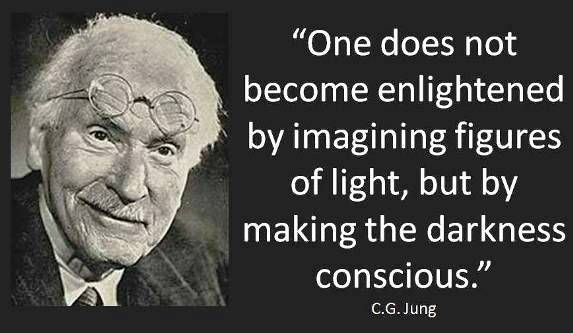
as Dr Jung says;
Cheers all dear friends and have a wonderful Weekend ❤ ❤
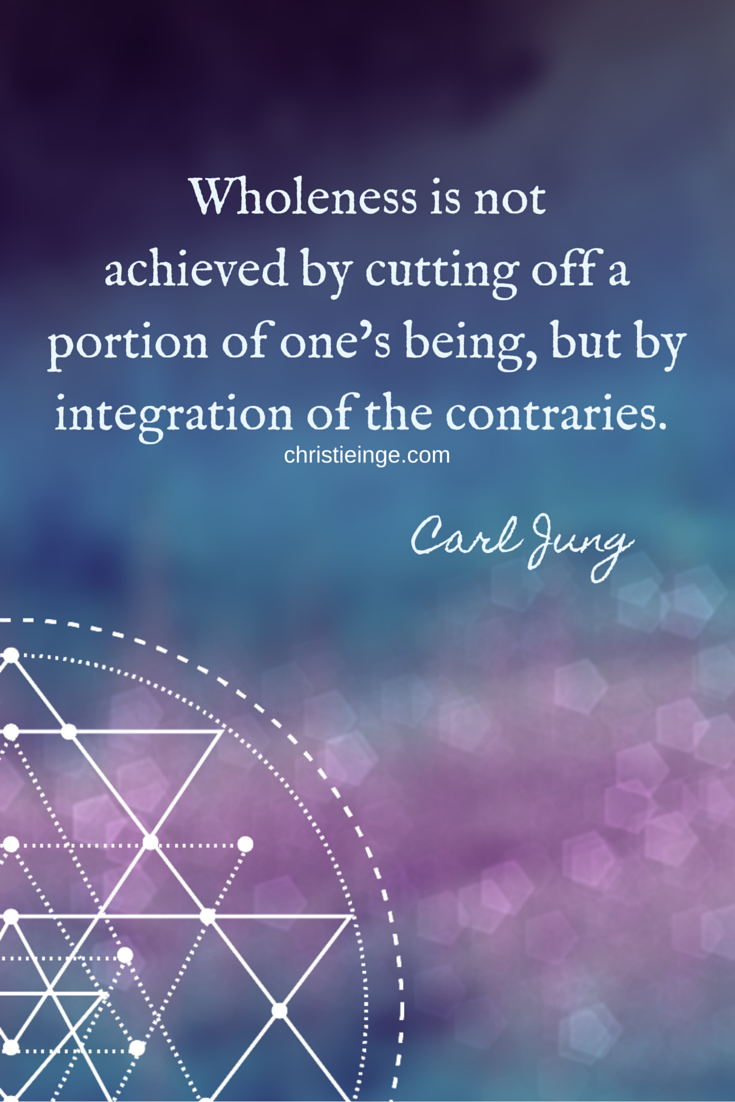
A Symposium which we must ever learn to know at least the mining of life. I mean, the main thing in our existence is these both poles; the Body and the Soul. Or as Dr C. G. Jung said;
Or as we might know about Cathars and Catharism, or Mani; the painter or the prophet; a revolutionary in the Zarathushtrian time in the old Persians. . They all are talking about these two part of us. and if we get to know both functions, we might find out the truth of our being here… or at least a part of it. 🙂 🙏💖
The craving for reproduction is yet another element of love. There are two ways of reproducing: physical and mental. The loved ones join their bodies to reproduce. Intercourse is a divine thing, says Diotima, but the mental model of reproduction is superior because the soul gives birth to another indestructible ideas and feelings. Those who are pregnant in the soul are arrested by thought.
They are the poets, the artists, the wise men and, finally, the legislators who teach wisdom and righteousness. Thus, a lover can bring to the soul of the mistress the knowledge, virtue, respect for the good, the law and the good. The beauty, the truth and the virtue are three concepts and at the same time one. They are aspects of the same reality. Love is “the way to the more beauty”. This is the path of immortality. PLATONOS ‘SYMPOSIUM’ ABOUT THE PROJECT LIBRARY OF ANCIENT GREECE
Carl Jung wrote of the psyche as that aspect of each of us which incorporates the conscious, the unconscious and also the collective unconscious – that realm beyond our individual self, the realm of the archetypal.
That is one of his many topics which we can learn from; though, some people, as I noticed now and then, make mistake with the word: Collective, and think that Dr Jung meant the whole human has a one with a common Consciousness/Unconsciousness; but it is wrong!
He actually speaks about the Individual and somehow: I, Me, Mine, with the whole history behind me. There again his topic with the “Synchronicity” shows us the connections between two Individuals and the chemy inbetween.
Here is a wonderful explanation which hit my heart and soul when I read this: With a great Thank to my friend and master Craig Nelson 🙏 ❤
The collective unconscious is “the world of water’.. “It is the world of water, where all life floats in suspension; where the realm of the sympathetic system, the soul of everything living, begins; where I am indivisibly this and that; where I experience the Other in myself and the Other-than-myself experiences me. […] The unconscious no sooner touches us than we are it –we become unconscious of ourselves. That is the age-old danger, instinctively known and feared by primitive man, who himself stands so very close to this pleroma.” CGJ, CW9,parar 45-47
Good Lord, I’m quite taken aback. My latest book has only just this minute been listed on Amazon and look at all these fabulous reviews and messages I’ve received from the fabled and the famous. These are just a mere sample.
Marilyn Monroe: “I can’t thank you enough, Michael. It’s about time the truth was told. Yes, to my shame my life was blighted by flatulence, although in fairness such gusts of malodorous wind emanating from my BTM did ensure me iconic status when I released a smelly humdinger of colossal proportions and as a result my little white dress blew up while I was standing over an ineffectual subway grate in New York on the set of ‘The Seven Year Itch’ movie. I can’t thank you enough for including the tale of my dire plight when writing this book, a frankly outstanding piece of modern English literature.”
How Friedrich Nietzsche used ideas from the Ancient Cynics to explore the death of God and the nature of morality
Friedrich Nietzsche (1844-1900) on his sickbed, 1899. Oil sketch on cardboard by Hans Olde. Photo Goethe-Nationalmuseum, Weimar/AKG
Haven’t you heard of that madman who in the bright morning lit a lantern and ran around the marketplace crying incessantly: ‘I’m looking for God! I’m looking for God!’ Since many of those who did not believe in God were standing around together just then, he caused great laughter. Has he been lost, then? asked one. Did he lose his way like a child? asked another. Or is he hiding? Is he afraid of us? Has he gone to the sea? Emigrated? – Thus they shouted and laughed, one interrupting the other. The madman jumped into their midst and pierced them with his eyes. ‘Where is God?’ he cried; ‘I’ll tell you! We have killed him – you and I! We are all his murderers.’
No! they shouldn’t laugh, cause God is dead! We can see the event in this corresponding every day these days. Nietzsche has always fascinated me.
again, (sorry of my attacking this very day, I have only a Saturday just to be able to think!!) but is not this man a really fascinating creature? I think if I understand Nietzsche, I’ll understand me too!
Helen Small is professor of English literature at the University of Oxford, and a fellow of Pembroke College, Oxford. Her most recent book is The Value of theHumanities (2013). She lives in Oxford.
Ancient Cynicism was an eccentric model for practising a philosophical life. Diogenes of Sinope (c404-323 BCE) and his followers claimed independence from conventional material desires and the normal turmoil of emotional life. They were notorious without shame – pissing and satisfying their sexual needs in public, like the dogs (kynes) from which their name partly derived.
Diogenes himself was said to have slept in a tub or a shack in the Athenian marketplace. Seeing a youth scoop up water in the hollow of his hand, he threw away the wooden cup he had been using, pleased to see that he did not need it. When Alexander the Great announced himself: ‘I am Alexander the great king,’ Diogenes replied: ‘I am Diogenes the dog.’
For Friedrich Nietzsche – steeped in the Classics – the Cynics, and the much later account of them in the gossipy collection of anecdotes TheLives and Opinions of Eminent Philosophers by Diogenes Laertius (no relation to Diogenes of Sinope), were attractive material long before he parted company with an academic career to practice a more abrasive public philosophy of his own. ‘Diogenes Laertiades’ was how Nietzsche signed himself in a letter to a friend in his late 20s: ‘son of Laertius’, or literally ‘sprung from Laertius’, ie from Diogenes Laertius. In the wake of a great deal of critical work in recent years, excavating Nietzsche’s Cynicism, two questions are worth asking afresh: how far did the identification go? And what did his philosophy hope to gain, and risk losing, by it?
The Cynic Diogenes of Sinope appears in Nietzsche’s The Gay Science(1882) as der tolle Mensch (‘the crazy man’) who proclaims the death of God; it is a canonical scene of modern philosophy:
Haven’t you heard of that madman who in the bright morning lit a lantern and ran around the marketplace crying incessantly: ‘I’m looking for God! I’m looking for God!’ Since many of those who did not believe in God were standing around together just then, he caused great laughter. Has he been lost, then? asked one. Did he lose his way like a child? asked another. Or is he hiding? Is he afraid of us? Has he gone to sea? Emigrated? – Thus they shouted and laughed, one interrupting the other. The madman jumped into their midst and pierced them with his eyes. ‘Where is God?’ he cried; ‘I’ll tell you! We have killed him – you and I! We are all his murderers.’
The drama of the madman performs a serio-comic riff upon TheLives and Opinions of Eminent Philosophers: ‘He [Diogenes of Sinope] lit a lamp in full daylight and walked around with it, saying: “I’m searching for a man”.’ Sometimes more loosely translated as ‘searching for an honest man’, the words are a challenge and potentially an affront to all who hear them. Tapping into the radicalism of the ancient example, Nietzsche echoes its original cynicism – the sorry absence of anyone capable of living in the knowledge of what it means to be human – and gives it an updated point. A new Diogenes declares the death of God, the collapse of the belief system that underpinned Judaeo-Christian morality and provided the culture’s sources of valuation for hundreds of years. Or rather, the crazy man demands attention to what should have followed from that realisation, since the realisation itself is hardly news.
Later in The Gay Science, Nietzsche clarifies what is at issue. By ‘God is dead’, we should understand that ‘belief in the Christian God has become unworthy of belief’: the time has come for human beings to live truthfully, in accordance with their situation. The neo-Cynic affront lies not in the debasement of long-lost metaphysical certainties, but in a fresh insistence, that destruction of the old basis for morality raises urgent consequences about how to live now. ‘Aren’t we straying as though through an infinite nothing?’ asks the crazy man; ‘Isn’t empty space breathing at us? Hasn’t it got colder? Isn’t night and more night coming again and again? Don’t lanterns have to be lit in the morning?’
Striking through the revival of the Cynic figure is, what might impress a reader with equal force is how stylistically unlike the original scene Nietzsche’s version of it is. Where Diogenes Laertius was concisely anecdotal and minimally interpretative, Nietzsche is – within the flexible parameters of the aphoristic form – expansive, even garrulous, and, if not psychologically intimate, certainly interested in staging a public psychological drama from his philosophical materials.
Enlightenment scepticism has been around a long time. Get up to speed!
Some features of the classical text remain. The anecdotal focus is on a single event, with a narrative delivery that suggests word-of-mouth transmission of matter of general public interest (‘Haven’t you heard …?’) Nietzsche also retains the distinctive mix of a whiff of philosophical scandal with an element of comedy that puts in question quite how much that sense of scandal is warranted, and what its presence might tell us about the conditions in which the Cynic issues his challenge to conventional moral thought. The broad parameters, then, are largely consistent, but the paragraph is, in Robert Pippin’s phrasing in Nietzsche, Psychology, and First Philosophy (2010) ‘quite mysterious’ as Diogenes Laertius’ account of the lamp lit in the morning light is not.
Much of the mysteriousness arises from the projection of the Cynic as unstable psychology into a public encounter that is, on both sides, full of questions with no obvious answers. Addressing an audience largely, but not entirely, committed to a view of itself as enlightened (‘many’ of them do not ‘believe’) the tolle Mensch seems absurd, histrionic, unduly agitated. The questions were thrown back at him as he makes his erratic progress – ‘Has he been lost?’, ‘Did he lose his way like a child?’, ‘Is he hiding?’, ‘Is he afraid of us? Has he gone to the sea? Emigrated?’ – are variants on a caustic theme: where has he been? Enlightenment scepticism has been around a long time. Get up to speed! Comedy turns to embarrassment only with the direct physical confrontation as he jumps into their midst, ‘piercing’ them with his eyes. The charge of ‘murder’ (in which he includes himself) silences the mockery, but it is far from clear what response beyond silence could be satisfactory at this point. By his own account, the new Diogenes has come too soon, or too abruptly. ‘Deeds need time, even after they are done, in order to be seen and heard’ – a reflection that sounds like pessimism about the power of the philosopher on the tolle Mensch’s part, even if it is not as finally so on Nietzsche’s.
Much more might be said about the tolle Mensch and his role in The Gay Science, but I want to concentrate on what this celebrated episode suggests about Nietzsche’s relationship to Cynicism as a form of heavily mediated philosophic self-expression – eccentric material that offers a set of old stylistic and intellectual strategies for the writer-philosopher, including strategies for apprehending the nature and limits of his or her own authority. With thought-provoking asperity, Nietzsche’s sister Elisabeth Förster-Nietzsche remarked: ‘There is no doubt … that my brother tried a little bit to imitate Diogenes in the tub: he wanted to find out how little a philosopher could get by with.’ Echoing lines from Nietzsche’s Human, All Too Human(1878-9), it is a statement to keep in view, since his handling of Cynicism was, in many respects, far from the kind of minimalism it seems to point to.
Numerous philosophers, public moralists, literary writers and cultural critics before and after Nietzsche have played with the possibilities of confrontational philosophic self-fashioning in Diogenes’ image, but the depth and extent of his intellectual engagement were unusual. Since Heinrich Niehues-Pröbsting’s groundbreaking work in the late 1970s, there have been many analyses of how Cynicism helped to shape Nietzsche’s style, his commitment to combatting pessimism and opening up avenues for ‘gaiety’, and (perhaps most extensively) his presentation of philosophy as a kind of affronting outspokenness, underwritten in part by the philosopher’s situation as exile (in Diogenes’ case, a political exile from his native Sinope; in Nietzsche’s, a more elective exile from the institutions of academia).
Revealing work has been done on Nietzsche’s early philological studies of the texts of Diogenes Laertius; much has been said too about his attraction to the French moralistes who placed themselves in the Cynic tradition, including François de La Rochefoucauld, Nicolas Chamfort and Jean de La Bruyère. This is a body of work that understandably tends to stress how much Cynicism does. But where does its usefulness to Nietzsche stop?
It is in the nature of cynicism, both the ancient kind and its modern derivatives (where psychology has as much to say about it as philosophy), that the identifications it provokes tend to be reluctant, ironic and partial. Always on the margins of mainstream or accepted thinking about morality, it exhibits a conscious detachment, or (maybe) alienation, from the common goals, projects, aspirations of others, pursuing a quasi-vocational (in the psychological view, a temperamental) calling to expose the illusions and self-delusions sustaining, or helping to sustain, those commitments. More than any other philosopher-critic who has turned to Cynicism (including Michel Foucault and Peter Sloterdijk, who owe a great deal to him), Nietzsche puts a sense of Cynicism’s limitations to work. When he invokes Cynic ways of thinking or speaking, he is not really offering a model for philosophy (though he sometimes seems to be): he is exploiting a set of conventions that palpably do and do not serve his purposes.
Nietzsche makes abundantly clear that Cynicism cannot be the light by which we guide ourselves
The shortcomings of the classical sources are an advantage here, rather than something to be regretted. Nietzsche was unrelentingly scathing about the poverty and stupidity of TheLives and Opinions of Eminent Philosophers, on which he had expended so much philological labour: this is a ‘stupid’, ‘impudent’, ‘imprudent’, ‘wretched’, ‘careless’, ‘vain’, ‘pretentious’ author. Philosophically inept as Diogenes Laertius is (a biographical gossip, at a long historical remove), the anecdotalism preserves the ‘spirit’ of Cynic philosophy in a way that escapes abstraction and systematisation. The ‘received’ quality of the tolle Mensch episode (its temporal remoteness from the events, the lack of authorial warrant or capacity to do more than report what others have said) is a continuation of that mode. It rattles any effort to get at its subject and comprehend him fully; but it also puts in question the writer/Nietzsche’s ‘philosophical’ claim to lead others in the murky historical, psychological, lived terrain that is our attachment to morality.
Nietzsche makes abundantly clear on several occasions that Cynicism cannot be the light by which we guide ourselves. When Human, All Too Human observes that the search for man requires a lantern, then asks: ‘Will it have to be the Cynic’s lantern?’, the answer is implicit but clear. Should there be any doubt, as Niehues-Pröbsting notes, Beyond Good and Evil (1886) clears it up: Nietzsche is eloquent, there, about the limits of Cynic self-fashioning. Cynicism, he warns, is a kind of clowning, ‘the only form in which base souls approach what is called honesty’. The original Cynics’ radical reduction of their requirements for a good life made happiness possible, but only by embracing life like an animal (a dog, or kunos). Diogenes and his ilk understood ‘self-overcoming’ as an ascetic practice of toughness in the face of deprivation, but had no concept of transformative ‘self-overcoming’ and none of the finer apprehension of art that distinguishes a ‘noble’ spirit. The best relationship the ‘higher man’ can have with Cynicism, then, will be strategic: there are ‘real short-cuts and aids’ here ‘to make his work easier’, Nietzsche suggests while remaining on the lookout for the inevitable betrayal of its limitations:
the higher man needs to open his ears to all cynicism, crude or refined, and congratulate himself every time the buffoon speaks up without shame, or the scientific satyr is heard right in front of him.
Be on your guard, in short: Cynicism is the operative mode of people who deal too much with ‘the average man’, and have learned to ‘recognise the animal, the commonplace, the “norm” within themselves’: strategically deployed, their ‘honesty’ might be of use.
The most obvious use to which Nietzsche puts it, beyond the revival of Diogenes himself as an unstable and perplexing public moralist, is at the level of style. The contrarian zest of ‘so-called cynic’ speech (to use Nietzsche’s own locution) is a significant element in his literary repertoire, and never more so than in the very late work, where he runs the gamut of its ‘crude – refined’ possibilities. Speech of this order is at its most concentrated in the ‘skirmishing’ [‘Streifzüge’] section of Twilight of the Idols (1889). Take this brief extract on the shortcomings of other artists, philosophical and literary-poetic:
Dante: or the hyena who writes poetry in tombs. – Kant: or cant as intelligible character. – Victor Hugo: or the lighthouse on the sea of nonsense. – Liszt: or the school of fluency – with women. – George Sand: or lactea ubertas, translated: the milk cow with ‘a beautiful style’ …
The sneering litany takes to fresh extremes Nietzsche’s earlier gestures in the way of ridiculing, castigating and mocking philosophers and public moralists across a sweeping panoply from Socrates to Jean-Jacques Rousseau. The cynicism here assists the combative energy of the prose, as it lashes out against all authorities. Nietzsche’s philosophy looks to a future that will be free, ‘gay’, ‘momentous’, as far as possible self-determining and nondialectical; it resists and resents the poisoning, ‘nausea’-inducing hold of past ways of thinking. (That resentment itself is an acknowledgement of debt is, of course, a thoroughly Nietzschean insight.)
More important than either the reworking of the character of the Cynic or the channelling of his stylistic energy is the allusive mode of argument that pervasively informs the genealogy of morality. Human, All Too Human, Beyond Good and Evil, the first edition of The Gay Science, but also The Wanderer and His Shadow (1880), Daybreak: Thoughts on the Prejudices of Morality (1881) and On the Genealogy of Morality (1887): all these texts make extensive play with Cynicism’s characteristic move, the ‘debasement’ of conventional morality.
These are classic Cynic manoeuvres: what looks like virtue is ‘devalued’, its conventional value ‘adulterated’
When Human, All Too Human, tells us, for example, that ‘good’ and ‘evil’ are just the names we have learned to give to the operation of power (‘He who has the power to requite, good with good, evil with evil … is called good; he who is powerless and cannot requite counts as bad’), or when Beyond Good and Evil tells us that: ‘In the final analysis, “love of one’s neighbour” is always something secondary … in relation to fear of the neighbour’, they are performing classic Cynic manoeuvres. What looks like virtue or like morally motivated behaviour is ‘devalued’ in the sense that its conventional value is compromised or ‘adulterated’ (as the underlying allusion to Diogenes of Sinope’s alleged adulteration of the Sinopean coinage encourages us to conceive of things).
The main difficulty of interpretation here attaches to the metaphoric scope of ‘debasement’. The Cynic manoeuvre unmasks an earlier, more primitive motive that counts for ‘less’ than the standard one. ‘What really are our reactions to the behaviour of someone in our presence?’, Daybreak asks:
– First of all, we see what there is in it for us – we regard it only from this point of view. We take this effect as the intention behind the behaviour – and finally we ascribe the harbouring of such intentions as a permanent quality of the person whose behaviour we are observing and thenceforth call him, for instance, ‘a harmful person’. Threefold error! Threefold primeval blunder! Perhaps inherited from the animals and their power of judgment! Is the origin of all morality not to be sought in the detestable petty conclusions: ‘what harms me is something evil (harmful in itself); what is useful to me is something good (beneficent and advantageous in itself); what harms me once or several times is the inimical as such and in itself’.
In a much-quoted closing flourish that is often made into a kind of epigraph for the entire genealogical project, Daybreak pronounces: ‘O pudenda origo!’ (‘Oh shameful origin!’) of morality. The moral texture of our psychological relations with others goes back, or comes down, in this locally Cynic reading, to the ‘detestable’ as-it-were-primal rationales of self-interest.
This looks very like a problematic appeal to something not just more ‘primitive’ but in some sense more ‘natural’ – and Nietzsche does indeed seem to be offering a kind of naturalistic psychology as a basis for understanding our investment in morality. Nietzsche’s genealogist, observes Brian Leiter in Nietzsche on Morality (2002), appears deeply ‘interested in “the nature of things” as they really are, not simply as some arbitrary interpretation would have them be’. The aim, Leiter concludes, is ‘critical, not positive’. The repeated invoking of ‘shameful origins’ rhetorically assists that purpose: it ‘brings a feeling of diminution in value of the thing that originated thus and prepares the way to a critical mood and attitude toward it’. The ‘reductive spirit’ is an error (Bernard Williams puts the point succinctly in his introduction to The Gay Science) but, under controlled circumstances, it is one that can help shift entrenched perspectives.
As with so much of Nietzsche’s writing (the tolle Mensch passage included), what keys us into the difference between a critical and a positive aim is a kind of literary excess in the delivery. One ignores the role of burlesque at one’s peril. Aping the voice of outraged conventionality (‘O pudenda origo!’ – the Latin adds an edge to pastiche), Daybreak asks for critical wariness at just the point where a conventional reader might be predisposed to take the story of origin semi-literally. Like the ventriloquist on audible in the ‘primaeval blunder’ – ‘whatever harms me is something evil’ – the ventriloquist on of a more modern ‘shame’ asks to be read at one remove as irony, or worthy of our irony.
Pippin is not wrong that the gesture of unmasking is continuous with the moralist tradition of La Rochefoucauld and others, and to that extent registers a familiar skeptic demand for ‘clarity about human frailty and failings’, but Nietzsche’s scepticism is unlike La Rochefoucauld’s in that it comes laced with a relish for mimicry that goes beyond intellectual requirements for clarity about what morality is and where it comes from, and targets the will to clarity itself. Exuberant excess of denunciation wards off an error that Nietzsche is constantly priming himself and us against the tendency of philosophers to ‘make the whole cosmos out of th[e] intellectual faculty’. ‘Primeval blunder!’ ‘Not much better than the judgments of animals!’ ‘Detestable petty conclusions!’ We don’t strictly need any of this expostulation, but such hyperbolic notes create a stylistic intimacy between the ravelling-up of morality (how it gets a hold on us) and the unravelling work of Nietzschean philosophy that seeks to put us on our guard against it, and against philosophy itself. That is: against the tenacity of inherited morality and against any claim that he, the philosopher, might want to make to avoid error and afford a value perspective that we could call ‘true’.
It is in this sense that we might best understand what it means for Nietzsche to be emulating Diogenes ‘a little bit’, seeking a practice of philosophy that would ‘make do’ with less. The most important question one can ask of so strategic a Cynicism, finally, is not ‘How far does it go?’, but ‘Where does it stop?’ It stops (or should stop) at the point where the complacency it targets has been dislodged – which means that it must be hyper-alert to the danger that Cynicism itself (old, well-recognised, liable to become more an object of affection and comic interest than shock or distaste) risks being not a tool but a gimmick. At that point, it must be cast aside, like the tolle Mensch’s lantern.
“Individuation means becoming a single, homogeneous being, and, in so far as ‘individuality’ embraces our innermost, last, and incomparable uniqueness, it also implies becoming one’s own self. We could, therefore, translate individuation as… ‘self-realization.’” (Collected Works of C.G. Jung: Volume 7, Carl Jung )
A wonderful easy understanding of #Jung. (at least humbly for me 😉
“Individuation means becoming a single, homogeneous being, and, in so far as ‘individuality’ embraces our innermost, last, and incomparable uniqueness, it also implies becoming one’s own self. We could therefore translate individuation as… ‘self-realization.’” (Collected Works of C.G. Jung: Volume 7, Carl Jung )
In this second video in our mini-series on the ideas of Carl Jung we are going to examine the individuation process, a process Jung believed to be essential for a healthy functioning personality. Such an examination will lead us to explore some of the parts of the personality that Jung viewed as particularly important, namely the persona, the shadow, the anima and animus, and the self. Before we go into more detail on the individuation process we will begin with a brief overview of the relevant content from our first video on Jung.
Jung conceived of the psyche, or one’s total personality, as composed of a conscious and unconscious realm. The unconscious realm he split into the personal unconscious and the collective unconscious. The personal unconscious is largely composed of repressed elements from one’s personal history, while the collective unconscious is composed of instincts and archetypes which are common to all human beings. Archetypes can be viewed as evolved cognitive structures which influence emotions, thoughts, and behaviours.
Archetypes provide structure to different parts of the psyche and the psyche functions optimally when there exists a harmonious balance between these parts. Unfortunately, according to Jung, few people function in an optimal manner. Rather most suffer from imbalances where some parts of their personality suffer from inflation, or over-expression in consciousness, while other parts suffer from deflation or underdevelopment whereby they lack proper expression in consciousness. Imbalances, Jung believed, often lead to the development of neuroses and a lack of vitality in life.
Working to bring about proper expression of the various archetypally structured elements of one’s personality by confronting contents of the unconscious and thus obtaining self-knowledge, is the purpose of the individuation process. It is important to note that this process occurs spontaneously if unimpeded as contents of the unconscious naturally strive for outward expression in the world, or as Jung put it “Everything in the unconscious seeks outward manifestation”.
However, the problem is that while natural, most people get stuck at various stages of the individuation process as they are unable to properly integrate into consciousness certain elements of the unconscious. How to promote such integration when it does not occur naturally was a question of deep concern for Jung. Through his patient analysis, research, and personal experience he arrived at the idea that dreams provide the greatest opportunity to access the unconscious. As he put it:
“Dreams are impartial, spontaneous products of the unconscious psyche, outside the control of the will. They are pure nature; they show us the unvarnished, natural truth, and are therefore fitted, as nothing else is, to give us back an attitude that accords with our basic human nature when our consciousness has strayed too far from its foundations and run into an impasse.” (The Collected Works of C.G. Jung: Volume 10, Carl Jung)
Jung put enormous emphasis on the therapeutic effects of dream analysis. By recording and analyzing one’s dreams, determining their meaning and relevancy, Jung thought one could integrate unconscious contents into consciousness. It must be noted, however, that dream analysis is not a simple matter, due to the often confusing nature of dreams and the fact that quite frequently dreams express material which can be difficult to incorporate into consciousness. The interpretation of dreams, therefore, must be seen as a skill acquired through practice and improved with an understanding of some of the most important archetypes, archetypes which we will spend the remainder of the video looking at.
Before looking at some of the archetypes which suffer from underdevelopment and therefore may manifest themselves in dreams, it is important to first look at the persona. The word persona was used in Roman times to signify a mask worn by an actor. In an analogous manner, in Jungian psychology, the persona represents the social mask that each of us “wear” in our interaction with others in society. Or to put it differently, it represents the personality that we try to portray to others. While the persona plays an important role in promoting social interaction and communal life, problems arise when people over-identify with their persona. As Jung writes:
“Fundamentally the persona is nothing real: it is a compromise between the individual and society as to what a man should appear to be. He takes a name, earns a title, represents an office, he is this or that. In a certain sense all this is real, yet in relation to the essential individuality of the person concerned it is only a secondary reality, a product of compromise, in making which others often have a greater share than he. The persona is a semblance, a two-dimensional reality.” (Carl Jung)
Most people suffer from inflation of the persona, meaning that they over-identify with their “social mask” to the detriment of other important areas of the psyche. In the course of the individuation process, one must come to the realization that the persona is not the totality of their being, but rather only a small component of a much larger personality. Such a realization is achieved by diving into the unconscious and mining from it the rich and meaningful contents manifested by the archetypes.
The first stage in the exploration of the unconscious, according to Jung, is an encounter with one’s shadow archetype. Over the course of one’s life, certain personality traits elicit negative feedback and even punishment from others. This negative feedback creates anxiety resulting in these traits being pushed away from awareness into the unconscious where they form the shadow – the “dark” side of one’s personality.
To become aware of and integrate the shadow into consciousness is often a difficult and sometimes heroic endeavour. But failure to do so can create chaos in one’s life. In the darkness of the unconscious the shadow is far from impotent, but instead influences emotions, thoughts, and behaviours, in a manner which is beyond conscious control. Often the shadow finds expression through projections, whereby instead of seeing the disagreeable elements of the shadow as residing within ourselves we project these traits onto to others.
Bringing elements of the shadow into the light of consciousness is crucial if one is to correct some of these less desirable aspects of themselves. As Jung explains:
“Unfortunately there can be no doubt that man is, on the whole, less good than he imagines himself or wants to be. Everyone carries a shadow, and the less it is embodied in the individual’s conscious life, the blacker and denser it is. If an inferiority is conscious, one always has a chance to correct it. . .But if it is repressed and isolated from consciousness, it never gets corrected.” (The Essential Jung, Carl Jung and Anthony Storr)
The shadow, according to Jung, is not only composed of negative traits. Rather, in the process of over-identifying with the persona often people reject personality traits not because they are harmful, but because they don’t fit with the dominant social attitudes of the day. Therefore, when integrating the shadow into consciousness, one is also exposed to positive traits and creative energies that can bring about a renewed sense of vitality to life.
“The shadow, when it is realized, is the source of renewal; the new and productive impulse cannot come from established values of the ego. When there is an impasse, and sterile time in our lives. . .we must look to the dark, hitherto unacceptable side which has been at our conscious disposal.” (Meeting the Shadow: The Hidden Power of the Dark Side of Human Nature)
In addition to the shadow, another archetype which normally suffers from underdevelopment is a contra-sexual archetype termed the anima in males and the animus in females. While the persona is oriented outward, acting as a barrier protecting the ego from the external social world, in an analogous manner the anima/animus is oriented inward, protecting the ego from the sometimes threatening and overwhelming contents which emerge from the dark inner depths of the unconscious:
“The natural function of the animus (as well as of in the anima) is to remain in place between individual consciousness and the collective unconscious; exactly as the persona is a sort of stratum between the ego-consciousness and the objects of the external world. The animus and the anima should function as a bridge, or a door, leading to the images of the collective unconscious, as the persona should be a sort of bridge into the world.” (Carl Jung)
An encounter with the anima/animus is manifested in one’s consciousness as a meeting, in dreams or visions, with a member of the opposite gender. Such a figure often arises during times of severe psychic disorientation, offering guidance as to how to remove any psychological barricades hindering the natural progression of the individuation process. Encountering such an archetype can, therefore, signify the coming of a deeply meaningful period in one’s life, defined by significant psychological transformations:
“The meeting with the anima/us represents a connection to the unconscious even deeper than that of the shadow. In the case of the shadow, it is a meeting with the disdained and rejected pieces of the total psyche, the inferior and unwanted qualities. In the meeting with the anima/us, it is a contact with levels of the psyche which has the potential to lead into the deepest and highest…reaches that the ego can attain.” (Jung’s Map of the Soul, Murray Stein)
After one encounters and integrates aspects of the anima/animus archetype into one’s ego, one gains access to enter into the deepest layer of the psyche, the archetype of wholeness – which Jung called the self and viewed as the most important of all the archetypes. Proper expression of the Self is the goal of the individuation process. As Jung put it:
“. . . the self is our life’s goal, for it is the completest expression of that fateful combination we call individuality. . .” (Carl Jung)
As the sun occupies the centre of the solar system, in an analogous manner the Self is the central archetype of the entire psyche. The Self-archetype acts as the unifying or organizing principle of the psyche and is oriented toward a union of the conscious and unconscious realms. Remembering from our first video on Jung that the centre of the field of consciousness is the ego, Jung noted that:
“the more numerous and more significant the unconscious contents which are assimilated to the ego, the closer the approximation of the ego to the Self, even though this approximation must be a never-ending process.”(Carl Jung)
As one increasingly identifies with the self they will notice a greater sense of harmony both within themselves and with the world as a whole. In fact, Jung saw the connection with the self as so important that at various times he described it as “a treasure that would make [one] independent” and a “link to the infinite”.
Jung came upon the existence of the self by exploring the universality of symbols such as the quaternity and mandala, which in his words, “occur not only in the dreams of modern people who have never heard of them, but are widely disseminated in the historical records of many peoples and many epochs.”
“A mandala”, said Jung “is the psychological expression of the totality of the self.” Not only do mandalas have an extremely long history and repeatedly show up in the imagery of many religions including Hinduism, Buddhism and Christianity, but Jung observed that with some of his patient’s mandalas spontaneously arose “during times of psychic disorientation or re-orientation.” Mandalas, and other “symbols of order”, Jung believed to be compensatory symbols of wholeness which are manifested by the Self in times of crisis.
The individuation process which culminates in an identification with the self is, according to Jung, crucial for the development of a healthy functioning personality as well as the expression of the unique potential that exists within each of us. But along with these personal benefits, Jung thought the process of individuation was essential for the well-being of society. Jung believed that conformist societies, composed mainly of people who over-identify with their persona, are easy prey for the rise of oppressive governments. Therefore it is essential for any lasting positive social change that increasing numbers of people, assisted by the individuation process come to the realization that there is more to their being then the social role dictated by the persona. A society increasingly composed of individuated individuals would not, according to Jung, succumb as easily to the rise of oppressive governments:
“…in so far as society is itself composed of de-individualized human beings, it is completely at the mercy of ruthless individualists. Let it band together into groups and organizations as much as it likes – it is just this banding together and the resultant extinction of the individual personality that makes it succumb so readily to a dictator. A million zeros joined together do not, unfortunately, add up to one.” (Man and His Symbols, Carl Jung)
Greeting to my dear wise friend Elaine Mansfield and with her allowance, I share here her brilliant article about #Life or much easily say; the way we begin with the first step in our lives till to the end.
I have also some loss in my life: as I was seven, my father had gone, and with eighteen, my mother said goodbye to me and my brother, cause of blood cancer. and finally, I’ve lost my brother in 2007, as he was just 54 years old. He has got a sudden anomaly, a tumour in 2006 in his genius brain but the surgery let him only one year more to live. We were just two sons and I’m the only one left. {Of course, my father and my brother were both ingrained authors and couldn’t do anything else but writing and as you might have mentioned, I’m not as good as them as I try to summarize this little piece with all effort. That’s why I should live a bit longer!!} 😏 😁
These are the realities which I must live with, and life is hard enough not to spend time with moaning, therefore, we all must stand against these difficulties. and as we read in this article; Mythology can help us to understand all these better. It is interesting that coincidentally, Mythology was one of my brother’s most favourite subject to investigate and I’ve learned a lot by him.
We imagine heroes as willful and disciplined. The hero wins with a smart positive attitude. We accept the top part of this diagram, the “known” part, where we’re consciously working a problem and following our plan. But notice how small the known part is–and it’s larger in this diagram than it is in life.
Our culture honours winners, those who climb to the top and come out in the first place. The Journey of Ascent is ever higher and more successful with a focus on the individual doing well, often at the expense of the group.
But what about real life? Does this model make an ageing or sick person a loser? What about someone who needs help? As a child, I lived with a dying dad and learned it was shameful to be sick since he hid his illness except at home. He was positive and courageous, but his body still gave up at 44. His friends were shocked. No one got to say goodbye. I can only imagine how he felt keeping his lonely secret.
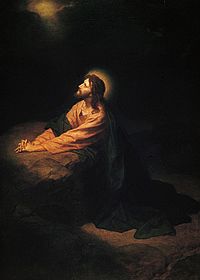
Christ in Gethsemane, Heinrich Hofmann, 1890
Being positive doesn’t solve every human problem no matter what we’re promised. What about shattering experiences like surviving an accident with lasting trauma and permanent wounds? What about illness without an obvious cause? What about grief from the death of a parent or spouse, a child or a pet? Positive thinking won’t bring them back.
Yes, staying positive can feel supportive in the rough spots, but hard times won’t disappear. Maybe we need to accept and expect that being human sometimes hurts. Sometimes our ego is helpless.
Initiations of Descent are part of many ancient and indigenous traditions. They teach us how to take a downward journey. They support us during hard times without demonizing the one who suffers. Even Christianity includes three days of Christ’s suffering and death, although we hurry along to the resurrection part.
It’s hard to accept the dark valley on the other side of the majestic hill of success. It’s hard to accept death and loss as natural parts of the whole. Ancient mythology helps me understand, so I’ll share a few stories.
Prosperina (Persephone), Dante Gabriel Rossetti, 1870
In Greek mythology, Hades abducted Persephone and took her to his Underworld Kingdom where she became Queen. Her Descent and her mother Demeter’s insistence on her return guided the dominant religious ritual in Greece for 2000 years. We don’t know what happened in the Eleusinian Mysteries, but worshipers experienced a ritual death followed by a symbolic rebirth.
In Sumeria 2500 BCE, the Goddess Inanna was Queen of Heaven and Earth. Without knowing mortality, something was missing, so she descended to the Underworld. At each step, she was stripped of power (a lot like ageing or illness) until, naked, she entered the throne room of the Goddess of Death. Inanna was a corpse in that cave for three days before rising again. Sound familiar?
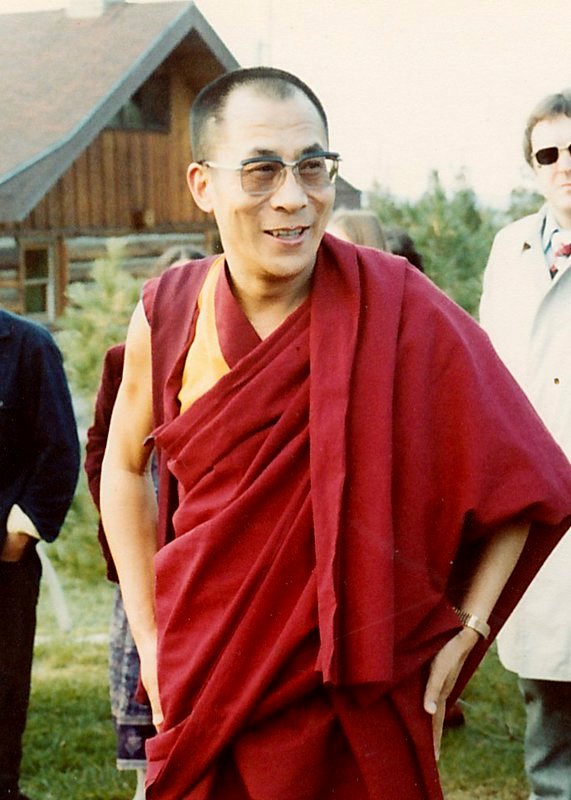
In Greek mythology, gentle Chiron was struck by a poison arrow. Since his father was the God Zeus, Chiron was immortal, so his suffering was eternal. He became a teacher and a healer, a Wounded Healer who couldn’t heal himself. Many great teachers and healers are wounded by descent and loss. Having lost his homeland after the Chinese invasion, the Dalai Lama became a Wounded Healer who teaches us about compassion and acceptance.
His Holiness the Dalai Lama, 1979, Hector, NY
We deny the descending part of life’s cycle. We hate facing the truth that life is precarious and doesn’t bend to our will. Disease won’t happen to us. We’ll be healthy forever if we live right and think correctly. If a loss happens, it will come later. Much later.
We know others lead lives of suffering from minimal care or food. We know many people don’t have clean water or shelter. We know war, poverty, and climate disaster force people into lives they didn’t choose. Still, we often look the other way.
Our ideal of ascent leaves us unprepared and shocked by life’s descending times, times when we often learn the most. Every living being will sooner or later descend. It’s part of being human. It’s another kind of heroic journey.
Cochlear Implant Surgery update: All went well, and I’m slowly recovering. I have to keep a tight leash on my tendency to push too hard. It’s time to rest.
















 lampmagician
You must be logged in to post a comment.