Agatha Christie

Standard

Death on Nile

“Death on the Nile” – ” Mort Sur Nil, 3Γ¨me “
1978 first film adaptation by the British John Guillermin Peter Ustinov as Hercule Poirot
2006: second adaptation by Andy Wilson with David Suchet as Hercule Poirot
2019-2020: 3rd ongoing adaptation of Agatha Christie’s novel by Fox and Kenneth Branagh

Certainly, I don’t need to introduce this Dame to anyone. She was and has ever been a Genius in writing such as murder mystery novels and she will always remain the master.

Agatha Christie

I have not read any book of her but seen almost all the “made of” movies. Of course, I must say that it’s not only Hercule Poirot which had fascinated me, but there’s also Miss Marple too an amazing character.
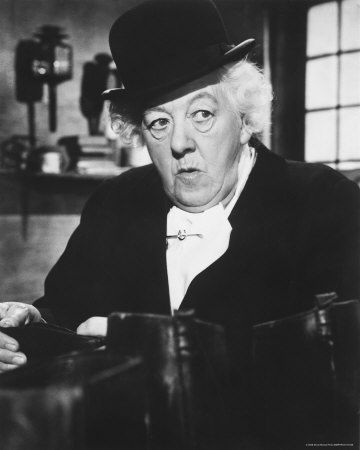
it’s always fascinating to see how ingeniously and powerfully she creates the moments of the crimes and how variable are the mysteries. Brilliant!

Now in this article by my dear friend and an Egyptologist; Marie Grillot I find out that there is another version of Death on The Nile has been made by Kenneth Branagh Kenneth Branagh

Kenneth Branagh

I knew he had made a third version of the novel; Orient Express and I’ve seen this and also both older ones, but never heard of the third one on Death on The Nile!

Anyway, it’s nice to read this article (have translated from French) and see the old famous great actors again. Have a wonderful weekend. ❀ ❀

via https://egyptophile.blogspot.com/

Mort sur Nil, 3Γ¨me ! (Death on Nile, 3rd!)

While Thomas Cook, initiator of the cruises on the Nile, is shipwrecked, “Death on the Nile” resurfaced! Indeed, after the success of the movie “The Crime of the Orient Express” released in 2017, the Fox – and Kenneth Branagh – decided to adapt the 3rd version of “Death on the Nile”.This novel by Agatha Christie was published on November 1, 1937, in the United Kingdom, the following year in the United States, then in France in 1945.

“Death on the Nile” – “Mort Sur le Nil”
The Agatha Christie novel published on 1 November 1937 in the UK,
in 1938 in the USA, in 1945 in France

For her writing, the novelist relied in part on her personal memories. When she is 17-18 years old, she goes to Egypt for the first time with her mother, she cruises in an environment that we imagine easy and luxurious. With her first and second husband, she will return for other stays. In 1923, she was in Luxor while the tomb of Tutankhamun had just been discovered, it would seem that she later met Howard Carter (in 1931 in Luxor).

Novelist Agatha Christie during a trip to Egypt

Flawless costumes, immaculate shirts, starched bow ties, moustache perfectly smoothed and a hairstyle that can only be said, he is steadfastly obsessed by his appearance … A bit precious, politeness “old France” grazing obsequiousness, his eyes sparkle with intelligence. He believes in him even in his doubts … One can not deny that his grey cells function perfectly, that he is a fine psychologist and, it must be said, without much confidence in the human nature of some … If the attention that it brings to small details is sometimes infuriating, the resolution of the enigma proves that they were in no way insignificant, that they participated indeed to weave the plot which he tried to “unravel”. He excelled often but was never better than in the final theatrical as dramatic happening, where, surrounded by all the witnesses and protagonists, he pronounced the final sentence, the outcome of the affair, finally announcing the name of – or – guilty (s)

… If “Death on the Nile” begins in a magnificent mansion nestled in the heart of the English countryside, it is in Egypt and mainly during a cruise on the “Karnak”, a luxurious steamship, that will take place history.


In the Agatha Christie novel “Mort Sur le Nil” – “Death on the Nile”, the boat named “Karnak”
Two boats have “endorsed” this role:
In 1978 in the 1Β stΒ film adaptation of John Guillermin,
this name is given to the “Memnon”, built in 1904 by Thomas Cook
In 2006, in the second film adaptation of Andy Wilson
this name is given to the steam ship “Sudan” built by Thomas Cook in 1915-1921
it is now owned by Voyageurs du Monde and sailing on the Nile

Jacqueline de Bellefort, charming but ruined, commits the irreparable mistake of presenting her “beautiful lover” to her billionaire childhood friend … who will not fail to seduce him …The spurned fiancee continues on the banks of the Nile, the couple now formed by the wealthy Linnet Ridgeway – his ex-best friend – and Simon Doyle – his ex-boyfriend – “rotting” their honeymoon …The boat quickly becomes “the” place where everything will be played, a microcosm bringing together noble ruined, a novelist on the bottle, rich kleptomaniac, the doctor failed or corrupt lawyer, arrived unscrupulous, unconditional and idealistic love, … Each having a ” good reason to blame Linnet …

“Death on the Nile” – “Mort Sur le Nil”
1978 first film adaptation by the British John Guillermin
The Colonel Race (David Niven) left, and Hercule Poirot (Peter Ustinov) right

All this “beautiful” world evolves under the watchful eyes of Poirot and his elegant English friend Colonel Race. Over the Nile, they will be led to see several crimes, the series being “inaugurated” by that of the rich heiress …It is at the end of the cruise, in Ouadi Halfa, that the “little grey cells” of the famous Belgian detective will end this story, more turbid than the waters of the Nile.Agatha Christie will adapt it to the theatre in 1944.
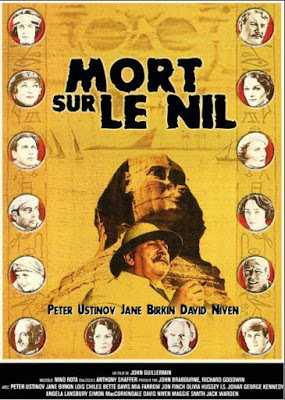
“Death on the Nile” – “Mort Sur le Nil”
1978:Β 1stΒ Β Β movie adaptationΒ Β Β by British John Guillermin Peter Ustinov as Hercule Poirot

Then it will be worn for the first time on the screen, in 1978, by the British John Guillermin, with a cast of dreams: Peter Ustinov, Jane Birkin, Mia Farrow, Bette Davis, Angela Lansbury, David Niven, Maggie Smith, and second roles totally up to the task …

“Death on the Nile” – “Mort Sur le Nil”
1978 first film adaptation by the British John Guillermin Peter Ustinov as Hercule Poirot

Peter Ustinov is excellent in Hercule Poirot, with his flawless white suits, his collared shirts, his debonair look sometimes denied by a piercing look …The extreme staging and the performance of the actors bring suspense to its climax …How to forget this sequence shot in Karnak? As Linnet’s and Simon’s couple walk through the hypostyle hall, a block falls from one of the columns throwing them to the floor. The actors seem to emerge, magically, from behind each column to discover the drama … all seeming stupefied … that while the leader is necessarily among them!

Death on the Nile” – “Mort Sur le Nil”
1978 1Β stΒ film adaptation by the British John Guillermin Peter Ustinov as Hercule Poirot

Most of the film is on the “Karnak” – it is actually the “Memnon”, built by Thomas Cook in 1904 – whose comfortable atmosphere will quickly become oppressive.
The second adaptation of “Death on the Nile” takes place in 2006: Andy Wilson directs David Suchet in the role of Hercule Poirot, the excellent James Fox wearing the uniform of Colonel Race.

“Death on the Nile” – “Mort Sur le Nil”
2006: second film adaptation by Andy Wilson with David Suchet as Hercule Poirot

Emma Griffiths is Jacqueline de Bellefort, J.J. Feild Simon Doyle, while Emily Blunt is Linnet Doyle.

The film is then shot on the luxurious steamship Sudan – “survivor” of the Thomas Cook fleet – which belongs today to Voyageurs du Monde.

For the third adaptation, that of the Twentieth Century Fox, according to articles published, Kenneth Branagh will camp “the inevitable Hercule Poirot and will be accompanied by Gal Gadot, Letitia Wright, Armie Hammer, Annette Bening, Ali Fazal, Sophie Okonedo, Emma Mackey Dawn French, Leslie Rose, Jennifer Saunders and Russell Brand “.

The film will be shot at the Longcross Studios in Surrey West London, and on the spot in Egypt … Of course, we are eager to learn more …The release of the film is scheduled in France, from October 7, 2020. Marie Grillot

To my dear lonely PC at home

Standard

Yes my dear friend, I am sorry to leave you alone at home in my office room under my desk.

I know that you are wondering why nobody pushes your button to turn you on, running warm to get ready for work.

I had to leave you to visit my friends in Bremen, a city in the northern Germany, therefore, I can’t be with you sharing our thoughts together.

Sorry for that, it’s a tragedy, because, my Smartphone could never be you. It is a sad sad world…. I miss you πŸ₯΄πŸ˜˜

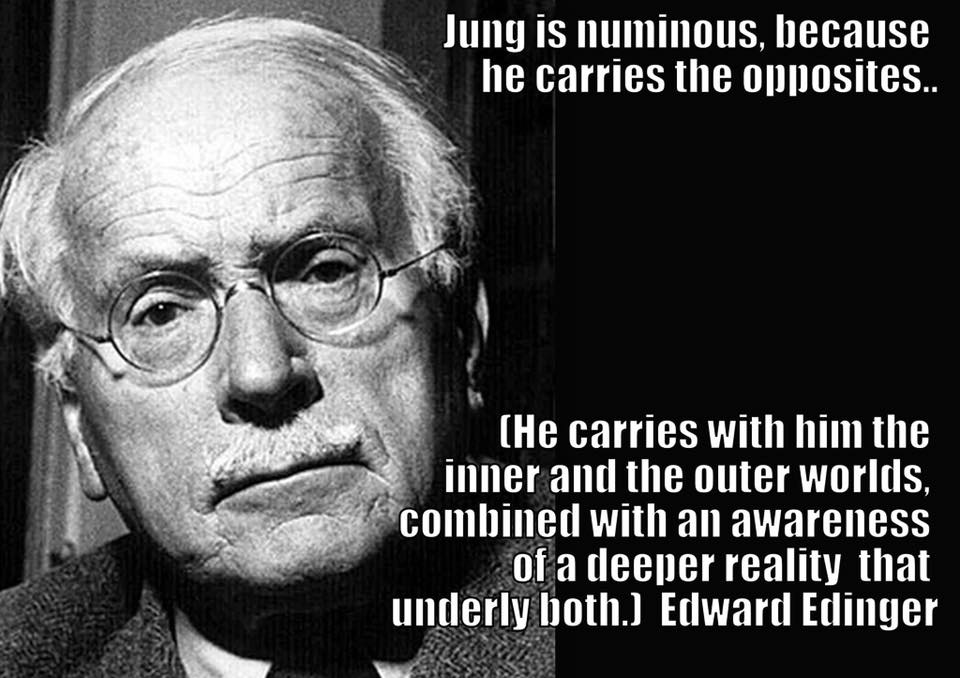
Let’s carry the both sides!

Standard

I think that we should understand and accept that we have the both sides; Inner & Outer, Dark & light, Good & Bad. what we need is the Awareness.

via; https://www.facebook.com/CarlJungIndividuation/?tn-str=k%2AF&hc_location=group_dialog

By; Craig Nelson with thanks πŸ™πŸ’–

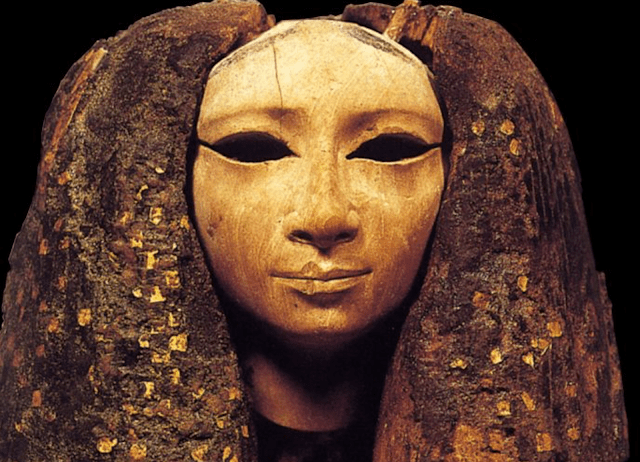
The beautiful lady of Licht

Standard
Head of the female statue – painted wood with gilding
Middle Kingdom – XIIth Dynasty
Provenance: Zone of the pyramid of Amenemhat to Licht – Excavations of the Metropolitan Museum of Art in New York – 1907
Egyptian Museum Cairo –Β JE 39380

The Head of a mysterious beautiful Lady. by Marie Grillot πŸ™πŸ’– with Marc Chartier as always much appreciated πŸ™‚

PS; Licht in German means light πŸ˜‰

Translated from French via https://egyptophile.blogspot.com/

The face is noble, perfectly symmetrical, veins of light wood give it a sense of life. The general expression is soft, calm, soothed. Large almond eyes, of which only the orbit remains, are absent. And despite everything, they question us … What presence did she give to the face? What did they show? Did the glass paste and the rock crystal subtly and luminously enliven their pupils? These questions remain forever unanswered. The eyebrows are treated in relief, while the line of makeup is treated in hollow. The nose is well proportioned, the lips are fine, the slight injury they suffered reminds us of the pangs of time.

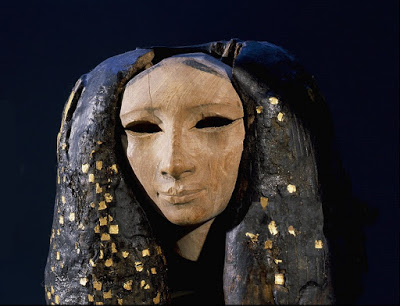
Head of the female statue – painted wood with gilding
Middle Kingdom – XIIth Dynasty
Provenance: Zone of the pyramid of Amenemhat to Licht – Excavations of the Metropolitan Museum of Art in New York – 1907
Egyptian Museum Cairo –Β JE 39380

What obviously impresses in this head of just over 10 cm, is the wide wig that framed it generously and should arrive at the shoulders, now missing. “The enveloping mass of the reported hair is worked in a darker wood and blackened with paint, it is attached to the head in lighter wood, using tenons.” The hair is black and fragments of gold, like so many small square touches bringing light and femininity, dot them. “The fact that the wig is particularly thin at the top, relative to the width of the lateral parts, suggests the presence of a crown or diadem.”

Head of female statue – painted wood with gilding
Middle Kingdom – XIIth Dynasty
Provenance: Zone of the pyramid of Amenemhat to Licht – Excavations of the Metropolitan Museum of Art in New York – 1907
Egyptian Museum Cairo – JE 39380

Who was this beautiful lady? A queen, a princess, a prominent person at the court of the sovereign? The quality of the work, the mastery of the artist, leave indeed to think that it can come from the workshops of Pharaoh. From the statue that represented it, in the foot, there remains only that face that does not identify it. Only her arms were found two years later in Situ.

The female statue head painted wood with gilding is often reproduced
Middle Kingdom – XIIth Dynasty
Provenance: Zone of the pyramid of Amenemhat to Licht – Excavations of the Metropolitan Museum of Art in New York – 1907

This head – which is also often used as a model to illustrate the beauty of the Egyptian women of antiquity – was discovered in 1907 in Lower Egypt, precisely in Licht, between Daschour and Meidoum. The city of Licht was created by Pharaoh Amenemhat I. “Not only to detach from Thebes and the followers of the last Montuhotep but also to keep an eye on the north and the Asian border, the city became the main royal residence during the twelfth and thirteenth dynasties … today give it another reality and another archaeological dimension than those that associate it with the two funerary monuments today reduced to two mounds: the pyramids of Amenemhat I and Sesostris I. ” (Egypt restored, T3, Sydney AufrΓ¨re, Jean-Claude Golvin).

TheΒ Metropolitan Museum of ArtΒ excavation siteΒ in New York on Licht site in 1907Β with the discovery of theΒ female statue head in painted wood with gildingΒ (JE 39380)Β of the XIIth Dynasty

As early as 1882, Gaston Maspero undertook excavations on the site, which had then enabled the identification of the pyramids. For practical reasons (there were sometimes up to 11 m of water, he said), however, he could not go to the funeral chamber. The study of the site was then resumed in 1894-1895 by the French Institute of Oriental Archaeology.

Then, in 1906, while Maspero was at the head of the Antiquities Department, the Metropolitan Museum of Art applied for and obtained the concession, and then settled for several seasons of excavations. Indeed, the Egyptian Department of MMA was created October 15, 1906, and its directors, and its new director, Alfred Morton Lythgoe, see there the interest of enriching their knowledge, their experience and their collections.

Thus, under the joint direction of the director, Herbert Eustis Winlock (Harvard) and Arthur C. Mace (Oxford), their first campaign, financed by private funds.150 workers are recruited: some, already ‘trained’ in excavations, come from Upper Egypt, others from neighbouring villages; their number will continue to grow over the years.

Head of the female statue – painted wood with gilding
Middle Kingdom – XIIth Dynasty
Provenance: Zone of the pyramid of Amenemhat to Licht
Excavations of the Metropolitan Museum of Art in New York – 1907
Egyptian Museum Cairo –Β JE 39380
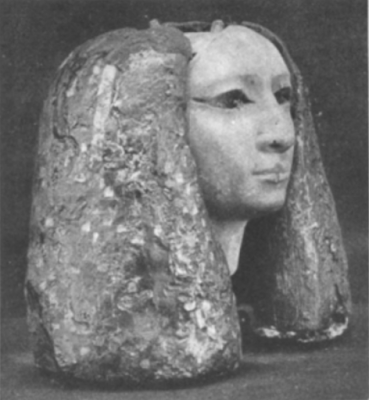
Reproduced for the first time in “The Metropolitan Museum of Art Bulletin” (No. 10 – Oct.1907)

The exact circumstances of the discovery of the head are not explained by Albert Lythgoe. In the October 1907 bulletin of the MMA, while it appears in the photo with the caption “Figure 2. Head of the wooden statuette from Lisht, 12th dynasty”, no details are given on the place where it was found. The author relates that the excavations concerned two sectors: that of the cemetery located to the west of the pyramid of Amenemhat, which delivered tombs of important figures of the XIIth dynasty, as well as an area located on a promontory. In all, more than 100 tombs were discovered for most of the twelfth dynasty. As the head is illustrative, opposite this paragraph, one can legitimately think that its discovery is related to those areas where dignitaries, relatives and members of the ruling family had the honour to rest, not far from Pharaoh.

This head is on display at the Egyptian Museum of Tahrir Square in Cairo under number JE 39380.

Marie Grillot
sources

The Egyptian Art at the time of the pyramids, National Museums 1999

Treasures of Egypt – The wonders of the Egyptian Museum in Cairo, under the direction of Francesco Tiradritti

The treasures of ancient Egypt in the Cairo Museum, National Geographic

Official Catalog – Egyptian Museum in Cairo, Mohamed Saleh, Sourouzian, Verlag Philipp von Zabern 1987

The restored Egypt, T3, Sydney AufrΓ¨re Jean-Claude Golvin

” The Metropolitan Museum of Art Bulletin
 “, Vol. 1, No. 12, Nov. 1906,

” The Egyptian Expedition ” AM Lythgoe, “The Metropolitan Museum of Art Bulletin”, Vol. 2, No. 4 (Apr. 1907),

” The Egyptian Expedition ” Albert M. Lythgoe, “The Metropolitan Museum of Art Bulletin”, Vol. 2, No. 7 (Jul. 1907)

” The Egyptian Expedition ” Albert M. Lythgoe, “The Metropolitan Museum of Art Bulletin”, Vol. 2, No. 10 (Oct.1907) 

Praha (Prague) 3

Standard
One idiot is an idiot.
two idiots are two idiots
ten thousand idiots are a political party!

Hi dear people, at first I’m lucky that I can write my third part of my journey to Prague because my computer or better to say the interaction to the web was horribly slow! But anyhow with some tricks, I’ve got through (don’t yammer again! πŸ˜‰

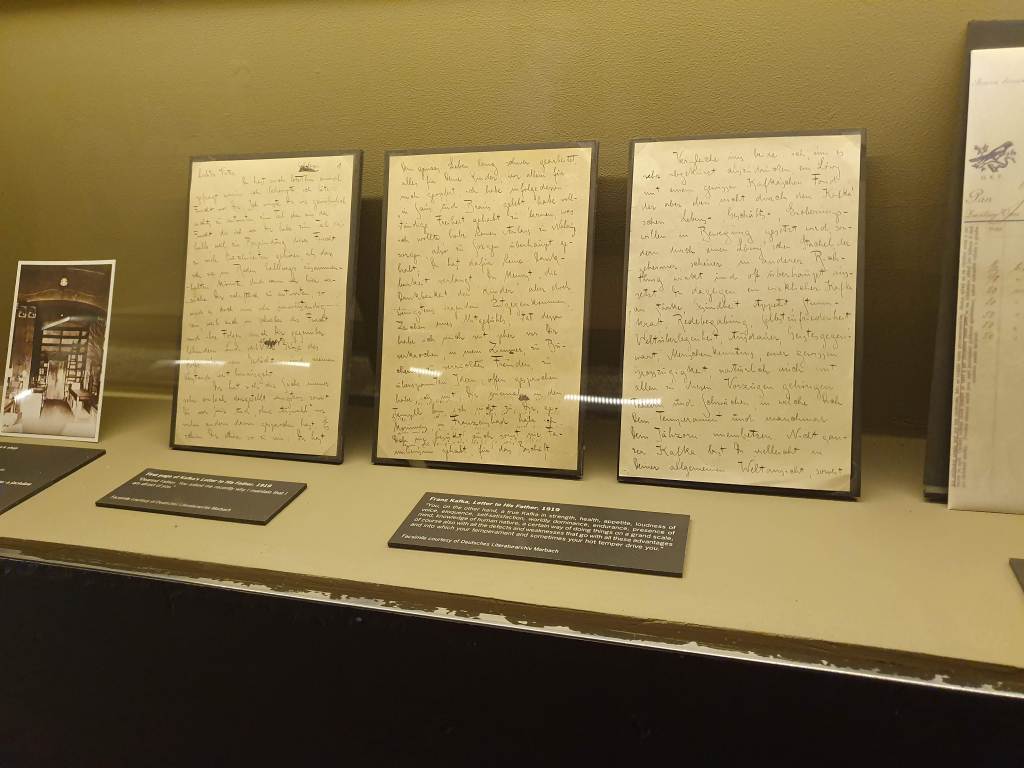
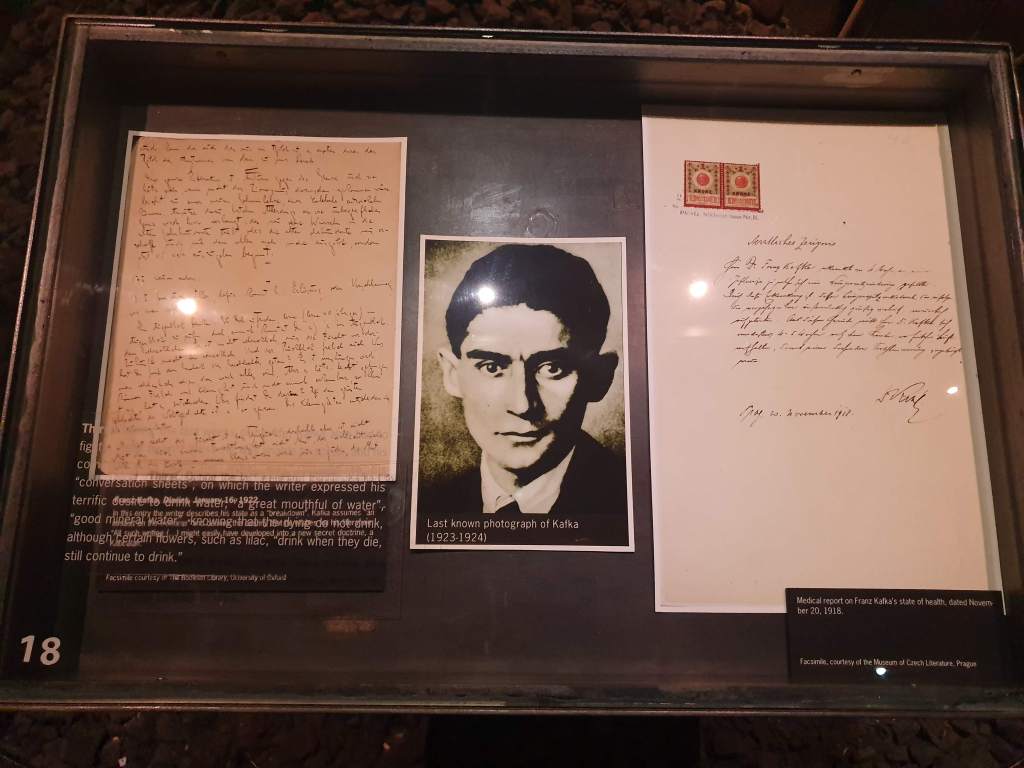
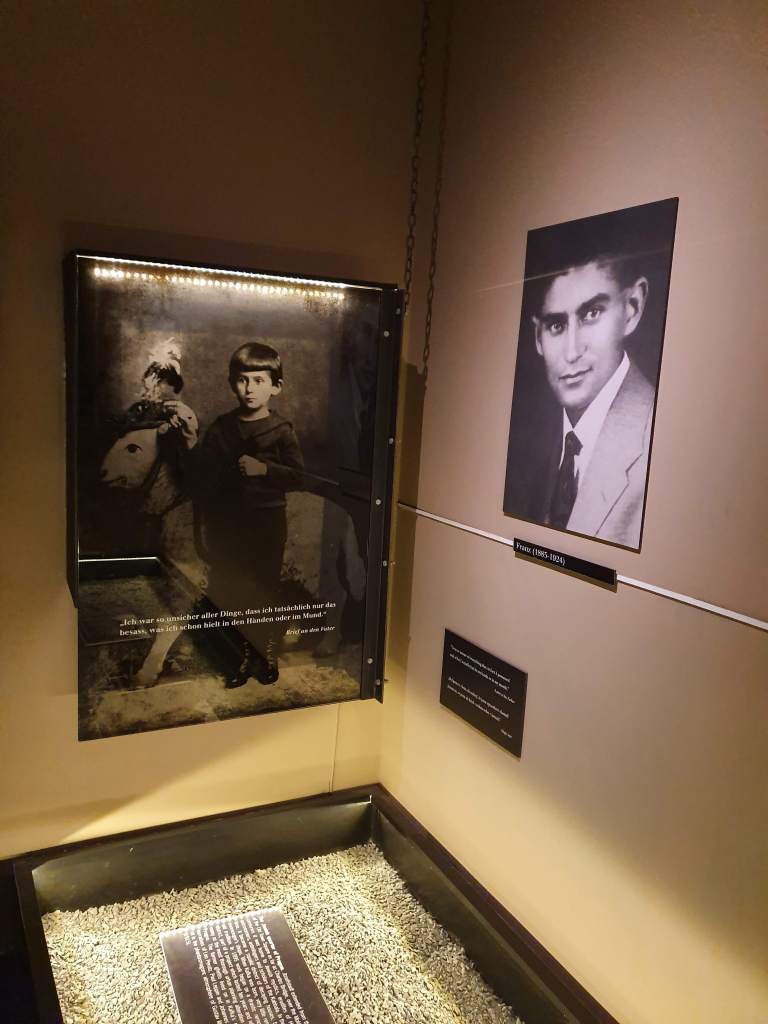
I began with Franz Kafka because it’s about our visit in Kafka’s museum and I have chosen one of his quote in German language (the translation has been subtitled πŸ™‚ because, he wrote his scriptures all in German and it seems that some of them had been translated in Czech by Dora Dymant but they haven’t succeeded in the Czech Republic those days.

Of course, you’re laughing! But believe me, it was the entry behind these two funny statues standing there and … πŸ˜‚

Anyway, I know Franz Kafka since I was about twenty-five, at first I have read “Process”, of course, translated in Persian and in such a situation the translator is almost as important as the writer him/herself. therefore, the first impression or effect was not so strong as I read the next one “The Metamorphosis” or The Transformation.

This book was translated by a Persian writer, the Persian writer, whom I much appreciated much; his name is Sadegh Hedayat https://en.wikipedia.org/wiki/Sadegh_Hedayat

I would say I love him, he was and is the best Persian writer as I believe in, and he was so similar to Kafka as he writing such a protesting novel against the dictatorship of the Persian’s Shah regimes (the Father and the son) and in early 1951 in Paris commit suicide.

Sadegh Hedayat 1903-1951

Anyway, this book was the great thunder which hit my brain awakening to work! He has written his books mostly also in French.

This book was the one which shown me who Franz Kafka is and how he wrote about very simple people like me and you, who are confronting every day with the environment in our society and try to fix it.

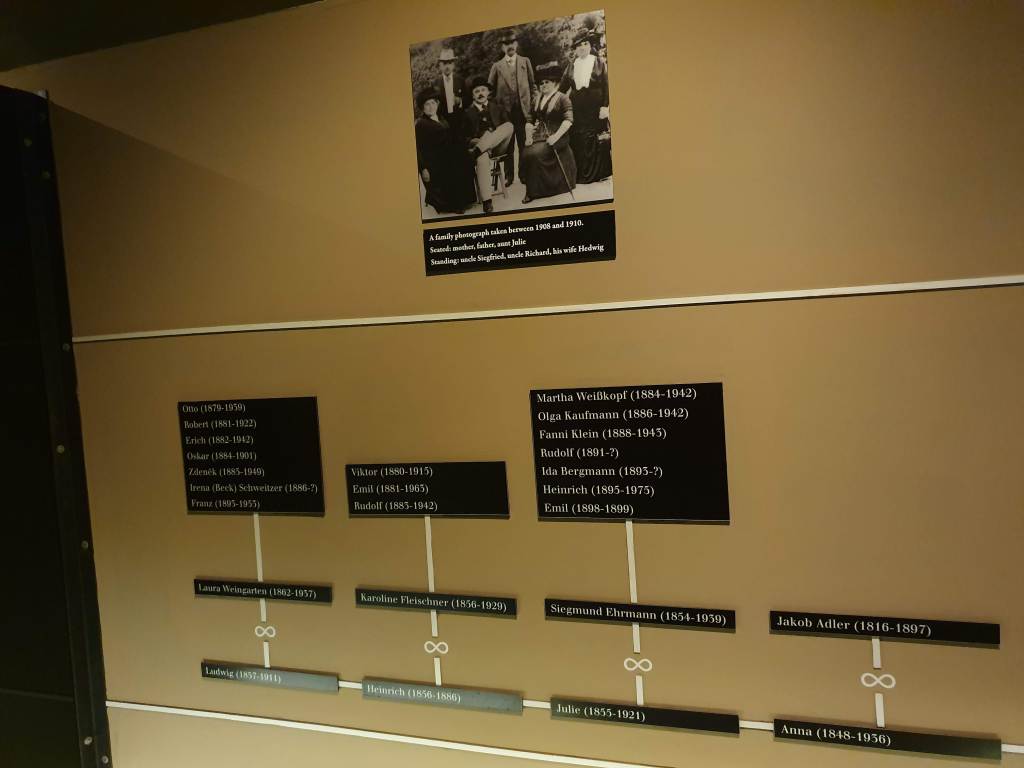
His sibling

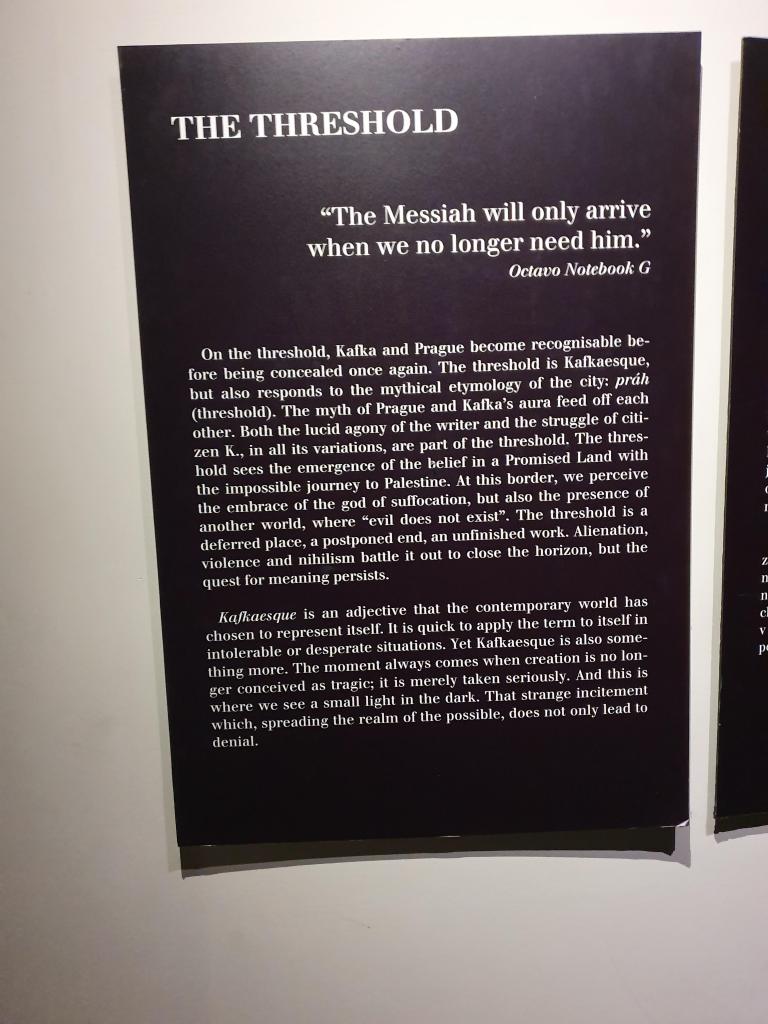
The Threshold The Messiah will arrive when we no longer need him; it reminded me of a novel by Dostoevsky; The Brothers Karamazov.

At the end I share an artwork of the head of Franz Kafka in Prague πŸ™‚ have a beautiful Weekend ❀

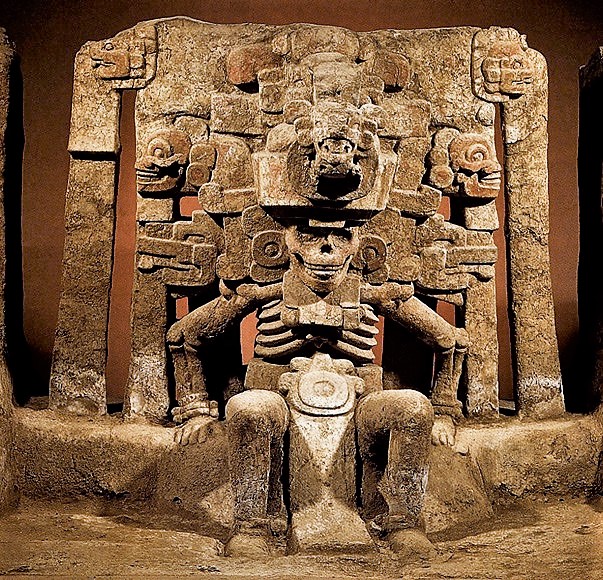
Actually, They come all from the original ancient history!

Standard
via Mexican Folk Art Guide

Hi Friends. it’s a holiday today in some of the states in Germany (the catholic ones) not because of the Halloween but because of an old catholic ceremony to honoured the beloved ones who past away. The All Saint’s Day (here we call it Allerheiligen) it is a day to go to the cemeteries and remember of the loss.

I am at home to take the benefit of this but not going to the cemetery, not only because of my nonreligious opinion but surely for me it isn’t necessary to go to the cemetery to remember my beloved one, I have them in my heart and when I go there it’s just to look after if everything is okay!

So now the reason of my writing is that I read an article in The Conversation a very interesting Website about the very ceremony of today by catholic, is not their invention but originally the Aztecs had it in those days. https://theconversationus.cmail19.com/t/r-l-jddthkjt-uihidylylr-n/

Mexico’s Day of the Dead begins with an overnight graveside vigil on Oct. 31.Β AP Photo/Marco Ugarte
WilderUtopia.com
kmlockwood.com

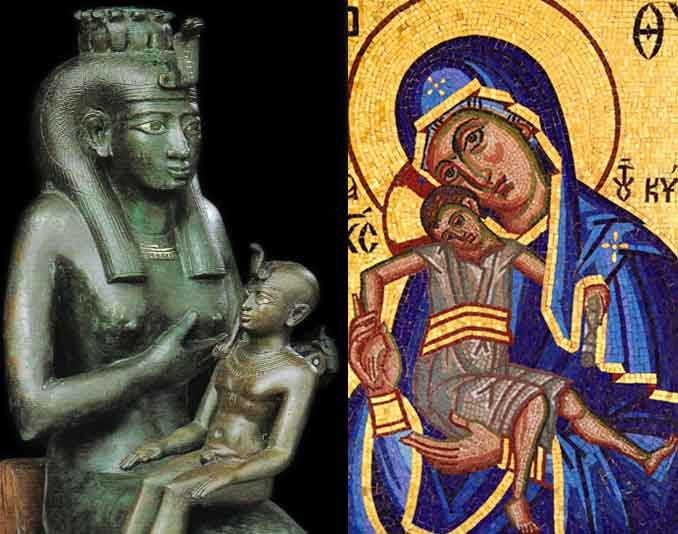
In the older history; about Mary & Jesus and Isis & Horus

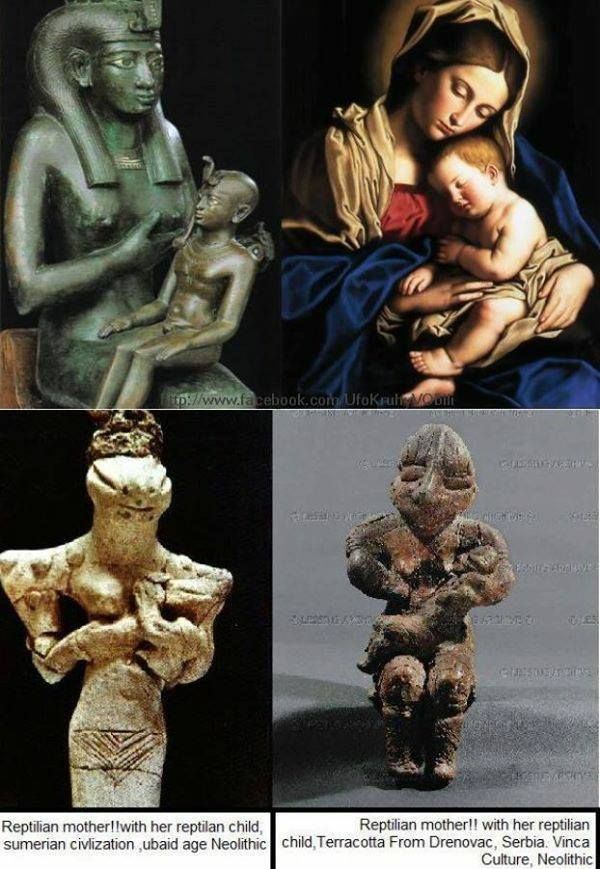
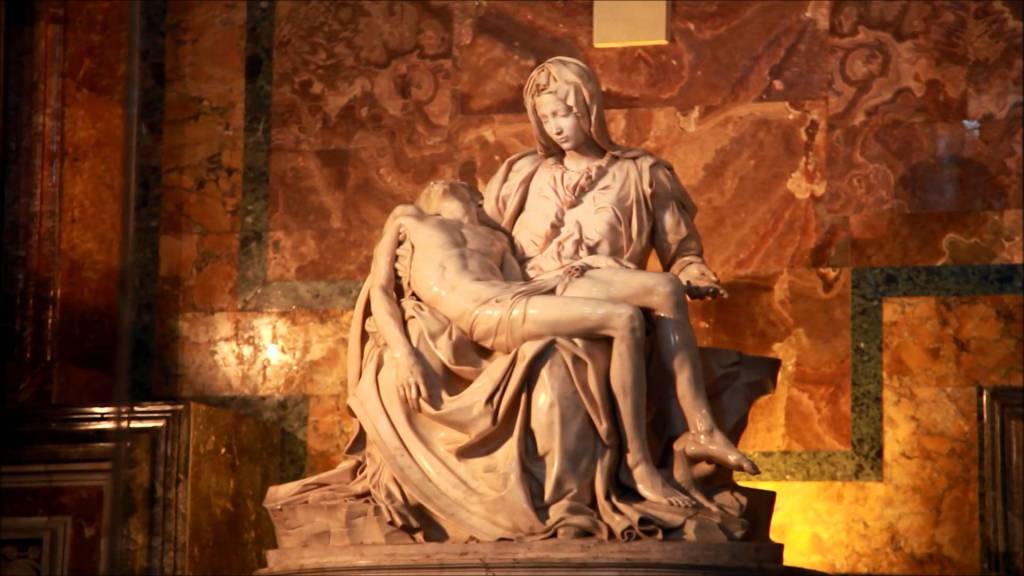
It’s really obvious as we look into the ancient history of mankind, we can find many similarities in between; for example, the famous Pieta(s) which isn’t found by the Christ on Mary’s lap:

hiukkagoddess.wordpress.com

with Egyptian Goddess Isis with her son Horus;

There are similar;

Eye of Horus Metaphysical

As we can find much more of these similarities in the past;

www.pinterest.com

I have found it always exciting to look after our history and from where have been all come from? There must be something important in our ancient time which had influenced all through history until now.

Happy Halloween if celebrate it πŸ™‚ πŸ’–πŸ’–

Is Death An Illusion? Study Suggests YES!

Standard

An amazing report on an amazing issue πŸ™‚ ❀

via http://in5d.com/illusion-death/

Is Death An Illusion? Study Suggests YES!

by Robert Lanza

After the death of his old friend, Albert Einstein said β€œNow Besso has departed from this strange world a little ahead of me. That means nothing. People like us … know that the distinction between past, present and future is only a stubbornly persistent illusion.”

New evidence continues to suggest that Einstein was right – death is an illusion.

Our classical way of thinking is based on the belief that the world has an objective observer-independent existence. But a long list of experiments shows just the opposite. We think life is just the activity of carbon and an admixture of molecules – we live awhile and then rot into the ground.

We believe in death because we’ve been taught we die. Also, of course, because we associate ourselves with our body and we know bodies die. End of story. But biocentrism – a new theory of everything – tells us death may not be the terminal event we think. Amazingly, if you add life and consciousness to the equation, you can explain some of the biggest puzzles of science. For instance, it becomes clear why space and time – and even the properties of matter itself – depend on the observer. It also becomes clear why the laws, forces, and constants of the universe appear to be exquisitely fine-tuned for the existence of life.

Until we recognize the universe in our heads, attempts to understand reality will remain a road to nowhere.

Consider the weather β€˜outside’: You see a blue sky, but the cells in your brain could be changed so the sky looks green or red. In fact, with a little genetic engineering we could probably make everything that is red vibrate or make a noise, or even make you want to have sex like with some birds. You think its bright out, but your brain circuits could be changed so it looks dark out. You think it feels hot and humid, but to a tropical frog it would feel cold and dry. This logic applies to virtually everything. Bottom line: What you see could not be present without your consciousness.

In truth, you can’t see anything through the bone that surrounds your brain. Your eyes are not portals to the world. Everything you see and experience right now – even your body – is a whirl of information occurring in your mind. According to biocentrism, space and time aren’t the hard, cold objects we think. Wave your hand through the air – if you take everything away, what’s left? Nothing. The same thing applies for time. Space and time are simply the tools for putting everything together.

Consider the famous two-slit experiment. WhenΒ scientists watch a particle pass through two slits in a barrier, the particle behaves like a bullet and goes through one slit or the other. But if you don’t watch, it acts like a wave and can go through both slits at the same time. So how can a particle change its behavior depending on whether you watch it or not? The answer is simple – reality is a process that involves your consciousness.

Or consider Heisenberg’s famous uncertainty principle. If there is really a world out there with particles just bouncing around, then we should be able to measure all their properties. But you can’t. For instance, a particle’s exact location and momentum can’t be known at the same time. So why should it matter to a particle what you decide to measure? And how can pairs of entangled particles be instantaneously connected on opposite sides of the galaxy as if space and time don’t exist? Again, the answer is simple: because they’re not just β€˜out there’ – space and time are simply tools of our mind.

Death doesn’t exist in a timeless, spaceless world. Immortality doesn’t mean a perpetual existence in time, but resides outside of time altogether.

Our linear way of thinking about time is also inconsistent with another series of recent experiments. In 2002, scientists showed that particles of light β€œphotons” knew – in advance – what their distant twins would do in the future. They tested the communication between pairs of photons. They let one photon finish its journey – it had to decide whether to be either a wave or a particle. Researchers stretched the distance the other photon took to reach its own detector. However, they could add a scrambler to prevent it from collapsing into a particle. Somehow, the first particle knew what the researcher was going to do before it happened – and across distances instantaneously as if there were no space or time between them. They decide not to become particles before their twin even encounters the scrambler. It doesn’t matter how we set up the experiment. Our mind and its knowledge is the only thing that determines how they behave. Experiments consistently confirm these observer-dependent effects.

Bizarre? Consider another experiment that was recently published in the prestigious scientific journal Science (Jacques et al, 315, 966, 2007). Scientists in France shot photons into an apparatus, and showed that what they did could retroactively change something that had already happened in the past. As the photons passed a fork in the apparatus, they had to decide whether to behave like particles or waves when they hit a beam splitter. Later on – well after the photons passed the fork – the experimenter could randomly switch a second beam splitter on and off. It turns out that what the observer decided at that point, determined what the particle actually did at the fork in the past. At that moment, the experimenter chose his past.

Of course, we live in the same world. But critics claim this behavior is limited to the microscopic world. But this β€˜two-world’ view (that is, one set of physical laws for small objects, and another for the rest of the universe including us) has no basis in reason and is being challenged in laboratories around the world. A couple years ago, researchers published a paper in Nature (Jost et al, 459, 683, 2009) showing that quantum behavior extends into the everyday realm. Pairs of vibrating ions were coaxed to entangle so their physical properties remained bound together when separated by large distances (β€œspooky action at a distance,” as Einstein put it). Other experiments with huge molecules called β€˜Buckyballs’ also show that quantum reality extends beyond the microscopic world. And in 2005, KHC03 crystals exhibited entanglement ridges one-half inch high, quantum behavior nudging into the ordinary world of human-scale objects.

We generally reject the multiple universes of Star Trek as fiction, but it turns out there is more than a morsel of scientific truth to this popular genre. One well-known aspect of quantum physics is that observations can’t be predicted absolutely. Instead, there is a range of possible observations each with a different probability. One mainstream explanation, the β€œmany-worlds” interpretation, states that each of these possible observations corresponds to a different universe (the β€˜multiverse’). There are an infinite number of universes and everything that could possibly happen occurs in some universe. Death does not exist in any real sense in these scenarios. All possible universes exist simultaneously, regardless of what happens in any of them.

Life is an adventure that transcends our ordinary linear way of thinking. When we die, we do so not in the random billiard-ball-matrix but in the inescapable-life-matrix. Life has a non-linear dimensionality – it’s like a perennial flower that returns to bloom in the multiverse.

β€œThe influences of the senses,” said Ralph Waldo Emerson β€œhas in most men overpowered the mind to the degree that the walls of space and time have come to look solid, real and insurmountable; and to speak with levity of these limits in the world is the sign of insanity.”

About the author:Β Robert Lanza has published extensively in leading scientific journals. His book β€œBiocentrism: How Life and Consciousness are the Keys to Understanding the True Nature of the Universe” lays out the scientific argument for his theory of everything.

See EXCLUSIVE In5D videos and ad free articles on Patreon for a minimal donation! https://www.patreon.com/in5d

Follow In5D on InstagramFacebookYouTubeTwitterWG1WGAPatreon, and OnStellar

Praha (Prague) 2

Standard

The Freiberger Mulde (CzechFreiberskΓ‘ Mulda, also called the Γ–stliche Mulde or Eastern Mulde) is the right-hand, 124-kilometre-long (77 mi) headstream of the river Mulde, whose catchment covers an area of 2,981 km2 (1,151 sq mi) in the Czech Republic and Germany in central Saxony. It has a volumetric flow of 35.3 m3/s (1,250 cu ft/s) which is greater than that of the other headstream, the Zwickauer Mulde (or Westliche Mulde or Western Mulde) who flow is about 26.4 m3/s (930 cu ft/s),[2] which is nevertheless the longer stream.

The source of the river is in theΒ Ore Mountains, nearΒ Moldava, in theΒ Czech Republic. It runs northwest, crossing the border with Germany after a few km, toΒ FreibergΒ (hence the name), and further northwest throughΒ Nossen,Β DΓΆbelnΒ andΒ Leisnig. A few km north ofΒ Colditz, the Freiberger Mulde is joined by theΒ Zwickauer MuldeΒ to form theΒ Mulde. The Mulde is a tributary of theΒ Elbe. via; https://en.wikipedia.org/wiki/Freiberger_Mulde

I just have to think of a lovely river-song which I loved and used to play on the streets in the youngest times πŸ˜‰

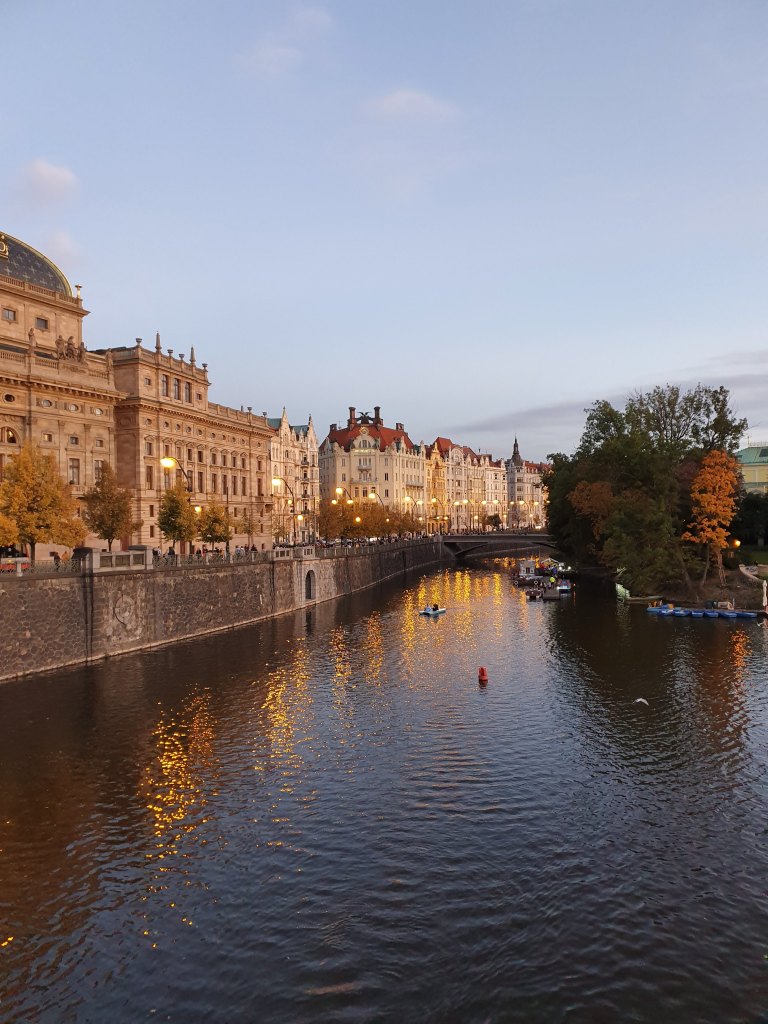
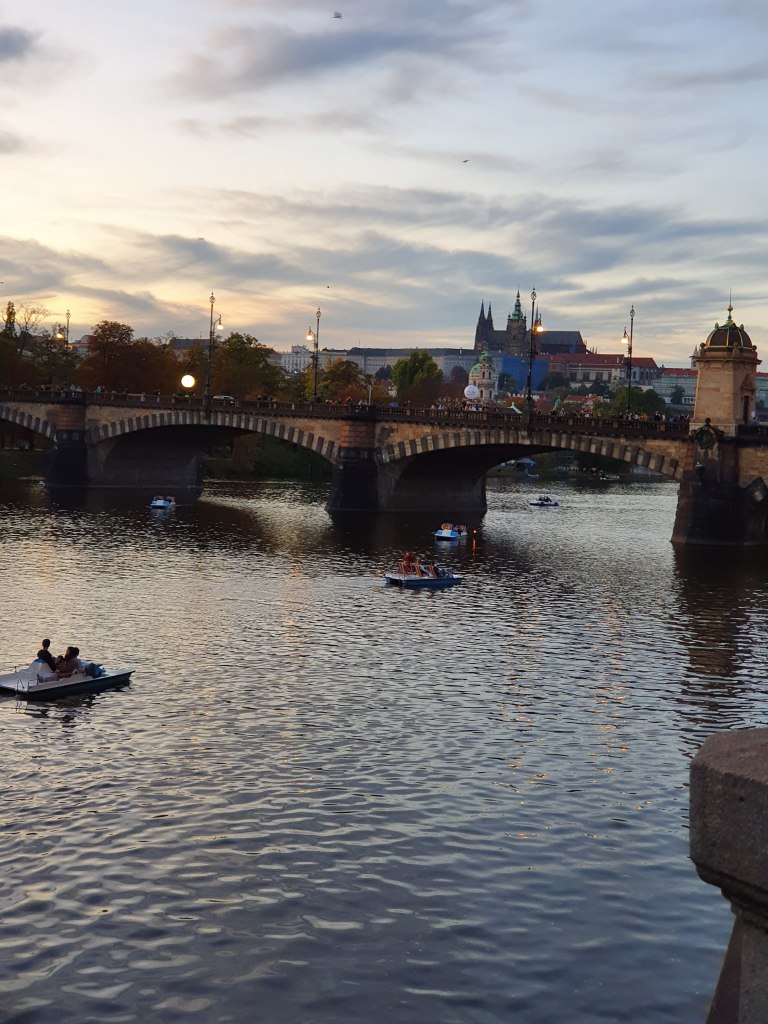
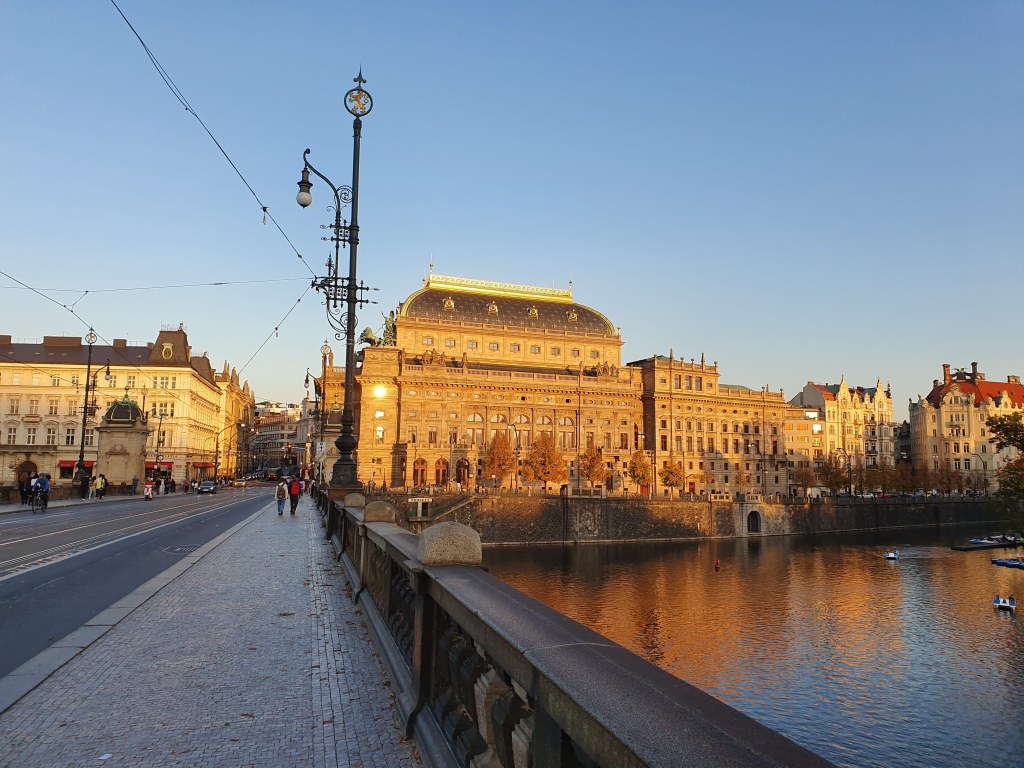
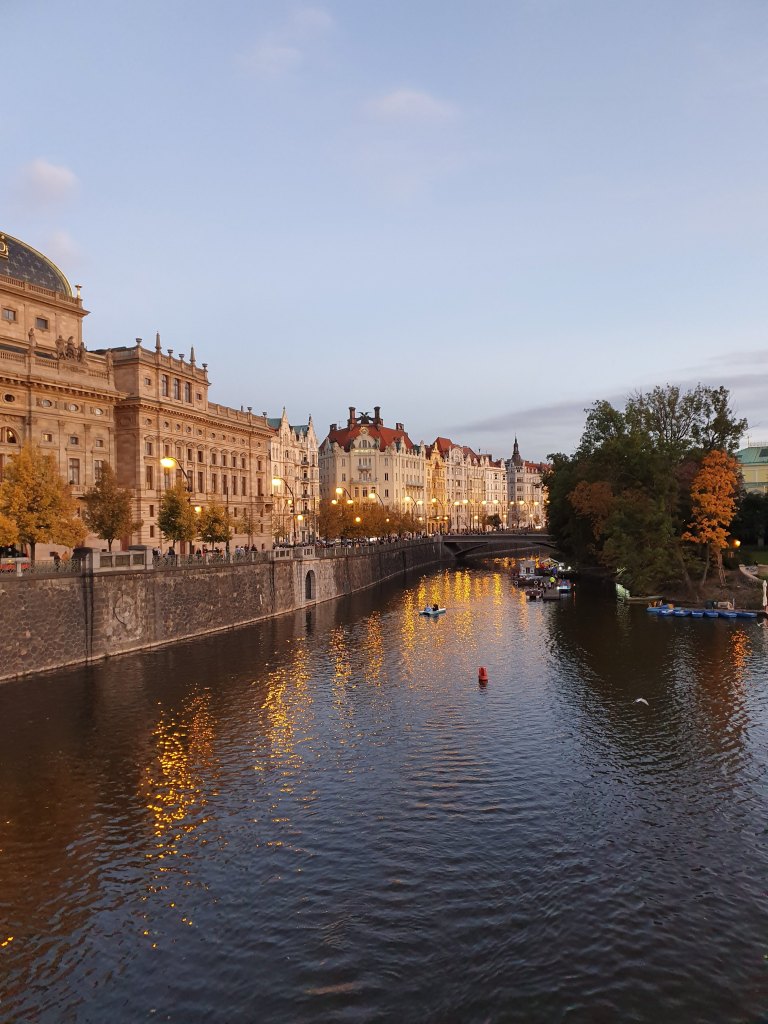
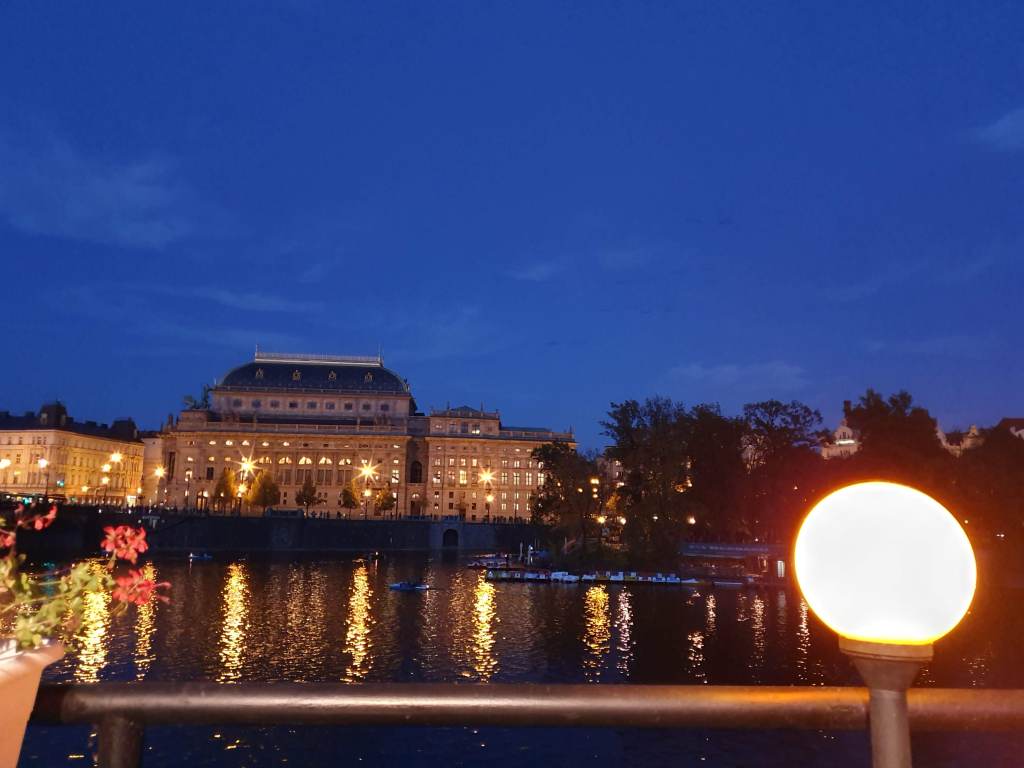
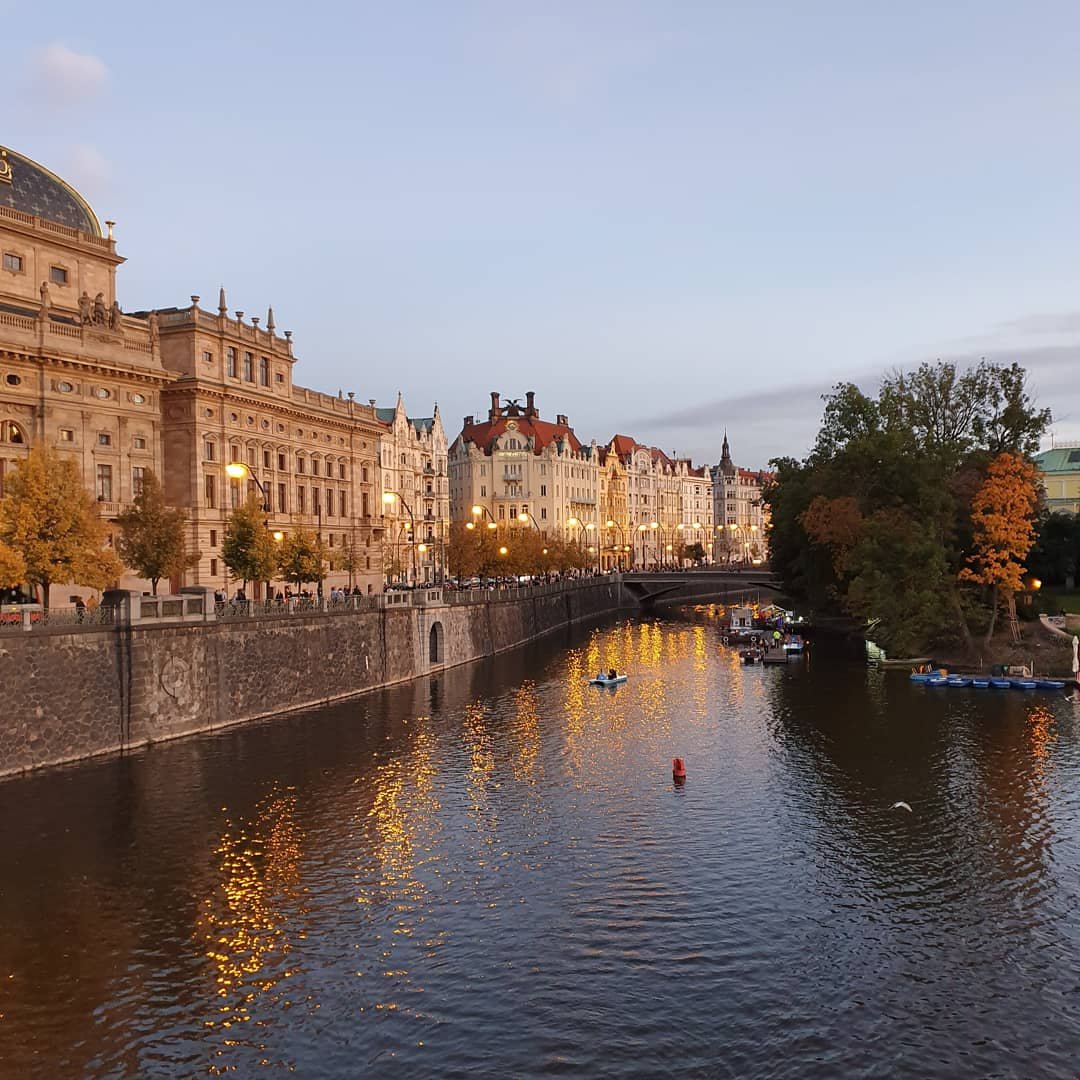
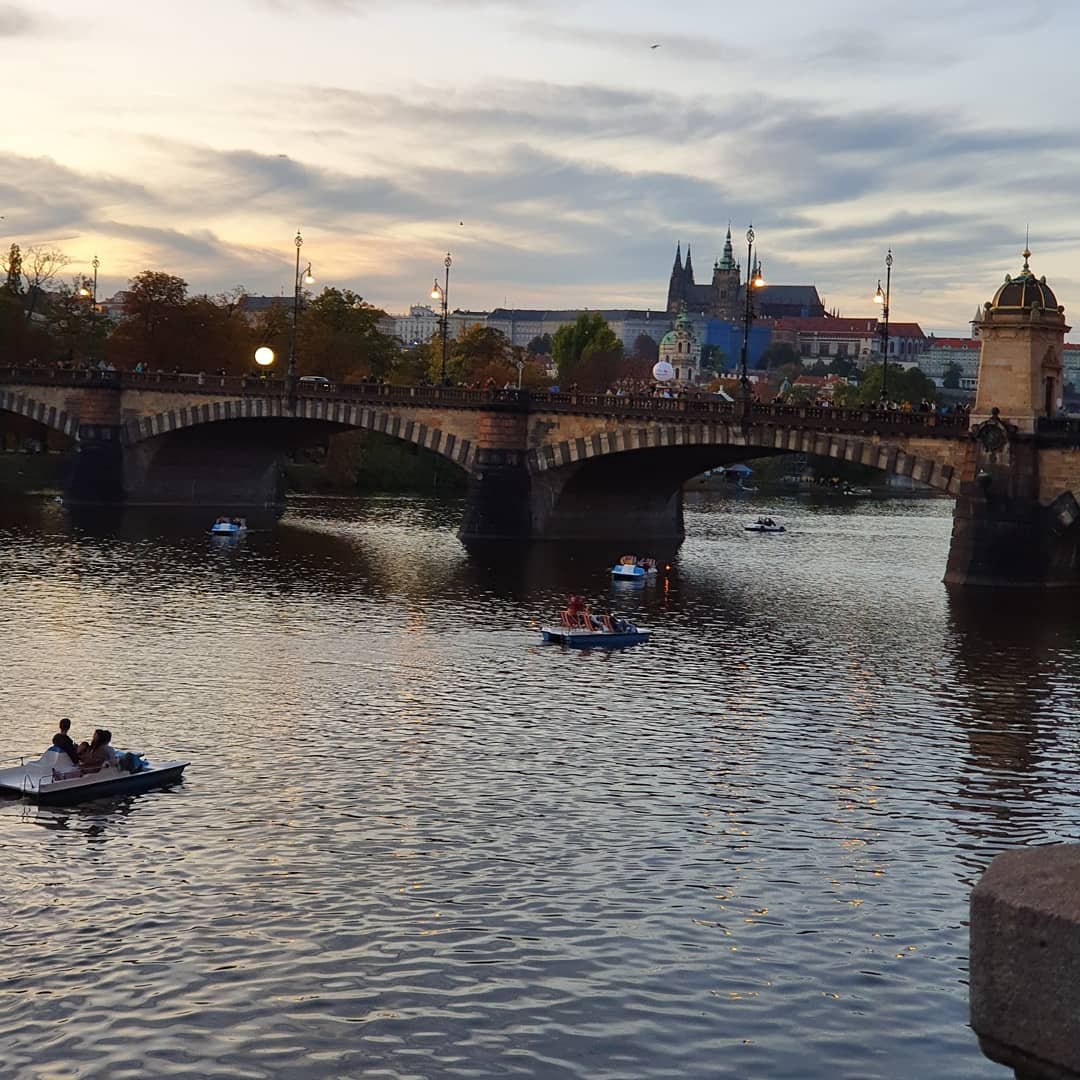
That is really one of the most beautiful and calm rivers as I’ve ever seen. As I walked along with this marvellous streaming, my mind was floating with Smetana’s Vltava (The Moldau), great Czech composer. http://BedΕ™ich Smetana – Wikipedia

this piece fulfilled my soul as I’s watching the sparkles on the water surface.

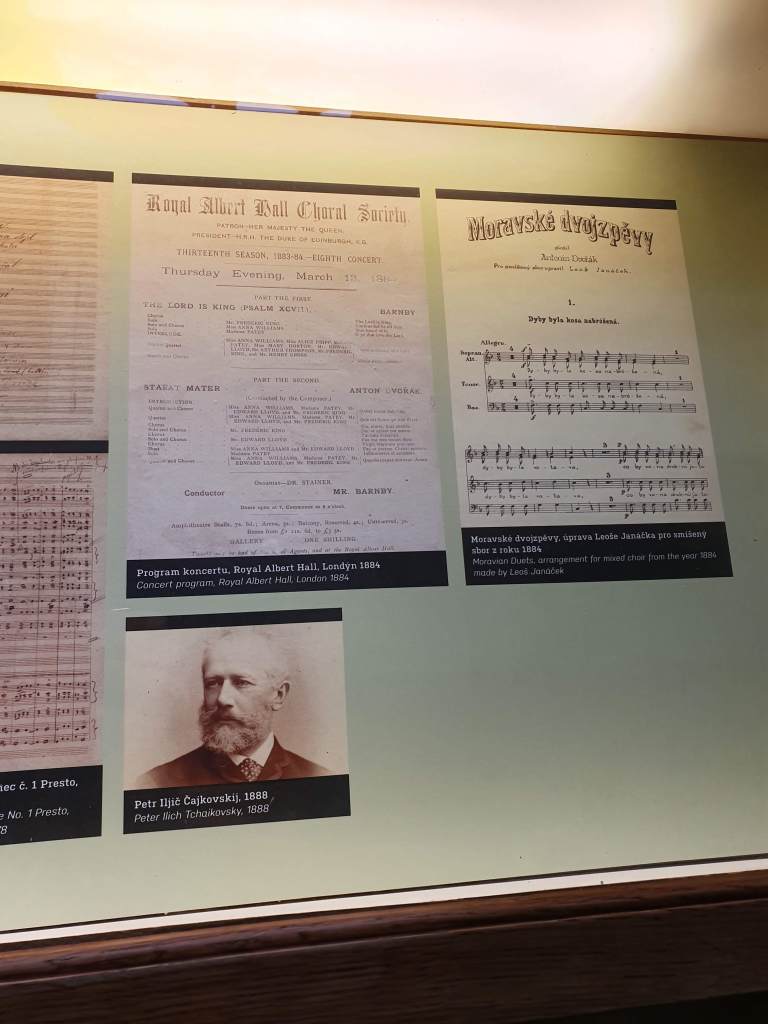
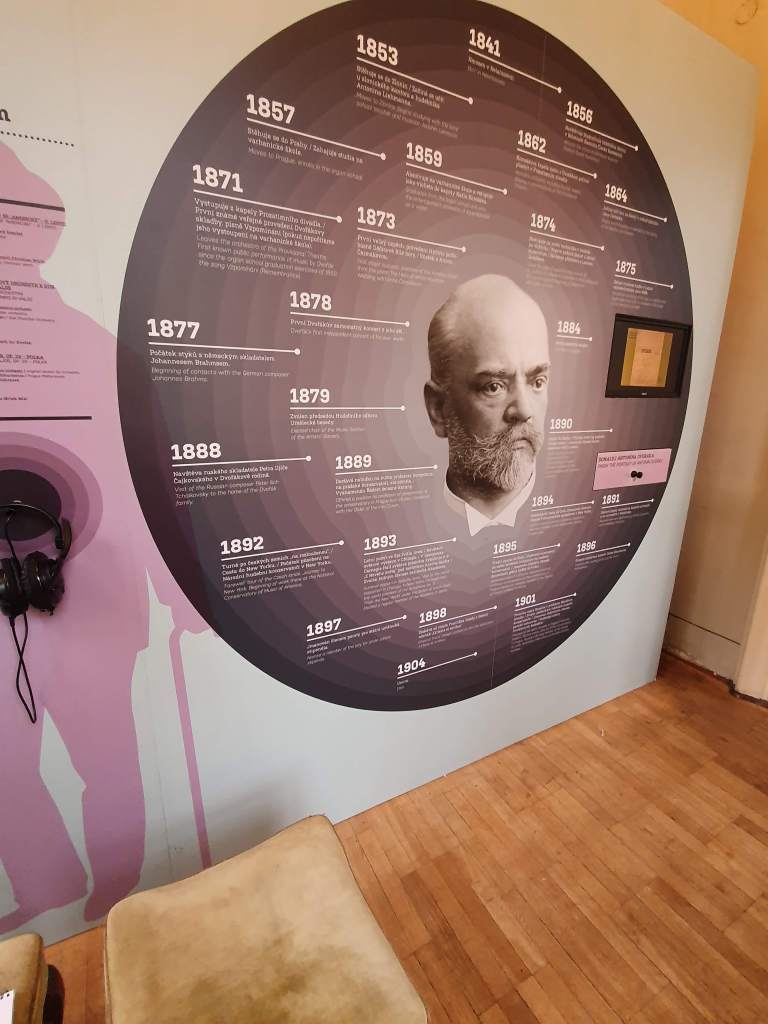
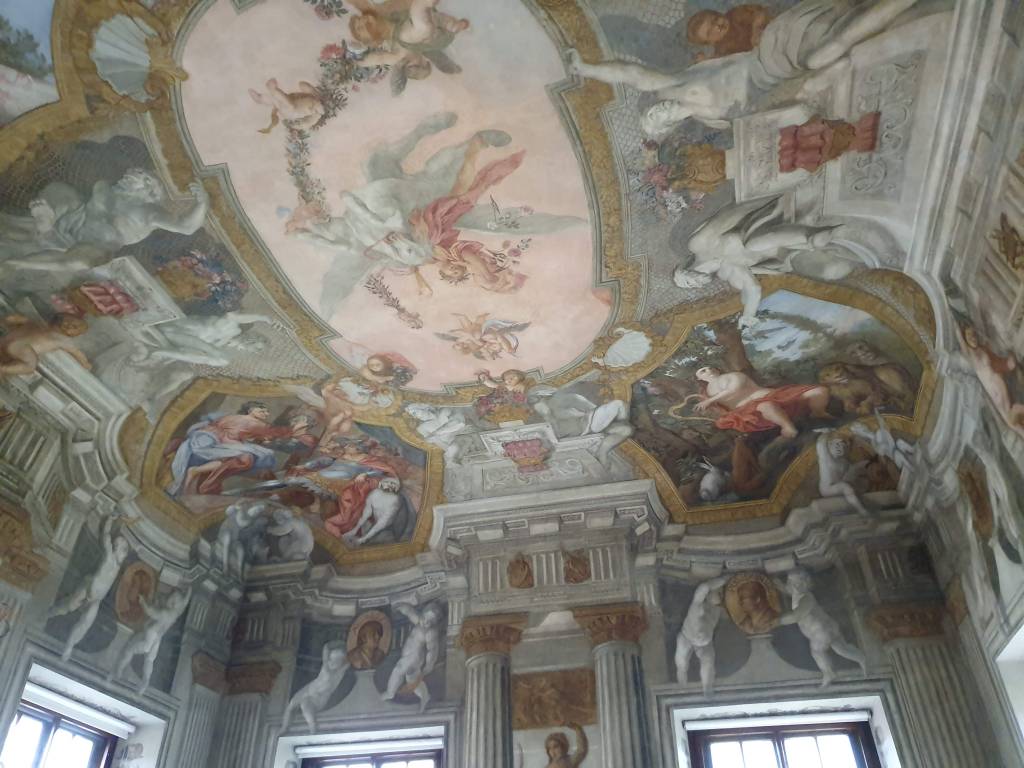
Yes, Prague is identical with its Art. As we went to the house of AntonΓ­n DvoΕ™Γ‘k, one of the greatest musician in the world it was an amazing experience. https://en.wikipedia.org/wiki/Anton%C3%ADn_Dvo%C5%99%C3%A1k

I have lost much time to search for one piece by Dvorak which I love but couldn’t find it.. damn!! Anyway, I have not share yet my favourite piece; Franz Kafka, and I will try next weekend to do it s, then; to be continued πŸ˜‰ . Thank you all lovely friends and wish you a wonderful weekend ❀ ❀

Praha (Prague) 1

Standard

A short introduction;

I don’t really lament or as in German we say; jammern (yammer) but I’m really to be deplored! I have had planed since Wednesday when I came back from Prague trip to write a journal and the Saturday is for me the only chance but the God of luck wasn’t agreed to give me the chance and I had to fight all my morning and forenoon to get the pictures into my PC!! I have used a lot of tricks and ways which I knew but finally just could get them in an afternoon!

Anyway, let me try at least to begin it if I should make it as some partitions. As I still believe that I’m not a writer (as a professional at least) I need a longer time to write a story; (with a confess that I type with one finger each hand πŸ˜€ )
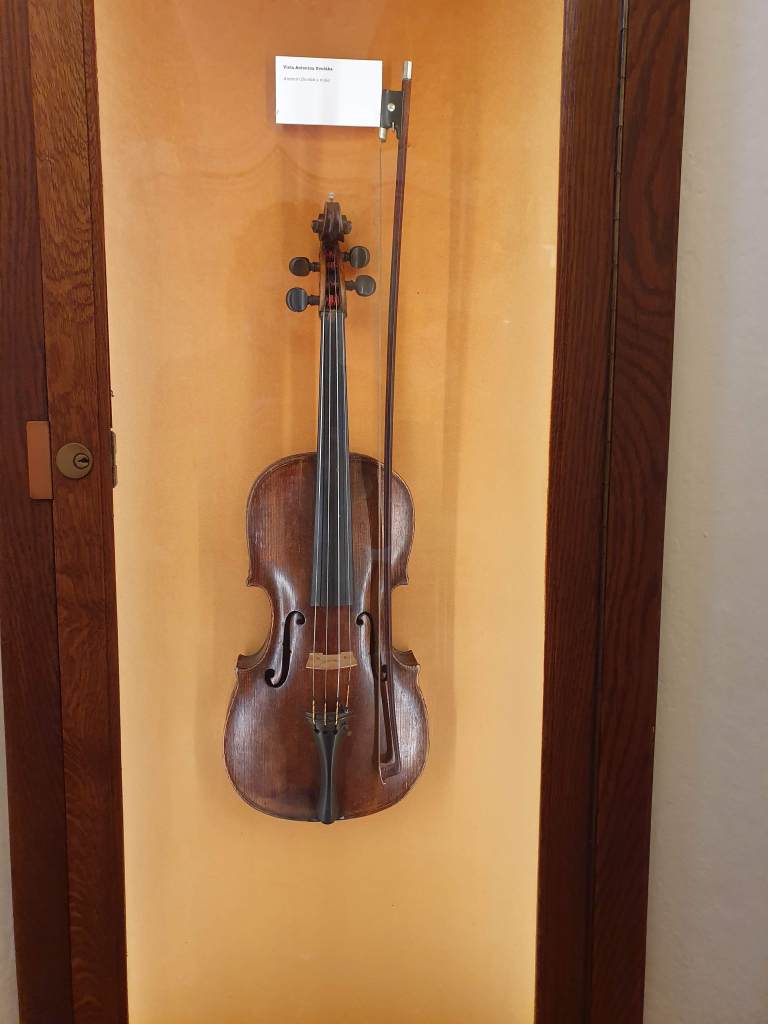
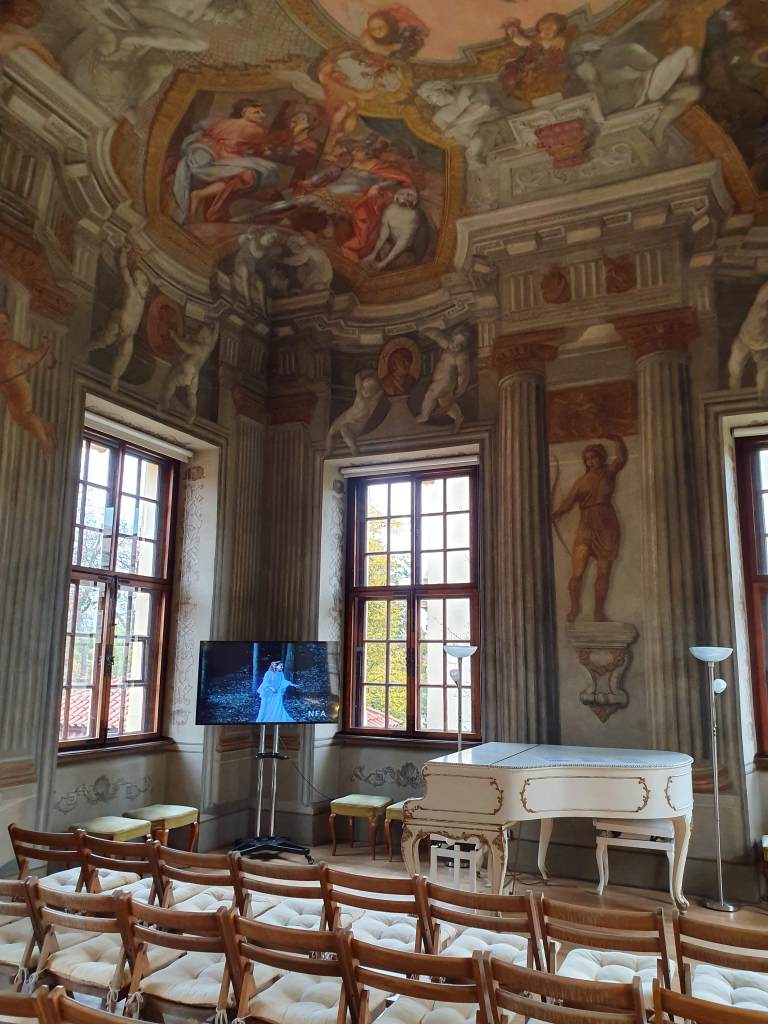
So; I wanted to see Prague because of my long but not lost interest since my youth. I know the city from its intelligence!; As I have heard of so many artists history and scene in the legendary pops; especially Franz Kafka’s tells. And also the 68’s Prague Spring with Alexander Dubček which it failed by the inversions USSR. https://en.wikipedia.org/wiki/Alexander_Dub%C4%8Dek

Alexander Dubček

Thanks my adorable wife, as she is caring for me and my wishes, arranged this short but amazing trip to see my idol(s). She knows me well as she might think that I have not so much time and must not take my all wishes with me into the grave. Please don’t think I’m exaggerating something; if you’d live in a country of the “so-called”; third world but have a brain on the beat, you’d surely have many wishes!

Before I share the pictures I want to show my appreciations to this; Czechoslovakia or these countries; Czech Republic & Slovakia for their separation in a peaceful condition which is unique in the human’s history. The Dissolution of Czechoslovakia https://en.wikipedia.org/wiki/Dissolution_of_Czechoslovakia

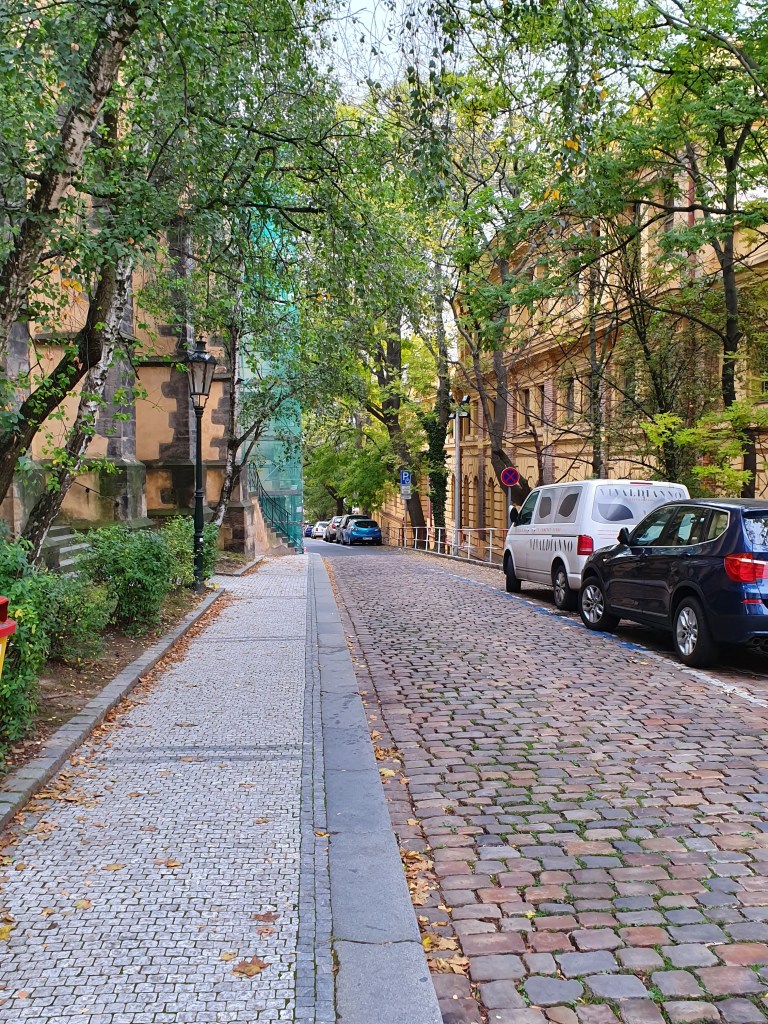
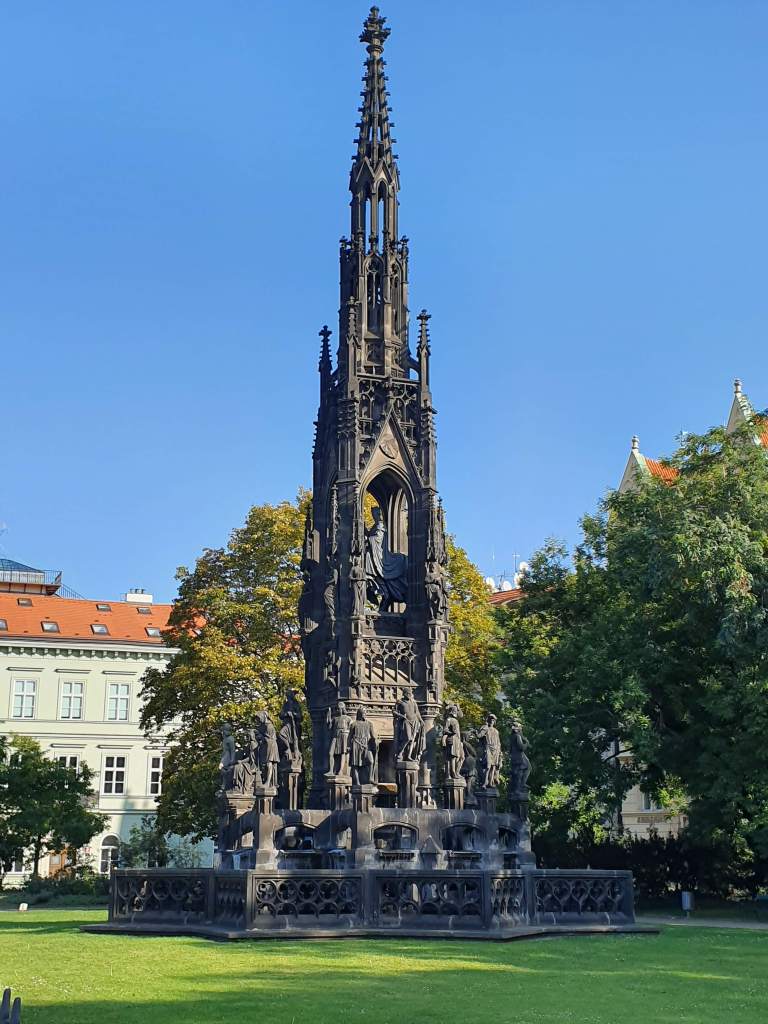
we can really recognize the whole city as a museum ❀

to be continued ❀ ❀