When Einstein Met Tagore: A Remarkable Meeting of Minds on the Edge of Science and Spirituality

Standard

Collision and convergence in Truth and Beauty.

via https://www.brainpickings.org/

On July 14, 1930, Albert Einstein welcomed into his home on the outskirts of Berlin the Indian philosopher, musician, and Nobel laureate Rabindranath Tagore. The two proceeded to have one of the most stimulating, intellectually riveting conversations in history, exploring the age-old friction between science and religionScience and the Indian Tradition: When Einstein Met Tagore (public library) recounts the historic encounter, amidst a broader discussion of the intellectual renaissance that swept India in the early twentieth century, germinating a curious osmosis of Indian traditions and secular Western scientific doctrine.

The following excerpt from one of Einstein and Tagore’s conversations dances between previously examined definitions of sciencebeautyconsciousness, and philosophy in a masterful meditation on the most fundamental questions of human existence.

EINSTEIN: Do you believe in the Divine as isolated from the world?

TAGORE: Not isolated. The infinite personality of Man comprehends the Universe. There cannot be anything that cannot be subsumed by the human personality, and this proves that the Truth of the Universe is human Truth.

I have taken a scientific fact to explain this — Matter is composed of protons and electrons, with gaps between them; but matter may seem to be solid. Similarly humanity is composed of individuals, yet they have their interconnection of human relationship, which gives living unity to man’s world. The entire universe is linked up with us in a similar manner, it is a human universe. I have pursued this thought through art, literature and the religious consciousness of man.

EINSTEIN: There are two different conceptions about the nature of the universe: (1) The world as a unity dependent on humanity. (2) The world as a reality independent of the human factor.

TAGORE: When our universe is in harmony with Man, the eternal, we know it as Truth, we feel it as beauty.

EINSTEIN: This is the purely human conception of the universe.

TAGORE: There can be no other conception. This world is a human world — the scientific view of it is also that of the scientific man. There is some standard of reason and enjoyment which gives it Truth, the standard of the Eternal Man whose experiences are through our experiences.

EINSTEIN: This is a realization of the human entity.

TAGORE: Yes, one eternal entity. We have to realize it through our emotions and activities. We realized the Supreme Man who has no individual limitations through our limitations. Science is concerned with that which is not confined to individuals; it is the impersonal human world of Truths. Religion realizes these Truths and links them up with our deeper needs; our individual consciousness of Truth gains universal significance. Religion applies values to Truth, and we know this Truth as good through our own harmony with it.

EINSTEIN: Truth, then, or Beauty is not independent of Man?

TAGORE: No.

EINSTEIN: If there would be no human beings any more, the Apollo of Belvedere would no longer be beautiful.

TAGORE: No.

EINSTEIN: I agree with regard to this conception of Beauty, but not with regard to Truth.

TAGORE: Why not? Truth is realized through man.

EINSTEIN: I cannot prove that my conception is right, but that is my religion.

TAGORE: Beauty is in the ideal of perfect harmony which is in the Universal Being; Truth the perfect comprehension of the Universal Mind. We individuals approach it through our own mistakes and blunders, through our accumulated experiences, through our illumined consciousness — how, otherwise, can we know Truth?

EINSTEIN: I cannot prove scientifically that Truth must be conceived as a Truth that is valid independent of humanity; but I believe it firmly. I believe, for instance, that the Pythagorean theorem in geometry states something that is approximately true, independent of the existence of man. Anyway, if there is a reality independent of man, there is also a Truth relative to this reality; and in the same way the negation of the first engenders a negation of the existence of the latter.

TAGORE: Truth, which is one with the Universal Being, must essentially be human, otherwise whatever we individuals realize as true can never be called truth – at least the Truth which is described as scientific and which only can be reached through the process of logic, in other words, by an organ of thoughts which is human. According to Indian Philosophy there is Brahman, the absolute Truth, which cannot be conceived by the isolation of the individual mind or described by words but can only be realized by completely merging the individual in its infinity. But such a Truth cannot belong to Science. The nature of Truth which we are discussing is an appearance – that is to say, what appears to be true to the human mind and therefore is human, and may be called maya or illusion.

EINSTEIN: So according to your conception, which may be the Indian conception, it is not the illusion of the individual, but of humanity as a whole.

TAGORE: The species also belongs to a unity, to humanity. Therefore the entire human mind realizes Truth; the Indian or the European mind meet in a common realization.

EINSTEIN: The word species is used in German for all human beings, as a matter of fact, even the apes and the frogs would belong to it.

TAGORE: In science we go through the discipline of eliminating the personal limitations of our individual minds and thus reach that comprehension of Truth which is in the mind of the Universal Man.

EINSTEIN: The problem begins whether Truth is independent of our consciousness.

TAGORE: What we call truth lies in the rational harmony between the subjective and objective aspects of reality, both of which belong to the super-personal man.

EINSTEIN: Even in our everyday life we feel compelled to ascribe a reality independent of man to the objects we use. We do this to connect the experiences of our senses in a reasonable way. For instance, if nobody is in this house, yet that table remains where it is.

TAGORE: Yes, it remains outside the individual mind, but not the universal mind. The table which I perceive is perceptible by the same kind of consciousness which I possess.

EINSTEIN: If nobody would be in the house the table would exist all the same — but this is already illegitimate from your point of view — because we cannot explain what it means that the table is there, independently of us.

Our natural point of view in regard to the existence of truth apart from humanity cannot be explained or proved, but it is a belief which nobody can lack — no primitive beings even. We attribute to Truth a super-human objectivity; it is indispensable for us, this reality which is independent of our existence and our experience and our mind — though we cannot say what it means.

TAGORE: Science has proved that the table as a solid object is an appearance and therefore that which the human mind perceives as a table would not exist if that mind were naught. At the same time it must be admitted that the fact, that the ultimate physical reality is nothing but a multitude of separate revolving centres of electric force, also belongs to the human mind.

In the apprehension of Truth there is an eternal conflict between the universal human mind and the same mind confined in the individual. The perpetual process of reconciliation is being carried on in our science, philosophy, in our ethics. In any case, if there be any Truth absolutely unrelated to humanity then for us it is absolutely non-existing.

It is not difficult to imagine a mind to which the sequence of things happens not in space but only in time like the sequence of notes in music. For such a mind such conception of reality is akin to the musical reality in which Pythagorean geometry can have no meaning. There is the reality of paper, infinitely different from the reality of literature. For the kind of mind possessed by the moth which eats that paper literature is absolutely non-existent, yet for Man’s mind literature has a greater value of Truth than the paper itself. In a similar manner if there be some Truth which has no sensuous or rational relation to the human mind, it will ever remain as nothing so long as we remain human beings.

EINSTEIN: Then I am more religious than you are!

TAGORE: My religion is in the reconciliation of the Super-personal Man, the universal human spirit, in my own individual being.

Science and the Indian Tradition: When Einstein Met Tagore is a sublime read in its entirety. Complement it with physicist Lisa Randall on the crucial differences between how art, science, and religion explain the universe, then revisit Einstein’s correspondence with Freud about violence, peace, and human nature, his little-known exchange with W.E.B. DuBois on race and racial justice, and his letter to a little girl in South Africa on whether scientists pray.

Thanks, Natascha

ΦΙΛΟΣΟΦΙΑ Krishnamurti: Τίποτα δεν μπορεί PHILOSOPHY Krishnamurti: Nothing can destroy love, because everything is dissolved in it!

Quote

via ΦΙΛΟΣΟΦΙΑ krishnamurti: Τίποτα δεν μπορεί να καταστρέψει την αγάπη, γιατί διαλύονται μέσα σ’ αυτήν τα πάντα!

Be spiritually flexible. The power is not to be rigid and stable, but to be flexible. The flexible tree withstands the storm. Gather all the power that gives a quick mind.

Life is strange; so many things are happening where no one expects them, so just by resisting them will not solve any problems. You need to have tremendous flexibility and a firm heart.

Life is like a razor’s edge and you have to walk on this path with extraordinary care and flexible wisdom.

Life is very rich, it has so many treasures and we are approaching it with empty hearts; we do not know how to fill our hearts with the abundance of life. While we are poor in ourselves, when we are offered our riches, we deny it. We go to the well for water holding a thimble, and so life becomes a malignant affair, insignificant and small.

Love is a dangerous thing; it brings the only revolution that gives absolute happiness. There are so few of us who can love; so few of those who want to love.

We love putting conditions, making love a marketable thing. We have a basketball mentality, but love is not marketable, it’s not a simple “get-give”. It is a state of being where all human problems are solved. 
What a wonderful place that could be the land with so much beauty that exists, so great, so indestructible beauty! We are trapped in the pain and we do not care to get away from it even when someone shows us the way.

I do not know, but one feels with love; there is a flaky flame; he feels that he has so much of it in him that he wants to give it to all, and he does it. It is like a river that flows with momentum, watering and giving life to every city and village; it is polluted by the human dirt that falls on it, but soon the waters cleanse on their own and continue to run. Nothing can destroy love because everything is broken in it: good and bad; ugly and beautiful.

It is the only thing that is this eternity.

CRISNAMOURTI

Source: http://espadozero.blogspot.gr/ (we read it at http://www.awakengr.com )

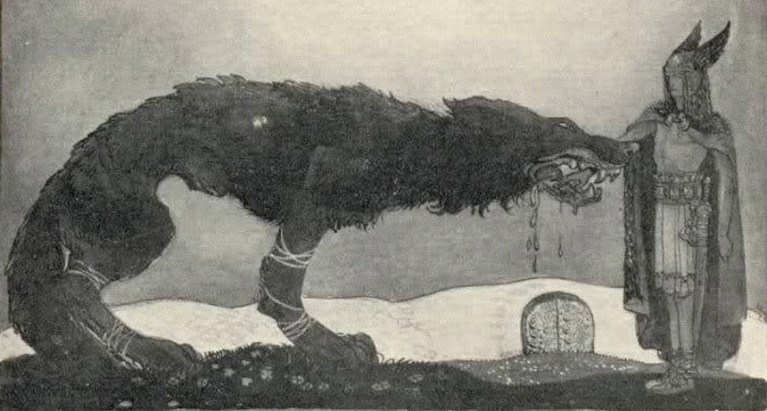
A Boy and His Dog: Tyr and Fenris

Standard

MythCrafts Team's avatarMyth Crafts

There’s a good chance you may not have heard of Tyr.

At the same time, we all acknowledge His day, once a week.

Yup, as surely as Odin/Wotan gets Wednesday, and Thor gets Thursday, Tyr’s day is Tuesday, which shows how important He was in Pre-Christian Europe.

In fact, at one point, He may have been more significant than the All-Father, Odin.

However, by the time of the Prose Edda, written by Snorri Sturluson in the 13th century C.E., Tyr had waned in significance; He was a still a God of Law, but He shared the role of God of War with His Brother, Thor.

So how do you spot a Tyr?

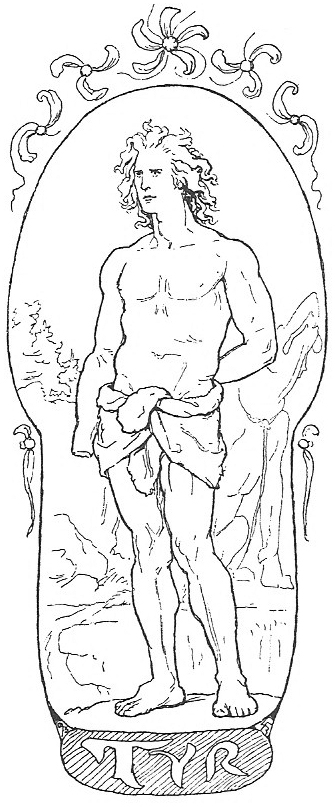
Tyr_one_hand Etching by Lorenz Frølich (1895)

Quite simple: He’s missing his right hand. And that’s the topic of this story. But first, we need to take a look at Asgard’s favorite foil, the trickster-God Loki…

*

Loki had two significant lovers: Sigyn…

View original post 625 more words

Thetis Delivering Achilles’ Shield in Art Through the Ages

Quote

A wonderful work, great read. With Thanks ❤❤

via Thetis Delivering Achilles’ Shield in Art Through the Ages

The Left Hand in Folklore

Standard

I’m right-Handed but I like Left-Handed 😊👍

Nifty Buckles Folklore's avatarNifty Buckles (Valerie Hopkins) Author of enchanted tales, folklore & magic • Once famously chased by vampire pumpkins. Brand Architect of The Darwind5 VAWT

Are you a left handed person or a right handed person?

Did you know in Old Europe using one’s left hand was considered evil? Where and when did this demotion of the left hand happen?

   It originated with the Christian Reformation, a thirty year war that began 1450 CE to 1750 CE sported Catholics vs. Protestants. As you well know, wars begin to benefit a few that profit from these wars. A Pandora’s box opened wide, resulting in a whole bunch of fear mongering and negative superstitions against Left-Handed folks accused by both sides of Christianity. Like most of the old pagan deities were also demoted to Demons by the Church accept for the Gaelic goddess Brighid who became St. Bridget.

Christianity’s Reformation peaked hysteria ushered in the Witch trials of the United Kingdom, Europe and North America. Innocent women and men (in the case of Iceland) were accused…

View original post 713 more words

Who Made Breaches of “Social Conscience” Uncool (and “Reformation of Manners” Cool?)

Standard

Sophia's Children's avatarSophia's Children

“Social conscience” obliges the individual to act. Today we call for action all the time, but mostly from government, which is another way of excusing us and allowing us to get on with the distractions of the day.” ~ Mark Steyn, He Made Slavery Look Uncool*

That’d be an observation about William Wilberforce (1759-1833), who persisted, actively and with a circle of diverse colleagues and friends, for several decades to abolish the slave trade, and ultimately slavery in general, in England.

He also founded what was to later become the Society for the Prevention of Cruelty to Animals, which took aim at a similar “normalized cruelty” to “his fellow creatures.”

Wilberforce’s life and efforts —the expression and power of his Soul Force, as the Rev. Dr. Martin Luther King, Jr. called it — and Wilberforce’s dogged persistence to change sociopathic toxic-normal practices that were not just acceptable…

View original post 676 more words

A Chat with Ancient Greece Writer, Luciana Cavallaro

Standard

A wonderful Chat 😊🙏❤❤👍

Jacqui Murray's avatar

I met Luciana Cavallaro at a writer’s conference in San Diego. We sat across from each other at a huge round table during lunch, crowded with ten historical fiction writers, but managed to have a wonderful conversation that ultimately inspired the entire group and became the foundation for a lasting friendship. I found our interest in history, our focus on ancient times, and the way we wrote so alike, you wouldn’t know we lived half a world away from each other (she’s in Australia; I’m in the US). And, we are both teachers! Since then, I’ve followed her blog, Eternal Atlantis, emailed back and forth, and hope to see her in person again at some future writing conference.

Luciana has a wonderful trilogy set in ancient Greece called Servant of the Gods. I’ve read the first two (Search for the Golden Serpent and the Labyrinthine Journey

View original post 1,244 more words

Carl Jung excerpts from Nietzsche’s Zarathustra

Standard

That is like the Gnostic myth of the soul, the soul being the spinther (the Greek word for spark) which falls from the pleroma or the empyrean into matter; that spark is the soul
of man and if it is touched, there will be a fire.

That’s really fascinating how Nietzsche was so interested in Zarathustra. I, myself, as a Persian, have been very interested in my ancient history and have had a good look of the ancient persian’s Gods though, in this case; I was much more interested in Mani or the painter, who came in the time of powerful Zarathustra, to continue his religion more in the spiritual form. Anyway, I think that Nietzsche was fascinated in Zarathustra because of the duality which the last showed in all his acting;  the unit of Animus and the Anima;

((Now, this rencontre contains a secret. That the meeting with that old woman meant to him something like a little child is a speech metaphor naturally, but it contains more
than a mere metaphor; it points to a secret connected with his meeting the anima. It continues; ,,,,.. As Nietzsche himself is nearly always pregnant with thoughts, his anima is with child.

Prof Jung:

Exactly. But why does Zarathustra behave as if he had a child under his mantle? He is not a woman.

Dr. Whitney: He is identical there with the anima.

Prof Jung: Yes, that is the point. Nietzsche is identified with Zarathustra and naturally also with his anima, because he can only reach Zarathustra through the medium of his anima, that being by definition of the function which connects the conscious with the unconscious.

Anyhow, It’s always interesting to know Nietzsche and read about him by Dr Jung.

NIETSCHEZARATHUSTRA SEMINAR

via https://carljungdepthpsychologysite.blog/

A heretic wilt thou be to thyself, and a wizard and a sooth-sayer,
and a fool, and a doubter, and a reprobate, and a villain.
Ready must thou be to burn thyself in thine own flame; how
Couldst thou become new if thou have not first become ashes! [Nietzsche in Zarathustra]

Here he describes what naturally will happen when you really meet your own devil, your own opposite; it will be a fight to death, a conflagration in which nothing remains but a heap of ashes.

Of course this statement is a bit too strong, too mythological.

It is like the Phoenix that burns itself, together with its nest, the soul and the body, and arises from the ashes anew. Such a total transformation is hardly possible.

That is not the myth of the ordinary man, but of the god in man, the primordial man, who was called the Anthropos ( Anthropos is Greek for human. It is part of an expression that is translated as Son of man in the New Testament.) in Neo-Platonist philosophy and in those syncretistic religions at the time of Christ.

It was on account of that idea of the Anthropos that Christ called himself the Monogenes, meaning the son of man-that primordial man, not of God.

(The Monogenes means “the only begotten,” and the autogenous means “the self-begotten.”)

This is the Anthropos in man, or you can call it the self, and the story of the self is like the Phoenix myth and like this passage here.

When man is on the way to himself, he will see his other side, and there will be a tremendous conflict; it will be a conflagration, a flame in which he is burned up.

Nietzsche always foresaw something of that; even in one of his first works the Unzeitgemassige Betrachtungen (Out of time considerations) , there is a peculiar passage: “A spark from the fire of justice fallen into the soul of a seeker will be sufficient to devour his whole life.”

That is like the Gnostic myth of the soul, the soul being the spinther (the Greek word for spark) which falls from the pleroma or the empyrean into matter; that spark is the soul
of man and if it is touched, there will be a fire.

This idea was in the grain of man, and in the philosophy of the time of Christ.

There is an apocryphal word of Christ, a “logion”, which says. “Whoever is near to me is near to the fire and whoever is far away from me is far from the kingdom.”

So the kingdom is the kingdom of fire. Christ himself is the flame.

That is also expressed in the Pentecostal miracle where the Holy Ghost descends in tongues of fire.”

And there is an authentic “logion” of Heraclitus which says: A dry glowing best and wisest soul.

You see, it is inevitable that anybody who seeks the self is forced into that fight with the shadow, with the other side of himself, his own negation; and that will be a catastrophe in which the ordinary man is as if destroyed: he becomes ashes.

There is again the connection with alchemy here, of course.

This conflagration is necessary; otherwise the self as the living unit cannot appear, otherwise it would be obliterated by the continuous fight of the Yea and the Nay.

They must exhaust each other in order that we may be still enough to hear the voice of the self and follow the intimation.

This is the ordinary way of the religious experience.

First it is a Yea and then it is a violent Nay, and then there is a catastrophe and man ceases to exist; then he becomes willing and submits to God.

Then it is the will of God that will decide for him.

Without that terrible conflict, there is no reality in such in such an existence.

To go into a revival meeting and get caught is no merit. ~Carl Jung, Zarathustra Seminar, Pages 721-723.

Prof Jung:

Exactly. The rule is that a man dreams of an old anima when he is too young in his own consciousness.

That may be for the time being or it may be generally so; certain men are too young for their age by lack of experience, or they are just childish, and then the anima is apt to be very old in order to compensate for the conscious individual.

As a woman’s animus may be just a very childish boy, full of naughty ideas, because the conscious is too old and wise.

Of course that is not always true-there are certain exceptions, the obvious one being the figure of the Puer Aetemus. (The bad side of Eros is the puer aetemus, the eternal boy, and Lucius Apuleius resembles this archetype: a bit of a homosexual, a bit of a Don Juan,…)

Now, this rencontre contains a secret. That the meeting with that old woman meant to him something like a little child is a speech metaphor naturally, but it contains more
than a mere metaphor; it points to a secret connected with his meeting the anima.

What could that child be? It is as if he were a mother himself carrying a child.

This is very interesting.

Mrs. Sigg:

As Nietzsche himself is nearly always pregnant with thoughts, his anima is with child.

Prof Jung:

Exactly. But why does Zarathustra behave as if he had a child under his mantle? He is not a woman.

Dr. Whitney: He is identical there with the anima.

Prof Jung: Yes, that is the point. Nietzsche is identified with Zarathustra and naturally also with his anima, because he can only reach Zarathustra through the medium of his anima, that being by definition of the function which connects the conscious with the unconscious.

So he is identical with his anima and with the old man and with every other archetype in sight. And since Zarathustra is hiding that child he carries, what kind of child would it be? ~Carl Jung, Zarathustra Seminar, Page 730.

Prof Jung:

Exactly. The rule is that a man dreams of an old anima when he is too young in his own consciousness.

That may be for the time being or it may be generally so; certain men are too young for their age by lack of experience, or they are just childish, and then the anima is apt to be very old in order to compensate for the conscious individual.

As a woman’s animus may be just a very childish boy, full of naughty ideas, because the conscious is too old and wise.

Of course that is not always true-there are certain exceptions, the obvious one being the figure of the Puer Aetemus.

Now, this rencontre contains a secret. That the meeting with that old woman meant to him something like a little child is a speech metaphor naturally, but it contains more
than a mere metaphor; it points to a secret connected with his meeting the anima.

What could that child be? It is as if he were a mother himself carrying a child.

This is very interesting.

Mrs. Sigg:

As Nietzsche himself is nearly always pregnant with thoughts, his anima is with child.

Prof Jung:

Exactly. But why does Zarathustra behave as if he had a child under his mantle? He is not a woman.

Dr. Whitney: He is identical there with the anima.

Prof Jung: Yes, that is the point. Nietzsche is identified with Zarathustra and naturally also with his anima, because he can only reach Zarathustra through the medium of his anima, that being by definition of the function which connects the conscious with the unconscious.

So he is identical with his anima and with the old man and with every other archetype in sight. And since Zarathustra is hiding that child he carries, what kind of child would it be? ~Carl Jung, Zarathustra Seminar, Page 730.


Three Herstorical Divas to Die For by Mary Sharratt

Standard

Mary Sharratt's avatarFeminism and Religion

The Urban Dictionary defines a diva as a woman who exudes great style and confidence and expresses her unique personality without letting others define who she should be. In my mind, a diva is a woman who stands in her sovereignty and blazes a trail for other women. We all need to claim our inner diva to truly dance in our power. And if you’re looking for inspiration, I present three herstorical divas to die for.

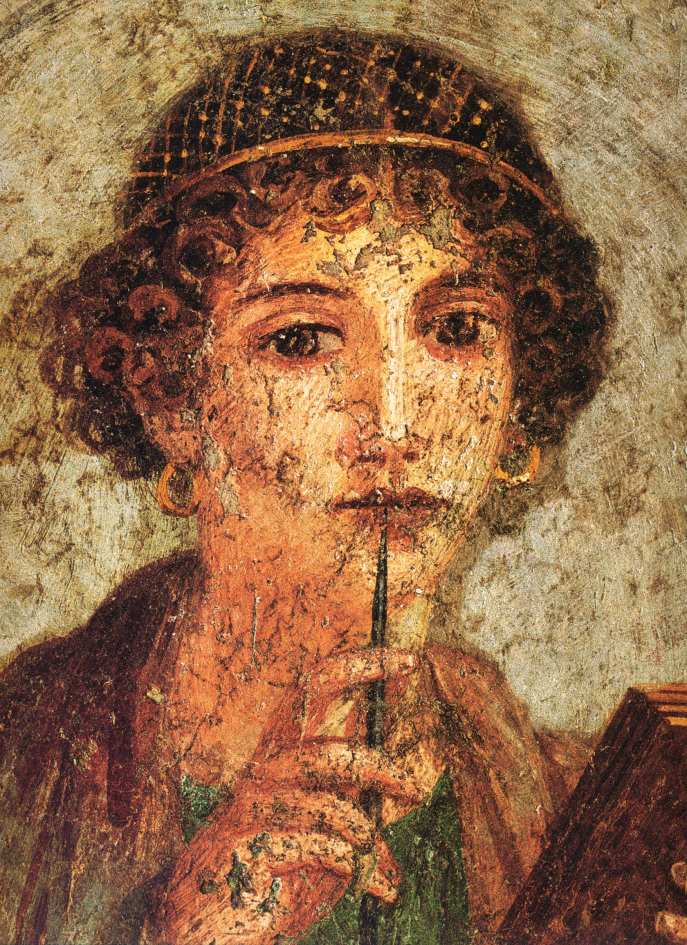
Pompei-Sappho.nocrop.w840.h1330.2x

  1. Sappho ca. 630 – 580 BCE

Sappho of Lesbos wrote the book on love. Literally. Her searing love poetry addressed to other women gave us the word lesbian. She was the first—and the best!—to describe passion as a visceral experience, in which we are seized and transfixed by Aphrodite, Goddess of love. Though much of her work was destroyed by the patriarchal fun police, the fragments of her poetry that survive are timeless, haunting…

View original post 393 more words