The hidden world of underground psychedelic psychotherapy in Australia

Standard

As I got the experiences about LSD in the early 70th,  being convinced that this could be a very helpful therapy for the psycho. Here is an interesting article there about. hope you enjoy. 🙂


http://www.abc.net.au/news/2018-08-30/underground-psychedelic-psychotherapy-mdma-lsd/10134044

The Infernal Vision of Sibylle Ruppert

Standard

Cakeordeath's avatarcakeordeathsite

Sibylle-Ruppert_Decadence 1976 Sibylle-Ruppert-Decadence 1976
Quite recently I was researching H.R Giger’s illustrations for De Sade’s Justine when I stumbled across the work of the German artist Sibylle Ruppert. I immediately wondered how I had never heard of her before as I take some pride in being well versed in Surrealistic/Fantastic/Dark Art and here was an exceptional example of the genre, that furthermore took its cues from the masters of transgressive literature: De Sade (of course), Lautreamont and Bataille, all of whom I have written about.

One can only wonder at the vagaries of recognition. Although she did have some influential admirers, namely Alain Robbe-Grillet, Henri Michaux and especially Giger, who owned a large collection of her work (the only major retrospective to date was at the H.R Giger Musuem), the critical and commercial success that other Fantastic artists of the period enjoyed eluded her. Instead she worked quietly away at producing…

View original post 256 more words

Chambre Close

Gallery

Cakeordeath's avatarcakeordeathsite

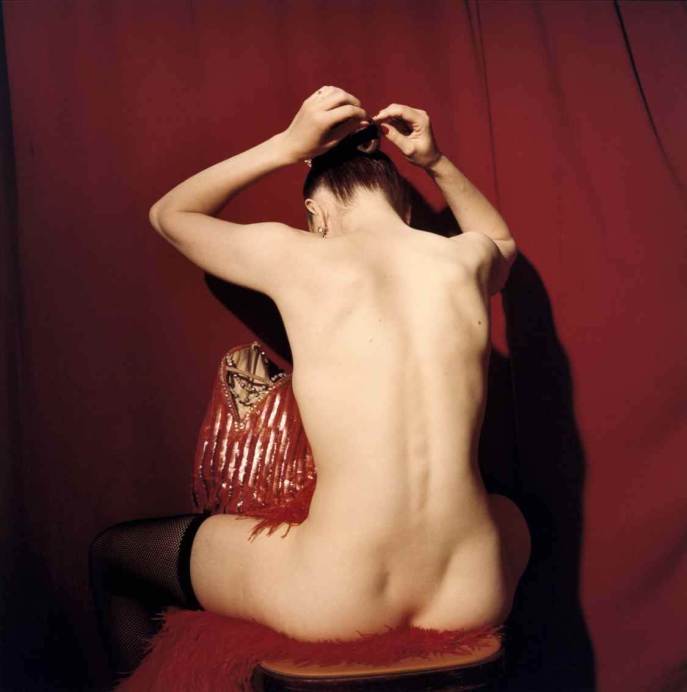
Bettina-Rheims-Chambre-Close-4th July 1991 Paris Bettina-Rheims-Chambre-Close-4th July 1991 Paris

Chambre Close is the collaboration between the writer Serge Bramly and the photographer Bettina Rheims. The elegant and cultured tone of the confessions of Mister X, an amateur photographer and voyeur who lures models back to shabby hotel rooms to engage in acts of ‘visual adultery’ is contrasted against the clinical detachment and raw intimacy of Rheims colour images.

Rheims is justly renowned for her studies of female nudes. As she herself notes, “I love flesh. I am a photographer of the skin.”

View original post

CARL JUNG ABOUT WHY TO PRAY WORKS

Standard

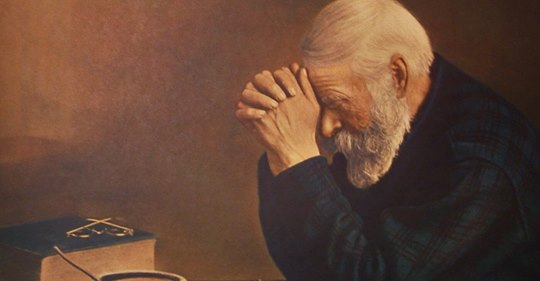
I might repeat myself but as I know not be so famous enough,  mention it again: I am not religious, but I pray when I get in an unwilling or feeling some uneasy situation. But pray to what? a good question; I just pray to a great ghost, the whole, sometimes call my brother, who was all in my life with me…anyway, it seems that Dr, Jung was also in this meaning. an interesting issue  

via http://esotericnow.com/

safe_image

http://esotericnow.com/carl-jung-about-why-to-pray-works/

As if nothing, in his most controversial book-at least of those published in life-C. G. Jung leaves a footnote:

Prayer, for example, reinforces the potential of the unconscious, thus explaining the sometimes unexpected power of prayer.

The prayer -or prayer or prayer-, Jung tells us, makes us enter into a relationship and dynamic tension with the unconscious. This is very important, but it is necessary to explain it. Jung considers that the unconscious is the source of instincts, images and even not only individual but also collective purposes, it is “the spiritual treasure of humanity”, a great ocean in which the whole history of humanity and possibly the cosmos is recorded. A fund that also seems to have an intention or purpose, which is to unify the psyche, integrate the opposites, make the human being complete, something that is equivalent to what in the Christian tradition is called theosis – the divinization of man – and in the Hinduism is the realization of the Atman. Jung, however, does not affirm that man becomes a god through the manifestation of his unconscious, but that the unconscious in his becoming conscious produces images similar to those that have been generated in the great religions and that this process is accompanied by a numinous effect, or of a sensation of finding meaning in life.

Carl Jung

Throughout his, work Jung argues that the unconscious is something like a divine monster, wonderful and terrible that responds to our attention and interest. Praying is a way of paying attention to this fund of mysterious energy and intelligence that is part of us – the biggest part of who we are, “the majority partner” -. The same can happen, for example, when we really make an effort to remember our dreams: something is shaken in the deep and begins to symbolize (the unconscious communicates through symbols or images that communicate something ineffable and transcendent). To pray is in a certain way to pray to ourselves, but in ourselves, there is an unknown and autonomous force, which can impose itself on our will and give meaning to our life. A force at once chthonic, celestial, titanic and demonic. The human being only finds true meaning when he feels part of something bigger than his ego.

In a letter to a patient, Jung wrote: “I have thought a lot about the prayer, it – the prayer – is very necessary, since it makes the transcendent in what we think and conjecture become an immediate reality and places us in the duality of the ego and the dark Other “. The unconscious is, at least while it has not become conscious, the transcendent, a transcendent aspect of existence, at once intimate and elusive. This dialogue opens us to the possibility of experiencing that we are not merely an ego; There is something else, an Other. In the dialogue with the unconscious, which is the dialogue with the transcendent, says Jung, the door is opened to “a whole sphere of knowledge and experience through which all the functions, all the ideas, manage to enter to the side of our ordinary conscience. ” How to open the vault of the treasures of the world of archetypes. Thus, praying can be a way of practising what Jung called the active imagination or the transcendent function, which is a way to open the way to the content that springs from the unconscious and its deep source of archetypes. In a certain way, prayer is to the religious awakening life what dreams are to the psychic life, a space in which the inner life can be revealed, what lies hidden in our psyche and that can produce a numinous experience, a meeting with the radical otherness that Rudolf Otto talks about.

“The unconscious wants to flow towards the consciousness to reach the light,” says Jung in Response to Job; “God wants to become a man, but not at all.” There is a strong tension here, something that hinders the repetition of the eternal myth that, in some way, is always occurring in the background: the incarnation of the Logos, the light that illuminates the darkness, which must finally be understood.

How the Heart Works As A Second Brain!

Standard

By SearchingTheMeaningOfLife With thanks

8e55a-stars_kindergarten_by_eresaw-d67n6fl


The word ” heart ” in English is an anagram of the word “earth”. So it came up with the phrase ” your home is where your heart is. “

Jacqueline & Pao Chang

The human heart is the organ that produces the strongest electromagnetic field than any other organ in the human body. The electromagnetic field of your heart has a radius that extends several meters away from the body. In addition, the energy field changes according to your feelings. Something you also need to know is that every organ and cell in your body can create an energy field around it.

Because the heart produces the strongest electromagnetic field, the information stored in it affects every organ and cell in your body. This may be because the heart is the first organ that begins to work on an embryo. In addition to creating the strongest electromagnetic field in the body, the heart has its own intelligence, for which some neurocardiologists refer to it as a cardiovascular or as the Fifth Brain.

According to neurocardiologists, the heart does not consist only of muscle cells, but also of neurons. Researchers from the HeartMath Institute have conducted experiments to prove that the role of the heart is not limited to pumping blood. There is a belief that it also has intelligence, which seems to play an important role in the way we perceive reality.

Here is an excerpt from the Staradigm book that talks about the deepest functions of the heart:

“The heart is one of the most important organs of the human body because it is one of the main intermediaries connecting us and the universe. Conventional science has taught us that the main role of the heart is to pump the blood and promote it to all body tissues. This definition of the heart is not very accurate. In addition to pumping blood, the heart has its own intelligence.

According to neurocardiologists, 60 to 65% of cardiac cells are neuronal cells, not muscle cells. This discovery has prompted them to conduct experiments that have shown that the heart works similar to the brain and in some areas is superior to it. This may be the reason why the heart is the first organ that starts working after capture. Approximately 20 days after conception, the heart begins to function, but the brain only works after about 90 days. This information tells us that the brain is of secondary importance to the heart. “

The Heart, the Brain, and the Emotions

The brain and the heart sometimes work against each other. We are constantly trying to determine whether we will put more emphasis on our thoughts or feelings. People of logic would say that mind is the key to avoiding all our problems since the mind thinks with interest and calculates the chances that will keep us safe or have less risk.

The heart, on the other hand, pushes us to choose according to what we feel is best for our inner level associated with our intuition. Working with just one of these two, just the mind or just the heart, can sometimes lead you to trouble. The mind may be afraid to seek happiness outside its comfort zone, and the heart sometimes urges decisions that are unknown and dangerous. By using both in balance you can clarify many things.

” Follow Your Heart ” is a common phrase that is constantly being heard, but it is not easy to apply. Following your heart means letting your deep feelings lead you, without there being any reasonable or obvious reasoning in the decisions you make. Our heart guides us with a sense of intuition, but we must be able, receptive, and trustworthy in it to realize its will and then act accordingly with full faith in the result. Our feelings are what help us to understand the world beyond reason and as such are the keys to understanding the spiritual aspects of ourselves.

The Intelligence of the Heart

Some researchers and neurocardiologists support the theory that the heart may function as a second brain, revealing that there may be a different form of intelligence. There are many physiology studies in progress that examine the interface of the heart and brain, and the sensations and feelings we attribute to the heart. Love and certain emotional states felt at the heart level, produce different physiological responses.

Heartbeats have been found to be affected by inner condition and emotions, as with heart rhythm disorder when experiencing anxiety or negative emotions. On the contrary, when we feel positive, the heart rhythms are more stable.

The nervous system of the heart contains about 40,000 neurons or sensory neurites. One of their roles is to monitor the heart’s hormones, neurochemicals, heart rate, and pressure information. Information on the behaviour of these chemicals is sent to the brain. The heart and the brain constantly communicate through the gastrointestinal nervous system and the body’s electromagnetic field. Through this dynamic communication process, it is that the consciousness of the heart can change the way the brain processes the information. This process can also affect how energy flows into the body.

These findings show that the heart works with the brain and the body, including the tonsil, to process emotions and incorporate emotional memories. Amygdala is the part of the brain that helps us make decisions about the information we receive and processes them based on our past experiences. This shows a connection between emotions and the physiology of the brain and body.

Other mental moods and anxiety also affect our body and our general health. Recent scientific research has found that anger, anxiety and other negative feelings can significantly increase the risk of heart disease. Therefore, stressful situations and high levels of anxiety adversely affect the heart as an organ.

The connection of the brain and the heart, as a self-contained emotional centre, is an issue that many researchers have paid attention to. It has been shown that the emotions we experience mentally, are also manifested in the body and can affect the heart rate and pulses. The best way to maintain a healthy heart is not only to make a healthy diet, but also to incorporate into our program meditation techniques for balancing the energy of the heart and the brain.

Why Does the Heart Hold Keys to World Peace?

Our heart helps us to understand our world through emotions. This allows us to understand reality as a totality of the universe, giving it universal features. The heart as a biological electromagnetic field generator allows us to understand one another at an emotional level but also beyond that, giving us a sense of connection with all the things that surround us. This emotional connection is what brings each of us together.

When we learn to think with the heart, it will be easier for us to understand others and live in harmony with them. For these reasons, the heart holds the key that unites mankind to achieve world peace.

Source: Text translation and editing: share24.gr via wakingtimes.com

Matchmaking Pigs in Atonement, Tennessee

Standard

Matchmaker matchmaker make me a match, find me a fine, catch me a catch…

Teagan Riordain Geneviene's avatarTeagan's Books

Saturday, August 25, 2018

Pigs Road Moon unsplash compositeDeme & Honeybell, looking for adventure again
Deme and Honeybell, the otherworldly glowing pigs of Atonement, Tennessee had so much fun visiting with you recently that they talked me into letting them have the spotlight again today.  Yes, it’s another snort story.

If you’ve been following me for awhile, please forgive me for another rerun.  The past couple of work-months have been so “over the top” that I’m surprised I’ve managed to post at all.  I ran this as a Valentines story last year, but it doesn’t have to be about that.

Last week you met a much younger Marge Tipton.  She is a minor character in the “Atonement” books.  I enjoyed giving her extra life here on the blog.  She owns the local diner and she’s suitably quirky for the town.

It’s fewer than 2,500 words.  I hope this snort story leaves you with a…

View original post 2,705 more words

The Ridere of Riddles

Standard

Nifty Buckles Folklore's avatarNifty Buckles (Valerie Hopkins) Author of enchanted tales, folklore & magic • Once famously chased by vampire pumpkins. Brand Architect of The Darwind5 VAWT

The Ridere of Riddles is a Scottish Saga collected by John Francis Campbell in Popular Tales of West Highlands. His fisherman/informant was named John MacKenzie who lived by Inverary.

375px-Scottish_Highlands_and_Lowlands

The Ridere of Riddles

Once upon a time there lived a king who married a great lady who sadly departed during childbirth of her first son. Later the king wed another woman and she birthed a son. Both sons lads grew up strong and tall. One day the new queen had an epiphany, that her son who was the second son of the king would not inherit the king’s kingdom when he passed on. Right then she schemed a plan to poison the king’s first son.

The queen ordered the royal cooks to poison the eldest son by mixing a lethal herb into the first son’s drink. The second son overheard the queen’s conversation about poisoning the first son so…

View original post 1,551 more words

“Thy soul shall be dead even sooner than thy body.” (the Rope Dancer, Zarathustra). C.G. Jung, ETH, 12/1/1939

Standard

via https://www.facebook.com/CarlJungIndividuation/

with best Thanks to Craig Nelson

What really happens is the “god image” becomes Psychological not Metaphysical, it is not to be found any longer in the outer world : “Nietzsche said ‘God is dead’ [but] did not realize.. in saying this he was still standing within the dogma, for Christ’s death is one of the secret mysteries of Christianity.. He meant God has come to an end.. & had no successor, [that] something very unusual had happened to the world. He did not realize he was God’s successor! When his psychosis overcame him he signed his letters: The Crucified, Dionysos, or Zagreus who was also a dismembered God, he.. fulfilled this fate himself.”
“Thy soul shall be dead even sooner than thy body.” (the Rope Dancer, Zarathustra).
C.G. Jung, ETH, 12/1/1939

16179272_1806212166295482_3316597107040071667_o

Suffering, not just happiness, weighs in the utilitarian calculus

Standard

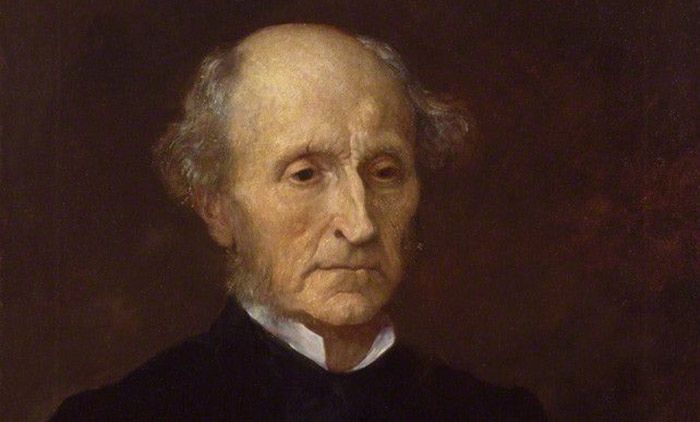
A utilitarian machine with a suicidal ghost inside. J S Mill (1873) by George Frederick Watts. <em>Photo courtesy Wikipedia</em>

A utilitarian machine with a suicidal ghost inside. JS Mill (1873) by George Frederick Watts. Photo courtesy Wikipedia

As I know well, the thoughtfulness and intelligence are somehow very near to the pessimism, as I remember one of the best Persian writer Sadeg Hedayat, who wrote the best seller in the 20th- 30th centuries and as a young man become suicide! but this nice article might help to:: Look at the white side 🙂 or we might just whistle!!

  Scott Samuelson is associate professor of philosophy and the humanities at Kirkwood Community College in Iowa. His latest book is Seven Ways of Looking at Pointless Suffering: What Philosophy Can Tell Us about the Hardest Mystery of All (2018).

Published in association with
The University of Chicago Press
an Aeon Partner https://aeon.co/

Edited by Sam Haselby

In 1826, at the age of 20, John Stuart Mill sank into a suicidal depression, which was bitterly ironic, because his entire upbringing was governed by the maximisation of happiness. How this philosopher clambered out of the despair generated by an arch-rational philosophy can teach us an important lesson about suffering.

Inspired by Jeremy Bentham’s ideals, James Mill’s rigorous tutelage of his son involved useful subjects subordinated to the utilitarian goal of bringing about the greatest good for the greatest number. Music played a small part in the curriculum, as it was sufficiently mathematical – an early ‘Mozart for brain development’. Otherwise, subjects useless for material improvement were excluded. When J S Mill applied to Cambridge at the age of 15, he’d so mastered law, history, philosophy, economics, science and mathematics that they turned him away because their professors didn’t have anything more to teach him.

The young Mill soldiered on with efforts for social reform, but his heart wasn’t in it. He’d become a utilitarian machine with a suicidal ghost inside. With his well-tuned calculative abilities, the despairing philosopher put his finger right on the problem:

[I]t occurred to me to put the question directly to myself: ‘Suppose that all your objects in life were realised; that all the changes in institutions and opinions which you are looking forward to could be completely effected at this very instant: would this be a great joy and happiness to you?’ And an irrepressible self-consciousness distinctly answered: ‘No!’ At this my heart sank within me: the whole foundation on which my life was constructed fell down.

For most of our history, we’ve seen suffering as a mystery and dealt with it by placing it in a complex symbolic framework, often where this life is conceived as a testing ground. In the 18th century, the mystery of suffering becomes the ‘problem of evil’, in which pain and misery turn into clear-cut refutations of God’s goodness to utilitarian reformers. As Mill says of his father: ‘He found it impossible to believe that a world so full of evil was the work of an Author combining infinite power with perfect goodness and righteousness.’

For a utilitarian, the idea of worshipping the creator of suffering is not only absurd, it undercuts the purpose of morality. It channels our energies toward the acceptance of what we should remedy. To revere the natural order could even turn us into moral monsters. Mill says: ‘In sober truth, nearly all the things which men are hanged or imprisoned for doing to one another, are nature’s everyday performances.’

What Mill calls the ‘Religion of Humanity’ involves pushing aside the old conception of God, and taking over responsibility for what happens in the world. We’re to become the good architect that God never was.

Redesigning the world hasn’t proven easy. Mill claims that our power to inflict suffering is small next to nature’s: ‘Anarchy and the Reign of Terror are overmatched in injustice, ruin, and death, by a hurricane and a pestilence.’ But that’s hard to maintain after the 20th century. What’s the 1755 Lisbon earthquake compared with Auschwitz? What’s a flu epidemic next to Hiroshima? The potential disasters of global warming or nuclear war show that apocalypse isn’t just the prerogative of God.

But the problem isn’t limited to the Religion of Humanity’s catastrophes. Even when things materially improve because of our commitment to utilitarian principles, our increased happiness often doesn’t register as meaningful. Mill’s irrepressible ‘No!’ can be distinctly heard in those I call ‘exiteers’, the growing number of people who, despite their ideological differences, share a desire to exit the system, sometimes with a bang. The irrepressible ‘No!’ haunts even comfy lives in the form of nagging anxieties muted by a steady stream of drugs and distractions. When we see each other in terms of usefulness, as Jean-Paul Sartre observed long before Facebook and Twitter: ‘Hell is other people.’

The problem with our attempt to play God is that it splits us into fixers and problems, marketers and consumers, biotechnicians and patients, entertainers and the entertained, managers and subjects, elites and deplorables, gods and beasts, when we should be workers, doers, caregivers, artists, teachers, students and citizens – roles that involve an openness to risk and vulnerability.

The utilitarian take on the problem of evil is half-right. Suffering ultimately outstrips our goals and beliefs. To claim otherwise is heartless. But it’s wrong to think that the problem of evil brushes aside God or the goodness of nature. When we refuse to accept a fundamental dimension of suffering, we suffer worse. There’s an immense mystery at the heart of being human: the paradox of opposing and accepting suffering. To abandon either side of the paradox is the real problem of evil.

The best things in life clue us into the mystery. Think of art, which by evoking our tragedies fills us with joy. Think of humour, which by registering our humiliations makes us roar with laughter. Think of forgiveness, which allows us to judge and be judged without destroying our relationships. Think of freedom, which by opening us to error gives our lives weight. Though these mysteries don’t preclude the belief in progress, they don’t subordinate all our energies to it. They might often be useless for material improvement, but their uselessness is extremely useful for a meaningful life.

Here’s another irony: what first lifted Mill out of his utilitarianism-induced depression was an act of suffering. Reading a historian’s account of losing his father as a boy, Mill started crying, and the fact that he was crying filled him with happiness: ‘I was no longer hopeless: I was not a stock or a stone.’

Next, he explored Romantic poetry, which nourished the ecosystem of his inwardness. By adding an affective dimension to his life’s projects, literature revealed a new horizon of value, one drawn by the paradox of suffering.

Most importantly, Mill fell in love – with a married woman. After Harriet Taylor’s husband died, Mill wryly observed: ‘[I]t was granted to me to derive from that evil my own greatest good.’ Not only did his eventual wife possess the intellectual vigour that Mill admired in his father, she embodied the poetry that he never got from his upbringing: ‘What was abstract and purely scientific was generally mine; the properly human element came from her.’

Mill tries philosophically to resolve the paradox of suffering by arguing that higher goods such as love and literature are ultimately more satisfying than basic forms of pleasure. In some sense, that’s true. But the terms of this satisfaction are no longer utilitarian; they have more to do with adventure, beauty, even holiness. As the political philosopher Michael Sandel puts it in Justice: What’s the Right Thing to Do? (2009): ‘Mill saves utilitarianism from the charge that it reduces everything to a crude calculus of pleasure and pain, but only by invoking a moral ideal of human dignity and personality independent of utility itself.’

We should be wary of the Religion of Humanity because subordinating our lives to utility hollows them out. But we have lots to learn from Mill’s fierce desire to add poetry to progress. Let’s rediscover the paradox that George Herbert – one of those poets excluded from Mill’s education – deftly expressed in 1633:

I will complain, yet praise;
I will bewail, approve:
And all my sowre-sweet dayes
I will lament, and love.

Without goods that explode utilitarianism and open us to the mystery of suffering, even the happiest life is miserable.

Seven Ways of Looking at Pointless Suffering by Scott Samuelson is out now via The University of Chicago Press.