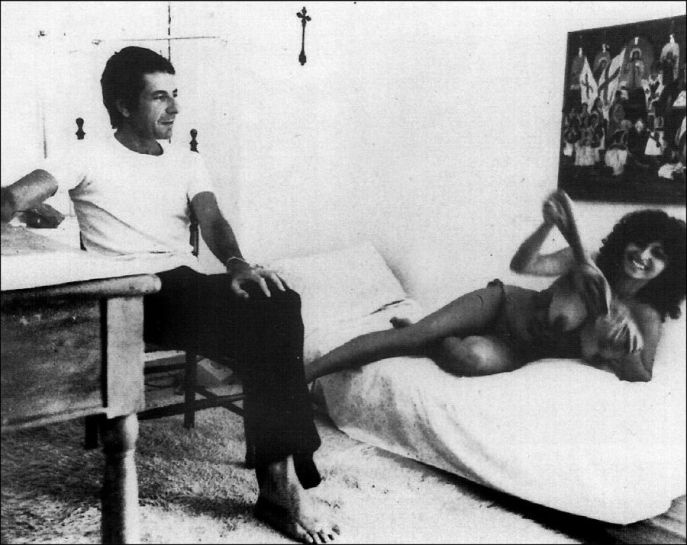
“Anyhow Lennie boy, you got any new songs you can belt out for me in your own indomitable style by way of a serenade as a prelude to my seduction?”
“Can’t say as how I have presently, luv. Me mind refuses to wander creatively anymore.”
“You’re having a laugh surely?”
“No Svet, it’s the honest truth. I’m bolloxed in that regard at the moment. Even now whilst your otherwise engaged abandoning your kit in a manner most tantalising, my creative juices fail me. I must admit I’m getting a tad worried about it if the truth be told.”
“Well Lenny, if you care to cast your gazers over here I’ll lay odds you’ll feel inspired, you old…
Another arresting erotic image by the master Surrealist photographer, Man Ray. I cannot accurately determine the date it was taken, however as it features his lover Juliet Browner (and later wife, they were married in a dual ceremony with Max Ernst and Dorothea Tanning in Beverly Hills in 1946) and Margaret Nieman who was his neighbour in Los Angeles during the early 1940’s, 1942 would seem to be the likeliest year.
Man Ray frequently photographed his lovers in embraces with other women, notably Lee Miller and her room-mate Tanja Ramm (though not the photograph of Lee and Tanja having breakfast in bed, that was taken by Lee’s father) and later, Ady Fidelin with the ultimate Surrealist muse Nusch Eluard.
The totem-like masks were designed by Man Ray himself and certainly add an aura of strangeness and animalistic carnality to the scene. In…
Marie Von Bruenchenhein-Eugene Von Bruenchenhein circa 1945
The self taught artist Eugene Von Bruenchenhein worked in a variety of mediums including painting, drawing, sculpture (using chicken bones) and photography, all of which adorned the modest house in Milwaukee, Wisconsin that he lived in for forty years with his wife and muse, Marie.
Eugene’s marriage to Evelyn Kalka in 1943 (he re-named her Marie) seemed to have ignited a creative spark. Over the next two decades he would photograph Marie thousand of times, as a pin-up girl, tropical tourist, vixen, Madonna. Bedecked with pearls, clunky fetish heels, lurid leopard prints against florid wall coverings, Marie looks wistfully upwards, awkward and gauche. The photographs are simultaneously curiously innocent and charged with an subterranean current of obsessional eroticism. Marie at times seems like a harbinger of Cindy Sherman, assuming and thereby questioning a number of manufactured female roles.
“He was a sky god, associated with wind, rain, thunder, and lightning, and was the master of spiritual phenomena, since it was the spirit realm that was signified by the sky and the manifestations of the weather. He was a carrier of justice and judgment, an embodiment of law and the punisher of transgression of the law, accomplished by the hurling of the thunderbolt. He was the personification of creative energy, which constantly spilled out and had an unceasing urge to impregnate, hence his perpetual love affairs.” Edward Edinger, The Eternal Drama: The Inner Meaning of Greek Mythology
In Edinger’s description of Zeus, we see the image of a powerful masculine ruler of the heavens. Although Zeus is still one of many gods, he is both leader and creator of the pantheon. And just as importantly, we see Zeus’ engagements with his wife, Hera, not as his compliment, but…
Intersting analyse about the masters of psychology. of course I admire Freud for his Ideas about the human’s sexual problems!
Sex, religion and envy – how Freud and Jung’s frenetic friendship tore itself apart
In 1906, the young Swiss psychiatrist Carl Jung received a collection of essays from none other than the founder of psychoanalysis himself, Sigmund Freud. When the two met in person a year later in Vienna, their first conversation lasted more than 13 hours, according to Jung’s account. And so began a collaboration that would blossom into an intense, albeit brief friendship between two titans of psychology. The duo toured the US together, giving lectures on psychoanalysis. They analysed each other’s dreams in depth. Twenty years his senior, Freud called Jung ‘the Joshua to my Moses, fated to enter the Promised Land which I myself will not live to see’. Their bond was so deep that at one point Jung wrote to Freud: ‘Let me enjoy your friendship not as one between equals but as that of father and son.’ Despite their shared interests and mutual admiration, in 1913 their relationship abruptly ended. But what caused their dramatic estrangement? And which one can lay claim to greater influence?
Freud versus Jung is the second instalment of ‘Philosophy Feuds’, Aeon’s original series of short animations, each of which tells the story of a famous – or not so famous – spat, break-up, falling-out or fracas. More than just revealing the hilarious and all-too-human pettiness of the world’s greatest thinkers, ‘Philosophy Feuds’ is about the fascinating ideas behind each of these rifts – and how these ideas continue to matter today.
“..The philosopher stared at the paradoxes of the ..inscription, just as he stared at the retort until the archetypal structures of the collective unconscious began to illuminate the darkness.” C.G. Jung, Mysterium
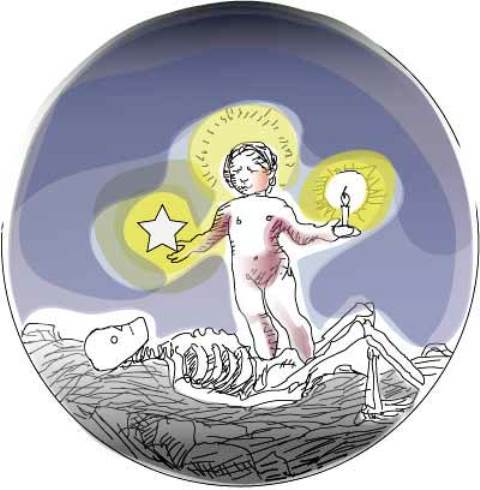
The self is the hero, threatened already at birth by envious collective forces; the jewel that is coveted by all and arouses jealous strife; and finally the god who is dismembered by the old, evil power of darkness.
I take another opportunity to share this magnificent analysis by Dr Jung with the help of two great Jungian experts and friend of mine Craig Nelson & lewislafontaine. I have been always in believing that every one of us is an individual, we are living together and keep ourselves in the societies but, we are doing it because of the fear that we have; we’re afraid of being alone! We know somehow that we’re “Contra Naturam” and therefore, always looking for shelter; a shelter in a crowd. on the other side, it’s also important for us how to confront each other because we’re also afraid of one another!
Anyway, read and hopefully enjoy it. have a great rest of the week 🙂 ❤
Without entering into other details of the text, I would like to draw attention to one more point: the building of the rampart against Gog and Magog (also known as Yajuj and Majuj).
This motif is a repetition of Khidr’s last deed in the previous episode, the rebuilding of the town wall.
But this time the wall is to be a strong defence against Gog and Magog.
The passage may possibly refer to Revelation 20:ηί. (AV):
And when the thousand years are expired, Satan shall be loosed out of his prison and shall go out to deceive the nations which are in the four quarters of the earth, Gog and Magog, to gather them together for battle: the number of whom is as the sand of the sea.
And they went up on the breadth of the earth and compassed the camp of the saints about and the beloved city.
Here Dhulqarnein takes over the role of Khidr and builds an unscalable rampart for the people living “between Two Mountains.”
This is obviously the same place in the middle which is to be protected against Gog and Magog, the featureless, hostile masses.
Psychologically, it is again a question of the self, enthroned in the place of the middle, and referred to in Revelation as the beloved city (Jerusalem, the centre of the earth).
The self is the hero, threatened already at birth by envious collective forces; the jewel that is coveted by all and arouses jealous strife; and finally the god who is dismembered by the old, evil power of darkness.
In its psychological meaning, individuation is an opus contra naturam, which creates a horror vacui in the collective layer and is only too likely to collapse under the impact of the collective forces of the psyche.
The mystery legend of the two helpful friends promises protection to him who has found the jewel on his quest.
But there will come a time when, in accordance with Allah’s providence, even the iron rampart will fall to pieces, namely, on the day when the world comes to an end, or psychologically speaking, when individual consciousness is extinguished in the waters of darkness, that is to say when a subjective end of the world is experienced.
By this is meant the moment when consciousness sinks back into the darkness from which it originally emerged, like Khidr’s island: the moment of death. ~Carl Jung, CW 9i, Pages 146-147
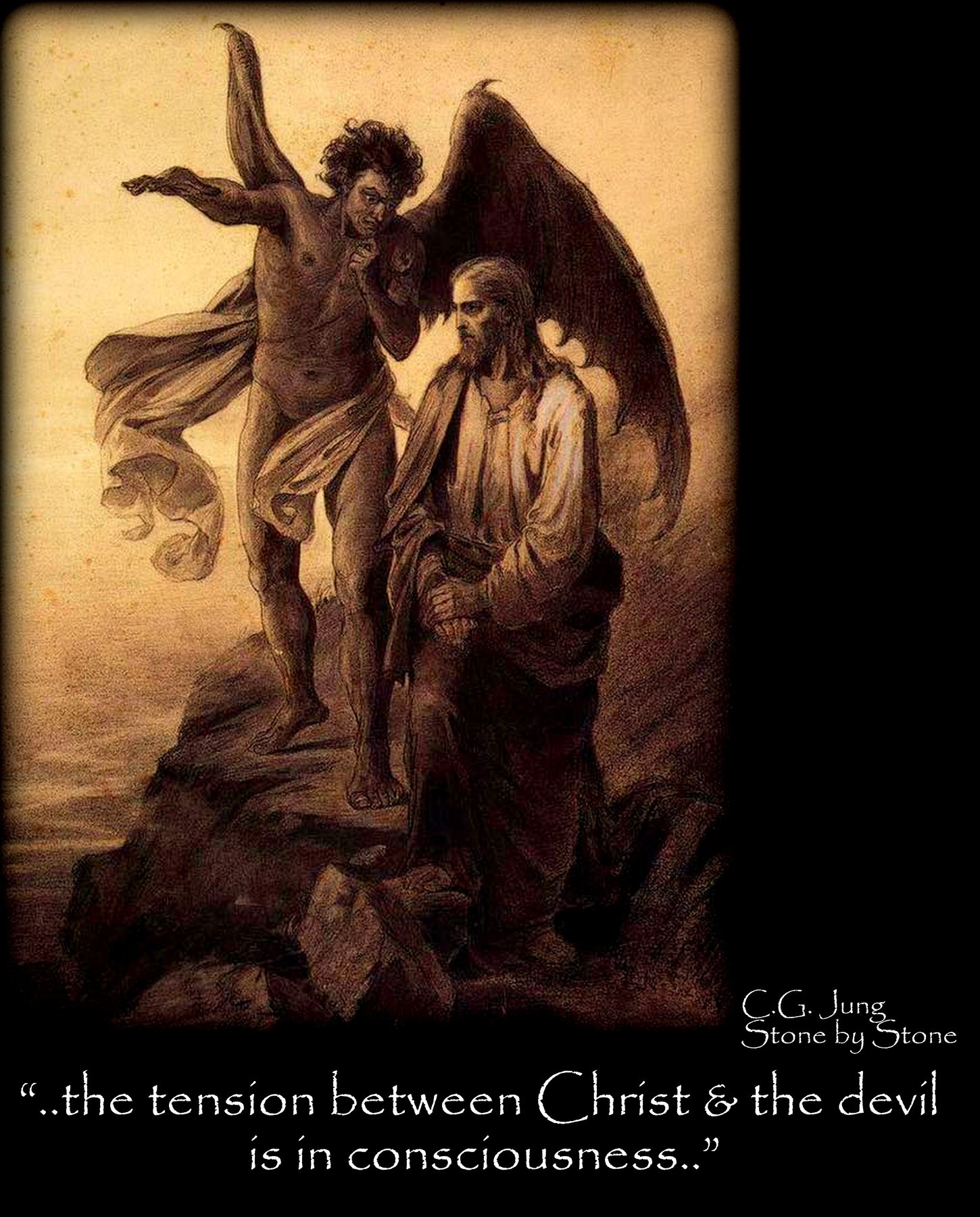
“..the tension between Christ and the devil is in consciousness..” C.G. Jung, Stone by Stone…”
The words say everything, though, Dr Jung here used the Christ (but not Jesus) just to show what he meant, isn’t religious but the recognition of the purity, as in the Christion’s religion has been known. I myself, have found Jesus as a phenomenal personality, even as I lived in Iran, as a Muslim. (I might notice here that the Muslims recognize Jesus and his mother Maria, as the holy persons in their religion.) but it wasn’t the reason why I did so; it was just because of his message: Love. Anyhow, what it’s saying here is, in my opinion, means that we’re always in the fight between two sides of ours: the light and the dark side. and further, I say the winning point is our unconsciousness, and to know it. we must get deeper and deeper in our soul to know ourselves better.
There is only one way and that is your way; there is only one salvation and that is your salvation.
Here I take the opportunity to use these two posts by two greats C.G.Jung experts Craig Nelson & lewislafontaine who also, fortunately, are my friends. to explain my feelings on this issue.
The tension of the future is unbearable in us. It must break through narrow cracks, it must force new ways.
You want to cast off the burden, you want to escape the inescapable. Running away is deception and detour.
Shut your eyes so that you do not see the manifold, the outwardly plural, the tearing away and the tempting.
There is only one way and that is your way; there is only one salvation and that is your salvation.
Why are you looking around for help?
Do you believe that help will come from outside?
What is to come is created in you and from you.
Hence look into yourself Do not compare, do not measure. No other way is really yours.
All other ways deceive and tempt you.
You must fulfill the way that is in you ~Carl Jung, Red Book, Page 308.
I love his way of discussion! I was a naive boy as my wise brother pushed four thick valiums set of books of Plato towards me and said: read! of course, I followed; they were the collection of Plato’s notes from the Socrates discussions complete. I can only remember when I began with reading them, once I was wandering on the Tehran’s street and just taking rest on a park bench, a girl came to me and asked: are you OK? I’d confusingly answered; of course, what’s the matter? you’re just looking so depressed I thought she said. I was so, not depressed but under a lot of heavy thought!
And what would you say about the prowess shown in the sea, sickness, poverty or political life? In addition, some people are brave when faced with pain and weak when taken by pleasure. That’s why I ask you again: what would we call the generosity of Lash?
Two Athenian generals Lachis and Niki discuss with Socrates the prowess that the combatants should demonstrate in the battlefield. Both generals lost their lives to Lachis in the Battle of Mantineia in 418 BC and Nicky in 412 in the Sicilian campaign. Socrates brings the conversation to a higher level than bravery and asks the General who are experts to express their opinion. Following is the dialogue: Lahis – A soldier recently showed us something new: He was one of my men and devised a spear-shaped spear. He was very proud of the potential of this weapon during the battle. In order to make no mistake, in a naval battle, his spear was caught in the rigging of another ship as we passed by beside him. The soldier pulled it, but the spear was not recited, so he was forced to run along the deck, vice versa, holding the grip firmly to keep him out of his hands. Eventually, he had to leave the spear and leave running while the crews of both ships laughed until tears. We could not keep it, you had to see how the spear was hanging from the rigging!
Nikia – I agree. I believe that this equipment seems remarkable.
Lahis – What is your view, Socrates? So far we are a pro, one against. The decisive vote falls on you!Socrates – Lahis, instead of voting, I would say we should focus our attention on a more substantive issue that you have just rightly put before. Do not you think that for an issue as important as the practice of the arms of your friends’ sons, should we look for a specialist and follow his advice?
Lahis – Of course, Socrates. This is right.
Socrates – What, then, should our expert be expert?Nikias – Now we were not talking about arms training? Whether our young people should be practised or not?
Socrates – Yes, Nikia. But should not we first answer this basic question? For example, when a person asks what medicine he has to put in his eyes, what does he really care about his medicine or eyes?
Nikis – Of course his eyes!
Socrates – And when he thinks of putting a bridle on a horse, the horse cares about it and not the bridle, is it?
Nice – Right. Socrates – Do not you see, then, Nikia, how to practice the weapons is like drugs and skirts – just a means of achieving a goal? What we really think about when it comes to different kinds of education is young people. It is the self, the soul of these young people undergoing education.
The doctor knows if it’s good for the eyes. Hippodomus what is good for horses. But who knows what’s good for the soul, that’s the basic question! Nikias – (laughing): I had to wait for it, Socrates, we have done similar discussions, and it is a painful process. However, in the end, I always leave with clearer ideas than at first. Are you ready to face him, Lah? I warn you of the experience this man has for us!
Lahis – Generally, I am not in favour of the discussions, unless I’m sure my interlocutor is a man of both acts and words. I was together with Socrates in the retreat after our defeat in the Battle of Delhi, if all were recognized as Socrates, we would have won. I would accept the questions of such a man at any time.
Socrates – Thank you, Lahis. Allow me to submit to you the part of this more general question that concerns you most because of your profession of driving soldiers into battle. What is Larus?
Lahis – This is easy, Socrates. It is a man who does not abandon his position and does not put his feet in danger. Socrates – Good definition of bravery, in terms of a pedestrian. Does it apply, however, to the cavalry that is constantly on the move? If I’m not mistaken, a favourite manoeuvre of the Scythians is to escape by galloping, turning both the trunk on the horse and hitting the enemy as they retreat.
Lahis – Correct observation Socrates. These horsemen are among the most prolific soldiers.
Socrates – And what would you say about the prowess shown in the sea, sickness, poverty or political life? In addition, some people are brave when faced with pain and weak when taken by pleasure. That’s why I ask you again: what would we call the generosity of Lash?
Lahis – You put me in Socrates thoughts. Now that I think about it better, I would say that bravery is a kind of soul’s heartbeat.
Socrates – My dear! Now you have given us a comprehensive definition, but perhaps too comprehensive, because if the real bravery is always a virtue, then the simple absurd misery can also be described as a virtue?
Lahis – I should have been wise. Socrates – Yes, but what does it mean wise? What is your view of the man who is able to fight and is willing to fight bravely because he has reasonably calculated that he will have the support of others, that he is fighting against the fewer and weaker than those who fight at his side? Would you say that this man who performs such a wit in such wisdom is a manly man? More prolific and by the one who has the will to stay and fight on the weak side?Lahis – I have no doubt that the man who is not sitting to figure out the risk is brighter than the other. Socrates – So, the man who dives in a well without knowing how to dive is brighter, even more, foolish than the trained diver? Lahis – I have to be consistent with what I said before Socrates, but there is obviously a gap in our reasoning. Source: Nasos Argiropoulos writes at : http: //nasosargiropoulos.blogspot.gr(We read it in Ronald Gross’s book, The Socrates Method)
Sometimes, the Gods and the Fates are cruel; sometimes, They are kind. Either way, if you have a loved one in your life, share a strawberry, drink some champagne, and most importantly, be grateful for the love you have…
Strawberries and Champagne are the quintessential ingredients for any romantic night in. So how did this tiny fruit become a popular love staple?
There is an obvious association with love; the fruit grows in the shape of a tiny red heart. A latter version of the Aphrodite and Adonis story claims to tell the origins of the strawberry: Aphrodite was in love with the beautiful Adonis, but his love for hunting ended up being his undoing. Gored by a boar, he lay in the forests gasping his last breaths as Aphrodite rushed to his side. She poured nectar on his wounds, hoping against hope to heal him, but it was too late and her beloved mortal died in her arms. Popular myth claims that her tears mingled with his blood; as this fluid seeped into the ground, strawberries grew in their place.



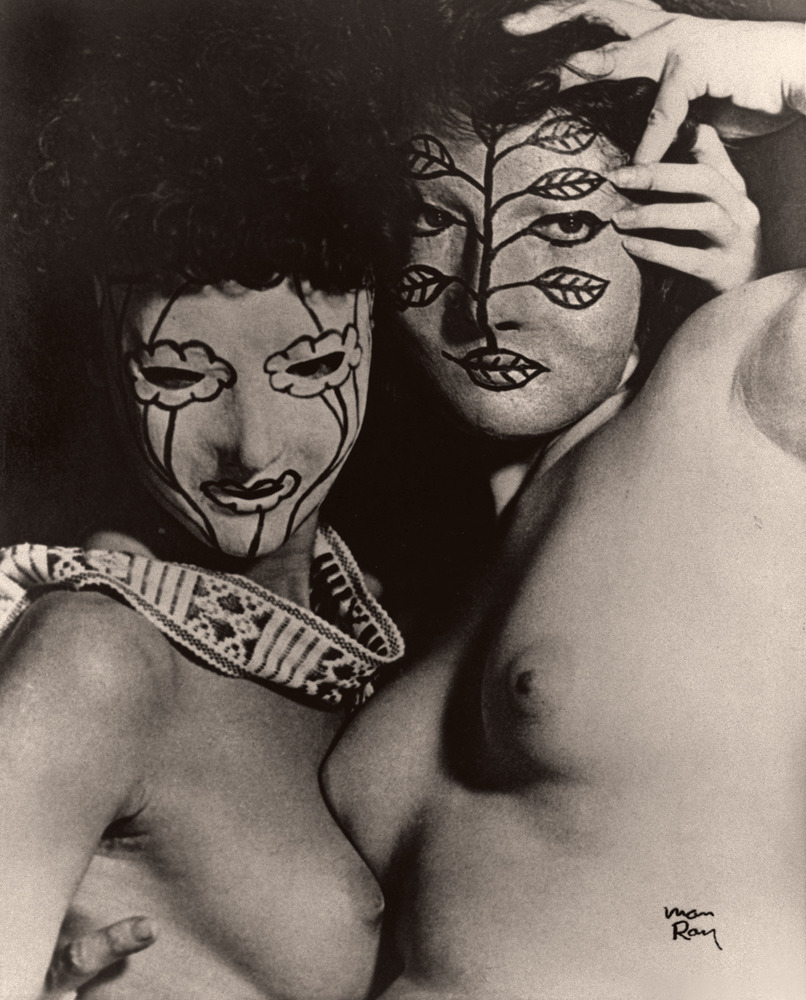 Juliet et Margaret -Man Ray 1942?
 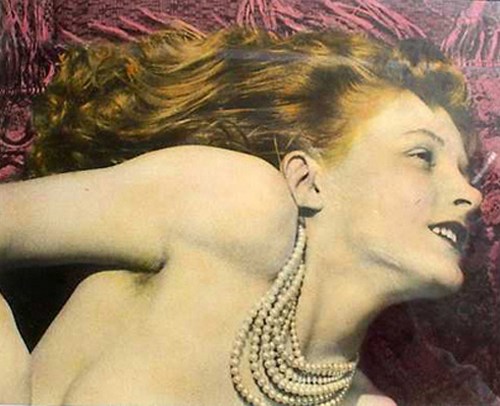 Marie Von Bruenchenhein-Eugene Von Bruenchenhein circa 1945
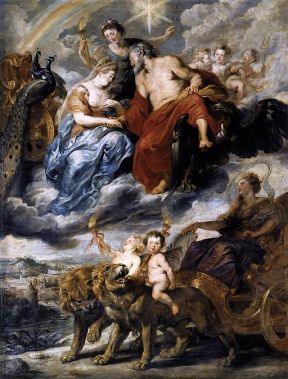




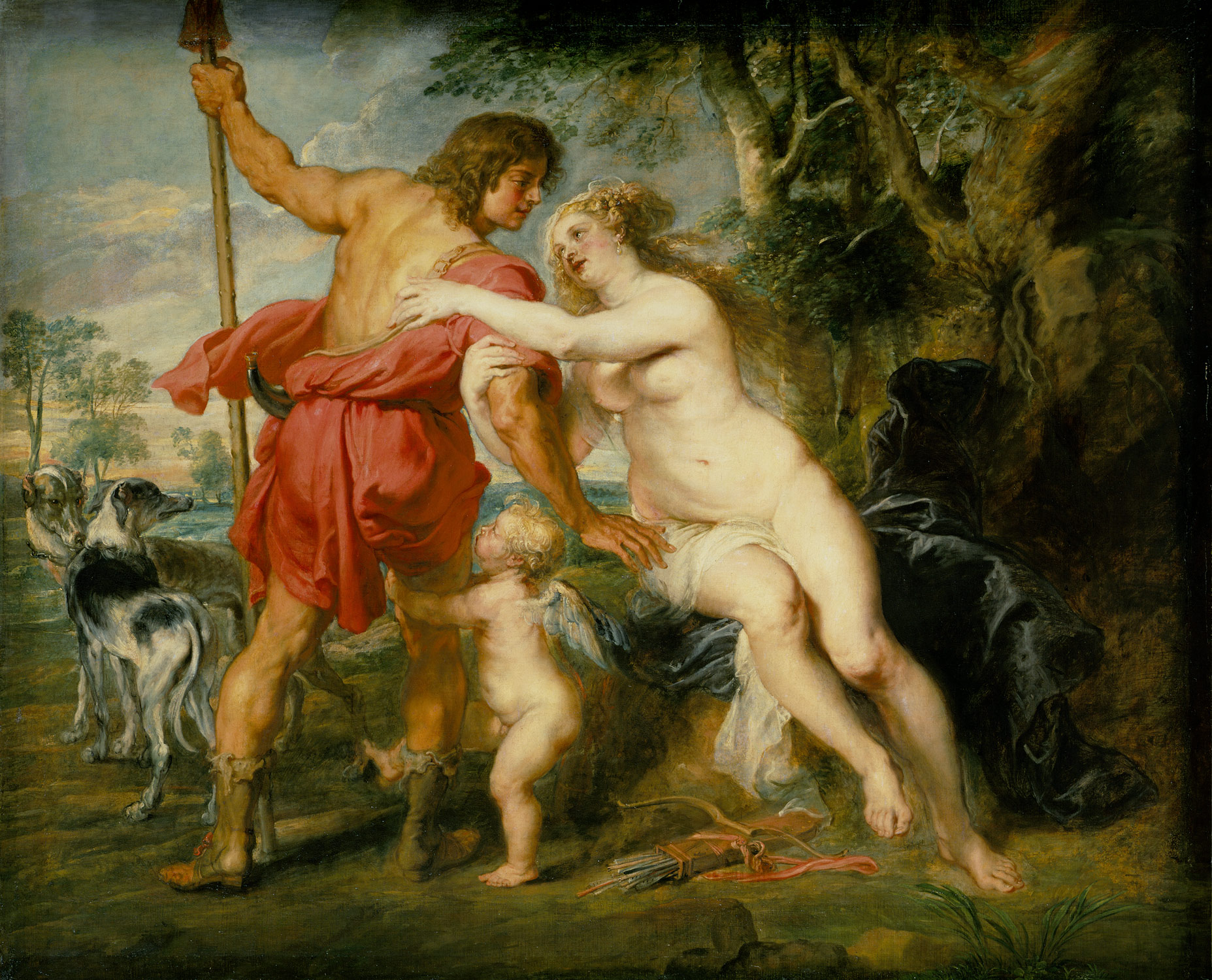 Peter Paul Rubens, mid 1630’s. Housed in the…
 lampmagician
You must be logged in to post a comment.