As I can remember me; at the beginning of WWW at the end of 80’s in Germany, there was an exciting on the way. For me, unfortunately, there was not much opportune to be busy with this newcomer because, I had to work to get money for all these costs but Al, my brother was fully employed with this phenomenon and I had to say it; it was my goal.
It was the time of running slowly and take your time! The time of running modem in the taking of 53 KB. and try to get the music Napster… I will never forget how Al complained; It is damn slow!!
Anyhow, in those days, He had shown me once a shit of paper about the; Philosophical view of the religious way of thinking. this paper I have lost or couldn’t find, but I could gather together something similar to share here, might the force be with you, enjoy:
The story of “Strawberry Fields Forever” is more or less the story in miniature of the Beatles’ reinvention after they swore off touring in 1966 and disappeared into the studio to make their most innovative albums. It was not, as some Beatles fans might remember, an easy transition right away. Some of their fans, it turned out, were fickle, easily swayed by gossip as the latest TV trends. “While unsubstantiated break-up rumors swirled, some music fans became disenchanted with the group,” writes Ultimate Classic Rock. “You need only watch a 1967 clip from American Bandstand to see how many teenagers in the audience thought the Beatles were has-beens.”
Eager to get something out and fight the whims of fashion, Parlophone and Capitol both released John Lennon’s latest, “Strawberry Fields Forever,” with Paul McCartney’s “Penny Lane” as the B-side, in 1967. Since the band no longer toured, they were “directed to make film clips to accompany each song and promote the single.”
Here, they debuted their new psychedelic look, and in the singles they demonstrated the new direction their music would go. Thematically, both songs are nostalgic trips through childhood, with Lennon taking a mystical, psych-rock approach and McCartney diving headlong into his sentimental music hall ambitions.
“Strawberry Fields Forever” also firmly established the band as studio wizards, thanks to the wizardry, primarily, of George Martin. In the video at the top from You Can’t Unhear This, we learn just what a marvel—as a technical achievement—the band’s new single was at the time, containing “the craziest edit in Beatles history.” The song itself went through a very lengthy gestation period, as Colin Fleming details in Rolling Stone, from sketchy, ghostly early acoustic demoes called “It’s Not Too Bad” (below) to the wild cacophony of crashing rhythms and looping melodies it would become.
Recording take after take, the band spent 55 hours in the studio working on “Strawberry Fields Forever.” Nothing seemed to satisfy Lennon, though he was leaning toward a darker, heavier take, Fleming notes:
This was a version approaching proto-metal. Lennon couldn’t decide if he wanted to go the ethereal route, or the stomping one, and famously told George Martin to combine the two versions. This was less than practical.
“Well, there are two things against it,” Martin informed Lennon. “One is that they’re in different keys. The other is that they’re in different tempos.”
But for a man who had started his most personal, honest musical journey, within the parameters of a single song, back in Spain, this was merely part of the process.
“You can fix it, George,” Lennon concluded, and that was that, with Martin now tasked with finding a solution to a problem that seemingly violated the laws of musical physics.
Martin’s solution involved slowing one version down and speeding up the other until they were close enough in pitch that “only a musicologist, really, would know that there was that much of a difference,” Fleming writes. Speeding up and slowing down tracks was common practice in the studio, and is today, but given the incredible number of instruments and amount of overdubbing that went into making “Strawberry Fields,” the endeavor defied the logic of what was technologically possible at the time.
While the time spent on the song might seem extravagant, we should consider that these days bands can pluck the sounds they want, whatever they are, from pull-down menus, and splice anything together in a matter of minutes. In the mid-60s, Brian Jones, Brian Wilson, Jimi Hendrix, the Beatles and other studio pioneers dreamed up sounds no one had heard before, and brought together instrumentation that had never shared space in a mix. Producers and engineers like Martin had to invent the techniques to make those new sounds come together on tape. Learning the ins-and-outs of how Martin did it can give even the most die-hard Beatles fans renewed appreciation for songs as widely beloved as “Strawberry Fields Forever.”
I have never thought that as a retired man being so busy as I haven’t been before. That is and means being a grandpa!
Oh yes; excitement is the order of these days, the first; queen Mila is on our board; with grandma & pa because the second one; the king (or the Lord on the side of the queen, the name has not been chosen yet) is on the way to step (or shout out) on this earth.
so then it’s announced many sleepless nights and heart-beats, till all gonna be well. we can just hope.
PS: Since last Saturday, I am writing (trying 😛) to finish these some words but I have a feeling that I’m getting old(er)! today I (thought) I have an appointment with my gum surgery to finish my implant but it came out that I have messed up the day and the appointment was yesterday 😮😩
I was shocked when I found it out and now try not to become depressed.
Anyway, I try to give my best. Have a good rest of the week and stay safe dear friends🙏💖✌
The “Nefer” (Good, Beauty, Pleasant, Well) is a prefix which had been used several times for the Egyptian queens, therefore, we must not mix them together. There are many beautiful Queens in ancient Egypt; “Queen Nefertari—not to be confused with Nefertiti, the powerful queen who ruled alongside her husband, King Akhenaten, in the mid-14th century B.C.—was the first and favoured wife of Ramses II, the warrior pharaoh who reigned from 1290 to 1224 B.C., during the early 19th dynasty.” https://www.history.com/news/archaeologists-identify-mummified-legs-as-queen-nefertaris
Here is another great article by Marie Grillot about finding a fetching artefact, among the others, the Pillar-djed amulet. 🙏💖🙏
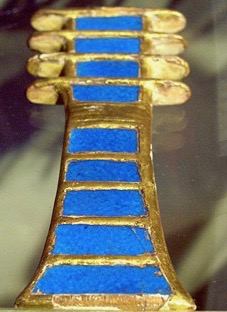
Pillar-djed amulet Wood covered with cloisonne gold leaf, with glass paste inlay – New Empire – 19th dynasty From the Tomb of Nefertari – QV / VdR 66 – discovered in 1904 by the Archaeological Mission of the Museum of Turin directed by Ernesto Schiaparelli and Francesco Ballerini Egyptian Museum of Turin – S. 5163
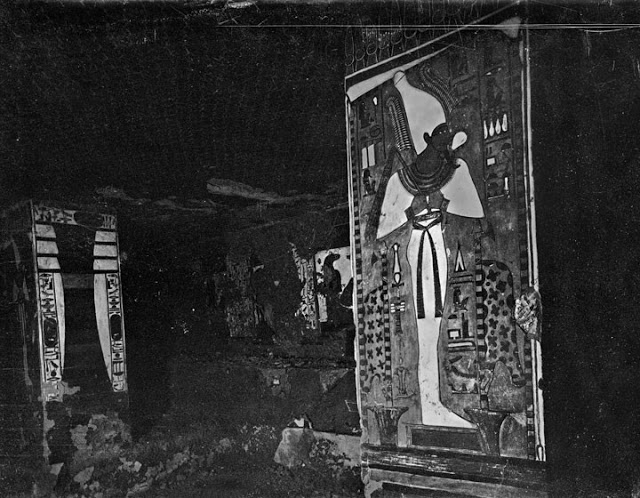
It is to the Archaeological Mission of the Museum of Turin, directed by Ernesto Schiaparelli and Francesco Ballerini, that we owe, in 1904, the discovery of the tomb of Nefertari, great wife of the pharaoh Ramses II; dazzlingly beautiful, it was adorned with eloquent titles. But the door which was to protect the abode of eternity – referenced QV / VdR 66 – from that which at Court was called “The most beautiful of all” had been opened, a sign of pillage from antiquity.
The tomb of Nefertari (QV / VdR 66) during its discovery by Ernesto Schiaparelli and Francesco Ballerini of the Archaeological Mission of the Museum of Turin, in 1904
“Cuttings had slipped, entered the first room and this filling almost reached the ceiling,” notes Schiaparelli. The ground of the tomb is entirely covered with solidified mud… Of the fabulous and royal treasure which it must have sheltered, there remain only “rare objects, in the middle of torn shrouds, everything showed to what extent the rape and the rampage had been systematic “. The looters left only “scarabs, fragments of the cover of the granite sarcophagus, and fragments of a coffin cover in gilded wood. Thirty “chaouabtis “(or ” shaouabtis “, ” chabtis “, “shabtis)., many shards of pottery … One of the niches kept for the magic bricks in the funerary chamber contained the partitioned wooden pillar-djed with an inlay of glass paste which had, one day, decorated the brick. It is inscribed in the name of Queen Nefertari… Finally to finish, humble but moving object abandoned by the looters, a pair of rope sandals… “
Pillar-djed amulet Wood covered with cloisonne gold leaf, with glass paste inlay – New Empire – 19th dynasty From the Tomb of Nefertari – QV / VdR 66 – discovered in 1904 by the Archaeological Mission of the Museum of Turin directed by Ernesto Schiaparelli and Francesco Ballerini Egyptian Museum of Turin – S. 5163
In “Nefertari, For Whom The Sun Rises”, Valeria Ornano describes the queen’s djed amulet as follows: “The front of the wooden object is 13 centimetres long and is covered with gold leaf with inlays in the blue glassy paste, while the back is painted yellow with red decorations and bears a touching engraving: “Osiris, the great royal wife, his beloved, just like Re”. It is quite possible that the other three niches contained similar objects, possibly related to Isis as she is depicted on the walls of the same tomb. These amulets were used to provide magical protection for Nefertari during his regeneration. “
Djed painted on one of the pillars of the sarcophagus room of the tomb of Nefertari (QV / VdR 66) discovered by Ernesto Schiaparelli and Francesco Ballerini (Archaeological Mission of the Museum of Turin) in 1904
The pillar-djed, symbol of stability is the Osirian amulet par excellence. In “Ancient Egypt and its gods”, Jean-Pierre Corteggiani devotes a long development to him, here is a short extract: “this pillar with the foot as flared as the head, surmounted above multiple ligatures, by four elements dishes which seem to fit one inside the other, was assimilated to the backbone of Osiris: this is what the ‘Formula of the pillar-djed in gold’ indicates… of chapter 155 of the Book of the Dead where it is specified that any deceased buried with this amulet suspended from the neck by sycamore fibre is guaranteed to be ‘an eminent blessed in the empire of the dead’ and this is what makes it a symbol conferring stability and duration, notions expressed in Egyptian by the corresponding hieroglyphic sign. “
Pillar-djed amulet Wood covered with cloisonne gold leaf, with glass paste inlay – New Empire – 19th dynasty From the Tomb of Nefertari – QV / VdR 66 – discovered in 1904 by the Archaeological Mission of the Museum of Turin directed by Ernesto Schiaparelli and Francesco Ballerini Egyptian Museum of Turin – S. 5163
The Guide to the Museo Egizio in Turin, where the Nefertari pillar-djed is exhibited under the reference S. 5163, specifies that this is: “the only survivor of the four amulets linked to what we call the ‘magic bricks’, ritually arranged at the four corners of the golden room to protect the deceased “.
In BIFAO 112, Elka Koleva-Ivanov studies this funeral ritual of “magic bricks” or “sacred bricks” linked to Osiris: “According to chapter 137A of the Book of the Dead, on the western brick must be placed a pillar-djed which is an Osirian object and on the eastern brick, the figurine of Anubis which is closely associated with the protection of the dead god. Similarly, according to this text, the magic brick must be made in sjn wȝḏ, which designates the raw clay, but also green clay, the Osirian colour par excellence “; the other two bricks being: “to the south – the one with the torch and to the north – the brick carrying the mummy figurine”.
Remains of the funeral furniture of Queen Nefertari from her grave (QV / VdR 66) discovery by Ernesto Schiaparelli and Francesco Ballerini of the Archaeological Mission of the Museum of Turin, in 1904 exhibited at the Turin Museum
It is clear that the bricks did not succeed in preserving the queen … In his “Nefertari the Lover of Mut”, Christian Leblanc returns to the desecration of the tomb: “The burial unsealed by looters was not burnt down, but the queen’s funeral furniture was largely taken away. The open pink granite sarcophagus allowed thieves to get their hands on the most precious objects: gold and gilded coffins, jewellery and amulets, which were easily transformable or exchangeable on the market where large traffic arises. The chests, baskets, chairs and beds which had to appear among the pieces of equipment put at the disposal of the sovereign in her eternal home, were undoubtedly dismantled then recovered, along with the contents of the jars and containers. “
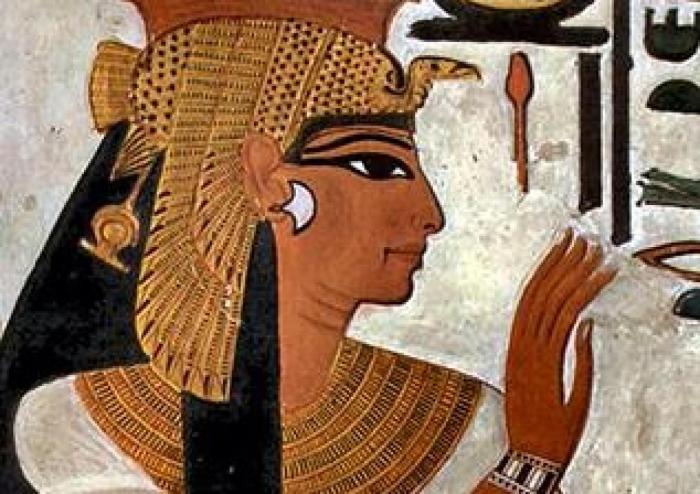
Nefertari represented in his tomb – Valley of the Queens – QV / VdR 66 discovery by Ernesto Schiaparelli and Francesco Ballerini of the Archaeological Mission of the Museum of Turin in 1904
As for Nefertari whose representations, whether painted or of stone, delight our eyes, it is infinitely sad to report that, of his mummy, only the two knees have been found. After the plundering at the end of the New Kingdom, was it restored and sheltered in a royal hiding place, similar to the DB 320? If that were the case, hope would then be allowed to see the beautiful sovereign one day …
Nefertari, ‘the beloved de Mut’ Christian Leblanc, Editions du Rocher 1999The queens of the Nile. Library Rarities, Christian Leblanc, Paris, 2009Nefertari, For Whom The Sun Rises, Valeria OrnanoOsiris and sacred bricks BIFAO 112 (2012), p. 215-224 Elka Koleva-Ivanovhttps://www.ifao.egnet.net/bifao/112/15/
12 Egyptian queens who changed history, Pierre TalletThe secret discoveries, Christiane Desroches-Noblecourt Editions Telemachus, 2006The great nubiade or the journey of a Egyptologist Christiane Desroches-Noblecourt, Stock 1992
Nefertari, also known as Nefertari Meritmut, was an Egyptian queen and the first of the Great Royal Wives of Ramesses the Great. Nefertari means ‘beautiful companion’ and Meritmut means ‘Beloved of [the goddess] Mut’. She is one of the best known Egyptian queens, next to Cleopatra, Nefertiti, and Hatshepsut. Wikipediahttps://g.co/kgs/SaKbEz
An Enlargement of a Photograph… or an Enlargement of Mind.
Hi dear friends. I hope you’re all good and well and tuned. Oops! It looks like I’m writing a letter to you 😁 Of course, I have no intention of writing a letter, I’m just a little confused, It seems I am doing mostly something else as I have thought to want to do!!
It might be also caused by a problem, which I have got since a week ago about my limited action on the WP.
You know; I must confess that I am as a guest-writer here, it means that I use this site in no charge. It is, of course, a very kind act by the WP to let me and the same as me, to be allowed to work and write their thoughts without paying and it is as it expected, limited version.
Therefore, and at the same time surprisingly, the warning comes to tell that; you have reached your limit! And of course, I respectfully accept it (with considering deleting some old posts as suggested)
Anyway, what can one expect from an old poor retired man? Nothing I think, just forgiveness and let him do calm his soul by sharing it with you good friends. 🙏💖
Now let’s go in the very past; from the time as life has begun, I would it recall; The end of ’60s. And with this old but very interesting movie; the Blow-up by Michelangelo Antonioni http://Search Results Web results Michelangelo Antonioni – Wikipedia and his first English-speaking movie.
I have watched this last weekend, after about forty-five years, oh yes; I have seen it in Iran those days though it was censored partly but anyhow it was an unbelievable occasion to see it! In fact, there were many opportunities in Shah’s time to do, one should only know that!
Now on this movie; of course, Antonioni is famous enough as a great movie-maker and he has made a lot of fascinating pieces in the history of cinema, but in this one, he has a message which he shows it at the end of the movie; fully noticed; the enlargement of the mind.
A miniature of Nizami‘s narrative poem. Layla and Majnun meet for the last time before their deaths. Both have fainted and Majnun’s elderly messenger attempts to revive Layla while wild animals protect the pair from unwelcome intruders. Late 16th-century illustration. via Wikipedia,
Layla and Majnun is a very old Persian story about two unfortunate lovers as in this video will be explained; it might be compared with W. Shakespeare’s drama Romeo and Juliet. But it seems that it is a never-ending story, it works itself out into the modern times. 😉🤗
The story of Eric Clapton and “Layla” has always bothered me because to understand it is to understand how fallible and crazed any of us can be when it comes to love. We understand that our rock gods are human, but there’s something about Clapton falling in love with the wife (Pattie Boyd) of one of his best mates (George Harrison, a freakin’ Beatle, man!) and then writing a whole album about it, that is just unsettling. Is this something tawdry writ epic? Or is this something epic that has the wafting aroma of tawdriness?
Polyphonic takes on the behind the scenes story of this rock masterpiece and rewinds several centuries to the source of Layla’s name: “Layla and Majnun,” a romantic poem from 12th century Persian poet Niẓāmi Ganjavi based on an actual woman from the 6th Century who drove her poet paramour mad. Lord Byron called the tragic poem “The Romeo and Juliet of the East,” as unrequited love leaves both Majnun and Layla dead after the latter’s father forbids her to be with the poet.
Eric Clapton heard of the poem from his Sufi friend Abdalqadir as-Sufi (formerly Ian Dallas), and so when he wrote a slow ballad about his unrequited love for Patti, “Layla” made perfect sense as a name.
The song might have stayed a ballad–think of Clapton’s slowed down version from his MTV “Unplugged” special–if it wasn’t for Duane Allman of the Allman Brothers. The two had yet to meet, but were aware of each other. Allman had grabbed Clapton’s attention with his fiery solo work at the end of Wilson Pickett’s cover of “Hey Jude”:
When Clapton and Allman did meet, the two set to jamming and Allman made the history-changing decision to speed up Clapton’s ballad and use a riff taken from Albert King. “Layla” was born. Allman’s bottleneck slide style met Clapton’s string bending, and the track is a conversation between the two, where no words are needed.
“It’s in the tip of their fingers,” says engineer Tom Dowd, listening to the isolated tracks in the video below. “It’s not in a knob, it’s not in how loud they play, it’s touch.
Over this, Clapton delivers his desperate lyrics, sung by a man at his wits end, much like Majnun of the poem.
And then, that coda, which takes up half the song. Drummer Jim Gordon was working on the piano piece for a solo album in secret. When Clapton discovered Gordon was recording on the sly, he wasn’t angry. Instead he insisted it be added to the end of the rocking first half. The song is a perfect balance between frantic rock and romantic ballad.
But in the real world, “Layla” didn’t do the job. Clapton played the album for Pattie Boyd three weeks later, and though she understood its beauty, Boyd was embarrassed by its message.
“I couldn’t believe I was the inspiration for putting this together,” she said in an interview. “I didn’t want this to happen.” She was also mortified thinking that everybody would know exactly who “Layla” was about.
“It didn’t work,” Clapton recalled. “It was all for nothing.”
The song was a flop in the charts, especially as it was cut in half for the single. It would find its audience three years later when the full version appeared on both a Clapton anthology and a best of collection of Duane Allman’s work. Finally it rocketed up the charts, and it’s kind of stayed in classic rock playlists ever since.
And as for Boyd, she actually did leave George Harrison in 1974 to marry Clapton in 1979, a marriage that lasted 10 years. Not all marriages last. The original flame dies out. It’s just that, in “Layla”‘s case, the flame is there every time the needle drops into the groove.
Yes, I am a retired pensioner person though, I’d never know what it really is! I mean; I have been feeling as an artist all through my life and I believe that an artist will never get retired, do they? why! there is always some ideas, something to create.
Of course, you might ask me that my job in the last almost 30 years could have nothing to do with the Arts and you might be right but, believe me, if you began your life with some kind of art in the society, you can’t leave it.
A nice welcome made by my adorable wife RENTE (Retirement) that every letter is the beginning of another word.
Yes, my destiny forced me to chose a job which I wasn’t really wanting it but a must to earn mony to survive, and I made of this dry, boring and trivial work an interesting one, a loving, caring and even intellectual kind of work, though, I tell you; in this business the word intelligence is a foreign word!
Anyway, I did my best and I can proudly say that some nice old people as my regular customers, will miss me 😉
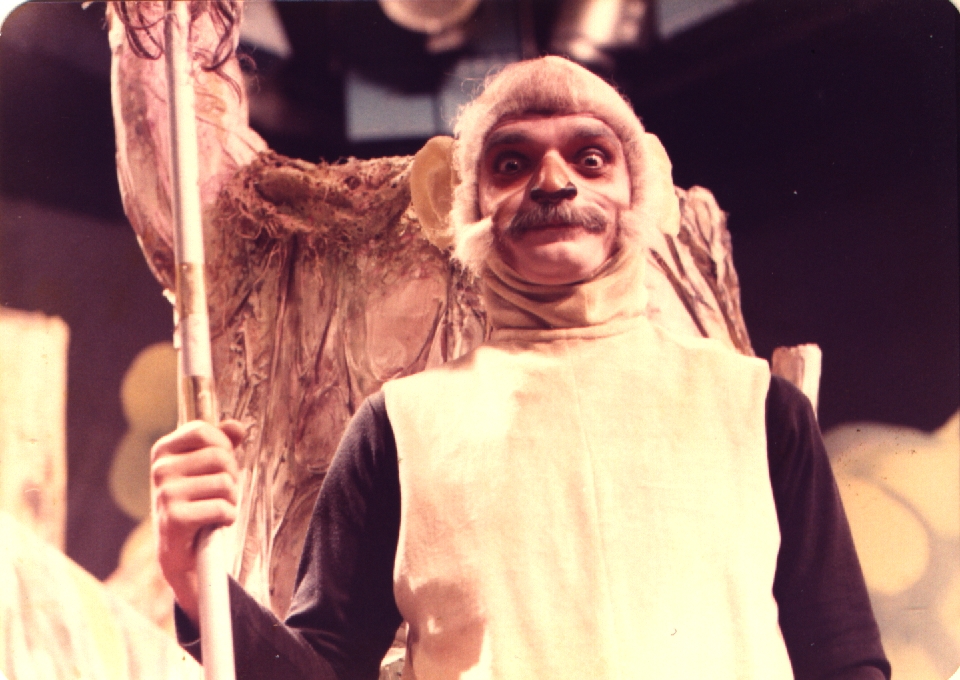
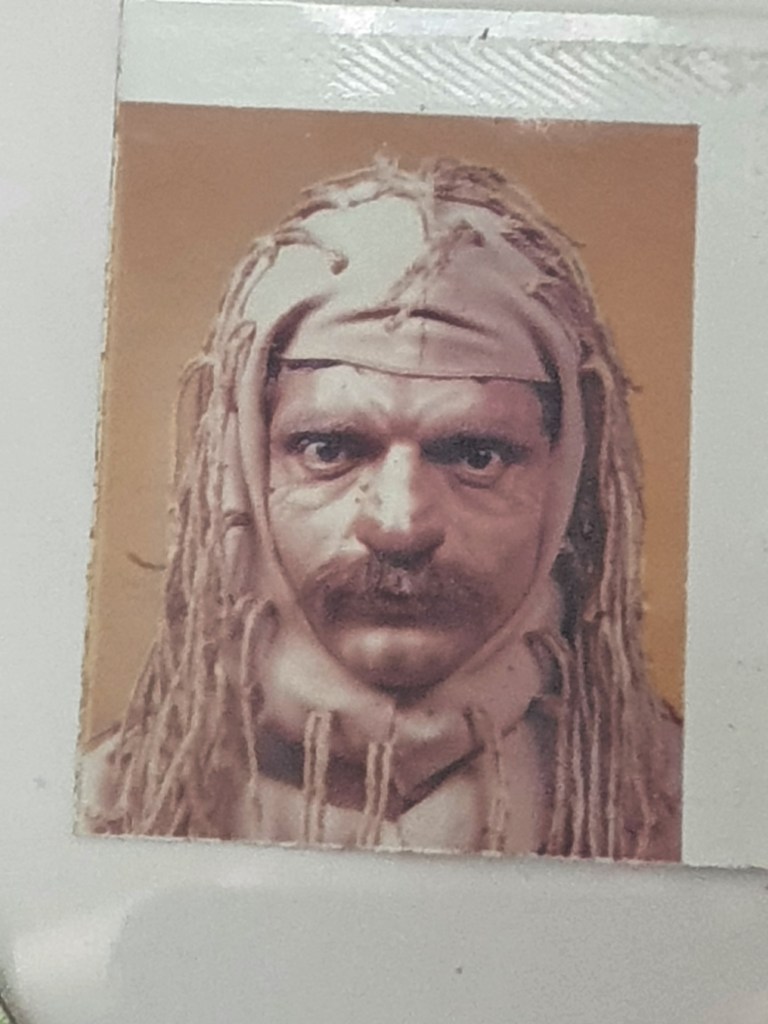
Now let me tell you what I had done, or beter to say tried to do in Iran after Khomaynie regime closed down all the newspapers, you know, in that time in Iran, after so-called; Iranian Spring; in the Spring of 1979, in which at the beginning, we could touch a hint of freedom, the Mullah’s regime closed all the real and free newspapers, I have tried my talent on the stages. and I succeeded; played as an Ape; as you can see here, and I was also a Lion, a Bear, and a soldier. I got in the world of the theatre, just to keep being creative. and of course, it was an unforgettable time in my life
for ever ape!!
There I am, an Ape with something 😉 that is my time in (not Paris) but in Tehran, when I, and some experts, discovered my talent as an actor😁🤣 Here I must add that I was lucky to get a master of make-up to do this wonderful mask on my face. And it was an act for the children which we’ve played on the stage and also on the TV show.
I myself, as always carefully saying; being an artist, or at least being surrounded by the artists all through my life, tried to give my best, and I can not imagine someone can do this without the ability of creation.
here are other roles which I took over to play;
it surely needs your imagination for seeing me as a lyon 😂
The one at the right side The Bear!
as a soldier! the one who, I never can be
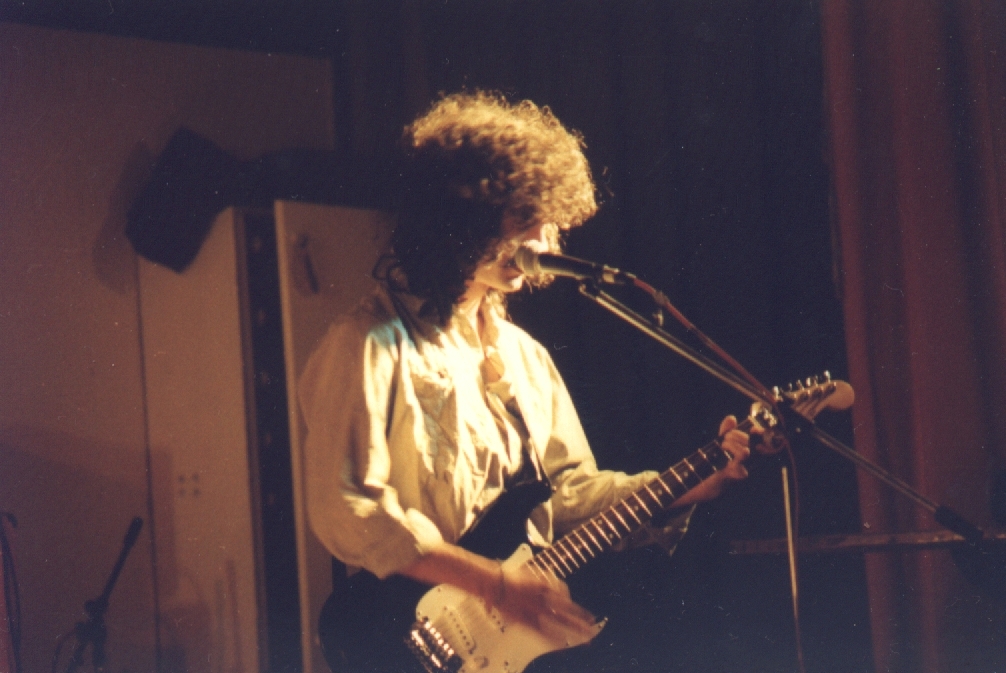
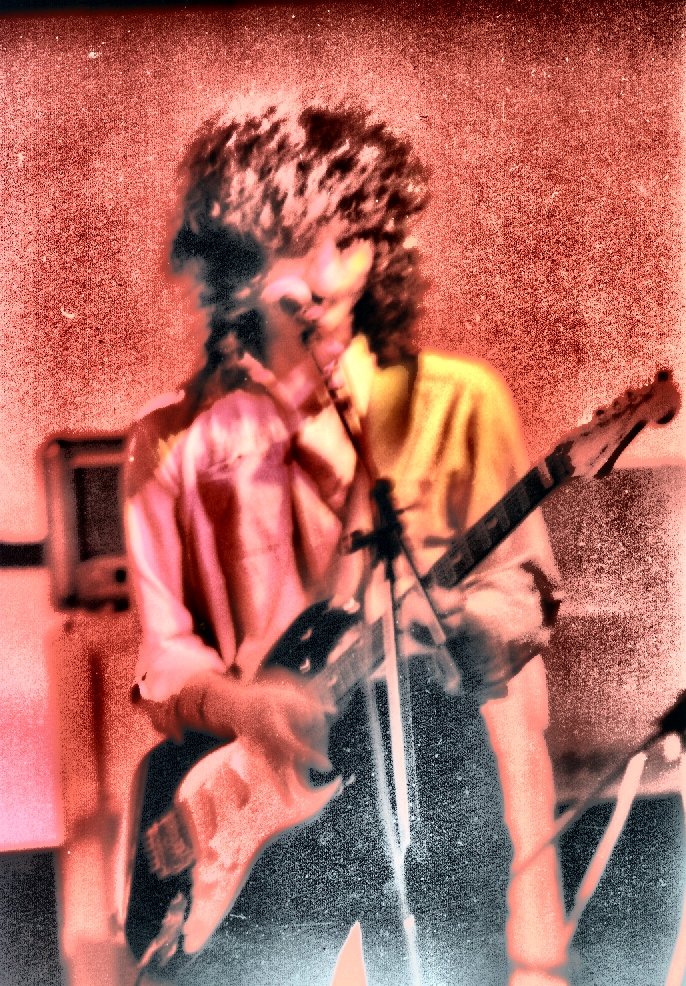
I must confess that I was actually always a musician. 😉🤗
introvert but no fear of the limelight 😉
“The artist is the creator of beautiful things. To reveal art and conceal the artist is art’s aim. The critic is he who can translate into another manner or a new material his impression of beautiful things.”
Anyway, I was never in any position to work… and work it out… and get retired! In my life the work is the art, to create; the one is there to try to make it, not perfect but better, harmonically nice and beautiful… the feeling like; now I’m done! let’s… have a look 🤔😎
but you know what I mean; if somebody has something to do with a kind of arts and creations, can never be a pensioner.., there is nothing to stop; nobody can limit or control the imaginations, they are unlimited.
I think somehow; Fact doesn’t actually exist, just let the imagination run and never stop! 😊
With a great Thank to Laurent Tremblay
And there it is; an important question which still remains: the question of “How is it, to be Retired? Of course, it’s another story 😂😅 stay safe everyone 💖👍✌🙏💖



















 lampmagician
You must be logged in to post a comment.