Can Dreams Be Prophetic?

Standard
Quote Master

The title is a good question; I am not an interpreter as I have always wished to be. I can’t even remember my dreams in the latest years as I did in my youth.

Yes, the Master tells the truth. My brother Al had the talent of the interpretation, as one of my aunts; Rakhshi. When someone talked about her/his dream, they could analyse it so well that one could be agreed immediately.

Now I want to share here with you a great article by Dale M. Kushner  MFA, who is founder of The Writer’s Place, a literary center in Madison, Wisconsin. She has an MFA in poetry from Vermont College and has served as poetry editor for The Journal of Pastoral Care & Counseling. http://dalemkushner.com/about/ It is much worthy to read.

Dale M. Kushnerundefined Transcending the Past

Can Dreams Be Prophetic? How might you tell if your dreams are predicting something?

Posted Feb 28, 2020
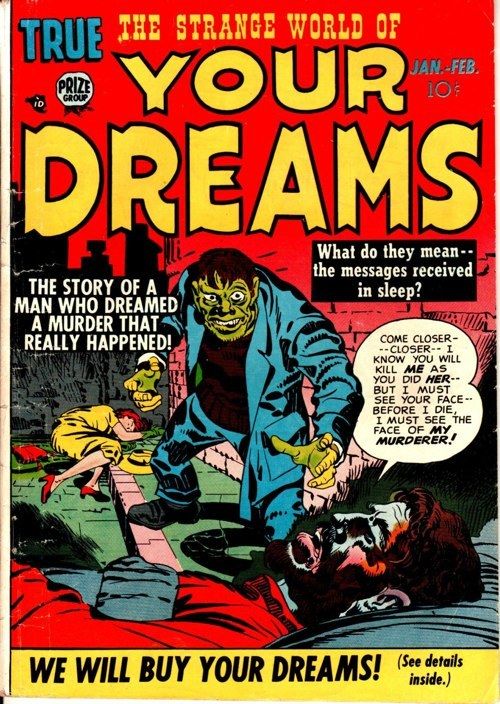
Prize Publcations/Public Domain
Cover of the last issue of The Strange World of Your Dreams (1953) by Joe Simon and Jack Kirby
Source: Prize Publcations/Public Domain

In September of 1913, Carl Jung, the great pioneer of depth psychology, was on a train in his homeland of Switzerland when he experienced a waking vision. Gazing out the window at the countryside, he saw Europe inundated by a devastating flood. The vision shocked and disturbed him. Two weeks later, on the same journey, the vision reoccurred. This time an inner voice told him: “Look at it well; it is wholly real and it will be so. You cannot doubt it.”

Years later, in his memoir, Memories, Dreams and Reflections, he recalls the event and his concern that he was having a psychotic break.

“I was suddenly seized by an overpowering vision: I saw a monstrous flood covering all the northern and low-lying lands between the North Sea and the Alps. When it came up to Switzerland I saw that the mountains grew higher and higher to protect our country. I realized that a frightful catastrophe was in progress. I saw the mighty yellow waves, the floating rubble of civilization, and the drowned bodies of uncounted thousands. Then the whole sea turned to blood.”

The following spring of 1914, he had three catastrophic dreams in which he saw Europe was deluged by ice, the vegetation was gone, and the land deserted by humans. Despite his awareness that the situation in Europe was “darkening,” he interpreted these dreams personally and feared he was going mad. However, by August of that year, his dreams and visions were affirmed: World War I had broken out.

Some fifty years earlier, President Abraham Lincoln had a prophetic dream. Three days before he was assassinated, Lincoln conveyed his dream to his wife and a group of friends. Ward Hill Lamon, an attending companion, recorded the conversation.
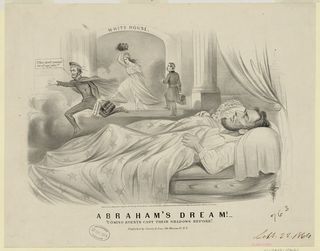
Library of Congress/Public Domain
“Abraham’s Dream! Coming Events Cast Their Shadow Before.” Lithograph by Currier & Ives (1864)Source: Library of Congress/Public Domain

“About ten days ago I retired very late. I had been up waiting for important dispatches from the front. I could not have been long in bed when I fell into a slumber, for I was weary. I soon began to dream. There seemed to be a death-like stillness about me. Think I heard subdued sobs, as if a number of people were weeping. I thought I left my bed and wandered downstairs. There the silence was broken by the same pitiful sobbing, but the mourners were invisible. I went from room to room; no living person was in sight, but the same mournful sounds of distress met me as I passed along. It was light in all the rooms; every object was familiar to me; but where were all the people who were grieving as if their hearts would break? I was puzzled and alarmed. What could be the meaning of all this? Determined to find the cause of a state of things so mysterious and so shocking, I kept on until I arrived at the East Room, which I entered. There I met with a sickening surprise. Before me was a catafalque, on which rested a corpse wrapped in funeral vestments. Around it were stationed soldiers who were acting as guards; and there was a throng of people, some gazing mournfully upon the corpse, whose face was covered, others weeping pitifully. ‘Who is dead in the White House?’ I demanded of one of the soldiers. ‘The President,’ was his answer; ‘he was killed by an assassin.’ Then came a loud burst of grief from the crowd, which woke me from my dream. I slept no more that night; and although it was only a dream, I have been strangely annoyed by it ever since.”  (Recollections of Abraham Lincoln, 1847-1865 by Ward Hill Lamon, published 1911.)

Two weeks later, on April 14, 1865, Lincoln was assassinated by John Wilkes Booth. As in his dream, his casket was put on view in the East Room of the White House and guarded by soldiers.

These are two chilling examples of dreams that occurred during periods of collective crisis which accurately predicted historical turning points. Do prophetic dreams occur more often during turbulent times? How does the dreamer know if a dream is to be interpreted personally and symbolically or as a warning for others and the world at large?

I asked these questions to Dr. Murray Stein, a renowned author and Jungian analyst at the International School for Analytic Psychology in Zurich, Switzerland. Dr. Stein replied that he had no statistics on whether people have predictive dreams more frequently in times of crisis than at other times. In his experience, one can’t know if a dream is precognitive until after the event. After 9/11, he told me, people reported precognitive dreams that foretold the disaster. He said people also reported that dreams foretold the financial crisis of 2008, which he called, “a black swan event.” According to Investopedia:

“A black swan is an unpredictable event that is beyond what is normally expected of a situation and has potentially severe consequences. Black swan events are characterized by their extreme rarity, their severe impact, and the practice of explaining widespread failure to predict them as simple folly in hindsight.”

The recent outbreak of the coronavirus might be considered a black swan event, and perhaps we will soon hear about people who have had prophetic dreams of its manifestation.
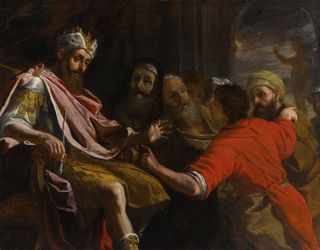
Sothebys/Public Domain
Daniel Interpreting Nebuchadnezzar’s Dream (c. 1670) by Mattia Preti (1613-1699)Source: Sothebys/Public Domain

While there is no simple answer or proven method to discern whether a dream should be interpreted personally or more broadly, we can go about exploring its contents with both aspects in mind. For example, if I have a dream in which I am a child who has been put into a cage. I might ask: What aspect of me feels “caged” right now? Noting that I am a child in the dream, I might further inquire: Is there something from my childhood that is still confining and constricting me? I might try to estimate the age of the child in the dream and reflect back to when I was that age and try to remember if something significant happened then. Maybe my parents had begun to think about divorce at that time and I felt caged by their emotions. I might then inquire if there is something similar going on in my life right now, not necessarily a divorce, but an imminent disruption or the loss of a treasured relationship. When we go back into a dream to amplify it, each question generates other questions that can lead to deeply buried insights. (For a more complete explanation of Jung’s use of amplification as a technique, please see Michael Vannoy Adams’ description on JungNewYork

But what if I dream that I am a child that has been put into a cage, and a few days later, I discover that children of immigrants are actually being held in cages in detention centers? My dream, while personally relevant, would carry a collective, or more public meaning, as well. This collective meaning of the dream attests to the interconnectedness of our species, to our capacity for empathy (we see a horror on the news and we feel it enter us) and to the common values we share about the quality of human life.

If we had lived during the early part of the last century, or in an Indigenous culture, or in ancient Mesopotamia, we might examine our dreams for deep wisdom and as augurs for the future. These days we are more likely to look to neuroscience to understand our dreams. Neurobiology tells us that sleep is a complex neural activity of the brain that stays busy activating and deactivating complicated neuro-systems while we doze, including consolidating memories, regulating mood, restoring immune function, and many other important utilitarian tasks. But neuroscience tells us nothing about the meaning of dreams or why our dreaming life has carried significance for humans since we first walked the planet.

British Museum/Public Domain
Gilgamesh and Enkidu fight the Bull of Heaven. Gilgamesh cylinder seal, Assyria, c. 7th century BCE.Source: British Museum/Public Domain

About thirty thousand years ago, toward the end of the Paleolithic Era, our hunter-gather forebears descended into the subterranean darkness of caves to enact rituals of trance and dreaming. Recently, archaeologists and ethnographers have speculated that the artifacts found in the caves of southern Europe—bone flutes, whistles, and types of drums—and the now-famous discovery of cave wall paintings indicate that ancient shamans may have used these caves for ceremonial dream retreats (See in particular the work of David Lewis-Williams). We can speculate that the depictions of bison and large and small game along with scenes of hunting painted on the walls may reflect shamanic dream content. Perhaps the shaman ascended from his retreat having had visions about the abundance and location of prey, which would be crucial information for the clan.

Later human societies continued to transcribe their dreams. The oldest written dream recorded is in the Sumerian epic poem of Gilgamesh (2100 BCE). Not unlike King Nebuchadnezzar’s frightening dream in the Book of Daniel, Gilgamesh, the king of the Sumerian city Uruk, has violent nightmares about death, which shake him to the core and send him on his quest for immortality. But Gilgamesh cannot interpret his own dreams, and like many of the dreamers in the Old Testament, he is in need of an interpreter. How telling that from ancient times the one who receives the dream and the one who knows its significance are different people.

Wikimedia Commons, public domain
Nicholas Black Elk with his daughter Lucy Black Elk and wife Anna Brings White.Source: Wikimedia Commons, public domain

In some contemporary cultures, dreams are thought to be a way of receiving messages from the spirit world. A holy man or medicine woman, an elder or shaman is the receiver of the prophetic dream, which is given for the benefit of all and linked to the survival of the tribe or people. Black Elk, the holy medicine man of the Lakota Sioux, stated this when he said a dream is worthless unless it is shared with the tribe.

How can we relate to the dreams that pursue us? Are they simply the result of complex neurological activity and without real meaning, just as we know the moon is no enchanted sphere but a mere rock in space? What might we miss if we cast our lot with a viewpoint based wholly on the material world? Is it possible to consider the two worlds as being equally meaningful, the world of science and—to borrow the phrase John Keats used to characterize adventurers on the threshold of a new frontier—the world of “wild surmise”? Can we think of ourselves as vessels open to receiving wisdom through non-ordinary means? Can we be our own shamans?

via https://www.psychologytoday.com/us

Originally; https://www.psychologytoday.com/us/blog/transcending-the-past/202002/can-dreams-be-prophetic
And in the End of the Tunnel; There’s a Light

Standard
Pitchfork

I don’t know if you have ever think about it? I do! Maybe because of the age… or maybe because I have a lot of loose (death) in my small family that I just can hardly wait for my turn.

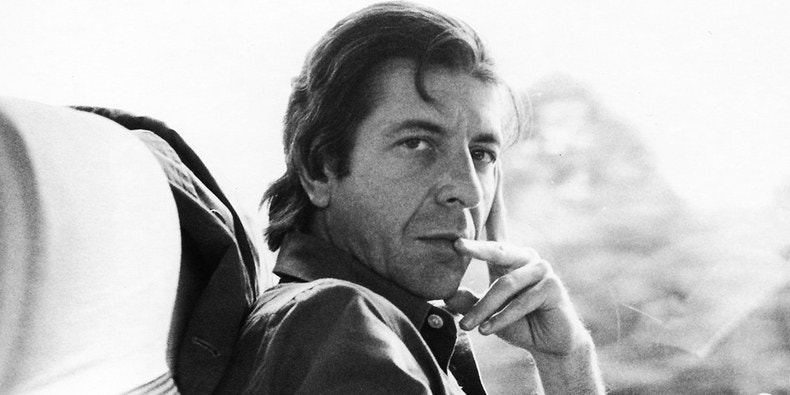
Sorry for not dying! He said; in one of his latest concerts. Yes, Leonard Cohen had a feeling of it. Mike Steeden – MIKE STEEDEN – surely can sing a perfect song on him and his life but I do it as well.

I don’t believe in life after death though, the whole energy which we still have, in my opinion, is a miracle, and would certainly do it’s best to survive!

First, we take Manhattan, then We take it All.

Now let’s again have a nice trip on the master to describe his thoughts on this unknown… position…

http://www.openculture.com/

via http://feedproxy.google.com/~r/OpenCulture/~3/eVdYn20T-x0/an-animated-leonard-cohen-offers-reflections-on-death-thought-provoking-excerpts-from-his-final-interview.html?utm_source=feedburner&utm_medium=email

A month before Leonard Cohen died in November, 2016, The New Yorker‘s editor David Remnick traveled to the songwriter’s Los Angeles home for a lengthy interview in which Cohen looked both forward and back.

As a former Zen monk, he was also adept at inhabiting the present, one in which the shadow of death crept ever closer.

His former lover and muse, Marianne Ihlen, had succumbed to cancer earlier in the summer, two days after receiving a frank and loving email from Cohen:

Well, Marianne, it’s come to this time when we are really so old and our bodies are falling apart and I think I will follow you very soon. Know that I am so close behind you that if you stretch out your hand, I think you can reach mine. And you know that I’ve always loved you for your beauty and your wisdom, but I don’t need to say anything more about that because you know all about that. But now, I just want to wish you a very good journey. Goodbye old friend. Endless love, see you down the road.

The New Yorker has never shied from over-the-top physical descriptions. The courteous, highly verbal young poet, who’d evinced “a kind of Michael Corleone Before the Fall look, sloe-eyed, dark, a little hunched” was now very thin, but still handsome, with the handshake of “a courtly retired capo.”

In addition to an album, You Want It Darker, to promote, Cohen had a massive backlog of unpublished poems and unfinished lyrics to tend to before the sands of time ran out.

At 82, he seemed glad to have all his mental faculties and the support of a devoted personal assistant, several close friends and his two adult children, all of which allowed him to maintain his music and language-based workaholic habits.

Time, as he noted, provides a powerful incentive for finishing up, despite the challenges posed by the weakening flesh:

At a certain point, if you still have your marbles and are not faced with serious financial challenges, you have a chance to put your house in order. It’s a cliché, but it’s underestimated as an analgesic on all levels. Putting your house in order, if you can do it, is one of the most comforting activities, and the benefits of it are incalculable.

He had clearly made peace with the idea that some of his projects would go unfinished.

You can hear his fondness for one of them, a “sweet little song” that he recited from memory, eyes closed, in the animated interview excerpt, above:

Listen to the hummingbird

Whose wings you cannot see

Listen to the hummingbird

Don’t listen to me.

Listen to the butterfly

Whose days but number three

Listen to the butterfly

Don’t listen to me.

Listen to the mind of God

Which doesn’t need to be

Listen to the mind of God

Don’t listen to me.

These unfinished thoughts close out Cohen’s beautifully named posthumous album, Thanks for the Dance, scheduled for release later this month.

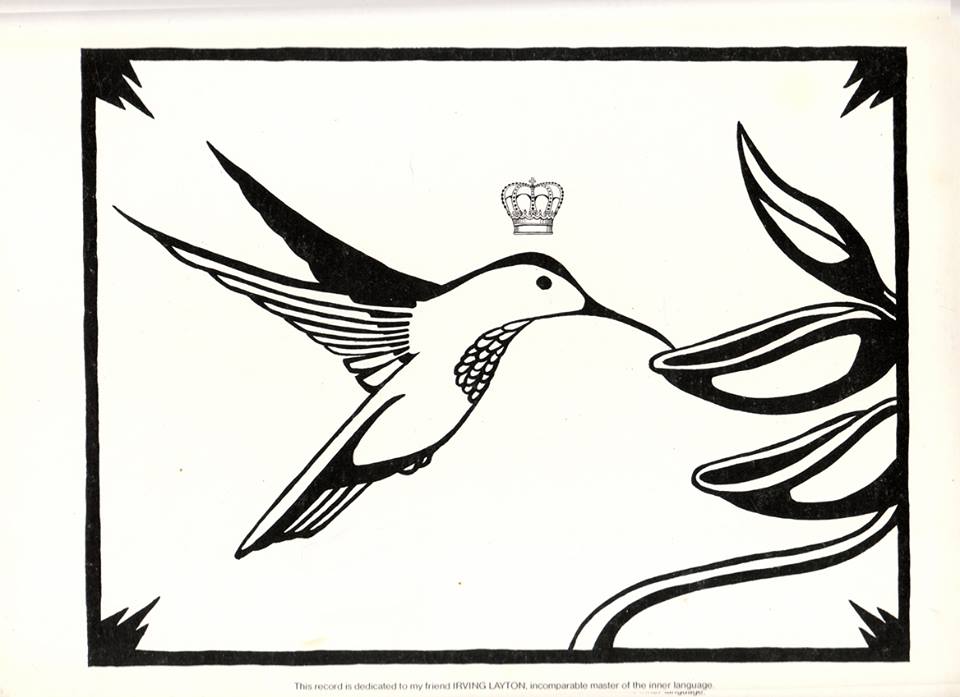
Dianne V. Lawrence, who designed Cohen’s hummingbird logo, a motif beginning with 1979’s Recent Songs album, speculates that Cohen equated the hummingbird’s enormous energy usage and sustenance requirements with those of the soul.

Read Remnick’s article on Leonard Cohen in its entirety here. Hear a recording of David Remnick’s interview with Cohen–his last ever–below:

Related Content:

Hear Leonard Cohen’s Final Interview: Recorded by David Remnick of The New Yorker

Leonard Cohen’s Last Work, The Flame Gets Published: Discover His Final Poems, Drawings, Lyrics & More

How Leonard Cohen Wrote a Love Song

Ayun Halliday is an author, illustrator, theater maker and Chief Primatologist of the East Village Inky zine.  Join her in NYC on Monday, December 9 for her monthly book-based variety show, Necromancers of the Public Domain. Follow her @AyunHalliday.

Nietzsche – The problem of Socrates

Standard

” To live means to be sick for a long time: I owe a bird to the saviour Asclepius.” Socrates.

No doubt I am a pessimist, but I’d never give up questioning! In all through my life, I was in the search of finding answers and with every step, I had to suffer more and my pain increased.

There I have understood that there is no knowledge without pain, but I am happy to suffer than be ignorant!

Pinterest

And I’m honoured to have such as great companions.

Goalcast

Now let’s read this wonderful post by SearchingTheMeaningOfLife about one of the greatest philosopher of all time by another greatest one. I try to translate from Greek. with thanks 🙏

https://searchingthemeaningoflife.wordpress.com/author/searchingthemeaningoflife/

The wisest people of all time have come to the same conclusion about life: it’s worth nothing … Everywhere and always one hears the same sound from their mouths – a sound full of doubt, of melancholy, of tiredness of life, of resistance to Zoe. Even Socrates said when he died: ” To live means to be sick for a long time: I owe a bird to the saviour Asclepius.” Even Socrates was tired of life. – But what does this prove? What does it mean?

  • Sometimes one would say (oh, it has been said, and even loudly, and especially by our pessimists!): “Something like that must be true! The Consensus Sapientium (consent of wise) indicates the truth. ” – Can we talk like that today? Should we talk like that? “Something like that must be sick,” we answer: we must scrutinize these wisest people of all time! Did they not get on their feet well? Were they late? deceivers? decadents; Does wisdom on earth appear as the crow that the odour draws from the crow?

This perverse thought that the great wise men are types of decadence was born in exactly one case where the prejudice of both intellectuals and others is very strong: I saw Socrates and Plato as symptoms of degeneration, as instruments of Greek disintegration, as Pseudo-Greeks, as anti-Greeks (Birth of Tragedy, 1872). This consensus sapientium – as time goes by I understand it better – does not prove at all that they were right in agreeing: it seems rather that they themselves, the wisest of men, were in some natural agreement and so they had – they had to take – the same negative attitude towards life. Judgments, judgments about life, for or against, can never be true: they only have value as symptoms, they deserve attention only as symptoms; We need to stretch our fingers and try to grasp this amazing finesse (finesse of character, refinement) that says he can not estimate the value of life. It cannot be appreciated by a living person because he is an interested party or an apple of contention rather than a judge – not even a dead man, for other reasons. Seeing a philosopher as a problem in the value of life is, therefore, an objection to himself, a question mark for his wisdom, a complete lack of wisdom. – How? And were all these great wise men not only decadents but also no wise men at all? – But I return to the Socrates problem.

By Socrates’ descent, he belonged to the lower people: he was a virtuous man. We know, we can still see, how ugly he was. But the ugliness, in itself, was a defect for the Greeks, almost a denial. So was or not Socrates Greek? Ugly is often the expression of a junction, a junction fractured by evolution. In other cases, it appears as a downward trend. Those who are anthropologists forensics tell us that the typical criminal is ugly: monstrum in front, monstrum in Animo (Animus). ” But the criminal is a decadent. Was Socrates a typical criminal? – At least that would not disprove the famous judgment of the physiognomist who so badly sounded at Socrates’ friends. A stranger who knew how to read physiognomy, he once passed through Athens and told Socrates how he was a monstrum – that he hid all the bad appetites and appetites within him. And Socrates simply replied, “You know me very well sir!”

The decline in Socrates is not only indicated by the admitted Achaemenidism and anarchy of his instincts, but also by the hypertrophy of logical ability and the malice of the militant that distinguishes him. Let us also not forget those acoustic hallucinations that, as a “demon of Socrates,” were interpreted religiously. Everything in it is overdone, buffo, caricature – at the same time everything is hidden, post-bulky, hypochondriac.

I try to understand what temperament gives this Socratic equation of rationality, virtue, and happiness: this equation the most curious of all, which has, in addition, all the instincts of the older Greeks against it.

With Socrates, Greek tastes turn to dialectics: so what exactly happened? First of all, a gentle taste was lost – with the dialectic the blade rises to the top. Before Socrates, dialectical ways were rejected by good society: they were considered bad ways, they were dangerous. They were warning young people about these ways. They also distrusted those who presented their arguments in such ways. Honest things, like honest people, do not offer their arguments manually. It is inappropriate to point at all five fingers. It is not worth much to prove it first. Everywhere where authenticity is still a part of good behaviour, wherever one develops arguments but gives orders, the dialectic is a kind of a jerk: they laugh at him, they don’t take him seriously. Socrates was the jerk who managed to take him seriously: so what happened then?

One only chooses dialectics when he has no other means. He knows that this causes distrust, that he is not very convincing. Nothing is easier to erase than the resonance of the dialect: it is demonstrated by the mere observation of each meeting that is being discussed. The dialectic can only be self-defence in the hands of those who no longer have any other weapons. One has to reinforce his law: once he succeeds, he no longer uses it. The Jews were dialectic for this reason Reineke Fuchs was dialectic: how? Was Socrates dialectical too?

Is Socrates’ irony an expression of rebellion? Disillusioned? Does he, as an oppressor, enjoy his own wilderness with the knives of his reasoning? Is he revenging the nobles whom he charmed? – As a dialectic one holds a ruthless tool in his hands; he can become a tyrant thereby endangering those he conquers. The dialectician leaves to his opponent the care to prove that he is not an idiot: he leaves the other angry and at the same time helpless. The dialectic renders his opponent’s intelligence invalid. – How? Is Socrates’ dialectic just a form of revenge?

I have given you an insight into how Socrates could be disliked: that is why it is now more than necessary to explain his charm. Here’s the first reason: he discovered a new kind of struggle and became his first teacher in the noble circles of Athens. He was fascinated by irritating the racing impetus of the Greeks – introduced a variation on the boxing match between young men and teenagers. Socrates was also great in eroticism.

Socrates, however, fought even harder. He looked behind his noble Athenians; he realized that his case, his temper, was no longer an exception. The same kind of degeneration was developing silently everywhere: old Athens had come to an end. – And Socrates understood that the whole world needed him – they needed his means, his healing, his own art of self-preservation … Everywhere the instincts were in anarchy; everywhere everyone was five steps from exaggeration: the monstrum in Animo was common danger. “The impulses want to become a tyrant we must find a stronger anti-tyrant” … When the physiognomist revealed to Socrates what it was – a cave full of bad appetites – the great ironic let another word that was key to his character escape. “This is true,” he said, “but I control them all.” How could Socrates become the master of himself? – In-depth his case was merely the extreme case, just the most striking example of what was beginning to become a common concern: no one was master of himself anymore, the instincts were turning against each other. Socrates was fascinated by the extreme case; his dreadful ugliness made it known to all eyes: it is obvious that he was still fascinated by the answer, the solution, the apparent cure for this case.

‘When one finds it necessary, as Socrates has done, to turn the rational into a tyrant, there is little risk that something else will become a tyrant. Then rationality was discovered as a saviour neither Socrates nor his “patients” were free to choose rationality: this became “de rigueur”, their last refuge. The fanaticism in which all Greek thought is cast into rationality betrays the existence of a hopeless situation; there was danger, there was only one choice: either to lose or to become unreasonably rational … Greek morality is pathologically defined, as is their appreciation of dialectics. The equation rational = virtue = happiness simply means: one has to imitate Socrates and permanently set against the dark appetites daylight – the daylight of the rational. One has to be in every way intelligent, clear, brilliant: every concession to instincts, to the unconscious, leads downwards …

I explained how Socrates was fascinated: he seemed to be a doctor, a saviour. Do we still need to point out the mistake he made in his belief in “rationality in every way”? Philosophers and moralists deceive themselves when they believe that they are free from decline by simply declaring war on it. Discharge is beyond their power: what they choose as a means, as salvation, is but another expression of decline – they change its expression but are not discharged from the decline itself. Socrates was a misunderstanding of the whole morality of improvement, including Christianity, was a misunderstanding … The most glaring daylight – rationality in every way life, brilliant, cold, careful, conscious, without instinct, contrary to the instincts – all this was just another illness, another illness, and no return to “virtue”, “health”, happiness … The obligation to fight instincts – this is the recipe for the decline: as long as life sustains one on the upward path, happiness is identified with esteem etc.

Didn’t Socrates, the smartest of all those who fooled themselves, realize this? Did he finally confess it in the wisdom of his courage before death? Oh, Socrates wanted to die: the Cone chose him and not Athens; he forced Athens to condemn him to death … “Socrates is not a doctor,” he said in silence: “here the doctor is only death … Socrates was just sick for a long time! “ (or of a long Life!)

~ from Nietzsche’s book Twilight of the Idols

Source:  http://antikleidi.com

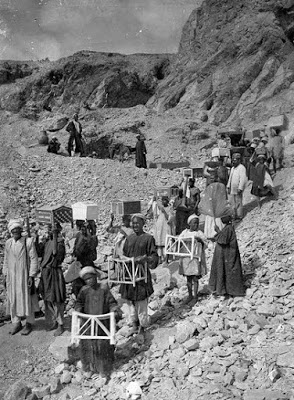
The tomb of Kha and Merit: the extraordinary discovery of Ernesto Schiaparelli in Deir el-Medina

Standard
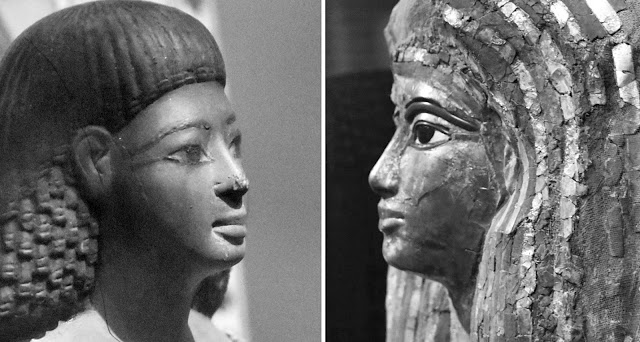
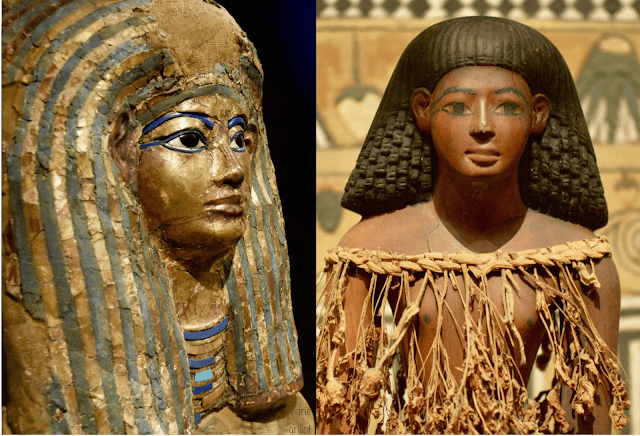
To the left statue of the architect Kha – Wood – Museo Egizio Turin – S 8335
Right, funeral mask of Merit, wife of Kha – Stucco golden – Museo Egizio Turin – S 8473
New Kingdom – Eighteenth Dynasty
From their graves – TT 8 – Deir el-Medina discovered February 15, 1906
by the Italian Archaeological Mission headed by Ernesto Schiaparelli
Photos Marie Grillot

We can surely never stop being amazed by this fantastic magical Egypt. And nowhere is another fabulous discovery to be stunned. With heartfelt thanks to Marie Grillot 🙏🧡🙏🧡

via https://egyptophile.blogspot.com/ Translated from French.

From 1903 to 1906, Ernesto Schiaparelli, at the head of the Italian archaeological mission, and his collaborator Francesco Ballerini, excavated in the Valley of the Queen’s necropolis of queens, princesses, princes of the New Empire. They will discover thirteen tombs, including those of the princes Amonherkhepshef and Khaemouaset which are open today to the public.

In 1905, they began excavations on the nearby site of Deir el-Medineh, the site “which presents the enormous interest of preserving important vestiges of the village and the graves of the workers who, in the New Empire, arranged the royal tombs in the Valley of the Kings and that of the Queen’s”.

“Set Maat her imenty Waset” – the “Place of Truth to the west of Thebes” of antiquity
today is called artisans’ village of Deir el-Medina (photo Marie Grillot)

Founded at the beginning of the 18th dynasty under the reign of Thutmosis Iᵉʳ, then extended and enlarged several times, notably under the reigns of Thutmosis III and the first Ramessides, “Set Maât her imenty Ouaset” (the “Place of Truth in the West of Thebes “) was surrounded by high walls. For almost 500 years, “between 40 to 120 households” lived there in stone houses covered with a palm leaf roof, also have places of worship and a necropolis. The community members were mainly architects, scribes, painters, sculptors, ordinary workers, …

When the Italian mission arrives, it decides to conduct large-scale excavations, employing up to 250 workers! Schiaparelli first explores the northern part of the necropolis: he discovers there the chapel of the tomb of Maia, painter of the end of the 18th dynasty (after the reign of Akhenaten, around 1330-1320 BC). ).

On 15 February 1906, the Italian Archaeological Mission headed by Ernesto Schiaparelli
discovered at Deir el-Medina,
the tomb inviolate   the architect Kha and his wife Merit    (TT 8)

It is on February 15, 1906, after a month of intense work that is discovered “in the northern circus of the necropolis of Deir el-Medina, the untouched tomb of Kha”. If the mud-brick chapel of Kha was already known, it was a great surprise that the tomb was found “in the isolated cliffs which surround the village and not in the immediate vicinity of the chapel, as was usually the case”.

Sensing an important discovery, the Italian mission takes care to prevent the service of antiquities… Arthur Edward Pearse Brome Weigall was appointed shortly before by Gaston Maspero to replace Howard Carter as chief inspector of antiquities, responsible for the protection and the management of the antiquities of Upper Egypt. Based in Luxor, he will oversee the extraordinary event.

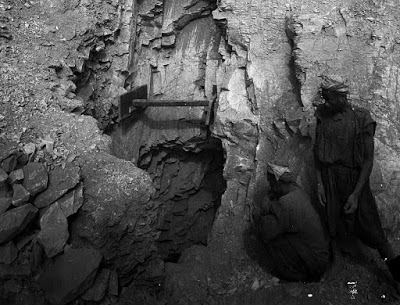
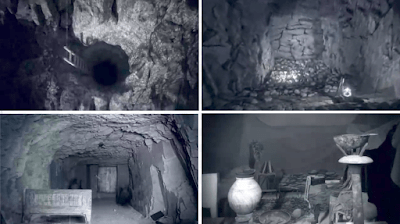
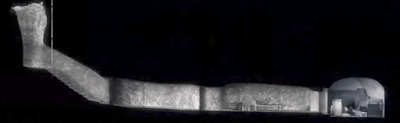
Different phases of the discovery of the tomb of Kha – TT 8 – Deir el-Medina
updated February 15, 1906 by the Italian Archaeological Mission headed by Ernesto Schiaparelli
Photos from the film “A Torino per rivivere the scoperta della fell di Kha”
(link at end of article)

Here is part of his story: “We reached the entrance to the tomb by descending a flight of steep and steep steps, cluttered with debris. At the end of this entrance, we arrived on a passage oriented towards the hill which was blocked by a wall of large stones. After taking photographs and removing the stones, we found ourselves in a tunnel, long and low, then blocked by a second wall which was a few meters in front of us… These two walls being intact, we realized that we were about to see what no living man had ever seen before … “

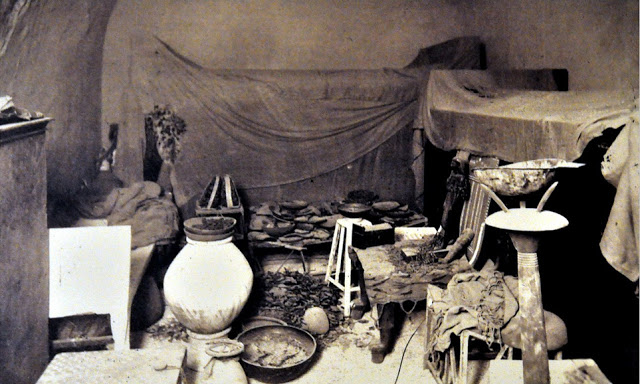
Inviolate tomb of Kha and Merit when discovered February 15, 1906
by the Italian Archaeological Mission headed by Ernesto Schiaparelli  
TT 8 – Deir el-Medina

Even if they expect to discover wonders, what is offered to them after opening the door takes their breath away … “All of the funeral equipment was perfectly ordered and positioned. The main elements were covered with dust that had solidified. The floor was carefully swept by the last to leave the place. A lamppost with a wooden papyrus column supporting a saucer made of copper alloy still contained the ashes of its last flames… The tomb and its contents reflected the personal wealth of the owners, their special position in society and the history of their lives. It suggested the vision of a prosperous house from the 18th dynasty, as “packaged” to be reused in the afterlife. “

There is no doubt that the architect Kha, “director of works”, and his wife Mérit were, during their lifetime, eminent figures!”A tomb of such magnificence must have taken years of preparation, a process that Kha certainly oversaw in person while he was still alive.”It turned out that his dear wife Mérit lost her life before him. “The afflicted widower then assigned him his own sarcophagus.”

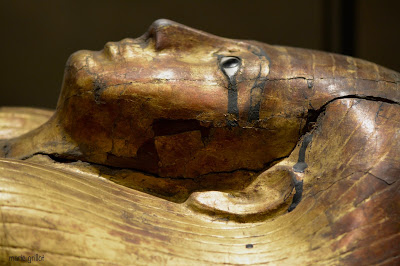
Coffin Merit – Museo Egizio Turin
From the Tomb of Kha and Merit – TT 8 – Deir el-Medina discovered February 15, 1906
  by the Italian Archaeological Mission headed by Ernesto Schiaparelli  
Photo Marie Grillot

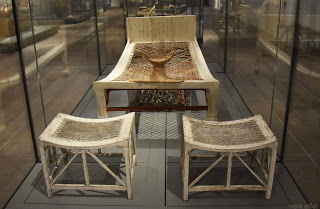
In addition to the two coffins of Merit, and the three coffins of Kha – placed one inside the other – the tomb will deliver clothes, household linen, the instruments and tools of work of Kha, the toilet boxes, as well as the Merit wig, as well as its work-box…

Some pieces of furniture of Kha and Merit
From their graves – TT 8 – Deir el-Medina discovered February 15, 1906
  by the Italian Archaeological Mission headed by Ernesto Schiaparelli  
Museo Egizio – Turin – Photo Marie Grillot

It is also a whole pantry for the afterlife which is revealed, thus providing important information on the food of the time: pieces of bread of different shapes, dishes of food, bags of ropes containing the doum palm fruits, a moving dish of carob compote, onions, salt blocks…

Food for eternity Kha and Merit
From their graves – TT 8 – Deir el-Medina discovered February 15, 1906
  by the Italian Archaeological Mission headed by Ernesto Schiaparelli  
Photo Marie Grillot

There is no shortage of dishes, as well as magnificent jars for storing liquids.

The senet game of Kha is particularly moving: in this context of the tomb, “the senet game was terribly serious because according to chapter XVII of the Book of the dead, the winner of the game came out like a living Ba spirit. “

The long list of the contents of the tomb cannot be exhaustive.

Right, funeral mask of Merit, wife of Kha – Stucco golden – Museo Egizio Turin – S 8473
To the left statue of the architect Kha – Wood – Museo Egizio Turin – S. 8335
New Kingdom – Eighteenth Dynasty
From their graves – TT 8 – Deir el-Medina discovered February 15, 1906
by the Italian Archaeological Mission headed by Ernesto Schiaparelli
Photos Marie Grillot

But it would be unforgivable not to mention three particularly touching pieces: the magnificent funerary mask of Merit, the lovely wooden statuette of Kha, as well as the papyrus from the Book of the Dead which takes place over 13 meters!

Artifacts exiting the tomb of Kha and Merit – TT 8 – Der el-Medina
Discovery February 15, 1906
by the Italian Archaeological Mission headed by Ernesto Schiaparelli

The funeral treasure of Kha and Merit then takes the path to the Egyptian Museum in Turin, directed by Ernesto Schiaparelli since 1894.

Since then, it has never ceased to delight, to amaze and marvel the thousands of visitors.

A new museography space, perfectly studied, was dedicated to it in 2015. Enriched with photographic testimonies which relate the discovery, it is now fully highlighted.

Marie Grillot

sources

Art Treasures from the Museo Egizio, Eleni Vassilika, Allemandi & Co

Museo Egizio guide, Franco Cosimo Panini Publishing

The Egyptian Museum in Turin, Federico Garolla Editore

Pharaoh Artists, Deir el-Medina and the Valley of the Kings, the Louvre, 2002

Who Was Who in Egyptology, Bierbier ML, London, Egypt Exploration Society

Laboratorio Rosso

Researchers from 1798-1945 Past: Learning from archeology , Eve Gran-Aymarich

” Schiaparelli: great name of Egyptology ” ( “égyptophile”)

” Francesco Ballerini, Italian pioneer of Egyptology ” ( “égyptophile”)

” Deirelmedina “

” Topographical bibliography of ancient Egyptian hieroglyphic texts, reliefs and paintings I – The Theban necropolis – 1. share private tombs ” by the late Bertha Porter and Rosalind Moss lb, b.sc . (oxon.), Ethel fsa assisted by w. Burne – 2nd Edition Griffith Institute Ashmolean Museum Oxford

“Excavations of Schiaparelli. Holdings Francesco Ballerini “CEFB, Como (Italy)

Wikipedia

MIFAO 73 : Vandier Abbadie, Joan; Jordan, Genevieve – “Two Tombs of Deir el Medina (1) Chapel Kha (2) The tomb of the royal scribe Amenemopet (1939)”

” At the Torino per rivivere scoperta della fell di Kha “

Hermann Hesse: What His Life Teaches Us

Standard

There is a man who talks from my soul; as he feels the solitude so do I.

I can understand what he’d gotta fight through his childhood and always confronted with the questions which hardly could be answered. And how could a child to do so!

He is one of my favorite person on this planet.

A great article by a signora, what else. just enjoy reading 😊🧡🙏

Translated from Italian.

By  Sandra Saporito https://www.eticamente.net/author/sandra

via https://www.eticamente.net/

“I was a birth of nature launched towards the unknown, maybe towards something new or even towards nothing, leave it to develop from the deep, obey my destiny and do my own will, this was my task.”

Vita di Hermann Hesse
Hermann Hesse: Cosa Ci Insegna La Sua Vita

Di Sandra Saporito -14 Luglio 2019

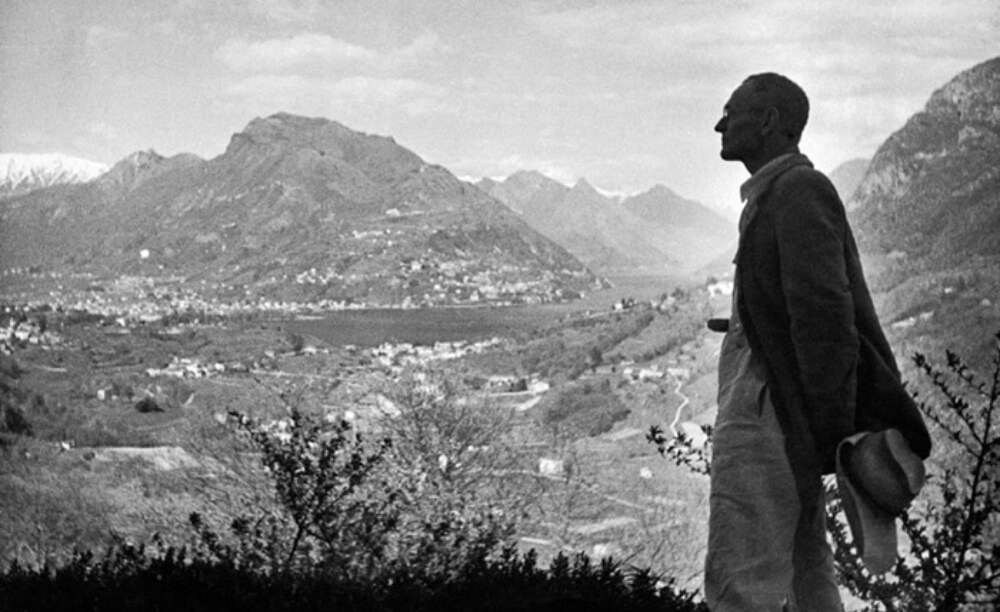
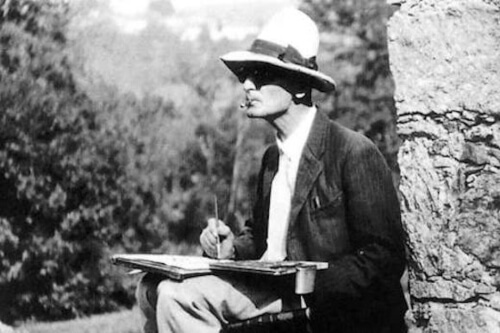
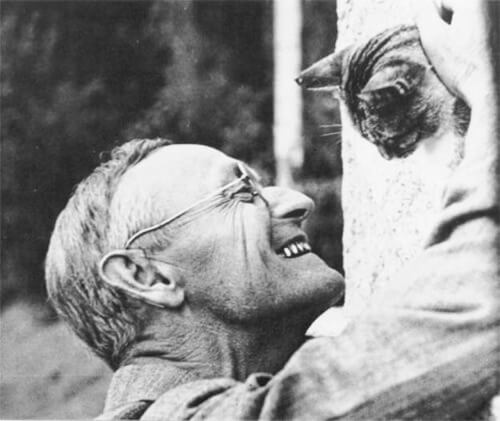
Hermann Hesse, artist and Nobel Prize winner for literature, was born on July 2, 1877, in Germany, in a pietist family who gave him a very rigid education, where art did not have its place and was considered superficial.

Hermann Hesse wrote one day to his sister Adelaide: “It often happened that mom and dad expressed approval for a poem or a musical composition, adding however immediately that all this, of course, was only atmosphere, only empty beauty, only art, without ever to draw on a high value such as morality, will, character, etc. This theory ruined my existence and I detached myself from it with no possibility of return. “

This did not prevent him from becoming an artist, with a capital “A”, not so much because he was a writer, poet, aphorist and painter at the same time but because his art was rich in meanings that went far beyond the purely aesthetic aspect of the work: imbued with moral, philosophical and psychological meanings that exalted both the disturbances and the profound transformations with which his inner life was rich, some of his works, markedly influenced by his psychoanalytic sessions with CG Jung, described the inner journey to discovery of the Self and the mysteries of existence.
His works are rich in teachings but today I would like to talk to you about the life of this great writer and the lessons that his life has left us as a legacy.

Look for your identity, your vocation: it is what elevates the human being.

“THE REAL VOCATION OF EVERYONE IS ONE, THAT OF ARRIVING TO HIMSELF.”

Hermann Hesse developed a totally different vision of art from that of his parents, to the point of making it the pillar of his life. Although he had little hope that art could change society, he felt that it could profoundly change man.

“Art, the fulfillment of inner satisfaction, meant connecting with a profound and essential sense associated with the term” home “. But this house was not his parents’ house. It was rather a return to something intangible, tied to an intuition, but unique to each individual. It was a return and a journey at the same time and could only be achieved through art, or through the hard training of oneself. “Writes Barbara Spadini on the relationship between Hermann Hesse and art.

It was through this means repudiated by his family that Hermann Hesse developed a visceral desire to discover his identity and discover the mysteries of the world; which he did thanks to Jungian analytical psychology, the study of Buddhism, Hinduism and Gnosticism, art and philosophy.

Although he acted in stark contrast to his parents’ ideology, his family background had a great influence on him: he was aware of the influence his family tree had on his life.

He was in fact influenced by the life of his grandparents, whose name he bore: “To tell my story I have to start from the distant beginning. If it were possible for me, I would have to go back much further, to the very early years of my childhood, and even further into the distance of my origin. “

Art helps to become better human beings

Through his novels and poems, full of autobiographical elements, Hermann Hesse recalled the episodes of the past that had caused him pain by making writing an instrument of self-analysis, of reflection on the world and of inner evolution.

“I KNOW HOW MUCH INNER LIFE AND HOW MUCH RED BLOOD I LIVE EVERY SINGLE TO GENUINE MUST BE DRINKING, BEFORE I CAN STAND UP AND WALK ALONE.”

Its protagonists lived in the imagination what the author had experienced: fears about the future related to war and violence perpetrated on human beings in the name of ideologies of power, internal tensions related to religion and its prohibitions, existential questions on the meaning of life and the search for inner peace despite the inner evils that did not give him peace: he had suffered from years of depression.

The plot of his works often highlighted how much the individual and the collective were linked, the reflection on identity moved back and forth towards a collective dimension that in turn influenced the individual for better or worse, bringing him both to virtue and vice, with the awareness that life is made up of these two antagonistic forces.

The most beautiful works can arise from the crisis

“I WAS A BIRTH OF NATURE LAUNCHED TOWARDS THE UNKNOWN, MAYBE TOWARDS SOMETHING NEW OR EVEN TOWARDS NOTHING, LEAVE IT TO DEVELOP FROM THE DEEP, OBEY MY DESTINY AND DO MY OWN WILL, THIS WAS MY TASK.”

Through art and writing, in particular, Hermann Hesse gave voice to those inner storms that he managed to govern thanks to the movement of his feather: writing became a tool to express the hidden side of identity, art was transformed into a bridge between invisible and manifest that allowed to channel and sublimate the impulses of the unconscious: pain was transmuted into art thanks to ink.

In Demian, a training novel, written in 1919, Hermann Hesse wrote some passages of his conversations with Dr. Lang, collaborator of C. G. Jung with whom he made a psychoanalytic path to get out of a state of deep crisis. This path gave him the inspiration to write the novel: “But all [the conversations], even the most humble ones, hit the same point inside me with light and constant hammering, all contributed to form me, to break eggshells from everyone of which I raised my head a little higher, a little freer until the yellow bird with the beautiful head of a bird of prey erupted from the shattered shell of the world. “

This pained feather allowed him to develop a literary style that earned him a Nobel Prize in 1946 “For his inspired writing which in growing boldness and penetration exemplifies classical humanitarian ideals, and for the high quality of the style”.

In hindsight it is curious to note how much his works have influenced the minds of his readers, debunking his initial belief: art, in reality, changing men, can really help change society. A tree will certainly not be able to change the face of a forest but its fruits, trees in power, will certainly be able to do so with the passing of many seasons.

by Sandra “Eshewa” Saporito
Autrice e operatrice in discipline bio-naturali
www.risorsedellanima.it

The Frontiers Are My Prison

Standard

Hi, Friends. I’m just full in my mind these days; There are many things in front of me, or better to say; I have a lot of plan to do!

At first, the gum has been survived and the surgery had been succeeding. But the soul has an injury which is more important and pains more than the buddy’s pain;

My main plan is to fly to the USA to meet my brother in law and his all daughters+son for maybe the last time in my life, because, my brother; Soroosh, is some older than me and it is our last chance to see each other.

Therefore, I thought it is possible;

I had to do this since many years ago but because of my full-hours work, I couldn’t plan a long trip, but now, as I am going to be retired in this year, I have thought to make it now, or never.

But as I tried to get the visa for the Us, I feel like I’m locked out from the normal visitors; as my wife got her visa already through ESTA. and I’m not authorized in this way.

It might sound not so terrifying but for me it is because, we; my wife and me, have sent our applications in the same manner at the same time, the only difference in between, it was the born country, my wife; Germany and mine, Iran.

Anyhow, I will try to make an appointment to the embassy in Berlin and try to do my best. My love for America stays tuned, only I must ponder what happened to this root of freedom.

You might remember how it was once in those days, good days 😊🙏💖😊

Freedom… Freedom… Freedom… Freedom Sometimes, I feel, like I’m almost gone. Sometimes I feel, like I’m almost gone.

* My soul is in a hurry. *

Standard
Facebook

That is a Poem by Mario de Andrade (San Paolo 1893-1945) poet, writer, essayist and musicologist.
One of the founders of Brazilian modernism. https://en.wikipedia.org/wiki/M%C3%A1rio_de_Andrade

I’ve received it occasionally by What’App messenger and profoundly touched. 💖

ISTOÉ Independente

* My soul is in a hurry. *

I counted my years and found that I have less time to live than I have ever lived.

I feel like this kid who won a box of candies: he eats the first ones with pleasure, but when he realizes that there are only a few left, he really begins to enjoy them.

I don’t have time for endless conferences to discuss statutes, rules, procedures and internal regulations, knowing that nothing will be achieved.

I no longer have time to endure absurd people who, regardless of their age, have not grown.

I no longer have time to struggle with mediocrity.

I don’t want to be in meetings where inflated egos are marching.

I don’t tolerate manipulators and opportunists.

I am bothered by the envious people who try to discredit the more able to seize their positions, talents and achievements.

My time is too short to discuss headings. I want the essentials because my soul is in a hurry, without lots of sweets in the package.

I want to live with people who are very human.

People who can laugh at their mistakes, who don’t imagine their success.

Who do not feel called ahead of time and who do not flee from their responsibility.

Who defend human dignity and who only want to go alongside truth and righteousness.

It is what makes life worth living.

I want to surround myself with people who know how to touch the hearts of others.

People who learned through the hard blows of life to grow through gentle touches of the soul.

Yes, I’m in a hurry, I’m in a hurry to live with the intensity that only maturity can give.

I try not to waste any of the candy I have left.

I am sure that they will be more delicious than the ones I have already eaten.

My goal is to reach the end contentedly, in peace with myself, my loved ones and my conscience.

We have two lives and the second begins when you realize that you only have one.

The Heartbreak of Hans Christian Andersen

Standard

Of turning sorrow into song.

How I love this man as he opened my mind-eyes to the world of fairy tales and magic. Of course, the magic followed me all in my life as my name: Aladin.

My father had chosen the name not because of “the magic-lamp” unfortunately, but just as he was a master of the Arabic language, wanted to give me the best piece of ritual, as this name means.
Because “Ala” means the best and “Din” means the ritual also, the best of the rituals!!

But as you know, and everybody knows, the name goes into the story or better to say, to the tails of the Aladdin with the magic lamp.

VectorStock

I have nothing against it. though in Iran the peoples around had shortened it in Ala, therefore, no chance about dragging the magic lamp after but as I came in Europe and finally in Germany, the name became the Name! Everywhere I go and introduce myself there comes my lovely inspiration: Ah! With the magic lamp!

I have nothing against it, You know; it works well, though I have not found the lamp yet 😉

Anyway, let’s now have a look at this wonderful article about the love, the love of the great writers whom we loved but might never know of their “surprising love stories.

via https://www.brainpickings.org/wp

BY MARIA POPOVA

The Heartbreak of Hans Christian Andersen

Harriet Hosmer — whose remarkable forgotten story I tell in Figuring (public library), from which this essay too is adapted — was not yet thirty when she became the world’s first successful female sculptor, claimed a place for American art in the European pantheon, and furnished queer culture with a bold new vocabulary of being. Her studio in Rome became a pilgrimage site for royalty and luminaries, drawing such esteemed admirers as Nathaniel HawthorneMaria Mitchell, the Prince of Wales, the Crown Princess of Germany, and the exiled queen of Naples (who would become Hosmer’s lover).

Among her famous visitors was Hans Christian Andersen (April 2, 1805–August 4, 1875) — a man of supreme storytelling genius and aching self-alienation, which Hosmer instantly intuited. In a letter home, she described Andersen as “a tall, gaunt figure of the Lincoln type with long, straight, black hair, shading a face striking because of its sweetness and sadness,” adding that “it was perhaps by reason of the very bitterness of his struggles, that he loved to dwell among the more kindly fairies in whose world he found no touch of hard humanity.”

Hans Christian Andersen (Portrait by Christian Albrecht Jensen, 1836)

Andersen’s struggles were ones of a heart unsettled, ambivalent, at war with itself. By all biographical evidence, he died a virgin. For years, he was infatuated with the Swedish opera diva Jenny Lind, but his great erotic love was reserved for Edvard Collin — a boyhood beloved who remained the single most intense emotional relationship throughout Andersen’s life. “The femininity of my nature and our friendship must remain a mystery,” he wrote to Edvard, who left in his memoir a forlorn record of the dual heartbreak that scars all such relationships between people who love each other deeply but differently: “I found myself unable to respond to this love, and this caused the author much suffering.” Andersen was unambiguous about both his feelings and his suffering, writing to Edvard with heart-rending plaintiveness:

I languish for you as for a pretty Calabrian wench… my sentiments for you are those of a woman.

Jenny Lind, on the other hand, was a woman of the highest caliber of femininity, and one of the most successful women artists of her time. Andersen sent her passionate, pouting letters, then wrote his classic story “The Nightingale” out of his frustrated reverence shortly before making an awkward marriage proposal in a letter handed to her on a train platform. The tale didn’t earn him Lind’s reciprocity, but it earned her the monicker “the Swedish Nightingale.”

Jenny Lind (Portrait by Eduard Magnus, 1862)

To make art out of heartache is, of course, the most beautiful thing one could do with one’s sorrow, as well as the most generous — no artist knows how the transfiguration of their pain into beauty will salve another heart, give another sorrower the language of their own truth, the vessel for navigating their own experience.

Across the Atlantic, Andersen’s heartbreak-fermented fairy tales furnished the language of understanding between two other deeply entwined hearts. Susan Gilbert — the love of Emily Dickinson’s life, to whom the poet had written those electrifying love letters — had married Emily’s brother to be near her. Having managed marital celibacy for an impressive five years, Susan eventually gave birth to her first child. That season, Dickinson sent to her editor a famed cryptic letter on the meaning of which biographers would speculate for centuries to come, telling him of some great unnamed and perhaps unnameable hurt:

I had a terror… I could tell to none, and so I sing, as the Boy does by the Burying Ground — because I am afraid.

Illustration for Hans Christian Andersen’s “The Nightingale” by Ukrainian artist Georgi Ivanovich Narbut, 1912.

Not a “fright,” not a “shock,” but a terror. Whether or not she was the cause, Susan knew of Emily’s suffering and suffered in consonance, for any two hearts bound by love are also bound to share in sorrow. Drawing on an image from Andersen’s fairy tale “The Nightingale and the Rose” — which in turn drew, as most of his fairy tales did, on the terrors of his own unmet heart — Susan captured the parallel heartbreak of their impossible love in a letter apologizing for turning away from Emily’s kiss:

If you have suffered this past Summer — I am sorry — I Emily bear a sorrow that I never uncover — If a nightingale sings with her breast against a thorn, why not we?

Emily Dickinson and Susan Gilbert

Complement this fragment of Figuring with Andersen’s arresting account of climbing Vesuvius during an eruption and the most beautiful illustrations from 150 years of his fairy tales, then revisit Herman Melville’s passionate and heartbreaking love letters to his friend and neighbor Nathaniel Hawthorne, penned in the same era and pained with the same sorrow.

https://www.brainpickings.org/2020/01/31/the-heartbreak-of-hans-christian-andersen/

It’s getting better all the time

Standard

Hi Friends, yes I’m still alive and want to try to update my mood right now, though it’s hard to type with one hand as the other one is holding the compressor bag to cool down my thick cheek!

www.pinterest.ca

Anyway, I must confess that I had somehow feared to get under this surgery, of course, I had many moments in my life to learn how to win the anxiety which everybody might have in her/his life.

Especially, I can well remember how I learned to get down my fear to go to the dentist! Yes, it’s surely a common sense in many people and mine was because of my whole-life problems with my teeth.

It is, as I believe, a genetic matter of fact; my mother had to get a complete denture when she was just twenty-five!

But I got loose of this fear as I was a late teen and I had to decide to go or not to go to the dentist and I went! As I remember; I was shivering and the doctor said: Don’t you shame?! You are a grown-up man, pull yourself together! From that time I understood how to get down the fear and it was much necessary because I had to let many teeth pull out several times in my life.

www.dreamstime.com

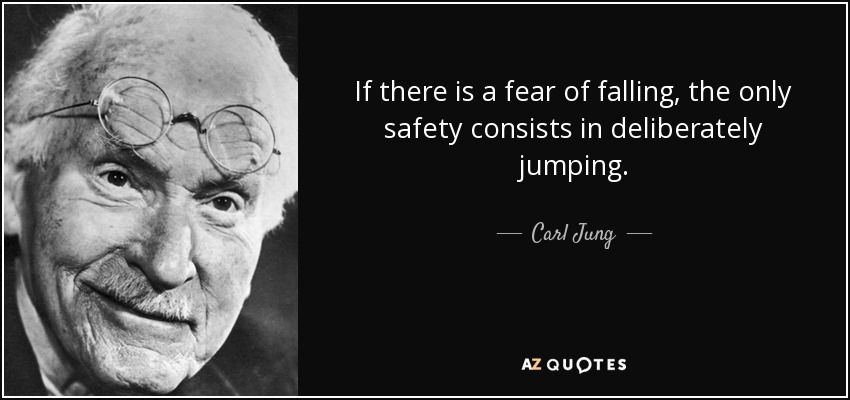
Now as I had to go to the surgery and this was a very new adventure, therefore, not exactly fear but something such as worry or excitement which I had in my belly. But some words were in my mind saying; Fear and only the fear in my great enemy.

Or as the great Master Dr. Jung says;

Pinterest

Okay, enough said; I think it is over now and I feel just better and better again. As the Beatles song: “Getting better, “Cause you’d be mine (this “you” means, of course, my pine implants) 😉

Have a great weekend everyone 💖💖🙏