

Put your hand on a hot stove for a minute, and it seems like an hour. Sit with a pretty girl for an hour, and it seems like a minute. That’s relativity.
~Albert Einstein
I was always sceptical about the concepts of time and space. As I explored Einstein’s theory of relativity, I realised that it encompasses not just time and space, but everything else as well, including happiness.
Indeed, it pertains to an individual’s life circumstances or, more precisely, it is linked to them. For example, someone living a stress-free and trouble-free life may experience a lack of happiness, but when faced with tough times, they may find happiness more readily.

My life has been filled with challenges, but this year has been especially tough. As you know, I had issues with my lower abdomen and underwent three surgeries to fix it, or so I thought. However, a problem arose when I went to the toilet, which caused concern, and I visited my doctor. After the examination, he stated that an apparent mistake had occurred during the last operation, a part had been injured, and I would require another procedure. I won’t go into the details, but after some anxious days, I’ve managed to secure a scheduled appointment for next Wednesday, as the procedure needs to be done soon to prevent kidney issues.
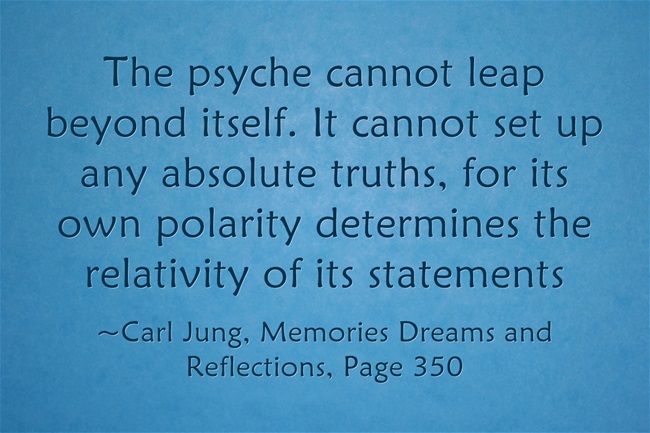
I gathered some insights and words from my teacher, Carl Jung, who held that the psyche and cosmos are fundamentally timeless. Working with Einstein and Pauli, he examined a concept of timelessness that goes beyond linear clock time. Jung proposed that accurate understanding involves transcending causality because time in the psyche and reality is relative. Although our conscious mind perceives time linearly, embracing a sense of timelessness can enhance learning. His goal was to unify physical and psychic realities and how they interact.
He believed in a psychological “relativity of time,” where perception is subjective and affected by inner states. He connected this to synchronicity, implying that the psyche and material world are not always ruled by linear cause-and-effect but can relate in other ways. Jung pointed out that, similar to the space-time continuum in modern physics, the unconscious also exhibits “indistinctness” or psychic relativity, which blurs the boundaries between time and space.
For Jung: “[Synchronicity] cannot be a question of cause and effect, but of a falling together in time, a kind of simultaneity. Because of this quality of simultaneity, I have chosen the term ‘synchronicity’ to designate a hypothetical factor equal in rank to causality as a principle of explanation.”
Jung, C. G. (1952). The Structure and Dynamics of the Psyche; Synchronicity: An Acausal Connecting Principle, in CW, Vol. 8.
Now, what about happiness? I tell you this: when I go to the toilet and manage to pee, I feel the entire joy of life again and find happiness!
Humour plays a vital role, and hope remained until the very end. In my seventy years, I have enjoyed good health and no surgeries, but this year I face my fourth operation. Here’s to a brighter year ahead. Wishing you all health and prosperity.
 lampmagician
You must be logged in to post a comment.