Today I would like to share a fascinating painter and his works (might not so well know to some of you). And, I could be valuable for my adorable wife, helping her clean the entire terrace and remove the moss!
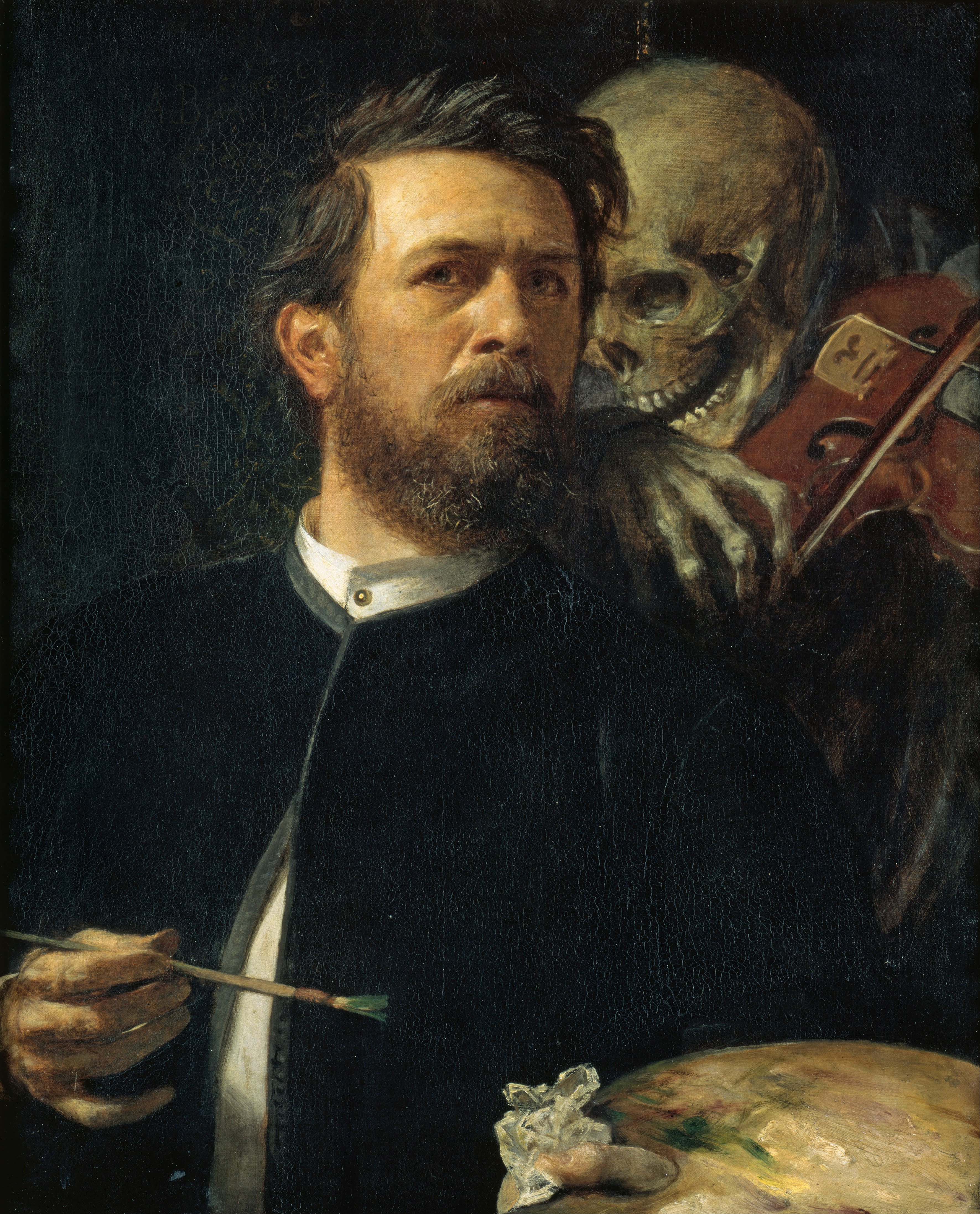
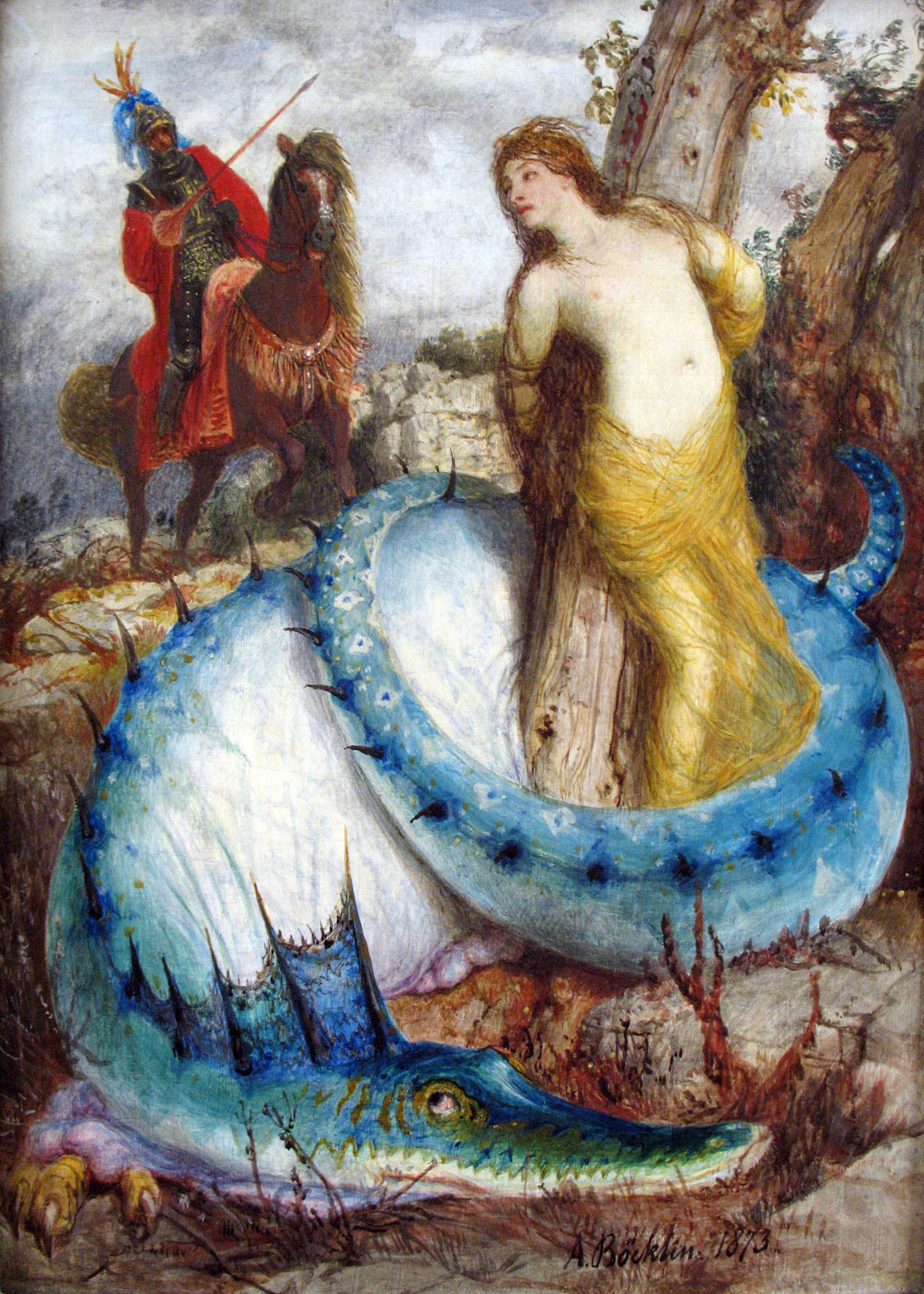
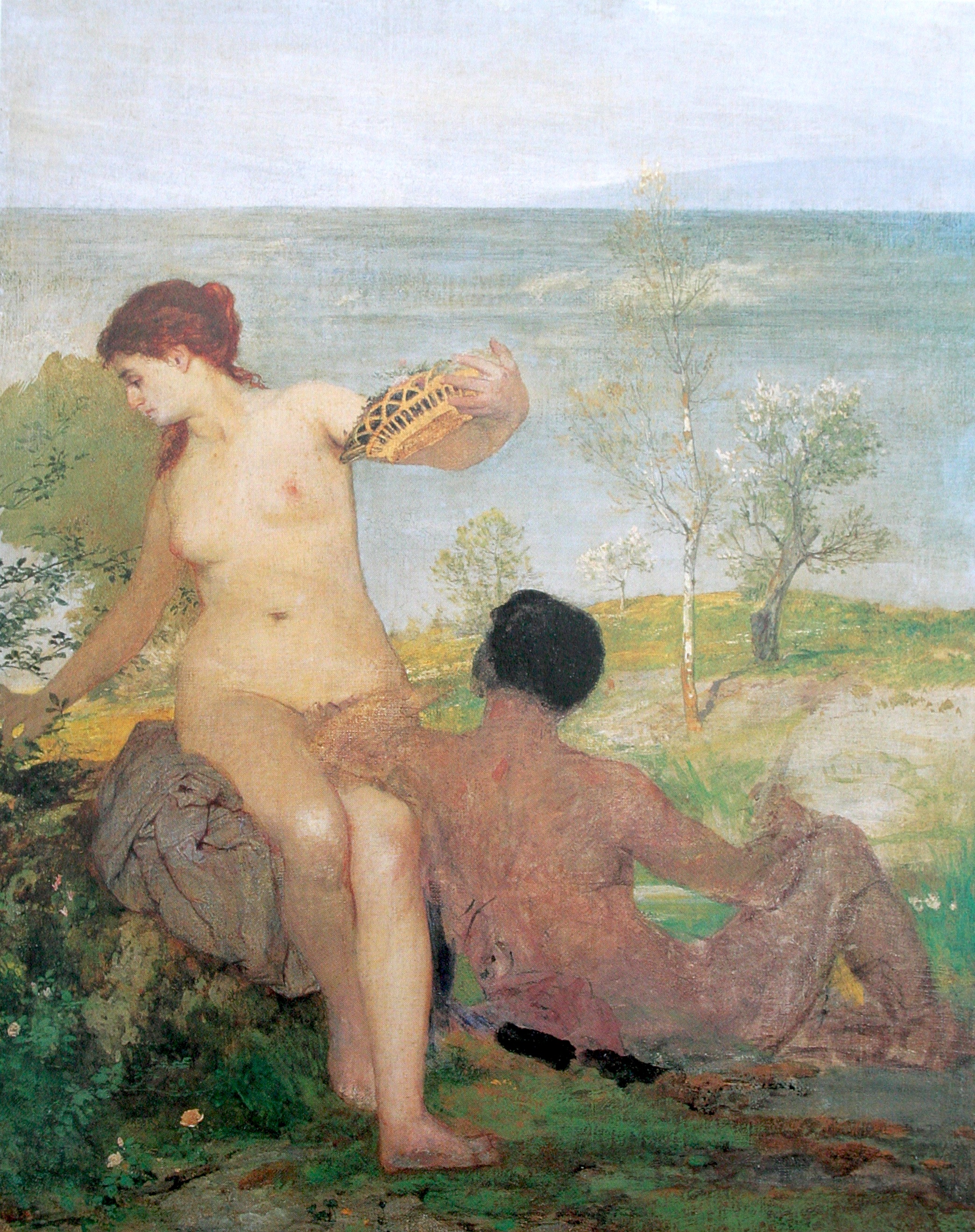
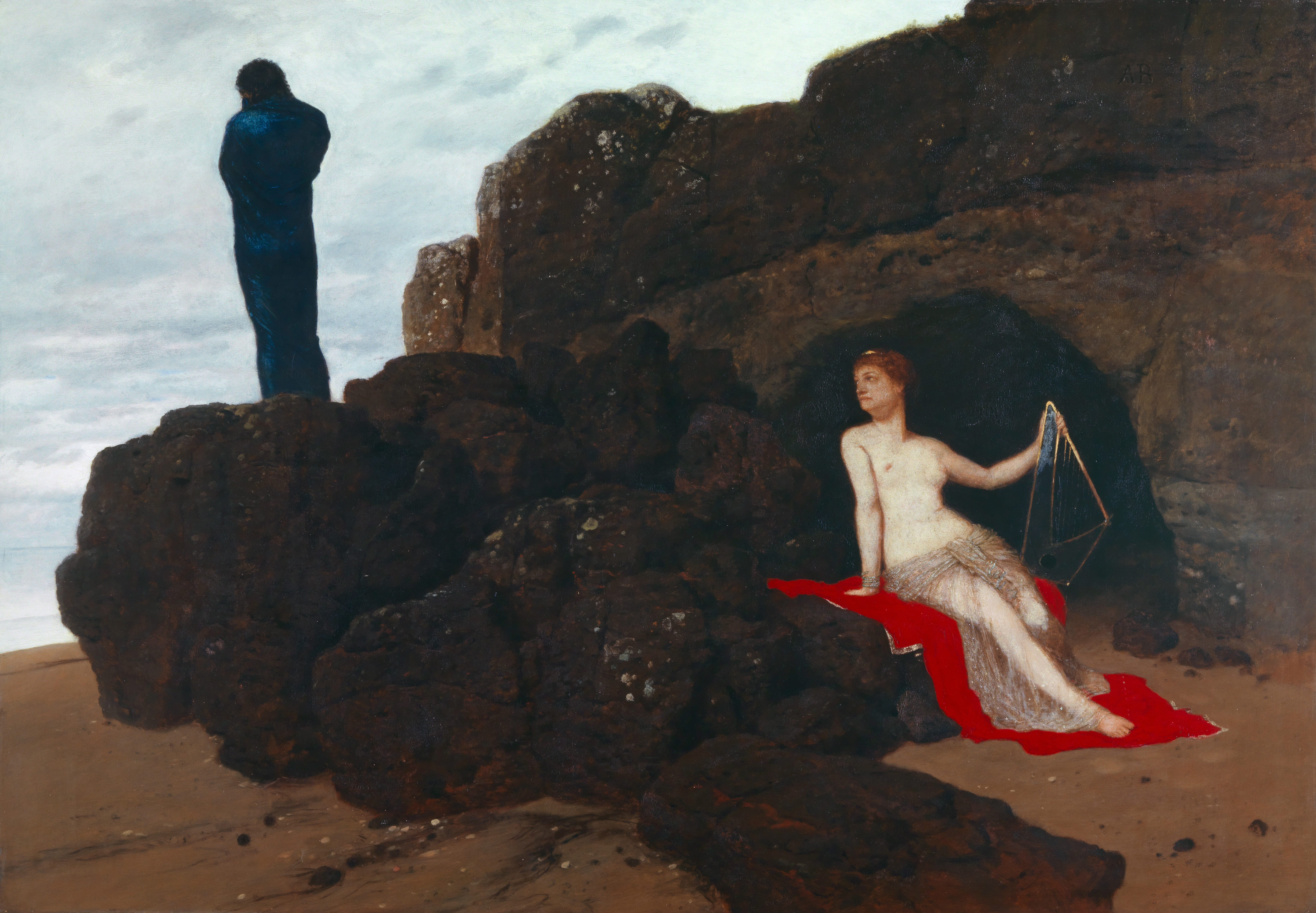
I have got known him for his style of Symbolism. (Symbolism: Influenced by Romanticism, Böcklin’s symbolist use of imagery derived from mythology and legend often overlapped with the aesthetic of the Pre-Raphaelites. Many of his paintings are imaginative interpretations of the classical world, or portray mythological subjects in settings involving classical architecture, often allegorically exploring death and mortality in the context of a strange, fantasy world.)
Böcklin is best known for his five versions (painted 1880 to 1886) of the Isle of the Dead, which partly evokes the English Cemetery, Florence, which was close to his studio and where his baby daughter Maria had been buried. An early version of the painting was commissioned by a Madame Berna, a widow who wanted a painting with a dreamlike atmosphere. Wikipedia
Arnold Böcklin (16 October 1827 – 16 January 1901) was a symbolist Swiss painter.
The painter rejected the naturalistic trends of his time and created symbolic, mythological works.
Arnold Böcklin was born on Oct. 16, 1827, in Basel. He attended the Düsseldorfer Academy (1845-1847).
At this time he painted scenes of the Swiss Alps, using light effects and dramatic views subjectively to project emotional moods into the landscape. ARNOLD BÖCKLIN
So, now let’s have a view of his astonishing paintings. I hope you will enjoy it. 🤗💖
It might have become obvious, for some of you, who have read my posts often, that I come, again and again, to the subject: Freedom. Although this issue is a known subject in western countries, but believe me, it has been used and discussed more often in the countries under dictators: like an unreachable aim. I ask for forgiveness. 🙏
Of course, it is not a new term for all of us, but since I have left my country and live in freedom, I have noticed that this is not the freedom, which existed in the late sixties and early seventies. That generation had fought to get its freedom and the new one, they have it already by hand.
As the American writer Elbert Hubbard said: Freedom cannot be bestowed – it must be achieved. I believe in this as I have noticed in Germany, most people don’t know what freedom really is. Because they got it by the Allies as a presence.
I have lived under one or more dictatorial regimes, and I know what freedom really means.
To be honest, I just want to say, with all of my prattles, that I’m living now in the free western, but nowadays, confronted with some failed ideas about freedom. Even among my friends, some valued people I know and honour, but notice that they are not really aware of freedom or being free. They mixed it up with somehow antisocial behaviour. Yes, I might swim against the stream, but I have surely my good reasons. You know what? If you’ve got your own safe home, you will never want to give it away at any price, whatever it costs, even if you’d become conservative!
————————
Journalism is dead! Said my guest, a Frenchman, whom I picked up to bring to the train station one day in my working time. You know, when I was working every day as a taxi driver, I tried, if possible, to open dialogue with my guests, and actually got used to it being asked again and again where I come from and what I used to do (and sometimes: what the hell I’m doing here at all! It happened though so seldom, thank goodness!). Even though we started talking, and when I said that I’ve come from Iran and was a journalist, he said that sentence: Journalism is dead!
He saw my surprised face in the mirror. Therefore, he added that he’s also a journalist working in Paris, and he followed: I know once upon a time, in the 60s and 70s, journalism was alive! A reporter was working to find out the truth, no matter about what or whom. The point was the power of curiosity for discovering what was hidden behind. The cheekiness, the tension, the peculiarity, and the excitement. And when he looked me through the mirror said to me: I know that you also belong to this group. Otherwise, you were still in Iran and did your job, not here, working as a taxi driver.
As I once saw someone had commented: “I remember the days when Rolling Stone had writers. I remember the days when the Washington Post had writers. Nowadays, journalists are nothing but uneducated bloggers pushing an agenda.”
So! Here I have found a person, Hunter S. Thompson, a dreamer maybe just like me, who had had an idea (he is from the time which I mentioned: old time!) with the name: Gonzo Journalism. Let hear what he meant.
PS: I am so grateful to have some friends like you and a place just like here to open my heart thoroughly. Thank you all.🙏💖🙏💖
Gonzo journalism is a style of journalism that features the author as its protagonist, simultaneously experiencing and reporting on a story from a first-person point of view. The writer becomes part of the story, portraying events through their own experience, which offers readers their version of the truth.
There’ve been any number of aspiring “gonzo journalists” over the past half-century, but there was only one Hunter S. Thompson. Having originated with his work in the early 1970s, this sense of gonzo made it into the Random House Dictionary within his lifetime. “Filled with bizarre or subjective ideas, commentary, or the like,” says its first definitions. And its second: “Crazy; eccentric.” Thompson seems to have approved, seeing as he kept a copy of this very edition, put on display at the Owl Farm Private Museum (run by the Gonzo Foundation) after his death in 2005. Thirty years earlier, he had the question put to him in the interview above: “What is gonzo journalism?”
“That word has really plagued me,” Thompson says. But he also credits it with putting distance between himself and the recently ascendant “New Journalists” like Tom Wolfe, Gay Talese, and Joan Didion: “I wasn’t sure I was doing that, but I was sure I wasn’t doing what we call straight journalism.” Indeed, few pieces could have seemed less “straight” than “The Kentucky Derby Is Decadent and Depraved,” first published in Scanlan’s Monthly in 1970. Assembled in desperation out of pages pulled straight from Thompson’s notebook and illustrated by Ralph Steadman (the beginning of a long and fruitful collaboration), the piece struck some readers as a revelation. A friend of Thompson’s declared it “pure gonzo” — an unconventional name for an unconventional form.
“Christ,” Thompson remembers thinking, “if I made a breakthrough, we’ve got to call it something.” Why not use a label with at least one instance of precedent? (It also appealed, he admits, to his inner “word freak.”) As for the substance of gonzo, he attributes to it “a mixture of humor and a high, stomping style, a bit more active than your normal journalism” — as well as whatever gets him past his innate hatred of writing. “All I can really get off on,” he says, is “when I can let my mind run. I start to laugh. I understand that Dickens used to laugh at his typewriter. I don’t laugh at my typewriter until I hit one of those what I consider pure gonzo breakthroughs. Then it’s worth it.”
Published three years earlier, Thompson’s best-known book Fear and Loathing in Las Vegas marked the culmination of a particular writing project: “to eliminate the steps, or the blocks, between the writer and the page. That’s why I always get the fastest and newest typewriter. If they make one that costs twelve million dollars, I’ll write a bad check and get it for a while.” Regulating this signature gonzo directness is a rigorous stylistic discipline. “That’s the one book of mine that I’ve even read,” Thompson says, thanks to the “four or five rewrites” he performed on the manuscript. “There’s not a word in there — I mean, there might be fifteen or twenty, but that’s about all — that don’t have to be there.”
Interviewing Thompson is veteran journalist Harrison Salisbury, the New York Times‘ Moscow bureau chief in the 1940s and 50s. He also wrote many books including The Shook-Up Generation, a 1958 study of juvenile delinquency (and a volume found in Marilyn Monroe’s personal library) that could have primed his interest in Thompson’s debut Hell’s Angels when it came out a decade later. Appear though he may to be the kind of establishment figure who’d have little enthusiasm for gonzo journalism, Salisbury’s questions suggest a thorough knowledge and understanding of Thompson’s work, right down to the “tension” that drives it. “It could be drug-induced, or adrenaline-induced, or time-induced,” Thompson says of that tension. “I’ve been told by at least one or two confident specialists that the kind of tension I maintain cannot be done for any length of time without… I’ll either melt or explode, one of the two.”
Based in Seoul, Colin Marshall writes and broadcasts on cities, language, and culture. His projects include the Substack newsletterBooks on Cities, the book The Stateless City: a Walk through 21st-Century Los Angeles and the video series The City in Cinema. Follow him on Twitter at @colinmarshall or on Facebook.
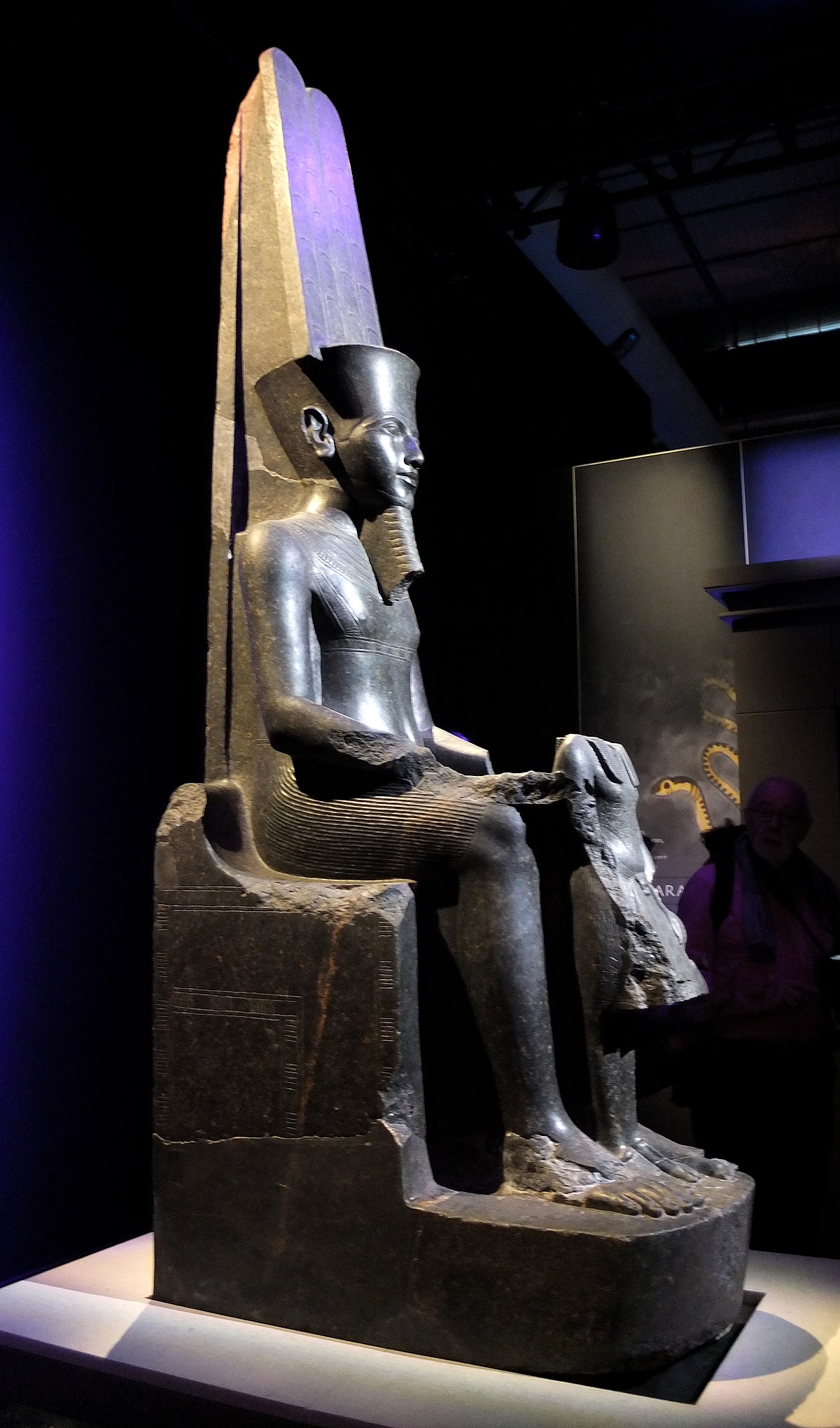
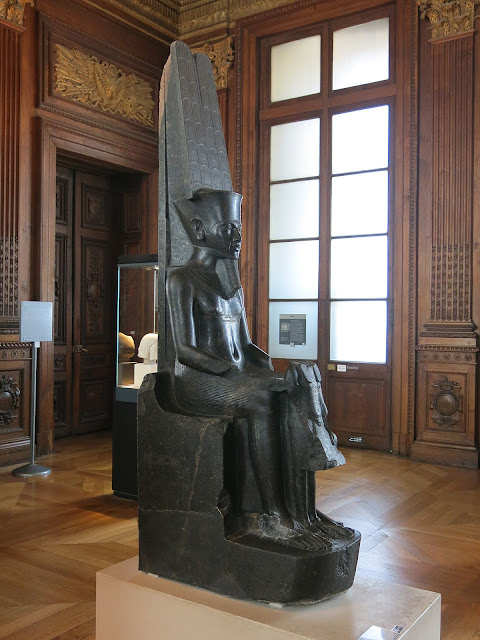
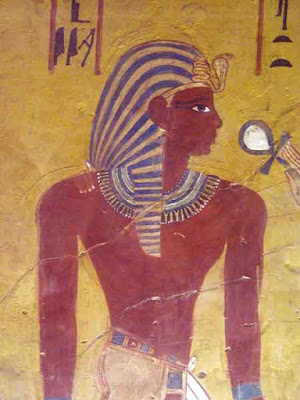
Amun protecting Tutankhamun The god Amon protects Tutankhamun. His successors broke the arms of the god to cease the protection, the head and the arms of the pharaoh because they thought that he belonged to the heretic period of the replacement of the god Amon by the god Aton. Wikimedia Commons
A fascinating legacy of ancient Egypt. Here is again a brilliant article, by Marie Grillot, about this amazing discovery. With thanks. 🙏💖
The god Amun protects Tutankhamun – 1336 – 1327 BC – diorite. Statue discovered by Auguste Mariette in Karnak in 1857 Collection of Prince Napoleon then Maison Feuardent Acquired by the Louvre Museum in February 1920 – E 11609
Dated 1336 – 1327 BC, 2.15 m high, this statue is carved in the round from a block of very dark diorite. The “polish”, as impeccable as it is admirable, given to it by the sculptor seems to have attenuated its dark side, even giving it a shiny appearance. Georges Bénédite, who devoted a long study to this statue, brings this clarification: “We see at the top of the supporting pillar like a trail of pink granite, the witness of the vast syenite bank where the black rock flow was imprisoned”.
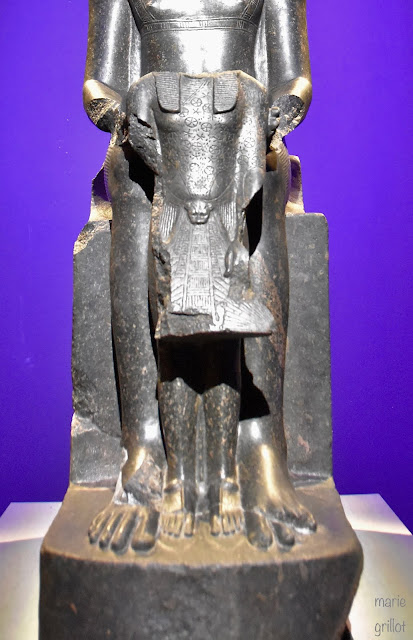
The statuary group represents the god Amun, seated on a cubic throne, with his hands resting as a sign of protection on the shoulders of Tutankhamun, who is standing in front of him and who is represented on a much smaller scale.
The god Amun protects Tutankhamun – 1336 – 1327 BC – diorite. Statue discovered by Auguste Mariette in Karnak in 1857 Collection of Prince Napoleon then Maison Feuardent Acquired by the Louvre Museum in February 1920 – E 11609
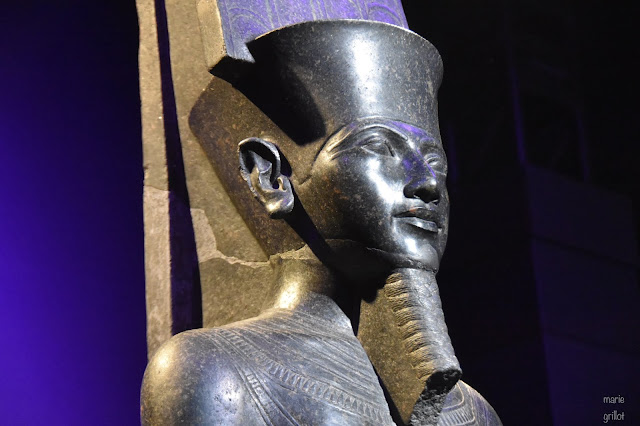
The face of the god, in an exceptional state of preservation, is perfectly symmetrical; he has an expression that is both gentle and distant at the same time. “Theban Amon is represented here in his canonical form, that is to say with his human face and the crown that characterizes him, made of a flat mortar surmounted by high feathers”.
Her cheeks are rather round, her eyes are almond-shaped. Her nose is thin and her mouth with full lips is small. He wears a braided false beard, slightly curved at the end. His neck is adorned with a six-row ousekh collar.
The god Amun protects Tutankhamun – 1336 – 1327 BC – diorite. Statue discovered by Auguste Mariette in Karnak in 1857 Collection of Prince Napoleon then Maison Feuardent Acquired by the Louvre Museum in February 1920 – E 11609
He is dressed in a tunic – or corselet – whose straps and braid are decorated with delicately chiselled friezes. The pleated loincloth leaves the navel visible. It is held at the waist by a nicely crafted belt which has an oval pattern in its centre under which is reproduced an Isis knot.
His body is of ideal proportions, with square shoulders and: “powerful legs, which help to accentuate the impression of strength and stability”.
The god Amun protects Tutankhamun – 1336 – 1327 BC – diorite. Statue discovered by Auguste Mariette in Karnak in 1857 Collection of Prince Napoleon then Maison Feuardent Acquired by the Louvre Museum in February 1920 – E 11609
The “symbolism” of the statue lies in the attitude that the god manifests to the sovereign: he, in fact, gives him “the investiture, because, the divine gesture is both of protection and presentation”. As Jacques Vandier translates it so well: “Amon stretches out his arms and puts his hands on the king’s arms. The divine hands were intentionally broken by sectarians who wanted, thereby, to prevent the divine fluid from permeating the former partisan of Aten. They also are who, without doubt, beheaded Tutankhamun “.
Of his head, broken at the base of the neck, only the two sides of the royal nemes remain.
The god Amun protects Tutankhamun – 1336 – 1327 BC – diorite.
Statue discovered by Auguste Mariette in Karnak in 1857
Collection of Prince Napoleon then Maison Feuardent
Acquired by the Louvre Museum in February 1920 – E 11609
The young king’s body is small, almost fragile. His arms were also damaged, but what remains allows us to see that his hands were laid flat on his loincloth.
He is dressed in the “costume of the priests of Amun, belted starched loincloth and feline skin on the left shoulder. He is shod in sandals and adorned with a wide collar.”
The destructive madness did not go so far as to destroy: “the cartridges inscribed on an adornment of the garment, suspended from the belt to the right of the loincloth” which name it …
Statue of Amun in the guise of Tutankhamun – limestone -18th Dynasty. Provenance: Temple of Amun Karnak – Discovered in 1904 in La Cachette, north of the 7th pylon (K.535) Louqsor Museum J. 198 (Cairo Museum JE 38689)
But Egyptologists would most certainly have identified it in analogy with other of its representations, so much the features of the god: “are the exact reflection; the soft, feminized face, generally characterizes the portraits of this dynasty”. This interpretation is thus further developed in the work “Ancient Egypt at the Louvre”: “The face of the god reproduces the characteristic physiognomy of the sovereign that many of his statues make known to us: that of a teenager whose cheeks are round and the full mouth with sinuous lips underline the youth, the expression remains however slightly melancholy. “
This statue, victim of the religious conflicts of a tormented time, was most certainly deposited, – perhaps even thrown – in a hiding place of the temple of Karnak …
It will not emerge until many centuries later and then, will begin the second part of its history …
Auguste Mariette (February 12, 1821, Boulogne-sur-Mer – January 18, 1881, Cairo)
In the fall of 1857, six years after having discovered the Serapeum and after a “return” to France of three “long” years, Auguste Mariette finally returned to Egypt …
Its mission, “arranged” by Ferdinand de Lesseps, aims “official” to prepare the trip of Prince Napoleon (cousin “undisciplined” of Emperor Napoleon III, known by the nickname of Plon-Plon).
Saïd Pasha, who wishes to maintain the best possible relations with France, is delighted to receive this member of the imperial family, presented as: “a great art lover who would be keen to visit the monuments of Egypt and bring back some antiques “.
Prince Napoleon (dit Plonplon) (1822-1891) – Photo by Disderi
Also, for the organization of this princely stay, he gives “carte blanche” to Mariette. The latter will write to Ferdinand de Lesseps: “I think that with the instruments which have been placed in my hands, I will succeed in satisfying the viceroy and in procuring for Prince Napoleon some good monuments to take away” …
Worksites will be opened in Giza, Sakkara, Abydos, Elephantine, and Thebes. It is in this context that, during the excavations carried out in Karnak, the statue will be discovered.
The prince ultimately will not come to Egypt. In a kind of “diplomatic compensation” for this cancellation, his close advisers will encourage him to acquire the collection of antiquities made up for him. But, in his munificence, “Saïd Pasha refuses any payment and asks the excavator-diplomat (Mariette) to choose himself what will be offered to the Prince”.
It is thus as a “diplomatic gift” that the statue of Amun protecting Tutankhamun joined the collections of the Prince. Did he intend it for his Parisian mansion on Avenue Montaigne? Or at its Prangins Castle in Switzerland? Both hypotheses are mentioned. It is certain that a decade later – in 1868 precisely – it is presented and described by Wilhelm Fröhner, under number 520, of the “Catalog of a collection of antiquities of Prince Napoleon-Jérôme Bonaparte”: “Ammon, (seated statue in black granite), with a pointed beard, dressed in schenti, his arms glued to his body, is seated on a seat. Dedicatory inscription: He wears a mitre, surmounted by feathers around his neck, and below the breast, some bands can be compared in part to the Greek ketos. The god holds before him the statuette of King Amen-Toutanch (of the Eighteenth Dynasty), dressed in a pleated apron and lion skin… “.
It is useful to remember here that Tutankhamun’s tomb will not be discovered until 54 years later!
The god Amun protects Tutankhamun – 1336 – 1327 BC – diorite. Statue discovered by Auguste Mariette in Karnak in 1857 Collection of Prince Napoleon then Maison Feuardent Acquired by the Louvre Museum in February 1920 – E 11609
The statuary group will be acquired by the renowned French antique dealers Camille Rollin and Félix-Bienaimé Feuardent, the “Maison Rollin & Feuardent”. Then after being located at 12 rue Vivienne (Paris 2nd). On the death of C. Rollin the activity will continue at 4 rue de Louvois, but under the name of “Feuardent Frères”. It was in February 1920, at the instigation of its curator Georges Bénédite, that the Egyptian Antiquities Department of the Louvre purchased this statue from them.
Registered in the collections under the reference E 11609, it “welcomed” visitors during the great exhibition “Tutankhamun, the Pharaoh’s treasure” in Paris.
Amon et Toutânkhamon (concerning a group acquired by the Egyptian Louvre Museum), Georges BénéditeMonuments and memories of the Eugène Piot Foundation Year 1920 24-1-2 pp. 47-68 https://www.persee.fr/doc/piot_1148-6023_1920_num_24_1_1806
Interview with Vincent Rondot – Press kit for the exhibition “Tutankhamun, the Pharaoh’s treasure” at La Villette Manual of Egyptian archeology, volume III, The great times, statuary, 1958 (statue 111.1), Jacques Vandier
Tutankhamun, Marc Gabolde
Mariette Pacha, 1821-1881, Elisabeth David, Pygmalion, 1994
Mariette Pacha, Claudine Le Tourneur d’Ison, Plon, 1999
A letter written from Egypt by Mr. Mariette, Emmanuel de Rougé
Minutes of the meetings of the Académie des Inscriptions et Belles-Lettres Year 1858 2 pp. 115-121
Greek composer Mikis Theodorakis is pictured in Athens, Aug. 21, 1974. (AP Photo) http://22 hours ago Spiegel
»I’ve seen everything there is. I’m so happy with all of this. It would be unfair to live longer «.
He actually experienced everything. He was celebrated worldwide for his music and was valued by critics and simple listeners alike. He lived an inconsistent, almost novel-like life that contained everything from exile to torture to universal love and appreciation. I (and Al) have learned a lot from him: over freedom and human rights. Therefore, I have to drop a line on him about his genial, and despite his pains, so sensitive music. I think I owe him that.
In fact, the Greeks have not only taught us Philosophy, Mythology, and parliamentary democracy, but they were the basis of freedom.
There are many artists, who were willingly or unwillingly, involved in the political condition of their countries. Like: Milan Kundera, Gabriel García Márquez, Pablo Neruda,… and even we can count Ernest Hemingway as a critical writer, and Victor Jara, the Chilean poet, singer-songwriter and socialist political activist who was not so lucky as Theodorakis and get torched and killed by Pinochet‘s coup in the year 1973. The artists, who were born in a country under the reign of dictatorship, without a doubt, will become critical activists. One must have lived in such a situation to understand it fully.
An artist is a creator, and it is not possible to create art without breathing freely.
Michail “Mikis” Theodorakis (Greek: Μιχαήλ (Μίκης) Θεοδωράκης [ˈmicis θeoðoˈɾacis]; 29 July 1925 – 2 September 2021) was a Greek composer and lyricist credited with over 1,000 works.
He scored for the films Zorba the Greek (1964), Z (1969), and Serpico (1973). He composed the “Mauthausen Trilogy“, also known as “The Ballad of Mauthausen”, which has been described as the “most beautiful musical work ever written about the Holocaust” and possibly his best work.[6] Up until his death, he was viewed as Greece’s best-known living composer. He was awarded the Lenin Peace Prize. Wikipedia
Of course, his name is always accompanied with one song (Sirtaki from Zorba the Greek), but I know mush more songs, beautiful songs from him:
It was not planned, I must confess, to write any second part on this issue. But as I finished (almost!) my latest post, look here, I have noticed that I am missing the part in which Dr Jung refers to Goethe’s Faust. Therefore, I add some notes here and hope not to bore some of you.
Actually, we don’t have to be religious to enjoy such brilliant work. Just like the Goethe’s Faust or Dante’s Inferno, they are Masterworks.
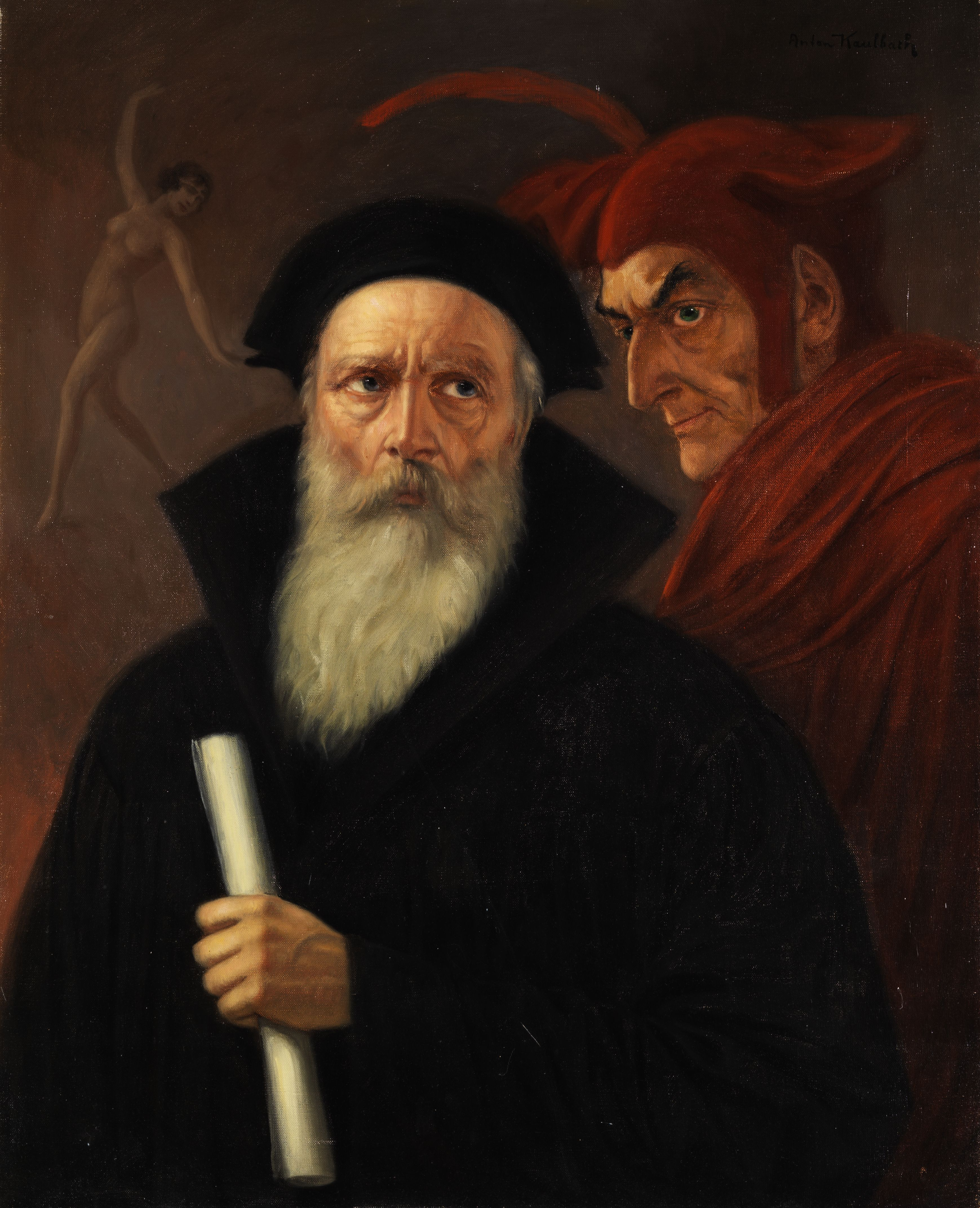
What does Faust mean for Goethe? Faust is chosen as a human prototype of the crown of creation as a demonstration object to show whether the creation succeeded in principle, as God and the angels believe, or completely failed, as Mephistopheles claims.
Why does Faust make the pact with the devil? The Lord (God) believes in the good in people – also in the good in Doctor Faust. Mephisto (the devil) made a bet with him that he could lead the scholar off the right path. This bet is reminiscent of the Job bet in the Old Testament.
(Although, I always have asked myself: What really is the purpose of religion? Isn’t it to show how the dark (devil) side is much more charming and appealing than the bright side?)
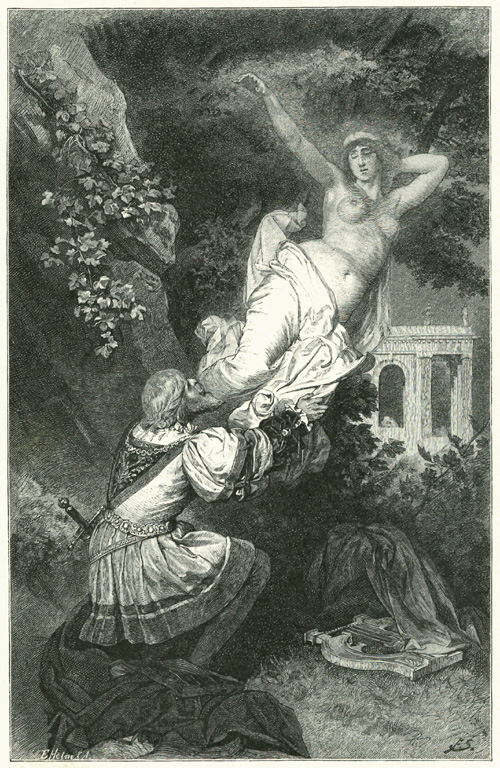
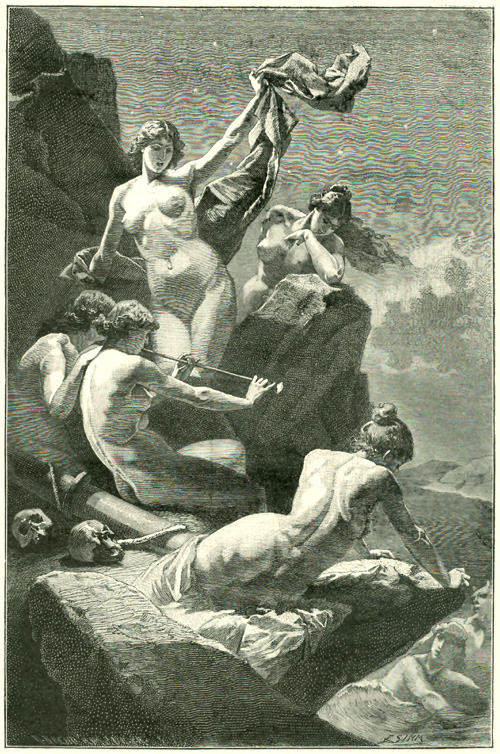
Second part. Second act. Rocky bays of the Aegean Sea. Sirens in the moonlight “lying around on the cliffs, fluting and singing”. http://www.goethezeitportal.de
Let’s now have a read on the master words of Dr Jung: From the very book reference, which I mentioned last time. “The relationships between the self (“I”) and the unconscious.” (Die Beziehungen zwischen dem Ich und dem Unbewussten.)
The Freudian theory of neuroses seems to provide a far better instrument for combating transmission. The dependency of the patient is explained as an infantile-sexual claim that takes the place of the sensible use of sexuality. Adler’s theory grants an equal advantage, explaining the transference as an infantile power intention and a tendency towards security. Both approaches fit so well with the neurotic mentality that one can explain every case of neurosis with both theories simultaneously. This actually bizarre fact, which every impartial person has to confirm, can only be based on the fact that Freud’s infantile eroticism and Adler’s tendency towards power are one and the same thing, relatively unconcerned about the dispute of opinions between the Freudian and Adlerian schools. It is simply a piece of wild and initially uncontrollable, original instinctual nature that comes to light in the transference phenomenon. The archaic forms of fantasy that gradually reach the surface of consciousness are nothing but further evidence of this fact.”
One could not say that this outcome would be “eo ipso” (of itself, on its own) a disaster for all people, then there are all too many who, because of their notorious unsuitability, thrive better in a rationalistic system than in freedom. The latter is one of the more difficult things. Those who can endure this outcome can say to themselves with Faust:
The earth is known enough to me, the prospect over there has run away for us; Gate, who directs his eyes there, blinking, composes himself above clouds of his own kind! He stands firm and looks around here; This world is not mute to the able. What does he need to wander into eternity! What he recognizes can be grasped. He walks along the earth day when ghosts spit, he goes his way … (Goethe; Faust ll, 5, act, midnight, in; works in ten volumes.)
This solution would be happy if one really succeeded in shaking off the unconscious to such an extent that one could also deprive it of its energy to the point of ineffectiveness.
And further: It would, therefore, be a delusion to believe that one could finally wrench the Libido from the unconscious with some kind of magical theory or method, and thereby so to speak: switch it off. One can indulge in this illusion for a while, only to have to say with Faust one day:
Now the air is so full of such spit, That nobody knows how to avoid him. Even if one day clearly laughs at us sensibly, The night entangles us in a web of dreams; We return happy from the young hall, A bird croaks; what is he croaking? Misfortune. Obsessed with superstition early and late, it is suitable, it shows, it warns. And so intimidated we stand alone. The gate creaks and nobody comes in …
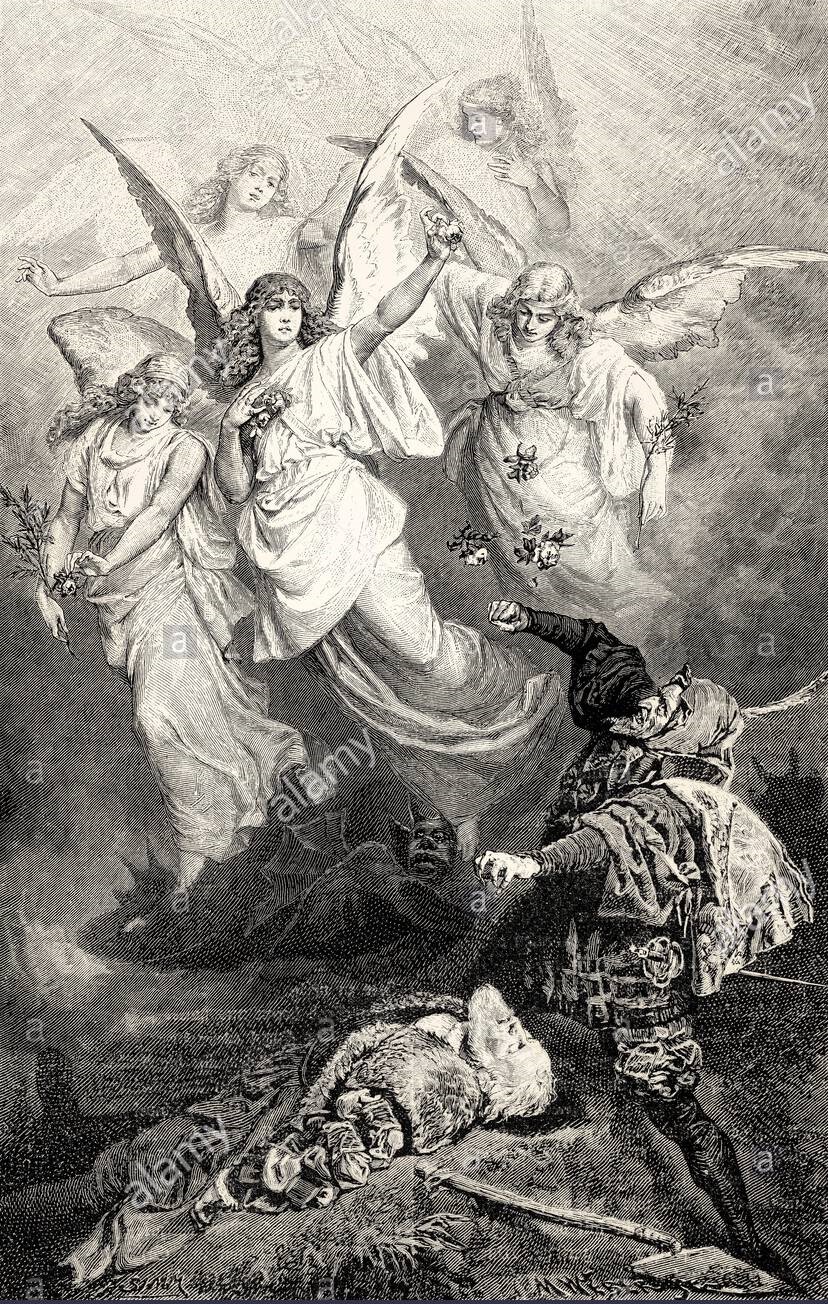
“He who strives on and lives to strive, can earn redemption still”, declare Angels, who arrive as messengers of divine mercy, at the end of Act V. And ultimately, Faust goes to Heaven, for he loses only half of the bet.
angels strewing roses on the body of Faust, act V, Faust II, Johann Wolfgang von Goethe http://Alamy
In the end, I again add some text in the original, may some know German and enjoy reading it. 🙏🤗
Ein weit besseres Instrument zur Bekaempfung der Uebertragung scheint die Freud’sche Neurosentheorie zu gewaehren. Die Abhaengigkeit der Patienten wird als infanti-sexualler Anspruch erklaert, der anstelle der vernuenftigen Anwendung der Sexualitaet stehe.Einen gleichen Vorteil gewährt die Adler’sche Theorie, welsche die Uebertragung als eine infantile Machtabsicht und als Sjcherungstendenz erklaert. Beide Theorien passen so gut auf die neurotische Mentalitaet, dass man jeden Neurosenfall mit beiden Theorien zugleich erklaeren kann. Dies eigentlich sehr merkwuerdige Tatsache, die jeder Unvoreingenommene bestaetigen muss, kann nur auf dem Umstand beruhen, dass Freuds infantile Erotik und Adlers Machttendenz ein und dieselbe Sache sind, ganz unbekuemmert um den Streit der Meinungen zwischen der Freud’schen und der Adler’schen Schule. Es ist einfach ein Stueck unbeherrschter und zunaechst nicht beherrschbarer, urspruenglicher Triebnatur, die im Uebertragungsphaenomen zutage tritt. Die archaischen Phantasieformen, die allmaehlich die Bewusstseinsoberflaeche erreichen,sind nichts als ein weiterer Beweis fuer diese Tatsache.
Wer diesen Ausgang wohl ertragen kann, der darf sich mit Faust sagen;
Der Erdenkreis ist mir genug bekannt, Nach drüben ist die Aussicht uns verrannt; Tor,wer dorthin die Augen blinzelnd richtet, Sich über Wolken seinesgleichen dichtet! Er stehe fest und sehe hier sich um; Dem Tüchtigen ist diese Welt nicht stumm. Was braucht er in die Ewigkeit zu schweifen! Was er erkennt, lässt sich ergreifen. Er wandle so den Erdentag entlang, Wenn Geister spucken, geh’ er seinen Gang… (Goethe; Faust ll, 5,Akt, Mitternacht, in; Werke in zehn Bänden.)
Diese Lösung wäre glücklich, wenn es einem wirklich gelänge, das Unbewusste dermaßen abzuschütteln, dass man ihm auch die Energie bis zur Unwirksamkeit entziehen könnte.
Und weiter: Es wäre daher eine Täuschung, wenn man glaubt, man könnte mit irgendeiner sozusagen magischen Theorie oder Methode dem Unbewussten endgültig die Libido entreißen und es dadurch gewissermaßen ausschalten. Man kann sich dieser Illusion für einige Zeit hingeben, um eines Tages mit Faust sagen zu müssen: Nun ist die Luft von solchem Spuck so voll, Dass nimand weiß,wie er ihn meiden soll. Wenn auch ein Tag uns klar vernünftig lacht, In Traumgespinst verwickelt uns die Nacht; Wir kehren froh von junger Flur zurück, Ein Vogel krächzt; was krächzt er? Mißgeschick. Von Aberglauben früh und spat umgarnt, es eignet sich, es zeigt sich an, es warnt. Und so verschüchtert stehen wir allein. Die Pforte knarrt, und niemand kommt herein…
There is no doubt that this work by Goethe is a Masterpiece of psychology in the soul of man. The soul within the confrontation between dark and bright side. We can easily compare it with ours and our wishes, and learn a lot about it: Our Unconsciousness.
First, let’s have a little part from the beginning, which I translated from the original.
MEPHISTOPHELES (alone): From time to time I like to see the old man, And be careful not to break with him. It is very nice of a great gentleman, So human to speak to the devil himself.
Faust: (at night) I have now, alas! Philosophy, Law and medicine, And unfortunately also theology Thoroughly studied, with ardent effort. There I stand now, poor fool me! And am as smart as before; Hot masters, hot doctors even And already pulling for ten years Up, down and across and crooked Fool my students and see that we can know nothing! It just wants to burn my heart. I am smarter than all the monkeys Doctors, masters, clerks and priests; I have no scruples or doubts Don’t be afraid of hell or the devil, for that all joy has been torn from me Don’t imagine what is right to know Don’t think I can teach To reform and convert people. I also have neither goods nor money, Still the honour and glory of the world; No dog would like to live this longer! That’s why I surrendered to magic Whether through the strength of the spirit and my mouth Not many secrets would be revealed; That I no longer have sour sweat Need to say what I do not know; That I know what the world is
We have all our wishes, in certain unknown. But wishes are always uncertain! Let’s have a deep look.
I have look for a quote by Jung on Goethe’s idea, but I have found only bullshits! Therefore, we take this one.
Honestly, I am reading one of Dr Jung’s books, which I haven’t dealt with so intensely lately. The book is in the original language, so in German. And I have a heartbeat when I read it, as this great man is sitting in front of me and talking with me. The name of the book is: “Die Beziehungen zwischen dem ich und dem Unbewussten. In English: (The relationships between the self and the unconscious.) {www.dtv.de
I know how difficult, is to read and understand Jung. Therefore, I try to make it as short and easy as I can understand myself. He goes in this way to explain his (amazing) point of view on the Complex in the personal identity. It could be everyone. I’ll give my best to translate it understandable.
A very common case is the humourless identity of many men, whether it be their occupation or their titles. Certainly, my office is the activity that belongs to me, but at the same time, it is also a collective factor that has historically come about from the cooperation of many and owes its existence to this dignity, only to a collective consent. When I identify myself with my office or title, I behave as if I were the whole complex, a social factor that an office represents, as if I were not only the bearer of the office but also the consent of the Society. With this, I have expanded myself unusually and usurped properties that are by no means in me, but outside of me. L’état-ç’est moi, that’s the motto for such people.In the case of inflation through knowledge, it is in principle similar but psychologically more subtle. It is not the dignity of an office, but significant fantasies that cause this inflation. What I mean by that, I want to explain with a practical example: I choose the case of a mentally ill person whom I knew personally and who mentions Maeder (Psychological examinations on Dementia Praecox sufferers) in a publication. The case is marked by high inflation (in the case of the mentally ill, one can namely observe all those phenomena, which are only hinted at in the normal on a coarsened and enlarged scale.)
Surely I will come back to this later, more fully. But right now, I add this short paragraph as an anecdote for the explanation of his thought.
just follow the old saying and my aunt, the snake. One day you will certainly be afraid of your divinity. In the case of the mentally ill, one can observe all those phenomena that are only hinted at in the normal, on a coarsened and enlarged scale. When I was still a doctor at the psychiatric clinic in Zurich, I once guided an intelligent layman through the medical department. He had never seen the inside of an asylum before. When we finished our tour, he exclaimed: But listen! That’s a small city of Zurich! A quintessence of the population! It’s like having all the guys you meet on the street every day collected here in their classic specimens. Loud owls and splendid specimens from all depths and heights! I had never looked at things from that side, but the man was right to a not inconsiderable degree.
And in German:
folg nur dem alten Spruch und meine Muhme, der Schlange. Dir wird gewiss einmal bei deiner Göttlichkeit bange bei Geisteskranken kann man nämlich alle jene Phänome, die beim normalen nur andeutungsweise vorhanden sind, in vergröbertem und vergrößertem Maßstab beobachten. Als ich noch Arzt an der psychiatrischen Klinik in Zürich war, führte ich einmal einen intelligenten Laien durch die Krankenabteilung. Er hatte noch nie eine Irrenanstalt von innen gesehen. Als wir unseren Rundgang beendet hatten, rief er aus: Aber hören Sie mal! Das ist ja eine kleine Stadt Zürich! Eine Quintessenz der Bevölkerung! Es ist, wie wenn man alle Typen, die man täglich auf der Straße trifft, in ihren klassischen Exemplaren hier gesammelt hätte. Laute Käuze und Prachtexemplare von allen Tiefen und Höhen! Ich hatte allerdings die Sache nie von dieser Seite betrachtet, aber der Mann hatte in nicht unerheblichem Maße recht.
Take care and be you! I have this requiem, by Mozart, all day long. I just put it here as a finishing point!
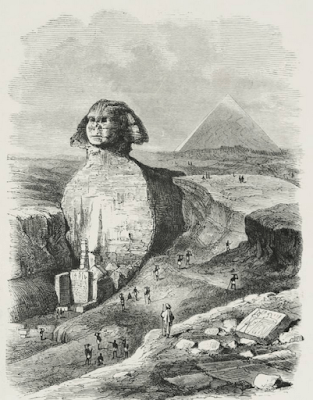
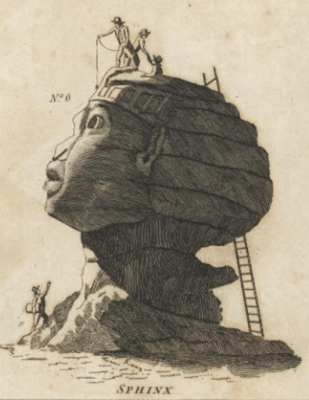
What a giant hilarious lion, sitting or lying proudly in front of the mysterious Pyramids of Giza. The Sphinx itself is also a mysterious work, which, according to new research, its year of construction goes back to eleven thousand years.
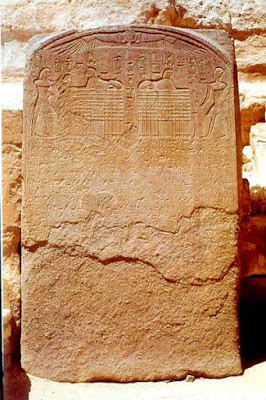
There is a stele erected between the front paws of The Great Sphinx of Giza by Thutmose IV in the first year of the king’s reign, 1401 BC, during the 18th Dynasty. As was common with other New Kingdom rulers, the epigraph claims to a divine legitimisation of kingship. And it’s called The Dream Stele.
Left. : watercolor by Mariette Right. : “The Great Sphinx” – Photographer: G. Lékégian & Co.
To establish their divine filiation and legitimize their power, the pharaohs sometimes let themselves go to interpret their dreams or the voice of certain oracles…
It is always, of course, the occasion of a story close to the marvellous, where the story loaded with unreal generates a history, with a capital “H”. It is a: “literary genre that is called the ‘Königsnovelle’. They are more or less romanticized accounts of a concrete event in the life of a pharaoh. It is always an event that illustrates the close bond between the king and the gods. In general, the king’s entourage is also included in the story. The king often dialogues with his advisers.
Thus, a grandson of Thutmose III and son of Amenophis II, who, according to some sources: “was not born of a royal wife and led the obscure and idle existence of a royal bastard”, therefore relatively distant from the succession to the throne, or who was, according to other sources: “certainly the legitimate and predestined successor of his father Amenhotep II, went hunting in the Libyan desert on a chariot drawn by horses faster than the wind ‘, accompanied by such or such of his servants “. This prince, who held the post of head of the royal chariotry, indeed liked to devote himself to hunting, especially on the Giza plateau, very: “prized by kings for hunting wild animals and gazelles, the ancient Egyptians l ‘ called then “La Vallée des Gazelles”.
At the time of the siesta, the prince and his companions settled down in the shade of the Sphinx for restorative rest.
The “future Thutmose IV” would thus have dozed off between the legs of the great sphinx. In his sleep, he would have presented himself and revealed himself to him. “This august God speaks to him with his own mouth as a father speaks to his son: ‘See me, look at me, O my son Thoutmes! I am your father Horemakhet-Khepri-Re-Atum. I give you my kingship on earth, at the head of the living. You shall wear the white crown and the red crown in the earth of Geb. Yours is the earth in its length and breadth, whatever lighteth the eye of the universal Lord, the provisions of the Two Lands and the great contributions of every foreign country are yours.
The sphinx would then have expressed the wish to be delivered from the suffering caused by the silting up and would have pronounced these words: “Come to my help since you are my son and my protector.”
Will the dream at the foot of the sphinx condition the prince to think about the possibility of achieving a royal function? Will he see there the promise of destiny he had to fulfil and be helped by the “highest”? Or more prosaically: did he use – or did he invent – this dream to justify his seizure of power? Still, he will indeed achieve royalty at the age of barely 20 years.
Thoutmosis IV
From “year I” of his reign, he will honour the request made by the sphinx and will remove the sand. But he will also perform another act intended to commemorate his recognition and the memory of this dream: he will build, between the legs of the sphinx, a chapel …
Illustration dated 1878 – author unknown
The back of this chapel is composed of a stele which happens to be almost applied to the chest of the sphinx. Carved from a block of red granite and arched. It is 3.61 m high and 2.18 m wide. “The arch of the stele has the representation of two leaning sphinxes, lying on plinths: in both cases, the text specifies that it is Harmakhis. In front of each of these sphinxes is King Thutmose IV. On the right, the king wearing the crown ‘khepresh’ offers incense and pours a libation. On the left, wearing the ‘nemest’, he makes a libation using a ‘nemset’ vase “. As for the hieroglyphic text, it reproduces the story of the dream.
This stele is rediscovered in 1818 by Giovanni Battista Caviglia, a Genoese, who: “arrived in Egypt on a merchant ship, of which he was the captain.” He settled in Egypt, where he soon made important excavations.
The sphinx in 1817
From 1817, it was on behalf of the Consul General Henry Salt, and the banker of Alexandria, Samuel Briggs, undertook excavations in Giza. His exploration of the underground galleries of the pyramid of Cheops will prove to be daring and interesting but will not, however, lead to the discovery of antiquities. “On the other hand, the excavations in the surroundings, in the vaults and the small truncated pyramids, which the Arabs designated under the term ‘mastabas’ (marcha), had brought to light beautiful statues and limestone stelae, dating from the Ancient Empire that Salt had reserved. Belzoni was particularly impressed by Caviglia’s work of clearing the front of the great sphinx. Between the two claws of this colossal animal, he found a small temple, and, on the chest, a large table of granite, adorned with hieroglyphs and various sculpted figures, including two sphinxes. “
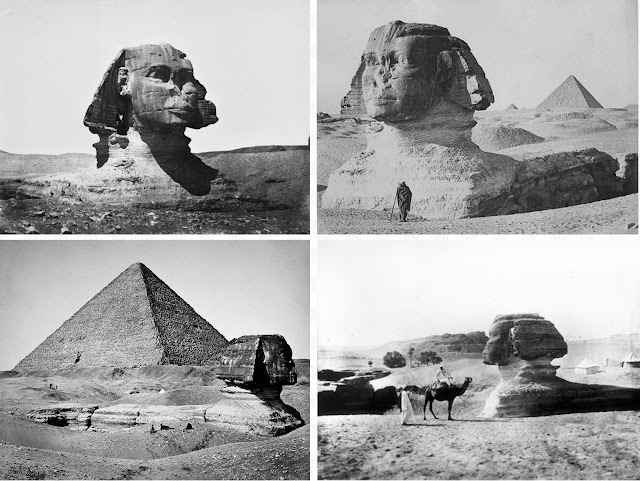
At left above: photo of Félix Bonfils – at left below: photo of Francis Frith. At right above: photo by J. P. Sébah -at right below: unidentified author
But the desert quickly regained its rights, and the stele was again covered with sand, as it was part of the sphinx. “The fight against the invading sand was perpetual, and less than a year after these discoveries, only the head of the sphinx still emerged as the Count de Forbin, notes with annoyance:” I arrived too late to benefit from the work of Mr Salt “. The same regret expressed by Jean-François Champollion in a letter of October 8, 1828: “I would have liked to remove the sands which cover the inscription of Thutmose IV, engraved on the chest (of the sphinx); but the Arabs, who had come running around us, from the heights crowned by the Pyramids, told me that it would take forty men and eight days to carry out this project. So it became necessary to give it up, and I took the path to the Great Pyramid. “
Karl Richard Lepsius will also have his teams work on removing the sand from the sphinx. And the sand, constantly carried by the desert, returns …
Auguste Mariette shows, in one of his aquarelle, the progress of the excavations in 1853: “The legs of the Sphinx are not cleared, but in the excavation dug at the base, stands the monolithic stele of pink granite of Pharaoh Thutmose IV, discovered by Giovanni Caviglia in 1818. “
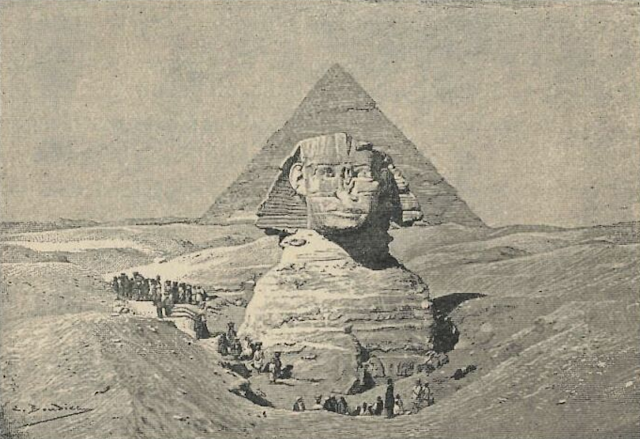
Desolation of the great sphinx in 1886 (drawing by Boudier from a photo by Emile Brugsch)
Gaston Maspero, in a letter, on March 6, 1886, addressed to his wife Louise, attaches a “photo of the excavation of the great sphinx” which he describes to him thus: “the stele of Thutmose IV comes out of the ground, and a group of workers have crouched above it, and it is about half the height of sand, which remains to be removed. “
It is the Egyptologist Émile Baraize who planed to clear the body of the sphinx completely. It is a work that will be continued from 1936 by Selim Hassan. From 1979, the Egyptian Antiquities Department will undertake numerous restorations, notably under the direction of Zahi Hawass.
Stele from the dream of Thutmose IV – photo S. Bickel – elearning.unifr
As regards more particularly the stele, the Egyptian Ministry of Antiquities declared, at the beginning of 2017, that after having completed successfully, the first phase of restoration of the lower level, which was very dilapidated, He began the second phase, which consists of restoring the upper part of the stele, reinforcing the fragile parts, removing the encrusted dust and treating the surface.
The rebirth of a dream inscribed in stone for more than 3,400 years …
Actually, we are invited to a birthday. My sister-in-law (one from the five!) has turned sixty and wants to have a big party. Of course, with everything needed: vaccinated, recovered or tested! Although this is an involuntary event for me. But, as I know, life is not a wish concert, and there is a “must” sometimes!
But before I go on this unforgivable trip, let me introduce two movies I have watched lately. These two might be known to you, because, they were made some years ago. Or also it might be not! Anyway, here they are:
First, it is HER, the movie. With Joaquin Phoenix, famous for his master play in Joker (at least for me.) He plays a totally different role and shows his skill in the matter of making a character.
And the story is a fascinating idea, to show the relationship, if ever, between human and machine. Between a man (Theodore Twombly) and a voice in computer: the unique erotic voice of Scarlett Johansson.
The second is The Best Offer, by Giuseppe Tornatore, an intriguing movie with a surprising end. Some say it is in Hitchcock manner! Anyhow, very mysterious and gripping. Worth watching.
Hello again, dear friends. I’ll try today to put the final cut on my travel. Included my Master in photography: my adorable wife, who else!
Let’s begin with some more views.
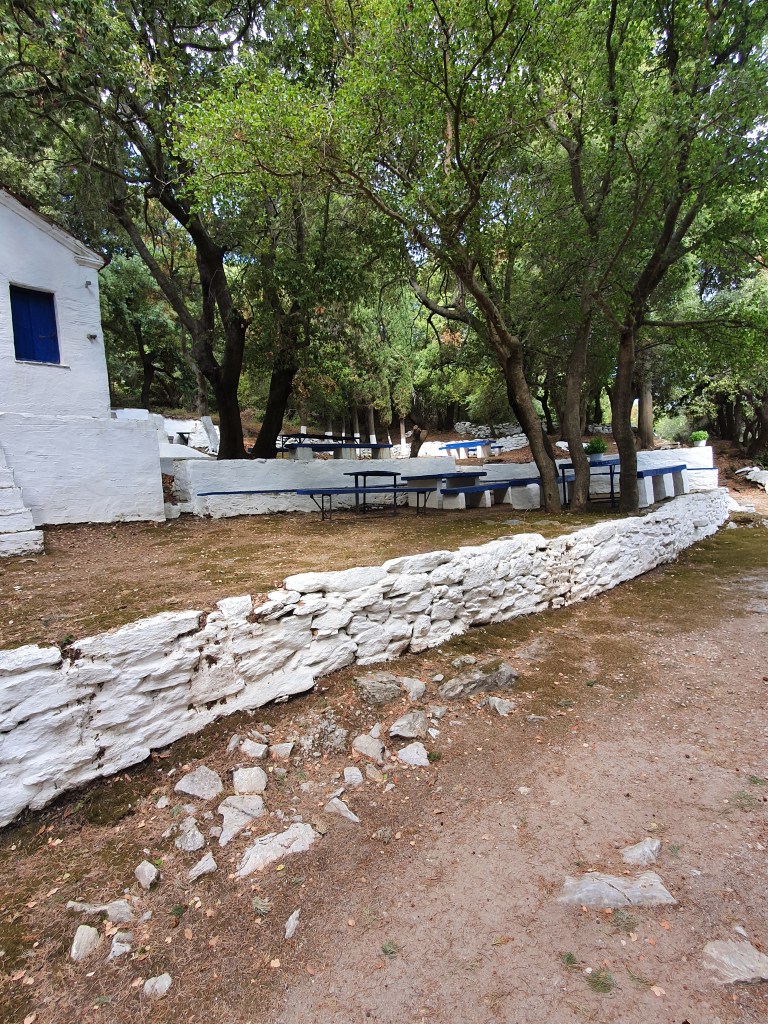
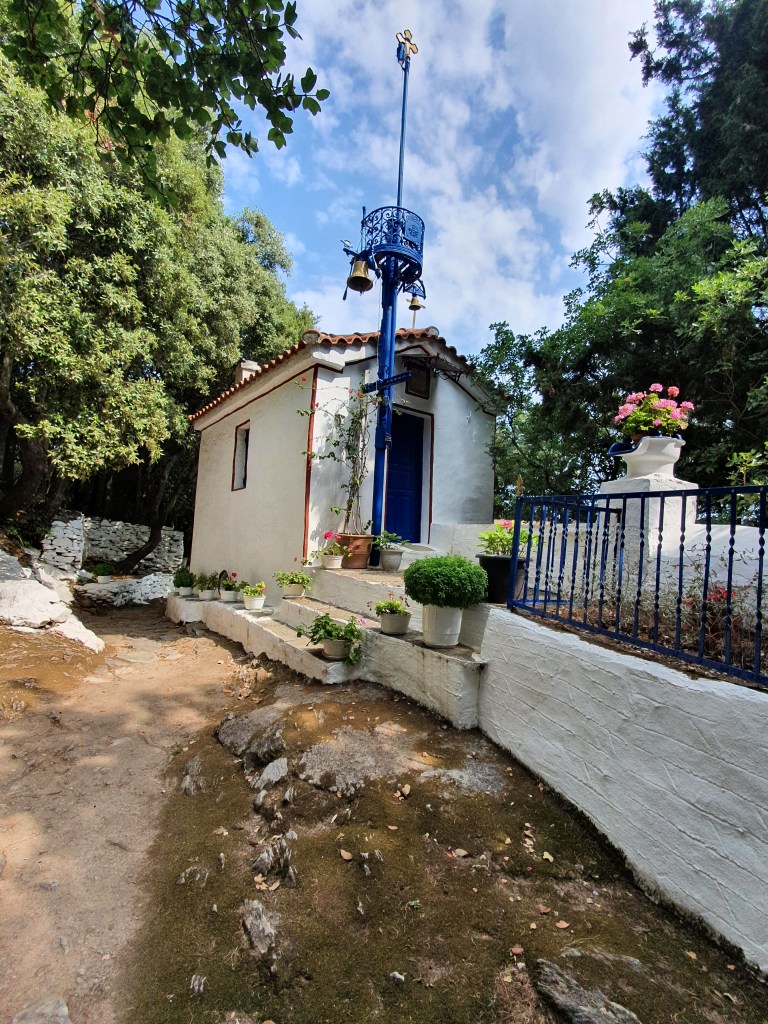
A Church, among the others.
Some taken by the adorable Regina.
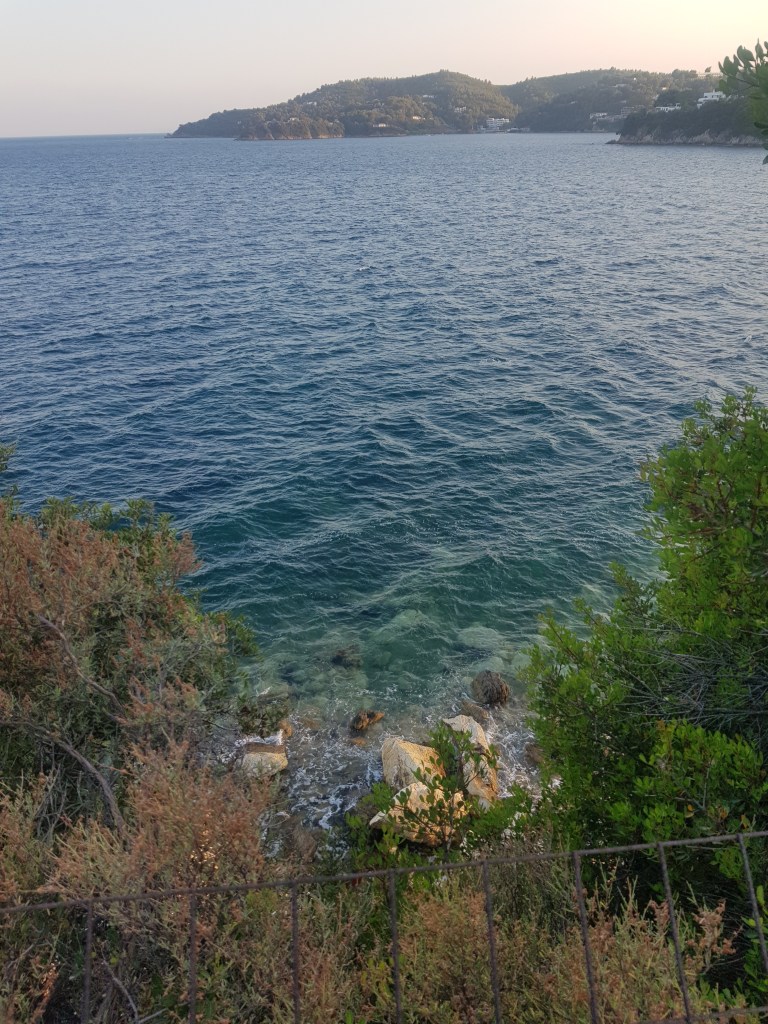
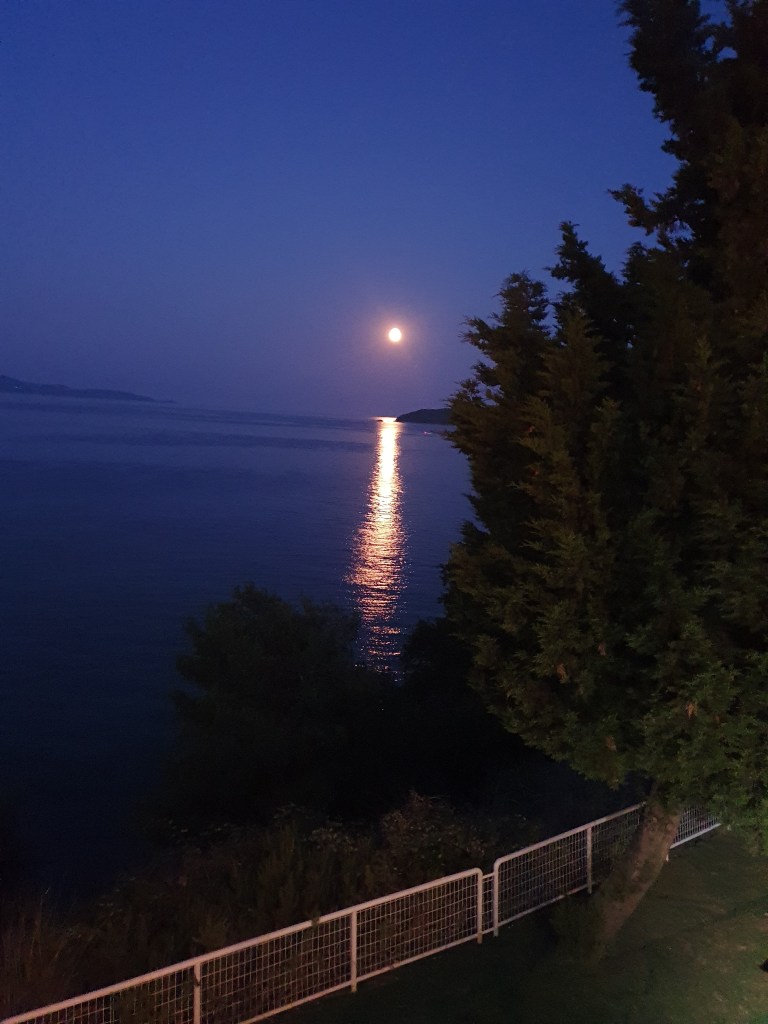
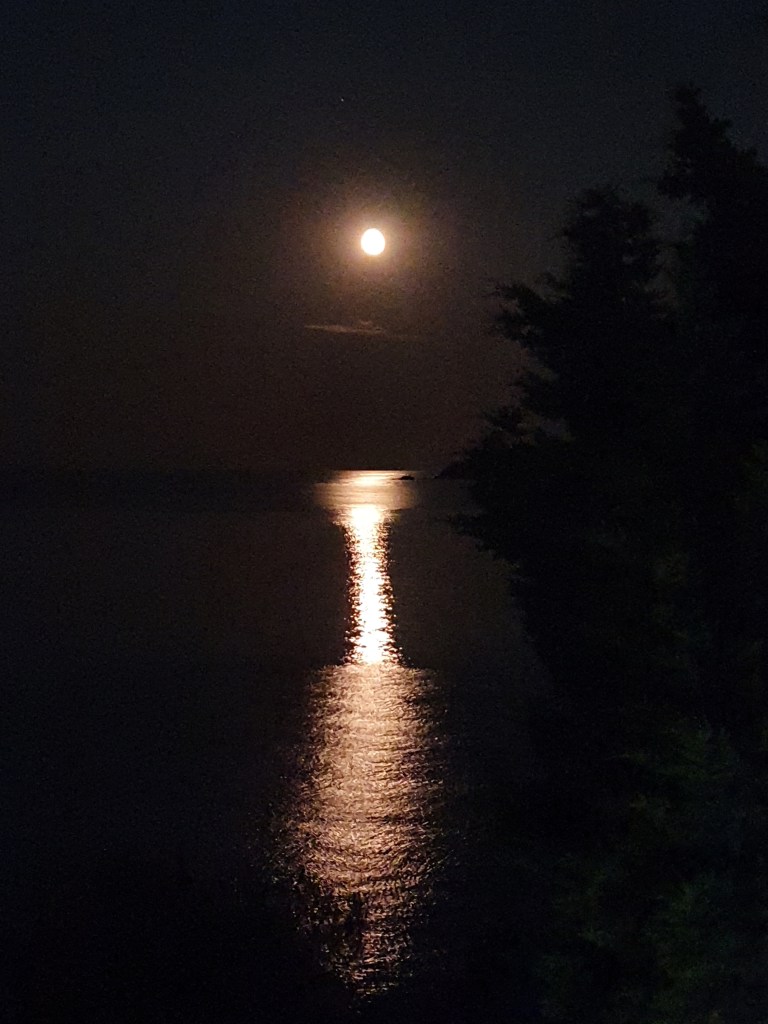
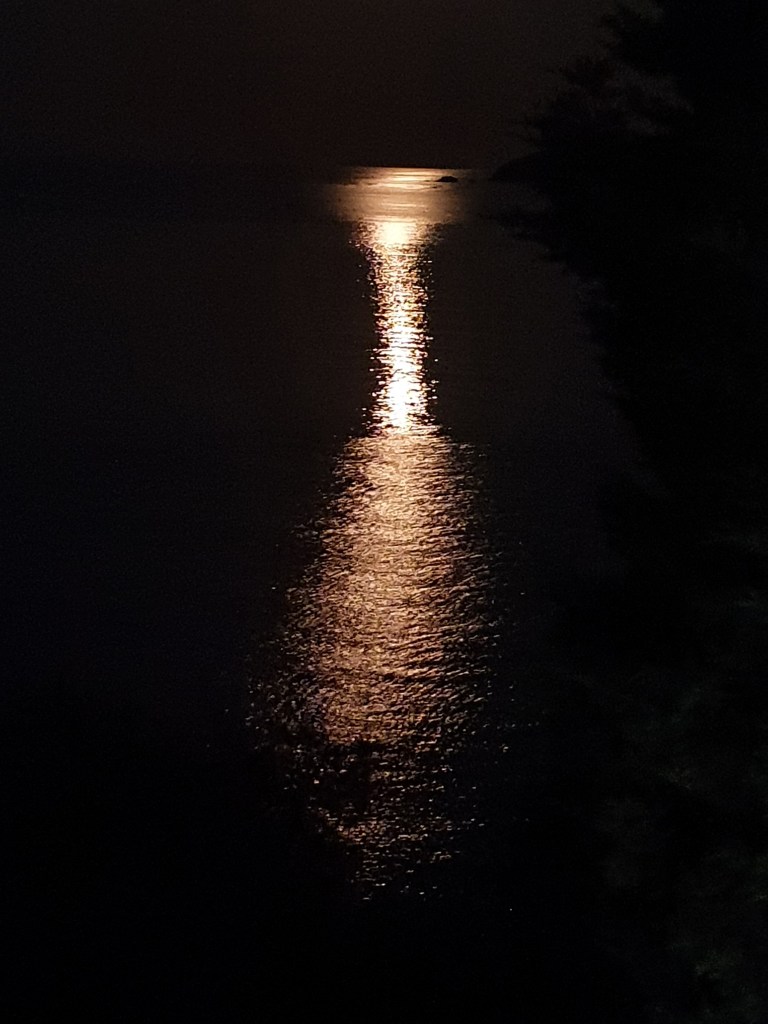
We always had the view towards the East. Therefore we could see only the rising progress and not the setting ones. And I was lucky to catch the Rising-Moon.
And the Sun…
We’ve started towards heights.
Twilight in the early morning!
A clean and beautiful Church with all different juices! 😉
And finally, a view from above on the return flight home.
But let’s take the sea with us, just to remember the music of the beauty of Mother Nature.
Preface! I had actually no idea for my second post today. I just feel empty a little, again?! By the way, I am alone today (the other part of me is on the road with friends) and I had to do all the household requirements: buying, cleaning, washing, cooking! Honestly, I am such a type who, when eating, always begins with the unfavourable part to reach the best part at the end, or, when I drive a car, I don’t mind driving over the white lines, or, I never brake at the yellow light! A little anarchist, but also a perfectionist.
Now, to overcome the void, I thought, let’s have a look back again and open another chapter by continuing my life-tells. With Pink Floyd, who is famous enough and don’t need to be introduced.
They are another main focus in my memories for sure. We have got to know Pink Floyd and listened to them since they got famous. It might be our continual habit, as the Beatles separated, and we have tried to keep staying truthful to the music. There were a lot of good music bands, which come from England. And as I believe Pink Floyd is one the best music bands of all time. After all, there was a connection between Al, me, and Roger Waters. It was almost the same situation in our childhood. I mean: to lose the father so early. We found some common feelings in the album “The Wall”, which I will explain later.
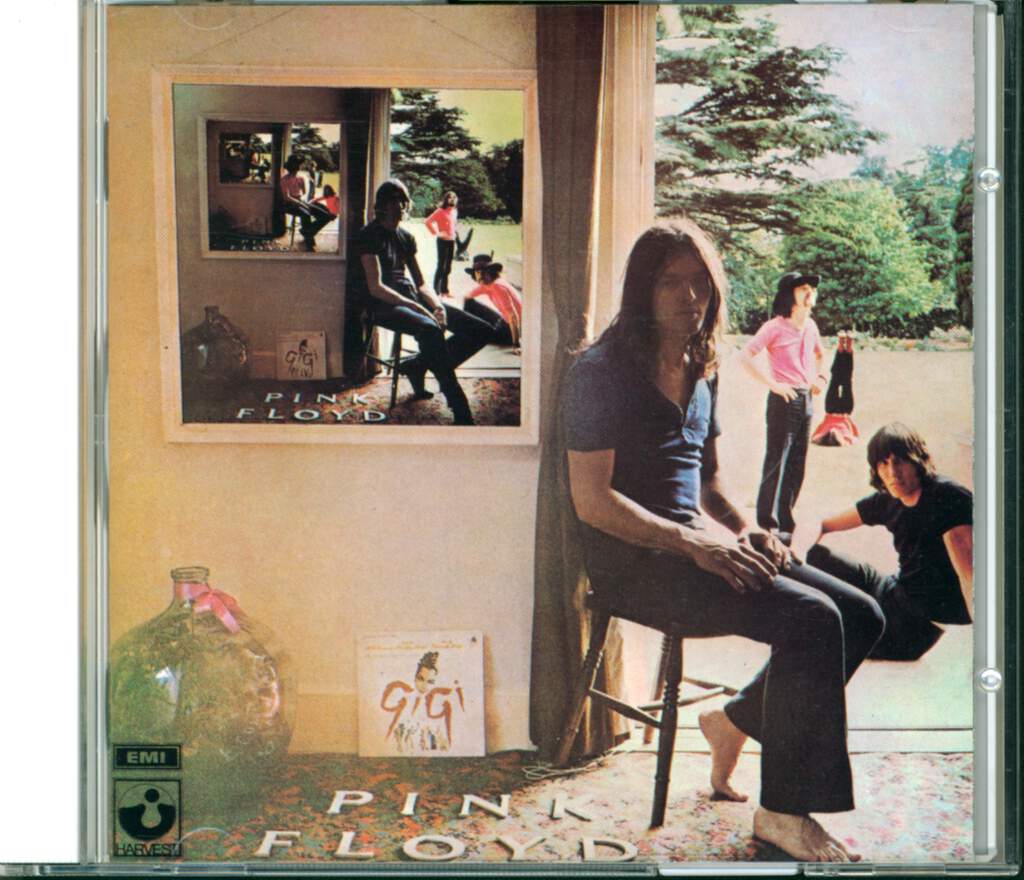
The first one, which got our attention, was Ummagumma. With this, we’d got a lot of “Highlights”!
After that, it follows with ” Atom Heart Mother” and Meddle, which pushed our flight higher, Then the Masterwork: “The Dark Side Of The Moon“, and with “Wish You Were Here“, we have begun our LSD trips. Of course, I must mention that we had a look back at one of their first albums, The Piper at the Gates of Dawn, in which we could find the basis of the Floyd music. In that, we can find harmony in chaos!
Anyway, it went on with “Animals” and the cape of top: The Wall. As you might know, it is all just breaking the wall!! We have surely needed such a “tearing the wall” in Iran, those days!
In “The Wall”, we found out the suffering of a kid, without father, and a helpless mother. It was so close and common feeling.
In that album “The Wall”, we have found our situation behind the wall, crying for freedom. But nobody was there, could help us.
Goodbye Cruel World Lyrics (Waters) 1:05
Goodbye cruel world, I’m leaving you today. Goodbye, Goodbye, Goodbye.
Goodbye, all you people, There’s nothing you can say To make me change my mind. Goodbye.
Oh yes! Pink Floyd had a big influence on us, when they sang: We’re just two lost souls Swimming in a fishbowl, Year after year, Running over the same old ground. What have we found? The same old fears.
“Wish You Were Here”
Or:
Since, my friend, you have revealed your Deepest fear, I sentence you to be exposed before Your peers. Tear down the wall! …….. and we did!
And we knew that it could not be so easy, but the danger and pressure have been too much.
Outside the Wall Lyrics (Waters) 1:42
All alone, or in two’s, The ones who really love you Walk up and down outside the wall. Some hand in hand And some gathered together in bands. The bleeding hearts and artists Make their stand.
And when they’ve given you their all Some stagger and fall, after all it’s not easy Banging your heart against some mad bugger’s wall.
After all, The Wall came out as a movie, and there, it has completed itself!
How many times, Al and I had hit the wall to hear a voice but, no one could hear us.































































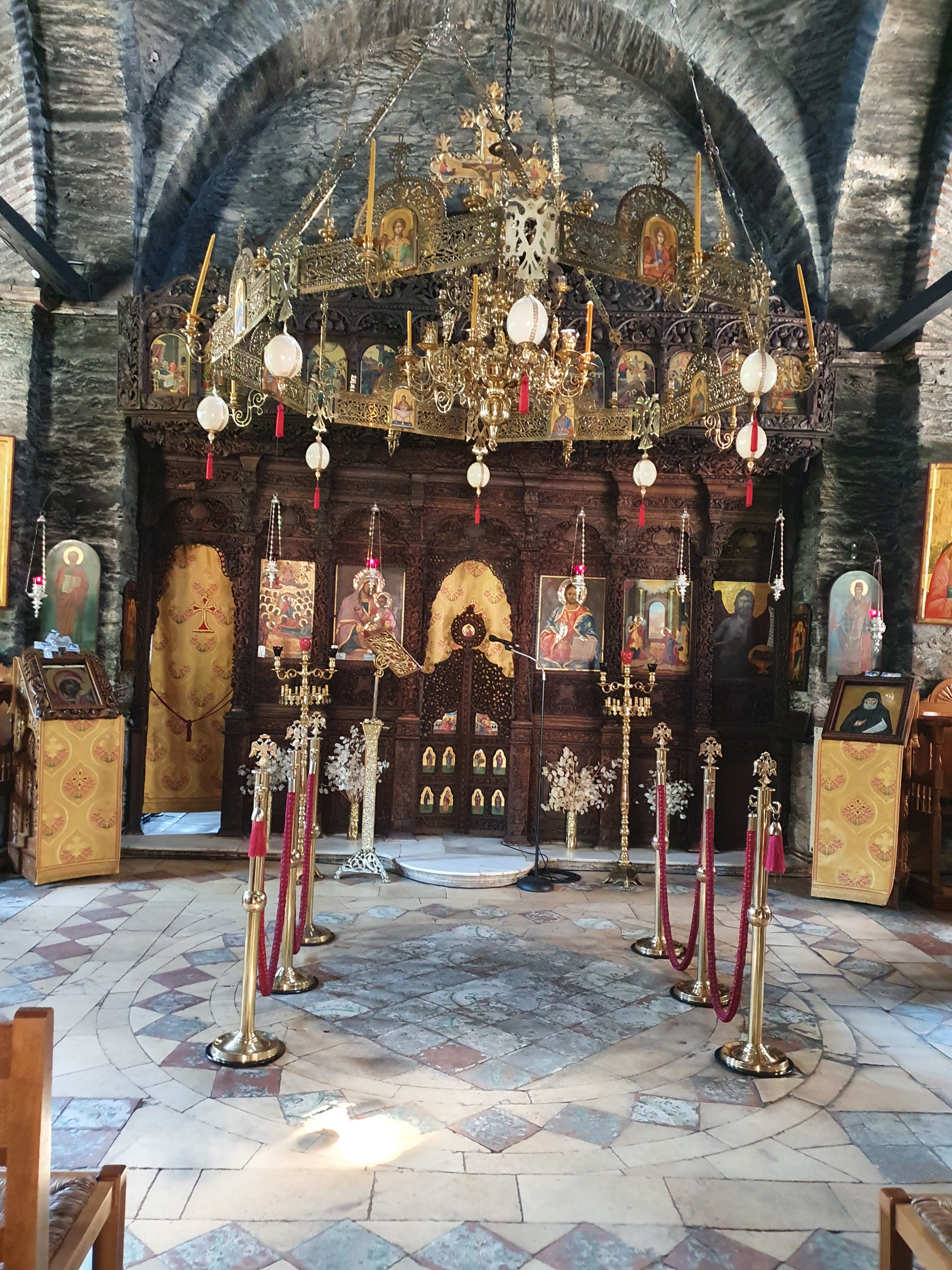

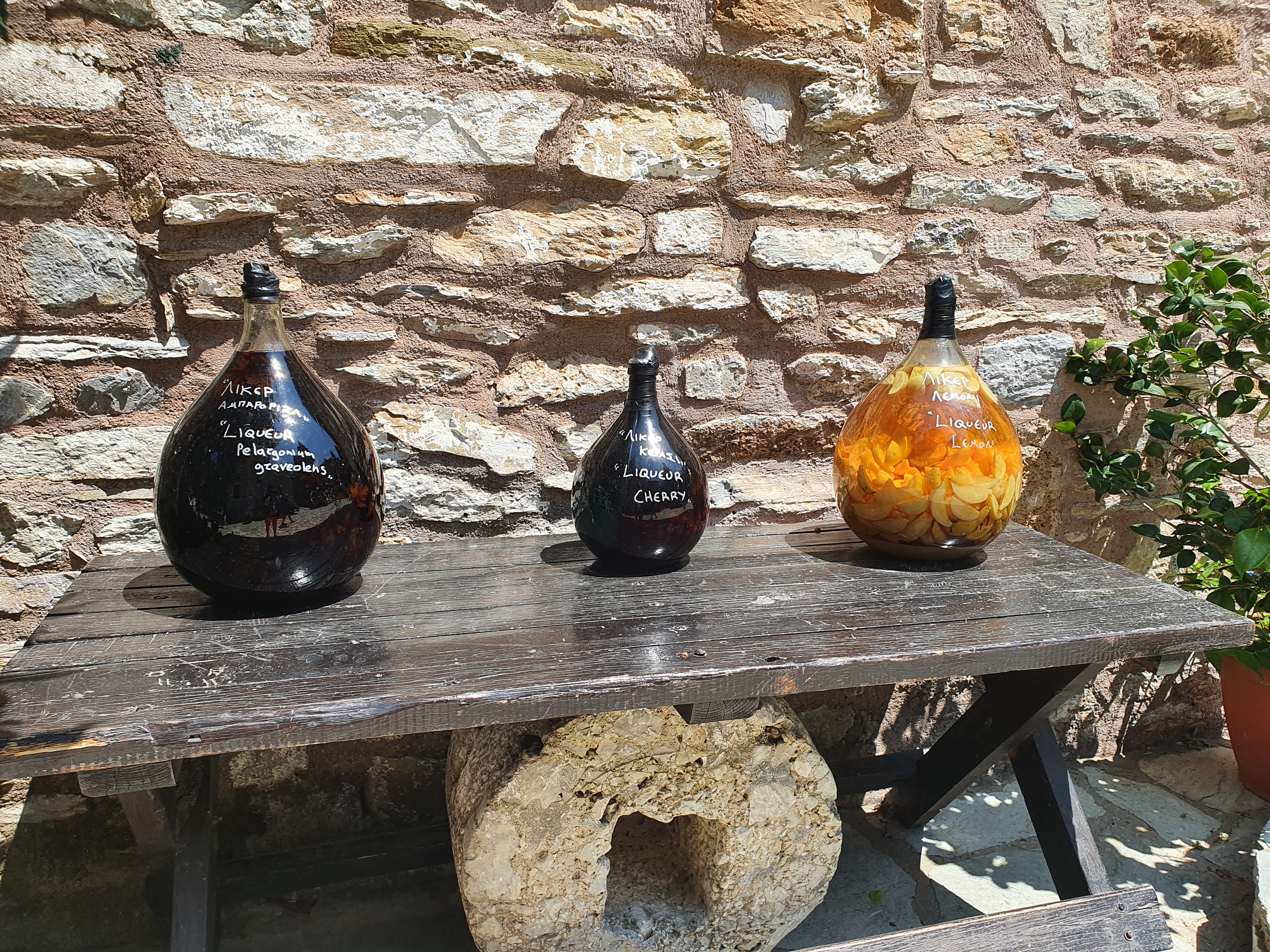
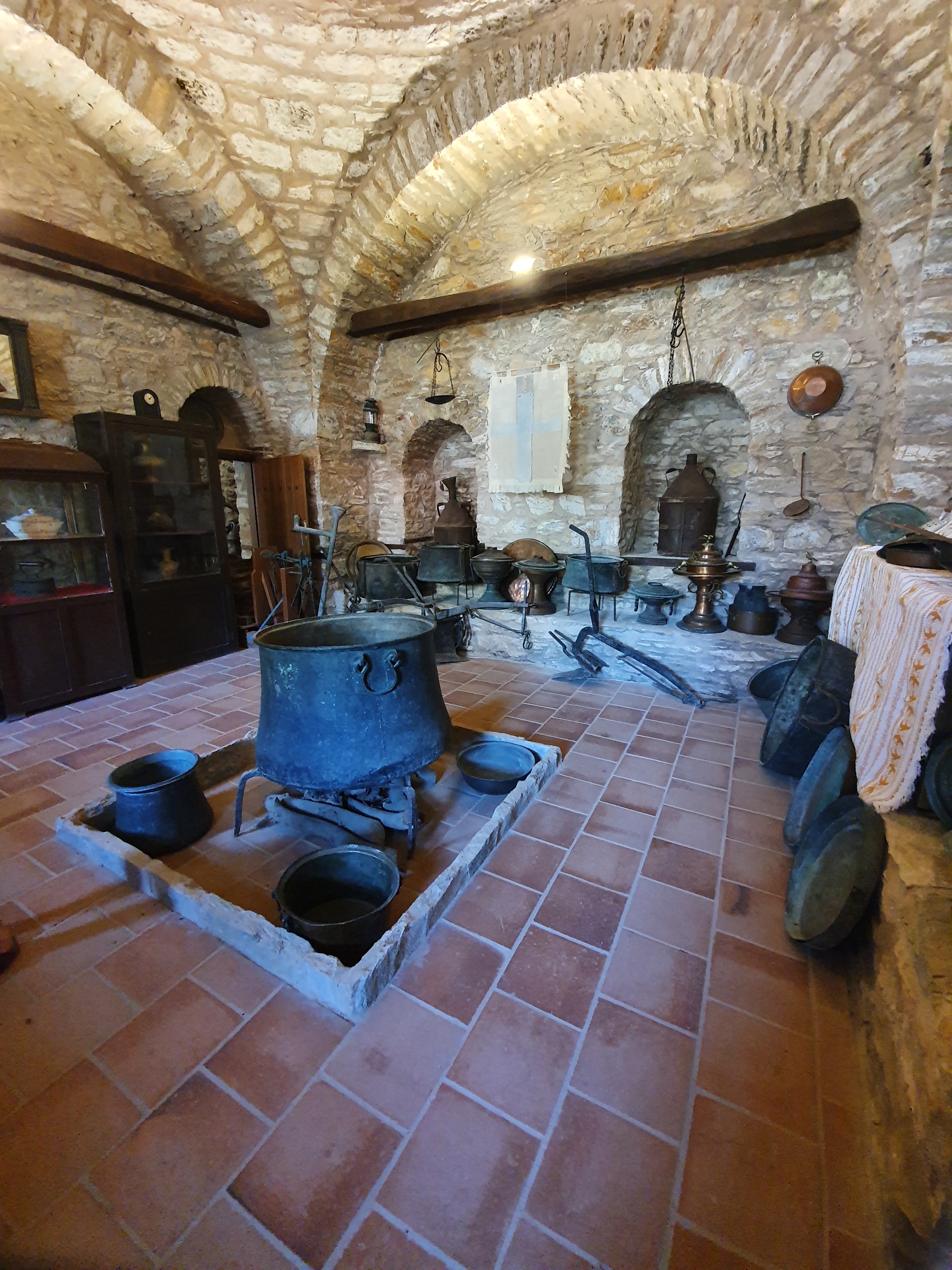
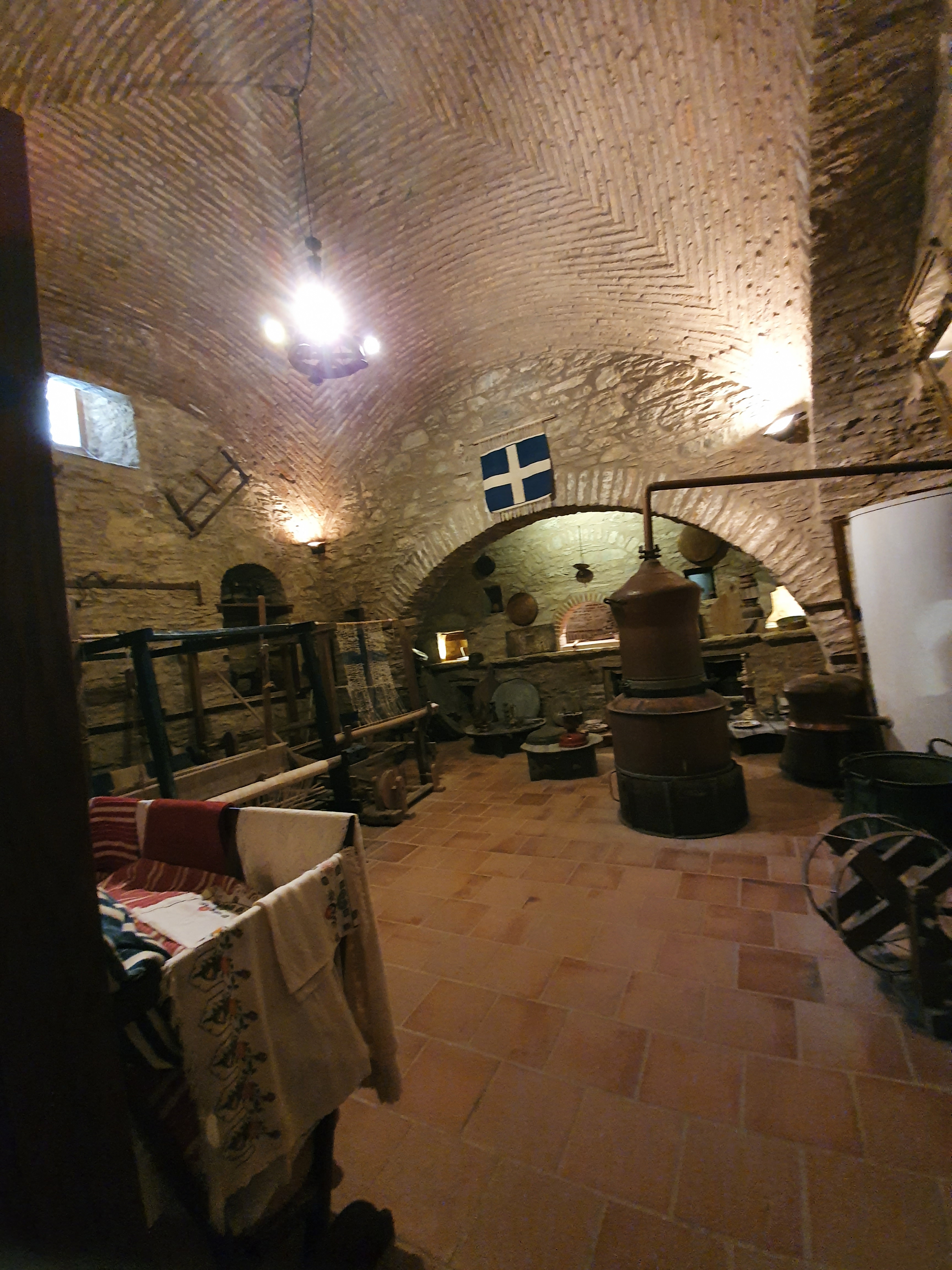






 lampmagician

You must be logged in to post a comment.