Honestly, I never envisioned myself writing a trilogy on this subject. Yet, here I am. While the first two entries were brief updates on my situation, I feel compelled to elaborate further and shed more light on this occurrence. I cited a quote from Dr Jung on “change” as we recently upgraded our kitchen. To be frank, I usually resist change unless it’s necessary. I’m content with older things as long as they still work. Thus, I saw no reason to remodel our kitchen since it was still working properly.
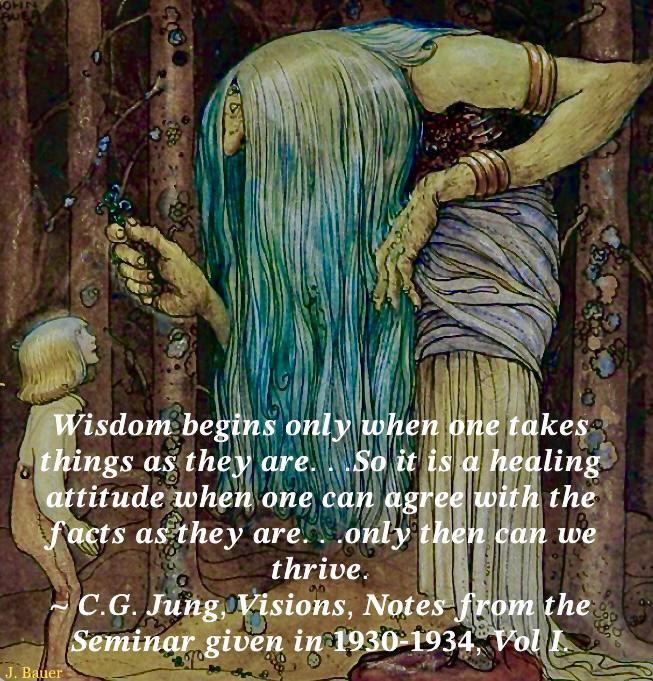
Of course, there is another quote from Jung about this subject which I admire as well:
With heartfelt thanks to Petra Glimmdall
Anyway, my adorable wife, though, has a different approach. She is not very patient and cannot tolerate things for too long. For example, our kitchen was almost thirty years old ( I must admit it is aged!), and she couldn’t stand it anymore. Being the boss most of the time, she took action, and I had to play the role of the working-class hero. 😎😉
Before ☝ Afterwards👇
I must acknowledge that all the efforts have paid off, and the outcome appears satisfactory, potentially lasting another 30 years!
As a follow-up, I would like to discuss the impact of mental exercises after engaging in physically demanding activities. Some individuals may not require extensive physical exertion to achieve this effect. Engaging in physical activity allows the mind, or more accurately, the soul, to relax. As a result, one may feel wholly drained with no creative thoughts flowing, but instead, a sense of inner peace. I believe this is valuable information to keep in mind.
We may have less money, but we are much happier having a brand-new kitchen. It feels like a well-deserved reward. 😅💖🙏
After that achievement, I’ll be kidnapped again the following weekend, including the week ahead, towards the North Sea, so you know! And I say goodbye to you with a two-chord song from my buddy fellow, John.
One of the most beautiful and sensitive tales ever written for children by one of the most sensitive authors in the world: Oscar Wilde. He was definitely different from others: unpredictable!
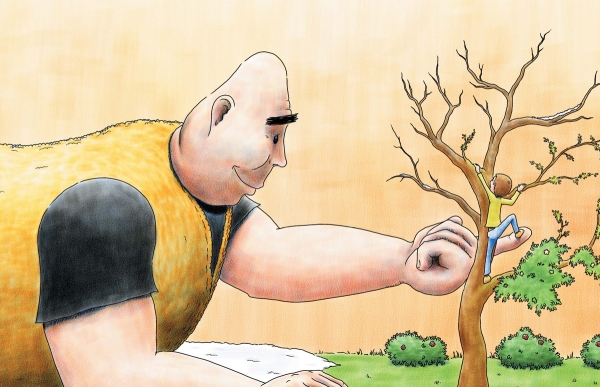
I’ve been coming across Oscar Wilde’s literary works and fairy tales quite often lately. I am pleased to present a captivating excerpt from one of their beautiful tales. The Selfish Giant; chapter three.
“Who hath dared to wound thee?” cried the Giant; “tell me that I may take my big sword and slay him.”
“Nay!” answered the child, “but these are the wounds of Love.”
“Who art thou?” said the Giant, and a strange awe fell on him, and he knelt before the little child.
And the child smiled at the Giant and said to him, “You let me play once in your garden; today, you shall come with me to my garden, which is Paradise.”
And when the children ran in that afternoon, they found the Giant lying dead under the tree, all covered with white blossoms.
Would you like to tackle the entire third chapter? Here it is, enjoy.
“The Selfish Giant”, Oscar Wilde
Then the Spring came, and all over the country, there were little blossoms and little birds. Only in the garden of the Selfish Giant, it was still Winter. The birds did not care to sing in it as there were no children, and the trees forgot to blossom. Once a beautiful flower put its head out from the grass, but when it saw the notice board, it was so sorry for the children that it slipped back into the ground again and went off to sleep. The only people who were pleased were the Snow and the Frost. “Spring has forgotten this garden,” they cried, “so we will live here all year round.” The Snow covered the grass with her great white cloak, and the Frost painted all the trees silver. Then they invited the North Wind to stay with them, and he came. He was wrapped in furs, and he roared all day about the garden and blew the chimney pots down. “This is a delightful spot,” he said, “we must ask the Hail on a visit.” So the Hail came. Every day for three hours, he rattled on the roof of the castle till he broke most of the slates, and then he ran round and round the garden as fast as he could go. He was dressed in grey, and his breath was like ice.
“I cannot understand why the Spring is so late in coming,” said the Selfish Giant as he sat at the window and looked out at his cold white garden; “I hope there will be a change in the weather.”
But the Spring never came, nor the Summer. The Autumn gave golden fruit to every garden, but to the Giant’s garden, she gave none. “He is too selfish,” she said. So it was always Winter there, and the North Wind, and the Hail, and the Frost, and the Snow danced about through the trees.
One morning the Giant was lying awake in bed when he heard some lovely music. It sounded so sweet to his ears that he thought it must be the King’s musicians passing by. It was really only a little linnet singing outside his window, but it was so long since he had heard a bird sing in his garden that it seemed to him to be the most beautiful music in the world. Then the Hail stopped dancing over his head, and the North Wind ceased roaring, and a delicious perfume came to him through the open casement. “I believe the Spring has come at last,” said the Giant, and he jumped out of bed and looked out.
What did he see?
He saw a most wonderful sight. Through a little hole in the wall, the children had crept in, and they were sitting in the branches of the trees. In every tree that he could see, there was a little child. And the trees were so glad to have the children back again that they had covered themselves with blossoms and were waving their arms gently above the children’s heads. The birds were flying about and twittering with delight, and the flowers were looking up through the green grass and laughing. It was a lovely scene; only in one corner, it was still Winter. It was the farthest corner of the garden, and in it was standing a little boy. He was so small that he could not reach up to the branches of the tree, and he was wandering all around it, crying bitterly. The poor tree was still quite covered with Frost and Snow, and the North Wind was blowing and roaring above it. “Climb up! Little boy,” said the Tree, and it bent its branches down as low as it could; but the boy was too tiny.
And the Giant’s heart melted as he looked out. “How selfish I have been!” he said; “now I know why the Spring would not come here. I will put that poor little boy on the top of the tree, and then I will knock down the wall, and my garden shall be the children’s playground forever and ever.” He was really very sorry for what he had done.
So he crept downstairs and opened the front door quite softly, and went out into the garden. But when the children saw him, they were so frightened that they all ran away, and the garden became Winter again. Only the little boy did not run, for his eyes were so full of tears that he did not see the Giant coming. And the Giant stole up behind him, took him gently in his hand, and put him up into the tree. And the tree broke at once into blossom, and the birds came and sang on it, and the little boy stretched out his two arms and flung them round the Giant’s neck, and kissed him. And the other children, when they saw that the Giant was no longer wicked, came running back, and the Spring came with them. “It is your garden now, little children,” said the Giant, and he took a great axe and knocked down the wall. And when the people were going to market at twelve o’clock, they found the Giant playing with the children in the most beautiful garden they had ever seen.
All day long, they played, and in the evening, they came to the Giant to bid him goodbye.
“But where is your little companion?” he said: “the boy I put into the tree.” The Giant loved him the best because he had kissed him.
“We don’t know,” answered the children; “he has gone away.”
“You must tell him to be sure and come here tomorrow,” said the Giant. But the children said they did not know where he lived and had never seen him before, and the Giant felt very sad.
Every afternoon, when school was over, the children came and played with the Giant. But the little boy whom the Giant loved was never seen again. The Giant was very kind to all the children, yet he longed for his first little friend and often spoke of him. “How I would like to see him!” he used to say.
Years went over, and the Giant grew very old and feeble. He could not play about any more, so he sat in a huge armchair, watched the children at their games, and admired his garden. “I have many beautiful flowers,” he said, “but the children are the most beautiful flowers of all.”
One winter morning, he looked out his window as he dressed. He did not hate the Winter now, for he knew it was merely the Spring asleep and the flowers were resting.
Suddenly he rubbed his eyes in wonder and looked and looked. It certainly was a marvellous sight. In the farthest corner of the garden was a tree entirely covered with lovely white blossoms. Its branches were all golden, and silver fruit hung down from them, and underneath it stood the little boy he had loved.
Downstairs ran the Giant in great joy and out into the garden. He hastened across the grass and came near to the child. And when he came pretty close, his face grew red with anger, and he said, “Who hath dared to wound thee?” For on the palms of the child’s hands were the prints of two nails, and the prints of two were on the little feet.
“Who hath dared to wound thee?” cried the Giant; “tell me that I may take my big sword and slay him.”
“Nay!” answered the child, “but these are the wounds of Love.”
“Who art thou?” said the Giant, and a strange awe fell on him, and he knelt before the little child.
And the child smiled at the Giant and said to him, “You let me play once in your garden; today, you shall come with me to my garden, which is Paradise.”
And when the children ran in that afternoon, they found the Giant lying dead under the tree, all covered with white blossoms.
We have completed several tasks in our kitchen renovation project so far. We removed the old cabinets and resolved any leftover issues, sealed all the gaps, painted the walls, and replaced the flooring with new laminate. We are eagerly anticipating the arrival of our new kitchen cabinets next week, and we expect them to be of better quality than the cabinets of the federal government.😉🤗🤟
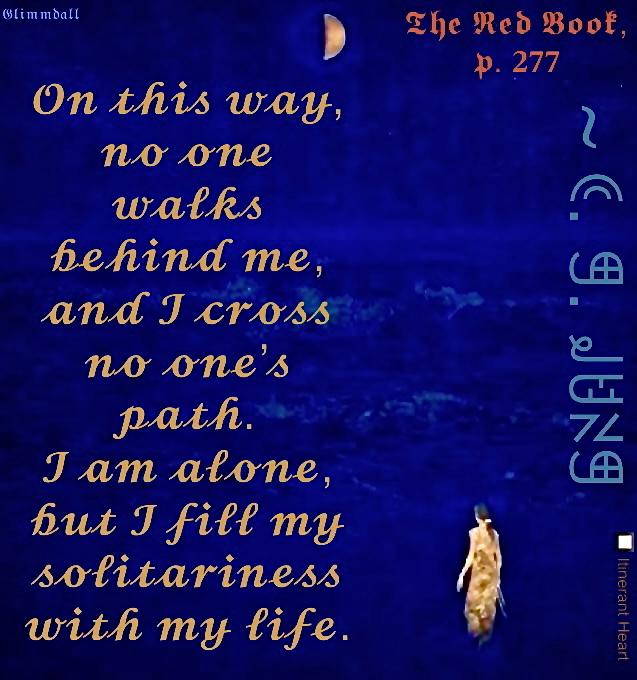
Honestly, if I had to choose a prophet and a holy book, I would go for Carl Gustav Jung and The Red Book, respectively. In The Red Book, Jung speaks about his encounter with the Self, his “Self”, and his journey through the desert, much like a prophet, accompanied by his ego but ultimately alone.
As I have shared of them here, Carl Jung, in his books, wrote his explanations in a way that could be understood, or at least he tried to do so. But in sharing his insights (as he did in The Red Book), Carl Jung aimed for clarity and understanding. However, his words carry a strong emotional resonance that may not be immediately apparent to some readers. It’s important to read between the lines and approach his ideas carefully rather than taking them at face value. (I have some examples on FB’s Jungian groups; I wonder what some people are doing there?!)
I want to share a section of this remarkable book. Let us strive to be mindful of our surroundings and reflect on how they align with our inner emotions.
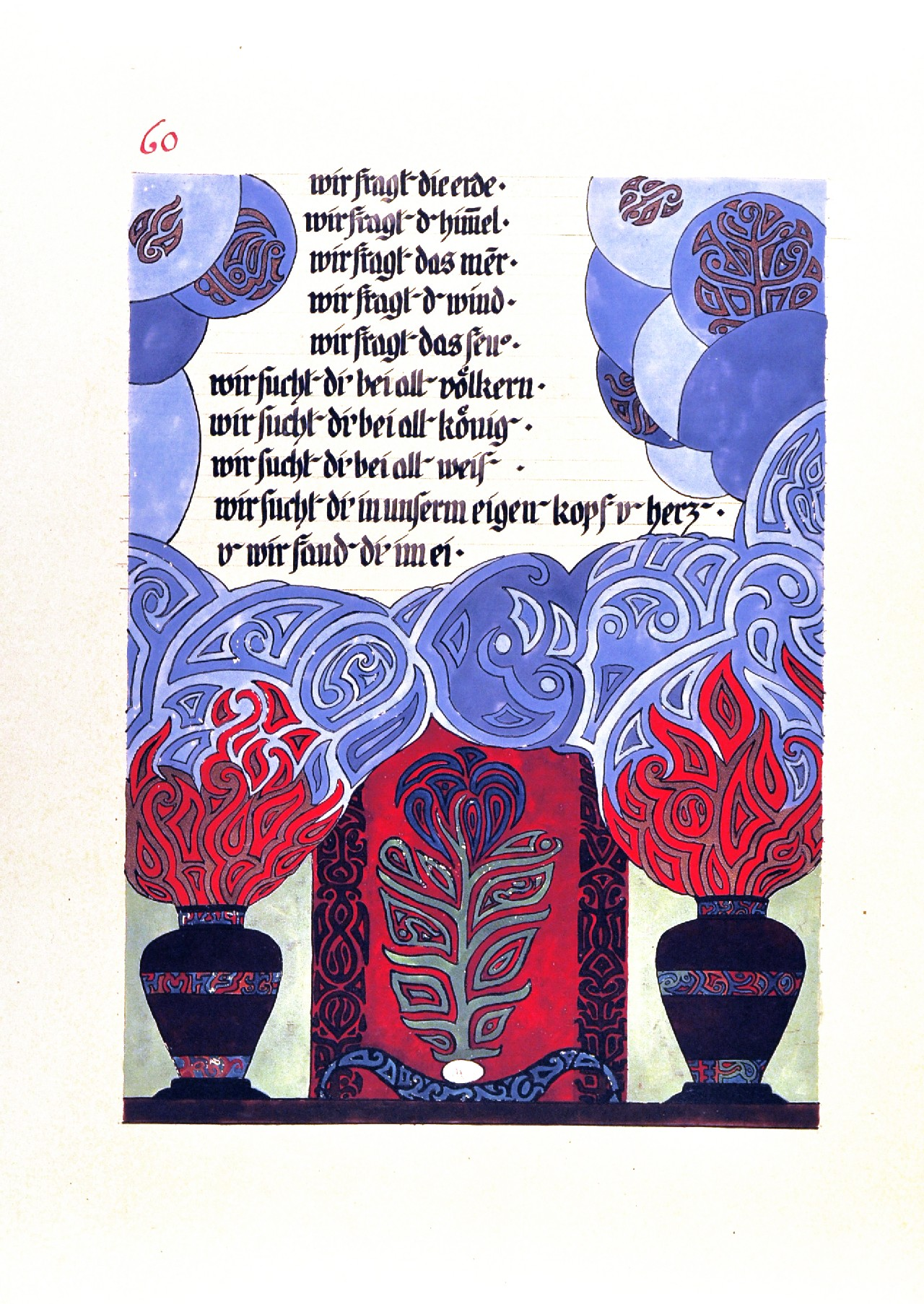
(The images are written in the original language)
We are miserable without you and wear out our songs. We spoke all the words that our hearts gave us. What else do you want? What else shall we fulfil for you? We open every door for you. We bent our knees where you want us to do. We go to all points of the compass according to your wish. We carry up what is below, and we turn what is above into what is below, as you commend. We give and take according to your wish. We wanted to turn rightbut go left, obedient to your sign. We rise, and we fall; we sway, and we remain still; we see, and we are blind; we hear, and we are deaf; we say yes and no, always hearing your word. We do not comprehend, and we live incomprehensibly. We do not love, and we live the unloved. And we evolve around ourselves again and comprehend. We love and live the loved, true to your law.
————————————————————————–
Come to us, we who are willing from our own will. Come to us, we who understand you from our own spirit. Come to us, we who will warm you at our own Fire. Come to us, we who will heal you with our own art. Come to us, we who will produce you out of our own body. Come child, to father and mother.
We ask Earth. We ask Heaven. We ask the Sea. We ask the Wind. We ask the Fire. We looked for you with all the people. We looked for you with all the kings. We looked for you with all the wise. We looked for you in our own heads and hearts. And we found you in the egg.
I have slain a precious human sacrifice for you, a youth and old man. I have cut my skin with a knife. I have sprinkled your altar with my own blood. I have banished my father and mother so that you can live with me. I turned my night into day and went about midday like a sleepwalker. I have overthrown all the Gods, broken the laws, eaten the impure. I have thrown down my sword and dressed in woman’s clothing. I shattered my firm castle and played like a child in the sand. I saw warriors form into line of battle, and I destroyed my suit of armour with a hammer. I planned my field and let the fruit decay. I made small everything that was great and made everything great that was small. I exchanged my furthest goal for the nearest, and so I am ready.
It has always been a mystery why the Egyptians painted their gods or pharaohs from the side, not the front. Although the whole face is more beautiful, maybe painting the entire face needs twice as much as painting the profile! Is it the reason why? I don’t think so.
Here is an article with the same question and may have some answers!
The characters presented on the Egyptian monuments are always aside. Although depicting people from the front was also possible in ancient Egypt, we only remember subjects in profile. Explanations. Everyone has in mind the drawings on the walls of the tombs of the pharaohs, on the wine jars or any other object accompanying the kings on their journey after death—humans, cats, horses, chariots, everyone aside, painted from their best side. First, Let’s correct what our memories tell us: the Egyptians did not draw only in profile. They also knew how to draw people and animals from the front and three-quarters. However, the vast majority of objects that have come down to us or brought up from the sands by Egyptologists are decorated with hieroglyphs, in other words writing from the time of the pharaohs. So-called pictorial writing is made of drawings where the subjects of a scene or a story are systematically represented in profile.
Then a problem arises because the drawing in profile gives less detail than a representation of the face; the Egyptians, therefore, developed bypass techniques to reveal elements and replace perspective.
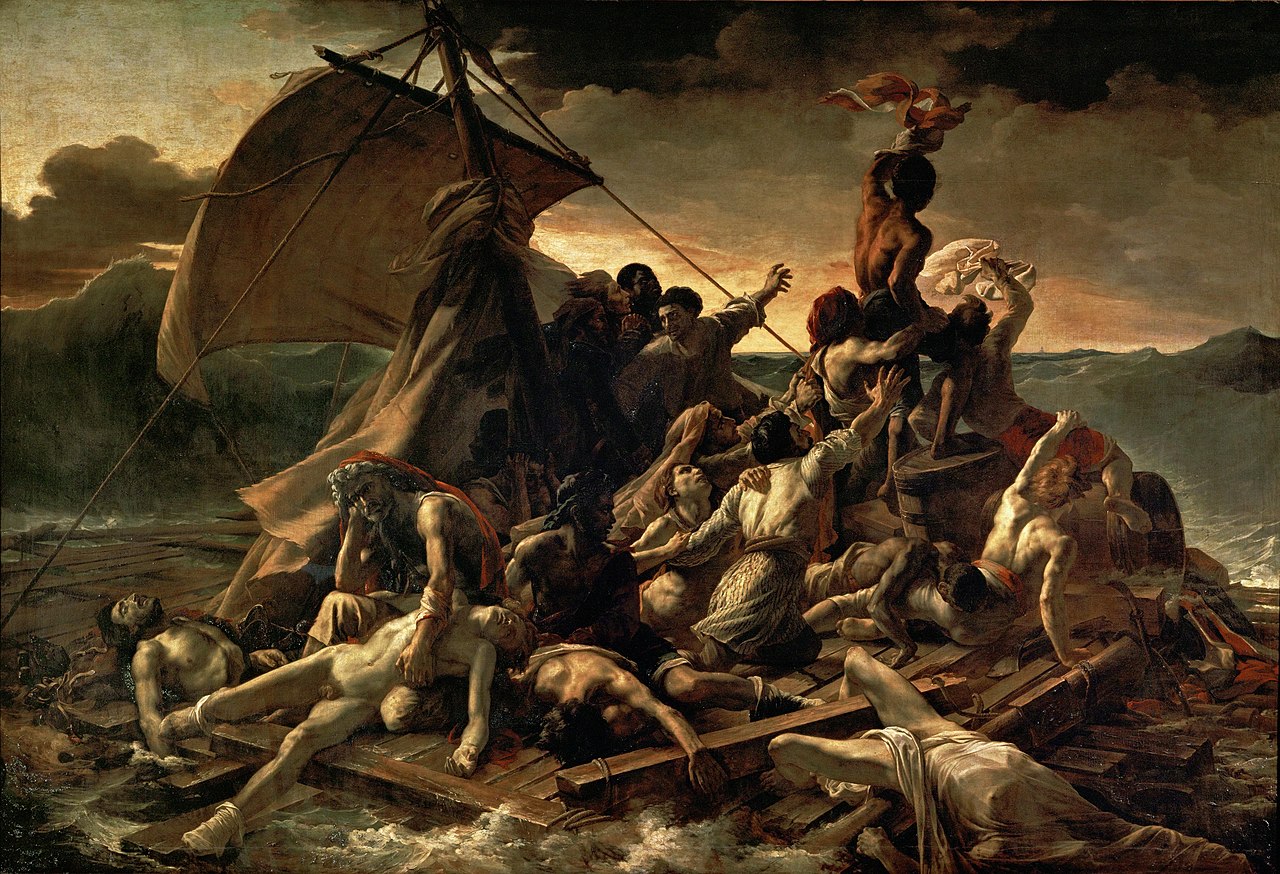
A vanishing point defines perspective; it is about showing depth, that the world we see is not flat, and that there are several planes, allowing space and time to evolve from one another. For example, if we observe the painting The Raft of the Medusa: the gaze sweeps over a rickety boat (which, well, enhanced by its sail is reminiscent of a pyramid), and then the eyes follow the characters from front to back, following an arm raised above all and end up falling on a boat far, far away. The story is told: the raft, the castaways, the hope of the ship. We travel through space and seize the time.
On a drawing executed from the side, perspective does not exist: Egyptologists then speak of respective. The Egyptians used this method not for lack of technique but because there was no space or time. With hieroglyphs, “there is no time, there is no space; we are everywhere and all the time” reminds us of Bénédicte Lhoyer. Egypt is eternal there. It is defined as such on objects adorned with hieroglyphs, perceived as such by the person who admires them.
In this world of respective immutable history, the Egyptians juxtaposed another technique to transcribe movement and time: elements are painted from the front on subjects from the side, thus making visible what was invisible. For example, an eye appears from the front on a face in profile; it can then be represented wide open to signify that the character is doing something. A torso will also be defined from the front, and the chest will be sideways, even if it means not completely respecting the human anatomy. The scribe then uses the limbs to signify always more things: a forward left leg translates function and social status, and showing the two legs together for a lady means that she does not need to work, so she is of high rank. The position of the arms, of what can be held in the hands, also has a specific meaning. A character can, like the boxes of a comic book, come back several times on the same wall or a series of papyri to describe each significant moment of the story of his life.
Let’s summarize. Why did the Egyptians always draw in profile?
To tell the truth, the Egyptians drew in profile the first intention. Then they added facial elements: the writing in hieroglyphs to transcribe the eternity of the Egyptian people, the details of the face to feed the story and bring context to the scene represented.
The question of Egyptian drawings is addressed in the program “Les p’titsboats” of June 04, 2023, asked by Jezabel, to whom Bénédicte Lhoyer, Doctor in Egyptology and lecturer at the École du Louvre, replied.
Experts also answer the following questions: Who says the name of metro stations, a person or a robot? Why do lions have manes? Or why is the red carpet red?
I look towards the horizon with a heavy, broken heart and eyes full of tears.
I “do try to” wish you all, my friends, a leisurely, happy Summer Solstice. I say I try because from one side, I love you all and know you all have honest heart and soul, but on the other side, my heart and soul is injured and very much disappointed by all the so-called democracy and human right that the West claim to have! Oh yes, I am talking about the situation in Iran; the Islamic regime brutally kills young girls and boys, and no severe reaction comes from the West. It might be declared that it is not so easy to stop this genocide, but joining in and helping them is surpassed! Joe Biden, the angel who won against Trump, the devil, merchandising with the Islamic regime and in Albania, the police attack a group of the Iranian opposition (The Mujahedin), and in France, the country of love and the protector of freedom, they stop the activity of this group. The government apologised to the Mullah’s regime in Belgium and invited them to make a new connection! What the Hell is going on?
I am not a member of this opposition group and do not agree with their theses, but as the great quote (by Voltaire or Evelyn Beatrice Hall) says: “I disapprove of what you say, but I will defend to the death your right to say it,”
Art by Cartoonist & designer Javad Takjoo
I know you do agree, more or less, with the corruption in most rulers in the world, but the trickster’s trick is that so far, one is ensured and confirmed in their own environment; any new activity is a considerable risk and better to avoid it! I can only say that we all are humans with the same rights, and if we don’t care about our fellow humans, we will be the next to be deceived!
In the end, I must be thankful, at least, for having this opportunity to open my heart to you, my lovely friends, and I wish you, with immense gratitude, a healthy and precious time. 🙏💖🙏
In that challenging year, just before the tsar summoned him, Pushkin wrote the poem “The Prophet”, in which he expands the romantic concept of the prophet to the literal, giving the poet the psyche and role of the Old Testament prophet as described by Isaiah:
The Prophet
Longing for spiritual springs, I dragged myself through desert sands … An angel with three pairs of wings Arrived to me at the cross of lands;
With fingers so light and slim He touched my eyes as in a dream: And opened my prophetic eyes Like the eyes of the eagle in surprise.
He touched my ears in movement, single, And they were filled with noise and jingle: I heard a shuddering of the heavens, And angels’ flight on Azure heights And creatures crawl in long sea nights, And the rustle of vines in distant valleys.
And he bent down to my chin, And he tore off my tongue of sin, In cheat and idle talks aroused, And with his hand in bloody specks He put the sting of wizard snakes Into my deadly stoned mouth. With his sharp sword, he cleaved my breast, And plucked my quivering heart out, And coals flamed with God’s behest, Into my gaping breast were ground.
Like dead, I lay on desert sands, And listening to God’s commands: ‘Arise, O prophet, hark and see, Be filled with utter My demands, And, going over Land and Sea, Burn with The Word the humane hearts.’ Translated by Yevgeny Bonver (edited by me!)
Dostoyevsky liked this poem very much and often recited it, emphasizing the last verse in particular.
“Like dead, I lay on desert sands, And listening to God’s commands: ‘Arise, O prophet, hark and see, Be filled with utter My demands, And, going over Land and Sea, Burn with The Word the humane hearts.”
There are many translations of this beautiful poem; here is another one, translated by Maurice Baring (1874-1945)
Addendum! Just for anyone’s interest, I will be very (unwillingly) busy next, not because of any vacation but for changing our 25 years old kitchen cabinets and the floor by “do-it-yourself”! I will try to be active here if any energy remains.
Here I add the original which it’s always the best, if one could read!
Пророк Александр Пушкин
Духовной жаждою томим, В пустыне мрачной я влачился, — И шестикрылый серафим На перепутье мне явился. Перстами легкими как сон Моих зениц коснулся он. Отверзлись вещие зеницы, Как у испуганной орлицы. Моих ушей коснулся он, — И их наполнил шум и звон: И внял я неба содроганье, И горний ангелов полет, И гад морских подводный ход, И дольней лозы прозябанье. И он к устам моим приник, И вырвал грешный мой язык, И празднословный и лукавый, И жало мудрыя змеи В уста замершие мои Вложил десницею кровавой. И он мне грудь рассек мечом, И сердце трепетное вынул, И угль, пылающий огнем, Во грудь отверстую водвинул. Как труп в пустыне я лежал, И бога глас ко мне воззвал: «Восстань, пророк, и виждь, и внемли, Исполнись волею моей, И, обходя моря и земли, Глаголом жги сердца людей».
It is never wrong if we become sceptical repeatedly, and instead of simply believing everything, think a little and do some research. The famous Russian prob gives good advice; Trust is good, Control is better! Of course, I don’t mean everything is a lie, but everything is not true, indeed! Now continuing on my topic (after parts one & two), I dare to confuse the everyday all-day life of some of us and may naughtily stir up some teasing. It will never be boring, I promise!
The world of Nexus! (an extra-dimensional realm of wish fulfilment that exists outside of normal space-time). An imaginary world that can be desirable for everyone. I got to know this world in one of the Star Trek movies: Star Trek; Beyond The Nexus. As you might have seen in this movie, there is a world or a dimension in which everything is possible; you must only wish for what you’d like to have. Here is everything and nothing real! Isn’t it a dream world? (I always ask myself if what we see is real at all?!)
Le Reve D’ania, Painting by Gyuri Lohmuller _ Artmajeur
These all can help us to extend our imagination and understand our environment.
In Sade’s work; discourse on Method; Rudiments for a Theory of Fantasy, the common characteristic of major libertine discourses is that the libertine expounds sexual theories or what might be better described as methodological recipes for jouissance (enjoyment).
Although, if we are aware of the world around us and think consciously, we have to be careful of what they want to feed us. By “they”, I mean those powerful behind the scenes who want to control everything.
The one who controls the food supply has the power to control the people, the one who controls the energy has the power to control the continents, and the one who controls the money has the power to control the entire world. Henry Kissinger
I have mentioned before that the safe way can only be made by “us” through all kinds of arts, writing, painting, making movies or music, to show our awakeness and help each other stay vigilant! I don’t want to scare anybody, but sometimes fear can awaken the perception, and it’s always better than to keep dumb!
Let’s have some examples and comparisons:
1984 is great at illustrating the warning behind government totalitarianism. The characters live in a world where the government monitors everything they do.
Brave New World is a similar warning from the standpoint of a Technocratic Utopian control.
Fahrenheit 451 explores a world in which ignorance is rampant and causes the decline of education to the point where the government begins to regulate reading.
What would be the 4th book to add to these other 3?
“Man sieht nur das, was man weiß.” You only see what you know!
Goethe is undoubtedly one of the great thinkers, poets and somehow psychoanalysts. In one of his collection of Goethe’s writings, published posthumously in 1833.: “Maximen und Reflexionen” (Maxims and Reflections), he dug into a very corner of human life.
An old man loses one of the most important rights of man: he is no longer judged by his peers. “Der Alte verliert eines der größten Menschenrechte: er wird nicht mehr von seines Gleichen beurteilt.”
There’s nothing worse than ignorance in action. “Es ist nichts schrecklicher als eine tätige Unwissenheit.” via; ThoughtCo.
And here are his four passages to help clear our minds towards life:
In this world, there is no right way; in vain if you are worthy and wise in vain, he wants you to be docile and humble!
* * *
I’m part of the part that was everything in the beginning I am part of the beings that give birth to the light.
* * *
What can your life give you now? Be deprived! Always get robbed! That is the eternal purpose ringing in everyone’s ears…
* * *
Are the poor a miracle amid wonders, they stumble, what dark, what invisible threshold tread their lost steps? Under the light and caress of heaven I feel the hell near… Hades.
By Petra Glimmdall 🙏💖
GOETHE, VIER PASSAGEN
In dieser Welt gibt es keinen richtigen Weg; vergebens, wenn du würdig und weise bist, vergebens, es möchte, dass du fügsam und demütig bist!
* * *
Ich bin Teil des Teils, der am Anfang alles war Ich gehöre zu den Wesen, die das Licht gebären.
* * *
Was kann dir dein Leben jetzt geben? Benachteiligt sein! immer beraubt werden! Das ist der ewige Zweck der allen in den Ohren klingt…
* * *
Sind die Armen ein Wunder? inmitten von Wundern straucheln sie, Was für eine Dunkelheit, was für eine unsichtbare Schwelle ihre verlorenen Schritte beschreiten? Unter dem Licht und der Liebkosung des Himmels Ich fühle mich verdammt nahe, Hades.
The image on top: File:JW Goethe by GM Kraus 1775 76.jpg – Wikimedia Commons














 lampmagician

You must be logged in to post a comment.