Gustave Doré’s Haunting Illustrations of Dante’s Divine Comedy

Standard

372 Γ— 499Images may be subject to copyright.

As I remember once in FB social media, there was a discussion about old lectures and I’d stated a many; among them the masterpiece by Dante’s Divine Comedy. There, a friend began to muck about this book as a liar book which leads the people in the wrong way! Sure, I must mention here again that I’m not a religious one at all and definitely never believe in such a paradise or hell as coming in the holy religious books but for me, the great old lectures have nothing to do with such Superstitions, as I’d call them. they are the imaginations by the great genius in their life that they share with us in a wonderful way.

now here is an amazing article about a meeting between two great Artists who made a Masterpiece much greater πŸ™‚

via http://www.openculture.com/ http://www.openculture.com/2019/02/gustave-dores-haunting-illustrations-of-dantes-divine-comedy.html

Inferno, Canto X:
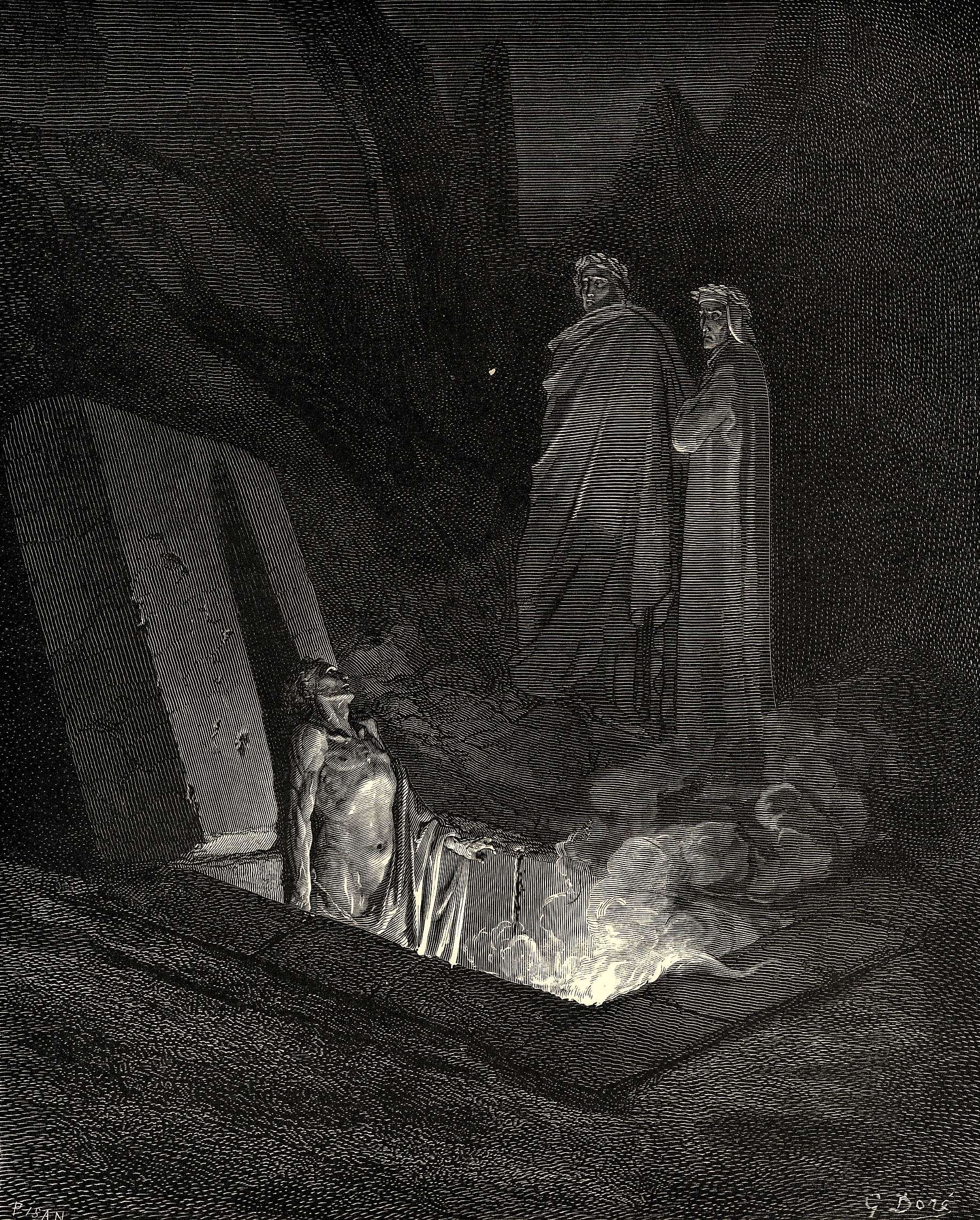
Many artists have attempted to illustrate Dante Alighieri’s epic poem the Divine Comedy, but none have made such an indelible stamp on our collective imagination as the Frenchman Gustave DorΓ©.

DorΓ© was 23 years old in 1855 when he first decided to create a series of engravings for a deluxe edition of Dante’s classic.  He was already the highest-paid illustrator in France, with popular editions of Rabelais and Balzac under his belt, but DorΓ© was unable to convince his publisher, Louis Hachette, to finance such an ambitious and expensive project. The young artist decided to pay the publishing costs for the first book himself. When the illustrated Inferno came out in 1861, it sold out fast. Hachette summoned DorΓ© back to his office with a telegram: “Success! Come quickly! I am an ass!”

Hachette published Purgatorio and Paradiso as a single volume in 1868. Since then, DorΓ©’s Divine Comedy has appeared in hundreds of editions. Although he went on to illustrate a great many other literary works, from the Bible to Edgar Allan Poe’s “The Raven,” DorΓ© is perhaps best remembered for his depictions of Dante. At The World of Dante, art historian Aida Audeh writes:

Characterized by an eclectic mix of Michelangelesque nudes, northern traditions of sublime landscape, and elements of popular culture, DorΓ©’s Dante illustrations were considered among his crowning achievements — a perfect match of the artist’s skill and the poet’s vivid visual imagination. As one critic wrote in 1861 upon publication of the illustrated Inferno: “we are inclined to believe that the conception and the interpretation come from the same source, that Dante and Gustave DorΓ© are communicating by occult and solemn conversations the secret of this Hell ploughed by their souls, travelled, explored by them in every sense.”

The scene above is from Canto X of the Inferno. Dante and his guide, Virgil, are passing through the Sixth Circle of Hell, in a place reserved for the souls of heretics, when they look down and see the imposing figure of Farinata Degli Uberti, a Tuscan nobleman who had agreed with Epicurus that the soul dies with the body, rising up from an open grave. In the translation by John Ciardi, Dante writes:

My eyes were fixed on him already. Erect,
he rose above the flame, great chest, great brow;
he seemed to hold all Hell in disrespect

Inferno, Canto XVI:

As Dante and Virgil prepare to leave Circle Seven, they are met by the fearsome figure of Geryon, Monster of Fraud. Virgil arranges for Geryon to fly them down to Circle Eight. He climbs onto the monster’s back and instructs Dante to do the same.

Then he called out: “Now, Geryon, we are ready:
bear well in mind that he is living weight
and make your circles wide and your flight steady.”

As a small ship slides from beaching or its pier,
backward, backward — so that monster slipped
back from the rim. And when he had drawn clear

he swung about, and stretching out his tail
he worked it like an eel, and with his paws
he gathered in the air, while I turned pale.

Inferno, Canto XXXIV:

In the Ninth Circle of Hell, at the very centre of the Earth, Dante and Virgil encounter the gigantic figure of Satan. As Ciardi writes in his commentary:

He is fixed into the ice at the centre to which flow all the rivers of guilt; and as he beats his great wings as if to escape, their icy wind only freezes him more surely into the polluted ice. In a grotesque parody of the Trinity, he has three faces, each a different colour, and in each mouth, he clamps a sinner whom he rips eternally with his teeth. Judas Iscariot is in the central mouth: Brutus and Cassius in the mouths on either side.

 Purgatorio, Canto II:

At dawn on Easter Sunday, Dante and Virgil have just emerged from Hell when they witness The Angel Boatman speeding a new group of souls to the shore of Purgatory.

Then as that bird of heaven closed the distance
between us, he grew brighter and yet brighter
until I could no longer bear the radiance,

and bowed my head. He steered straight for the shore,
his ship so light and swift it drew no water;
it did not seem to sail so much as soar.

Astern stood the great pilot of the Lord,
so fair his blessedness seemed written on him;
and more than a hundred souls were seated forward,

singing as if they raised a single voice
in exitu Israel de Aegypto.
Verse after verse they made the air rejoice.

The angel made the sign of the cross, and they
cast themselves, at his signal, to the shore.
Then, swiftly as he had come, he went away.

 Purgatorio, Canto IV:
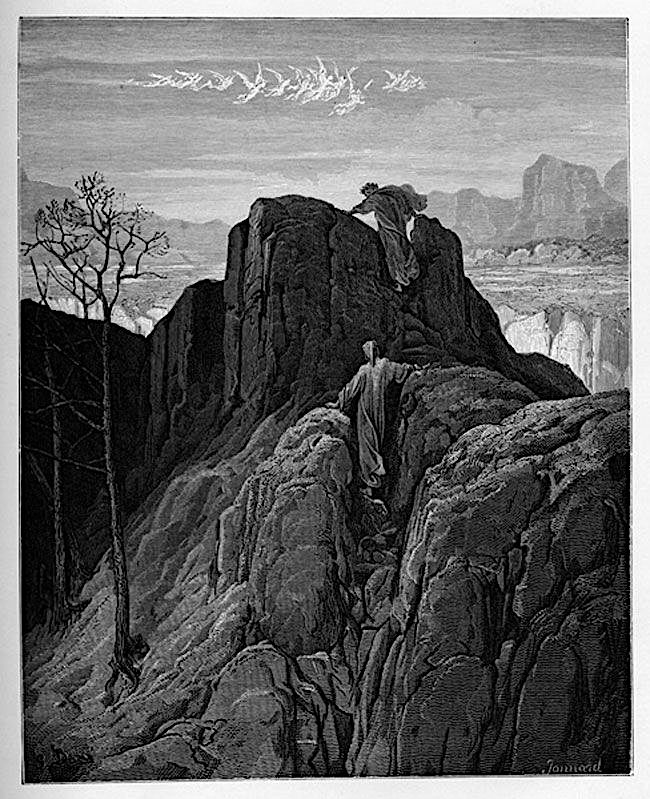
The poets begin their laborious climb up the Mount of Purgatory. Partway up the steep path, Dante cries out to Virgil that he needs to rest.

The climb had sapped my last strength when I cried:
“Sweet Father, turn to me: unless you pause
I shall be left here on the mountainside!”

He pointed to a ledge a little ahead
that wound around the whole face of the slope.
“Pull yourself that much higher, my son,” he said.

His words so spurred me that I forced myself
to push on after him on hands and knees
until at last, my feet were on that shelf.

Purgatorio, Canto XXXI:
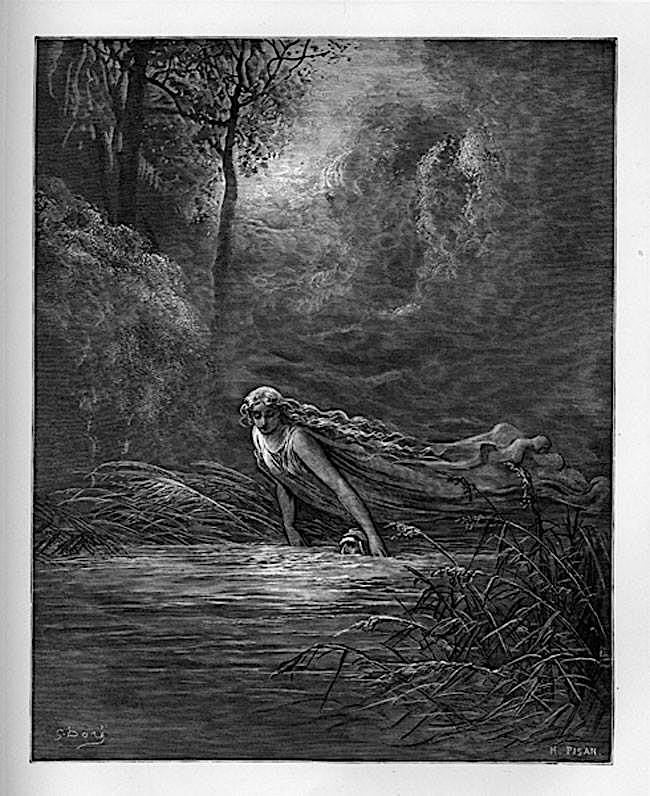
Having ascended at last to the Garden of Eden, Dante is immersed in the waters of the Lethe, the river of forgetfulness, and helped across by the maiden Matilda. He drinks from the water, which wipes away all memory of sin.

She had drawn me into the stream up to my throat,
and pulling me behind her, she sped on
over the water, light as any boat.

Nearing the sacred bank, I heard her say
in tones so sweet I cannot call them back,
much less describe them here: “Asperges me.”

Then the sweet lady took my head between
her open arms, and embracing me, she dipped me
and made me drink the waters that make clean.

Paradiso, Canto V:

In the Second Heaven, the Sphere of Mercury, Dante sees a multitude of glowing souls. In the translation by Allen Mandelbaum, he writes:

As in a fish pool that is calm and clear,
the fish draw close to anything that nears
from outside, it seems to be their fare,
such were the far more than a thousand splendors
I saw approaching us, and each declared:
“Here now is one who will increase our loves.”
And even as each shade approached, one saw,
because of the bright radiance, it set forth,
the joyousness with which that shade was filled.

Paradiso, Canto XXVIII:
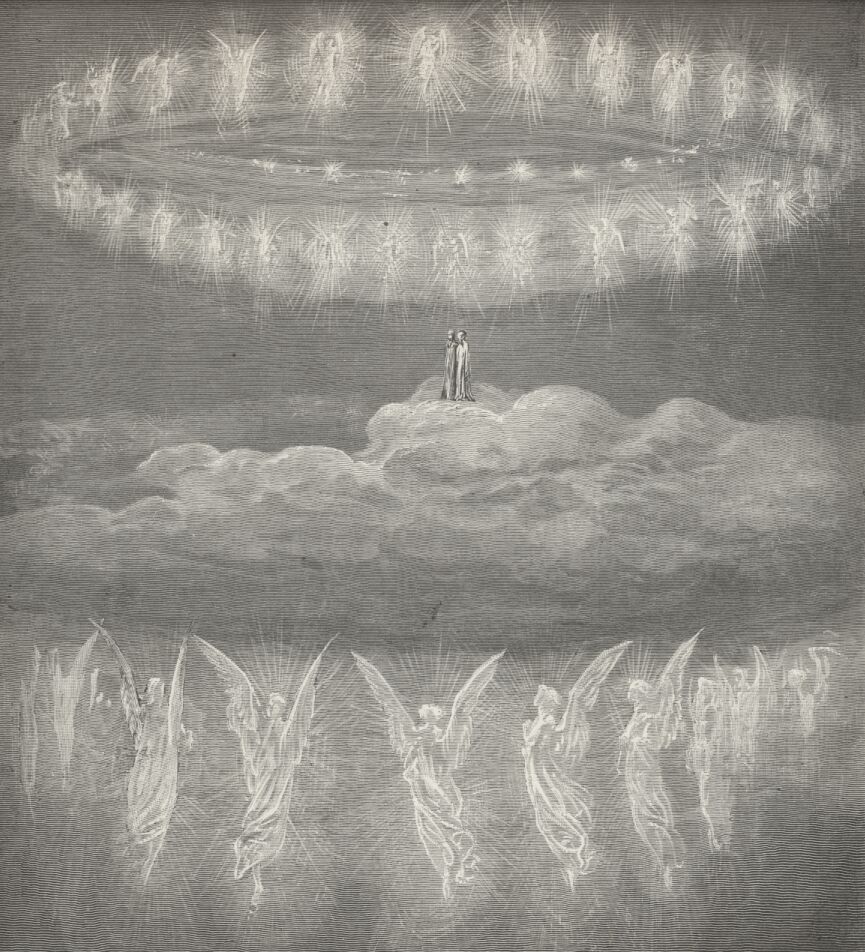
Upon reaching the Ninth Heaven, the Primum Mobile, Dante and his guide Beatrice look upon the sparkling circles of the heavenly host. (The Christian Beatrice, who personifies Divine Love, took over for the pagan Virgil, who personifies Reason, as Dante’s guide when he reached the summit of Purgatory.)

And when I turned and my own eyes were met
By what appears within that sphere whenever
one looks intently at its revolution,
I saw a point that sent forth so acute
a light, that anyone who faced the force
with which it blazed would have to shut his eyes,
and any star that, seen from the earth, would seem
to be the smallest, set beside that point,
as star conjoined with star, would seem a moon.
Around that point a ring of fire wheeled,
a ring perhaps as far from that point as
a halo from the star that colours it
when mist that forms the halo is most thick.
It wheeled so quickly that it would outstrip
the motion that most swiftly girds the world.

Paradiso, Canto XXXI:
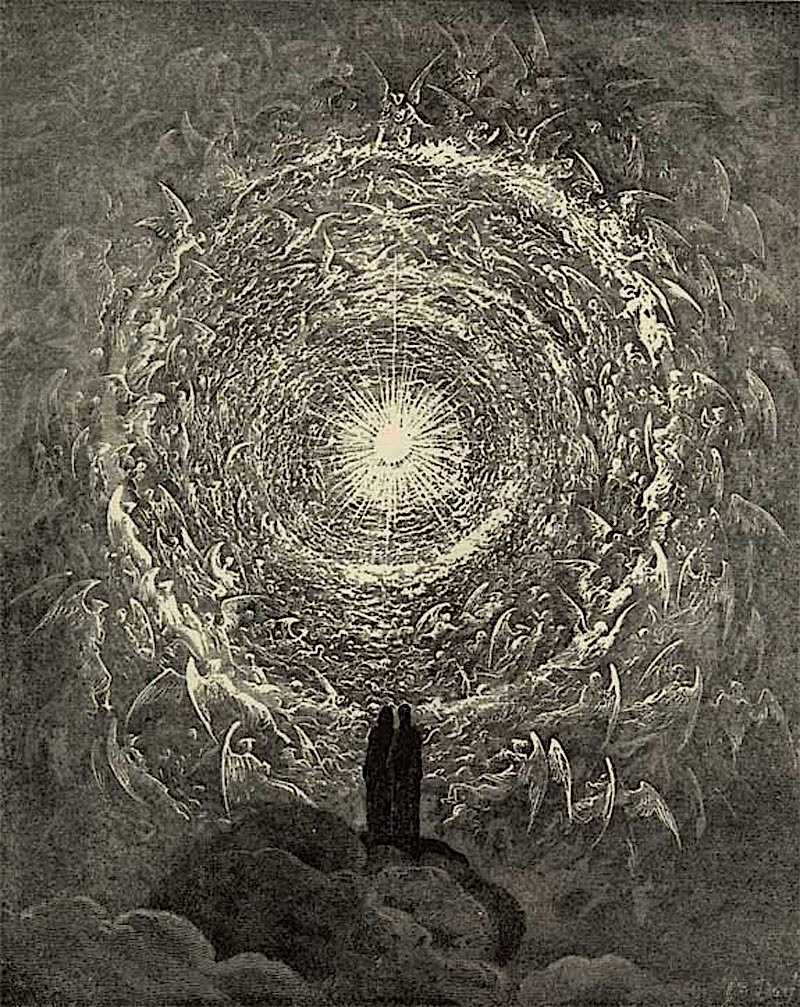
In the Empyrean, the highest heaven, Dante is shown the dwelling place of God. It appears in the form of an enormous rose, the petals of which house the souls of the faithful. Around the centre, angels fly like bees carrying the nectar of divine love.

So, in the shape of that white Rose, the holy
legion has shown to me — the host that Christ,
with His own blood, had taken as His bride.
The other host, which, flying, sees and sings
the glory of the One who draws its love,
and that goodness which granted it such glory,
just like a swarm of bees that, at one moment,
enters the flowers and, at another, turns
back to that labour which yields such sweet savour,
descended into that vast flower graced
with many petals, then again rose up
to the eternal dwelling of its love.

You can access a free edition of The Divine Comedy featuring DorΓ©’s illustrations at Project Gutenberg. A Yale course on reading Dante in translation appears in the Literature section of our collection of 750 Free Online Courses.

If you’d like to support Open Culture and our mission, please consider making a donation to our site. It’s hard to rely 100% on ads, and your contributions will help us provide the best free cultural and educational materials.

Follow Open Culture on Facebook and Twitter and share intelligent media with your friends. Or better yet, sign up for our daily email and get a daily dose of Open Culture in your inbox. 

Note: An earlier version of this post appeared on our site in October 2013.

Related Content:

An Illustrated and Interactive Dante’s Inferno: Explore a New Digital Companion to the Great 14th-Century Epic Poem

Visualizing Dante’s Hell: See Maps & Drawings of Dante’s Inferno from the Renaissance Through Today

Artists Illustrate Dante’s Divine Comedy Through the Ages: DorΓ©, Blake, Botticelli, MΕ“bius & More

A Digital Archive of the Earliest Illustrated Editions of Dante’s Divine Comedy 
(1487-1568)ο»Ώ

Alberto Martini’s Haunting Illustrations of Dante’s Divine Comedy (1901-1944)
Icelandic Folk Art:

Standard

I love it 😊

Nifty Buckles Folklore's avatarNifty Buckles (Valerie Hopkins) Author of enchanted tales, folklore & magic β€’ Once famously chased by vampire pumpkins. Brand Architect of The Darwind5 VAWT

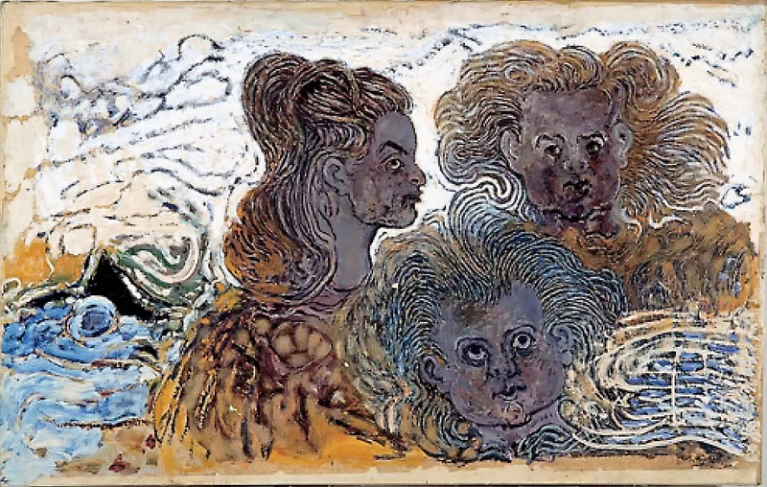
Famous Icelandic artist JΓ³hannes Sveinsson Kjarval (1885-1972). He is well known for his landscape paintings with an abstract or cubist touch with symbolist elements mixing myths and elves into the landscape.

Below 2,000 kr. banknote with Kjarval’s image on it.

2000 Icelandic Krona

Source & Reference:

*Saatchi Gallery online: https://www.saatchigallery.com/museums/museum-profile/Reykjavik+Art+Museum/615.html

*Featured image of The Sisters of Sapi, 1948 by JΓ³hannes Sveinsson Kjarval

View original post

Folklore: The Colour Green

Standard

Just Green, always πŸ™πŸ’–

Nifty Buckles Folklore's avatarNifty Buckles

β€œHope rules a land forever green” – Wordsworth

Spring is still a month away, after looking outside at a winter wonderland for the past few months, one’s heart sings for the sight of lush green plants and trees.

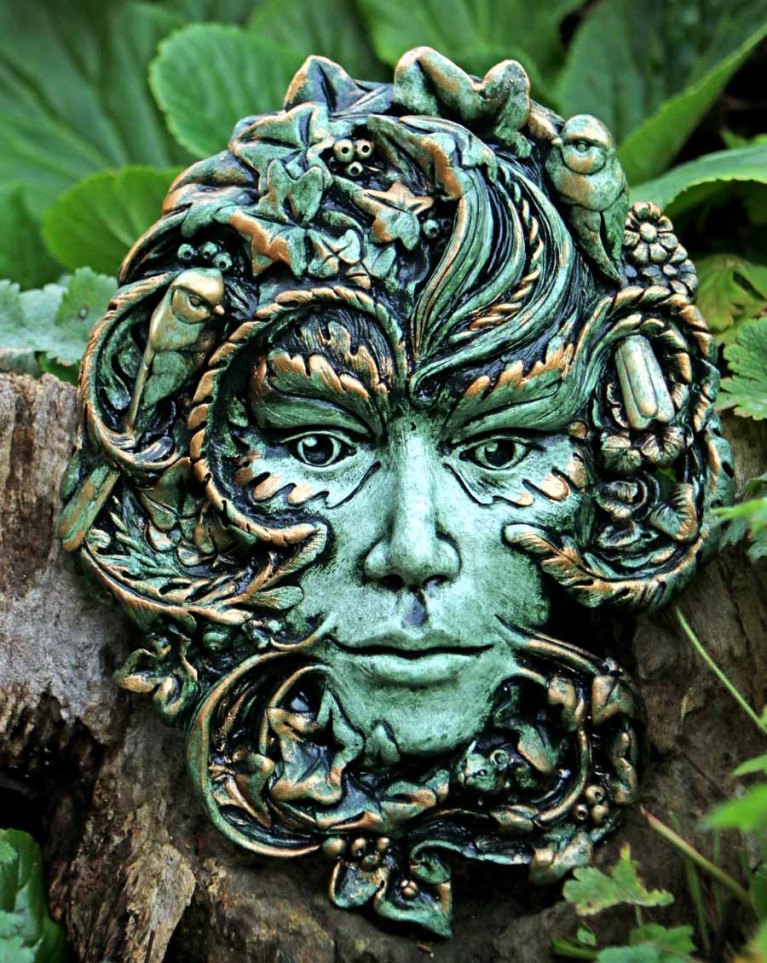
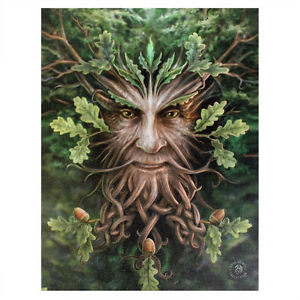
Green represents nature in all her glory, a symbolism of wisdom ie. Gaia mother earth awakens so doesΒ The Green Man.

Below:Β The Green Man β€˜Oak King’ wall canvas depicted by the artist Anne Stokes.

s-l300

In myth, the colour green reaches far back to the Ancient Egyptians, according to the historian Ellen Conroy wrote in her book β€œThe Symbolism of Colors” (1921). Thoth,Β  (Egyptian moon god) would lead the fresh souls of the dead to β€œa green hill of everlasting life and eternal wisdom.” Sounds peaceful, does it not? Osiris ruler of the underworld was depicted with a green face by the Ancient Egyptians. The ancient Druids wore green robes…

View original post 618 more words

Midnight tango

Standard

yassie's avataryaskhan

  • Let’s
  • Tango
  • In stardust
  • Where twilight’s flame Soaks breath in ambrosial rain
  • Novae sparkling in moon glow’s cosmic tint
  • Souls exploding
  • Into love’s
  • Ardent glow
  • As
  • Stars ink
  • Silken lines
  • Eclipsing night’s
  • Interlude touch push pause dark to light
  • Like runes embellishing passing milestones
  • Vignette keynotes
  • Become songs
  • That ring
  • True.
  • #tetracyt

    View original post

    Pegasus

    Standard

    yassie's avataryaskhan

    divine
    epynomous
    starry constellations
    carrying thunder, lightening
    renaissance of season, time
    springing
    Hippocrene's blue
    Mount Helicon's fountainhead
    quenching the muses' thirst;
    Nemesis of Narcissus.

    View original post

    NEWS OF BREXIT ISSUES REACHES THE FOREIGN OFFICE IN LONDON

    Standard

    mikesteeden's avatar- MIKE STEEDEN -

    rees-mogg2

    β€œI say Carruthers, I’ve heard tell Jacob is racist. What pray do you make of that my friend?”

    β€œWho the bleddy hell is Jay Cobb when he’s at home?”

    β€œI think you got the wrong end of the stick old chum, it’s Jacob Rees-Mogg who’s racist.”

    β€œGood Lord, so Rees-Mogg is aka Ray Cyst. Doesn’t surprise me, mind. I always knew he had a thing for a gal named Kath Licks, but to go undercover and adopt a dual identity using the name Ray Cyst, thus making it easier to covertly get his leg across as and when, I find astonishing. I pity his poor wife. He needs a sound horse-whipping in my book.”

    β€œJe ne comprends pas?”

    β€œKath Licks! Some Irish bint he bonks when the fancy takes. No one’s ever met the girl though, notwithstanding we all know what the two-timing devil is up to. Kath Licks this…

    View original post 470 more words

    What’s in a Name?

    Standard

    etinkerbell's avatare-Tinkerbell

    β€œWhat’s Montague? It is nor hand, nor foot,
    Nor arm, nor face, nor any other part
    Belonging to a man. O, be some other name.
    What’s in a name? That which we call a rose
    By any other name would smell as sweet;
    So Romeo would, were he not Romeo call’d,
    Retain that dear perfection which he owes
    Without that title..” (Romeo and Juliet. Act 2, Scene 2)

    Dazzled by the darts of love, Juliet speculates on the nature of names. Names are immaterial, yet, they can become insurmountable obstacles. They cannot be touched or seen, yet, they belong to a man and may mark his fate, even if, of course, they cannot change his essence, whatever it may be. Therefore, names matter. If if weren’t so, my mother wouldn’t have opposed so strongly to the one which was destined to me: Rosaria. I should have been named after my…

    View original post 624 more words

    Motion Picture industry fails ancient world

    Standard

    cav12's avatarLuciana Cavallaro

    I love to write, create scenes, characters, storylines, and plotting what’s going to happen, but I also enjoy good movies. It may be a surprise to you that I am a visual learner, given that I write. However, this article is not about my writing style. I am disappointed by the lack of decent movies centred on our historical past, and I don’t mean the 20th Century or even going back 600 years. I am referring to flicks that reflect the ancient past.

    once-upon-a-time-719174_640

    View original post 461 more words

    The Song of Love & Torcher

    Standard

    And then I confess that I tortured the dress that you wore for the world to look through.

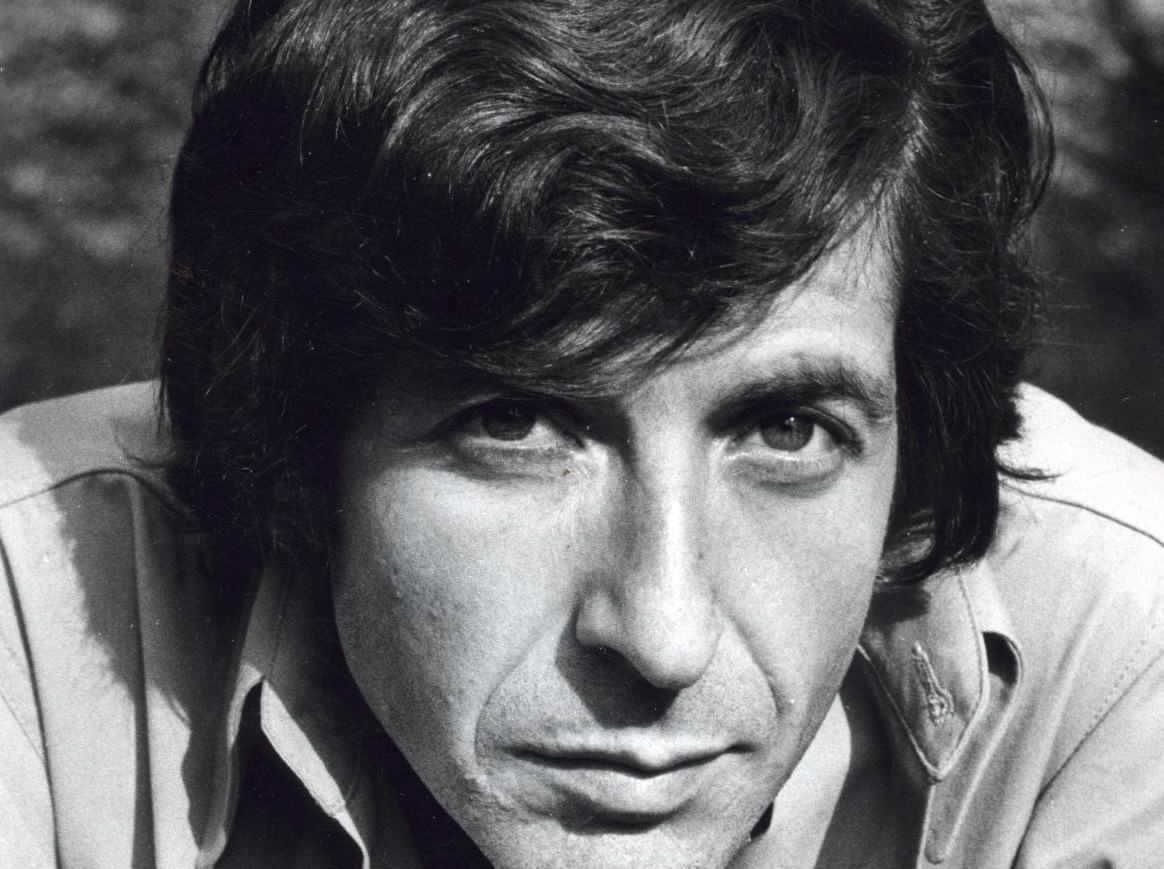
    To be honest; I must thank MIKE STEEDEN for his wonderful works which mostly have a touch of Leonard Cohen, to learn me, learn me to remember one of my favourite songwriters and poet of my youth. He came to us; my brother and me, in the early seventies when we were in our most melancholic time in Tehran, Iran those days and were trying to separate us from the society, the society in which you’ve got the feeling that you’ve never belonged and it’s sad! and the only way to escape was the help with drugs. one friend, a professional bassist, came in an evening of a cold winter day and showed us his new discovery which was “the songs of love and hate” by L. Cohen.

    I’ve put the vinyl record on the gramophone and it began with the song; Avalanche


    Well, I stepped into an avalanche,
    It covered up my soul;
    When I am not this hunchback that you see,
    I sleep beneath the golden hill.
    You who wish to conquer pain,
    You must learn, learn to serve me well.

    Anyway, it was the beginning of a long friendship. But now I wanted to tell about a song by him which is not so current by some people who know Cohen but not aware of this of: “One of Us Cannot Be Wrong”


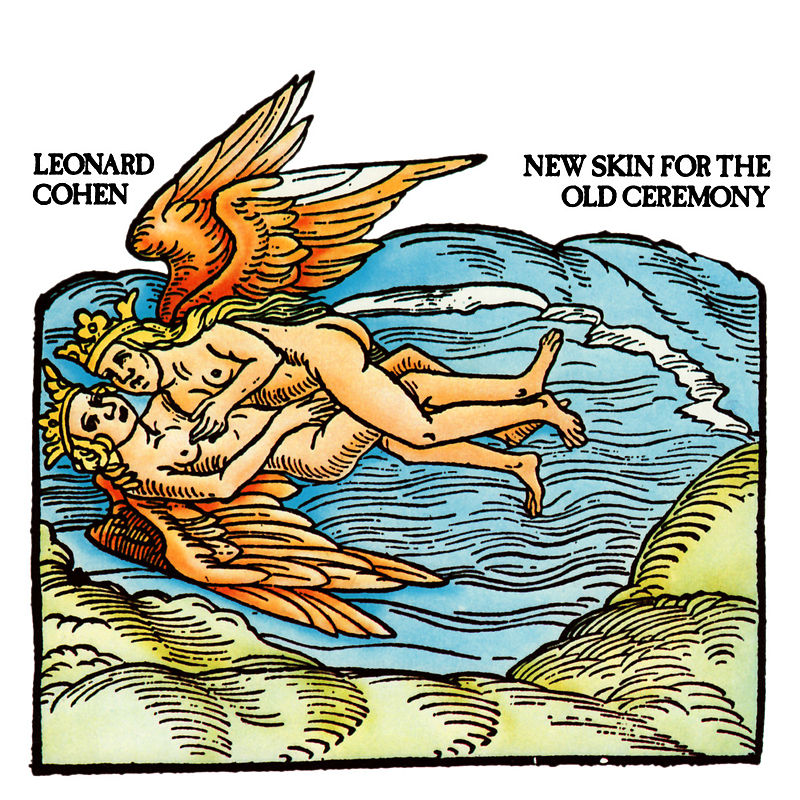
     “New Skin for the Old Ceremony” 

    it is the last song of the album; New Skin for the Old Ceremony if I do not mistake πŸ˜‰ and when one listens to it, can find a universe inside of it! I mean that’s Poem, you can fly in throughout the whole universe with never-ending. { oh please let me come into the storm }

    I suppose that he froze when the wind took your clothes and I guess he just never got warm. But you stand there so nice, in your blizzard of ice, oh please let me come into the storm.

    It is a fascinating art to write a poem, and make a song; I hope you’d enjoy it.
    just lets your soul fly with. ❀


    I lit a thin green candle, to make you jealous of me. But the room just filled up with mosquitos, they heard that my body was free. Then I took the dust of a long sleepless night and I put it in your little shoe. And then I confess that I tortured the dress that you wore for the world to look through. I showed my heart to the doctor: he said I just have to quit. Then he wrote himself a prescription, and your name was mentioned in it! Then he locked himself in a library shelf with the details of our honeymoon, and I hear from the nurse that he’s gotten much worse and his practice is all in a ruin. I heard of a saint who had loved you, so I studied all night in his school. He taught that the duty of lovers is to tarnish the golden rule. And just when I was sure that his teachings were pure he drowned himself in the pool. His body is gone but back here on the lawn his spirit continues to drool. An Eskimo showed me a movie he’d recently taken of you: the poor man could hardly stop shivering, his lips and his fingers were blue. I suppose that he froze when the wind took your clothes and I guess he just never got warm. But you stand there so nice, in your blizzard of ice, oh please let me come into the storm.

    And here is the Avalanche;

    Well, I stepped into an avalanche,
    It covered up my soul;
    When I am not this hunchback that you see,
    I sleep beneath the golden hill.
    You who wish to conquer pain,
    You must learn, learn to serve me well. You strike my side by accident
    As you go down for your gold.
    The cripple here that you clothe and feed
    Is neither starved nor cold;
    He does not ask for your company,
    Not at the centre, the centre of the world.When I am on a pedestal,
    You did not raise me there.
    Your laws do not compel me
    To kneel grotesque and bare.
    I myself am the pedestal
    For this ugly hump at which you stare. You who wish to conquer pain,
    You must learn what makes me kind;
    The crumbs of love that you offer me,
    They’re the crumbs I’ve left behind.
    Your pain is no credential here,
    It’s just the shadow, shadow of my wound. I have begun to long for you,
    I who have no greed
    I have begun to ask for you,
    I who have no need.
    You say you’ve gone away from me,
    But I can feel you when you breathe. Do not dress in those rags for me,
    I know you are not poor
    You don’t love me quite so fiercely now
    When you know that you are not sure,
    It is your turn, beloved,
    It is your flesh that I wear.


    Thank you again
    MIKE STEEDEN πŸ™πŸ™

    PS: You, the dear friends and followers who might look at my posting, may wonder why I post mostly in the weekend, it is because of my hard working all through the week, it is a kind of working in which you’d not have to use your brain, the job itself does not need any, but I can not without, therefore, I must suffer, but at the weekend I’m alive again!!

    If you really want to know my kind of job, you might watch Woody Allen’s Radio Days, then you can find the solution 🀣🀣