
Translated from volumes published by Lorenz Jung based on the edition “Gesammelte Werke” dtv.de The Symbols of Transformation (1952) and Aion (1950)

Here, I present another aspect of “Mana—Personality,” and honestly, I’m getting more and more excited to delve deeper and deeper into the subject! (The past episodes: 1, 2, 3, 4, 5, 6,)
In this part, Jung continues explaining the concept of Mana and its impact on our lives from childhood to adulthood. He describes our inner try of separation from our parents, the process of growing up within a religious context, and the acknowledgement of God. He also provides an excellent explanation of our attitudes and behaviours towards authority figures and those in power.

Individuation
The Mana Personality (P7)
By distinguishing the “I” from the archetype of the Mana Personality, one is now compelled – just as in the case of the anima – to make conscious those unconscious contents which are specific to the Mana Personality. Historically, the Mana Personality is always in possession of the secret name or of the special knowledge or the prerogative of a special action (quod licet Jovi, non licet bovi), in a word: of Individual Distinction. Becoming aware of the content that builds up the archetype of the Mana Personality means for the man the second and true liberation from the father, for the woman from the mother and thus the first feeling of her own individuality. This part of the process corresponds precisely to the intention of the concrete primitive initiations up to baptism, namely the separation from the >carnal< (or >animal<) parents and the rebirth >in novam infantiam<, into the state of immortality and spiritual childhood, as formulated by certain ancient mystery religions, including Christianity.
One may not identify with the Mana Personality, opting to view it as an extramundane ‘Father in Heaven’ embodying Absoluteness, which many find significant; if faith is achieved, this leads to an absolute dominance of the unconscious, causing the entire world to flow toward it.

(Absolute means “detached”. To declare God to be absolute is to place him outside of all connection with man. Man cannot act on him, and he cannot act on man. Such a God would be a completely irrelevant thing. One can, therefore, only reasonably speak of a God who is relative to humans as is to God. The Christian conception of God as a “Father in heaven” expresses the relativity of God in exquisite form. Quite apart from the fact that man can make out less about God than an ant can about the contents of the British Museum, this urge to declare God absolute arises only from the fear that God might become ‘psychological’. That would, of course, be dangerous. An absolute God, on the other hand, is of no concern to us at all, whereas a “psychological” God would be real. This God could reach man. The Church seems to be a magical instrument to protect man from this eventuality, for it is said that “it is a fearful thing to fall into the hands of the living God”.)
The logical consequence of this is that only a miserable, inferior, useless and sin-laden bunch of people remains. As is well known, this solution has become a historical worldview. Since I am only moving on psychological ground here and have no inclination to dictate my eternal truths to the universe, I must critically note that if I push all the highest value onto the side of the unconscious and construct a summum bonum from it, I have found myself in the unpleasant position of also inventing a devil of equal weight and size who maintains the psychological balance of my summum bonum. But under no circumstances will my modesty allow me to identify myself with the devil. That would be too presumptuous and would also put me in unbearable opposition to my highest values. But I cannot afford that, given my moral deficit.
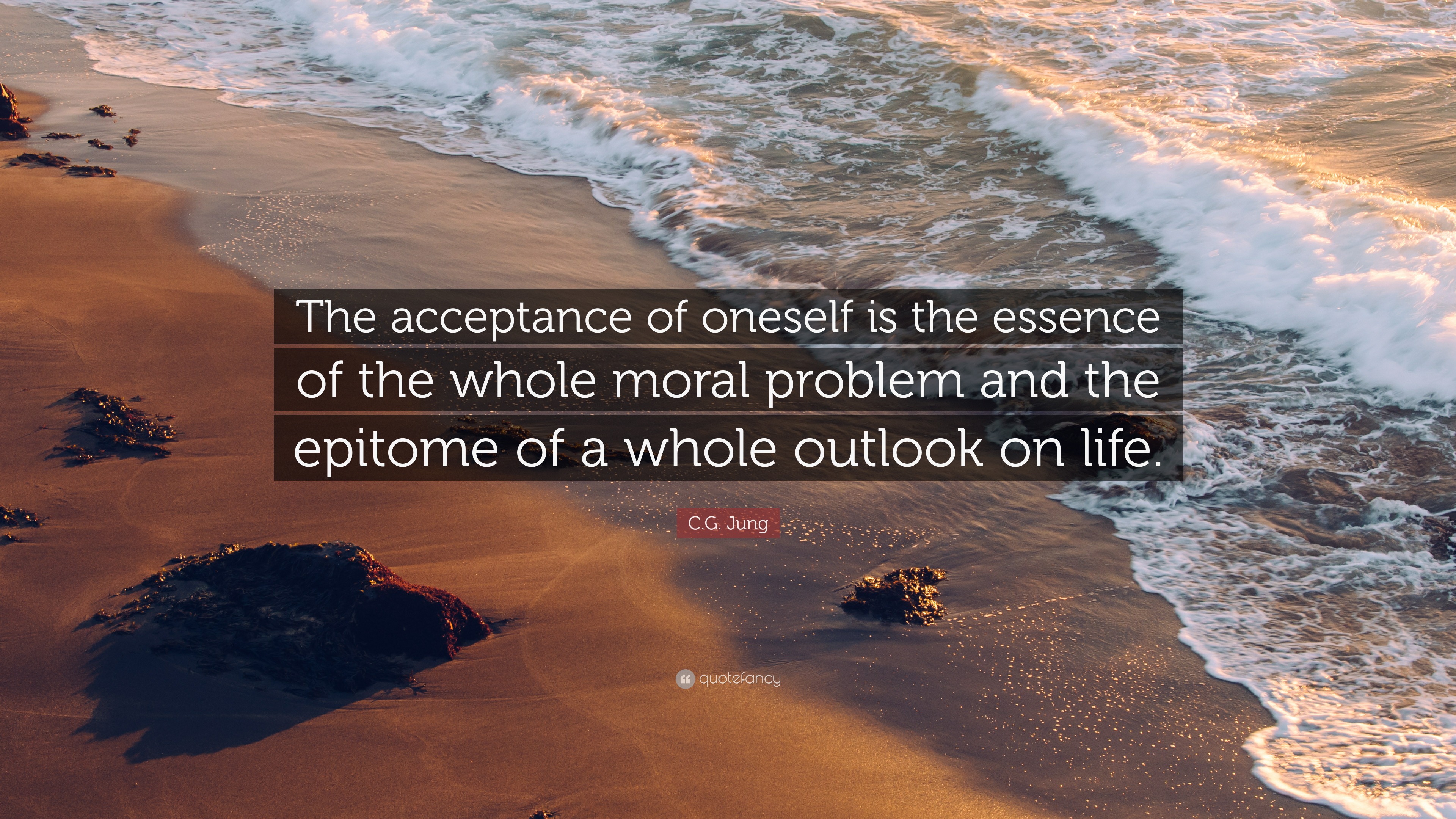
~C.G. Jung, Memories, Dreams, Reflections
Carl Jung Depth Psychology
For psychological reasons, I would, therefore, recommend not constructing a God from the archetype of the Mana Personality, that is, not making it concrete, because, in this way, I avoid projecting my values and non-values onto God and the devil, and, in this way I preserve my human dignity, my own specific weight, which I need so much in order not to become the unresisting plaything of unconscious powers. When you deal with the visible world, you have to be crazy to assume that you are the master of this world. Here, the principle of non-resistance to all superior factors is naturally followed up to a certain individual limit. At this point, even the most peaceful citizen becomes a bloody revolutionary. Our bowing to law and state is a recommendable model for our general attitude toward the collective unconscious. (>Give to Caesar what is Caesar’s, and to God what is God’s. <) Our bowing would not be difficult up to this point. But there are also factors in the world to which our conscience does not necessarily say yes, and we bow before them. Why? It is practically more beneficial than the opposite. Likewise, there are factors in the unconscious where we have to be nothing but clever. (>Do not resist evil. < >Make friends for yourselves in the huts of unjust mammon. < >The children of the world are cleverer than the children of light<, ergo: >Be wise as serpents and gentle as doves. <)
To be continued! 💖🙏🤗
 lampmagician
Here’s my Truth; God is psychological, I call her the Self. The Devil is psychological, I call her the Shadow. Other cultures, I note, use interchangeable names for their God/dess. Only as a young child did I believe that God was Absolute and existed ‘outside’ of myself.
From twenty to forty years of age, I planted my head firmly in the sand about all this. But thankfully, somewhere in midlife I slowly began to pull it out and look deeply within. There I found my Truth.
Aladin, thank you for continuing this brilliant series on the Mana personality. You make me think about many things. Today feels like a celebration to know that God/dess does exist, only for me (I respect all others different beliefs here) She exists within. Love and light, Deborah.
LikeLiked by 3 people
Your message has been arrived, and I am speechless! Thank you, my holly ghost, for helping me draw my head out of the sand (as I had kept it in for many years) to look within. I follow you and your words to understand and find myself on the right path.🙏💖
LikeLiked by 1 person
God is within each of us. Not absolute or separate from us.
LikeLiked by 2 people
Even if I find them a bit complex at times, I still appreciate this series of posts, dear Aladin
Thanks a lot for sharing
Happy Saturday
LikeLiked by 1 person
That is very kind of you, my dear Luisa. It needs time to sit in a quiet place and read Jung’s thesis, and you might find the right time, sometimes, somehow. Love to you. 🙏💖🥰🙏
LikeLiked by 1 person
Thanks so much for your thoughtful words, my friend.
Your friendship means a lot to me. 🙏
LikeLiked by 1 person
Beautiful sharing, Thank you, Love, nia
LikeLiked by 1 person
Thank you, lovey Nia. Love and peace.🤗🙏
LikeLiked by 1 person
I acknowledge god.
I don’t worship this god, or any god.
However, it is honest to say I conduct myself according to many things said in the bible, such as you have cited – “That I feed the hungry (through taxation and charity), that I forgive an insult (easy), that I love my enemy (or believe I honestly attempt too)” (I exclude in the name of Christ).
Yet, I see many who worship god, go to church or temple or mosque, who truly hate their enemy and will never ever considered trying not to.
Caesar is long dead, and god isn’t helping.
Where does that leave civilization?
I don’t understand all of what Jung says… but much.
Still, after reading this I say what I said in an attempt at intellectuality.
Thank you, Aladin!
💓🌸❤️❦❦🌹
LikeLiked by 1 person
Thank you, dear Resa. I am glad to encourage my readers to think more about their inner souls. You have selected some parts as examples, and I just want to add that Dr. Jung is actually questioning their meaning with these examples and quotes. He is always gentle with his readers, not to destroy their beliefs, but to help them ask themselves simple questions.
I am aware of your well-fortfilled intelligence. 🙏💖🤗
LikeLiked by 1 person
Yes! It also seems that Jung is not asking people to believe in what he is believing, but to question and understand their own beliefs.
🙏💖🤗xx
LikeLiked by 1 person
Here is what Jung said once about beliefs:
The word ‘belief’ is a difficult thing for me. I don’t believe. I must have a reason for a certain hypothesis. Either I know a thing, and then I know it – I don’t need to believe it.
😊🤗🖖🙏
LikeLiked by 1 person
Exactly my thoughts and sentiments.
Thank you Aladin, you’ve cleared that ip nicely!
✨💫✨💫✨💫✨💫✨💫
LikeLiked by 1 person
This is my favorite series of posts from you! I look forward to each one!
LikeLiked by 1 person
It is very kind of you, my friend, and I appreciate it much.🙏
LikeLiked by 1 person
You’re welcome!
LikeLiked by 1 person
🤙🙏
LikeLike