TOPSHOT – An Iranian woman raises her fist amid the smoke of tear gas at the University of Tehran during a protest driven by anger over economic problems, in the capital Tehran on December 30, 2017.
Students protested in a third day of demonstrations sparked by anger over Iran’s economic problems, videos on social media showed, but were outnumbered by counter-demonstrators. / AFP PHOTO / STR (Photo credit should read STR/AFP/Getty Images)
My dear friends, as I use and abuse 😉 my free time on Saturdays, trying to do my lovely work; writing, to tell you the story of a permanent fight for freedom which has been going on in certain countries since eternal date.
Actually a wonderful genius friend of mine (as I’m proud to mention it) yassyhttps://yassy66.wordpress.com/ brought me to this idea, or better to say she had thrown me in my past when I was in Iran and working as Journalist and an actor in theaters.
That is the question; where are the flowers gone?
It is surely not a usual knowing in the western countries in which, the human rights have been “at least” written and mentioned in their constitution, having any full comprehensive idea about what really happened to the people in the countries with a dictatorship regimes, and especially the thinker ones, the chosen ones?!
I can still remember about the Shah’s regime how my father was under observation because of his favour for Mosaddegh (the Prime minster in the ’50s who stood against the young Shah’s favorite’s position. https://en.wikipedia.org/wiki/Mohammad_Mosaddegh
And also about the so-called Tehran Spring in 1979 during the revolution. In that time my brother and me, we were working with the newspapers, he was writing and I was photographing.
It was a wonderful time in my life, you might not believe it; full of enthusiasm and excitement and creations.
In this time, thanks to the (at least) short time of freedom, we have known many artists in different categories, like movies. One of them was Costa Gavras, https://en.wikipedia.org/wiki/Costa-Gavras
A wonderful director and a great creator, and when we have watched his works, we have just thought; look! the bloody regime showed already the situation on our streets in a movie. It’s because, the Gavras’s movies based on the countries which were under pressure, as we felt in Iran exactly the same. But they never understood this and we have enjoyed it at least in the way of having sympathy.
Here I’d like to share with you my friends, two of his masterworks, of course with the music work of another master; Mikis Theodorakis https://en.wikipedia.org/wiki/Mikis_Theodorakis which goes under the skin I bet!
The first one which we had seen in the movie was the film; Z https://en.wikipedia.org/wiki/Z_(1969_film) and it describes exactly the situation in Iran on the very same date. We were the freedom seekers and the opposites were the regime’s hiring legionnaires.
I tell you; it will never be the same when, you have once experienced it.
Download this stock image: MONTY PYTHON Terry Jones, Graham Chapman, John Cleese, Eric Idle, Terry Gilliam and Michael Palin – K373GW from Alamy’s library of millions of high resolution stock… alamy.com
There’s hardly any doubt that these masters of satire are known for many. Their works were not only comedies for making the people laugh, but they have also lessons in their humourful satires which we’d learn a lot by them. like this scene;
I love them! And I love how they take their memorial ceremonies on each lost friends, like Graham Chapman who left the group and this Earth after singing this song; Christmas in Heaven in the movie; Meaning of Life. (in heaven every day is Christmas) 🙏💖
The British comedian Graham Chapman delighted in offending people. As a writer and actor with the legendary Monty Python troupe, he pushed against the boundaries of propriety and good taste. When his writing partner John Cleese proposed doing a sketch on a disgruntled man returning a defective toaster to a shop, Chapman thought: Broken toaster? Why not a dead parrot? And in one particularly outrageous sketch written by Chapman and Cleese in 1970, Chapman plays an undertaker and Cleese plays a customer who has just rung a bell at the front desk:
“What can I do for you, squire?” says Chapman.
“Um, well, I wonder if you can help me,” says Cleese. “You see, my mother has just died.”
“Ah, well, we can ‘elp you. We deal with stiffs,” says Chapman. “There are three things we can do with your mother. We can burn her, bury her, or dump her.”
“Dump her?”
“Dump her in the Thames.”
“What?”
“Oh, did you like her?”
“Yes!”
“Oh well, we won’t dump her, then,” says Chapman. “Well, what do you think? We can bury her or burn her.”
“Which would you recommend?”
“Well, they’re both nasty.”
From there, Chapman goes on to explain in the most graphic detail the unpleasant aspects of either choice before offering another option: cannibalism. At that point (in keeping with the script) outraged members of the studio audience rush onto the stage and put a stop to the sketch.
Chapman and Cleese had been close friends since their student days at Cambridge University, and when Chapman died of cancer at the age of 48 on October 4, 1989, Cleese was at his bedside. Out of respect for Chapman’s family, the members of Monty Python decided to stay away from his private funeral and avoid a media circus. Instead, they gathered for a memorial service on October 6, 1989 in the Great Hall at St. Bartholomew’s Hospital in London. When Cleese delivered his eulogy for Chapman, he recalled his friend’s irreverence: “Anything for him, but mindless good taste.” So Cleese did his best to make his old friend proud. His off-color but heartfelt eulogy that evening has become a part of Monty Python lore, and you can watch it above. To see a longer clip, with moving words from Michael Palin and a sing-along of “Always Look on the Bright Side of Life” led by Eric Idle, watch below:
“The serpent is the age-old representative of the lower worlds, of the belly with its contents and the intestines.” – Carl Jung
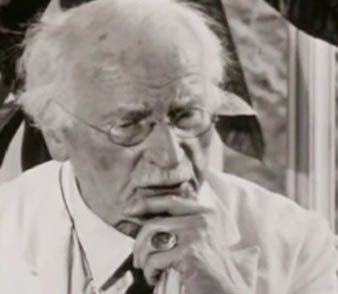
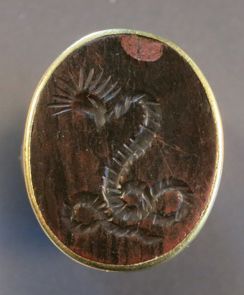
This picture below is the personal ring of the Great Modern Swiss Gnostic, Carl Jung. The image on his ring is of the deity known as Chnoubis.
Jung himself describes the ring in C.G. Jung Speaking: Interviews and Encounters. W.McGuire and R.F.C. Hull page 468:
“It is Egyptian. Here the serpent is carved, which symbolizes Christ. Above it, the face of a woman; below the number 8, which is the symbol of the Infinite, of the Labyrinth, and the Road to the Unconscious. I have changed one or two things on the ring so that the symbol will be Christian. All these symbols are absolutely alive within me, and each one of them creates a reaction within my soul.”
A close up of his ring can be found below.
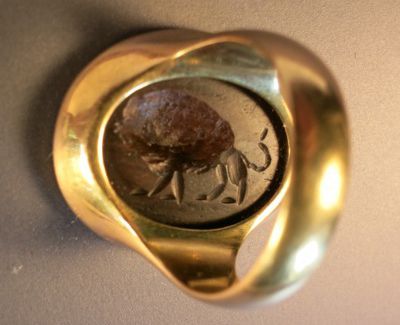
Here is a close up image of the front and back of Jung’s ring below. (Int-Private Coll._Ex-C. G. Jung_s.n.)
This image on the back appears to be of a dog.
Jung had commented on his ring in C.G. Jung, Visions;
“I have a Gnostic ring which is over two thousand years old-a symbol on the inside indicates that it is pre-Christian-and the snake engraved upon it is not hooded, it is more like the coluber natrix, the ordinary water snake which is found here as well as in more southern countries. In inland meadows it is grey, but near the water, it is a very elegant long black snake with yellow moon spots behind the ears, occasionally reaching a length of one meter fifty and quite thick.”
Karl Kerenyi said Jung, who wore the ring almost constantly for 35 years, wore it because he regarded himself as the pope of the gnostics. Barbara Hannah said he wore it to remind himself of personality number two.
“The serpent is an adversary and a symbol of enmity, but also a wise bridge that connects right and left through longing, much needed by our life.” (247)
“Why did I behave as if that serpent were my soul? Only, it seems, because my soul was a serpent…. Serpents are wise, and I wanted my serpent soul to communicate her wisdom to me.” (318) (This comment comes after a long dialogue in active imagination with a great iridescent snake coiled atop a red rock.)
“I have united with the serpent of the beyond. I have accepted everything beyond into myself.” (322)
“If I had not become like the serpent, the devil, the quintessence of everything serpentlike, would have held this bit of power over me. This would have given the devil a grip and he would have forced me to make a pact with him just as he also cunningly deceived Faust. But I forestalled him by uniting myself with the serpent, just as a man unites with a woman.” (322)
“The daimon of sexuality approaches our soul as a serpent.” (353)
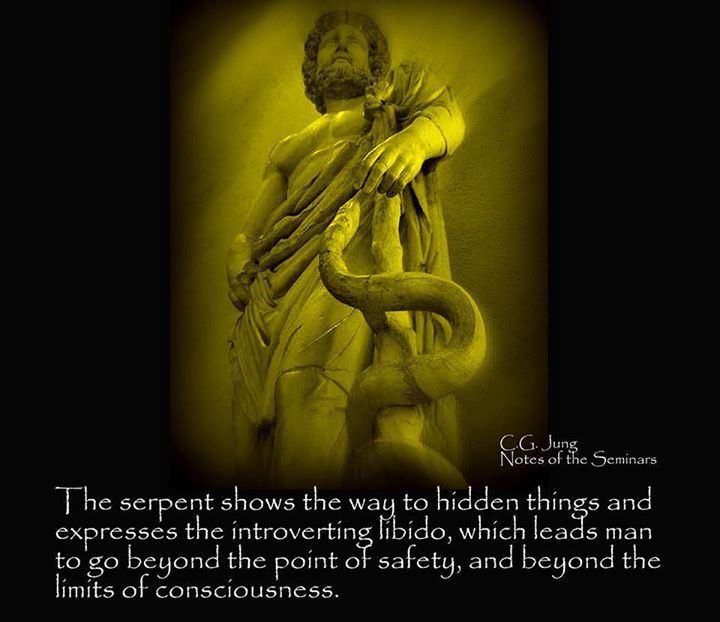
Perhaps the commonest dream symbol of transcendence is the snake, as represented by the therapeutic symbol of the Roman god of medicine Aesclepius, which has survived to modern times as a sign of the medical profession. This was originally a nonpoisonous tree snake; as we see it, coiled around the staff of the healing god, it seems to embody a kind of mediation between earth and heaven. — Carl Jung, Man and His Symbols, page 153
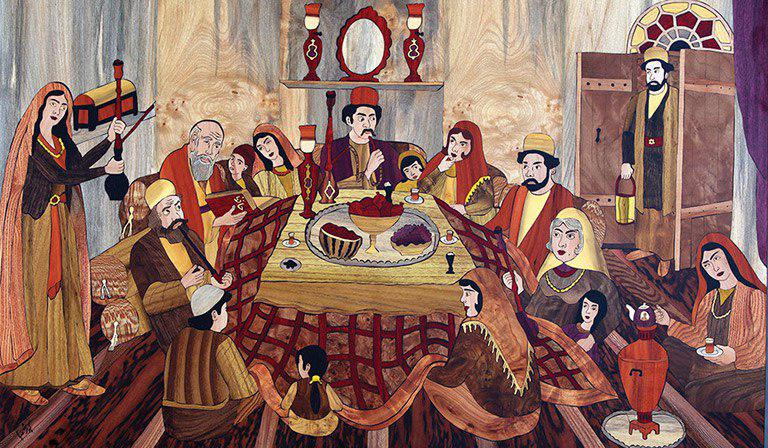
Yes, tonight is another Yalda-Night, the longest night in the year. The Persians celebrate this night as their culture; ( A Person’s culture and nothing to do with the Arabic Islam!) that is an old Persian ceremony.
It has ever always been a family’s ceremony in a completely form; from grandfather-mother to the youngest being.
Anyhow the oldest one of the family; mostly the grand mom, sits at the head of the community (Family) and as “she” scarf the skin of the nuts and pomegranates ( a hard work!) she began to narrate or recount the magnificent fairy tails, and it was always the best of my memories.
The main Mather is not the nuts and not the warm place in which we, all the family, gather together to get warm, it is to spend the longest night together, with having our imaginations circulate and spread. The Fairy-tails are actually real?; “let’s put the question; what is really real!!”
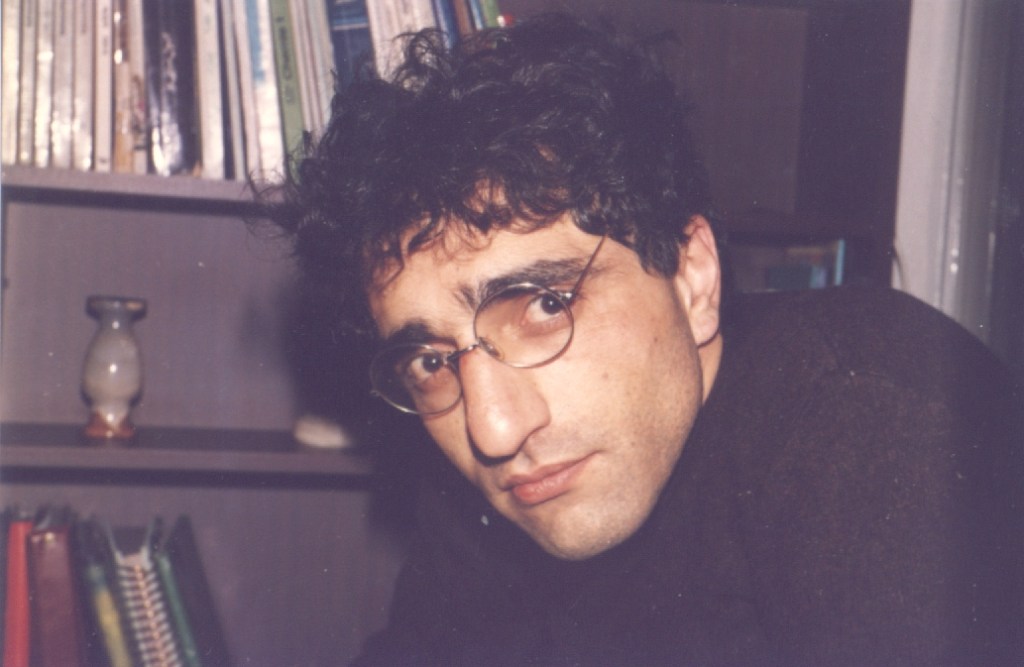
Hi my lovely friends, that’s Al birthday; his birthday was in 12, 9th but as it was on Monday, I couldn’t write an anniversary for it at this time, though, I think it is not so important; it’s his birthday month and I can write down some of my heart-telling memories about our being together on this Earth 🙂
Oh yes! his birth-star-sign is Sagittarius, and as I know some people who are born in this time, they’re somehow special, very proud and self-confident, and very intelligent.
I really don’t want to exaggerate but he was a genius in compare to other genius people I know, as a child he was a thoughtful child; it began the day after our father died in the very night and mother kept it secret and didn’t tell us! I was seven in age in that time and Al was nine.
she’d known his strength
Oh yes, she made a great mistake. She was a young woman at that time and as expected, very unskilled, therefore, anxious to do the right decision.
As I look back on this day; can just see a gloomy scene that after we’d woke up in that morning, mother told us that our father had been travelled to Europe, as he’d down sometimes, and sent us to our uncle’s house to stay a while, it was in Summertime’s holiday as my vague memories show me the scene of us; my cousins, Al and me laughingly playing in the big uncle’s swimming-pool but I’d never mention that Al knew already what happened. we were just twenty months apart but he was much older than me to catch the circumstances.
Father very left & Mother very right
I found it all afterwards, I was really a kid, but forty days after father’s death, I’ve coincidentally read an article in the magazine about the anniversary of my father’s (at first because he was a famous writer and secondly, in Islam, they celebrate the seventh and the fortieth day of one’s death) at once, I got to mother and asked her the matter, she had scolded me and said I’d shut up all! There one can imagine how I’d felt, though, she came to me after I got to a corner to shed tears and shed tears with me.
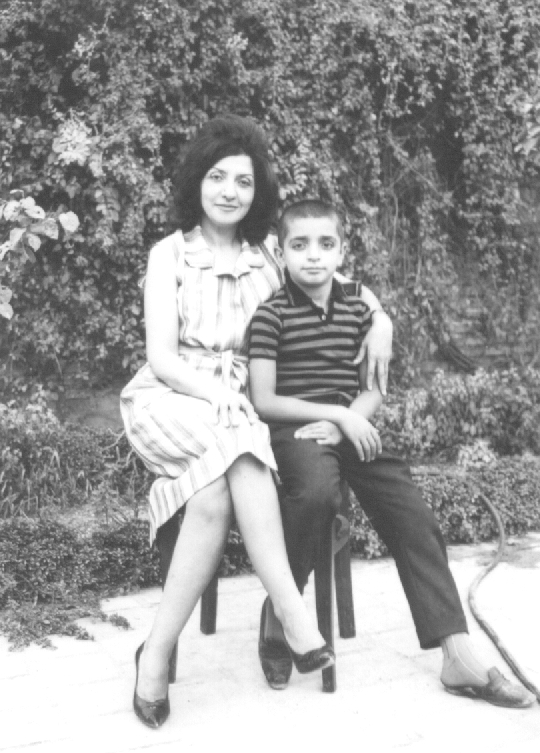
my mom & me some later
Yes, I’d a dramatic childhood but it’s another story!
Anyway, my brother Al was a genius no doubt, interestingly, after father’s leaving, he had begun to write, and became a writer, an unknown one, unfortunately, but he was an ingrained writer.
He’d helped me a lot to grow up, as I’m still doing it and thankful to have him all in my life.
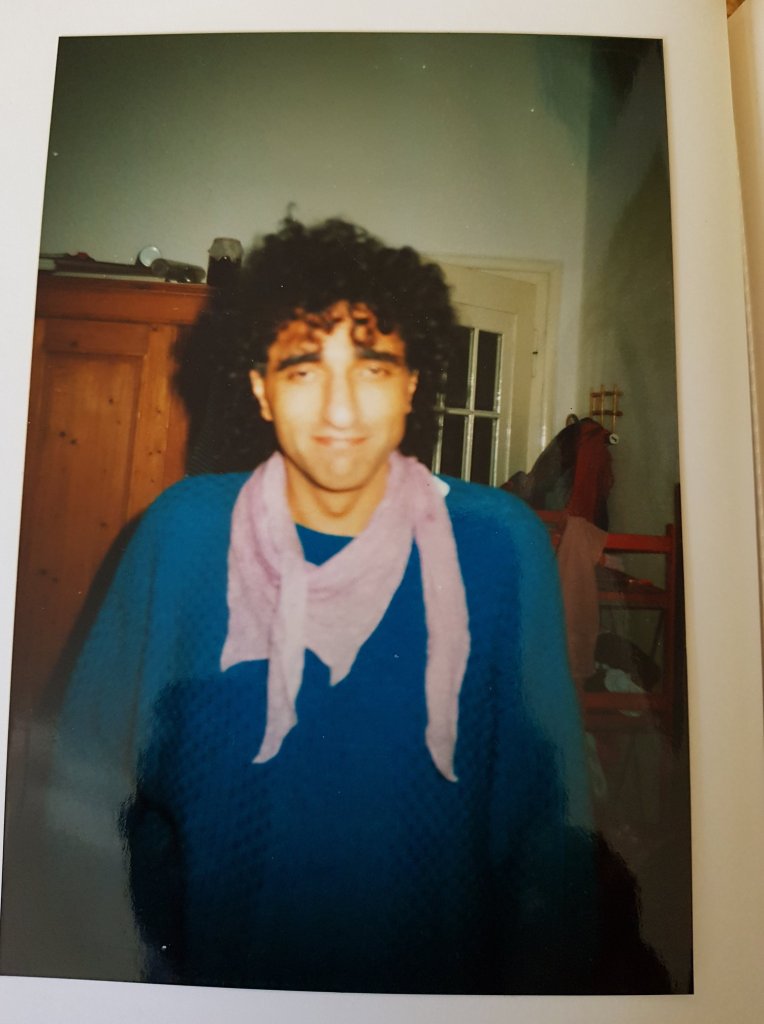
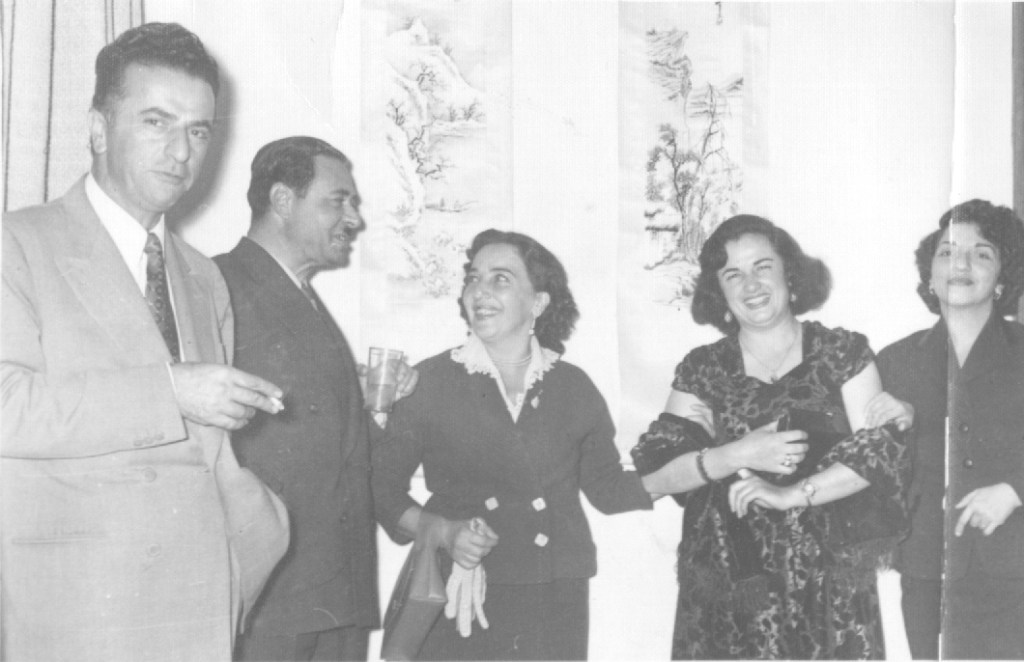
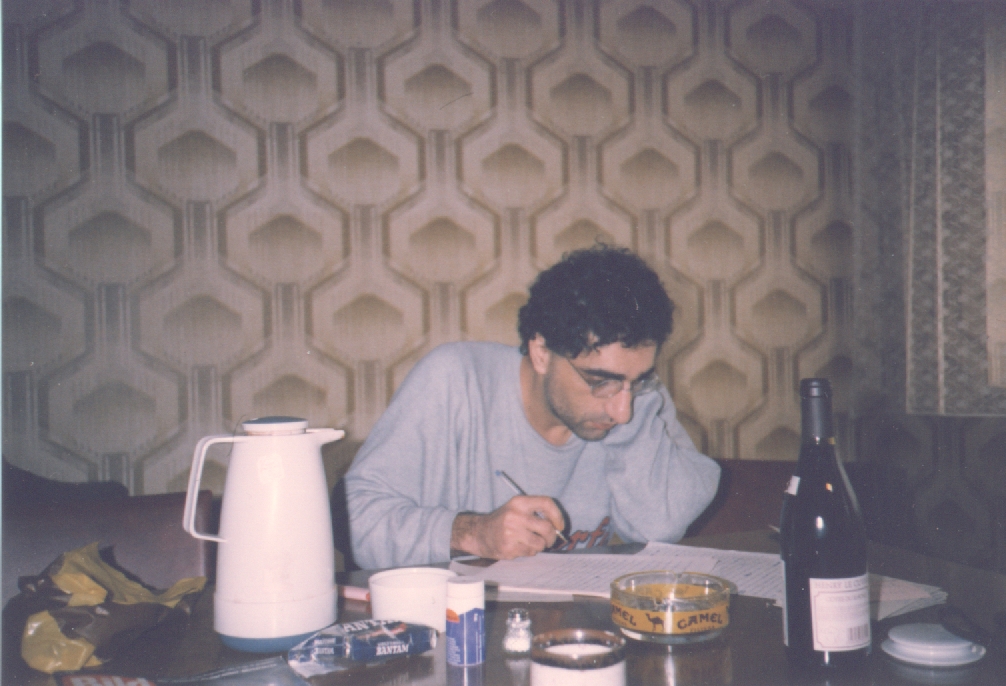
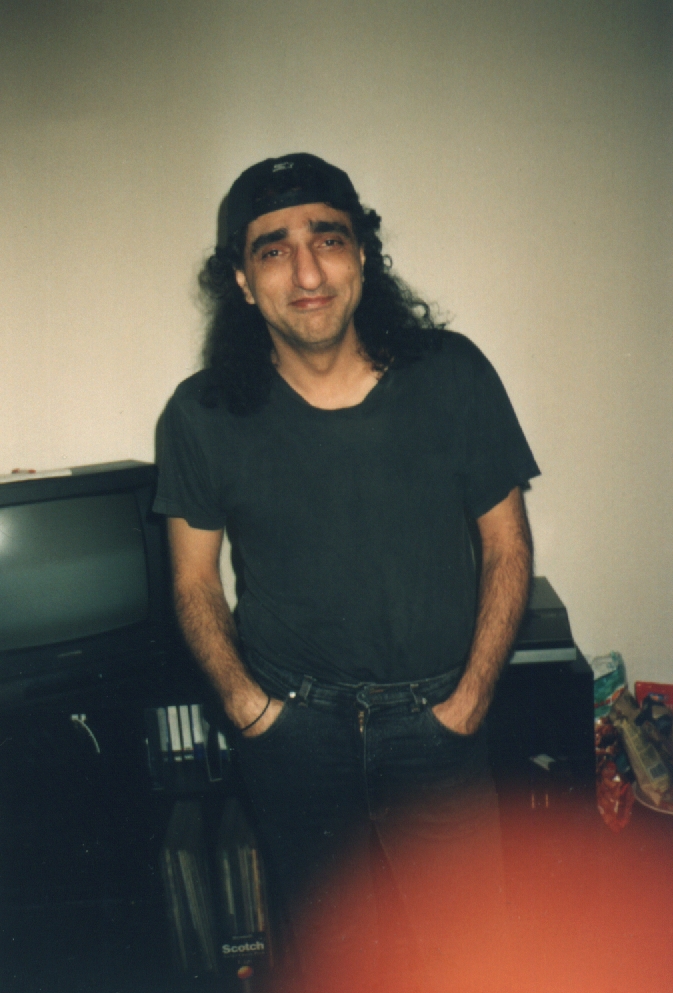
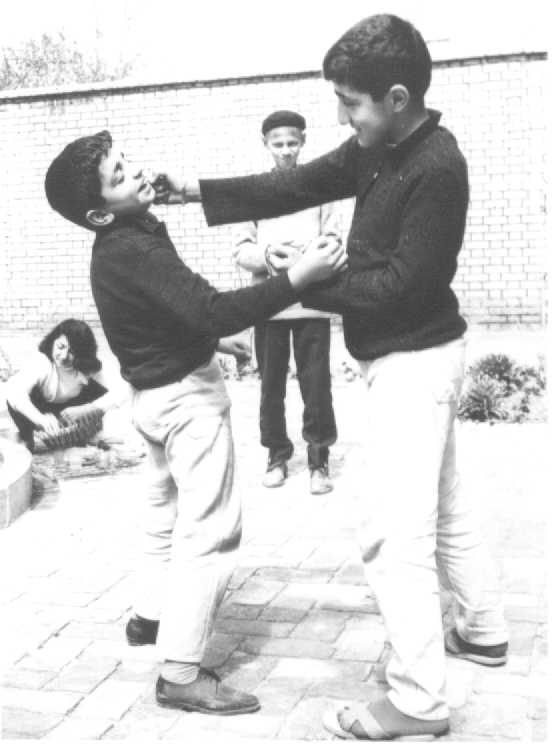
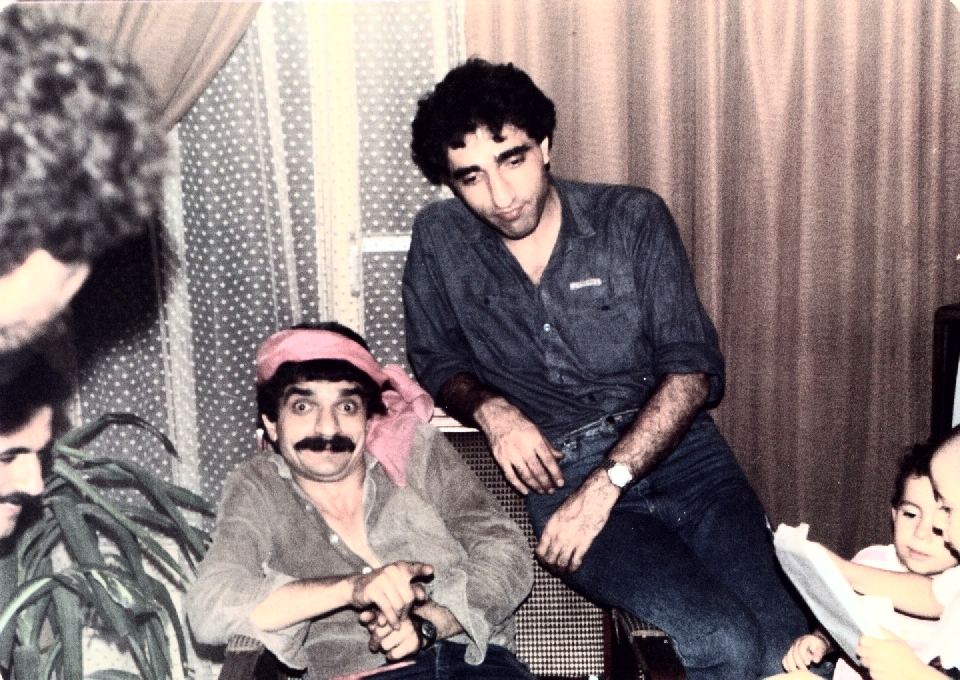
his fortieth birthday Just for fun 😉 Those days in 70th of state of euphoria My 31th birthday in Iran
A long time ago, I shared one of his short stories in WordPress, and now I re-share it here if you’d like to have a read 😉
With a happy Salut to all dear friends, it is again my lovely day and I want to use every moment of it 😉
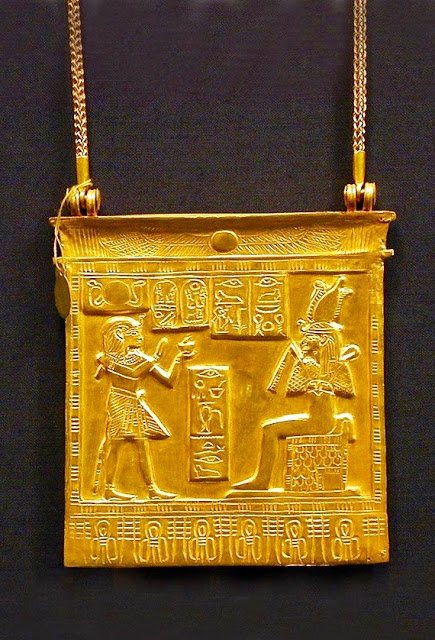
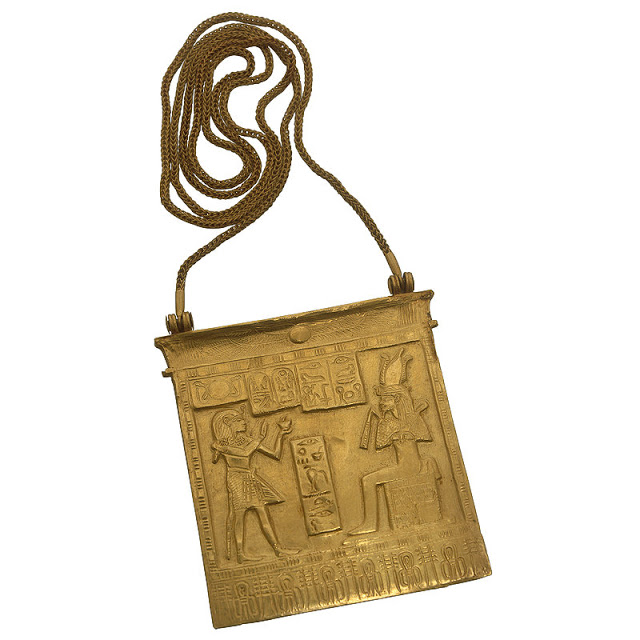
here is a wonderful encounter of a Pharaoh (Amenemopé) with the God Osiris; a great image (translated from French) 🙏💖
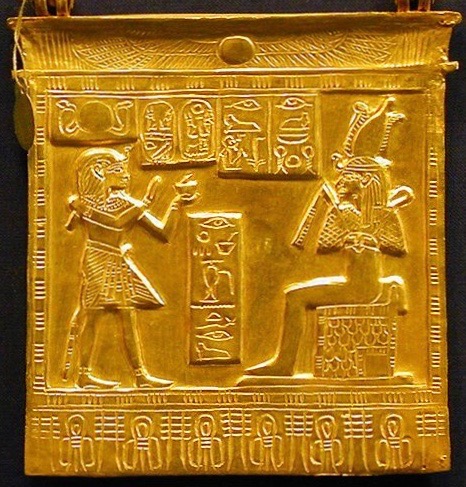
Pectoral of Amenemope – gold Origin: Tanis – Tomb Amenemope discovered by Pierre Montet, April 16, 1940 Exhibited at the Egyptian Museum in Cairo – JE 86038
This breastplate is one of only two that accompanied Pharaoh Amenemope for his eternity. On a heavy gold chain with a length of 46 cm, hangs a gold plate, of square shape (8.8 x 8.9 cm), which is relatively original because this type of pendant marries the most often a rectangular shape.
Jean Yoyotte explains the way the silversmith designed it: “Two gold sheets of the same size fit together dry, adjusted on a thin filling (cement?), The whole being provided with two welded grooved rams on the edge, small rods are used to fix the chain “.
The decoration of the breastplate takes up the architecture of a temple door, surmounted by a grooved cornice, on which is stretched – as in temples – a representation of the winged sun.
The lower part of the pendant consists of a frieze of thirteen repeating patterns alternately: the Djed pillar is reproduced seven times, while the Tit loop appears six times. These protective emblems are respectively associated with Osiris and Isis.
Pectoral of Amenemope – gold Origin: Tanis – Tomb Amenemope discovered by Pierre Montet, April 16, 1940 Exhibited at the Egyptian Museum in Cairo – JE 86038
Indeed, the Djed pillar is an Osirian amulet, a symbol of stability, present in Egypt since the earliest times while the “knot of Isis (Tit) is, meanwhile, assimilated to the blood and the magic power of Isis “(Isabelle Franco).
The “table” central scene, evoking a funeral rite, is declined in a frame bordered by a ramesside frieze. If this scene is very frequent in funerary iconography, Christiane Ziegler explains, however, here, the originality: “Of all the pectorals of Tanis, this one is the only one to stage the pharaoh. The decoration, executed in pushed back on the gold leaf depicts King Amonemope offering incense and a libation to the god of the dead Osiris. An identical motif is engraved on the backplate “.
The pharaoh wearing the nemes and wearing a loincloth with a facet is standing, in the attitude of walking. He is facing Osiris who sits on his throne. The god of the underground world, wearing the imposing Atef crown, is represented in its mummiform aspect. He squeezes the whip and the flail on his chest.
Pectoral of Amenemope – gold Origin: Tanis – Tomb Amenemope discovered by Pierre Montet, April 16, 1940 Exhibited at the Egyptian Museum in Cairo – JE 86038
Amenemopé raises his right hand and holds an incense casserole in the left. “Between the two partners, a vertical legend specifies that the first is supposed to make the censer and the libation to his father Osiris” (Jean Yoyotte)
In the worship of gods and divinities, the fumigation of incense is, with the libation of water, one of the most important rituals of the Pharaonic liturgy. The main function of fumigation was to “breathe life back into the frankincense supposed to be an emission from Osiris’ body”. This scene is often reproduced on the walls of temples or the walls of tombs, most often performed by a Sem priest or by Pharaoh himself … “. It is also important to note that it is reproduced on one of the walls of the tomb of Amenemope.
Frankincense, rare in Egypt, was mainly dedicated to the worship of divinities and to Pharaoh,; it could be olibanum, terebinth, myrrh, or styrax,… But the most sought after, the most popular, was kyphi (kỳ phi), produced by a mixture of 10 to 50 substances. It should be recalled that “The priests offered Re three kinds of incense every day, one at waking, one in the middle of the day and one at bedtime”. …
Funerary mask of Pharaoh Amenemop (Amenemope, Ménémopé, Amonemapit) discovered by Pierre Montet at Tanis in April 1940 – May 3, 1940, a truck protected by the army, the treasure of Amenemope takes the path of the Egyptian Museum Square Tahrir
Amenemopé is a pharaoh of the XXIth dynasty whose reign, which has been exercised since Tanis, is located around 1001-992 BC. In “The treasures of the Egyptian Museum”, collective work written under the direction of Francesco Tiradritti, one can read that this “successor of Psousennès Ier was buried in the tomb of this last, in a room covered with granite, originally created to accommodate the remains of Moutnedjemet, wife and sister of Psousennès I “.
We can only be surprised that he was buried in a one-room vault when he has his own burial referenced NRT IV (NRT = Royal Necropolis of Tanis). The fact remains that his “real” abode of eternity – the one in which his mummy rested – was discovered in the spring of 1940 by Pierre Montet and his team.
The vault of Amenemope when opened Drawing E. Pons Source: Pierre Montet, “Tanis”, Payot, 1942
In “Tanis – Twelve years of excavations in a forgotten capital of the Egyptian Delta”, the discoverer recounts this very special day: “The entrance was opened on April 16. His Majesty King Farouk arrived the day before in Sân, where he had made erect a city of tents, was present, as well as Canon Drioton, director of the Egyptian Antiquities Service and a young Egyptian Egyptologist, Professor Abou Bekr. The vault was furnished much like that of Psousennès: at the bottom a sarcophagus of granite, in the anterior half the canopic jars, the metal jars, a large sealed jar, funerary statuettes, a vast chest in gilded wood which had collapsed by the effect of time and humidity. objects had been put in a safe place the sarcophagus cover was put in their place. Much less opulent than Psousennès, the new sovereign had been content with a single stone sarcophagus and an anthropoid wooden coffin re-clad in gold, the wood was reduced to almost nothing. The gold plates were removed. It is hardly necessary to say that the mummy had suffered enormously. His ornaments less numerous than those of Psousennès nevertheless constitute a very beautiful collection: a gold mask, two necklaces, two pectorals, two scarabs, hearts of lapis and chalcedony, bracelets and rings, a large cloisonne gold falcon with spread wings, canes. ”
In this troubled period of World War II, the artefacts will be brought to safety as soon as possible. Thus, from May 3, 1940, it is in a truck protected by the army that the treasure of Amenemope will take the way to the Egyptian Museum in Tahrir Square … The breastplate will be registered in the Journal des Entrées under the reference JE 86038.
I just wanna say; I’m jealous! That must not be a yammer though, I have a little tear in my eyes. You know; I have always a hard working day to get my weekend, my lovely weekend with you lovely friends to share my deepest thoughts which I can never share them during my work with the colleagues. they’d never understand it, quote end! And then; as I am working, I have always a look into my Smartphone to know what I’m missing and of course, there come a lot of ideas in my head to work on; and then when I get my favourite day: Saturday, I wake up early in the morning; not wasting time, but after turning on my PC, I sit there in front on monitor and stare on it! Believe me, I really don’t know where and how I’d begin.
And what makes me jealous; It is that some of my friends have a lot of time to read good stuff which I’d dream of 😀 😉
Anyway, I “have to” add the forth part on this journey, because of two meeting which my lady and me have taken part in;
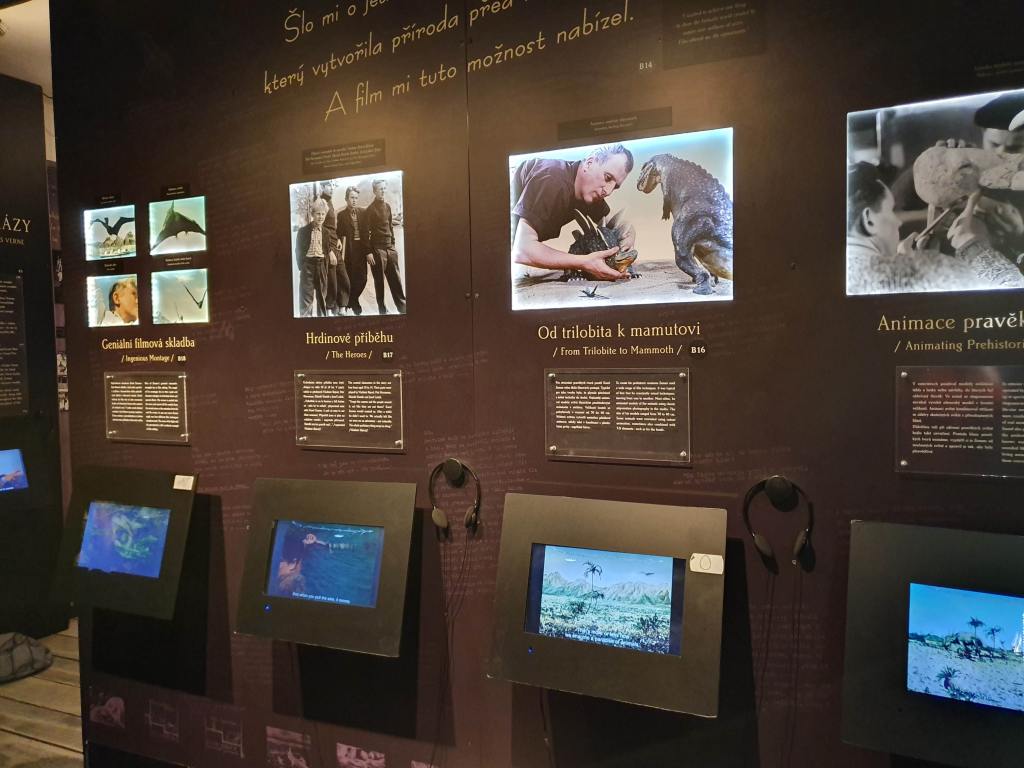
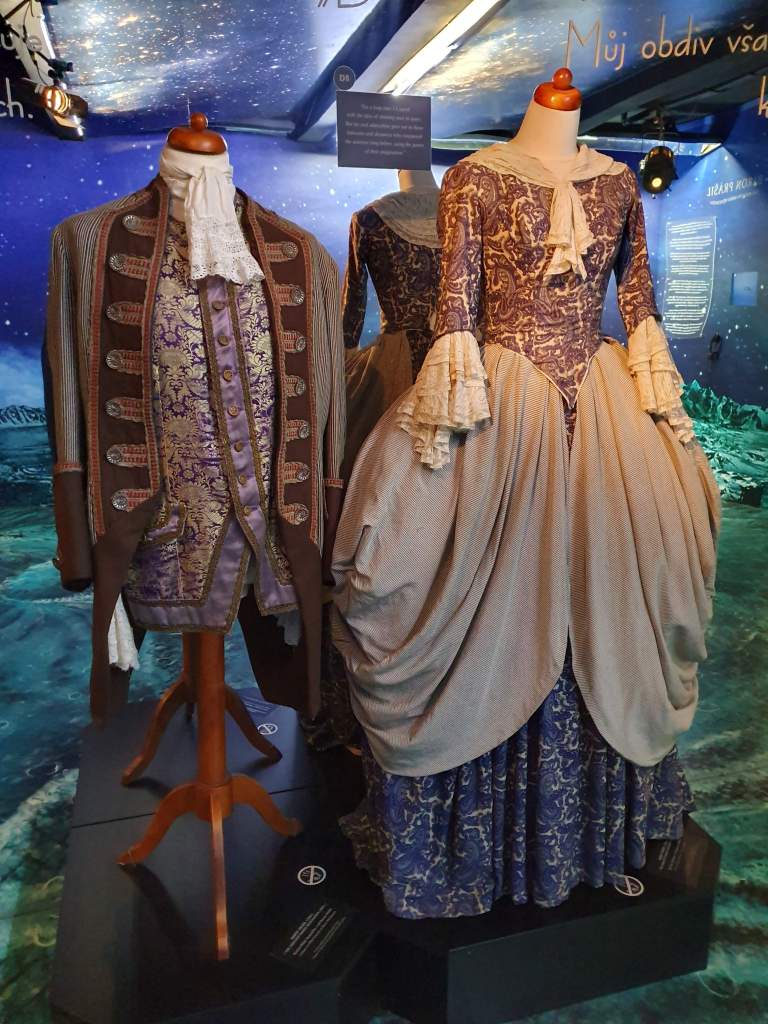
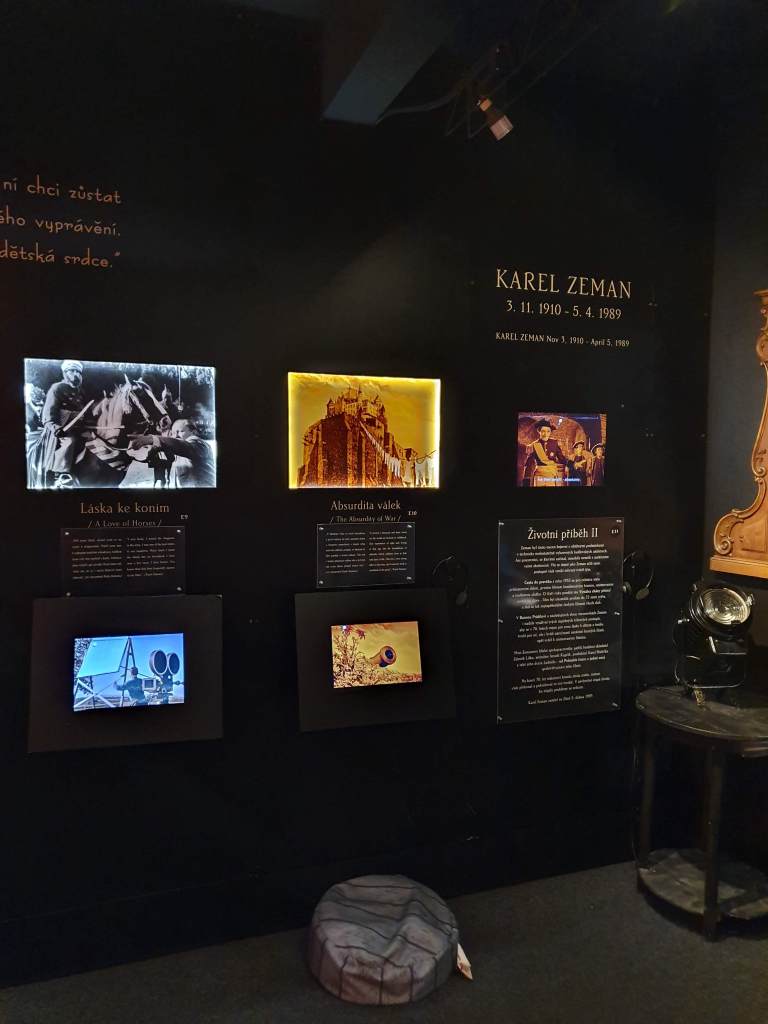
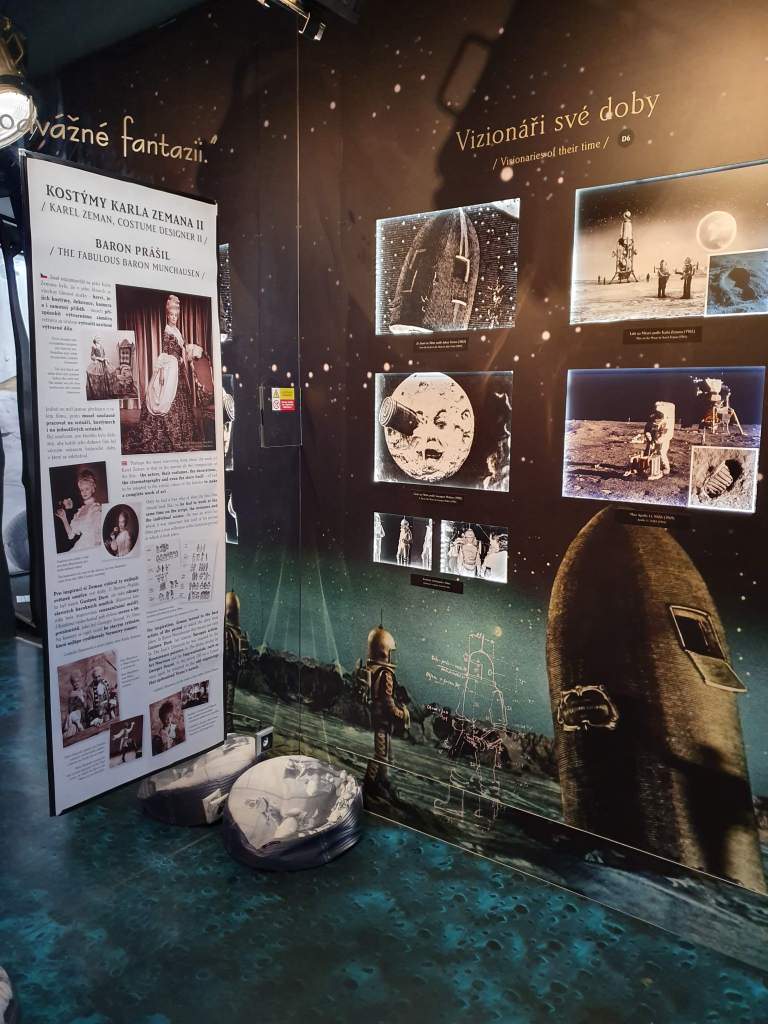
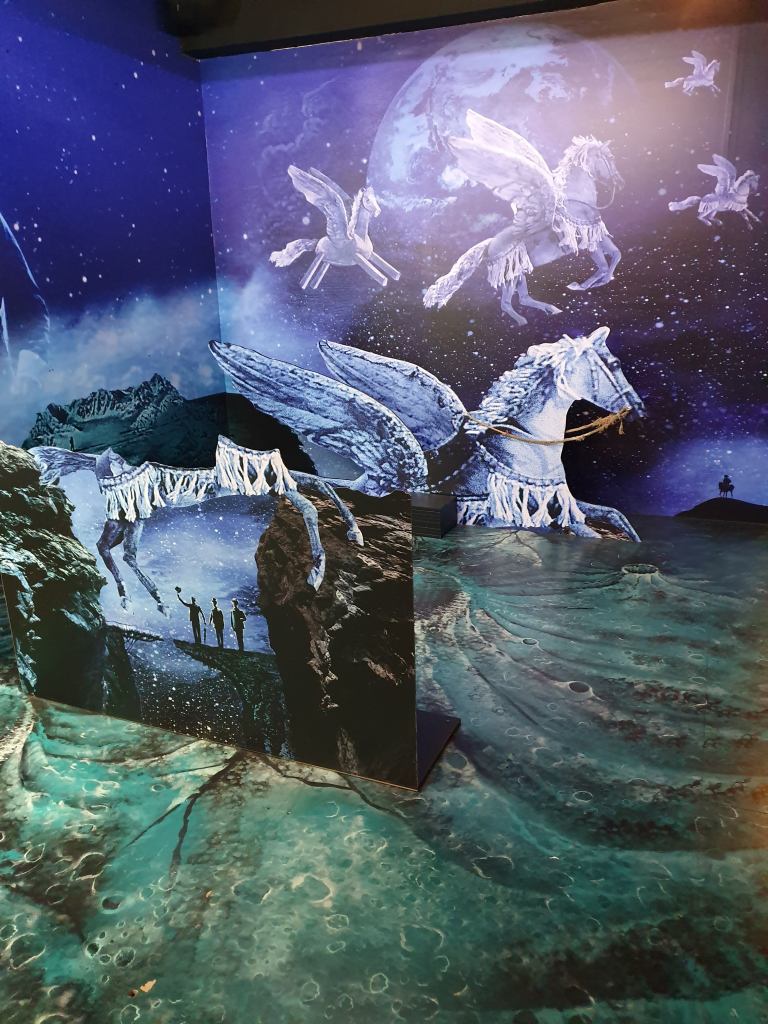
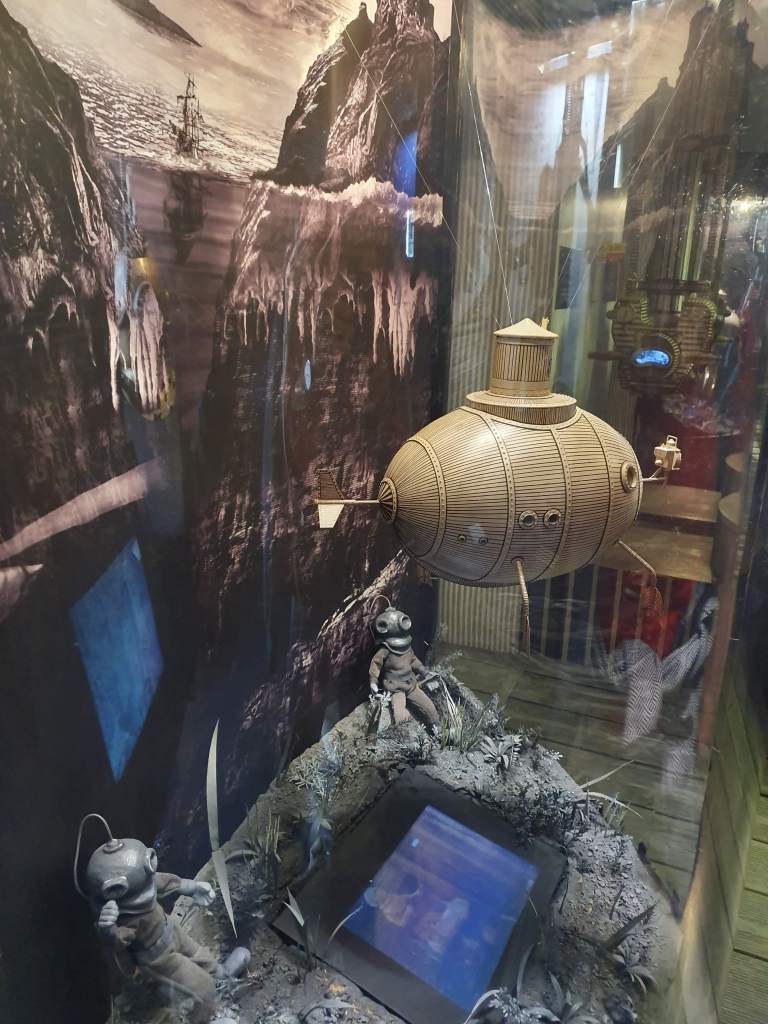
I knew him from the younger-time in Iran as I was working as an actor on the stages and was much interested in theatre and movies. His works had fascinated me; he had worked with toys and took frames from every single act. You might know it, it had caught my eyes those days how hard work it could be; to bring your uncommon imaginations on the screen to make a movie…
And there are some more pics on this issue;
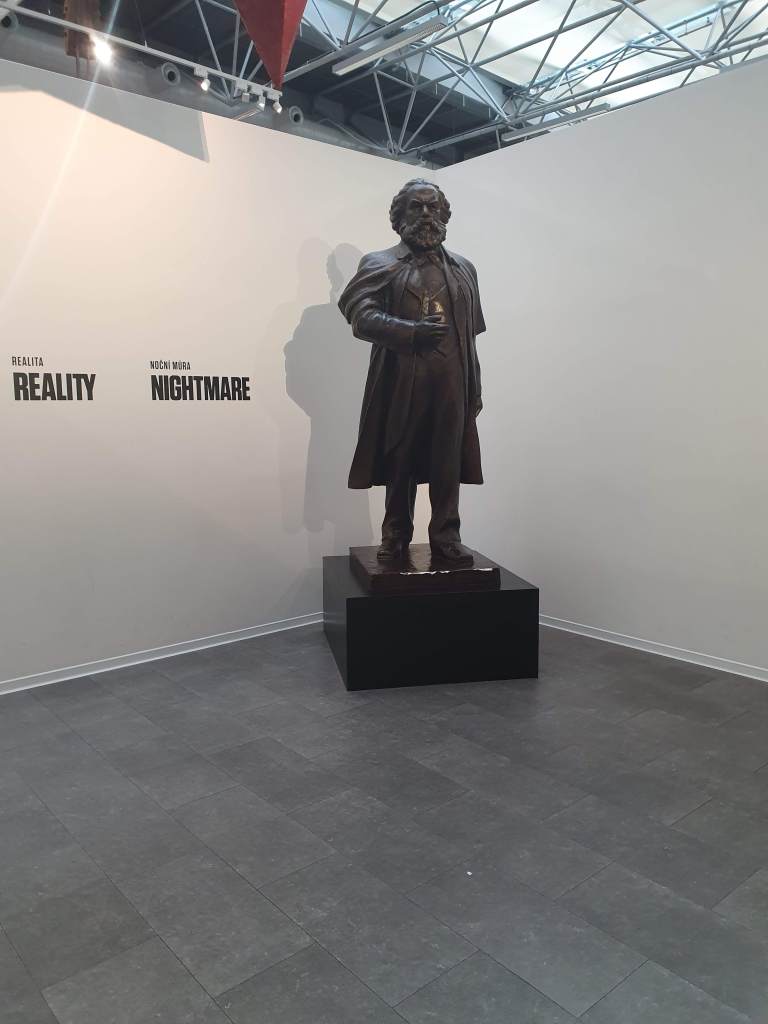
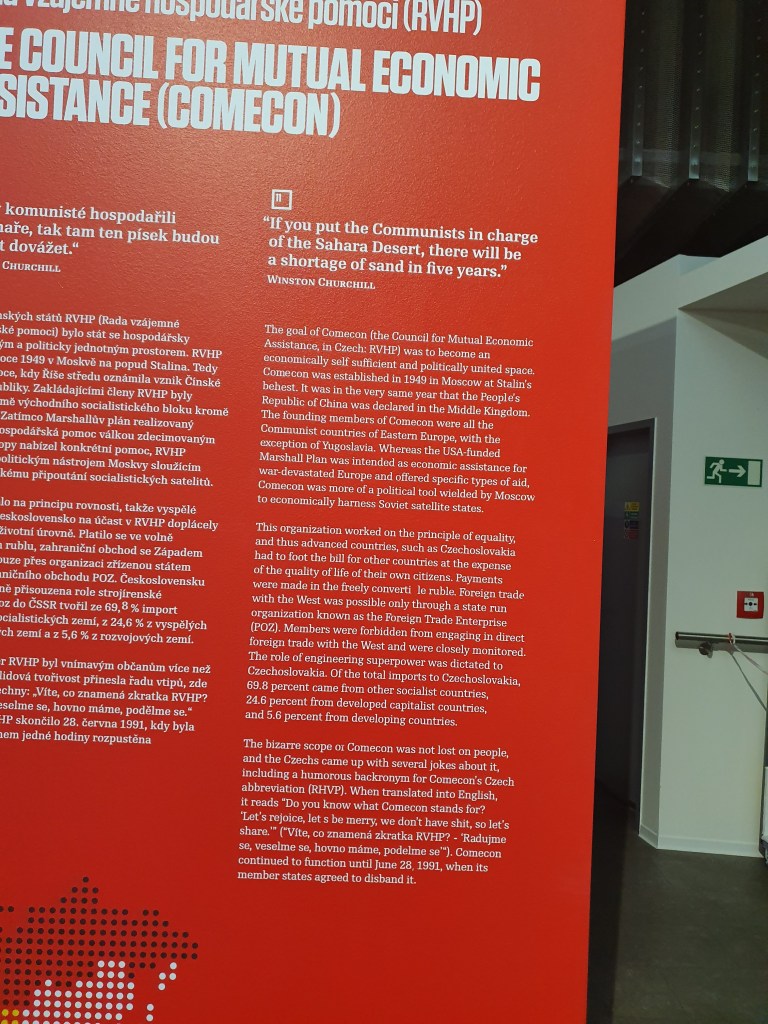
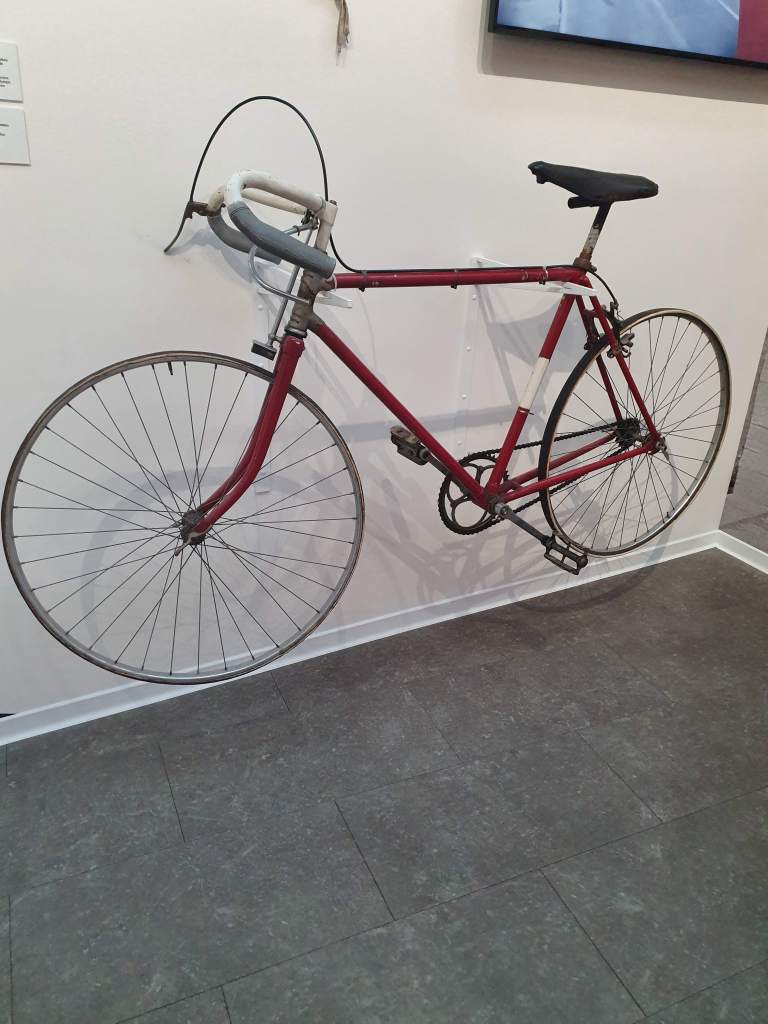
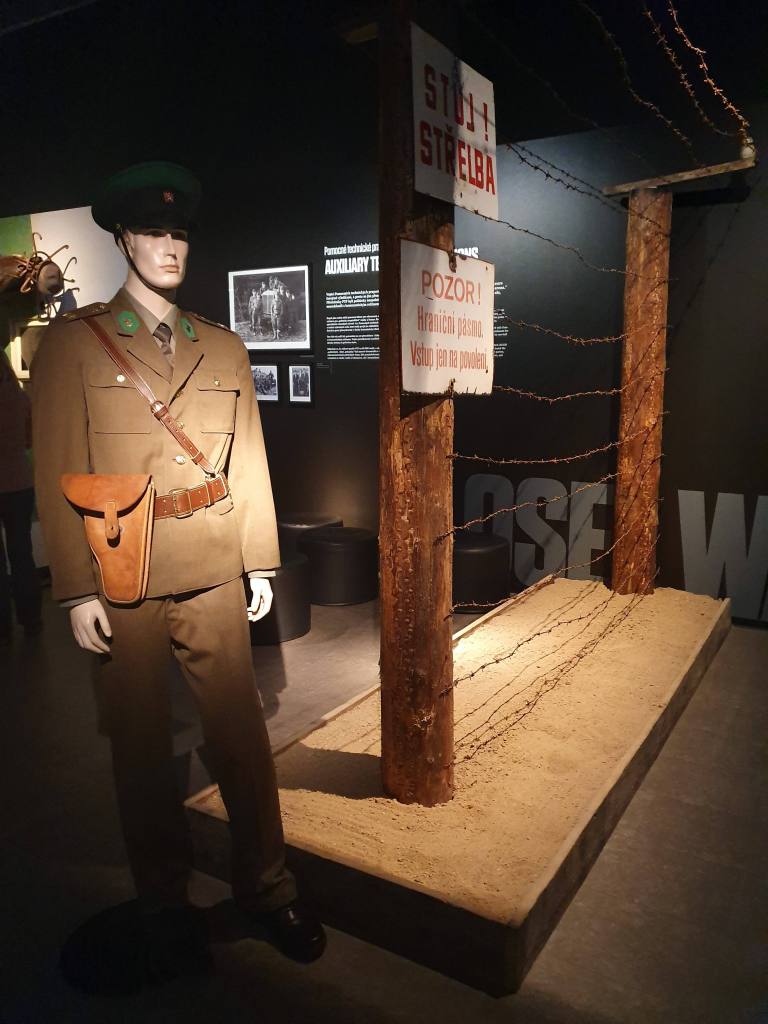
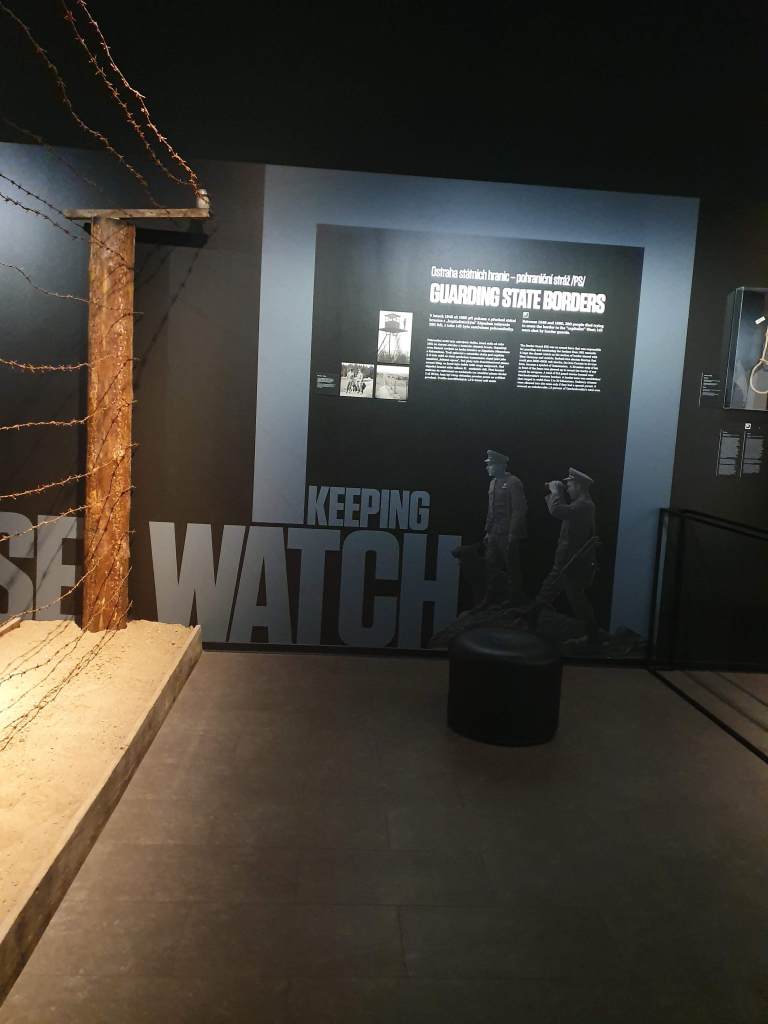
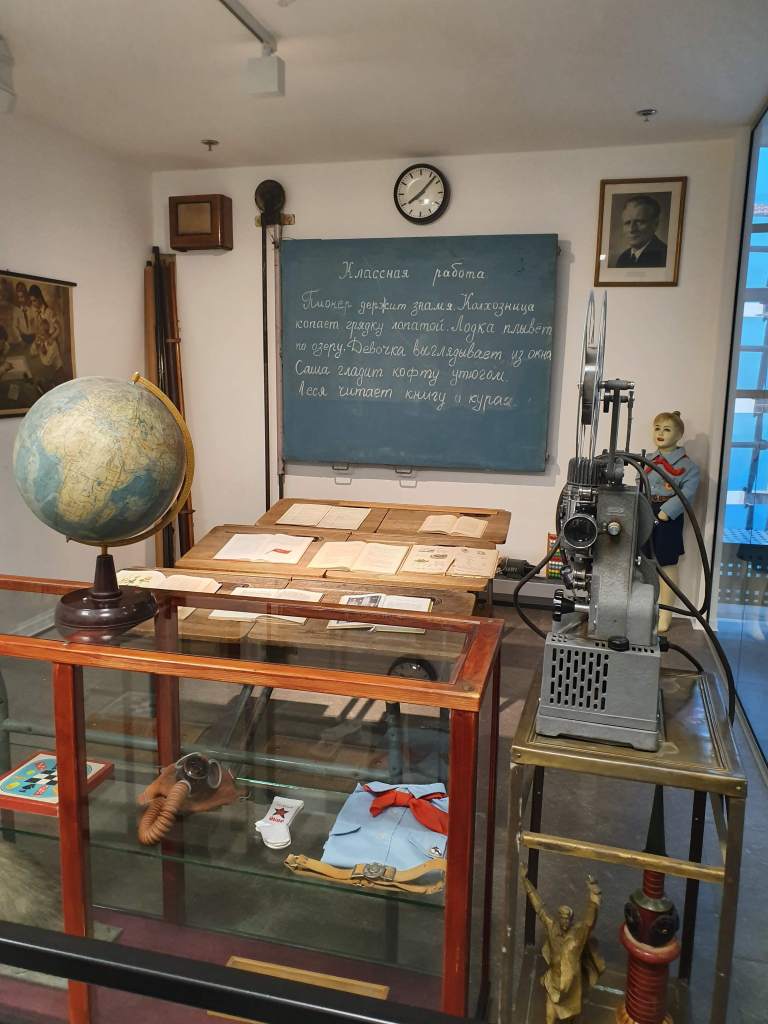
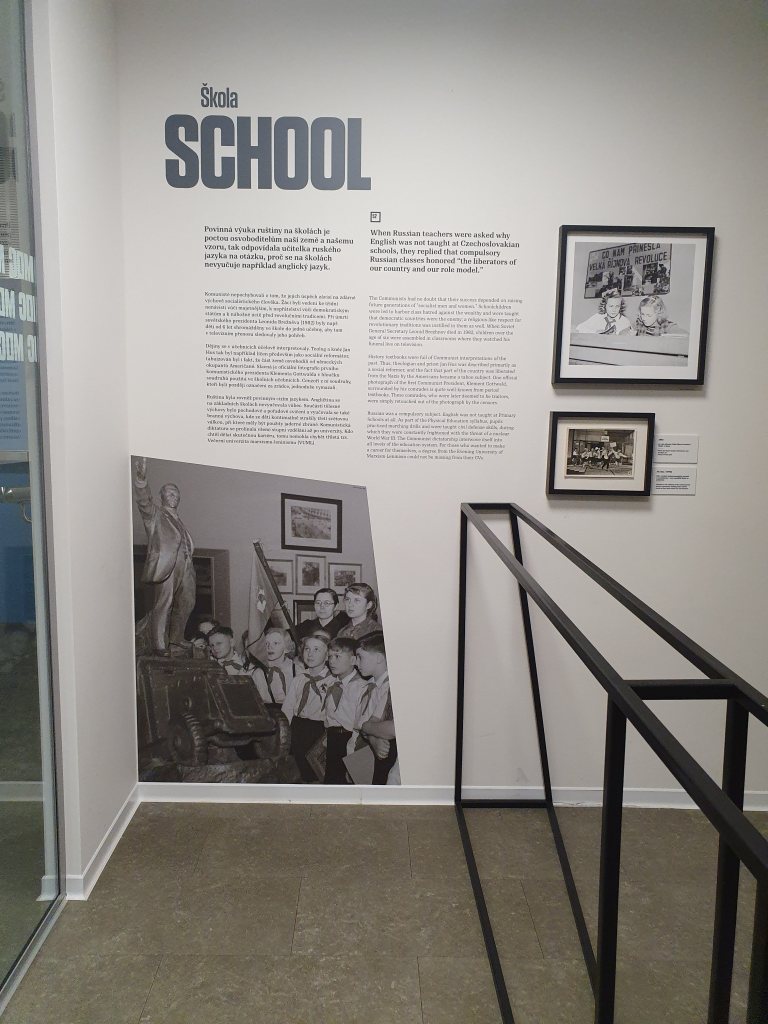
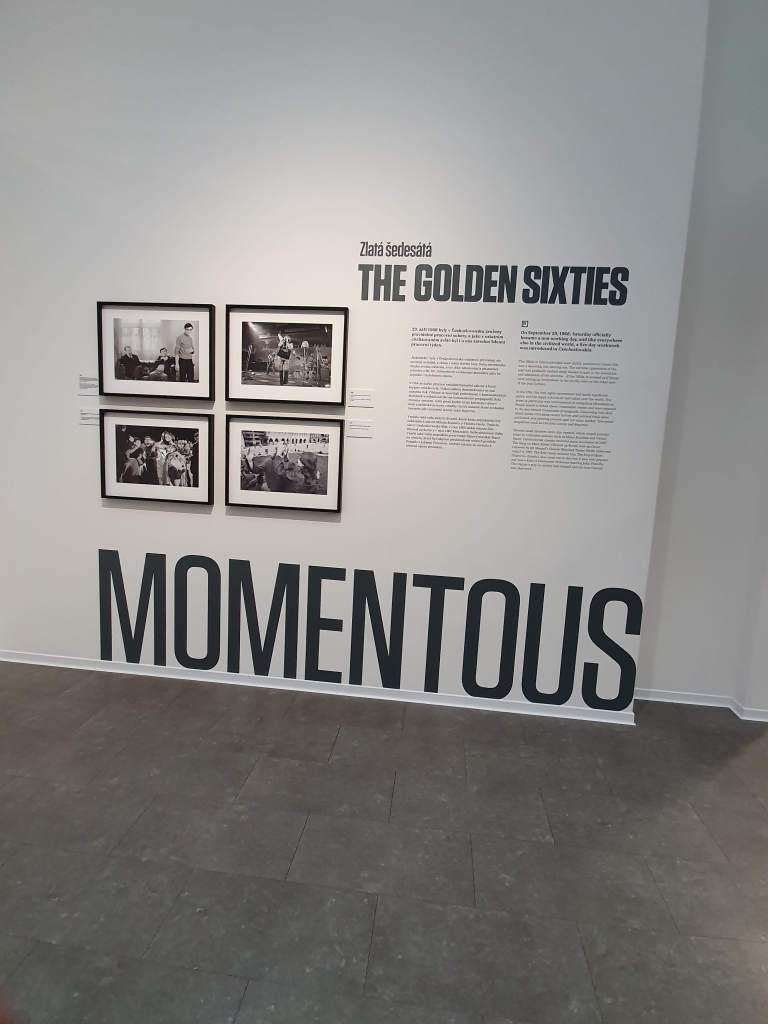
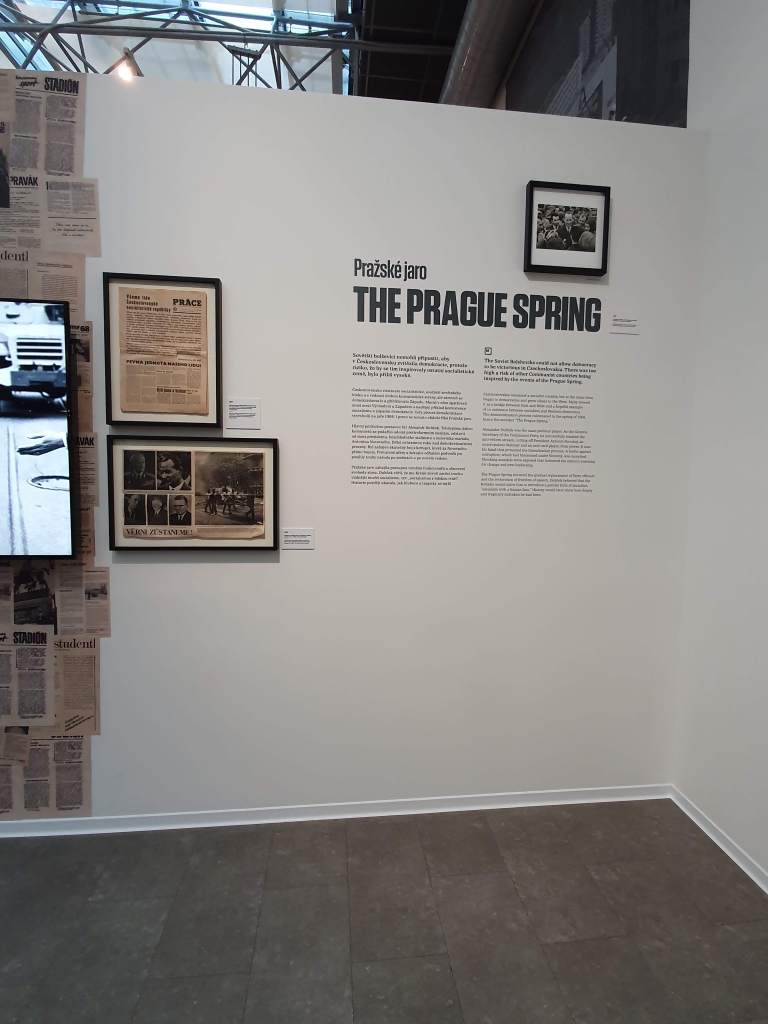
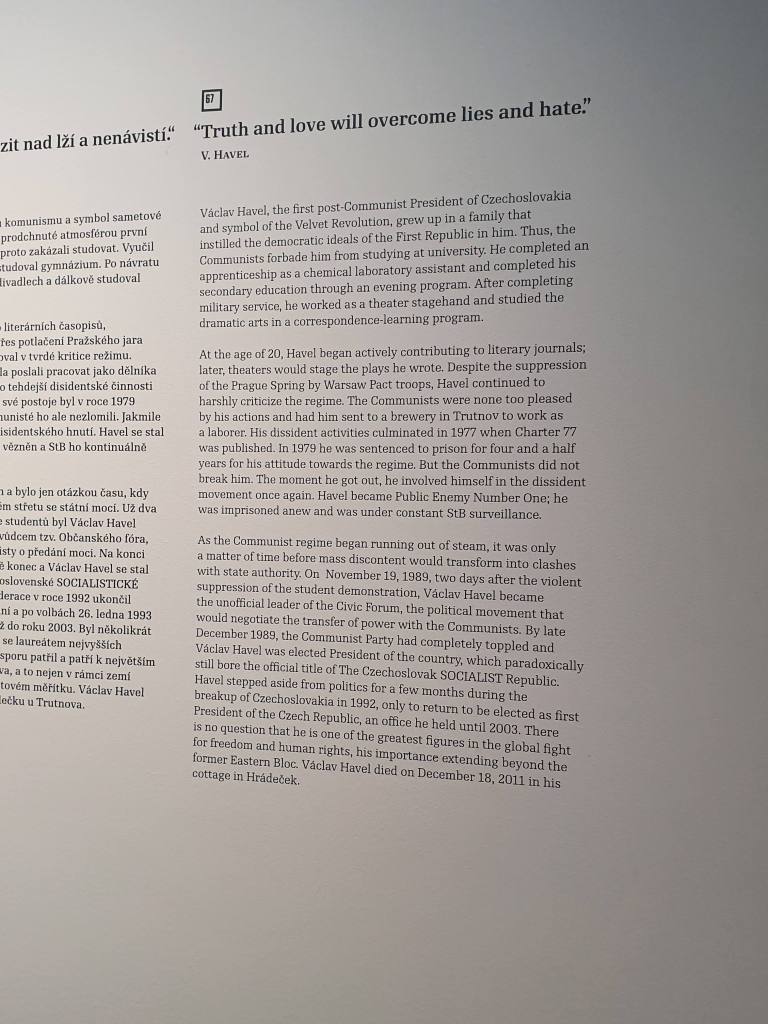
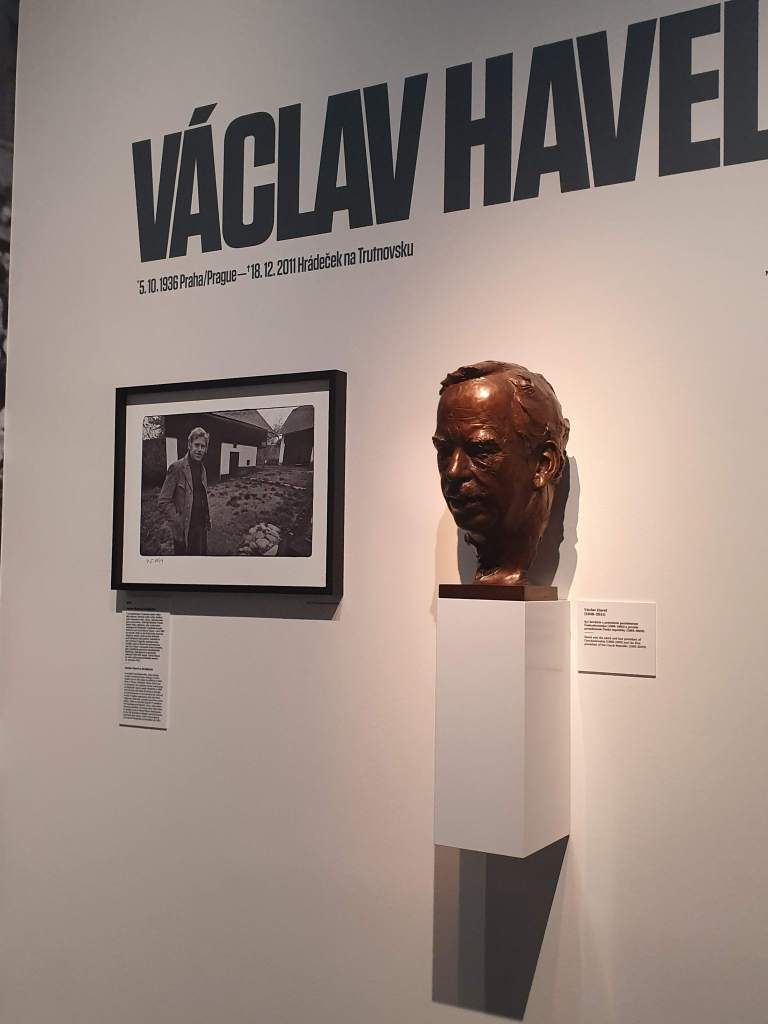
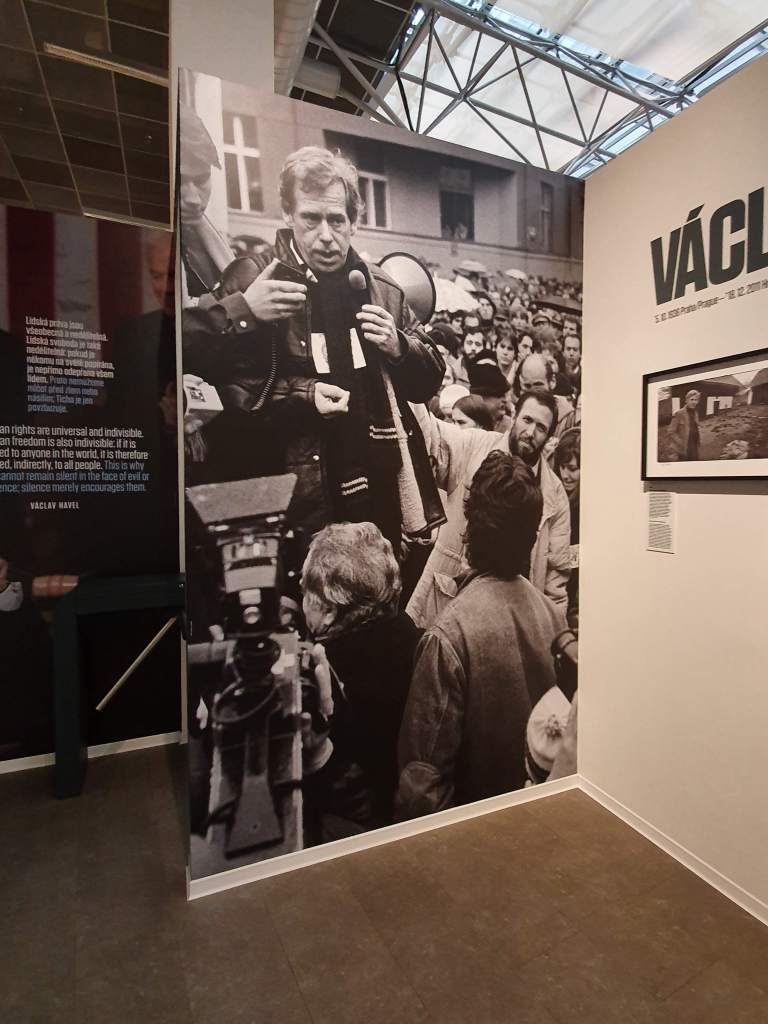
Another issue was to visit the communism museum. though, it was not so easy to find it but we’d succeed and there are some pics; first begin with the Master 😉
an ever life working place for a stuff The undergoing events Havel the saviour


















 lampmagician
You must be logged in to post a comment.