Agatha Christie

Standard

Death on Nile

“Death on the Nile” – ” Mort Sur Nil, 3Γ¨me “
1978 first film adaptation by the British John Guillermin Peter Ustinov as Hercule Poirot
2006: second adaptation by Andy Wilson with David Suchet as Hercule Poirot
2019-2020: 3rd ongoing adaptation of Agatha Christie’s novel by Fox and Kenneth Branagh

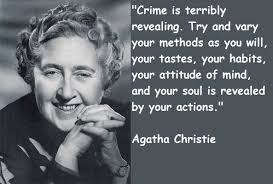
Certainly, I don’t need to introduce this Dame to anyone. She was and has ever been a Genius in writing such as murder mystery novels and she will always remain the master.

Agatha Christie

I have not read any book of her but seen almost all the “made of” movies. Of course, I must say that it’s not only Hercule Poirot which had fascinated me, but there’s also Miss Marple too an amazing character.
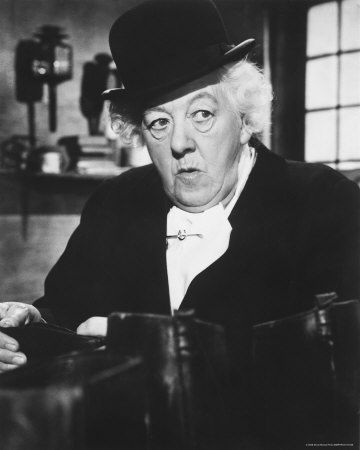
it’s always fascinating to see how ingeniously and powerfully she creates the moments of the crimes and how variable are the mysteries. Brilliant!
Now in this article by my dear friend and an Egyptologist; Marie Grillot I find out that there is another version of Death on The Nile has been made by Kenneth Branagh Kenneth Branagh

Kenneth Branagh

I knew he had made a third version of the novel; Orient Express and I’ve seen this and also both older ones, but never heard of the third one on Death on The Nile!

Anyway, it’s nice to read this article (have translated from French) and see the old famous great actors again. Have a wonderful weekend. ❀ ❀

via https://egyptophile.blogspot.com/

Mort sur Nil, 3Γ¨me ! (Death on Nile, 3rd!)

While Thomas Cook, initiator of the cruises on the Nile, is shipwrecked, “Death on the Nile” resurfaced! Indeed, after the success of the movie “The Crime of the Orient Express” released in 2017, the Fox – and Kenneth Branagh – decided to adapt the 3rd version of “Death on the Nile”.This novel by Agatha Christie was published on November 1, 1937, in the United Kingdom, the following year in the United States, then in France in 1945.

“Death on the Nile” – “Mort Sur le Nil”
The Agatha Christie novel published on 1 November 1937 in the UK,
in 1938 in the USA, in 1945 in France

For her writing, the novelist relied in part on her personal memories. When she is 17-18 years old, she goes to Egypt for the first time with her mother, she cruises in an environment that we imagine easy and luxurious. With her first and second husband, she will return for other stays. In 1923, she was in Luxor while the tomb of Tutankhamun had just been discovered, it would seem that she later met Howard Carter (in 1931 in Luxor).

Novelist Agatha Christie during a trip to Egypt

Flawless costumes, immaculate shirts, starched bow ties, moustache perfectly smoothed and a hairstyle that can only be said, he is steadfastly obsessed by his appearance … A bit precious, politeness “old France” grazing obsequiousness, his eyes sparkle with intelligence. He believes in him even in his doubts … One can not deny that his grey cells function perfectly, that he is a fine psychologist and, it must be said, without much confidence in the human nature of some … If the attention that it brings to small details is sometimes infuriating, the resolution of the enigma proves that they were in no way insignificant, that they participated indeed to weave the plot which he tried to “unravel”. He excelled often but was never better than in the final theatrical as dramatic happening, where, surrounded by all the witnesses and protagonists, he pronounced the final sentence, the outcome of the affair, finally announcing the name of – or – guilty (s)

… If “Death on the Nile” begins in a magnificent mansion nestled in the heart of the English countryside, it is in Egypt and mainly during a cruise on the “Karnak”, a luxurious steamship, that will take place history.


In the Agatha Christie novel “Mort Sur le Nil” – “Death on the Nile”, the boat named “Karnak”
Two boats have “endorsed” this role:
In 1978 in the 1Β stΒ film adaptation of John Guillermin,
this name is given to the “Memnon”, built in 1904 by Thomas Cook
In 2006, in the second film adaptation of Andy Wilson
this name is given to the steam ship “Sudan” built by Thomas Cook in 1915-1921
it is now owned by Voyageurs du Monde and sailing on the Nile

Jacqueline de Bellefort, charming but ruined, commits the irreparable mistake of presenting her “beautiful lover” to her billionaire childhood friend … who will not fail to seduce him …The spurned fiancee continues on the banks of the Nile, the couple now formed by the wealthy Linnet Ridgeway – his ex-best friend – and Simon Doyle – his ex-boyfriend – “rotting” their honeymoon …The boat quickly becomes “the” place where everything will be played, a microcosm bringing together noble ruined, a novelist on the bottle, rich kleptomaniac, the doctor failed or corrupt lawyer, arrived unscrupulous, unconditional and idealistic love, … Each having a ” good reason to blame Linnet …

“Death on the Nile” – “Mort Sur le Nil”
1978 first film adaptation by the British John Guillermin
The Colonel Race (David Niven) left, and Hercule Poirot (Peter Ustinov) right

All this “beautiful” world evolves under the watchful eyes of Poirot and his elegant English friend Colonel Race. Over the Nile, they will be led to see several crimes, the series being “inaugurated” by that of the rich heiress …It is at the end of the cruise, in Ouadi Halfa, that the “little grey cells” of the famous Belgian detective will end this story, more turbid than the waters of the Nile.Agatha Christie will adapt it to the theatre in 1944.
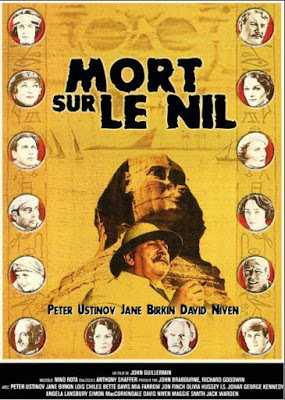
“Death on the Nile” – “Mort Sur le Nil”
1978:Β 1stΒ Β Β movie adaptationΒ Β Β by British John Guillermin Peter Ustinov as Hercule Poirot

Then it will be worn for the first time on the screen, in 1978, by the British John Guillermin, with a cast of dreams: Peter Ustinov, Jane Birkin, Mia Farrow, Bette Davis, Angela Lansbury, David Niven, Maggie Smith, and second roles totally up to the task …

“Death on the Nile” – “Mort Sur le Nil”
1978 first film adaptation by the British John Guillermin Peter Ustinov as Hercule Poirot

Peter Ustinov is excellent in Hercule Poirot, with his flawless white suits, his collared shirts, his debonair look sometimes denied by a piercing look …The extreme staging and the performance of the actors bring suspense to its climax …How to forget this sequence shot in Karnak? As Linnet’s and Simon’s couple walk through the hypostyle hall, a block falls from one of the columns throwing them to the floor. The actors seem to emerge, magically, from behind each column to discover the drama … all seeming stupefied … that while the leader is necessarily among them!

Death on the Nile” – “Mort Sur le Nil”
1978 1Β stΒ film adaptation by the British John Guillermin Peter Ustinov as Hercule Poirot

Most of the film is on the “Karnak” – it is actually the “Memnon”, built by Thomas Cook in 1904 – whose comfortable atmosphere will quickly become oppressive.
The second adaptation of “Death on the Nile” takes place in 2006: Andy Wilson directs David Suchet in the role of Hercule Poirot, the excellent James Fox wearing the uniform of Colonel Race.

“Death on the Nile” – “Mort Sur le Nil”
2006: second film adaptation by Andy Wilson with David Suchet as Hercule Poirot

Emma Griffiths is Jacqueline de Bellefort, J.J. Feild Simon Doyle, while Emily Blunt is Linnet Doyle.

The film is then shot on the luxurious steamship Sudan – “survivor” of the Thomas Cook fleet – which belongs today to Voyageurs du Monde.

For the third adaptation, that of the Twentieth Century Fox, according to articles published, Kenneth Branagh will camp “the inevitable Hercule Poirot and will be accompanied by Gal Gadot, Letitia Wright, Armie Hammer, Annette Bening, Ali Fazal, Sophie Okonedo, Emma Mackey Dawn French, Leslie Rose, Jennifer Saunders and Russell Brand “.

The film will be shot at the Longcross Studios in Surrey West London, and on the spot in Egypt … Of course, we are eager to learn more …The release of the film is scheduled in France, from October 7, 2020. Marie Grillot


To my dear lonely PC at home

Standard

Yes my dear friend, I am sorry to leave you alone at home in my office room under my desk.

I know that you are wondering why nobody pushes your button to turn you on, running warm to get ready for work.

I had to leave you to visit my friends in Bremen, a city in the northern Germany, therefore, I can’t be with you sharing our thoughts together.

Sorry for that, it’s a tragedy, because, my Smartphone could never be you. It is a sad sad world…. I miss you πŸ₯΄πŸ˜˜

Let’s carry the both sides!

Standard

I think that we should understand and accept that we have the both sides; Inner & Outer, Dark & light, Good & Bad. what we need is the Awareness.

via; https://www.facebook.com/CarlJungIndividuation/?tn-str=k%2AF&hc_location=group_dialog

By; Craig Nelson with thanks πŸ™πŸ’–

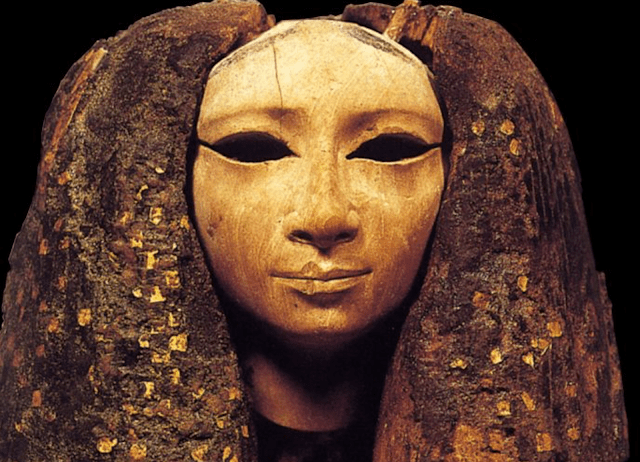
The beautiful lady of Licht

Standard
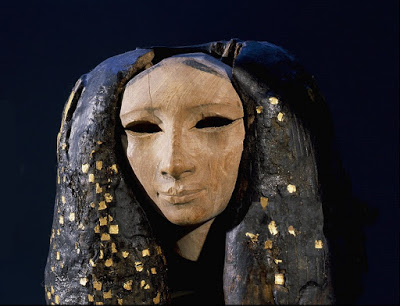
Head of the female statue – painted wood with gilding
Middle Kingdom – XIIth Dynasty
Provenance: Zone of the pyramid of Amenemhat to Licht – Excavations of the Metropolitan Museum of Art in New York – 1907
Egyptian Museum Cairo –Β JE 39380

The Head of a mysterious beautiful Lady. by Marie Grillot πŸ™πŸ’– with Marc Chartier as always much appreciated πŸ™‚

PS; Licht in German means light πŸ˜‰

Translated from French via https://egyptophile.blogspot.com/

The face is noble, perfectly symmetrical, veins of light wood give it a sense of life. The general expression is soft, calm, soothed. Large almond eyes, of which only the orbit remains, are absent. And despite everything, they question us … What presence did she give to the face? What did they show? Did the glass paste and the rock crystal subtly and luminously enliven their pupils? These questions remain forever unanswered. The eyebrows are treated in relief, while the line of makeup is treated in hollow. The nose is well proportioned, the lips are fine, the slight injury they suffered reminds us of the pangs of time.

Head of the female statue – painted wood with gilding
Middle Kingdom – XIIth Dynasty
Provenance: Zone of the pyramid of Amenemhat to Licht – Excavations of the Metropolitan Museum of Art in New York – 1907
Egyptian Museum Cairo –Β JE 39380

What obviously impresses in this head of just over 10 cm, is the wide wig that framed it generously and should arrive at the shoulders, now missing. “The enveloping mass of the reported hair is worked in a darker wood and blackened with paint, it is attached to the head in lighter wood, using tenons.” The hair is black and fragments of gold, like so many small square touches bringing light and femininity, dot them. “The fact that the wig is particularly thin at the top, relative to the width of the lateral parts, suggests the presence of a crown or diadem.”

Head of female statue – painted wood with gilding
Middle Kingdom – XIIth Dynasty
Provenance: Zone of the pyramid of Amenemhat to Licht – Excavations of the Metropolitan Museum of Art in New York – 1907
Egyptian Museum Cairo – JE 39380

Who was this beautiful lady? A queen, a princess, a prominent person at the court of the sovereign? The quality of the work, the mastery of the artist, leave indeed to think that it can come from the workshops of Pharaoh. From the statue that represented it, in the foot, there remains only that face that does not identify it. Only her arms were found two years later in Situ.

The female statue head painted wood with gilding is often reproduced
Middle Kingdom – XIIth Dynasty
Provenance: Zone of the pyramid of Amenemhat to Licht – Excavations of the Metropolitan Museum of Art in New York – 1907

This head – which is also often used as a model to illustrate the beauty of the Egyptian women of antiquity – was discovered in 1907 in Lower Egypt, precisely in Licht, between Daschour and Meidoum. The city of Licht was created by Pharaoh Amenemhat I. “Not only to detach from Thebes and the followers of the last Montuhotep but also to keep an eye on the north and the Asian border, the city became the main royal residence during the twelfth and thirteenth dynasties … today give it another reality and another archaeological dimension than those that associate it with the two funerary monuments today reduced to two mounds: the pyramids of Amenemhat I and Sesostris I. ” (Egypt restored, T3, Sydney AufrΓ¨re, Jean-Claude Golvin).

TheΒ Metropolitan Museum of ArtΒ excavation siteΒ in New York on Licht site in 1907Β with the discovery of theΒ female statue head in painted wood with gildingΒ (JE 39380)Β of the XIIth Dynasty

As early as 1882, Gaston Maspero undertook excavations on the site, which had then enabled the identification of the pyramids. For practical reasons (there were sometimes up to 11 m of water, he said), however, he could not go to the funeral chamber. The study of the site was then resumed in 1894-1895 by the French Institute of Oriental Archaeology.

Then, in 1906, while Maspero was at the head of the Antiquities Department, the Metropolitan Museum of Art applied for and obtained the concession, and then settled for several seasons of excavations. Indeed, the Egyptian Department of MMA was created October 15, 1906, and its directors, and its new director, Alfred Morton Lythgoe, see there the interest of enriching their knowledge, their experience and their collections.

Thus, under the joint direction of the director, Herbert Eustis Winlock (Harvard) and Arthur C. Mace (Oxford), their first campaign, financed by private funds.150 workers are recruited: some, already ‘trained’ in excavations, come from Upper Egypt, others from neighbouring villages; their number will continue to grow over the years.

Head of the female statue – painted wood with gilding
Middle Kingdom – XIIth Dynasty
Provenance: Zone of the pyramid of Amenemhat to Licht
Excavations of the Metropolitan Museum of Art in New York – 1907
Egyptian Museum Cairo –Β JE 39380
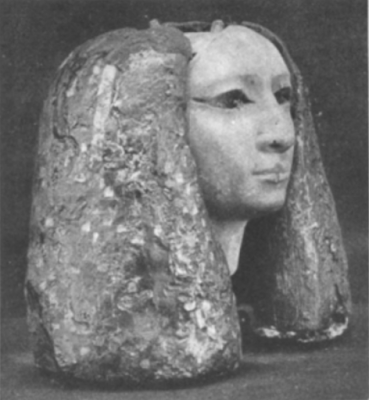
Reproduced for the first time in “The Metropolitan Museum of Art Bulletin” (No. 10 – Oct.1907)

The exact circumstances of the discovery of the head are not explained by Albert Lythgoe. In the October 1907 bulletin of the MMA, while it appears in the photo with the caption “Figure 2. Head of the wooden statuette from Lisht, 12th dynasty”, no details are given on the place where it was found. The author relates that the excavations concerned two sectors: that of the cemetery located to the west of the pyramid of Amenemhat, which delivered tombs of important figures of the XIIth dynasty, as well as an area located on a promontory. In all, more than 100 tombs were discovered for most of the twelfth dynasty. As the head is illustrative, opposite this paragraph, one can legitimately think that its discovery is related to those areas where dignitaries, relatives and members of the ruling family had the honour to rest, not far from Pharaoh.

This head is on display at the Egyptian Museum of Tahrir Square in Cairo under number JE 39380.

Marie Grillot
sources

The Egyptian Art at the time of the pyramids, National Museums 1999

Treasures of Egypt – The wonders of the Egyptian Museum in Cairo, under the direction of Francesco Tiradritti

The treasures of ancient Egypt in the Cairo Museum, National Geographic

Official Catalog – Egyptian Museum in Cairo, Mohamed Saleh, Sourouzian, Verlag Philipp von Zabern 1987

The restored Egypt, T3, Sydney AufrΓ¨re Jean-Claude Golvin

” The Metropolitan Museum of Art Bulletin
 “, Vol. 1, No. 12, Nov. 1906,

” The Egyptian Expedition ” AM Lythgoe, “The Metropolitan Museum of Art Bulletin”, Vol. 2, No. 4 (Apr. 1907),

” The Egyptian Expedition ” Albert M. Lythgoe, “The Metropolitan Museum of Art Bulletin”, Vol. 2, No. 7 (Jul. 1907)

” The Egyptian Expedition ” Albert M. Lythgoe, “The Metropolitan Museum of Art Bulletin”, Vol. 2, No. 10 (Oct.1907) 

Praha (Prague) 3

Standard
One idiot is an idiot.
two idiots are two idiots
ten thousand idiots are a political party!

Hi dear people, at first I’m lucky that I can write my third part of my journey to Prague because my computer or better to say the interaction to the web was horribly slow! But anyhow with some tricks, I’ve got through (don’t yammer again! πŸ˜‰

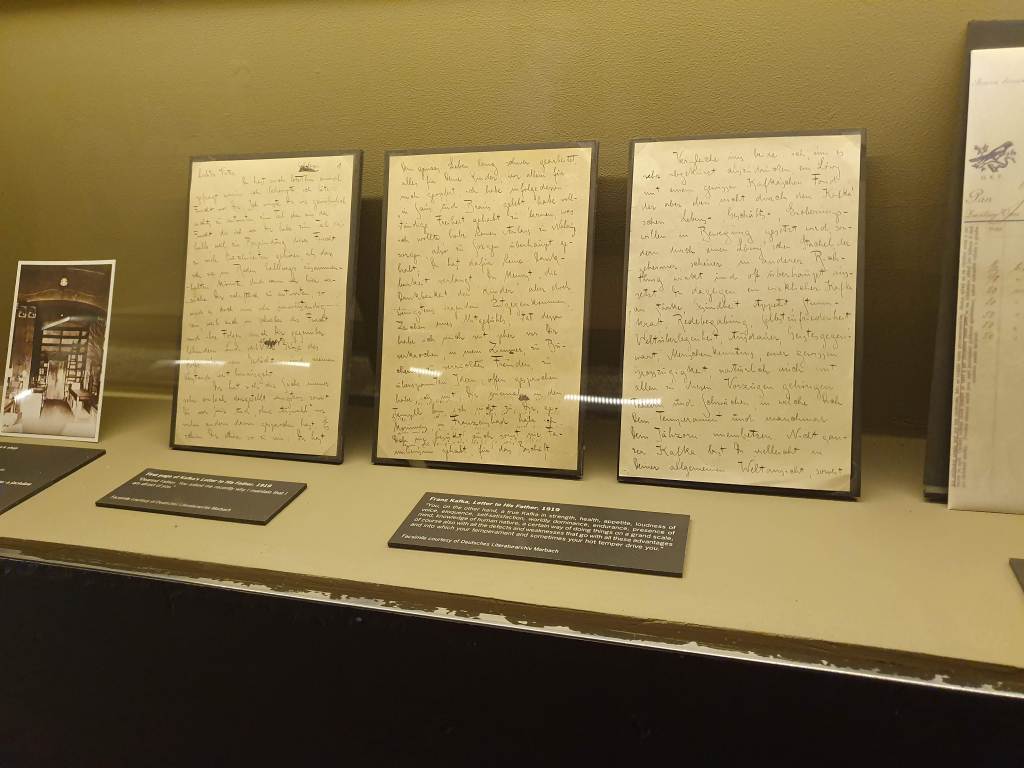
I began with Franz Kafka because it’s about our visit in Kafka’s museum and I have chosen one of his quote in German language (the translation has been subtitled πŸ™‚ because, he wrote his scriptures all in German and it seems that some of them had been translated in Czech by Dora Dymant but they haven’t succeeded in the Czech Republic those days.

Of course, you’re laughing! But believe me, it was the entry behind these two funny statues standing there and … πŸ˜‚

Anyway, I know Franz Kafka since I was about twenty-five, at first I have read “Process”, of course, translated in Persian and in such a situation the translator is almost as important as the writer him/herself. therefore, the first impression or effect was not so strong as I read the next one “The Metamorphosis” or The Transformation.

This book was translated by a Persian writer, the Persian writer, whom I much appreciated much; his name is Sadegh Hedayat https://en.wikipedia.org/wiki/Sadegh_Hedayat

I would say I love him, he was and is the best Persian writer as I believe in, and he was so similar to Kafka as he writing such a protesting novel against the dictatorship of the Persian’s Shah regimes (the Father and the son) and in early 1951 in Paris commit suicide.

Sadegh Hedayat 1903-1951

Anyway, this book was the great thunder which hit my brain awakening to work! He has written his books mostly also in French.

This book was the one which shown me who Franz Kafka is and how he wrote about very simple people like me and you, who are confronting every day with the environment in our society and try to fix it.

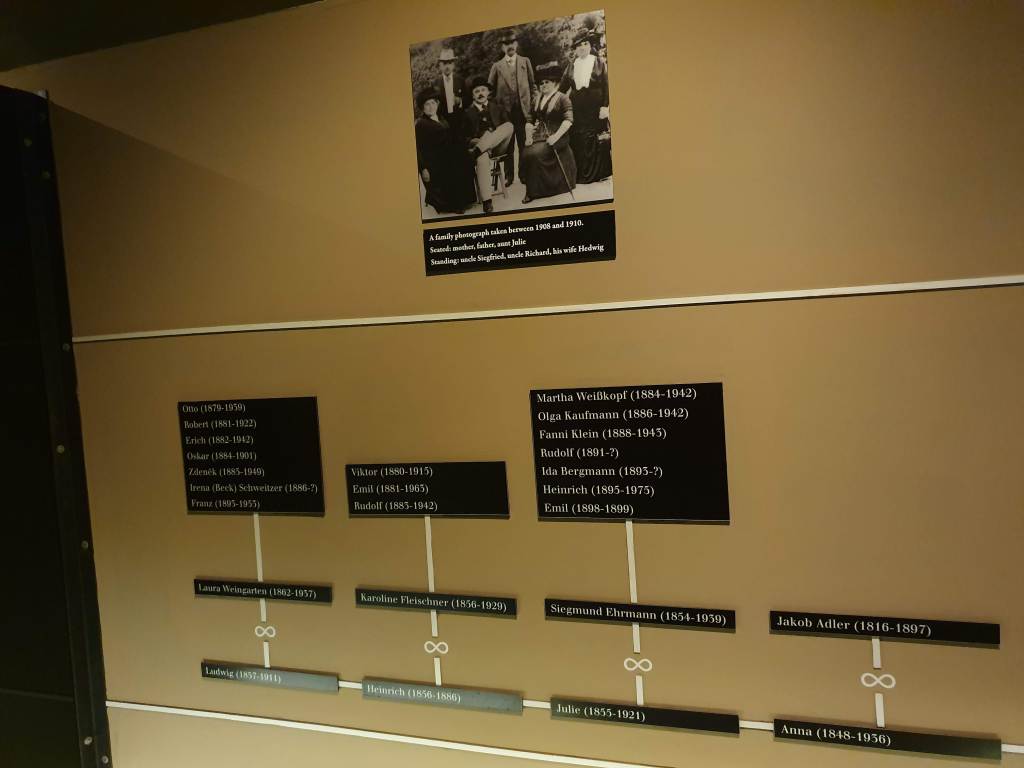
His sibling

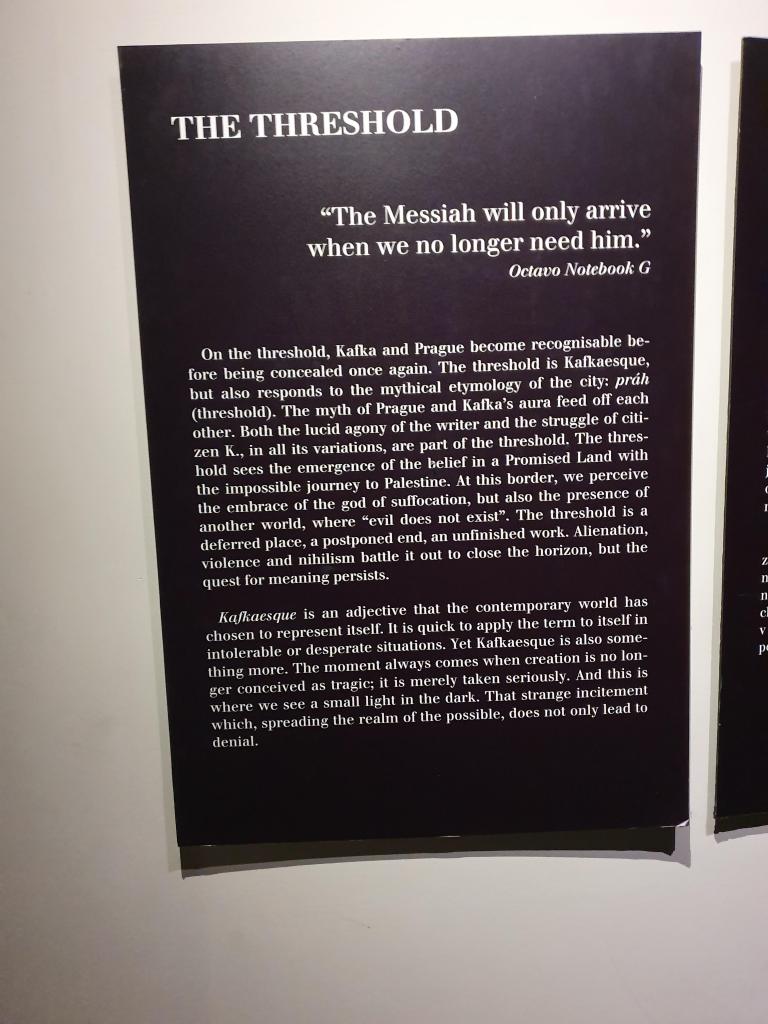
The Threshold The Messiah will arrive when we no longer need him; it reminded me of a novel by Dostoevsky; The Brothers Karamazov.

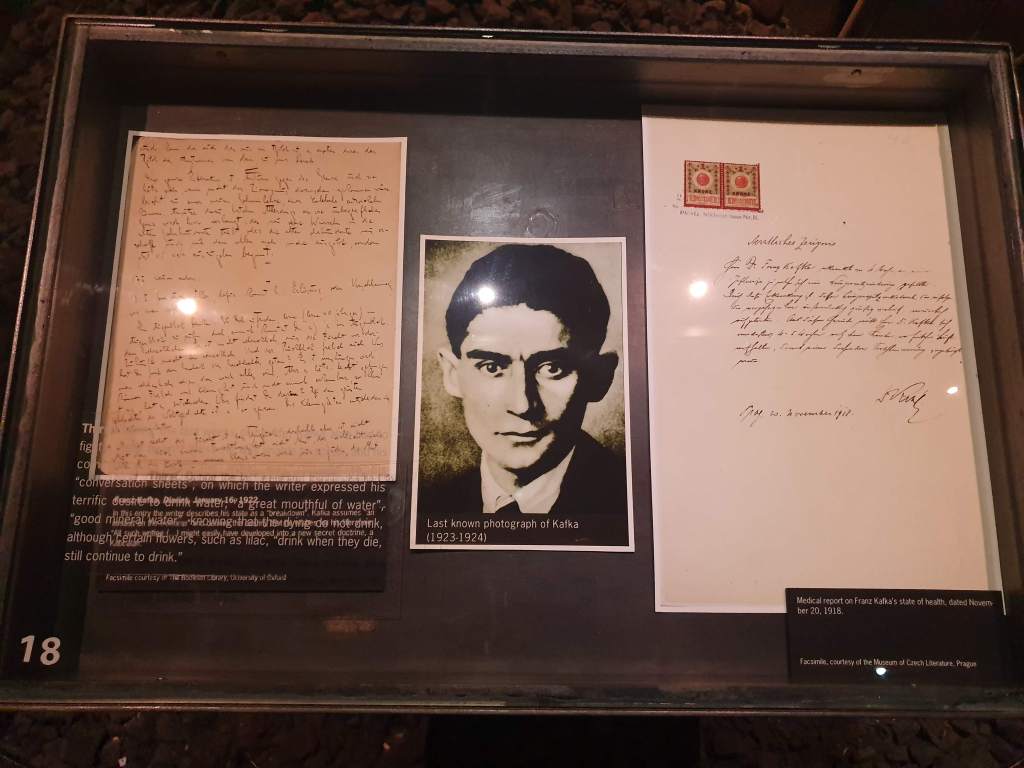
At the end I share an artwork of the head of Franz Kafka in Prague πŸ™‚ have a beautiful Weekend ❀

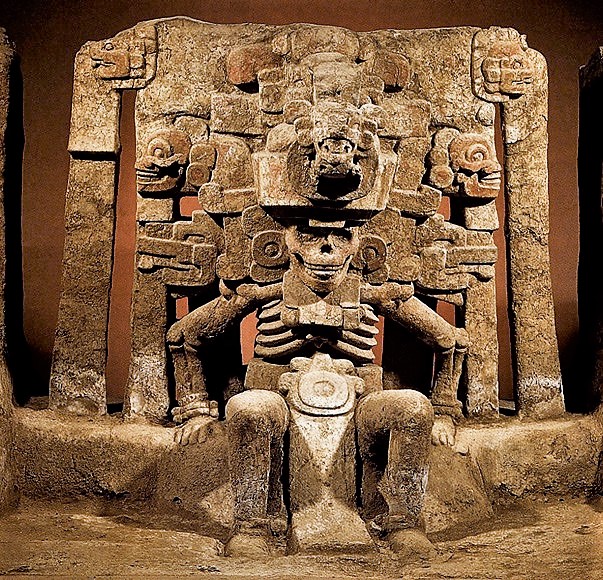
Actually, They come all from the original ancient history!

Standard
via Mexican Folk Art Guide

Hi Friends. it’s a holiday today in some of the states in Germany (the catholic ones) not because of the Halloween but because of an old catholic ceremony to honoured the beloved ones who past away. The All Saint’s Day (here we call it Allerheiligen) it is a day to go to the cemeteries and remember of the loss.

I am at home to take the benefit of this but not going to the cemetery, not only because of my nonreligious opinion but surely for me it isn’t necessary to go to the cemetery to remember my beloved one, I have them in my heart and when I go there it’s just to look after if everything is okay!

So now the reason of my writing is that I read an article in The Conversation a very interesting Website about the very ceremony of today by catholic, is not their invention but originally the Aztecs had it in those days. https://theconversationus.cmail19.com/t/r-l-jddthkjt-uihidylylr-n/

Mexico’s Day of the Dead begins with an overnight graveside vigil on Oct. 31.Β AP Photo/Marco Ugarte
WilderUtopia.com
kmlockwood.com

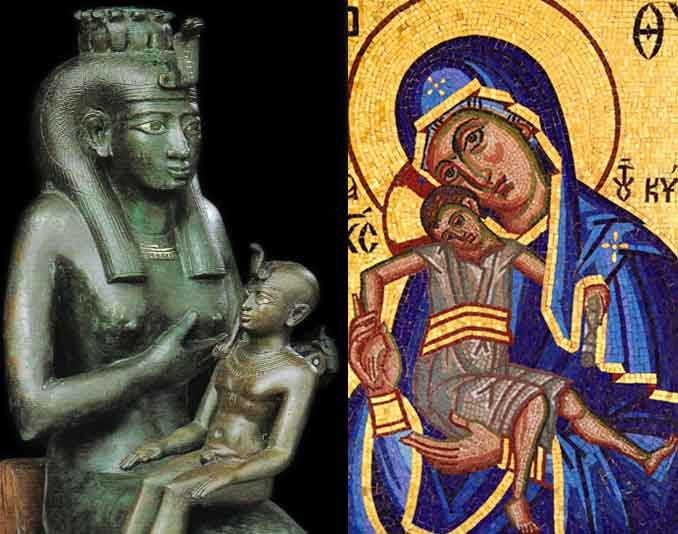
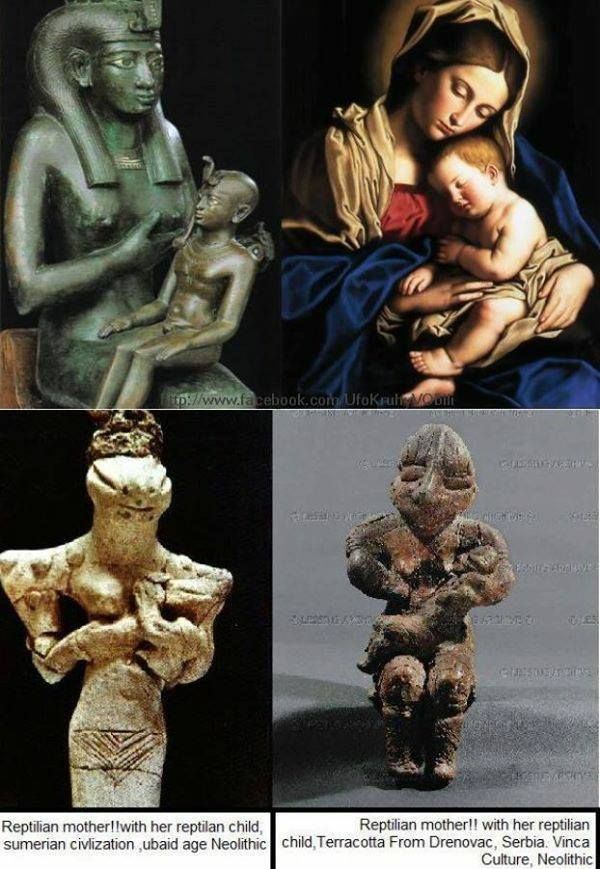
In the older history; about Mary & Jesus and Isis & Horus

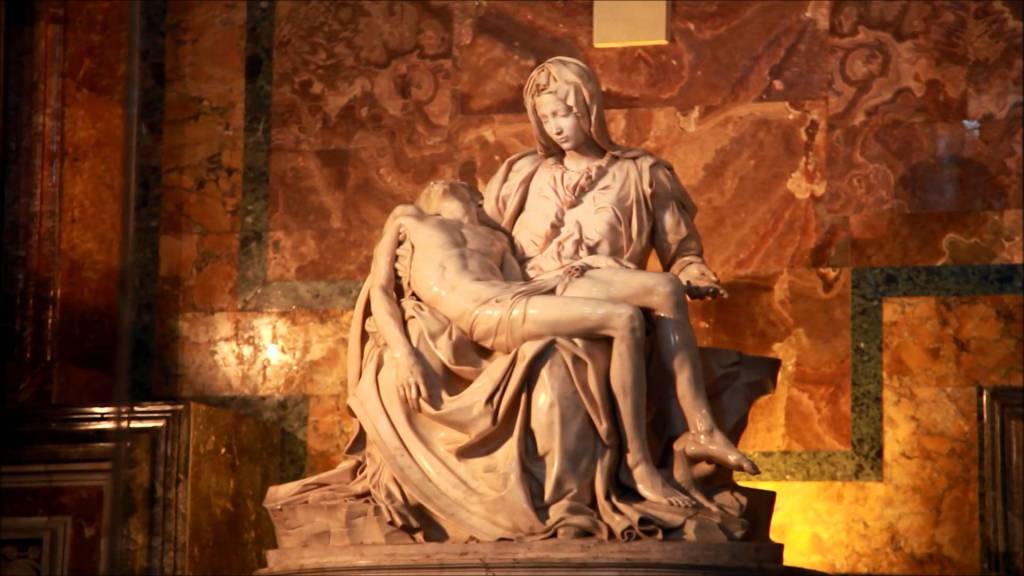
It’s really obvious as we look into the ancient history of mankind, we can find many similarities in between; for example, the famous Pieta(s) which isn’t found by the Christ on Mary’s lap:

hiukkagoddess.wordpress.com

with Egyptian Goddess Isis with her son Horus;

There are similar;

Eye of Horus Metaphysical

As we can find much more of these similarities in the past;

www.pinterest.com

I have found it always exciting to look after our history and from where have been all come from? There must be something important in our ancient time which had influenced all through history until now.

Happy Halloween if celebrate it πŸ™‚ πŸ’–πŸ’–