The Spartans

Standard

“Why are you Spartan women the only ones who can rule men?”
“Because we are also the only ones who give birth to men.”

Gorgo, Queen of Sparta and wife of Leonidas, as quoted by Plutarch[1] via; http://Wikipedia Women in ancient Sparta – Wikipedia

Women in ancient Sparta.  Jean-Jacques-François Le Barbier - Courage des femmes de Sparte.
Women in ancient Sparta. 
Jean-Jacques-François Le Barbier – Courage des femmes de Sparte. http://Wikimedia Commons

This topic has been lingering in my mind for many years as I’d heard more and more about this interesting but also very strange folk. Even, as I can remember, it was about two years ago that Aquileana (Amalia) https://aquileana.wordpress.com/ had written to me that we could write one time an article together about them, but this, unfortunately, hasn’t come yet.

Therefore, I thought to try it alone; because these Spartans are full of contrasts as we can see in their behaviour. There are many researchers and many tells about them. They might be famous especially because of the movie: 300 which has been run some years ago in cinemas. An action film though, based on lies as the history shows that the Spartans were not alone, they got help by Athens among the others.

Anyway, we see here a folk with a very hard discipline about their masculine and a freewill towards their feminine; The born sons had to learn to be soldiers as children. In this link here we can read how difficult is to be born as a masculine: https://www.history.com/news/8-reasons-it-wasnt-easy-being-spartan

‘The Spartans were a strange people…Their contemporaries in the ancient world were intrigued by the ‘mystery’ that surrounded them, by their secretiveness, their peculiar manner of life and the impenetrable seclusion into which they had withdrawn. In their own day they were a great people; but their greatness sprang from qualities violently and astonishingly different from those that the world regards as typically Greek.’
(H Michell, 1964, Sparta, Cambridge University Press, London, p.1)

The Rise of Sparta | Sparta map, Sparta, Historical maps
http://Pinterest

It seems that as the Greek or better to say, Plato wanted to build his Utopia school, as he described a perfect society as one where everyone lived harmoniously and without the fear of violence or material possession. He believed that political life in Athens was to rowdy and that no one would be able to live a good life with that kind of democracy.

Platón y Aristóteles representados por Rafael en "La escuela de ...
http://Pinterest

We can find it in Plato’s book; The Law: The Laws is one of Plato’s last dialogues. In it, he sketches the basic political structure and the laws of an ideal city named Magnesia. The Laws is Plato’s last, longest, and, perhaps, most loathed work. The book is a conversation on political philosophy between three elderly men: an unnamed Athenian, a Spartan named Megillus, and a Cretan named Clinias. These men work to create a constitution for Magnesia, a new Cretan colony. The government of Magnesia is a mixture of democratic and authoritarian principles that aim at making all of its citizens happy and virtuous. https://iep.utm.edu/pla-laws/

But the Spartans were just thinking of making soldiers for the next war!

Here is another look at them from the way in the Greek art of old “tragicomedy” (SPARTA AND SPARTANS IN OLD COMEDY) by Ralph M. Rosen http://Ralph M. Rosen From the book; “The Greek SuperpowerSparta in the Self-Definitions of Athenians” Edited. by Anton Powell & Paul Cartledge, according to the author:

The Athenian attitude towards Sparta that emerges from Aristophanes’ plays, however, is far more complex than this sweeping overview conveys. Even a quick, superficial reading of Acharnians or Lysistrata is enough to show that Aristophanes was not out to persuade his audience to detest the Spartans, despite the many times Sparta or Spartan customs come in for ridicule throughout all his plays. Over the past half-century, scholars have
taken up the question of Aristophanes and Sparta systematically, and there is little dispute that Aristophanes’ plays serve up a mixture of hostility, admiration, ambivalence and empathy in their depiction of the Spartans.

Tigerstedt (1965) summed up the matter well when he said that the
‘expressions of popular sentiment against Sparta were not approved without reservation by Aristophanes. He – or his mouthpieces in the comedies – agrees with its adversaries in so far as the Spartans were guilty of much evil. But the Athenians are no better’ (1965, 125). Two subsequent studies, by Cozzoli (1984) and Harvey (1994), have reached similar conclusions, although the latter offers a fuller treatment of the evidence and slightly different analyses than the former. These scholars have done the important groundwork: they have collected the passages in Aristophanes where Spartans are featured – negatively, positively or somewhere in between – and tried to make some sense out of the representations that emerge….

And he continues: This leaves us, however, still with an unresolved problem: if we are not willing to call Aristophanes a ‘sympathizer’, what exactly accounts for the restraint of his attacks on the Spartans and on some occasions, as it seems, his open support of their point of view? This is the question I would like to revisit here, partly because I think more needs to be said about the role of comic poetics in this debate, and also to pay at least some attention to what other poets of Old Comedy, fragmentary though they now are, have to contribute. I hope to show, first, that the particular ways in which Aristophanes wove the Spartans into his plots, or how he constructed them as targets more occasionally in other plays, can be explained as a function of the satirical dynamics governing the genre, without recourse to biographical speculation. Second, I would like to spend more time than earlier scholars have on the question of how Sparta was represented by the non-Aristophanic comic poets, in an effort to show that there is little evidence (as is sometimes imagined) 3 that they were any more vehement in their criticism of Sparta than Aristophanes. In the end, as I hope to show, the particular ways in which Sparta was represented by comic poets during the Peloponnesian War can best be explained by the confluence of several quite specific poetic and cultural factors, where generic forces meet historical specifics.

But interestingly, the women were free to choose what they wanted to do in their lives, of course except to taking part in the wars.

WOMEN IN SPARTA

via; https://thespartans-oflaconia.weebly.com/
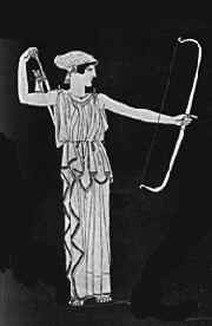
The women of Sparta were unlike any other women of their time. They were educated, known for their beauty, competent in various sporting activities, and looked upon by their Athenian counterparts as exceptional mothers. Contrasting to other Greek women, the women of Sparta were significant within the biological, social, economic, and religious parts of Spartan society and culture. It has been said that Spartan women were seen as the vehicle by which Sparta advanced; in no other Greek city state did women have the privilege of freedom like the women of Sparta.

This greater freedom for Spartan women and girls began at birth. The same care and food given to their brothers was something required for the Spartan girls by law – opposing to other Greek cities, where it was much more common for girls to be rejected or killed, starved and prevented from exposure to sunlight or fresh air.

Spartan girls, once they had reached a certain age, would receive an education. They would be trained in the arts of literacy; being encouraged to speak in public upon many topics, Moussika; to pass on the traditional values of Sparta, such as music, dance and poetry. They were also taught horsemen ship and athletics. Athletics was something that other Greek girls and women were not permitted to do, however, for Spartan women exercising unclothed, with other men, and performing in various athletic events was standard.

Although Spartan women seemed to have more freedom then most women of the Greek world, their one main role was to make strong Spartan offspring. When women in Sparta reached sexual maturity, they were not rushed into marriage or childbirth; unlike the other women of the Greek and ancient world, who would suffer from psychological and even physical injury from being rushed into childbirth at a young age. Spartan laws even advocated the importance of marriage and pregnancy only after women had reached an appropriate age.

Once married the wife would become in control of the estate of her husband, because of the frequency and length of time that the husband would be away devoting his life to the Spartan military. This is where control of the Spartan agricultural economy fell into the hands of the Spartan women. A Spartan husband became dependant on his wife, that she would pay his fees and supply the money for the son’s agoge fees. This control that Spartan women had is a sharp difference to Athenian women, who were never heiress of their husbands or fathers estates – money would be passed down to the next male in the family. Because of all this power that was given to the Spartan women it was often said by Aristotle that Spartan women “ruled” their husbands. In response to this, the wife of King Leonidas said that “Spartan women were the only women who ruled their husbands, because they were the only women who gave birth to men”.

I hope you’ve not gotten tired to read more of it, here is another article was written by the Greek friends which I more or less translated from Greek. 😉Have a great time and a peaceful weekend everyone 💖

The only ancient Spartans

By SearchingTheMeaningOfLife

As I read all over about the ancients, where so ever from; old Greece, old Persians, or even old Arabs, there are the women who decide over the fate or destiny of all the history of “men” and as I read a lot about Sparta and know them as a brave and advanced folk. WE can really learn a lot from our own history.

Women in ancient Sparta. Jean-Jacques-François Le Barbier – Courage des femmes de Sparte.

Women make up half of the population, but historical sources do not pay even half the attention they deserve and demand their role. But the women of Sparta were an exception. They were the only women in antiquity who, instead of remaining silent, had their own opinion and took care to formulate it. So since in the eyes of the rest of the Greeks the Spartans seemed strange with their manners and habits, their wives also seemed even more strange.

The mission given to them by the semi-mythical legislator Lykourgos was to give birth to boys who would be the soldiers of the next generation, with measures to ensure that they were physically fit. The girls were not required to be inspected by the authorities at birth, and the decision to step up was left entirely to the parents. All they needed was to exercise their bodies in running, wrestling, discus and javelin throwing, while participating naked in religious processions, orchestrations and songs.

Aristotle criticized the Spartan law that allowed women, unlike men, living dissolutely and luxury. From the testimonies, we conclude that the women did not need to exercise after the birth of children or after the age at which they could have children.

So, our contexts lead us to think that women should get married when they reach the right age to have children. The Plutarch writes that they used to marry ” not little girls or immature for marriage, but in the prime of their youth and mature .” That is, while in the rest of Greece they married around fourteen, the Spartan law stipulated that the woman had to be fully physically developed, therefore at the age of eighteen to twenty.

In Sparta, unlike in Athens, the official engagement from the bride’s father was not necessary for a legal marriage, so there was no official promise from the father to give a dowry for his daughter. Lykourgos legislated this with the reasoning that no one should remain unmarried because of poverty or be sought after because of wealth, but that everyone should focus on the character and qualifications of the girl. Therefore, marriages were arranged individually, without implying that there was no agreement between the groom and the father of the bride. In addition, there was the so-called abduction, which the husband simply stole due to custom, although there is evidence that this was done knowingly by the father.

But while men had to divorce their wives in order to marry another woman, a woman was allowed to have Spartans from the time they were married, had her hair short, unlike long-haired men, and possibly wore a veil when appearing in public… sex with two men ! If a man, due to old age or incapacity, wanted to have children, he would bring home any man who admired his physique and character to have children with his wife. Also, if someone saw a woman having beautiful children, she asked, with the consent of her husband, to give birth to his children. Of course, the purpose of the law was to increase the population and give birth to as many older children as possible. The children could legally be considered to belong either to their natural father or to the woman’s husband by agreement of the men. Thus, it is not easy to capture the notion of adultery in Sparta. 

However, the moralist and conservative Aristotle refers to sexual  innocence when he spoke of the women of Sparta, who imposed their will and how it constituted the political and moral bankruptcy of Sparta. Like the educated Aristotle, the rest of the Greeks embraced the typical macho view that women were inferior to men and that this freedom of the Spartans alienated them unimaginably! They had the view that the Spartans were living a tender and unselfish life, at the urging of their retreating spouses. The truth is, however, that these women were nurtured within a public educational system, which resulted in a dramatic difference from the typical behaviour of other Greek women.

Apart from sexual relations with other men, a very important element for Aristotle to consider Sparta as a female-dominated society was their right to own and manage the same assets, including land ownership, without being subject to any legal committee status. When the rest of the Greek women transferred their property to their husband or the closest relative, the Spartan patrons were the owners of the property they had inherited!

They were also free from the tedious housework, unlike the other Greek women whose whole world was their home. They didn’t cook, they didn’t sew, they didn’t clean: all this was done by women. It is possible that they did not even breastfeed their children. Whether it happened or not, the fame of the Spartan food, which was obviously helots, was so great that, for example, Alcibiades was raised by a helot. In general, the rest of the Greeks, having a distorted view, considered that a climate of moral depravity prevailed and that the Spartans not only imposed their will on men but also exerted influence on state affairs!

In Sparta, there were no celebrations exclusively for women. The girls on the doorstep competed in dance and song, while the married women sang mocking songs and mocked the bachelors.

Another special feature of them was that they did not mourn or smell after the death of a family member. They did not mourn and did not retreat to their homes when their husbands fell in the war, but they walked proudly with a bright and happy face for the glorious death of their husbands.

Archileonis, Vrasidas’ mother, whose son died when some arrived from Amfipoli in Sparta and went to see her, asked if her son had died in a beautiful and dignified manner in Sparta. As they praised him and said that in his achievements he was the best of the Lacedaemonians, she said: “My son was a foreigner, right and virtuous, but Lacedaemon is much superior to him.” Plutarch.

Young people in ancient Sparta.  Young Spartans Exercising by Edgar Degas (1834-1917)

Young people in ancient Sparta. Young Spartans Exercising by Edgar Degas (1834-1917)

Spartan society was the first to try to implement eugenics. The good physical condition of women contributed to being healthy mothers. They were not considered inferior in their society. Young girls were given similar portions of food as boys. They were imbued with a process of education and socialization with the ideals of Spartan society, for the implementation of which their behaviour as adult women was crucial.

Finally, as adults, they had the right to inherit and manage their own property. They could express their opinion about the prospective groom that their father would choose and their opinion was important. It was these women who, if their sons returned defeated and alive, would publicly show them their wombs and ask them insultingly if they wanted to crawl into it! They were just unique in a macho world!

Indicative bibliography

Source: http://eranistis.net/wordpress/

https://www.history.com/news/8-reasons-it-wasnt-easy-being-spartan

https://en.wikipedia.org/wiki/Women_in_ancient_Sparta

https://www.classics.upenn.edu/people/ralph-m-rosen

https://www.jstor.org/stable/j.ctv5jxmb3

https://plato.stanford.edu/entries/plato-utopia/#laws

The lotus, more than a plant, a symbol

Standard
In the Theban tomb of Menna (TT69) a young girl, seated on a mat, holds lotuses in her hands

The flowers, they are one of the wonder on our planet for sure. I am not exaggerating; we may see them all around us and not notice when we look at them we feel some calmness and happiness in our soul.

And here is the proof! The magic of this nature goes back to the magic of ancient Egypt. Here is the tale of the wizard of Nymphaea, the Water Lily.

With a heartily thank to two honourable Egyptologists and friends of mine

http://Marc Chartier & http://Marie Grillot 🙏💖🙏💖

“Imagine it if in the hands or on the forehead of women, in bouquets mounted or on offering tables, in decorative friezes or floating on water features in gardens, the image of elegant blue lotus is one that is automatically associated with Egyptian civilization. ” (Jean-Pierre Corteggiani, Ancient Egypt and its Gods, Fayard 2007).

In his “General Overview on Egypt” Antoine Barthélémy Clot-Bey, evokes it thus: “The water lily is the famous Nymphaea lotus of antiquity. When the flood disappears, this aquatic plant covers the surface of its canals. immense leaves, in the middle of which stand out white or azure flowers, of the most elegant form. Its tubers were, according to what Herodotus reports, one of the foods most in favour among the ancient Egyptians “.

Lotus – Nénuphar – Nymphéa

In fact, three different water lilies are usually listed on Egyptian soil: the pink Indian lotus introduced to Egypt by the Persians around 500 BC. AD; the white lotus which opens at nightfall and is characterized by its jagged-edged leaves, rounded buds, spreading petals and strong scent; the blue lotus, with its leaves with a linear edge, its tapered, pointed buds and its narrow, pointed petals.

It is the latter – the Nymphaea caerulea, lotus or blue water lily – that is most characteristic of Egypt.

With a suave and sweet aroma, it blooms during the day, opening at the first rays of the sun, then in the evening, closed for the night, it disappears under the water from which it will not emerge until the next morning. “Its yellow centre, with a blue outline, also evokes the sun in the sky” specifies Salima Ikhram. It is considered by the ancient Egyptians to be “the initial flower” and “the symbol of the birth of the divine star”. Thus, when it has finished its course, the sun takes refuge in the lotus to plunge back into the wave.And the cycle begins again every day and every night, since the dawn of time.

Symbol of birth, the lotus is also that of re-birth. “Chapter 81 of the Book of the Dead allows the deceased to assimilate to the renewed solar god. The vignette which illustrates it represents the skull of the dead springing from the water lily” specifies Isabelle Franco.

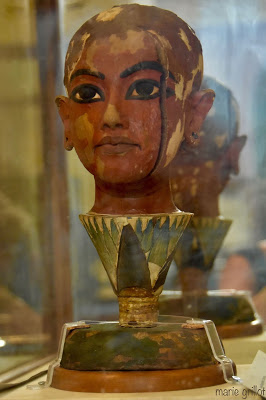
Magnificent polychrome wooden statue representing Tutankhamun
whose head emerges from a lotus flower with open blue petals (JE 60723)

This image can only refer us to the magnificent polychrome wooden statue representing Tutankhamun whose head emerges from a lotus flower whose blue petals are open (JE 60723). Christiane Desroches Noblecourt analyzes it thus: “Symbolic image of the rebirth of the deceased, the head of the sovereign emerging from the lotus evoked the Horus-child: Harpocrates”.

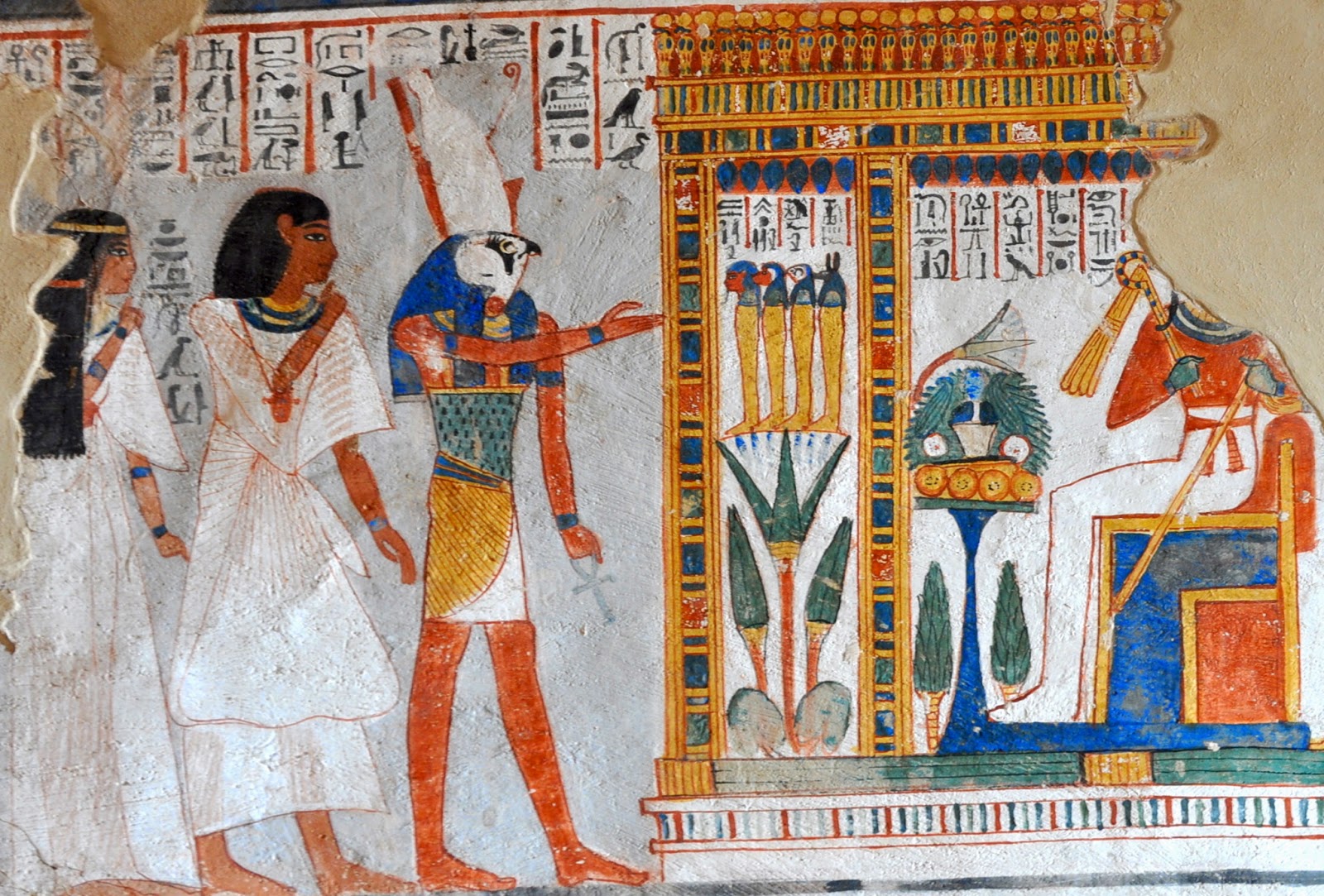
Center: the four sons of Horus stand on a lotus – Roy’s Theban tomb (TT255)

This flower can also serve as a “support” for the four sons of Horus: “This representation appears at the end of the XVIIIth Dynasty, without real systematization at the beginning. Then the motif of the four standing figures, frozen in a precise order, on the corolla of the open lotus will be the standard cannon from the XXth Dynasty until Roman times …

The choice of the blue lotus is clearly related to the rise at this time of the Hermopolitan cosmogony. This presents, at the dawn of time, four male characters who fertilize the primordial lotus floating on the abyssal waters of the Nun (or the Nun himself, from which the plant will emerge); lotus from which will spring the solar child, and therefore Creation “… (Osirisnet)

The lotus was endowed with other functions, symbolic and mythological; it was used in particular to represent Upper Egypt, Lower Egypt has been associated with the papyrus. Thus the two plants are instituted as the “heraldic plants” of Egypt and are often presented linked to signify the union of the two lands.

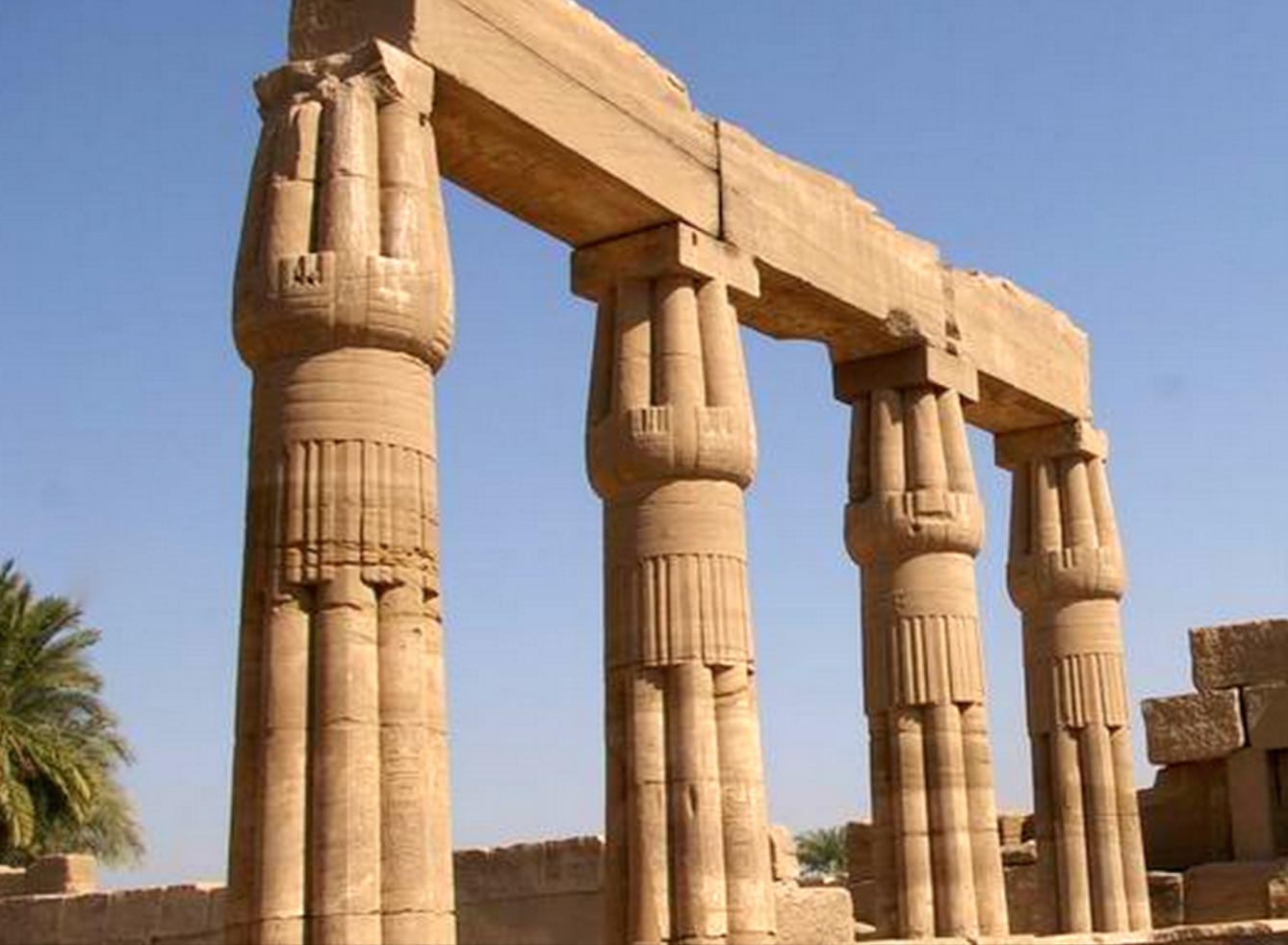
Lotiform columns: portico of the temple of Akh-Ménou (Karnak)

It is widely used in the decoration of temples. This is how we find columns with loti form capitals – “they may have originally represented, writes Gaston Maspero, a bundle of lotus stems whose buttons, tight around the neck by a link, meet in a bouquet to form the capital “- and that often” the base of the columns is surrounded by leaves, the foot of the walls were lined with long stems of lotus or papyrus “.

In the Theban tomb of Nakht (TT52) lotus bouquet decorating an offering table

The lotuses are very often represented in the scenes of the tombs. They are found on offering tables, in floral wreaths, on headbands worn by beautiful ladies, or, quite simply, in their hands and sometimes turned towards their nostrils …

As we can see on certain wall decorations, or pavements, which reach us from the Amarna period, the lotus, like the papyrus, expressed their freshness and their overflowing nature …

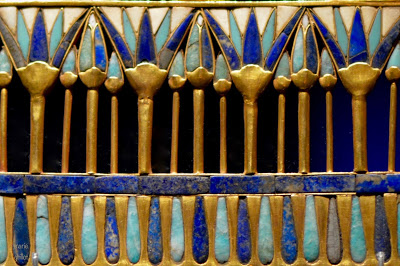
Lotus flowers and buds: detail of a breastplate from Tutankhamun (JE 61897 – GEM 139)

It is also very popular in goldsmiths where it is found in rings, bracelets, elements of necklaces or pectorals or in certain chalices which borrow its shape.

He was the emblem of the god Nefertum, son of Ptah and Sekkmet, “divinity of the pleasant smell”, appeared “like a lotus in the nostril of Ra”.

“Despite its brevity, comments Jean-Pierre Corteggiani, this [last] formula is important since, in addition to the allusion to the fact that the flower is breathed, it establishes a relationship with the sun, a link that underlines (…) the only other mention of the god in the oldest corpus of Egyptian religious texts: invoked as ‘image of Nefertum’, the lotus then becomes that of the primordial flower, ‘exit of the Nun’ [personification of the primordial waters existing before creation], d ‘where the solar child arises every day as he did the first time. ”

Represented in the “erotic” papyrus of Turin, above the heads of the characters, the lotus was famous, such as Ginko Biloba, for its tonic, narcotic and aphrodisiac virtues, against the effects of ageing or sexual “breakdown”.

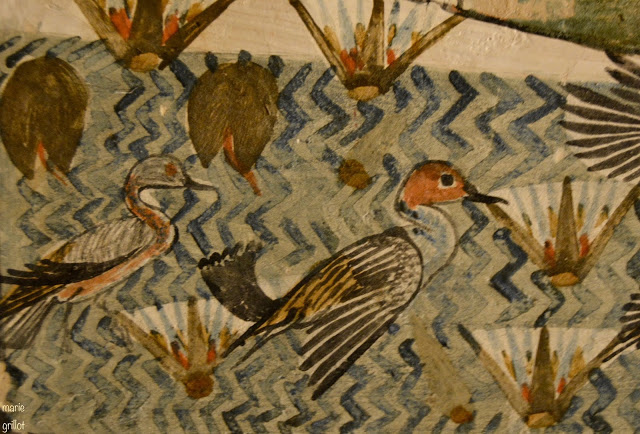
In the Theban tomb of Menna (TT69) ducks swim among the lotuses

The lotus was, therefore, for the Egyptians of antiquity, a flower, beautiful and fragrant, loaded with meaning, life, and promises …

http://Marc Chartier & http://Marie Grillot

sources:
Dictionary of Egyptian Mythology, Isabelle Franco, 2013
Ancient Egypt and its gods, Jean-Pierre Corteggiani, 2007
Egyptian Archeology, Gaston Maspero, 1910
General Overview on Egypt, Clot-Bey, Antoine B., Paris, 1840
https://digi.ub.uni-heidelberg.de/diglit/clotbey1840bd1/0200/text_ocr
osirisnet.net
The fabulous heritage of Egypt, Christiane Desroches Noblecourt, 2004

Death in Venice

Standard

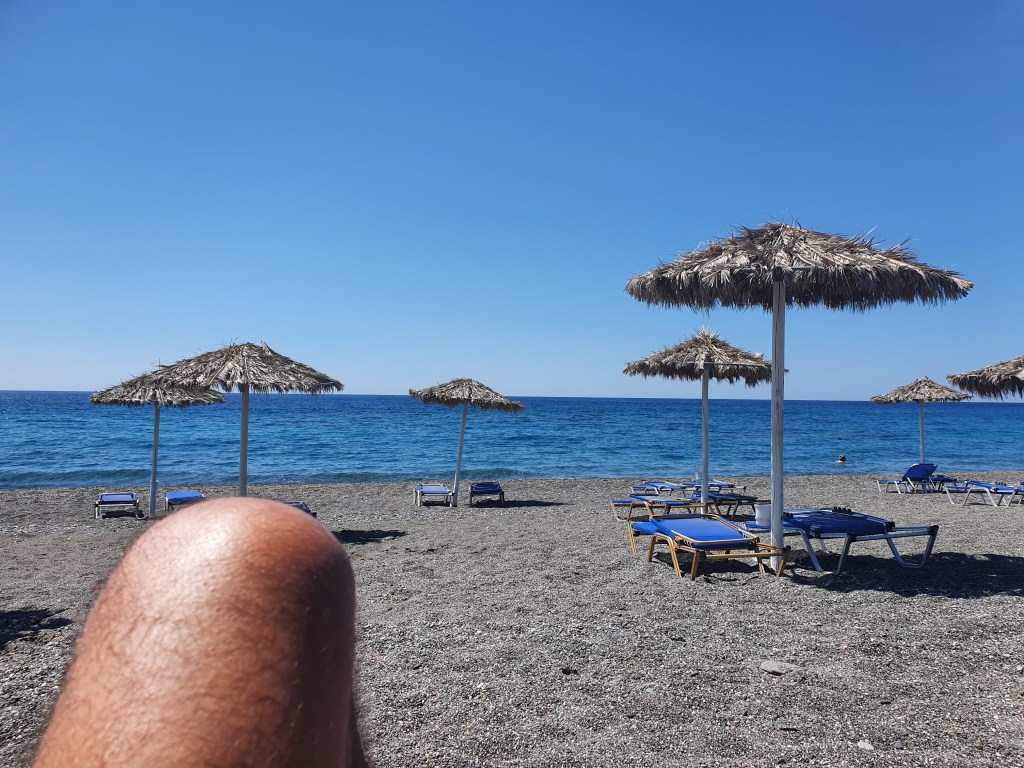
Of course, it’s the title of a book and a movie, and I was in Crete lately, not in Venice. And I’m still alive!

But when I was sitting at the beach almost alone and as I felt this total solitude, how beautifully it came to my head once the scene of the end of Luchino Visconti’s masterwork, when Dirck Borgarde in the movie: Death in Venice, as Gustav von Aschenbach (actually Gustav Mahler) sitting in his chair in the last minutes of his life, regards the perfect beauty, I thought; isn’t it an ideal death?,,

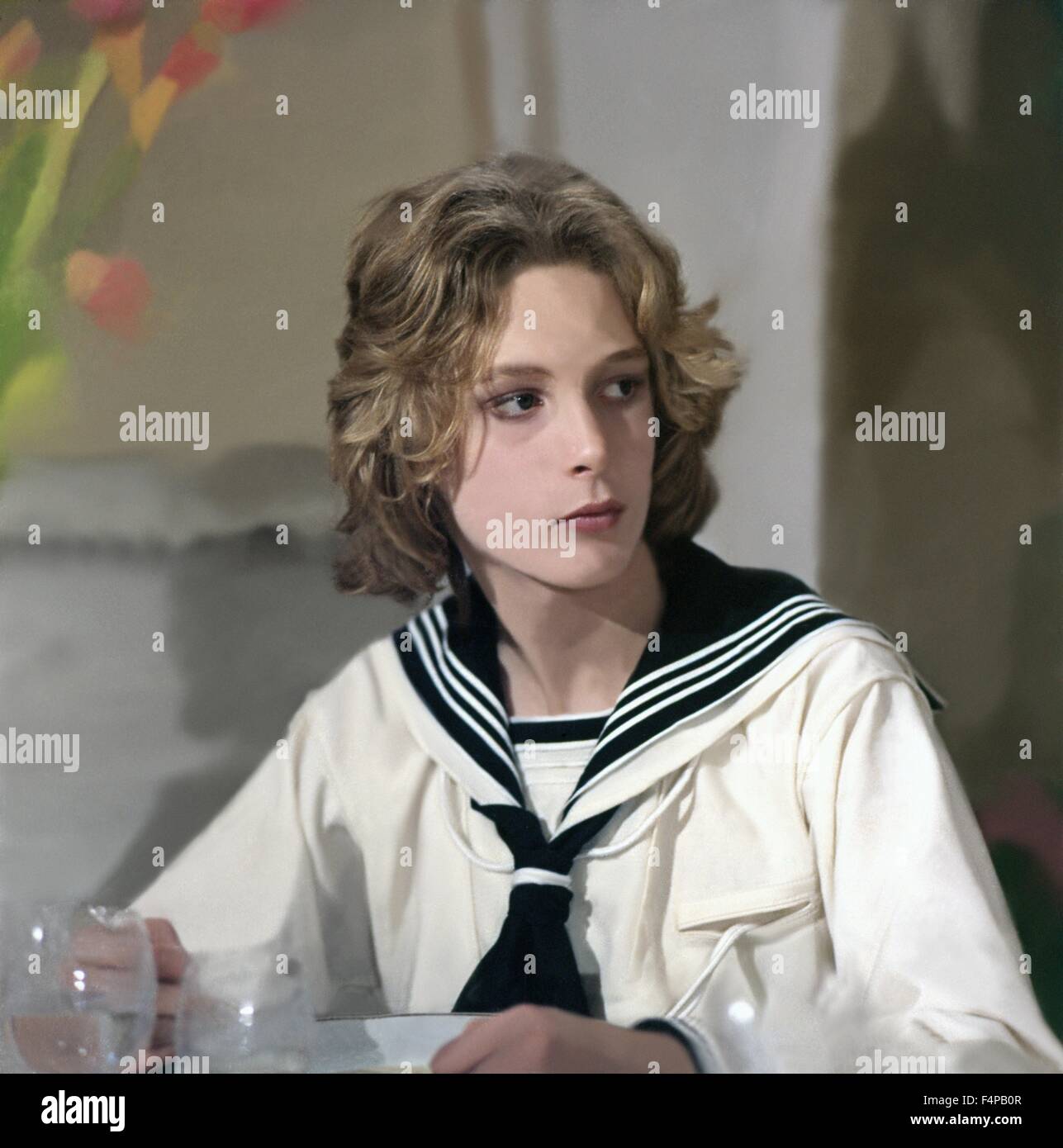
Gustav Von Aschenbach, a composer utterly absorbed in his work, arrives in Venice due to a youthfully ardent thirst for distant scenes and meets a young man whose beauty he becomes obsessed with. His pitiful pursuit of the object of his overpowering affection and its inevitable and tragic consequences is told here in Visconti’s luminous work of Art.

I don’t know if you have seen this film or are interested in such neorealist Italian movies (I love them all!). It was made in 1971. I saw it some years later, the interesting mix of three Genius Artists: Thomas Mann, the writer, Luchino Visconti, the director and Gustav Mahler (I think he had a unique view of beauty). It makes perfect sense!

Björn Andresen Stockfotos und -bilder Kaufen - Alamy
http://Alamy

Oh yes, the Beauty is, as I think, the most adorable questionable issue of all time! I say this because I, myself, am not and will never be a homosexual, though I had a lot of homosexual friends in Iran.! And I must say that they were all artists. Therefore, we have the same view on beauty, no matter what kind (you can understand what I’m talking about). Beauty was the matter.
In this movie comes first the Author, Thomas Mann https://en.m.wikipedia.org/wiki/Thomas_Mann. He was a homosexual. Gustav Mahler https://en.wikipedia.org/wiki/Gustav_Mahler I don’t know if he was!? Luchino Visconti was a man who recognised beauty. I know that because I know some movies by him, especially Conversation Piece. https://en.wikipedia.org/wiki/Conversation_Piece_(film)

I can imagine that this one is unknown or might not be so famous, at least for you; as I may be allowed to mention, we, as artists, tried to survive in Iran. The bread was not the problem, but the lack of Art was the main one. That was the motive for us to catch up with all the good things which had to do with the arts. Therefore, we swallowed all the arts at any time (come what may). You know, in those days, Art had a meaning!

And I meant Art; I am convinced that Art is a gracious presence, or “the presence” of God, and it helps us without hesitation find our path, the way to a certain aim. That’s all I can imagine.

In this movie, Luchino Visconti chose an excellent set for his film; Burt Lancaster, an old master of the act. And Helmut Berger, an outstanding actor (plus a handsome Dorian Gray)

Look (searching) for the Beauty “In Meinem Lied”…

By making this video, Stephen Van Woert explains that Gustav Mahler (whom Visconti asserted to be Aschenbach in the film) composed “Ich bin der Welt abhanden gekommen” (“I have become lost to the world”) in 1901, ten years before his untimely death. He said of this music, “It is truly me!” The words are from a poem by Friedrick Rückert. If you want to understand Mahler and Aschenbach, you must understand the song’s meaning. Here is a translation:

I have become lost to the world Where I formerly wasted much time… It has heard nothing from me for so long… It may well believe me to be dead… It is of no concern at all to me If it takes me for dead

[These two lines are omitted from the video: I can’t at all contradict it, For in a real sense, I am dead, dead to the world]

I am dead to the world’s turmoil And rest in a quiet realm. I live solely in my heaven, In my loving, In my song!

That’s all about Arts and nothing else 🙏💖🙏😊

https://en.wikipedia.org/wiki/Death_in_Venice

Nima Yushij; the maker of the new way in Poetry

Standard

I must begin this post with a confession that I have never used a romantic poetic way in my life. I think that some of my wonderful friends who are great poets have noticed that I am not the one and they may be righ” 😁😉

Therefore, I want to present this post to these appreciated poetesses and poets. especially; Holly @hrenehunter https://houseofheartweb.wordpress.com/ , Yassy @yaskhan https://yassy66.wordpress.com/ , Lance Sheridan https://lancesheridan.com/ Deborah Gregory @liberatedsheep http://theliberatedsheep.com/ Mike Steeden @michaelsteeden https://mikesteeden.wordpress.com/ And surely many others. 🙏💖🤗💖🤗🙏

When I was young, I chose the way of logic; although likely read the romantic novels and even when I got into the world of theatre, I used both methods of Konstantin Sergejewitsch Stanislawski and Berthold Brecht; though, there is a huge difference between them. Stanislawski believed that the actor(ess) must bring the character on the stage into life, and Brecht wasn’t agreed and wanted the Technique on the stage: {Epic Theatre}, but I used them both appropriately. You can find more here; https://en.wikipedia.org/wiki/Epic_theatre

First, let me tell you about the old style and the modern one in Persian poesy; the poesy in the old-time as belonging to the high society and the poets were appreciated by the kings and queens like in all countries; Athens, Romans, and Persians. In the old Persian, they had a special norm and regulation to write or make a poem; it had to have written in two sentences in the separated row with the same weight and in rhyme.

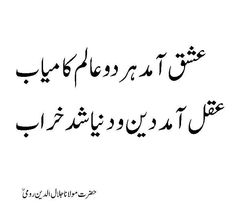
Love has come, both worlds succeed.
Wisdom came to religion and the world became ruined
Moulana Jalal e din Rum

i

I have surely some favourites among those old poets; like Rumi, Khayyam and Hafez

But it never means that I wanted to block all the modern poesy in those days. My brother, Al, had a huge knowledge about the literature included poems, therefore, I was much involved in them. But my interest was not so strong as his, especially, when the modern poesy got famous in Iran and it was a very beloved subject in the meetings of the young intellectuals in some privet apartments, particularly after the Islamic revolution. We had a lot of discussions about the new poems and also there were young poets as newcomers and I had to challenge with them, then I had some problem to get accustomed to the new Poesy, I always meant that I had to understand it when I read a poem! They said that It might because of my lack of interest or understanding about the new wave but I had an argument: I answered I’d appreciate one of the new poets and it was him; Nima Yushij, the revolutioner who made a break in the old form of poesy in Iran and when I heard his poets I had not only understood it completely, it even had touched my soul.

Of course, these young poets were likely trying to get my approval for their own works and I was very amused when I once told a young poet “I like one of your piece” he was fascinatingly encouraged and happy!

Now let me introduce this great poet;

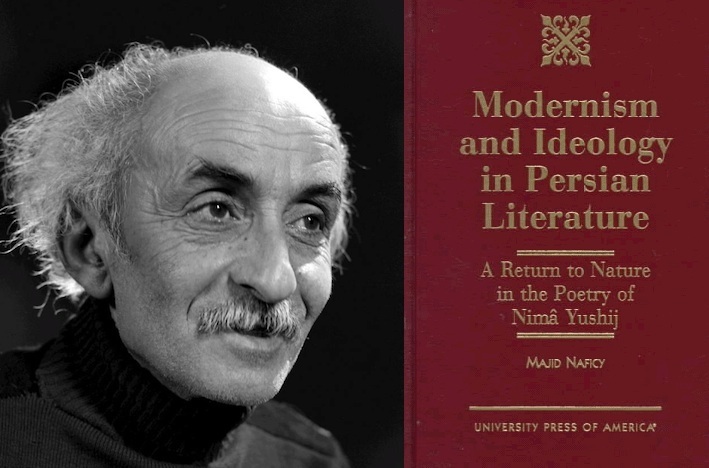
Nima Yushij

His real name is Ali Esfandiyari, he’s born in 1896 and lived till 1960, the eldest son of Ebrahim Nouri of Yosh (a village near Nour county in Mazandaran province of Iran), was born on November 12 1896. He was a contemporary Tabari (Mazandarani dialect) (my father has been born almost in his neighbourhood) and Persian poet who started a new movement in Persian poetry called she’r-e no (“new poetry”) or sometimes called she’r-e Nimaei (Nimaic poetry).

iroon.com: Blogs: Chapter 4-I: Nature Poetry
http://iroon.com

Here is one of his poets which might not be so famous but the one that hit my heart and soul. (as hard as it was I have tried to translate in English)

My House is Cloudy, by Nima Yushij:

my house is cloudy
the entire earth is cloudy with that
from the height, of the mountains pass, desolated ruin and drunk,
the wind whirls. and all the world been shattered by that,
and so my senses.
Ay, Player, that the sound of your flute brought you so out of road, where are you?

My house is cloudy
but, the cloud seems to pour rain
in the reverie of my clear days that have been lost.
I, into the facing of my Sun, carry a look at the threshold of the sea.
And all the world is ruined and shattered by the wind
and on the way, the player who blows into his flute in this cloudy world,
keep going on his own road.

And here is the original version;

خانه ام ابریست

 یکسره روی زمین ابریست با ٱن

از فرازه گردنه ، خرد وخرابو مست

باد میپیچد  ،

یکسره  دنیا خراب از اوست

و حواس من.

ی نیزن  که تورا ٱوای نی بردست دور از ره. کجای ٱ

خانه ام ابری است

 اما

ابر بارانش گرفته است.

در خیال  روزهای روشنم که از دست رفتندم

من به روی ٱفتابم می برم بر صاحت دریا نظاره

و همه دنیا خرا ب و خرد از باد است ،

وبراه نیزن که داىم مینوازد نی در این دنیای ابر اندود راه خود را دارد اندر پیش

Here are some great poets (the old and new) from Persian; hopefully, you’d enjoy 🤗💖🙏

via: http://iranianarchives.org/

http://Ferdowsi

Forough Farrokhzad

Hafez

Nima Yushij

Omar Khayyam

Rumi

Sohrab Sepehri

Ahmad Shamlou

Parvin Etesami

Baba Tahir

Saadi Shirazi

Other Poets


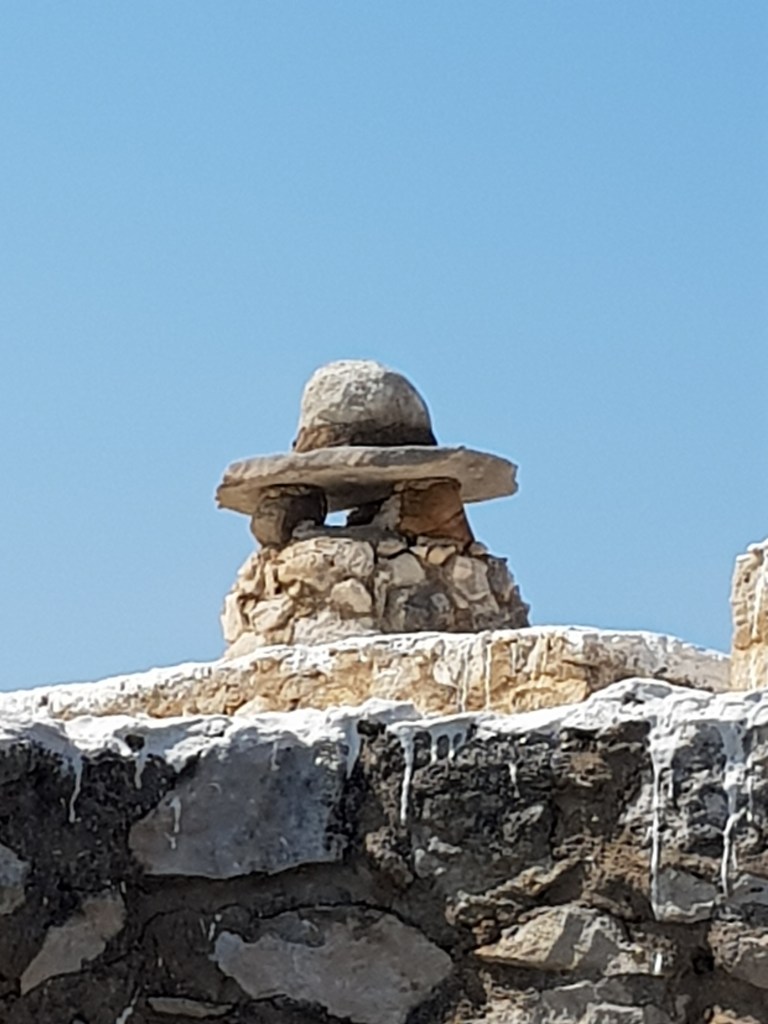
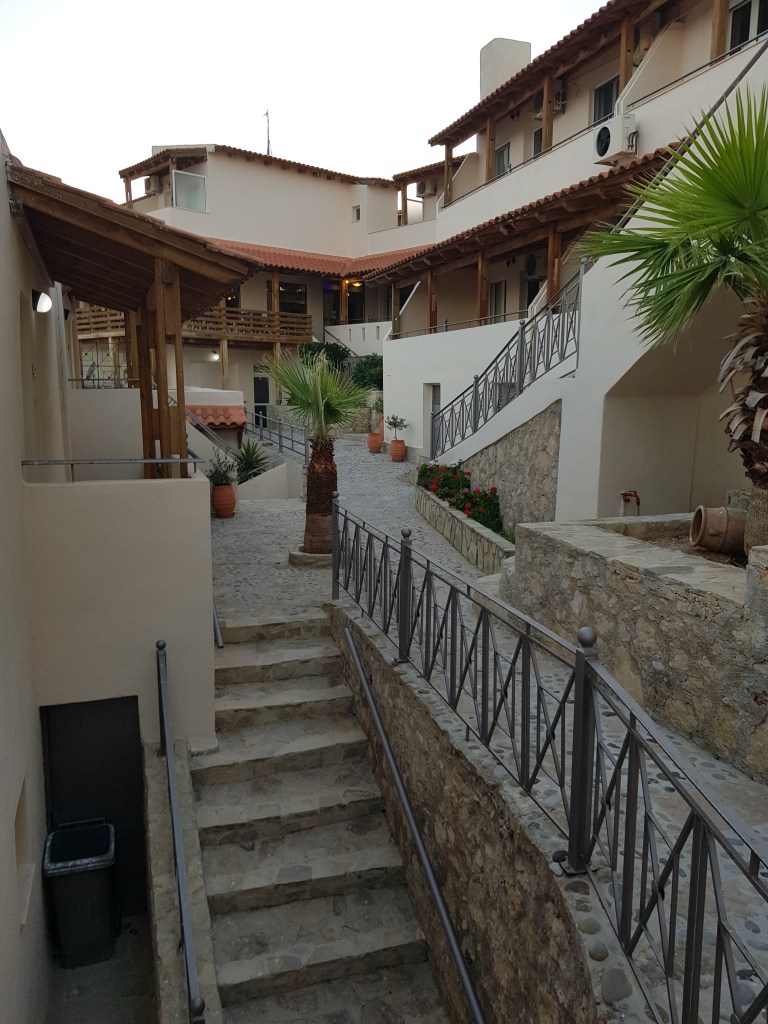
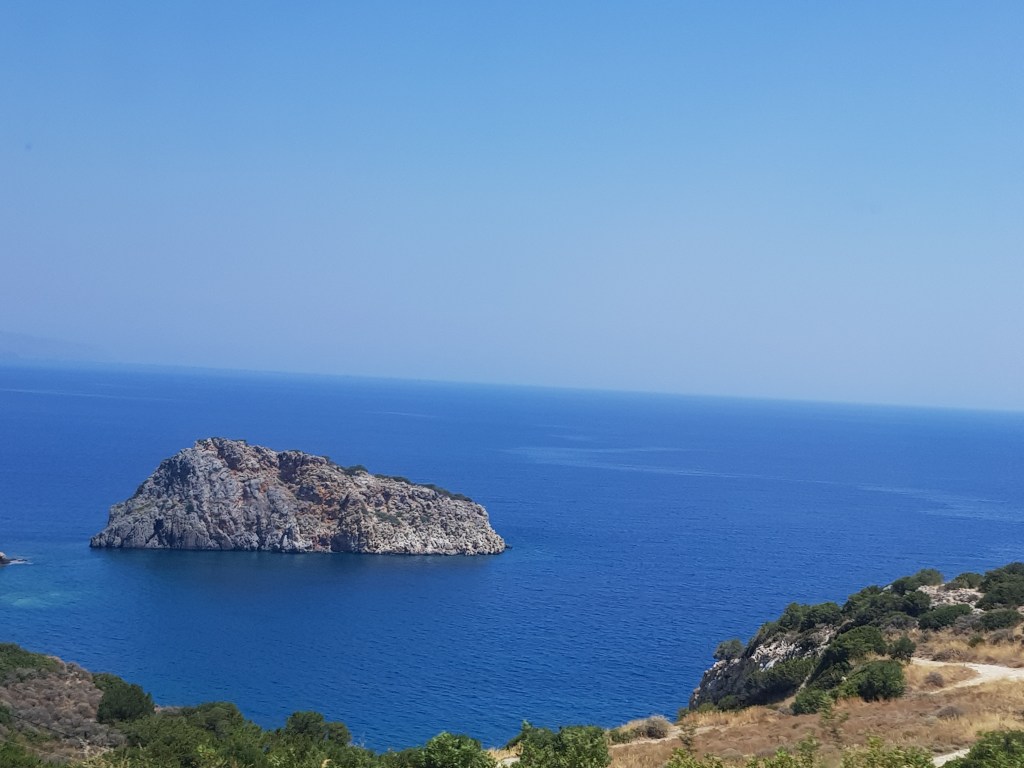
Holidays with Helios and Ilias’ Extra-Sheet!

Standard

As I have thought that in my latter post there are not enough pictures of this wonderful island (but more and again from a narcissist like me! 👳‍♀️) want to share more pics with you dear friends, especially the most are taken by my adorable wife who proves that women have a much more intensive sight than the men. 😁😎

All pics are taken by my Lady, I wanted to put more pictures but it seems that I have a limited possibility. Have a wonderful week ahead lovely friends. 🙏💖🙏😊

Happy birthday Dear Dr. Carl Gustav Jung

Standard

Today is the day in which a great genius has been born and I think that we must be thankful for his being there to show us our so many unknown dark corners of our souls 🙏❤❤

Holidays with Helios and Ilias

Standard

Or an Adventure in the time of Corona!

Crete, Greece. Taken by my better half (my wife)

Hello dear friends, Yes! We have done it; to spend our vacation in the other place, including taking the flight and bus and far away from home. And as you know it was surely not so easy as every year but as our big travel to the US failed out or cancelled, we had decided spontaneously (as my wife likely does) to fly to Greece. The main reason for this choice was not only the Sun and the Sea but the Greek people. I like them very much because, as I have travelled many times to many Europian countries, the Greek people were (and are) the most honest, free and easy taken ones.

In these two weeks in which I was away, I didn’t try to write something or even do much busy on the web, especially from WP. I had some ideas to write down but I didn’t, just had a short review here and there, now and then. {I hope one or two had noticed 😉} firstly because I wanted to company my wife, Regina, and she is not so interested in the social media, therefore, I decided to take a small distance to the internet and also it had done good to me, honestly!

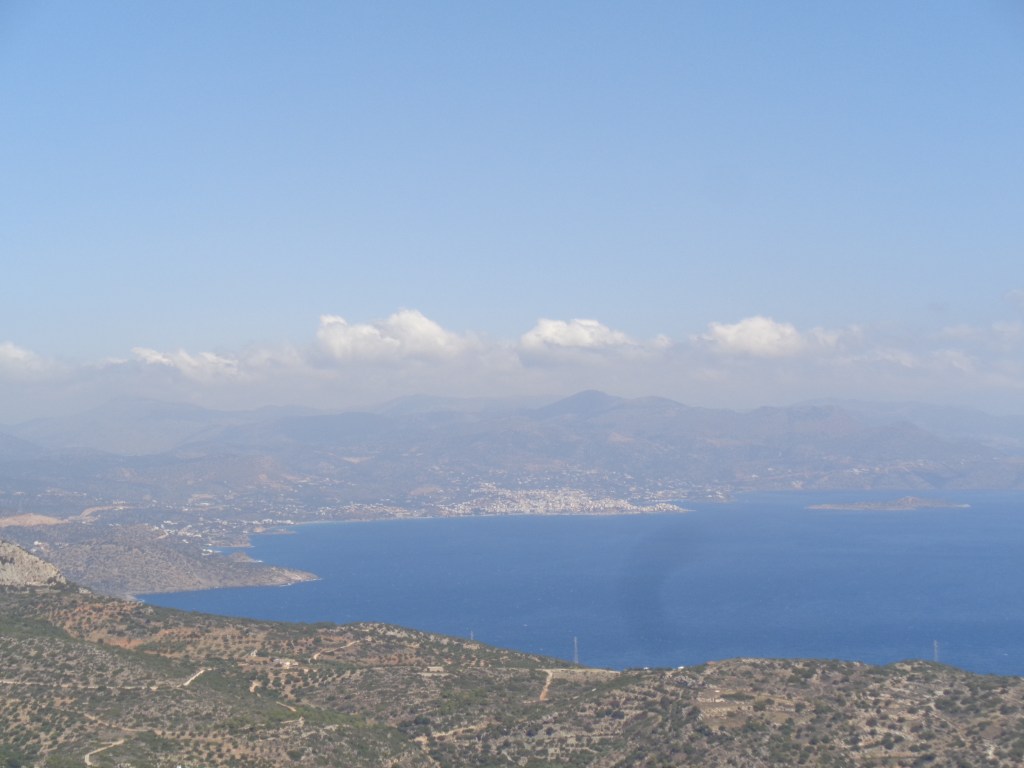
Anyway, we flew to Crete on the southern side and I must confess that I had a seedy or shifty feeling as we arrived in the apartment in our facility; it was all empty of guests! we were the first and the only guest at least for the first three or four days. And also at the beach, there were very few people all around. For us, it was at one hand wonderful, calm and quiet, and on the other hand, we had sympathised with the natives who were suffering by this lacking tourists.

Now let’s have a look at what we had experienced on this wonderful island with abundant culture and history full of mythology.

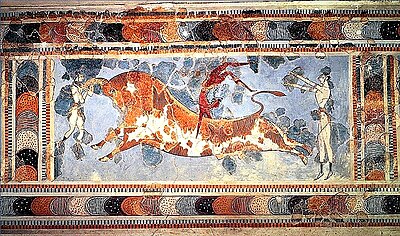
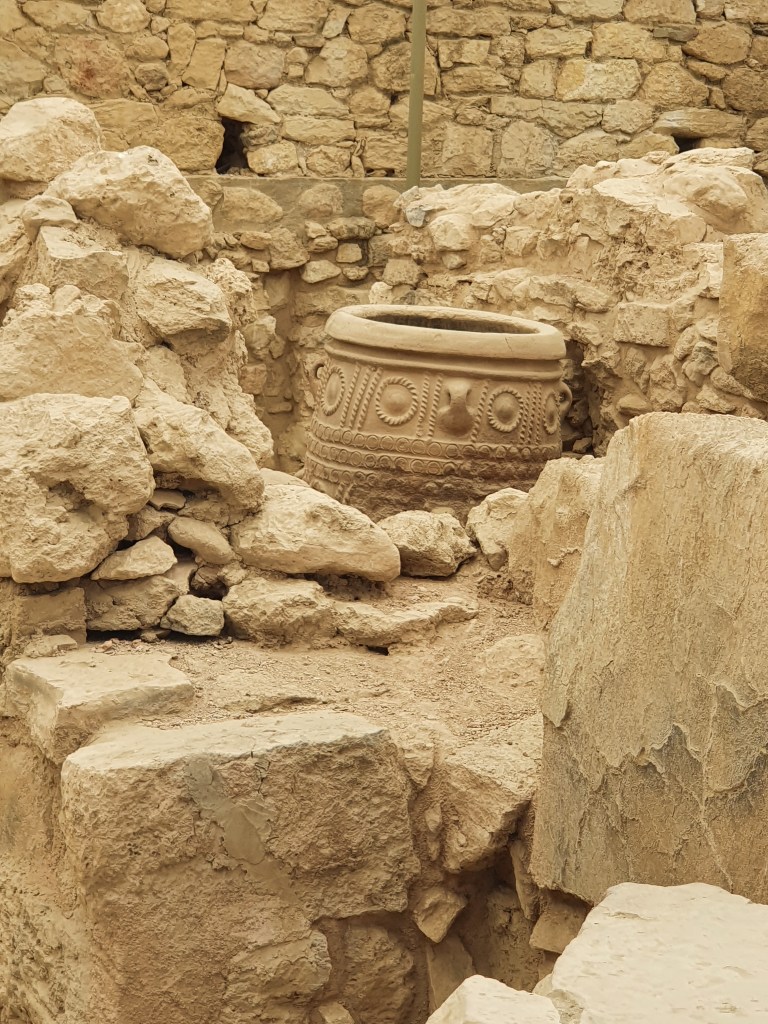
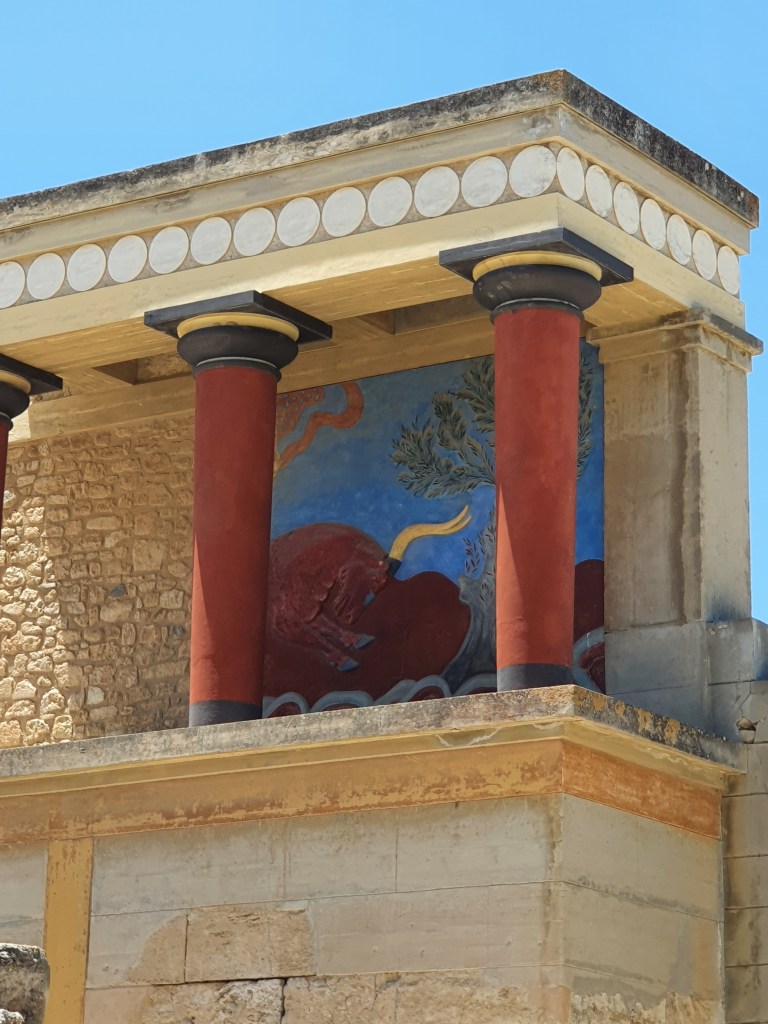
Our main point, surely after our investigation all around the other places to see the beauty of the countryside, was the visiting of excavation of the Knossos.

fresco found at the Minoan site of Knossos, indicating a sport or ritual of “bull leaping”, the dark skinned figure is a man and the two light skinned figures are women https://en.wikipedia.org/wiki/History_of_Crete

In the beginning, we’ve met the turtles in some small pond, I’ll bet that most people stood most of the time to look at these beautiful and fascinating creatures!!

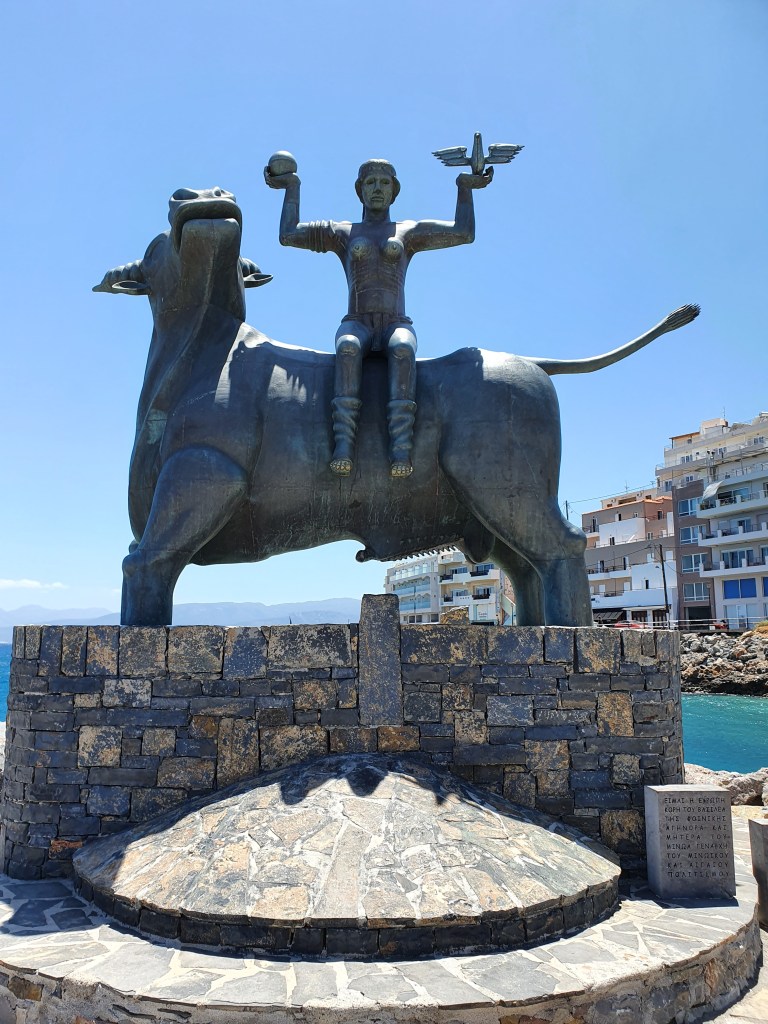
The Minoans are the primal ruler on this island; Crete; here I have seen a statue of the all-mighty woman on this island; Europe.

Europe the queen

And down there it says; Europe is my name, I am the Daughter of Phoenician king Agenoras and mother of King Minos, creator of the Minoan civilisation (As I read this, I could hear her voice in my ears, I don’t know if someone else did it too!)

An interjection: I have a mournful feeling when I just read the name Europe, what a dream I (we) had!!

And in the end, I have just thought:

What a … is breezing so strong…

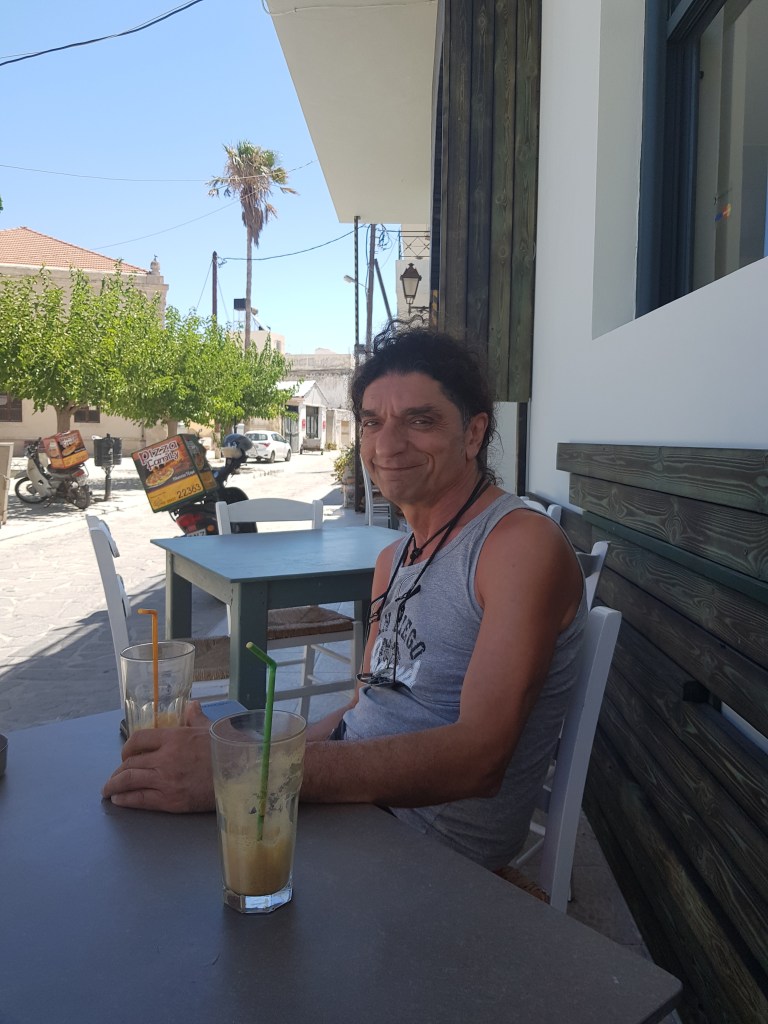
the hairstyle is cool 😎😉🤣

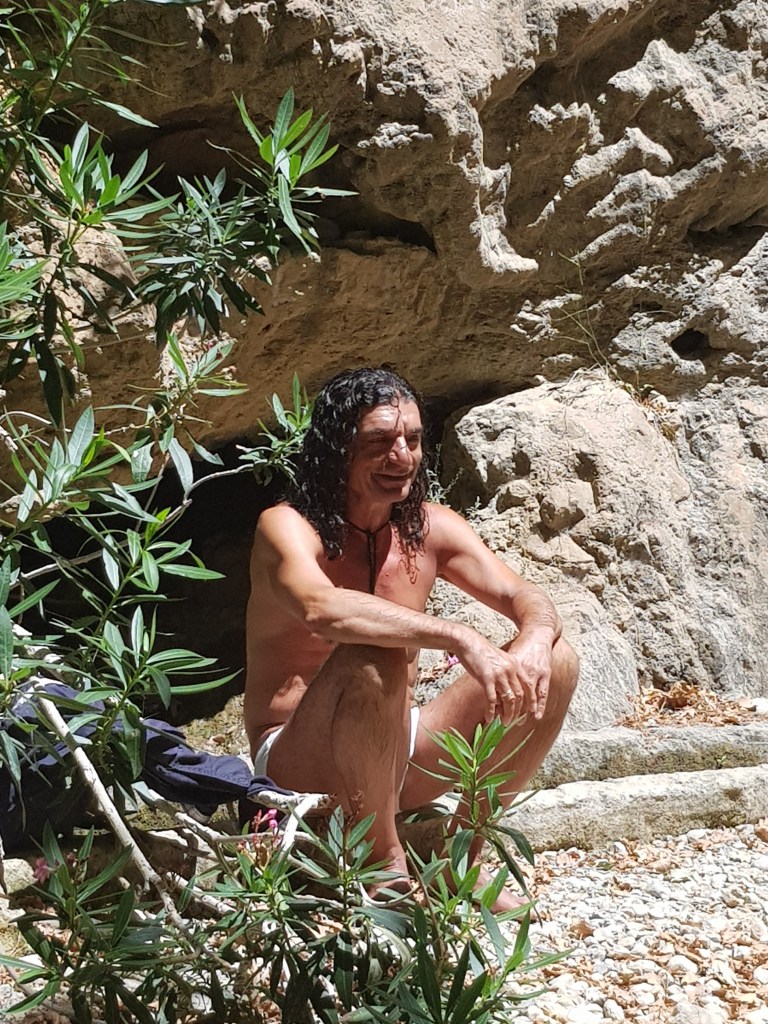
Of course, We have visited the “Waterfall” too, It was an amazing experience, surely with the Tarzan in it!!

That’s him!!

The last Look;

Thank you all and I wish you wholeheartedly a much better life as ever (this can be needed always, believe me!)
And here a secret PS: as I was writing, it comes a warning that my storage space is full, then I had to act; to delete some. no problem I know the reason: no paying no action. And in the world of cash, it is normal.😏; I just remember on Hemingway’s “to Have or have not”; Herry Morgan quote on life: A man alone has no f…..g chance.
I love You All dear folk. 😉😍😘🤗😍✌🙏🙂😊😂😮😳🙃👌🤗😘😎🤑🤑🤑👳‍♀️😷🤟🤣

Natalia Goncharova

Standard

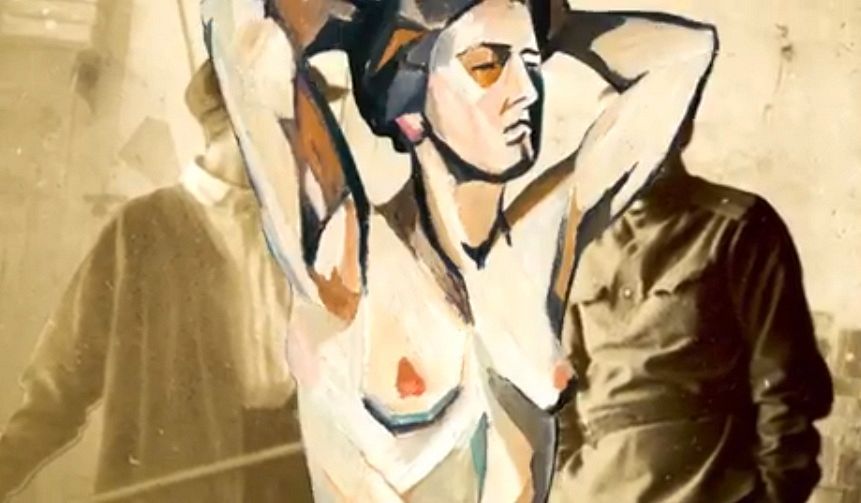
Natalia Goncharova is an artist, a paintress. I didn’t know her honestly and after watching a report on BBC TV, I have just wondered what a wonderful and genius woman is she; a Russian Frida Kahlo?

Let me first to announce that my wife and I have planned to take a trip (an adventure?) to Crete, Greece,(to meet Helios or his son Ilias 😉) or to spend our ( better to say; her) holidays. It might be risque but life, as I think, is full of risques and as I know my wife who can’t stay calm, I agreed to do it so. (Of course, I have finished the whole prosses with my gum-implant and also I was at Coiffeur to let cutting my hair!!) Let’s see what happens.

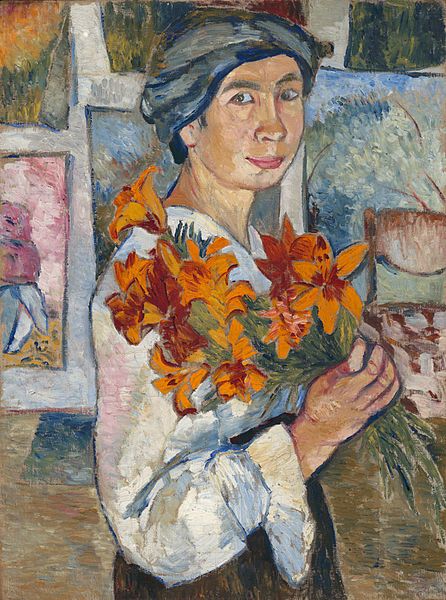
Natalia Goncharova - Self-Portrait. 1907-1908 | Portrait painting ...
Self-portrait http://Pinterest

Natalia Sergeevna Goncharova; July 3, 1881 – October 17, 1962) was a Russian avant-garde artist, painter, costume designer, writer, illustrator, and set designer.

She was a stunning woman but as we, unfortunately, find permanently in our history, the genius artists like her, have to bear a lot of trouble to do their works. I have mentioned there above the name of Frida Kahlo ( Frida Kahlo) though, she had a better situation in Spain, but in our man’s world, these great artists always had to suffer some bullying and harassment in their life.

She has created her works, as an artist and a revolutioner had to do but because she was a woman, it has been forbidden to show her paintings (especially the naked women) it became worst for her after the October revolution(!) 1917,therefore, she had to emigrate to Paris (thanks France-Novum art) to continue. (1921)

Goncharova, Instagram sblocca il video incriminato
http://Qui News Firenze

I am very happy to have known her and her amazing works. I hope you will enjoy them as well.

Russian revolutionary? Natalia Goncharova at Tate Modern ...
http://Financial Times
Gardening', Natalia Goncharova, 1908 | Tate
http://Tate
A Firenze Natalia Goncharova: senza quella donna il 900 non ...
http://Chiamamicitta

Source; https://en.wikipedia.org/wiki/Natalia_Goncharova

Sir Lawrence Alma-Tadema: a painter who inspired ancient Egypt …

Standard
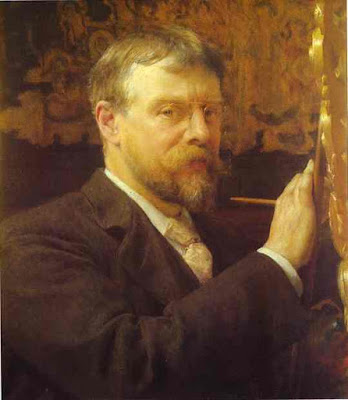
Sir Lawrence Alma-Tadema – painter
(Dronrijp, Netherlands 8-1-1836 – Wiesbaden, Germany, 25-6-1912)
The Discovery of Moses (1902-1904, oil on canvas, private collection)

When Art meets History! Let’s have a look at these amazing paintings which illustrated the beauty of the magical history of Egypt. With ever thanks to my adorable friend and Egyptologist Marie Grillot.

From French via; https://egyptophile.blogspot.com/

Lourens Alma-Tadema was born on January 8, 1836, in Dronrijp in the Netherlands into a very wealthy family. Very early on his artistic gifts were revealed. He then shared his life between his native country and Belgium where he studied at the Royal Academy of Fine Arts in Antwerp. He is passionate about historical and archaeological subjects, with inspiration from Greece, Italy and then, finally, Egypt.

Sir Lawrence Alma-Tadema – painter
(Dronrijp, Netherlands 8-1-1836 – Wiesbaden, Germany, 25-6-1912)

This “orientation” which leads him to “paint pages of history”, he owes in large part to his archaeology teacher, Louis de Taye. Whoever becomes his friend puts many publications at his disposal…

“Alma-Tadema created his own specific visual representation of ancient Egypt in the context of his Orientalist colleagues such as Jean-Léon Gêrome, Willem de Famars Testas and Fredérick Goodall. He drew on academic sources such as his friend well-known Egyptologist Georg Ebers, just as he adopted virtual material from popular sources, such as illustrations by John Gardner Wilkinson, Manners and Customs of the ancient Egyptians “(” Alma-Tadema’s Egyptian dream: ancient Egypt in the work of Sir Lawrence Alma-Tadema “, Robert Verhoogt.

Sir Lawrence Alma-Tadema – painter
(Dronrijp, Netherlands 8-1-1836 – Wiesbaden, Germany, 25-6-1912)
The Egypt of the past, 3000 years ago (1863, oil on canvas, Harris Museum & Art Gallery, Preston)

He frequents the Egyptian department of the British Museum. He will come back often to feed on the wonders found there and will be happily inspired by it for his “Egyptian” paintings.

Sir Lawrence Alma-Tadema – painter
(Dronrijp, Netherlands 8-1-1836 – Wiesbaden, Germany, 25-6-1912)
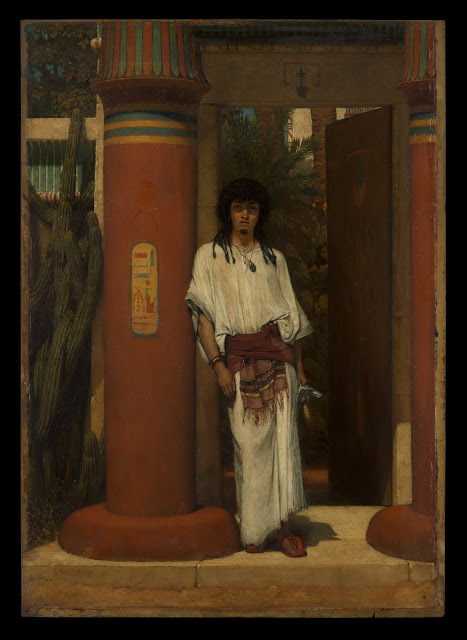
Egyptian at the door (1865, oil on wood, Metropolitan Museum of Art, New York)

As the New York Metropolitan Museum of Art points out: “In the mid-1860s, Alma-Tadema painted a number of subjects from ancient Egypt, in which convincing archaeological precision and astonishing liveliness seem to give life to a distant past. “
With “Egypt from the past 3000 years ago”, painted in 1863, the following year he won the Gold Medal at the Paris Salon…

Sir Lawrence Alma-Tadema – painter
(Dronrijp, Netherlands 8-1-1836 – Wiesbaden, Germany, 25-6-1912)
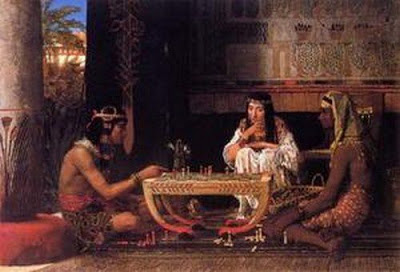
Egyptian chess players (1865, oil on panel, private collection)

In 1865, “Egyptian chess players” immerses us in an intimate game, bringing together three characters, concentrated on their game, while “An Egyptian at the door” puts us in front of a handsome young man with a questioning look. In 1870, his “Egyptian juggler” seems to evolve in a universe closer to Ancient Rome …

Sir Lawrence Alma-Tadema – painter
(Dronrijp, Netherlands 8-1-1836 – Wiesbaden, Germany, 25-6-1912)
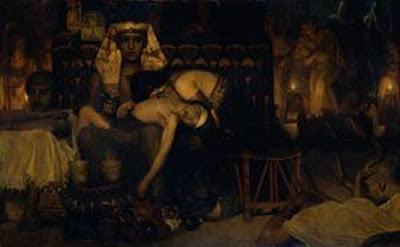
Death of Pharaoh’s firstborn (1872, oil on canvas, Rijksmuseum)

In 1872, he painted “The Death of Pharaoh’s firstborn” and “The Egyptian Widow” whose play of light for one, dark light for the other, transcends the dramatic intensity …

Sir Lawrence Alma-Tadema – painter
(Dronrijp, Netherlands 8-1-1836 – Wiesbaden, Germany, 25-6-1912)
Joseph watching over Pharaoh’s granaries (1874, oil on canvas, Dahesh Museum of Art, New York)

Then in 1874, “Joseph watching over Pharaoh’s granaries” brought together two characters in an attitude imbued with theatricality. There are scenes from the tomb of Nebamun that the painter had admired in the museum. “On the fresco behind Joseph, he reproduces the scene of the goose keepers prostrating before the deceased who inspects the herds. We distinguish his scribe on the left, a scroll under his arm, writing numbers. On the side, a standing man holds a stick and enjoins the breeders to sit down and be silent. The cartouche painted on Joseph’s seat depicting a scarab and a solar disk is that of Thutmôsis He who also reigned during the 18th dynasty. This double reference to a specific period of ancient Egypt owes nothing to chance. In the 19th century, in fact, researchers thought that it corresponded at the time mentioned in the Bible “…

After living in Paris, Alma-Tadema had settled in London in 1870 where he was appointed, six years later, a member of the Royal Academy.

Sir Lawrence Alma-Tadema – painter
(Dronrijp, Netherlands 8-1-1836 – Wiesbaden, Germany, 25-6-1912)
The Egyptian Widow (1872, oil on panel, Rijksmuseum)

On August 8, 1888, in the British capital, in the presence of other orientalist painters, Frank Dillon, Henry Walis, and the Director of the National Gallery Sir Frédérik Burton, he met William Flinders Petrie and Wallis Budge in order to alert them to the state of deterioration of Egyptian temples and tombs,…

In 1899, knighted by Queen Victoria, he became Sir Lawrence Alma-Tadema.

It was three years later, in 1902, at the age of 66, that he discovered Egypt! One of his connections, Sir John Aird, invited him for a 6-week stay, motivated in particular by the inauguration of the Assiut and Aswan dams.

On his return, he will order him a large canvas, the only one with Egyptian inspiration made after having discovered this country … Thus, “The Discovery of Moses” will see the day … A theme often represented but which is sublimated by the interpretation that ‘in fact the master.

Sir Lawrence Alma-Tadema – painter
(Dronrijp, Netherlands 8-1-1836 – Wiesbaden, Germany, 25-6-1912)

One of the pharaoh’s daughters returns from the river where she bathed in the company of her followers … She is seated on a sedan chair supported by young men, with shaved heads, dressed in white loincloths. Two fan carriers dressed in white tunics fan it by means of ostrich feather fans: around their long handle is wrapped a lotus stem. A musician plays the lute while the following two carry a wonderful burden that the princess looks on with tenderness and gentleness: a basket decorated with lotus leaves in which rests the baby she has just discovered in the reeds: Moses … The princess and her following are beautiful, graceful, sensual. Their clothes are airy and vaporous, their luxurious ornaments, their romantic expression… We follow them in this procession which leads the child towards his new destiny. The Nile and its banks are suggested, and flowers seem to line the bottom of the table disseminating a wonderful shade of blue …

Sir Lawrence Alma-Tadema, Victorian academic painter, close to the Pre-Raphaelites, has exhibited his works in many countries, from Europe to the United States, and even to Australia…

Some sources even state that several of his paintings “would have belonged to the American director Cecil B. DeMille who would have been inspired by them for the decorations of Hollywood films with an ancient theme like Cleopatra”!

Died in Wiesbaden on June 25, 1912, he was later buried in Saint Paul’s Cathedral in London.

Marie Grillot { http://Marie Grillot }

sources:
Ancient Egypt by painters, Dimitri Casali, Caroline Caron-Lanfranc de Panthou, Seuil, 2011Flinders Petrie: A Life in Archeology, Margaret S. Drowerhttp://www.artrenewal.org/pages/artist.php?artistid=8https://lesdoublesviesdepompei.wordpress.com/2014/01/27/sir-lawrence-alma-tadema-1838-1912-au-musee-jacquemart-andre/https://www.metmuseum.org/art/collection/search/441350?fbclid=IwAR0rASwHljyhiScHm3skQkJl09pBIrvTzKTnEaX4vgqpmw86xB12nnlYl1wAlma-Tadema’s Egyptian dream: ancient Egypt in the work of Sir Lawrence Alma-Tadema, Robert Verhoogthttps://www.tandfonline.com/doi/abs/10.1080/08905495.2018.1484611?src=recsys&journalCode=gncc20https://www.wikiart.org/fr/lawrence-alma-tadema

Stay by me; the strength of the memories 💖

Standard

I was very happy, very. But as years went on, my dear boy would have wearied of his child-wife. He would have been more and more sensible of what was wanting in his home. She wouldn’t have improved. It is better as it is.

Oh, Dora, dearest, dearest,do not speak to me so. Every word seems a reproach!

I was reading from Charles Dickens’ David Copperfield as I sat at the bed where my brother Al was lying; almost in a coma, I could only hear he’s breathing. We were in a hospital in a small town and doctors told me that there’s no chance because the tumour in his head was very vicious and predominant. I had no choice just sitting there beside him and read from one of his favourites…

No, not a syllable! She answered, kissing me. “Oh, my dear, you never deserved it, and I love you far too well, to say a reproachful word to you, in earnest; it was all the merit I had, except being pretty– or you thought me so. Is it lonely, downstairs,Doady? “very! very!” Don’t cry! Is my chair there?In its old place.

Oh, how my poor boy cries! Hush, Hush! Now, make me one promise. I want to speak to Agnes. When you go downstairs, tell Agnes so, and send her up to me…….

“Agnes is downstairs when I go into the parlour, and I give her the message. She disappears, leaving me alone with Jip. His Chinese house is by the fire, and he lies within it, on his bed of flannel, querulously trying to sleep. The bright moon is high and clear. As I look out on the night my tears fall fast, and my undisciplined heart is chastened heavily, heavily.”

063.033 - Dora To Agnes. | Levy Music Collection
http://Lester S. Levy Sheet Music – Johns Hop

“I sit down by the fire, thinking with blind remorse of all those secret feelings I have nourished since my marriage, I think of every little trifle between me and Dora and feel the truth, that trifles make the sum of life. Ever rising from the sea of my remembrance, is the image of the dear child as I knew her first, graced by my young love, and by her own, with every fascination wherein such love is rich. Would it, indeed, have been better if we have loved each other as a boy and girl, and forgotten it? Undisciplined heart replayed!”

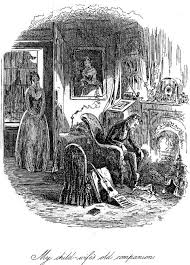
How the time wears, I know not; until I am recalled by my child-wife’s old companion (Jip) more restless than he was, he crawled out of his house, and looks at me, and wanders to the door and whines to go upstairs. “Not tonight Jip, not tonight!” He comes very slowly back to me, licks my hand and lifts his dim eyes to my face; “Oh Jip, it may be, never again!

“He lies down at my feet, stretched himself out as if to sleep, and with plaintive cry is dead… Oh Agnes! (she’s come down) Look, look here!”

“That face, so full of pity and of grief, that rain of tears, that awful mute appeal to me, that solemn hand upraised towards heaven! Agnes?”

“It’s over, darkness comes before my eyes, and for me a while, all things are blotted out of my remembrance.”

I began my tribute with a masterpiece from Dickens’ book not only because of its brilliance and impressive power of his literature but also for Al’s loved it so much and I add this as a present and am sure that he’d like it. I read this book the whole of the ten days in which we were both in this hospital till the time had come. At the end of the book, we were separated.

It’s thirteen years ago on this day as Al passed away and left this earth but strangely, I have a feeling that I have got much nearer to him as before. Am I closer to the line to change the level too? I don’t know but anyway, I am very happy about this closeness, it helps me to remember more and more about our time we were living and fighting together through those over fifty years of our life.

I wish you all you dear a leisure and peaceful weekend 💖🙏💖

The pictures source:

http://A Useful Fiction – WordPress.com

http://The Victorian Web

Lester S. Levy Sheet Music – Johns Hop