Good Lord, I’m quite taken aback. My latest book has only just this minute been listed on Amazon and look at all these fabulous reviews and messages I’ve received from the fabled and the famous. These are just a mere sample.
Marilyn Monroe: “I can’t thank you enough, Michael. It’s about time the truth was told. Yes, to my shame my life was blighted by flatulence, although in fairness such gusts of malodorous wind emanating from my BTM did ensure me iconic status when I released a smelly humdinger of colossal proportions and as a result my little white dress blew up while I was standing over an ineffectual subway grate in New York on the set of ‘The Seven Year Itch’ movie. I can’t thank you enough for including the tale of my dire plight when writing this book, a frankly outstanding piece of modern English literature.”
How Friedrich Nietzsche used ideas from the Ancient Cynics to explore the death of God and the nature of morality
Friedrich Nietzsche (1844-1900) on his sickbed, 1899. Oil sketch on cardboard by Hans Olde. Photo Goethe-Nationalmuseum, Weimar/AKG
Haven’t you heard of that madman who in the bright morning lit a lantern and ran around the marketplace crying incessantly: ‘I’m looking for God! I’m looking for God!’ Since many of those who did not believe in God were standing around together just then, he caused great laughter. Has he been lost, then? asked one. Did he lose his way like a child? asked another. Or is he hiding? Is he afraid of us? Has he gone to the sea? Emigrated? – Thus they shouted and laughed, one interrupting the other. The madman jumped into their midst and pierced them with his eyes. ‘Where is God?’ he cried; ‘I’ll tell you! We have killed him – you and I! We are all his murderers.’
No! they shouldn’t laugh, cause God is dead! We can see the event in this corresponding every day these days. Nietzsche has always fascinated me.
again, (sorry of my attacking this very day, I have only a Saturday just to be able to think!!) but is not this man a really fascinating creature? I think if I understand Nietzsche, I’ll understand me too!
Helen Small is professor of English literature at the University of Oxford, and a fellow of Pembroke College, Oxford. Her most recent book is The Value of theHumanities (2013). She lives in Oxford.
Ancient Cynicism was an eccentric model for practising a philosophical life. Diogenes of Sinope (c404-323 BCE) and his followers claimed independence from conventional material desires and the normal turmoil of emotional life. They were notorious without shame – pissing and satisfying their sexual needs in public, like the dogs (kynes) from which their name partly derived.
Diogenes himself was said to have slept in a tub or a shack in the Athenian marketplace. Seeing a youth scoop up water in the hollow of his hand, he threw away the wooden cup he had been using, pleased to see that he did not need it. When Alexander the Great announced himself: ‘I am Alexander the great king,’ Diogenes replied: ‘I am Diogenes the dog.’
For Friedrich Nietzsche – steeped in the Classics – the Cynics, and the much later account of them in the gossipy collection of anecdotes TheLives and Opinions of Eminent Philosophers by Diogenes Laertius (no relation to Diogenes of Sinope), were attractive material long before he parted company with an academic career to practice a more abrasive public philosophy of his own. ‘Diogenes Laertiades’ was how Nietzsche signed himself in a letter to a friend in his late 20s: ‘son of Laertius’, or literally ‘sprung from Laertius’, ie from Diogenes Laertius. In the wake of a great deal of critical work in recent years, excavating Nietzsche’s Cynicism, two questions are worth asking afresh: how far did the identification go? And what did his philosophy hope to gain, and risk losing, by it?
The Cynic Diogenes of Sinope appears in Nietzsche’s The Gay Science(1882) as der tolle Mensch (‘the crazy man’) who proclaims the death of God; it is a canonical scene of modern philosophy:
Haven’t you heard of that madman who in the bright morning lit a lantern and ran around the marketplace crying incessantly: ‘I’m looking for God! I’m looking for God!’ Since many of those who did not believe in God were standing around together just then, he caused great laughter. Has he been lost, then? asked one. Did he lose his way like a child? asked another. Or is he hiding? Is he afraid of us? Has he gone to sea? Emigrated? – Thus they shouted and laughed, one interrupting the other. The madman jumped into their midst and pierced them with his eyes. ‘Where is God?’ he cried; ‘I’ll tell you! We have killed him – you and I! We are all his murderers.’
The drama of the madman performs a serio-comic riff upon TheLives and Opinions of Eminent Philosophers: ‘He [Diogenes of Sinope] lit a lamp in full daylight and walked around with it, saying: “I’m searching for a man”.’ Sometimes more loosely translated as ‘searching for an honest man’, the words are a challenge and potentially an affront to all who hear them. Tapping into the radicalism of the ancient example, Nietzsche echoes its original cynicism – the sorry absence of anyone capable of living in the knowledge of what it means to be human – and gives it an updated point. A new Diogenes declares the death of God, the collapse of the belief system that underpinned Judaeo-Christian morality and provided the culture’s sources of valuation for hundreds of years. Or rather, the crazy man demands attention to what should have followed from that realisation, since the realisation itself is hardly news.
Later in The Gay Science, Nietzsche clarifies what is at issue. By ‘God is dead’, we should understand that ‘belief in the Christian God has become unworthy of belief’: the time has come for human beings to live truthfully, in accordance with their situation. The neo-Cynic affront lies not in the debasement of long-lost metaphysical certainties, but in a fresh insistence, that destruction of the old basis for morality raises urgent consequences about how to live now. ‘Aren’t we straying as though through an infinite nothing?’ asks the crazy man; ‘Isn’t empty space breathing at us? Hasn’t it got colder? Isn’t night and more night coming again and again? Don’t lanterns have to be lit in the morning?’
Striking through the revival of the Cynic figure is, what might impress a reader with equal force is how stylistically unlike the original scene Nietzsche’s version of it is. Where Diogenes Laertius was concisely anecdotal and minimally interpretative, Nietzsche is – within the flexible parameters of the aphoristic form – expansive, even garrulous, and, if not psychologically intimate, certainly interested in staging a public psychological drama from his philosophical materials.
Enlightenment scepticism has been around a long time. Get up to speed!
Some features of the classical text remain. The anecdotal focus is on a single event, with a narrative delivery that suggests word-of-mouth transmission of matter of general public interest (‘Haven’t you heard …?’) Nietzsche also retains the distinctive mix of a whiff of philosophical scandal with an element of comedy that puts in question quite how much that sense of scandal is warranted, and what its presence might tell us about the conditions in which the Cynic issues his challenge to conventional moral thought. The broad parameters, then, are largely consistent, but the paragraph is, in Robert Pippin’s phrasing in Nietzsche, Psychology, and First Philosophy (2010) ‘quite mysterious’ as Diogenes Laertius’ account of the lamp lit in the morning light is not.
Much of the mysteriousness arises from the projection of the Cynic as unstable psychology into a public encounter that is, on both sides, full of questions with no obvious answers. Addressing an audience largely, but not entirely, committed to a view of itself as enlightened (‘many’ of them do not ‘believe’) the tolle Mensch seems absurd, histrionic, unduly agitated. The questions were thrown back at him as he makes his erratic progress – ‘Has he been lost?’, ‘Did he lose his way like a child?’, ‘Is he hiding?’, ‘Is he afraid of us? Has he gone to the sea? Emigrated?’ – are variants on a caustic theme: where has he been? Enlightenment scepticism has been around a long time. Get up to speed! Comedy turns to embarrassment only with the direct physical confrontation as he jumps into their midst, ‘piercing’ them with his eyes. The charge of ‘murder’ (in which he includes himself) silences the mockery, but it is far from clear what response beyond silence could be satisfactory at this point. By his own account, the new Diogenes has come too soon, or too abruptly. ‘Deeds need time, even after they are done, in order to be seen and heard’ – a reflection that sounds like pessimism about the power of the philosopher on the tolle Mensch’s part, even if it is not as finally so on Nietzsche’s.
Much more might be said about the tolle Mensch and his role in The Gay Science, but I want to concentrate on what this celebrated episode suggests about Nietzsche’s relationship to Cynicism as a form of heavily mediated philosophic self-expression – eccentric material that offers a set of old stylistic and intellectual strategies for the writer-philosopher, including strategies for apprehending the nature and limits of his or her own authority. With thought-provoking asperity, Nietzsche’s sister Elisabeth Förster-Nietzsche remarked: ‘There is no doubt … that my brother tried a little bit to imitate Diogenes in the tub: he wanted to find out how little a philosopher could get by with.’ Echoing lines from Nietzsche’s Human, All Too Human(1878-9), it is a statement to keep in view, since his handling of Cynicism was, in many respects, far from the kind of minimalism it seems to point to.
Numerous philosophers, public moralists, literary writers and cultural critics before and after Nietzsche have played with the possibilities of confrontational philosophic self-fashioning in Diogenes’ image, but the depth and extent of his intellectual engagement were unusual. Since Heinrich Niehues-Pröbsting’s groundbreaking work in the late 1970s, there have been many analyses of how Cynicism helped to shape Nietzsche’s style, his commitment to combatting pessimism and opening up avenues for ‘gaiety’, and (perhaps most extensively) his presentation of philosophy as a kind of affronting outspokenness, underwritten in part by the philosopher’s situation as exile (in Diogenes’ case, a political exile from his native Sinope; in Nietzsche’s, a more elective exile from the institutions of academia).
Revealing work has been done on Nietzsche’s early philological studies of the texts of Diogenes Laertius; much has been said too about his attraction to the French moralistes who placed themselves in the Cynic tradition, including François de La Rochefoucauld, Nicolas Chamfort and Jean de La Bruyère. This is a body of work that understandably tends to stress how much Cynicism does. But where does its usefulness to Nietzsche stop?
It is in the nature of cynicism, both the ancient kind and its modern derivatives (where psychology has as much to say about it as philosophy), that the identifications it provokes tend to be reluctant, ironic and partial. Always on the margins of mainstream or accepted thinking about morality, it exhibits a conscious detachment, or (maybe) alienation, from the common goals, projects, aspirations of others, pursuing a quasi-vocational (in the psychological view, a temperamental) calling to expose the illusions and self-delusions sustaining, or helping to sustain, those commitments. More than any other philosopher-critic who has turned to Cynicism (including Michel Foucault and Peter Sloterdijk, who owe a great deal to him), Nietzsche puts a sense of Cynicism’s limitations to work. When he invokes Cynic ways of thinking or speaking, he is not really offering a model for philosophy (though he sometimes seems to be): he is exploiting a set of conventions that palpably do and do not serve his purposes.
Nietzsche makes abundantly clear that Cynicism cannot be the light by which we guide ourselves
The shortcomings of the classical sources are an advantage here, rather than something to be regretted. Nietzsche was unrelentingly scathing about the poverty and stupidity of TheLives and Opinions of Eminent Philosophers, on which he had expended so much philological labour: this is a ‘stupid’, ‘impudent’, ‘imprudent’, ‘wretched’, ‘careless’, ‘vain’, ‘pretentious’ author. Philosophically inept as Diogenes Laertius is (a biographical gossip, at a long historical remove), the anecdotalism preserves the ‘spirit’ of Cynic philosophy in a way that escapes abstraction and systematisation. The ‘received’ quality of the tolle Mensch episode (its temporal remoteness from the events, the lack of authorial warrant or capacity to do more than report what others have said) is a continuation of that mode. It rattles any effort to get at its subject and comprehend him fully; but it also puts in question the writer/Nietzsche’s ‘philosophical’ claim to lead others in the murky historical, psychological, lived terrain that is our attachment to morality.
Nietzsche makes abundantly clear on several occasions that Cynicism cannot be the light by which we guide ourselves. When Human, All Too Human observes that the search for man requires a lantern, then asks: ‘Will it have to be the Cynic’s lantern?’, the answer is implicit but clear. Should there be any doubt, as Niehues-Pröbsting notes, Beyond Good and Evil (1886) clears it up: Nietzsche is eloquent, there, about the limits of Cynic self-fashioning. Cynicism, he warns, is a kind of clowning, ‘the only form in which base souls approach what is called honesty’. The original Cynics’ radical reduction of their requirements for a good life made happiness possible, but only by embracing life like an animal (a dog, or kunos). Diogenes and his ilk understood ‘self-overcoming’ as an ascetic practice of toughness in the face of deprivation, but had no concept of transformative ‘self-overcoming’ and none of the finer apprehension of art that distinguishes a ‘noble’ spirit. The best relationship the ‘higher man’ can have with Cynicism, then, will be strategic: there are ‘real short-cuts and aids’ here ‘to make his work easier’, Nietzsche suggests while remaining on the lookout for the inevitable betrayal of its limitations:
the higher man needs to open his ears to all cynicism, crude or refined, and congratulate himself every time the buffoon speaks up without shame, or the scientific satyr is heard right in front of him.
Be on your guard, in short: Cynicism is the operative mode of people who deal too much with ‘the average man’, and have learned to ‘recognise the animal, the commonplace, the “norm” within themselves’: strategically deployed, their ‘honesty’ might be of use.
The most obvious use to which Nietzsche puts it, beyond the revival of Diogenes himself as an unstable and perplexing public moralist, is at the level of style. The contrarian zest of ‘so-called cynic’ speech (to use Nietzsche’s own locution) is a significant element in his literary repertoire, and never more so than in the very late work, where he runs the gamut of its ‘crude – refined’ possibilities. Speech of this order is at its most concentrated in the ‘skirmishing’ [‘Streifzüge’] section of Twilight of the Idols (1889). Take this brief extract on the shortcomings of other artists, philosophical and literary-poetic:
Dante: or the hyena who writes poetry in tombs. – Kant: or cant as intelligible character. – Victor Hugo: or the lighthouse on the sea of nonsense. – Liszt: or the school of fluency – with women. – George Sand: or lactea ubertas, translated: the milk cow with ‘a beautiful style’ …
The sneering litany takes to fresh extremes Nietzsche’s earlier gestures in the way of ridiculing, castigating and mocking philosophers and public moralists across a sweeping panoply from Socrates to Jean-Jacques Rousseau. The cynicism here assists the combative energy of the prose, as it lashes out against all authorities. Nietzsche’s philosophy looks to a future that will be free, ‘gay’, ‘momentous’, as far as possible self-determining and nondialectical; it resists and resents the poisoning, ‘nausea’-inducing hold of past ways of thinking. (That resentment itself is an acknowledgement of debt is, of course, a thoroughly Nietzschean insight.)
More important than either the reworking of the character of the Cynic or the channelling of his stylistic energy is the allusive mode of argument that pervasively informs the genealogy of morality. Human, All Too Human, Beyond Good and Evil, the first edition of The Gay Science, but also The Wanderer and His Shadow (1880), Daybreak: Thoughts on the Prejudices of Morality (1881) and On the Genealogy of Morality (1887): all these texts make extensive play with Cynicism’s characteristic move, the ‘debasement’ of conventional morality.
These are classic Cynic manoeuvres: what looks like virtue is ‘devalued’, its conventional value ‘adulterated’
When Human, All Too Human, tells us, for example, that ‘good’ and ‘evil’ are just the names we have learned to give to the operation of power (‘He who has the power to requite, good with good, evil with evil … is called good; he who is powerless and cannot requite counts as bad’), or when Beyond Good and Evil tells us that: ‘In the final analysis, “love of one’s neighbour” is always something secondary … in relation to fear of the neighbour’, they are performing classic Cynic manoeuvres. What looks like virtue or like morally motivated behaviour is ‘devalued’ in the sense that its conventional value is compromised or ‘adulterated’ (as the underlying allusion to Diogenes of Sinope’s alleged adulteration of the Sinopean coinage encourages us to conceive of things).
The main difficulty of interpretation here attaches to the metaphoric scope of ‘debasement’. The Cynic manoeuvre unmasks an earlier, more primitive motive that counts for ‘less’ than the standard one. ‘What really are our reactions to the behaviour of someone in our presence?’, Daybreak asks:
– First of all, we see what there is in it for us – we regard it only from this point of view. We take this effect as the intention behind the behaviour – and finally we ascribe the harbouring of such intentions as a permanent quality of the person whose behaviour we are observing and thenceforth call him, for instance, ‘a harmful person’. Threefold error! Threefold primeval blunder! Perhaps inherited from the animals and their power of judgment! Is the origin of all morality not to be sought in the detestable petty conclusions: ‘what harms me is something evil (harmful in itself); what is useful to me is something good (beneficent and advantageous in itself); what harms me once or several times is the inimical as such and in itself’.
In a much-quoted closing flourish that is often made into a kind of epigraph for the entire genealogical project, Daybreak pronounces: ‘O pudenda origo!’ (‘Oh shameful origin!’) of morality. The moral texture of our psychological relations with others goes back, or comes down, in this locally Cynic reading, to the ‘detestable’ as-it-were-primal rationales of self-interest.
This looks very like a problematic appeal to something not just more ‘primitive’ but in some sense more ‘natural’ – and Nietzsche does indeed seem to be offering a kind of naturalistic psychology as a basis for understanding our investment in morality. Nietzsche’s genealogist, observes Brian Leiter in Nietzsche on Morality (2002), appears deeply ‘interested in “the nature of things” as they really are, not simply as some arbitrary interpretation would have them be’. The aim, Leiter concludes, is ‘critical, not positive’. The repeated invoking of ‘shameful origins’ rhetorically assists that purpose: it ‘brings a feeling of diminution in value of the thing that originated thus and prepares the way to a critical mood and attitude toward it’. The ‘reductive spirit’ is an error (Bernard Williams puts the point succinctly in his introduction to The Gay Science) but, under controlled circumstances, it is one that can help shift entrenched perspectives.
As with so much of Nietzsche’s writing (the tolle Mensch passage included), what keys us into the difference between a critical and a positive aim is a kind of literary excess in the delivery. One ignores the role of burlesque at one’s peril. Aping the voice of outraged conventionality (‘O pudenda origo!’ – the Latin adds an edge to pastiche), Daybreak asks for critical wariness at just the point where a conventional reader might be predisposed to take the story of origin semi-literally. Like the ventriloquist on audible in the ‘primaeval blunder’ – ‘whatever harms me is something evil’ – the ventriloquist on of a more modern ‘shame’ asks to be read at one remove as irony, or worthy of our irony.
Pippin is not wrong that the gesture of unmasking is continuous with the moralist tradition of La Rochefoucauld and others, and to that extent registers a familiar skeptic demand for ‘clarity about human frailty and failings’, but Nietzsche’s scepticism is unlike La Rochefoucauld’s in that it comes laced with a relish for mimicry that goes beyond intellectual requirements for clarity about what morality is and where it comes from, and targets the will to clarity itself. Exuberant excess of denunciation wards off an error that Nietzsche is constantly priming himself and us against the tendency of philosophers to ‘make the whole cosmos out of th[e] intellectual faculty’. ‘Primeval blunder!’ ‘Not much better than the judgments of animals!’ ‘Detestable petty conclusions!’ We don’t strictly need any of this expostulation, but such hyperbolic notes create a stylistic intimacy between the ravelling-up of morality (how it gets a hold on us) and the unravelling work of Nietzschean philosophy that seeks to put us on our guard against it, and against philosophy itself. That is: against the tenacity of inherited morality and against any claim that he, the philosopher, might want to make to avoid error and afford a value perspective that we could call ‘true’.
It is in this sense that we might best understand what it means for Nietzsche to be emulating Diogenes ‘a little bit’, seeking a practice of philosophy that would ‘make do’ with less. The most important question one can ask of so strategic a Cynicism, finally, is not ‘How far does it go?’, but ‘Where does it stop?’ It stops (or should stop) at the point where the complacency it targets has been dislodged – which means that it must be hyper-alert to the danger that Cynicism itself (old, well-recognised, liable to become more an object of affection and comic interest than shock or distaste) risks being not a tool but a gimmick. At that point, it must be cast aside, like the tolle Mensch’s lantern.
“Individuation means becoming a single, homogeneous being, and, in so far as ‘individuality’ embraces our innermost, last, and incomparable uniqueness, it also implies becoming one’s own self. We could, therefore, translate individuation as… ‘self-realization.’” (Collected Works of C.G. Jung: Volume 7, Carl Jung )
A wonderful easy understanding of #Jung. (at least humbly for me 😉
“Individuation means becoming a single, homogeneous being, and, in so far as ‘individuality’ embraces our innermost, last, and incomparable uniqueness, it also implies becoming one’s own self. We could therefore translate individuation as… ‘self-realization.’” (Collected Works of C.G. Jung: Volume 7, Carl Jung )
In this second video in our mini-series on the ideas of Carl Jung we are going to examine the individuation process, a process Jung believed to be essential for a healthy functioning personality. Such an examination will lead us to explore some of the parts of the personality that Jung viewed as particularly important, namely the persona, the shadow, the anima and animus, and the self. Before we go into more detail on the individuation process we will begin with a brief overview of the relevant content from our first video on Jung.
Jung conceived of the psyche, or one’s total personality, as composed of a conscious and unconscious realm. The unconscious realm he split into the personal unconscious and the collective unconscious. The personal unconscious is largely composed of repressed elements from one’s personal history, while the collective unconscious is composed of instincts and archetypes which are common to all human beings. Archetypes can be viewed as evolved cognitive structures which influence emotions, thoughts, and behaviours.
Archetypes provide structure to different parts of the psyche and the psyche functions optimally when there exists a harmonious balance between these parts. Unfortunately, according to Jung, few people function in an optimal manner. Rather most suffer from imbalances where some parts of their personality suffer from inflation, or over-expression in consciousness, while other parts suffer from deflation or underdevelopment whereby they lack proper expression in consciousness. Imbalances, Jung believed, often lead to the development of neuroses and a lack of vitality in life.
Working to bring about proper expression of the various archetypally structured elements of one’s personality by confronting contents of the unconscious and thus obtaining self-knowledge, is the purpose of the individuation process. It is important to note that this process occurs spontaneously if unimpeded as contents of the unconscious naturally strive for outward expression in the world, or as Jung put it “Everything in the unconscious seeks outward manifestation”.
However, the problem is that while natural, most people get stuck at various stages of the individuation process as they are unable to properly integrate into consciousness certain elements of the unconscious. How to promote such integration when it does not occur naturally was a question of deep concern for Jung. Through his patient analysis, research, and personal experience he arrived at the idea that dreams provide the greatest opportunity to access the unconscious. As he put it:
“Dreams are impartial, spontaneous products of the unconscious psyche, outside the control of the will. They are pure nature; they show us the unvarnished, natural truth, and are therefore fitted, as nothing else is, to give us back an attitude that accords with our basic human nature when our consciousness has strayed too far from its foundations and run into an impasse.” (The Collected Works of C.G. Jung: Volume 10, Carl Jung)
Jung put enormous emphasis on the therapeutic effects of dream analysis. By recording and analyzing one’s dreams, determining their meaning and relevancy, Jung thought one could integrate unconscious contents into consciousness. It must be noted, however, that dream analysis is not a simple matter, due to the often confusing nature of dreams and the fact that quite frequently dreams express material which can be difficult to incorporate into consciousness. The interpretation of dreams, therefore, must be seen as a skill acquired through practice and improved with an understanding of some of the most important archetypes, archetypes which we will spend the remainder of the video looking at.
Before looking at some of the archetypes which suffer from underdevelopment and therefore may manifest themselves in dreams, it is important to first look at the persona. The word persona was used in Roman times to signify a mask worn by an actor. In an analogous manner, in Jungian psychology, the persona represents the social mask that each of us “wear” in our interaction with others in society. Or to put it differently, it represents the personality that we try to portray to others. While the persona plays an important role in promoting social interaction and communal life, problems arise when people over-identify with their persona. As Jung writes:
“Fundamentally the persona is nothing real: it is a compromise between the individual and society as to what a man should appear to be. He takes a name, earns a title, represents an office, he is this or that. In a certain sense all this is real, yet in relation to the essential individuality of the person concerned it is only a secondary reality, a product of compromise, in making which others often have a greater share than he. The persona is a semblance, a two-dimensional reality.” (Carl Jung)
Most people suffer from inflation of the persona, meaning that they over-identify with their “social mask” to the detriment of other important areas of the psyche. In the course of the individuation process, one must come to the realization that the persona is not the totality of their being, but rather only a small component of a much larger personality. Such a realization is achieved by diving into the unconscious and mining from it the rich and meaningful contents manifested by the archetypes.
The first stage in the exploration of the unconscious, according to Jung, is an encounter with one’s shadow archetype. Over the course of one’s life, certain personality traits elicit negative feedback and even punishment from others. This negative feedback creates anxiety resulting in these traits being pushed away from awareness into the unconscious where they form the shadow – the “dark” side of one’s personality.
To become aware of and integrate the shadow into consciousness is often a difficult and sometimes heroic endeavour. But failure to do so can create chaos in one’s life. In the darkness of the unconscious the shadow is far from impotent, but instead influences emotions, thoughts, and behaviours, in a manner which is beyond conscious control. Often the shadow finds expression through projections, whereby instead of seeing the disagreeable elements of the shadow as residing within ourselves we project these traits onto to others.
Bringing elements of the shadow into the light of consciousness is crucial if one is to correct some of these less desirable aspects of themselves. As Jung explains:
“Unfortunately there can be no doubt that man is, on the whole, less good than he imagines himself or wants to be. Everyone carries a shadow, and the less it is embodied in the individual’s conscious life, the blacker and denser it is. If an inferiority is conscious, one always has a chance to correct it. . .But if it is repressed and isolated from consciousness, it never gets corrected.” (The Essential Jung, Carl Jung and Anthony Storr)
The shadow, according to Jung, is not only composed of negative traits. Rather, in the process of over-identifying with the persona often people reject personality traits not because they are harmful, but because they don’t fit with the dominant social attitudes of the day. Therefore, when integrating the shadow into consciousness, one is also exposed to positive traits and creative energies that can bring about a renewed sense of vitality to life.
“The shadow, when it is realized, is the source of renewal; the new and productive impulse cannot come from established values of the ego. When there is an impasse, and sterile time in our lives. . .we must look to the dark, hitherto unacceptable side which has been at our conscious disposal.” (Meeting the Shadow: The Hidden Power of the Dark Side of Human Nature)
In addition to the shadow, another archetype which normally suffers from underdevelopment is a contra-sexual archetype termed the anima in males and the animus in females. While the persona is oriented outward, acting as a barrier protecting the ego from the external social world, in an analogous manner the anima/animus is oriented inward, protecting the ego from the sometimes threatening and overwhelming contents which emerge from the dark inner depths of the unconscious:
“The natural function of the animus (as well as of in the anima) is to remain in place between individual consciousness and the collective unconscious; exactly as the persona is a sort of stratum between the ego-consciousness and the objects of the external world. The animus and the anima should function as a bridge, or a door, leading to the images of the collective unconscious, as the persona should be a sort of bridge into the world.” (Carl Jung)
An encounter with the anima/animus is manifested in one’s consciousness as a meeting, in dreams or visions, with a member of the opposite gender. Such a figure often arises during times of severe psychic disorientation, offering guidance as to how to remove any psychological barricades hindering the natural progression of the individuation process. Encountering such an archetype can, therefore, signify the coming of a deeply meaningful period in one’s life, defined by significant psychological transformations:
“The meeting with the anima/us represents a connection to the unconscious even deeper than that of the shadow. In the case of the shadow, it is a meeting with the disdained and rejected pieces of the total psyche, the inferior and unwanted qualities. In the meeting with the anima/us, it is a contact with levels of the psyche which has the potential to lead into the deepest and highest…reaches that the ego can attain.” (Jung’s Map of the Soul, Murray Stein)
After one encounters and integrates aspects of the anima/animus archetype into one’s ego, one gains access to enter into the deepest layer of the psyche, the archetype of wholeness – which Jung called the self and viewed as the most important of all the archetypes. Proper expression of the Self is the goal of the individuation process. As Jung put it:
“. . . the self is our life’s goal, for it is the completest expression of that fateful combination we call individuality. . .” (Carl Jung)
As the sun occupies the centre of the solar system, in an analogous manner the Self is the central archetype of the entire psyche. The Self-archetype acts as the unifying or organizing principle of the psyche and is oriented toward a union of the conscious and unconscious realms. Remembering from our first video on Jung that the centre of the field of consciousness is the ego, Jung noted that:
“the more numerous and more significant the unconscious contents which are assimilated to the ego, the closer the approximation of the ego to the Self, even though this approximation must be a never-ending process.”(Carl Jung)
As one increasingly identifies with the self they will notice a greater sense of harmony both within themselves and with the world as a whole. In fact, Jung saw the connection with the self as so important that at various times he described it as “a treasure that would make [one] independent” and a “link to the infinite”.
Jung came upon the existence of the self by exploring the universality of symbols such as the quaternity and mandala, which in his words, “occur not only in the dreams of modern people who have never heard of them, but are widely disseminated in the historical records of many peoples and many epochs.”
“A mandala”, said Jung “is the psychological expression of the totality of the self.” Not only do mandalas have an extremely long history and repeatedly show up in the imagery of many religions including Hinduism, Buddhism and Christianity, but Jung observed that with some of his patient’s mandalas spontaneously arose “during times of psychic disorientation or re-orientation.” Mandalas, and other “symbols of order”, Jung believed to be compensatory symbols of wholeness which are manifested by the Self in times of crisis.
The individuation process which culminates in an identification with the self is, according to Jung, crucial for the development of a healthy functioning personality as well as the expression of the unique potential that exists within each of us. But along with these personal benefits, Jung thought the process of individuation was essential for the well-being of society. Jung believed that conformist societies, composed mainly of people who over-identify with their persona, are easy prey for the rise of oppressive governments. Therefore it is essential for any lasting positive social change that increasing numbers of people, assisted by the individuation process come to the realization that there is more to their being then the social role dictated by the persona. A society increasingly composed of individuated individuals would not, according to Jung, succumb as easily to the rise of oppressive governments:
“…in so far as society is itself composed of de-individualized human beings, it is completely at the mercy of ruthless individualists. Let it band together into groups and organizations as much as it likes – it is just this banding together and the resultant extinction of the individual personality that makes it succumb so readily to a dictator. A million zeros joined together do not, unfortunately, add up to one.” (Man and His Symbols, Carl Jung)
Greeting to my dear wise friend Elaine Mansfield and with her allowance, I share here her brilliant article about #Life or much easily say; the way we begin with the first step in our lives till to the end.
I have also some loss in my life: as I was seven, my father had gone, and with eighteen, my mother said goodbye to me and my brother, cause of blood cancer. and finally, I’ve lost my brother in 2007, as he was just 54 years old. He has got a sudden anomaly, a tumour in 2006 in his genius brain but the surgery let him only one year more to live. We were just two sons and I’m the only one left. {Of course, my father and my brother were both ingrained authors and couldn’t do anything else but writing and as you might have mentioned, I’m not as good as them as I try to summarize this little piece with all effort. That’s why I should live a bit longer!!} 😏 😁
These are the realities which I must live with, and life is hard enough not to spend time with moaning, therefore, we all must stand against these difficulties. and as we read in this article; Mythology can help us to understand all these better. It is interesting that coincidentally, Mythology was one of my brother’s most favourite subject to investigate and I’ve learned a lot by him.
We imagine heroes as willful and disciplined. The hero wins with a smart positive attitude. We accept the top part of this diagram, the “known” part, where we’re consciously working a problem and following our plan. But notice how small the known part is–and it’s larger in this diagram than it is in life.
Our culture honours winners, those who climb to the top and come out in the first place. The Journey of Ascent is ever higher and more successful with a focus on the individual doing well, often at the expense of the group.
But what about real life? Does this model make an ageing or sick person a loser? What about someone who needs help? As a child, I lived with a dying dad and learned it was shameful to be sick since he hid his illness except at home. He was positive and courageous, but his body still gave up at 44. His friends were shocked. No one got to say goodbye. I can only imagine how he felt keeping his lonely secret.
Christ in Gethsemane, Heinrich Hofmann, 1890
Being positive doesn’t solve every human problem no matter what we’re promised. What about shattering experiences like surviving an accident with lasting trauma and permanent wounds? What about illness without an obvious cause? What about grief from the death of a parent or spouse, a child or a pet? Positive thinking won’t bring them back.
Yes, staying positive can feel supportive in the rough spots, but hard times won’t disappear. Maybe we need to accept and expect that being human sometimes hurts. Sometimes our ego is helpless.
Initiations of Descent are part of many ancient and indigenous traditions. They teach us how to take a downward journey. They support us during hard times without demonizing the one who suffers. Even Christianity includes three days of Christ’s suffering and death, although we hurry along to the resurrection part.
It’s hard to accept the dark valley on the other side of the majestic hill of success. It’s hard to accept death and loss as natural parts of the whole. Ancient mythology helps me understand, so I’ll share a few stories.
Prosperina (Persephone), Dante Gabriel Rossetti, 1870
In Greek mythology, Hades abducted Persephone and took her to his Underworld Kingdom where she became Queen. Her Descent and her mother Demeter’s insistence on her return guided the dominant religious ritual in Greece for 2000 years. We don’t know what happened in the Eleusinian Mysteries, but worshipers experienced a ritual death followed by a symbolic rebirth.
In Sumeria 2500 BCE, the Goddess Inanna was Queen of Heaven and Earth. Without knowing mortality, something was missing, so she descended to the Underworld. At each step, she was stripped of power (a lot like ageing or illness) until, naked, she entered the throne room of the Goddess of Death. Inanna was a corpse in that cave for three days before rising again. Sound familiar?
In Greek mythology, gentle Chiron was struck by a poison arrow. Since his father was the God Zeus, Chiron was immortal, so his suffering was eternal. He became a teacher and a healer, a Wounded Healer who couldn’t heal himself. Many great teachers and healers are wounded by descent and loss. Having lost his homeland after the Chinese invasion, the Dalai Lama became a Wounded Healer who teaches us about compassion and acceptance.
His Holiness the Dalai Lama, 1979, Hector, NY
We deny the descending part of life’s cycle. We hate facing the truth that life is precarious and doesn’t bend to our will. Disease won’t happen to us. We’ll be healthy forever if we live right and think correctly. If a loss happens, it will come later. Much later.
We know others lead lives of suffering from minimal care or food. We know many people don’t have clean water or shelter. We know war, poverty, and climate disaster force people into lives they didn’t choose. Still, we often look the other way.
Our ideal of ascent leaves us unprepared and shocked by life’s descending times, times when we often learn the most. Every living being will sooner or later descend. It’s part of being human. It’s another kind of heroic journey.
Cochlear Implant Surgery update: All went well, and I’m slowly recovering. I have to keep a tight leash on my tendency to push too hard. It’s time to rest.
As I remember once in FB social media, there was a discussion about old lectures and I’d stated a many; among them the masterpiece by Dante’s Divine Comedy. There, a friend began to muck about this book as a liar book which leads the people in the wrong way! Sure, I must mention here again that I’m not a religious one at all and definitely never believe in such a paradise or hell as coming in the holy religious books but for me, the great old lectures have nothing to do with such Superstitions, as I’d call them. they are the imaginations by the great genius in their life that they share with us in a wonderful way.
now here is an amazing article about a meeting between two great Artists who made a Masterpiece much greater 🙂
Many artists have attempted to illustrate Dante Alighieri’s epic poem the Divine Comedy, but none have made such an indelible stamp on our collective imagination as the Frenchman Gustave Doré.
Doré was 23 years old in 1855 when he first decided to create a series of engravings for a deluxe edition of Dante’s classic. He was already the highest-paid illustrator in France, with popular editions of Rabelais and Balzac under his belt, but Doré was unable to convince his publisher, Louis Hachette, to finance such an ambitious and expensive project. The young artist decided to pay the publishing costs for the first book himself. When the illustrated Inferno came out in 1861, it sold out fast. Hachette summoned Doré back to his office with a telegram: “Success! Come quickly! I am an ass!”
Hachette published Purgatorio and Paradiso as a single volume in 1868. Since then, Doré’s Divine Comedy has appeared in hundreds of editions. Although he went on to illustrate a great many other literary works, from the Bible to Edgar Allan Poe’s “The Raven,” Doré is perhaps best remembered for his depictions of Dante. At The World of Dante, art historian Aida Audeh writes:
Characterized by an eclectic mix of Michelangelesque nudes, northern traditions of sublime landscape, and elements of popular culture, Doré’s Dante illustrations were considered among his crowning achievements — a perfect match of the artist’s skill and the poet’s vivid visual imagination. As one critic wrote in 1861 upon publication of the illustrated Inferno: “we are inclined to believe that the conception and the interpretation come from the same source, that Dante and Gustave Doré are communicating by occult and solemn conversations the secret of this Hell ploughed by their souls, travelled, explored by them in every sense.”
The scene above is from Canto X of the Inferno. Dante and his guide, Virgil, are passing through the Sixth Circle of Hell, in a place reserved for the souls of heretics, when they look down and see the imposing figure of Farinata Degli Uberti, a Tuscan nobleman who had agreed with Epicurus that the soul dies with the body, rising up from an open grave. In the translation by John Ciardi, Dante writes:
My eyes were fixed on him already. Erect, he rose above the flame, great chest, great brow; he seemed to hold all Hell in disrespect
Inferno, Canto XVI:
As Dante and Virgil prepare to leave Circle Seven, they are met by the fearsome figure of Geryon, Monster of Fraud. Virgil arranges for Geryon to fly them down to Circle Eight. He climbs onto the monster’s back and instructs Dante to do the same.
Then he called out: “Now, Geryon, we are ready: bear well in mind that he is living weight and make your circles wide and your flight steady.”
As a small ship slides from beaching or its pier, backward, backward — so that monster slipped back from the rim. And when he had drawn clear
he swung about, and stretching out his tail he worked it like an eel, and with his paws he gathered in the air, while I turned pale.
Inferno, Canto XXXIV:
In the Ninth Circle of Hell, at the very centre of the Earth, Dante and Virgil encounter the gigantic figure of Satan. As Ciardi writes in his commentary:
He is fixed into the ice at the centre to which flow all the rivers of guilt; and as he beats his great wings as if to escape, their icy wind only freezes him more surely into the polluted ice. In a grotesque parody of the Trinity, he has three faces, each a different colour, and in each mouth, he clamps a sinner whom he rips eternally with his teeth. Judas Iscariot is in the central mouth: Brutus and Cassius in the mouths on either side.
Purgatorio, Canto II:
At dawn on Easter Sunday, Dante and Virgil have just emerged from Hell when they witness The Angel Boatman speeding a new group of souls to the shore of Purgatory.
Then as that bird of heaven closed the distance between us, he grew brighter and yet brighter until I could no longer bear the radiance,
and bowed my head. He steered straight for the shore, his ship so light and swift it drew no water; it did not seem to sail so much as soar.
Astern stood the great pilot of the Lord, so fair his blessedness seemed written on him; and more than a hundred souls were seated forward,
singing as if they raised a single voice in exitu Israel de Aegypto. Verse after verse they made the air rejoice.
The angel made the sign of the cross, and they cast themselves, at his signal, to the shore. Then, swiftly as he had come, he went away.
Purgatorio, Canto IV:
The poets begin their laborious climb up the Mount of Purgatory. Partway up the steep path, Dante cries out to Virgil that he needs to rest.
The climb had sapped my last strength when I cried: “Sweet Father, turn to me: unless you pause I shall be left here on the mountainside!”
He pointed to a ledge a little ahead that wound around the whole face of the slope. “Pull yourself that much higher, my son,” he said.
His words so spurred me that I forced myself to push on after him on hands and knees until at last, my feet were on that shelf.
Purgatorio, Canto XXXI:
Having ascended at last to the Garden of Eden, Dante is immersed in the waters of the Lethe, the river of forgetfulness, and helped across by the maiden Matilda. He drinks from the water, which wipes away all memory of sin.
She had drawn me into the stream up to my throat, and pulling me behind her, she sped on over the water, light as any boat.
Nearing the sacred bank, I heard her say in tones so sweet I cannot call them back, much less describe them here: “Asperges me.”
Then the sweet lady took my head between her open arms, and embracing me, she dipped me and made me drink the waters that make clean.
Paradiso, Canto V:
In the Second Heaven, the Sphere of Mercury, Dante sees a multitude of glowing souls. In the translation by Allen Mandelbaum, he writes:
As in a fish pool that is calm and clear, the fish draw close to anything that nears from outside, it seems to be their fare, such were the far more than a thousand splendors I saw approaching us, and each declared: “Here now is one who will increase our loves.” And even as each shade approached, one saw, because of the bright radiance, it set forth, the joyousness with which that shade was filled.
Paradiso, Canto XXVIII:
Upon reaching the Ninth Heaven, the Primum Mobile, Dante and his guide Beatrice look upon the sparkling circles of the heavenly host. (The Christian Beatrice, who personifies Divine Love, took over for the pagan Virgil, who personifies Reason, as Dante’s guide when he reached the summit of Purgatory.)
And when I turned and my own eyes were met By what appears within that sphere whenever one looks intently at its revolution, I saw a point that sent forth so acute a light, that anyone who faced the force with which it blazed would have to shut his eyes, and any star that, seen from the earth, would seem to be the smallest, set beside that point, as star conjoined with star, would seem a moon. Around that point a ring of fire wheeled, a ring perhaps as far from that point as a halo from the star that colours it when mist that forms the halo is most thick. It wheeled so quickly that it would outstrip the motion that most swiftly girds the world.
Paradiso, Canto XXXI:
In the Empyrean, the highest heaven, Dante is shown the dwelling place of God. It appears in the form of an enormous rose, the petals of which house the souls of the faithful. Around the centre, angels fly like bees carrying the nectar of divine love.
So, in the shape of that white Rose, the holy legion has shown to me — the host that Christ, with His own blood, had taken as His bride. The other host, which, flying, sees and sings the glory of the One who draws its love, and that goodness which granted it such glory, just like a swarm of bees that, at one moment, enters the flowers and, at another, turns back to that labour which yields such sweet savour, descended into that vast flower graced with many petals, then again rose up to the eternal dwelling of its love.
You can access a free edition of The Divine Comedy featuring Doré’s illustrations at Project Gutenberg. A Yale course on reading Dante in translation appears in the Literature section of our collection of 750 Free Online Courses.
If you’d like to support Open Culture and our mission, please consider making a donation to our site. It’s hard to rely 100% on ads, and your contributions will help us provide the best free cultural and educational materials.
Follow Open Culture on Facebook andTwitter and share intelligent media with your friends. Or better yet, sign up for our daily email and get a daily dose of Open Culture in your inbox.
Note: An earlier version of this post appeared on our site in October 2013.
And then I confess that I tortured the dress that you wore for the world to look through.
To be honest; I must thank MIKE STEEDEN for his wonderful works which mostly have a touch of Leonard Cohen, to learn me, learn me to remember one of my favourite songwriters and poet of my youth. He came to us; my brother and me, in the early seventies when we were in our most melancholic time in Tehran, Iran those days and were trying to separate us from the society, the society in which you’ve got the feeling that you’ve never belonged and it’s sad! and the only way to escape was the help with drugs. one friend, a professional bassist, came in an evening of a cold winter day and showed us his new discovery which was “the songs of love and hate” by L. Cohen.
I’ve put the vinyl record on the gramophone and it began with the song; Avalanche
Well, I stepped into an avalanche, It covered up my soul; When I am not this hunchback that you see, I sleep beneath the golden hill. You who wish to conquer pain, You must learn, learn to serve me well.
Anyway, it was the beginning of a long friendship. But now I wanted to tell about a song by him which is not so current by some people who know Cohen but not aware of this of: “One of Us Cannot Be Wrong”
it is the last song of the album; New Skin for the Old Ceremony if I do not mistake 😉 and when one listens to it, can find a universe inside of it! I mean that’s Poem, you can fly in throughout the whole universe with never-ending. { oh please let me come into the storm }
I suppose that he froze when the wind took your clothes and I guess he just never got warm. But you stand there so nice, in your blizzard of ice, oh please let me come into the storm.
It is a fascinating art to write a poem, and make a song; I hope you’d enjoy it. just lets your soul fly with. ❤
I lit a thin green candle, to make you jealous of me. But the room just filled up with mosquitos, they heard that my body was free. Then I took the dust of a long sleepless night and I put it in your little shoe. And then I confess that I tortured the dress that you wore for the world to look through. I showed my heart to the doctor: he said I just have to quit. Then he wrote himself a prescription, and your name was mentioned in it! Then he locked himself in a library shelf with the details of our honeymoon, and I hear from the nurse that he’s gotten much worse and his practice is all in a ruin. I heard of a saint who had loved you, so I studied all night in his school. He taught that the duty of lovers is to tarnish the golden rule. And just when I was sure that his teachings were pure he drowned himself in the pool. His body is gone but back here on the lawn his spirit continues to drool. An Eskimo showed me a movie he’d recently taken of you: the poor man could hardly stop shivering, his lips and his fingers were blue. I suppose that he froze when the wind took your clothes and I guess he just never got warm. But you stand there so nice, in your blizzard of ice, oh please let me come into the storm.
And here is the Avalanche;
Well, I stepped into an avalanche, It covered up my soul; When I am not this hunchback that you see, I sleep beneath the golden hill. You who wish to conquer pain, You must learn, learn to serve me well. You strike my side by accident As you go down for your gold. The cripple here that you clothe and feed Is neither starved nor cold; He does not ask for your company, Not at the centre, the centre of the world.When I am on a pedestal, You did not raise me there. Your laws do not compel me To kneel grotesque and bare. I myself am the pedestal For this ugly hump at which you stare. You who wish to conquer pain, You must learn what makes me kind; The crumbs of love that you offer me, They’re the crumbs I’ve left behind. Your pain is no credential here, It’s just the shadow, shadow of my wound. I have begun to long for you, I who have no greed I have begun to ask for you, I who have no need. You say you’ve gone away from me, But I can feel you when you breathe. Do not dress in those rags for me, I know you are not poor You don’t love me quite so fiercely now When you know that you are not sure, It is your turn, beloved, It is your flesh that I wear.
PS: You, the dear friends and followers who might look at my posting, may wonder why I post mostly in the weekend, it is because of my hard working all through the week, it is a kind of working in which you’d not have to use your brain, the job itself does not need any, but I can not without, therefore, I must suffer, but at the weekend I’m alive again!!
If you really want to know my kind of job, you might watch Woody Allen’s Radio Days, then you can find the solution 🤣🤣
It is a true word by Dr Jung which we know it through history and unfortunately, nowadays it gets stronger and popular between the public to how easily open the mouth and show off the opinion basic on unknowing, but man must tell something, otherwise, the others think one knows nothing!
Here I share a wonderful post by Searching The Meaning Of Life! (STMOL) with many wise words as I know him as a Wiseman 🙂 with many Thanks ❤
The German writer of the “Steppe Wolf” delivers life lessons …
“Every man’s life is a way to himself, the model of a road, the draft of a path. No man has come to be completely himself, however, everyone aspires to succeed, others to the blind, others to more light, everyone as he can “
One forgets to judge and criticize others when it is full of doubts about themselves: “Making the judge alive is the perfect excuse to not analyze your own. If we observe the people who are turning here and thereby making a verdict about what they are doing well and what the others are bad about, we will find a great lack of self-criticism. They are not conscious of their actions and their reasons because they focus their attention on the lives of others.
And they behave that way because they are afraid to radiograph themselves and be disappointed. “
When we hate someone, we hate the image of something inside us: “When we think we are hurt with someone, it is because it possesses something that touches us deeply and causes us discomfort. This one becomes a mirror of something inside us and we do not want to admit it. Otherwise, it would not bother us so much. Thus, the stingy man endures the stinging of the others with more intensity than anyone, and the indiscretion is overpowered when there is indiscretion. The person we hate is our mirror and, therefore, a spiritual master we should not underestimate. “
When we are afraid of someone is why we have given him power over us. “Often others or who have an opinion about us. We ourselves are blinded by the fury to learn what they will think … “
The tender is stronger than the hard, the water stronger than the rock, the love stronger than the violence. “The power of love, like water, lies in its adaptability to the medium where it lives. If this is transposed into everyday life, the ability to love – not just another person but a design – is confronted with the difficulties to get the best out of every situation. “
Some that are perfect are perfect because they have fewer demands than themselves: “A simple yet very effective exercise: it has been a goal of improvement for each week, and in one year your quality of life will be upgraded in a way that you can not even imagine “.
The bird breaks the shell. The egg is the world. The one who wants to be born has to break a world: “The child must abandon his childhood, his innocence in this way transform into an adult. These transition rituals always lead to the elimination of his earlier ego to allow the new ego to be born. “
Sometimes enemies are more useful than friends since windless winds do not turn: “The enemy forces us to act and get out of the comfort that made us soft. It forces us to make the best, as well as our worst self. If we can see our reactions from a distance and with a little humour, in every conflict, there is a great lesson about our own and our weaknesses. “
The school does not teach the skills and abilities that are necessary for life: “As Esse writes in his tale” Under the Wheel “:” The school teacher prefers to have a few strands in his class rather than a single genius student. And deep down he is right because it is not his duty to form extremely brains but good philologists, mathematicians, and useful people. “
Again and again, one is thrown into the things he has loved and he thinks it is a faith while it is just laziness: “Children scare the dark because they think that there is a monster hidden among the shadows, something unknown that can attack them. In the same way, adults frighten the unknown because it involves change, risk, uncertainty. We are afraid of the new one because if we fail we know that we will hear the phrase: “I told you”.
Without personality there is no love, there is no real love deeply: “Many people are trying to show something they are not, either because they think that this is what others want or why they do not like what they are like. They are dependent on the opinion of others and desperately need their approval. However, true love is not born out of deprivation by waiting for the other to fill our inner voids or to tell us what to do. We really love something only by accepting what it is. “
I think I am! Therefore I am!! though, it wasn’t so easy for me; I have a hard struggling life behind, of course, everything is relative but as I can remember, I had or still can have, a lot of complexes, though, I’m lucky that I got knowing it! it might depend on my bringing up by my mam or the gene of my dad’s, I don’t know. anyway, I could work on it and recognize my dark side. Yes! I think unknown complexes strengthen the dark side of humanity. To tell about it clearly; it is the Unconsciousness.
I did fight a much with my inner devil as I really kept in my mind to recall it when I got angry about my destiny, (although, I had to do it often!) because of my hard time of growing up. There were many reasons to force me into my unknown but thanks goodness that I could rescue myself and found love instead of hate. ( As I can also say; Thanks to Fyodor Dostoevsky who learned me a lot about my inner unknown, especially in the novel: Demons in which, we can see ourselves and our soul absolutely naked!
Anyway, here again, I’ve found a great read by http://jungcurrents.com/ the words of C. G. Jung as a wonderful teacher, with a help of my dear friend and sister Elaine Mansfield to share with you because; We hu-wo-man, are a complex of two sides of the existence, nature, life, being! And therefore, we must find out the balance in between. there, we can survive and find the inner freedom and that’s the point.
From The Symbolic Life, Vol. 18 of the Collected Works, (Princeton, 1976 ), Paragraphs 1374-1378
For about half a century now science has been examining under the microscope something that is more invisible than the atom—the human psyche—and what it discovered at first was very far from enjoyable. If one had the necessary imagination one would actually be shattered by these discoveries. But the psychologist today is in the same position as the physicist, who has discovered the elements of a future atomic bomb capable of turning the earth into a nova. He sees it merely as an interesting scientific problem, without realizing that the end of the world has come tangibly closer. In the case of psychology things are not quite as bad as that, but all the same it has discovered where those demons, which in earlier ages dominated nature and man’s destiny, are actually domiciled, and, what is more, that they are none the worse for enlightenment. On the contrary, they are as sprightly as ever, and their activity has even extended its scope so much that they can now get their own back on all the achievements of the human mind. We know today that in the unconscious of every individual there are instinctive propensities or psychic systems charged with considerable tension. When they are helped in one way or another to break through into consciousness, and the latter has no opportunity to intercept them in higher forms, they sweep everything before them like a torrent and turn men into creatures for whom the word “beast” is still too good a name. They can then only be called “devils.” To evoke such phenomena in the masses all that is needed is a few possessed persons, or only one. Possession, though old-fashioned, has by no means become obsolete; only the name has changed. Formerly they spoke of “evil spirits,” now we call them “neuroses” or “unconscious complexes.” Here as everywhere, the name makes no difference. The fact remains that a small unconscious cause is enough to wreck a man’s fate, to shatter a family, and to continue working down the generations like the curse of the Atrides.
If this unconscious disposition should happen to be one which is common to the great majority of the nation, then a single one of these complex-ridden individuals, who at the same time setting himself up as a megaphone, is enough to precipitate a catastrophe. The good people, in their innocence and unconsciousness, do not know what is happening to them when they are changed overnight into a “master race” (a work of the devil, who has so often changed horse-apples into gold), and an amazed Europe is hard to put to accommodate itself to the “new order” where anything so monstrous (one thinks of Maidenek in relation to Eckhart, Luther, Goethe, and Kant!) is not merely a possibility but a fait accompli.
Countless people have asked themselves how it was possible for a civilized nation like Germany to fall into this hellish morass. I once wrote that Germany is the land of spiritual catastrophes.6 If the neo-German madness proclaims that the Germans are the chosen people, and if they then, out of envious rivalry, persecute the Jews with whom they have certain psychological peculiarities in common (behind every persecution there lurks a secret love, as doubt behind every fanaticism), we are indeed confronted with something quite apart, a state of being “elect.” For nobody can fall so low unless he has a great depth. If such a thing can happen to a man, it challenges his best and highest on the other side; that is to say, this depth corresponds to a potential height and the blackest darkness to a hidden light. This light is certainly invisible today because it is blocked up in the depths of the psyche. Indeed everything has gone so desperately awry in Germany, and what has happened is an infernal caricature of the answer the German spirit should have given to the question put to Europe by a new age. Instead of reflecting on this question, it was taken in by that fake figure of the Superman, which the neurotically degenerate mind of Nietzsche invented as a compensation for his own weakness. (Not without some excuse, however, since the Faust that made the pact with the devil was his godfather.) Germany has soiled her name and her honour with the blood of the innocent and brought upon her own head the curse of the election. She has aroused such hatred in the world that it is difficult to make the scales of justice balance. And yet the first to enter with the Saviour into paradise was the thief. And what does Meister Eckhart say? “For this reason God is willing to bear the brunt of sins and often winks at them, mostly sending them to people for whom he has prepared some high destiny. See! Who was dearer to our Lord or more intimate with him than his apostles? Not one of them but fell into mortal sin, and all were mortal sinners.” The psychiatrist knows that certain dangerous unconscious forces can be rendered harmless, or at least held in check if they are made conscious, that is. if the patient can assimilate them and integrate them with his personality. In so far as psychiatrists are concerned with the psychic treatment of such complexes, they have to do every day with “demons,” i.e., with psychic factors that display demonic features when they appear as a mass phenomenon. To be sure, a bloodless operation of this kind is successful only when a single individual is involved. If it is a whole family, the chances are ten to one against, and only a miracle can provide the remedy. But when it is a whole nation the artillery speaks the final word. If this is to be avoided one must begin with the individual—and lamentably long-drawn-out and hopeless labour of Sisyphus this may seem. At any rate, people are so impressed by the suggestive power of megaphone oratory that they are inclined to believe that this bad means—mass hypnotism—could be put to a good purpose by “inflammatory” speeches.
as in my experience, they’re among the best time in my life 😉 I can only remember of one of my friends, an excellent musician gave up smoking cigarets, he’d just smoked cannabis. In any case, exaggeration in any matter and in any direction is a wrong way! 😀
“If you use a lot of cannabis, it generally makes their mood or anxiety worse,” says Tishler, bluntly. “But on the other hand, if people use very small amounts of cannabis, we find it can actually benefit their mood and anxiety. So, my approach with patients is very low dose in the evening, which effectively creates a period of intoxication that dissipates over the course of the night, but the benefits to mood persist throughout the next day.”
Even the world’s most seasoned tokers have experienced the overwhelming and frightening feeling of THC-induced anxiety. We’ve all taken a hit (or consumed an edible) too many, inadvertently thrusting our stoned minds into a vortex of bleak thoughts, or even raising unsubstantiated questions like why is everyone looking at me right now?
Thus, while cannabis has been proven to be beneficial for a wide range of medical conditions, one might assume that it doesn’t offer much relief for mood-related disorders like depression and anxiety.
In fact, most past research suggests that ganja has an adverse effect on these conditions. And, besides the veteran-backed emergence of treatment for PTSD, most states don’t allow physicians to recommend cannabis for these other types of mood disorders.
Regardless of those anecdotal inklings some cannabis users have about the terrifying effect pot can have on anxiety and depression, new research suggests that more patients may be seeking treatment for mood-related disorders than any other medical classification, including pain-related conditions.
In a recent study conducted by CB2 Insights, researchers found that over 34 per cent of patients seeking medical cannabis were aiming to alleviate mood-related disorders like anxiety, depression, PTSD, and others. Pain-related conditions were a close second, encompassing 33 per cent of the patients that took part in the evaluation.
“We went into this study with a clear mind, and we actually believed that pain would be at the top,” says Dan Thompson, the chief marketing officer of CB2 Insights. “We wanted to look at what the second, third, and fourth most prominent primary conditions were, and how big of a discrepancy there was between them. The fact that mood-related disorders bubbled to the top was a surprise to us, so the report kind of came just from that.”
In the report, CB2 Insights assessed nearly 500 patients across multiple states over a four-week period. The findings were essentially published to highlight the fact that, outside of PTSD, most states with medical legalization don’t list mood-related disorders as a qualifying condition.
Currently, only seven states and Washington DC allow certified healthcare practitioners to provide a medical recommendation for patients to treat any condition with cannabis, so long as the doc deems it an appropriate remedy.
In Massachusetts, one of the few states that actually allow physicians to endorse Mary Jane-use at their own discretion, Dr Jordan Tishler believes he’s had substantial success in treating depression and anxiety with small doses of medical-grade greens.
A Doctor Who Knows How to Get Patients in the Right Mood
Dr Tishler runs the New England-based medical cannabis clinic InhaleMD, and also founded the Association of Cannabis Specialists, an organization that promotes education and advocacy in regard to medical cannabis care. He’s also a firm believer that, in a small and controlled dose, THC-heavy flower can be extremely beneficial for patients suffering from depression and anxiety.
“If you use a lot of cannabis, it generally makes their mood or anxiety worse,” says Tishler, bluntly. “But on the other hand, if people use very small amounts of cannabis, we find it can actually benefit their mood and anxiety. So, my approach with patients is very low dose in the evening, which effectively creates a period of intoxication that dissipates over the course of the night, but the benefits to mood persist throughout the next day.”
To ensure that those suffering from anxiety and depression obtain proper treatment, Tishler gets extraordinarily specific with each patient. Although dispensaries are technically not obliged to follow a doctor’s orders when it comes to dosages, the Massachusetts-based cannabis specialist tells each patient exactly what to get, when to use it, and how to use it.
Courtesy of Dr.Tishler
For mood-related disorders like anxiety and depression, he’ll often recommend a small dose of THC-laden bud right before bedtime.
“There are Benzos, which we try not give people too often because they can be highly dangerous,” Tishler told us. In that case, generally speaking, the low dose of cannabis in the evening is enough to replace the Benzos. And I’ve seen this. I’ve also seen people come in on Klonopin, and over time, we’re able to win them right off of that.”
While he doesn’t necessarily subscribe to the idea that cannabis can fully replace antidepressant medication in every case, Tishler sees remarkable benefits to using medical-grade ganja as a supplement to reduce opioid dependencies and help deal with the negative side effects of SSRIs.
“The side effects to SSRIs include weight gain, the feeling of not having any joy, and there’s also a whole bunch of sexual side effects for both men and women. Interestingly, cannabis can help offset those side effects so that if you need to be on an SSRI… using cannabis as a supplement can make the whole thing work better,” he explains.
The Future of Research on Mood-Related Disorders and Medical Cannabis
One of the main issues with past studies on how cannabis impacts these two particular mood-related conditions is that doses were not typically controlled or administered properly. In turn, this created a stigma that cannabis has an adverse effect on anxiety and depression.
But to Tishler, all this means is that we need to conduct better research, and that starts with implementing more controlled dosing regimens.
“Particularly with regard to the mood disorders, the amount of cannabis is so critical,” he says. “I think that when we look at this older literature and see that the results are totally mixed, if we could go back and actually control what people are getting, then we would really be able to demonstrate that low doses are beneficial and higher doses are nonbeneficial. We’d be able to find that breakpoint.”
Unfortunately, as long as cannabis remains illegal on the federal level, it will be difficult to conduct this research in a proper manner. But according to Thompson of CB2 Insights, he believes that will likely change once Big Pharma – for better or for worse – finally situates itself in the budding cannabis space.
“They’ll either do so to protect themselves or as an understanding that it’s time to collaborate with it,” says Thompson. “Whatever the motivation, Big Pharma will absolutely enter the cannabis space.”
Although Thompson doesn’t necessarily believe cannabis will be a replacement for opioids, he does believe it can be used in tandem to reduce opioid usage. And the same goes for with antidepressants. “Trying to find that balance of how traditional Pharma can work with cannabis in an integrated treatment plan,” he says, “is certainly the future.”
Welcome to another part «Women in History». Today we deal with Sabina Spielrein, a woman who likes to forget the great psychoanalysts Sigmund Freud and C.G. Jung. (I’d just hope that it isn’t a (made of feminist portrait!)
As I, Aladin Fazel, once decided to translate this, I did! but surely not agree with all. Though, very laborious research which I appreciated.
«Miss Sabina Spielrein, b. Rostov-on-Don, Russia, 1885, shows signs of extreme hysteria. She laughs and cries alternately, cries out […] A shot in a lunatic asylum is absolutely necessary because it could possibly lead to self-harm. Paranoia not excluded. Anyway, there is a psychosis. »
With this medical certificate, the 18-year-old Sabina Spielrein is taken to the Burghölzli.
Progress has not made people happier, capitalist modernity challenges them much, and their unwavering belief in the technical mastery of the world makes them dream their wildest dreams. The railroad, which had brought an unprecedented speed into the bound, leisurely lives of people, supplanted the fashion sickness of previous centuries – the melancholy. The modern, sensitive age has given birth to hysteria, a world of nervous souls and nerve-wracked women.
The madness of a hysterical patient, circa 1880. Photo: wikimedia
The hysteria was from the beginning as a female disease. She emerged from the unfathomable depths of the woman and she was closely linked to insanity. It even went so far that some doctors demanded impunity for crimes committed during menstruation.
The doctors fell into a veritable zeal for collecting, all sorts of symptoms they brought together, from a sudden paralysis of the arm, about a headache, blurred vision to hypersensitivity of the soles of the feet. What was real, what was a simulation in order to avoid the hardships of life? And what could one dismiss as insidious, validated acting? The tenor of the researching men was:
“None of us sees through the female heart to its depth. For the woman is strong in appearance. »
Director of the Psychiatric University Hospital Berlin, Karl Wilhelm Ideler, 1840
But the disease raised a very different question: is it possible that mental factors affect the body? That not all suffering is of physical origin?
When Sabina is taken to the Bürghölzli, Professor Eugen Bleuler is the director of the asylum. The cause of his sister’s disease: “schizophrenia” made him become doctor and psychiatrist. He studied with the French neurologist Charcot, who hypnotized the hysterical symptoms of his patients. In Bleuler lives the Enlightenment spirit from which the Burghölzli was born in 1870: He wants to bring light into the twisted heads of mentally ill people. He listens to them and finds out that many of his patients’ delusions are veiled dreams. Bleuler is the first university professor to engage with Sigmund Freud’s psychoanalytic approach. He experiments with the dream analysis of the Vienna Dependoctor, encouraging his students to read Freud’s writings. The so-called Viennese psychoanalysis, which is so passionately hostile for the first time, becomes clinically and scientifically capable for the first time – in Zurich.
Sabina Spielrein graduated high school in her hometown Rostov with the highest distinction. She is a well-educated girl, but she is not feeling well. She dreams of being flogged in front of a large crowd. She suffers from obsessions and threatens suicide. Her mother, Eva, hoped the girl would recover in the land of good air. The lakes, forests and glaciers would have an invigorating and invigorating effect, a stay in the spa town of Interlaken would bring the most beautiful healing results for ill nervous systems – the brochure promises.
But the therapy does not help Sabina. Her diary is silent about her presence in the sanatorium of the Bernese doctor Moritz Heller, this is supported by the receipt of her stay, which she has scribbled with gloomy drawings:
«Wasseranstalt» (left): The patient is doused with cold water. “Electrify” (right): Patient lies on a cot while the doctor stands on or beside her and gives her electric shocks. “Dr. Heller »,« Dr. Hisselbaum »(middle): To her doctors Sabina writes« chort », russ. For devil. picture: sabine Richebächer: sabina Spielrein
For nine and a half months, Sabina will stay in Burghölzli. And she will prove to be a stroke of luck for a man who wants to try the Freudian method on her: Carl Gustav Jung. He is strong and tall, born in Thurgau and the son of a poor Protestant pastor who came to Basel with his parents when he was four. After completing his medical studies, he devoted himself to psychiatry, to the amazement of his environment, for Jung was ambitious and suddenly switched to this dull, ridiculed branch. He works as Bleuler’s assistant in Burgholzli and now wants to take care of the hysterical Russian.
C.G. Jung next to the Burghölzli main portal, 1901. Photo: wikimedia
Strict bed rest is prescribed to the patient, nobody is allowed to visit her and every five minutes a nurse comes to look for Sabina. The young woman defies and threatens, hides, plays pranks on the nursing staff, runs through the corridors, and then falls back into hysterical twilight states. Jung asks about her father, Sabina keeps silent. She only makes faces, fights with her hands, her legs start to twitch – or she sticks out her tongue. She does not want to be healed at all. Sabina grows up with her siblings in Rostov. The Spielreins are among the few of the approximately five million Jews who do not live in the Russian tsarist empire within the settlement area. Most of them live in confined areas in Jewish neighbourhoods or the Jewish streets of the cities, many are poor, they are called “airmen”.
Between the end of the 18th and the beginning of the 20th century, the residential and employment rights of the Jewish population in the Russian Empire were limited to the settlement area. The area had previously been largely a part of Poland-Lithuania and came under Russian rule at the end of the 18th century with the partition of Poland. The settlement area extended from the Baltic Sea to the Black Sea. picture: wikimedia / editing watson
In Rostov, the conditions are a bit cheaper. The Jews live scattered throughout the city, Sabina’s father Nikolai Spielrein is a wealthy merchant, he earns his money by trading in grain, feed and fertilizer.
Sabina’s mother Eva is the daughter of a Hasidic rabbi. She is one of the first women in the Russian Empire to visit the university and study dentistry during the short liberal period. The games are among the most educated families in the city.
Sabina’s childlike spirit is full of imagination and scientific curiosity. In her diary she remembers the things that occupied her four-year-old self:
“Especially Americans caught my curiosity because the earth is like as a ball, they had to move with their heads downwards and their feet upwards”
Sabina Spielrein in her diary
The little girl digs holes in the ground again and again and asks the mother how long it takes until she can pull an American by the legs. She knows that children come from her mother’s stomach and wants to know if she can get one too. Eva Spielrein explains to her daughter that she is still too young for that. But maybe a kitten could have her. And while Sabina happily awaits the creature, she wonders if with good upbringing she can develop into a being as intelligent as a human.
Family Spielrein around 1896: Sitting on the ground in front v. l. No. the siblings Sabina, Emilia and Jascha, behind her is Isaac, the man with a mustache on the back left is the father Nikolai Spielmann, in front of him on the left is the mother Eva Spielrein. picture: sabine richebächer: sabina spielrein
The gentle girl is fragile and often sick. She feels lonely and creates a protective spirit with which she speaks German. Sabina argues a lot with her brothers, she plays the boys pranks – and is punished for it by the father. Until she is eleven years old, he beats her hand on her bare bottom, even in the presence of the brothers.
“It always seems to me that Daddy is coming and I drive with him .” Sabina Spielrein in her diary
She loves her father in pain, finally betrays her Jung, who drilled deeper and deeper into her injured soul. He should not force her, she asks her doctor. But he does not listen.
Undeterred, he continues to poke, digging out the repressed memories of the young Russian woman, whom she now has to relive once again.
“The special psychic existences are shattered by the fact that they are pulled out with a volitional effort to the daylight.” C. G. Jung
In the end, she gives up her resistance and tells the doctor that she has been sexually aroused since the age of four after her father’s beatings. She masturbated when she heard that one of her brothers was beaten. And even if a patient is brought back into the room by force, she feels like touching herself. Sabina feels guilty. She was a bad person.
Sabina Spielrein, ca. 1920. Photo: sabine richebächer: sabina spielrein
Again and again she asks Jung to treat her badly, to ask her nothing, only to give her orders. She wants to be humiliated by him.
«Ich will eben Schmerzen haben. Ich möchte, dass Sie mir etwas recht Böses tun, dass Sie mich zu etwas zwingen, das ich aus ganzer Kraft nicht will.» Sabina Spielrein
Jung does not fulfil her wish, and so the pain moves in Sabina’s soles, which he is now forced to investigate. The relationship between doctor and patient is sadomasochistic, what else should emerge from Jung’s treatment method. Sabina begins to fall in love with her doctor, the better father who takes care of her. Jung also feels attracted by the young Russian woman, who is so different from his wife Emma; dangerous, irritating, educated and exotic.
C.G. Jung with Mrs. Emma and four of his five children, 1917. picture: pinterest
Much later, he will write to her that he loves her “great, proud character,” but never marries her because he is a “great philistine” who needs “the narrow, specifically Swiss.”
Jung’s wife does not miss her husband’s interest in his patient. And when she gives birth to the first child, Sabina falls back into the old frenzy. She hides, threatens suicide, scratches the floor, and thinks a black cat is crouching in her room, maybe the animal she was a child to give birth to.
Director Bleuler distracts the patient, affirms her in her scientific interest and allows her to participate in his case presentations. Sabina soon has enough self-confidence to believe in her old wish and enrols at the University of Zurich. She wants to become a doctor.
Burghölzli’s director, Eugen Bleuler, who introduced psychoanalysis to psychiatry. picture: wikimedia
On January 22, 1905, tens of thousands of workers marched in their home country to the Winter Palace, the residence of the Czar. They demonstrate peacefully for decent conditions in the enterprises, for agrarian reforms and the creation of a representative body. But they do not invade Nicholas II. The soldiers shoot into the crowd first. The prelude to the revolution, which will soon overtake the whole country.
Sabina is released from Burgholzli five months later.
Jung considers the socialists, nothing more than thieves, in a letter Sabina accuses him of covetousness, which would lead him to such a limited view:
“Socialism, in the sense that all people are the same […], would, of course, be a utopia. But socialism has a high value as an anti-capitalist movement. They say the acquisition of wealth requires some intelligence and energy, so the rich are the most efficient. This could only apply in exceptional cases. It seems so funny to me that I have to show you how unfairly the goods are distributed as if you did not know it much better than me. “ Sabina Spielrein in a letter to Jung.
Jung met in 1907 in Vienna for the first time the Grand Master of Psychoanalysis, Sigmund Freud. The two men spend 13 hours in Freud’s office on Berggasse 19, talking about Sabina, about the future of psychoanalysis, as the room fills up with the smoke of Freud’s cigar: “I can not think of myself to wish a better continuer and finisher of my work as you, »he finally says.
At a time when sexuality had to hide under buttoned blouses, locked away, tabooed and declared sinful, Sigmund Freud stepped onto the stage. He realized that the suppression of sexuality can lead to serious mental health problems and he climbed into the dreams of his patients because he described them as the royal way to the soul. picture: ap sigmund freud museum
But the two have different views, Freud’s one-sided restriction to the sex drive as the cause of any neurosis does not want to divide Jung, Freud, in turn, holds Jung’s parapsychological interests for humbug and fears the scientific death of his young subject, mix it with elements of superstition.
For quite a while, Freud Jung defended himself as the crown prince and heir of his legacy to his Viennese colleagues, because all of them do not want the Swiss to be presidents of the International Psychoanalytical Association.
“You are for the most part Jews, and therefore not suited to acquire friends of the new doctrine. Jews must be satisfied with being a culture fertilizer. » Sigmund Freud to his Viennese colleagues
He was old, Freud placated the gentlemen, he no longer wanted to be attacked. “The Swiss will save us. Me and you all. »
In 1909, Freud (bottom left) was awarded an honorary doctorate from Clark University, Massachusetts. Jung (bottom right) travelled with him. Between them is G. Stanley Hall, with Abraham Brill, Ernest Jones and Sándor Ferenczi in the back row. picture: Wikimedia
Freud should be wrong. Jung endangered the reputation of psychoanalysis. The illegitimate sexual desire, which he believed he recognized in one of his dreams, has come true. Sabina is no longer just his patient.
In Vienna, people start to talk. They tell themselves that Jung wants to leave his wife to marry his patient. “Sabina has betrayed me!” Thinks the aspiring physician, who now fears for his reputation, his social position. He writes Freud. He pathologizes Sabina, sacrifices her, the aspiring physician. He always remained “within the bounds of a gentleman” in the letter to his spiritual father:
“In the most damaging manner, she [Sabina] disappointed my trust and my friendship and made a despicable scandal solely because I renounced the pleasure of giving birth to her. C.G. Jung in a letter to Freud
He moves with his family to Küsnacht and opens a private practice there. Sabina is hurt, but she still hopes for a loving farewell to the man she must love as much as he loved her. For, as Jung writes in his essay “On the Role of the Father in the Destiny of the Individual”, the choice of the future life partner of a human being always depends on his first childlike relationship. From those to the parents.
Jung loved his nervous mother, Sabina her father, whom she had never considered normal: “Now he has fallen in love with me, a hysteric, and I have fallen in love with a psychopath.”
When the two finally pronounce, Jung apologizes for the false suspicions. She makes him tell the truth to Freud too.
“In general, my love brought me almost pain, it was only a few moments, as I rested against his chest, in which I could forget everything.” Sabina Spielrein about her love for Jung
Sabina graduated in 1911. “About the psychological content of a case of schizophrenia” is the title of her dissertation, she is the first woman ever, who receives the doctor of medicine with a psychoanalytic topic.
The father of Swiss psychiatry, representative of the abstinence movement and predecessor Bleulers am Burghölzli: Auguste Forel (1848-1931). picture: wikimedia
In her work, she writes of the case person as an “inferior psychopath”. She uses the usual jargon of her studies, which is based on racist, demographic theories. In Switzerland, especially in Zurich, eugenics and racial doctrine are taught by Auguste Forel and his successor Eugen Bleuler.
Practically, these ideas are implemented with institutionalization, child support, marriage bans, forced sterilization and castration. Everything is already there, the National Socialists will use this instrument in a consequence, which can not be surpassed in cruelty.
Sabina still thinks a lot of Jung, this man who is everything to her at the same time, mentor, role model, parental substitute – and in her mind still lover and father of her imaginary son, who baptizes Siegfried after Wagner’s opera Ring des Nibelungen.
Richard Wagner (1813-1883) created music dramas that fundamentally changed the expressiveness of operas. His “Tristan und Isolde” is considered by many to be the starting point of modern music. He was early convinced that he was a genius: “In 50 years, I will be the master of the musical world,” he predicted. picture: wikimedia
The idea that love only becomes fully fulfilled in death inspires her to write “The destruction as the cause of becoming” (1912). In it, she describes the desire for death as part of the libido, the reproductive instinct as something that always triggers fear and disgust, which must first be overcome. From Sabina’s idea, Freud will develop his most controversial and speculative theory – that of the death instinct.
She is now a member of the Vienna Psychoanalytical Association. Another woman sits in this select circle: the paediatrician Margarete Hilferding, who was the first to realize that there is no innate maternal love, as many mothers had hostile feelings towards their children.
The Viennese Margarete Hilferding (1871-1942) graduated in 1903 as the first woman from medical school at the University of Vienna. She dealt above all with questions about birth control, education and education. picture: wikimedia
Sabina’s diary reveals no more than this cryptic sentence about her marriage to the Rostov doctor Pawel Scheftel:
“Dr Paul Scheftel married. The sequel follows.” Sabina in her diary
And even when her daughter Irma-Renata is born, her thoughts sneak to the former lover and the fantasy fruit Siegfried. In the meantime, Freud and Jung have completely disagreed, “my personal relationship with your Germanic hero has definitely broken down,” writes Freud Sabina.
Pawel receives his mobilization order and returns to Russia. His 29-year-old wife wants to stay with the child in the west.
In the First World War, four million Russian soldiers fall, the general strike in the Tsarist empire becomes a revolution, the civil war devastates the country, the economy collapses, typhus, cholera and the Ruhr tear countless people to their deaths. In 1921, five million people starve to death. The Red Army wins the following year – the Soviet Union is founded.
Käthe Kollwitz’s poster “Help Russia”, 1921. The famine in Soviet Russia was so bad that there were cases of cannibalism.
Meanwhile, Sabina lives in Lausanne, then in Geneva, where she works as a psychoanalyst and gives courses at the Jean Jacques Rousseau Institute. There she also meets the young Jean Piaget, whose works incorporate some of Sabina’s thoughts, and with which he will revolutionize child psychology.
She earns her own money for the first time, but it is not enough, she has to keep herself and her dying child afloat with sewing. Her father Nikolai tries to send his daughter money to Switzerland. Lenin, with his New Economic Policy (NEP), has decided on a partial return to the capitalist system so that the country can recover. So the game ranks were able to save some of their fortunes. But Sabina, who lives in war-torn Switzerland, gnawing at the hunger-wipe.
In 1923 she returns to her homeland, to her family and to her husband; to where she really did not want to be. Three years later, Sabina is now 41 years old, she gives birth to her second child, which she named after her deceased mother Eva.
Sabina’s father is full of pride in helping to build the new Russia, her brothers are making a career. Sabina is the psychoanalyst with the best education in the country, providing courses for doctors, educators, psychologists and students.
Under the patronage of Leon Trotsky, psychoanalysis flourishes in the Soviet Union – he has come to know “Freudism” during his exile in Vienna. The subject has power policy goals; it should contribute to the creation of the new human being, promote the collective education and re-educate all the stray, robbing orphans by means of new pedagogy to valuable state members.
But when Lenin dies in 1924, “Judas Trotsky” falls out of favour, and the ice axe that splits his skull in Mexican exile immediately kills Soviet psychoanalysis.
On August 20, 1940, a secret service agent Trotsky hit an ice axe in the head. The photo shows Trotsky in the hospital of Mexico City, where he died a day later. picture: ap
She shares a destiny with many other sciences. Stalin buried them all. He wants «workers sciences», «working technologies», born of «proletarian intelligence».
And while Freudism in the Soviet Union is denounced as a reactionary theory, in Berlin Goebbels’s fire spell accompanies Freud’s writings into the flames.
«What progress we make! In the Middle Ages, they burned me, and nowadays they are content to burn my books. “ Sigmund Freud
Now Jung enters the orphaned stage of psychoanalysis. Finally, as the Swiss hateful in Vienna must have thought, my theories are officially recognized. Jung can be celebrated as the man who opposes Freud’s “decomposing” psychoanalysis with his uplifting psychology. He takes over the editorship of the Zentralblatt für Psychotherapie, in which he announces in 1934:
“The Jew as a relative nomad never has and will probably never create his own cultural form, since all his instincts and gifts require a more or less civilized host nation to develop. The Aryan unconscious has a higher potential than the Jewish […]» ???????????????? C.G. Jung in the “Zentralblatt für Psychotherapie”, 1934 (I, Aladin Fazel, am not sure about this one!)
In 1937, the heart of Sabina’s husband Pawel stops beating. It is the year in which Stalin’s purges reach their peak. The officers of the NKVD drive their black limousines through the streets and take “suspicious” people out of their beds during the night. Sabina’s brother Isaak, formerly head of psycho-technology, is executed and buried in the mass grave on Moscow’s territory. Her brother Jascha, professor of energetics, is murdered a year later. The youngest brother Emil, who taught experimental biology at the University of Rostov, will be executed in June. Her father Nikolai dies a month later – out of grief.
When German planes began attacking Russian airfields and cities in June 1941, Sabina still lives with her daughters in Rostov. The city is called “the gate to the east”, with its four major railway lines it is an important strategic goal of Hitler, whose “enterprise Barbarossa” from the beginning was planned as a war of extermination. Habitat in the east is to be created.
On November 22, the capture of Rostov is reported to Berlin. But still is shot, soon the NKVD keeps the administration of the city in hands again. 800 people are suspected of collaborating with the Germans and executed. The inhabitants are used for forced labour, many freezes to death or die from exhaustion while trying to build fortifications.
Sabina stays in town. Maybe she did not believe what is being said about the fascists. She, who spent half her life in Germany and Switzerland.
In the summer offensive 1942, the Germans gain the upper hand in Rostow. Sabina’s house is bombed, she waits eleven days with Renata and Eva in a cellar. The SS Sonderkommando 10a roughly estimates 200,000 to 300,000 remaining inhabitants.
Soon posters are posted, signed to deception by the Jewish Elders. All Jews should register for their protection. Then they should arrive at the respective collection points.
bild: sabine richebächer: sabina spielrein
The 56-year-old Sabina is ready at the appointed time, supported by her daughters. You will be picked up by car. If you get in too slowly you will be beaten. They drive to Schlangenschlucht, where they have to hand over all valuables in a vacant house. Naked, they have removed behind the house again.
Five kilometres northwest of Rostov, the Red Army prisoners have already cleared thirteen pits in a grove. The residents of “2-yy Smijovka” were ordered to leave the village for shooting practice. An eyewitness reports:
“On the 14th of August, I went to that grove where I had heard the shooting, and saw that the pits were crammed with corpses that were only lightly covered with earth, over which you could see rivulets of blood.” Beloded Ignat Stepanovich, eyewitness
The Holocaust Archive of the Yad Vashem memorial sites in Jerusalem bears the name Sabina Spielrein: «1942, died with all Jews, Rostov-on-Don.»
The book used for the article Sabine Richebächer: Sabina Spielrein – an almost cruel love of science, 2005. Richebächer supervised for many years the category “Psychological New Publications” in the NZZ, she lives as an author and psychoanalyst in Zurich. The latest film version of the Spielrein material is also worth seeing: “A Dark Desire” (original: “A Dangerous Method”, 2011) by Canadian director David Cronenberg.





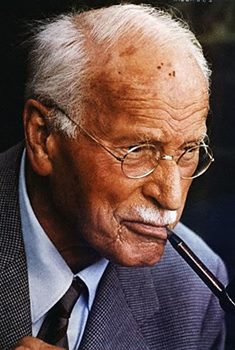

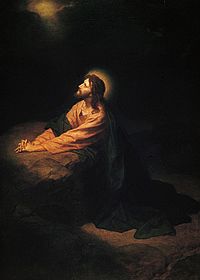

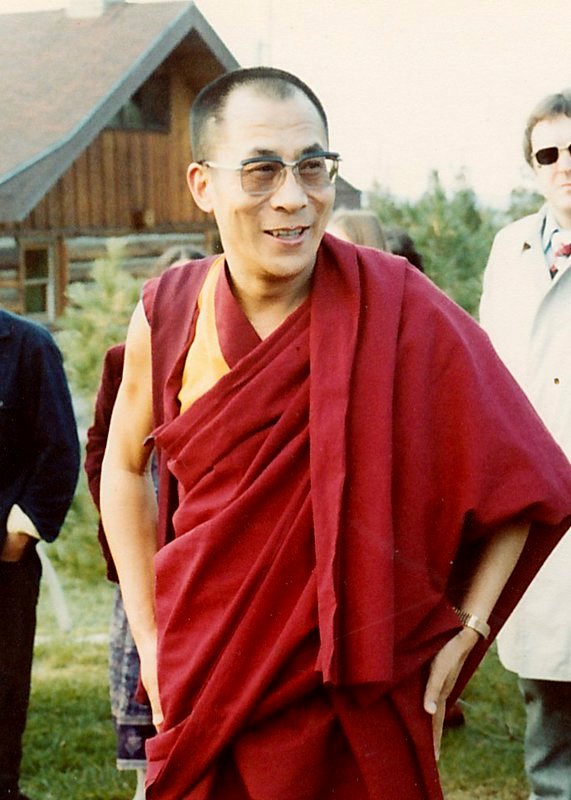

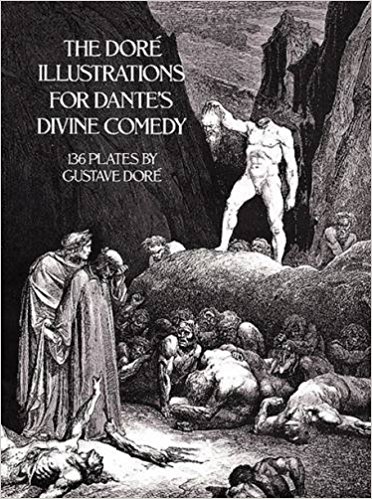
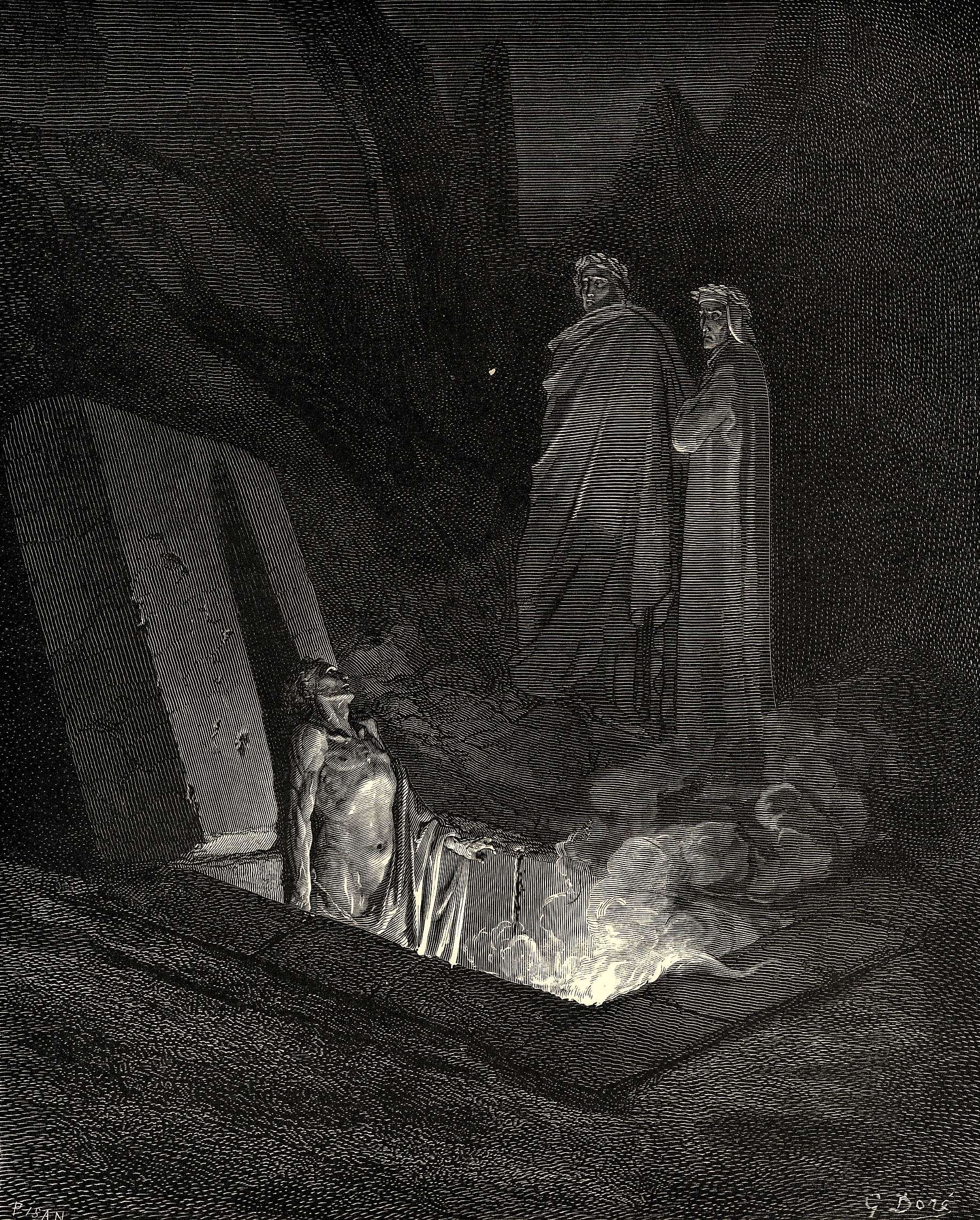


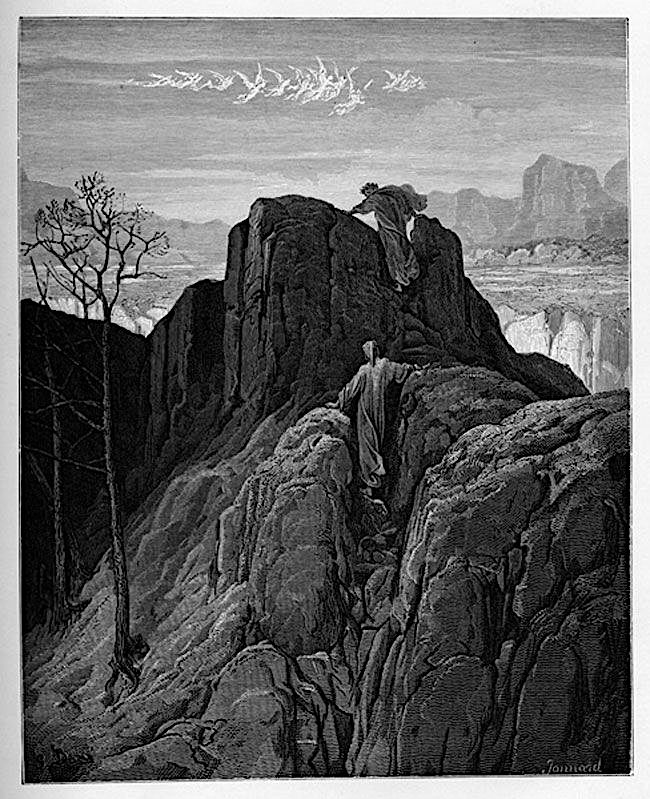
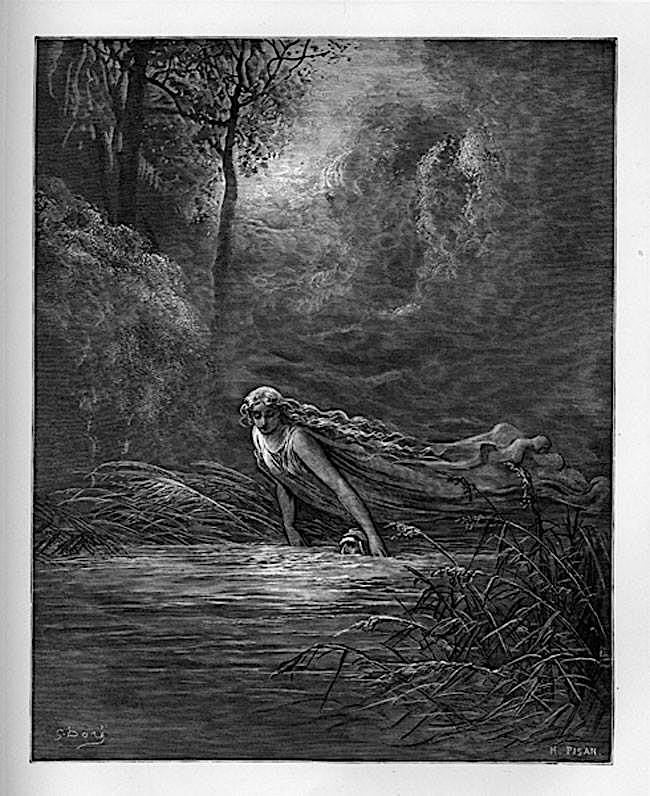

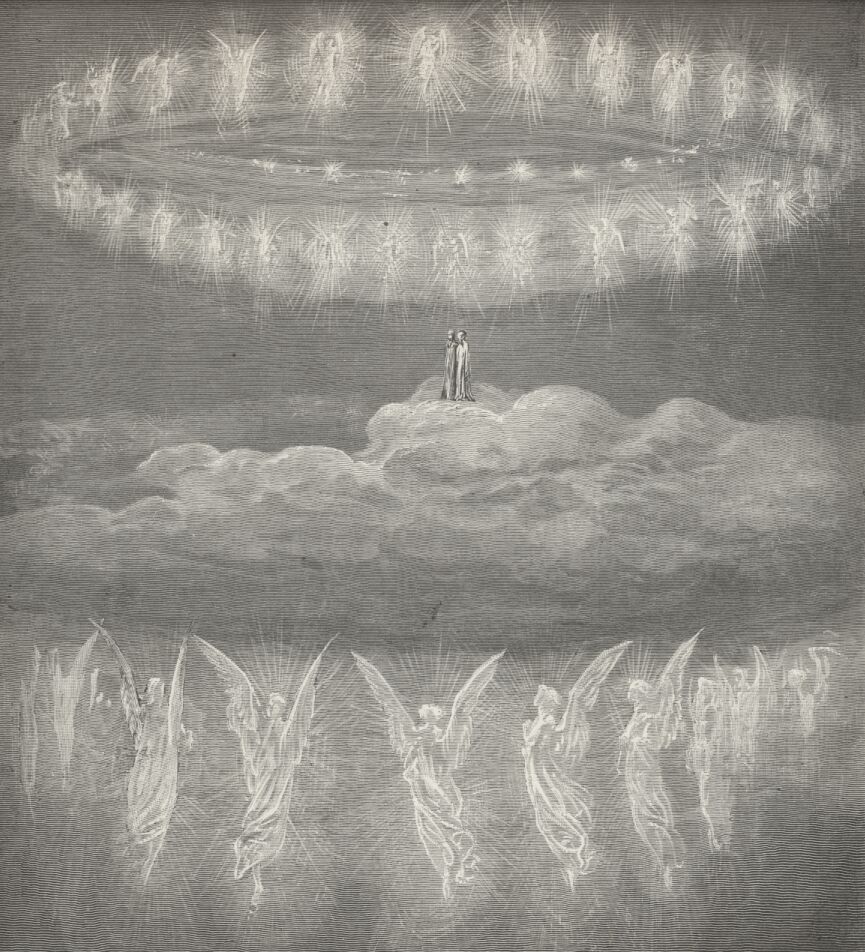
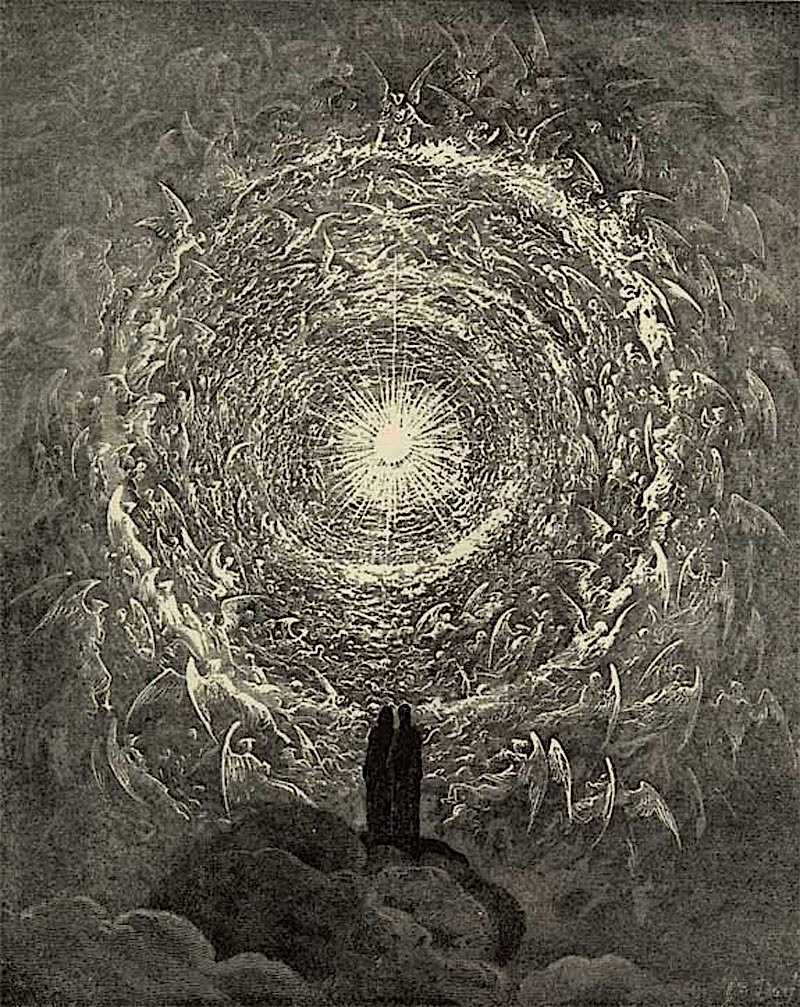
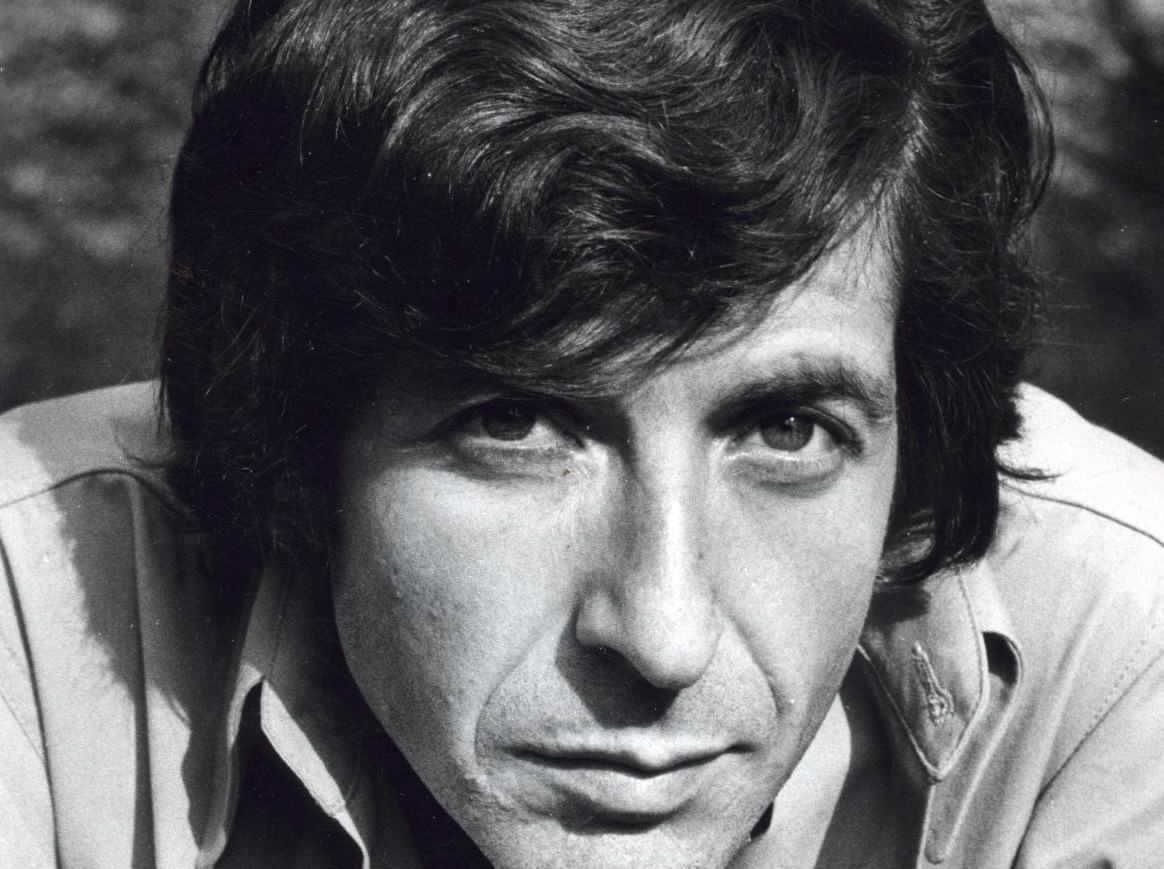
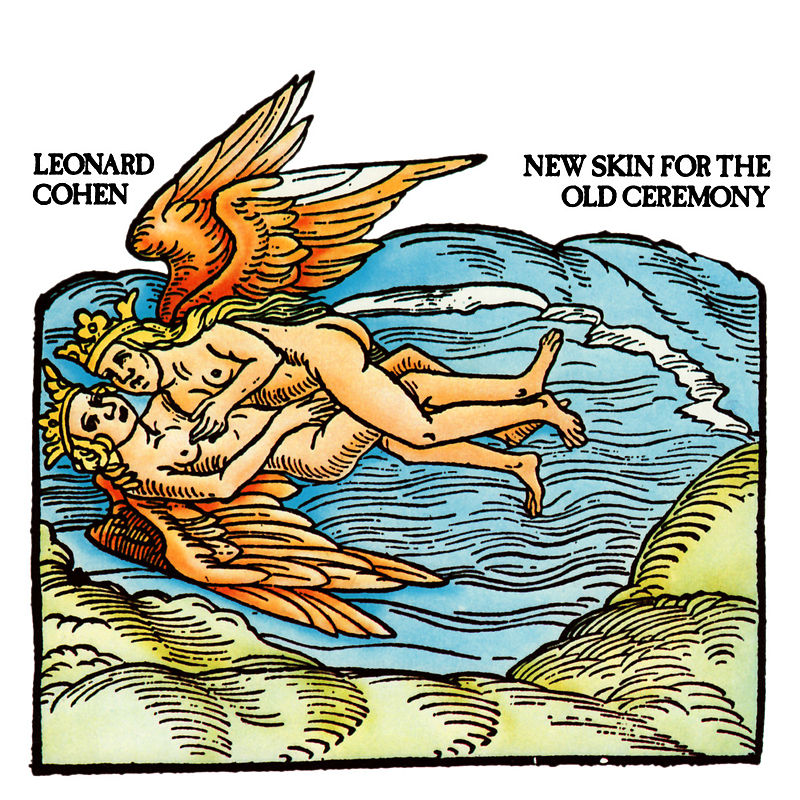

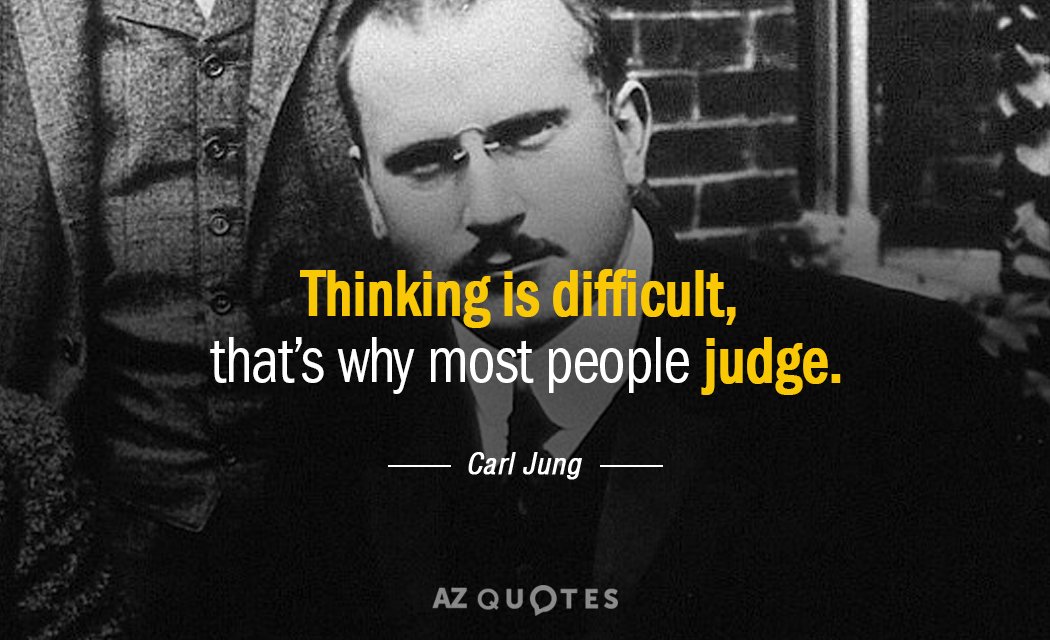



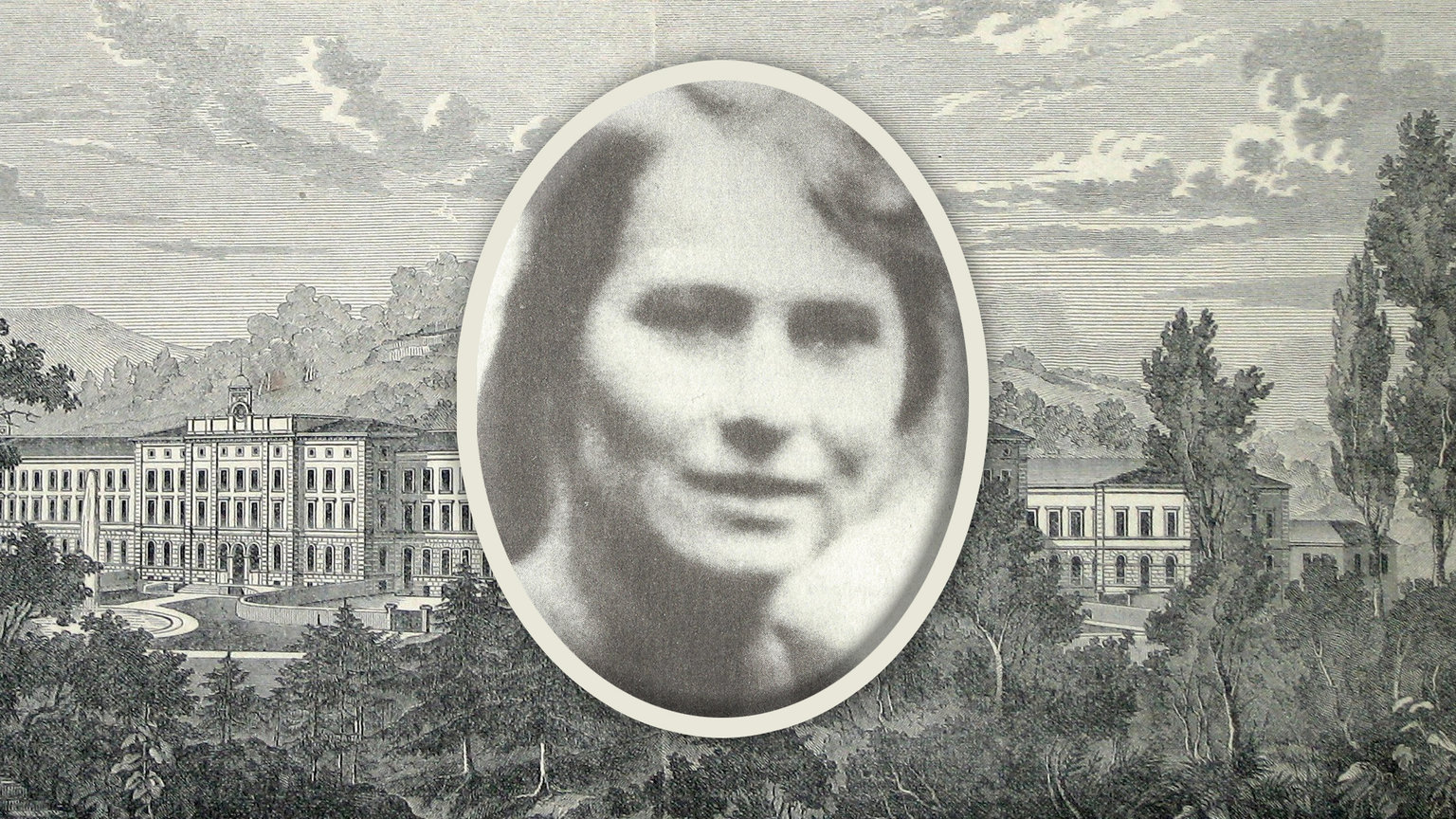
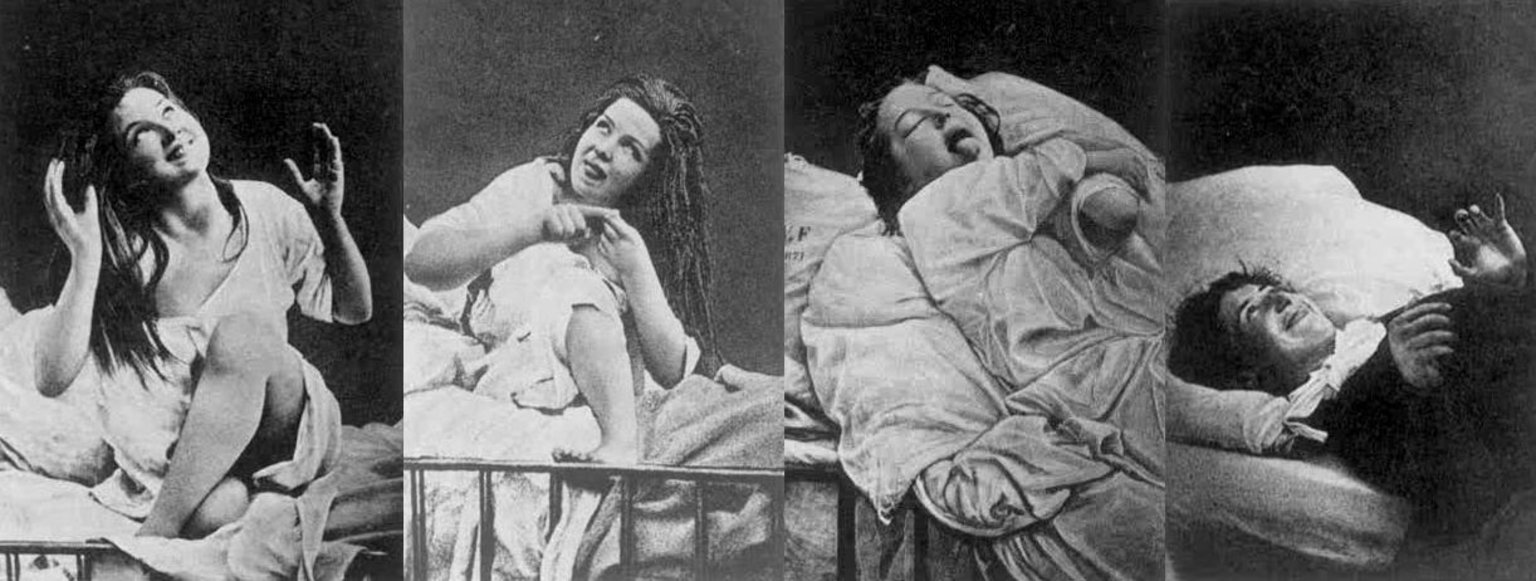
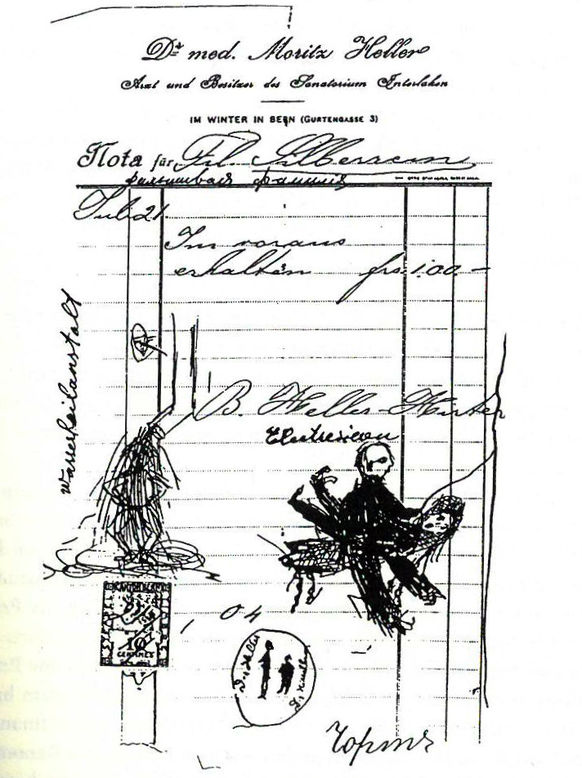
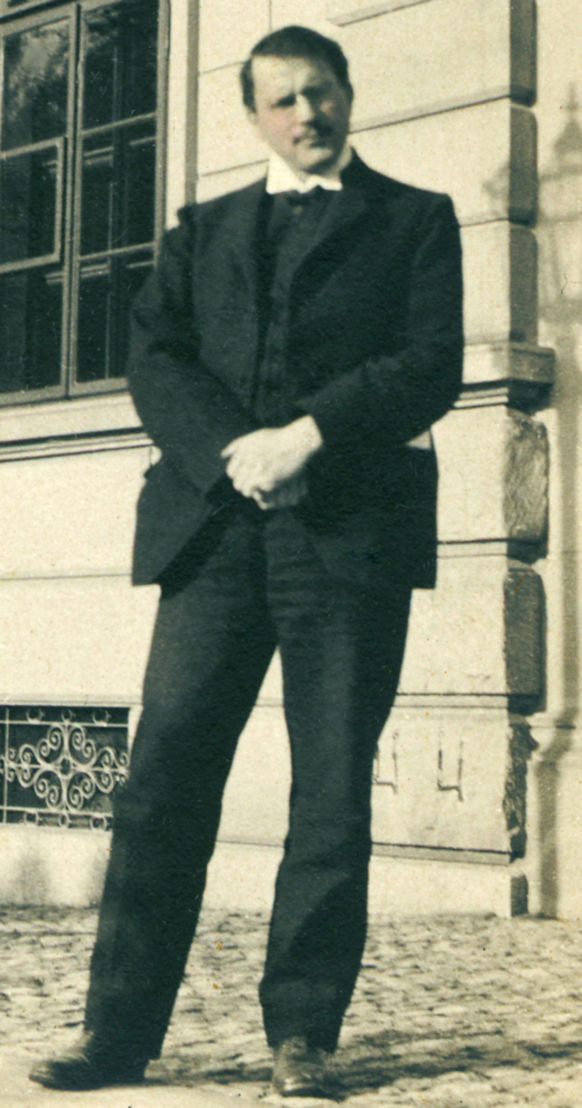
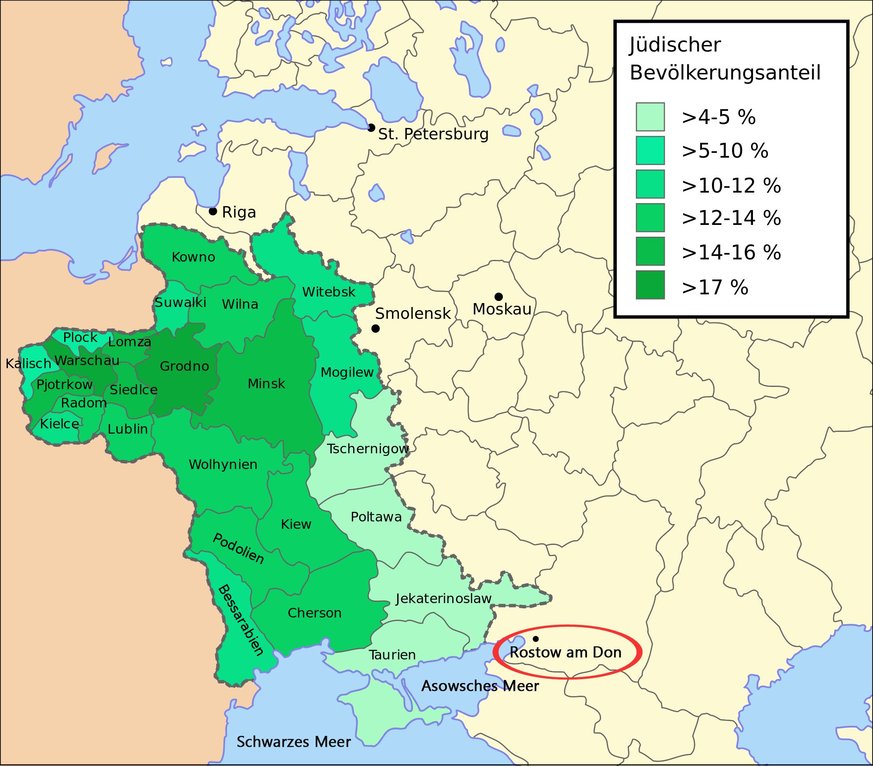
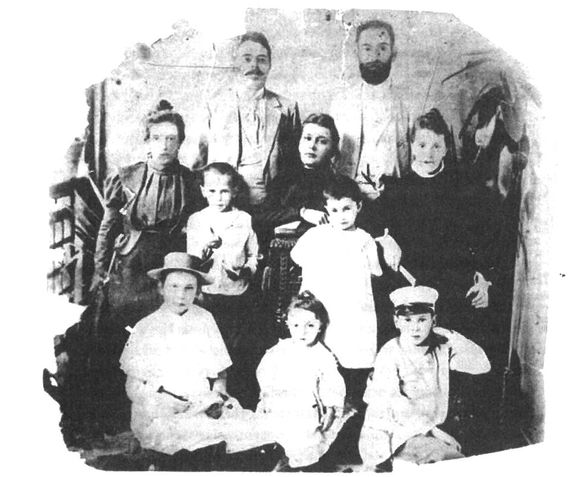
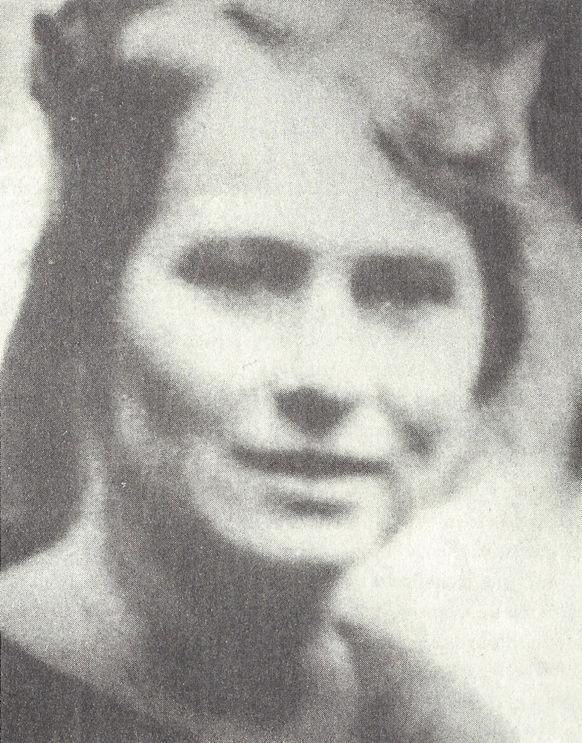
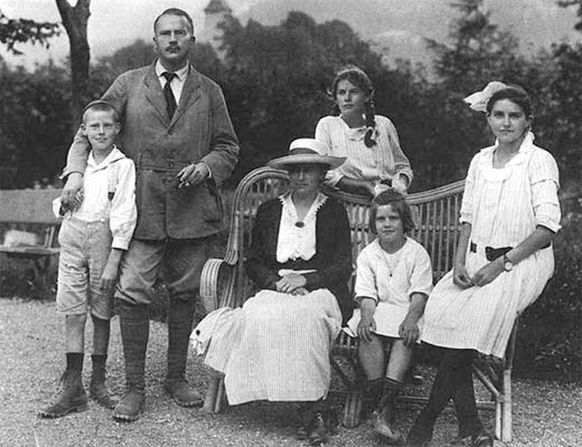
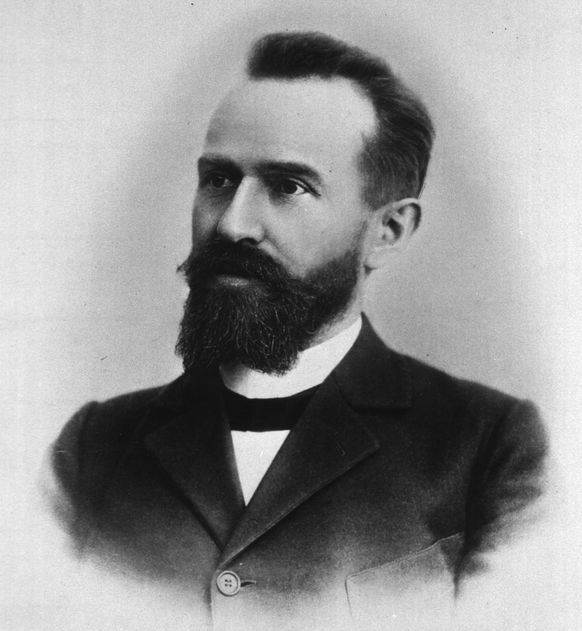
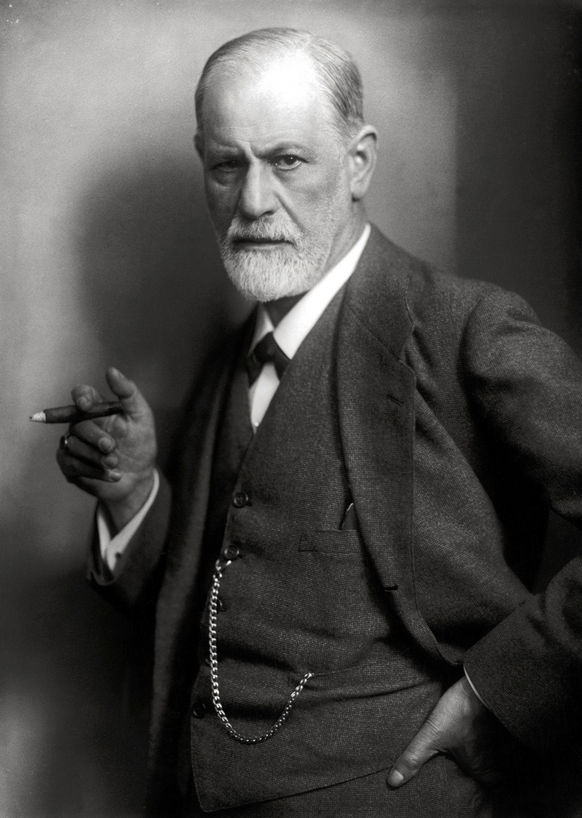
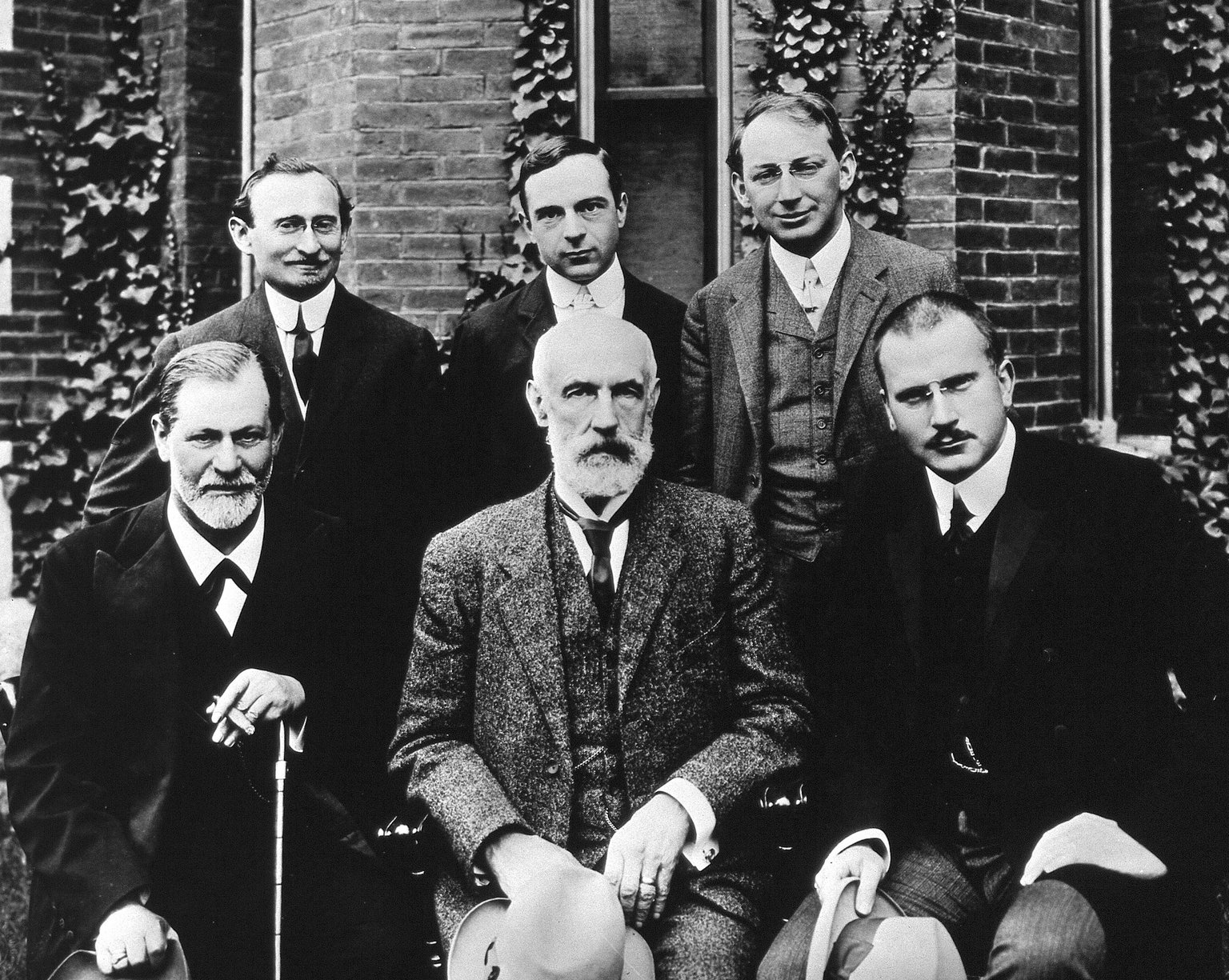
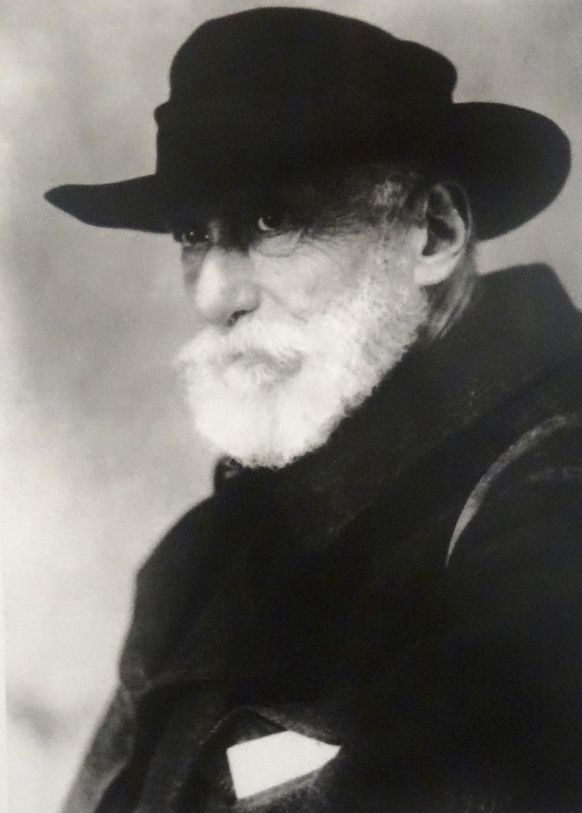
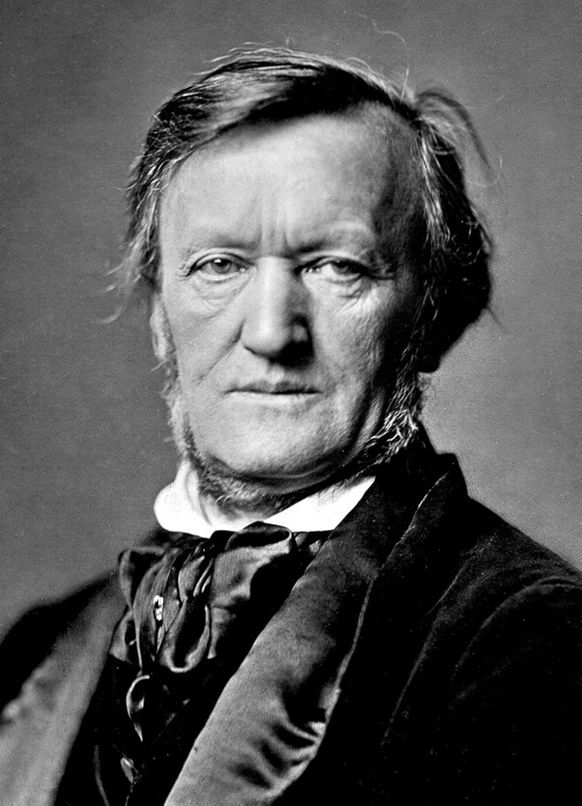
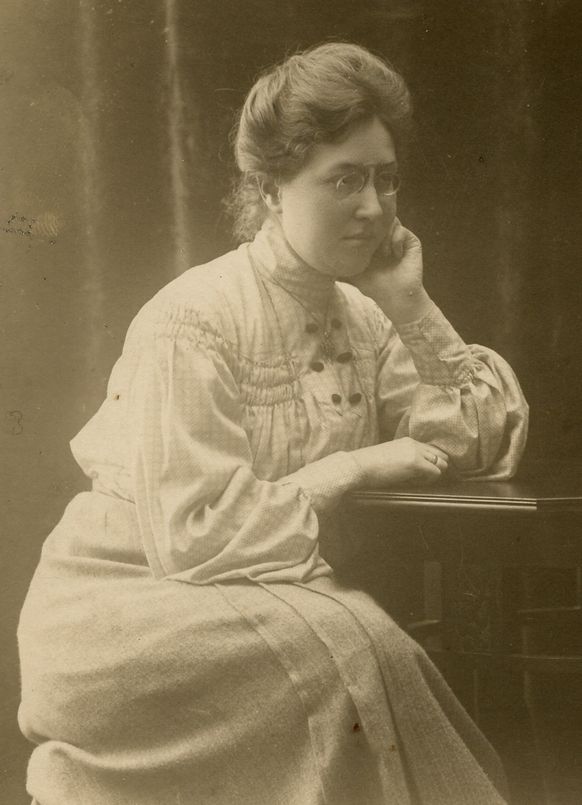
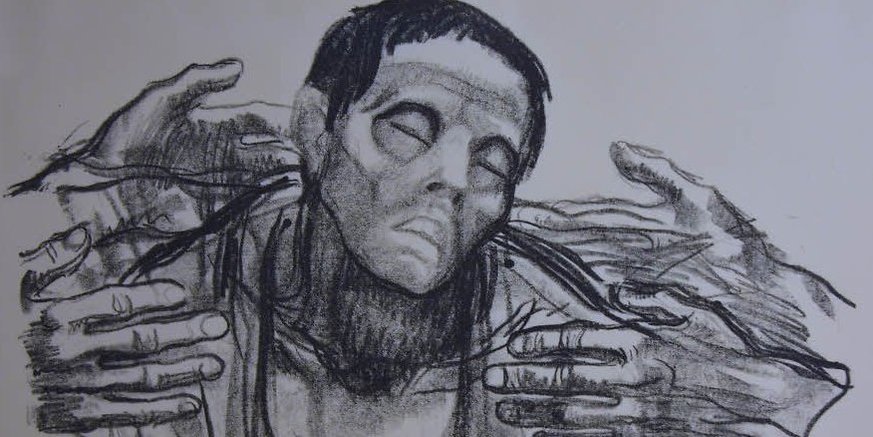
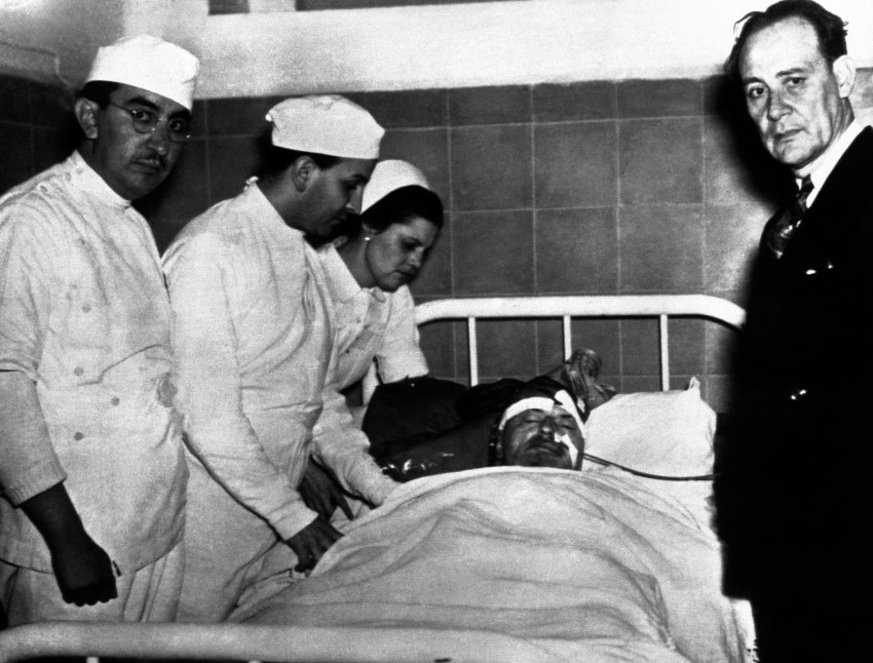
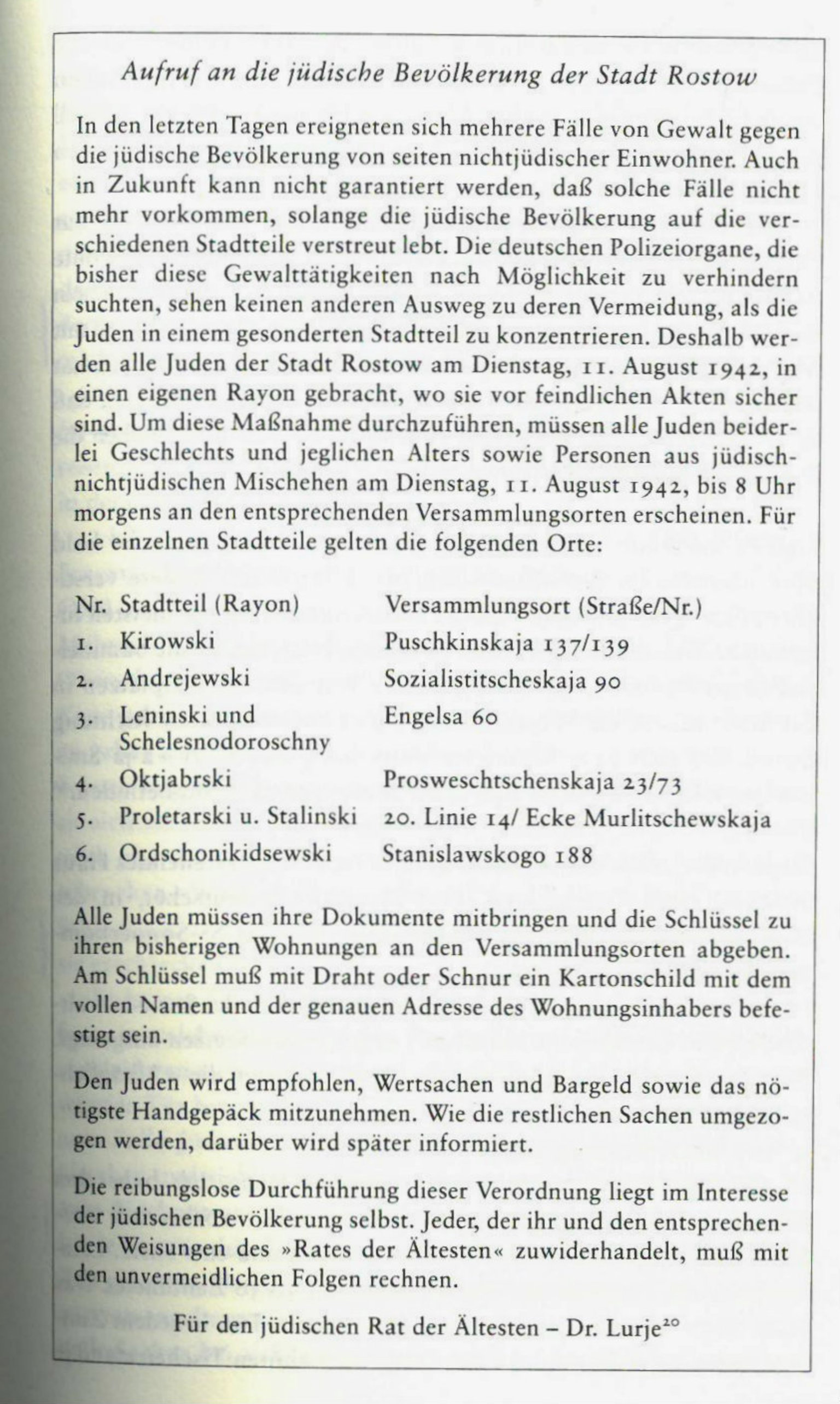
 lampmagician
You must be logged in to post a comment.