

Okay, we can delve deeper into this analysis if you’re ready. According to Jung, modern intelligent people would not find these theories amusing. They may be too tired or lazy to understand or consider them outdated. I fully understand Dr. Jung’s sentiments and how he often felt isolated. In my opinion, these magical concepts may provide solutions to certain mysteries surrounding our existence.
Here we go! (to freshen the memories, here and here are the old posts.)
The Mandala Symbolism (Dream 16) P.3
There are a lot of people there. Everyone walks counterclockwise around the square. The dreamer is not in the middle but on one side. It is said that one wants to reconstruct the gibbon.
Such things are, of course, complete nonsense to the modern intellect. However, this value judgment in no way eliminates the fact that such combinations of ideas occur and have even played an important role over many centuries. It is up to psychology to understand these things and leave it to the layperson to complain about nonsense and obscurantism. (Many of my critics who claim to be ‘scientific’ do exactly the same thing, as did the bishop who excommunicated cockchafers for improper reproduction.).
Just as the stupas contain relics of the Buddha in their innermost being, the Lamaistic square, like the Chinese square of the earth, contains the holiest or magically effective thing: namely the cosmic energy source, the god Shiva, the Buddha, a bodhisattva or a great teacher; in Chinese it is Kiän, the sky with its four radiating cosmic forces (Fig. 46).

The pearl, as a symbol of Kiän, is surrounded by four emanating forces (Dragons). (Chinese Bronze Mirror from the T’ang period, 7th-9th centuries)
In the Western, medieval Christian mandala, too, the deity is enthroned in the middle, often in the form of the triumphant Savior with the four symbolic figures of the evangelists (Fig. 47). The dream symbol contrasts most violently with this highest met physical idea; Because in the centre the ‘gibbon’, which is undoubtedly a monkey, is to be reconstructed. Here, we meet the monkey again, who first appears in Dream 22.

Rectangular mandala with a cross, in the middle of which stands the Lamb of God (Agnus Dei), surrounded by the four evangelists and the four streams of paradise. The four cardinal virtues are depicted in the four medallions. (Zwiefalten Monastery, Breviary, 12th century)
It gives rise to panic and the intellect’s helpful intervention. Now, it is to be ‘constructed’, which probably means nothing other than that the anthropoid, the archaic fact ‘human’, is to be restored. The left-hand path obviously does not lead up into the realm of gods and eternal ideas but down into natural history, the animal instinctual basis of human beings. So it is a – to put it in ancient terms – a Dionysian mystery.

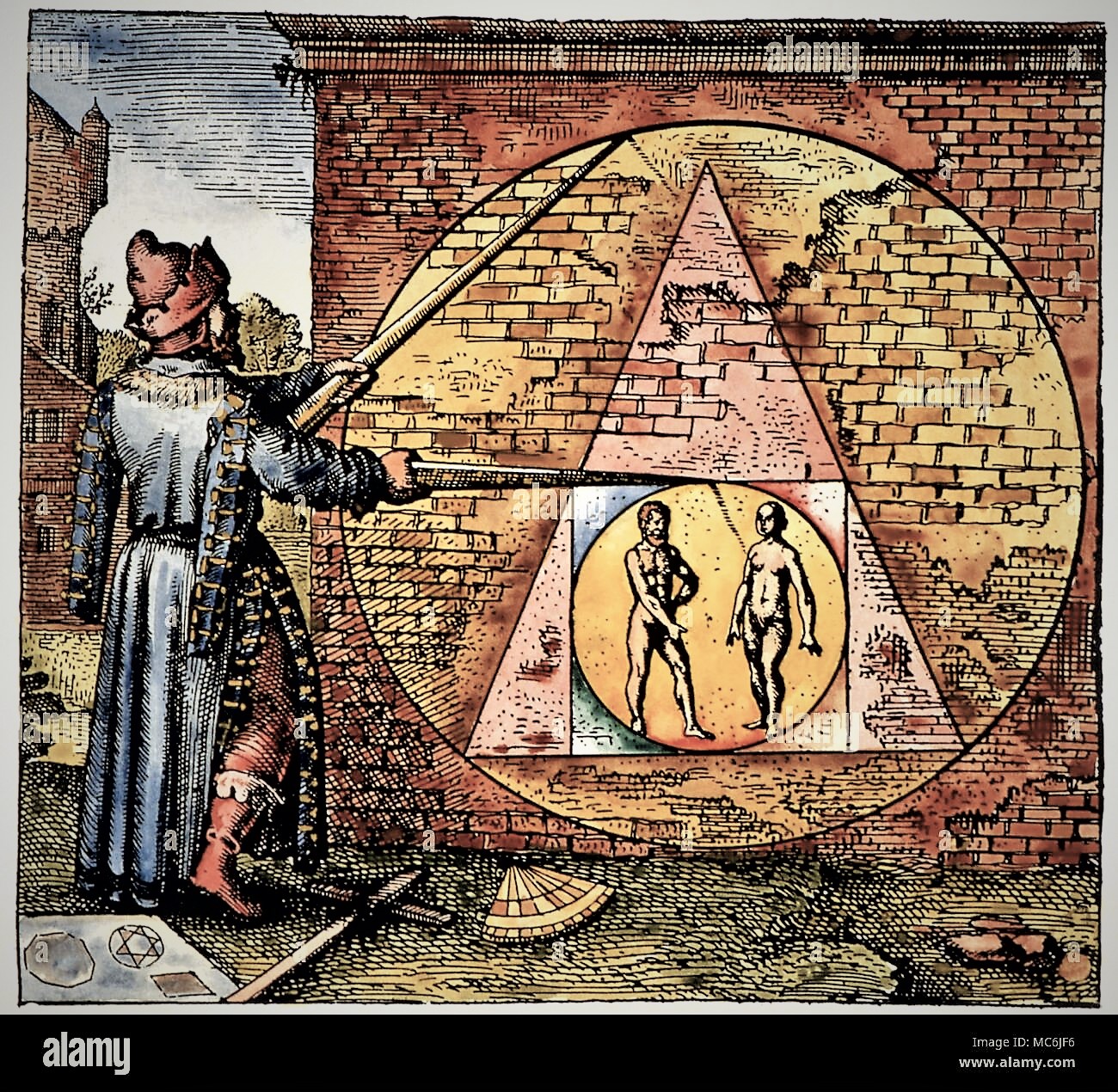
The symbolic city as the earth’s centre represents a temenos with its protective walls arranged in a square. Majer: Viatorium, (Voyager)1651
The square corresponds to the Temenos (see Fig. 7), where theatre is played, in this case, a monkey play instead of a satyr play. The ‘golden flower’ interior is a ‘germinal point’ where the ‘diamond body’ is produced. The synonym’ ancestral land’ perhaps even indicates that this creation emerges from integrating the ancestral stages. (Wilhelm/Jung: The Secret of the Golden Blossom, 1939, p. 112.)
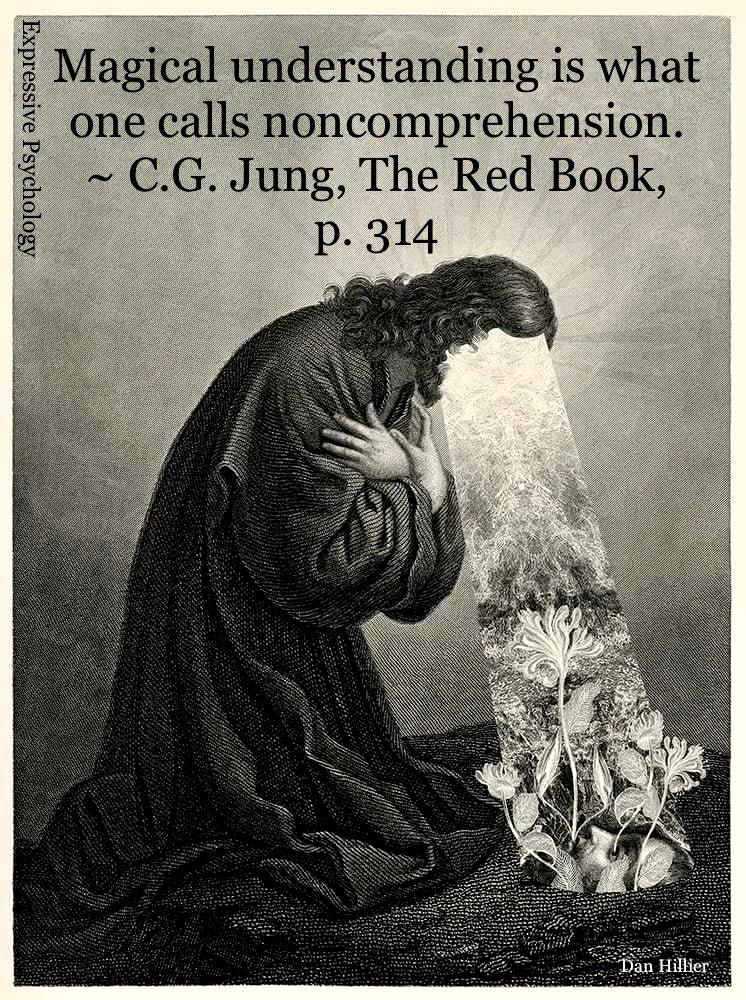
Ancestral spirits play a significant role in primitive renewal rites. Central Australian natives even identify with their mystical ancestors of the Alcheringa period, a kind of Homeric age. Likewise, in preparing for the ritual dances, the Taos Pueblos identify with the sun, whose sons they are. Psychologically, re-identification with the human and animal ancestors means an integration of the unconscious, actually a renewal bath in the source of life, where one is fish again, that is, unconsciously as in sleep, drunkenness and death; hence the incubation sleep, the Dionysian consecration and the ritual death in initiation. Of course, these processes always take place in holy places. One can easily translate these ideas into the concreteness of Freudian theory: the Temenos is then the womb, and the rite is a regression to incest. But these are the neurotic misunderstandings of people, some of whom still remain infantile and do not know that these are the subjects which have always been the exercises of adults, whose activities cannot possibly be explained as mere regressions to infantilism. Otherwise, humanity’s most significant and highest achievements would ultimately be nothing but perverted children’s wishes, and the word ‘childish’ would have lost its raison d’être.
Let’s take another break. Thank you for reading, and have a lovely WE.🤗🦋
Image on top: EDEN II by Carlos-Quevedo































 lampmagician
You must be logged in to post a comment.