
Honestly, when I first saw the statue of the woman below in the main article, I thought it depicted a woman washing clothes in a jar. But as I read the article, I had to admit my failure: she actually makes beer! It is funny that many men, such as in Germany, think beer is a man’s business. Then look! Here we go; in ancient Egypt, the women, and even the Goddesses, brewed beers.
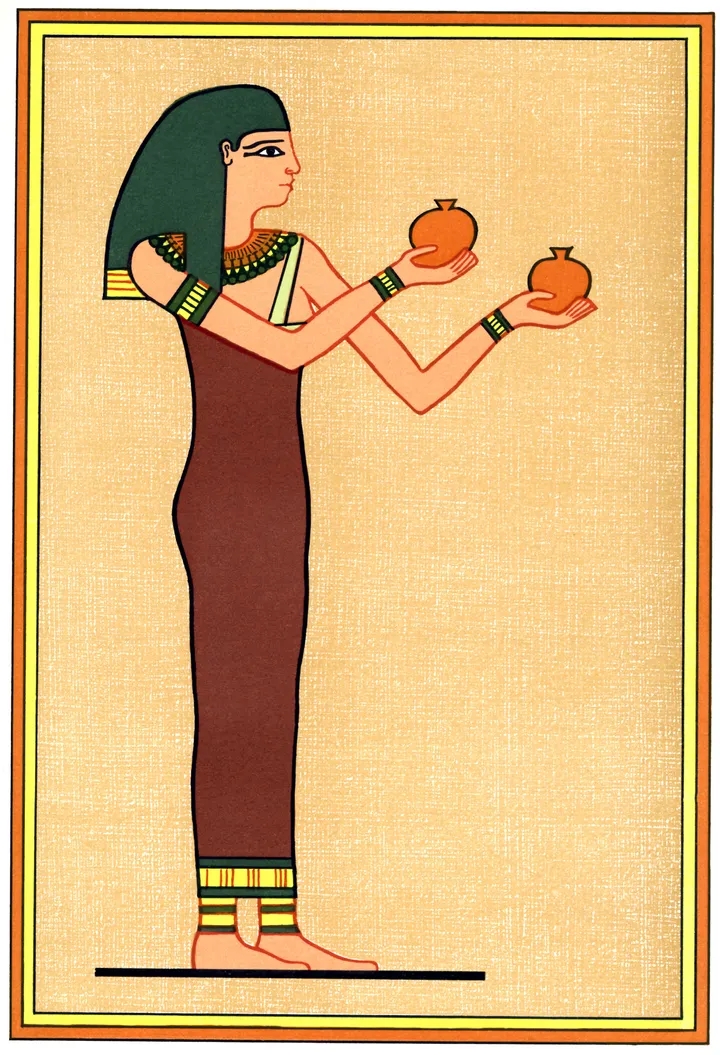

Yes! It is fascinating to know that there was more than one beer Goddess in ancient Egypt: Nephthys (She was associated with mourning, the night/darkness, service (specifically temples), childbirth, the dead, protection, magic, health, embalming, and beer.) The others were Menqet (The Egyptians worshipped the Goddess of beer, Menqet, and celebrated sun God Ra’s daughter, Sekhmet, whose bloodthirsty ways were calmed by beer. According to Egyptian mythology, Menqet was the Goddess of beer and ruled over the Place of Reeds.) and Tenenet (Tjenenyet), as both latter mentioned in this article.
We read here the description of this amazing story by brilliant Marie Grillot and Marc Chartier. Cheers!!
Beer Brewer for Eternity…
via égyptophile

discovered in 1931 in the mastaba of Mersou-ankh in Giza
by Professor Sélim Bey Hassan on behalf of the Antiquities Service
Egyptian Museum in Cairo – JE 66624
In 1931, while continuing the excavations undertaken in 1929 on behalf of the Antiquities Service in the sector concerning: “the ascending routes of the Pyramid of Chephren to the north and the Pyramid of Mycerinus to the south”, Professor Sélim Bey Hassan discovers the mastaba of Mersou-ankh.

The mastaba of this chief of the Rà-wèr domains will turn out to contain numerous statues.
Among them is that of this brewer, discovered in serdab no. 1, facing a triple statue representing the tomb’s owner.
It is made of painted limestone and stands 28 cm high. It represents a woman leaning over a large jar. She wears a black, mid-length wig, while her natural hair forms a fringe on her forehead. The face is generous, the cheeks are full, the eyes and eyebrows are marked with black, the nose is wide, and the mouth seems to be smiling. A necklace in blue and white tones adorns her neck.
Her breasts are exposed, and the light-coloured, almost transparent garment she wears begins at the waist and goes down to below the knee.

discovered in 1931, in the mastaba of Mersou-ankh in Giza, by Professor Sélim Bey Hassan
on behalf of the Antiquities Department – Egyptian Museum in Cairo – JE 66624 – museum photo
The arms are relatively robust, and the hands are not visible. They are busy kneading the dough in the sieve placed on the pottery jar. “She kneads the ingredients used to make beer in the Old Kingdom, namely barley loaves, water and date liqueur,” explains Rosanna Pirelli in “Treasures of Egypt – The Wonders of the Egyptian Museum in Cairo.
To understand the method of production, we refer to the information provided in Thierry Benderitter’s description of certain scenes of the mastaba of Ty in Saqqara on his indispensable site, Osirisnet.net, and to Sylvia Couchoud’s sDynastyeer in Pharaonic Egypt.

discovered in 1931, in the mastaba of Mersou-ankh in Giza, by Professor Sélim Bey Hassan
on behalf of the Antiquities Department – Egyptian Museum in Cairo – JE 66624
The base ingredient is sprouted barley. “It is crushed in flat-bottomed containers with a mortar and filtered using increasingly fine sieves. Wheat flour is added. With this mixture, once moistened, oblong pieces of dough are made and poured into hot moulds until the crust is golden while ensuring that the inside remains raw and that the malt enzymes are not destroyed. The half-cooked bread is then crumbled in a bowl and mixed with a sweet liquid obtained with dates. The mixture is kneaded, stirred, filtered with a large strainer and collected in jugs where it will ferment. When the fermentation is finished, the beer obtained is transferred into amphorae closed with a. plug of straw and damp clay, or with a small plate and a little plaster.”
Four types of beers have been referenced: zythum (literally “barley wine,” a widely used light beer), Dizythum (a double beer), Carmi (a sweet beer), and Korma (a ginger beer).
Jean-Pierre Corteggiani (“Ancient Egypt and its gods”) specifies the importance of beer in ancient Egypt: “Personified by the goddesses Tenemet and Menqet, who are responsible for brewing it, beer plays a significant role in the divine world. It is obviously part of the offerings made to the gods and goddesses, particularly Hathor, since, like wine, it can induce intoxication.

Menqet is often represented with two jugs in her hands, associated with Âqyt, who personifies bread. With bread, it’s beer – not wine! – which the Egyptians wished to have for eternity.
The deceased wished not to lack anything in his afterlife… Thus, as we can read in the “Official Catalog of the Egyptian Museum in Cairo”: “the figurines of servants at work reproduce in the round themes previously developed in bas relief. The statuary of the tombs is enriched by a small world of brewers, millers, pastry chefs, potters or butchers, who continue their daily service in the tomb. Generally of a mediocre style, these figurines are nevertheless quite expressive and represent their professional practice well. The first known limestone models date back to the 4th Dynasty, but the vast majority occurred in the 5th.

on behalf of the Antiquities Department – Egyptian Museum in Cairo – JE 66624
This brewer is displayed at the Egyptian Museum in Cairo under the reference JE 66624.
Sources:
Statuette of a Female Brewer http://www.globalegyptianmuseum.org/record.aspx?id=14885 Statuette of a woman preparing beer https://egyptianmuseumcairo.eg/emc/artefacts/old-kingdom-serving-statues/ Francesco Tiradritti, Treasures of Egypt – The Wonders of the Egyptian Museum in Cairo
Mohamed Saleh, Hourig Sourouzian, Official Catalogue of the Egyptian Museum in Cairo, Verlag Philippe von Zabern, 1997
Jean-Pierre Corteggiani, Ancient Egypt and its gods, Fayard, 2007
National Geographic, Treasures of Ancient Egypt at the Cairo Museum
Beer: a drink known in ancient Egypt https://egyptophile.blogspot.com/2016/04/la-biere-une-boisson-connue-et-deifiee.html
 lampmagician

You must be logged in to post a comment.