By my one of very worthy friend; SearchingTheMeaningOfLife (I’d hope I’d be recognized and confirmed 🙂 )
I’m born in the time of “Radio Day’s” as Woody Allen might call it, in that time in which there wasn’t TV and the only general communication was the radio in that times. Therefore, I’ve got a whole experiences to listen to the radio and the young friends might not believe it, it was a fascinating experience. it had helped me to learn to imaginate.
Anyway, when I was young and still listening to radio, there were a many theatre plays in it, you might not believe but those days there were writers for the Radio Piece. Theater in the radio, and they were wonderful acts happened: one of them it was written by a very famous writer (that I have unfortunately forgotten his name) about the wandering souls, our souls which go to nowhere land and waiting for the nxt act. there were four souls who met each others and sat and talked in the waitings time, and in between, they began to like each others, two men and two women.
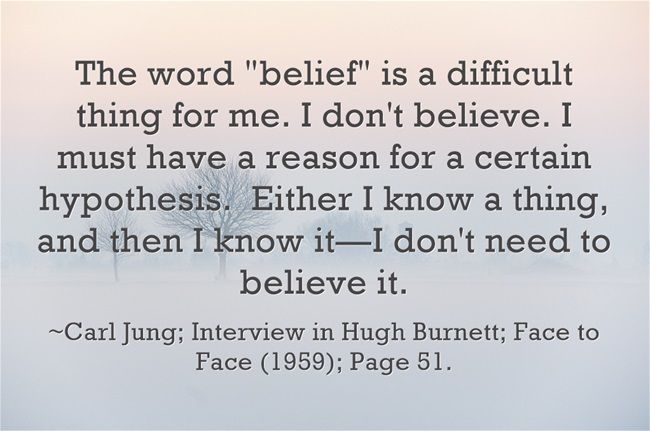
one of the men said that he’d know that they’d all go into the new life on the Earth, the have begun to definite and wish how they could be in this new phase, they have liked each other in this very short time and they’d hope to get a nice life on the Earth in the new life, but exactly, at the time of reincarnation, they find out that they will have a tragic life; It’d mean that they married in pair and one of the men felt in love with the other’s wife and at the end there in murder! very sad story anyhow, there’s not a matter of believe in or not, C. G. Jung once said: I don’t believe in what I don’t really know about it. the main thing is that we all as humans when the time comes and we died, there will be something that’d surely remains, if we are here on this Earth to get through an examination as Graham Hancock once stated.
Anyway, it’s a highly recommended issue here to read and spend a thought on it.
“We come from a dark abyss, we end up in a dark abyss: in the bright space we call it Zoe. As soon as we are born, the return begins. At the same time the beginning and the return. Every moment we die. This is why many have said: The purpose of life is death. But as soon as we are born, the effort to create, to compose, to make the matter of life begins. Every moment we are born. That’s why many have said: “The purpose of ephemeral life is immortality”
Assketika N. Kazantzakis
Life and death are the two sides-poles of the same coin, THE LIFE, as the ancient wise men said. We, as lovers of wisdom, suffice to accept their views in order to realize the very course of evolution.
But what is death? Is there something after the end of earthly life? Why are we born? Who we are; Where do we go from and where do we go?
All of the above questions call philosophy, religions in their essence, and the very science of psychology to answer.
Let’s try to unroll the skein. Let’s take things in a row.
“Death, in my opinion, is nothing but the separation of two things that were previously united. Of soul and body, “said Uncle Plato.
All ancient peoples, Sumerians, American Indians, Egyptians, Indians, Chinese, Japanese, and Greeks believed in reincarnation. Large personalities such as Pythagoras, Plato, Aristotle, Confucius Lao Tse, Buddha and more modern, such as Nietzsche, Schopenhauer and others have confirmed this old theory.
Reincarnation, then, is a very old teaching, which shows us the succession of life and death in human existence. Before proceeding, let us meditate by observing the nature itself, which teaches us the existence of circles … Each new spring succeeds in the winter … every new day at night … Man, as an integral part of nature, participates in his rhythms and, following them rhythms, lives, dies and resuscitates in this world.
Reincarnation teaches us that the human soul, or spiritual energy, changes body. It changes physical presence every time and so lives various lives in the flow of evolution. Moreover, the very purpose of the Reincarnation Law is to perfect the being. Through the successive reincarnations, the human spirit is perfected, acquiring the necessary experience and knowledge, and thus rising more and more to the source of the spiritual light from which it originated.
But what is it that is unchanging, reincarnated, and what is it that changes with every life? Again, we will turn to the depths of antiquity, collecting all these elements that humanity has inherited. Thus, the inner traditions impart that man, as an evolving being, has an Eternal and indestructible part of Heavenly origin, the Spirit, or the Ego, and another perishable, moral and earthly part, subject to changes in life. This second part we call it personality (does the word “persona” do not mean the mask of the ancient Greeks? Remember the masks that Khalil Gibran mentions in his work “the madman”). So the ancient wise men were saying that man consists of a perishable personality, which is quadruple, with four “masks” of material substance and an immortal spirit, which does not wear out if it is not material. The Ego or the Self of the ancient Greeks (remember again the delphic saying “know him” that reminds us to know our true self beyond the “masks”).
So we said that what the traditions say is reincarnated is the Spirit, which each time acquires a new personality (or else changes the worn-out clothes, as Krishna tells Arjuna in Bhagavad Gita, a project of great importance to the Indians ) that will allow him through his own life to acquire new experiences, knowledge and experiences, which will enrich and will help to develop the consciousness of the individual ego.
Every personality (which is to say that it includes our physical body, our vital energy, our emotions and the subjective mind) in every life has a certain duration. Sometime he is born and sometime he dies. So the soul “rises” into another world, in another dimension. In the east, this dimension is called Devachan and can be paralleled with Paradise, the Chalices of the Ancient Greeks, the Valhalla of the Scandinavian, the Egyptian Emperor … There the human entity spends a certain period of resting and processing everything learned from ” school of life “until it is forced to” rewind “(I go up and down is relative, but these meanings have always been used, which suggest the passage from one dimension to another) on the earth, in the material world,
In general this describes the process of reincarnation. Whether there are several “levels” in which souls are sent or else gone (Dante described these spaces as multi-storey universes) is a very big issue.
Moreover:
“Birth is sleep, forgetfulness
and the soul within us is born,
the star of life but the brilliant,
else he has gone to set,
and its east is elsewhere.
Not even naked,
Not completely into oblivion,
we are born into this life,
but like wind clouds,
sent from God, our first source. ”
“Feelings of Immortality Through the Reminders of Childhood”
William Gordworth
Following those who have realized all of the above we understand:
“My children, death and birth,
a pain of heart and sweetness,
one I leave it, and I come,
one hello and I found it well. ”
“Report to Greco” N. Kazantzakis.
BIBLIOGRAPHY
• KARMA, ANNIE BESANT, THESSALONIKI PUBLICATIONS
• ASKITIKI, N. KAZANTZAKIS, EDITIONS E. KAZANTZAKIS
• REFERENCE TO GREKO, N. KAZANTZAKIS, EDITIONS E. KAZANTZAKIS
• METENSARKOSIS, IRVING S. COOPER, THEOSPHIC EDITIONS
• CHOOSE CHILDREN IN NEW ACROPOLIS, GA PLANAS, NEW ACROPOLIS ISSUES
• THE 3 CENTERS OF THE MYSTERY, GA PLANAS, PUBLICATIONS NEW ACROPOLIS
LIFE AFTER LIFE, CAROL NEIMAN & EMILY GOLDMAN, EASTERN EDITIONS
• THE SILENT TEACHING OF PLATON, SAVVAS PATTAKOS, PUBLISHING NEW ACROPOLIS
Today we celebrate International Women’s Day! In honour of all you talented women out there, here is some folklore of the Sámi people.
The Sámi consider the Sun a divine being, claiming the sun rays and heat represent the daughter of the sun Salaneide, who has the power to end the cold winter.
Rana Niejta, a Spring/fertility Goddess awakens nature. She is known for turning the Southward mountains green in order to nourish the famished Reindeer from a long, cold, harsh, winter.
Above: Statue of Rana Nietja sits in a park in Mo i Rana, Rana, Norway.
Le fleuve au vent du soir fait chanter ses roseaux. Seul je m’en suis allé. – J’ai dénoué l’amarre, Puis je me suis couché dans ma jonque bizarre, Sans bruit, de peur de faire envoler les oiseaux.
Et nous sommes partis, tous deux, au fil de l’eau, Sans savoir où, très lentement. – O charme rare, Que donne un inconnu fluide où l’on s’égare !… Par instants, j’arrêtais quelque frêle rameau.
Et je restais, bercé sur un flot d’indolence, A respirer ton âme, ô beau soir de silence… Car j’ai l’amour subtil du crépuscule fin ;
L’eau musicale et triste est la soeur de mon rêve Ma tasse est diaphane, et je porte, sans fin, Un coeur mélancolique où la lune se lève.
THE EXTREME ORIENT
I
An evening music in the reed was heard. I went to the river alone. I freed the painter, I laid me…
very good advice to think twice about it. I myself always try to stay in about average 😉 and I’m also lucky that my wife doesn’t interested in any social media at all, therefore, I have to reduce my activity in this case.
I can only read here an absolute true Words, the creation, as I may call it so, which an artist creates, comes from own self. It even forces to come out. Thank you MG Wells for sharing your thoughts ❤❤🙏🙏👍
Welcome back to Hidebound Hump Day, my chuckaboos! Unfortunately I still haven’t gotten my agoraphobic self on the road. Even without my “messed-up-ness,” a cross country relocation is a lot for one person, physically and mentally… and I’m no spring chicken… So, please forgive me for being scarce. I miss visiting other blogs, and apologize that I haven’t been to see you.
The quite romantically random “things” that drove this chapter were from author Mary J McCoy-Dressel.
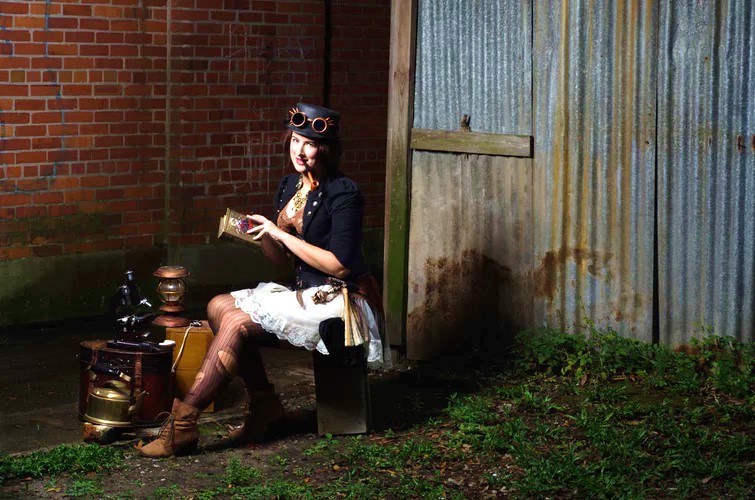
Now, let’s get straight to the #steampunk submarine.
Previously with Copper, the Alchemist, and the Woman in Trousers
A Rewind from Chapter 8back when our trio escaped from fierce marauding chimpanzees.
The chimp must have seen me looking back at him. It started wreaking havoc in the branches of the tree, jumping up and down and screeching bloody murder. His fellows in the…
Neuf heures du matin seulement et déjà il se fait bien tard…
Une ombre épaisse recouvre lentement la chair tuméfiée de tous ces jours d’attente, de prière et d’espoirs impossibles comme une fraîche nuit d’automne jetant son voile épais sur un été encore chaud, orageux mais fragile et sans avenir.
Depuis tant d’années, elle frappe et frappe à ma porte lancinante et insidieuse, terrifiante et mortifère, jouant avec mon impatience et s’accrochant à ma raison comme une tique sur un corps offert à la mort.
Soudain ! par effraction et violemment elle entre, ayant rompu la trêve et tué toute trace de sérénité ; la douleur se fait enfin reconnaître comme telle par une âme chancelante et durement éprouvée.
Et sans désemparer elle fredonne son petit air de fête, toujours le même… elle, puissante et ivre d’avoir trop bu à la coupe d’une souffrance impitoyable et quotidienne comme une bête sauvage…
How Friedrich Nietzsche used ideas from the Ancient Cynics to explore the death of God and the nature of morality
Friedrich Nietzsche (1844-1900) on his sickbed, 1899. Oil sketch on cardboard by Hans Olde. Photo Goethe-Nationalmuseum, Weimar/AKG
Haven’t you heard of that madman who in the bright morning lit a lantern and ran around the marketplace crying incessantly: ‘I’m looking for God! I’m looking for God!’ Since many of those who did not believe in God were standing around together just then, he caused great laughter. Has he been lost, then? asked one. Did he lose his way like a child? asked another. Or is he hiding? Is he afraid of us? Has he gone to the sea? Emigrated? – Thus they shouted and laughed, one interrupting the other. The madman jumped into their midst and pierced them with his eyes. ‘Where is God?’ he cried; ‘I’ll tell you! We have killed him – you and I! We are all his murderers.’
No! they shouldn’t laugh, cause God is dead! We can see the event in this corresponding every day these days. Nietzsche has always fascinated me.
again, (sorry of my attacking this very day, I have only a Saturday just to be able to think!!) but is not this man a really fascinating creature? I think if I understand Nietzsche, I’ll understand me too!
Helen Small is professor of English literature at the University of Oxford, and a fellow of Pembroke College, Oxford. Her most recent book is The Value of theHumanities (2013). She lives in Oxford.
Ancient Cynicism was an eccentric model for practising a philosophical life. Diogenes of Sinope (c404-323 BCE) and his followers claimed independence from conventional material desires and the normal turmoil of emotional life. They were notorious without shame – pissing and satisfying their sexual needs in public, like the dogs (kynes) from which their name partly derived.
Diogenes himself was said to have slept in a tub or a shack in the Athenian marketplace. Seeing a youth scoop up water in the hollow of his hand, he threw away the wooden cup he had been using, pleased to see that he did not need it. When Alexander the Great announced himself: ‘I am Alexander the great king,’ Diogenes replied: ‘I am Diogenes the dog.’
For Friedrich Nietzsche – steeped in the Classics – the Cynics, and the much later account of them in the gossipy collection of anecdotes TheLives and Opinions of Eminent Philosophers by Diogenes Laertius (no relation to Diogenes of Sinope), were attractive material long before he parted company with an academic career to practice a more abrasive public philosophy of his own. ‘Diogenes Laertiades’ was how Nietzsche signed himself in a letter to a friend in his late 20s: ‘son of Laertius’, or literally ‘sprung from Laertius’, ie from Diogenes Laertius. In the wake of a great deal of critical work in recent years, excavating Nietzsche’s Cynicism, two questions are worth asking afresh: how far did the identification go? And what did his philosophy hope to gain, and risk losing, by it?
The Cynic Diogenes of Sinope appears in Nietzsche’s The Gay Science(1882) as der tolle Mensch (‘the crazy man’) who proclaims the death of God; it is a canonical scene of modern philosophy:
Haven’t you heard of that madman who in the bright morning lit a lantern and ran around the marketplace crying incessantly: ‘I’m looking for God! I’m looking for God!’ Since many of those who did not believe in God were standing around together just then, he caused great laughter. Has he been lost, then? asked one. Did he lose his way like a child? asked another. Or is he hiding? Is he afraid of us? Has he gone to sea? Emigrated? – Thus they shouted and laughed, one interrupting the other. The madman jumped into their midst and pierced them with his eyes. ‘Where is God?’ he cried; ‘I’ll tell you! We have killed him – you and I! We are all his murderers.’
The drama of the madman performs a serio-comic riff upon TheLives and Opinions of Eminent Philosophers: ‘He [Diogenes of Sinope] lit a lamp in full daylight and walked around with it, saying: “I’m searching for a man”.’ Sometimes more loosely translated as ‘searching for an honest man’, the words are a challenge and potentially an affront to all who hear them. Tapping into the radicalism of the ancient example, Nietzsche echoes its original cynicism – the sorry absence of anyone capable of living in the knowledge of what it means to be human – and gives it an updated point. A new Diogenes declares the death of God, the collapse of the belief system that underpinned Judaeo-Christian morality and provided the culture’s sources of valuation for hundreds of years. Or rather, the crazy man demands attention to what should have followed from that realisation, since the realisation itself is hardly news.
Later in The Gay Science, Nietzsche clarifies what is at issue. By ‘God is dead’, we should understand that ‘belief in the Christian God has become unworthy of belief’: the time has come for human beings to live truthfully, in accordance with their situation. The neo-Cynic affront lies not in the debasement of long-lost metaphysical certainties, but in a fresh insistence, that destruction of the old basis for morality raises urgent consequences about how to live now. ‘Aren’t we straying as though through an infinite nothing?’ asks the crazy man; ‘Isn’t empty space breathing at us? Hasn’t it got colder? Isn’t night and more night coming again and again? Don’t lanterns have to be lit in the morning?’
Striking through the revival of the Cynic figure is, what might impress a reader with equal force is how stylistically unlike the original scene Nietzsche’s version of it is. Where Diogenes Laertius was concisely anecdotal and minimally interpretative, Nietzsche is – within the flexible parameters of the aphoristic form – expansive, even garrulous, and, if not psychologically intimate, certainly interested in staging a public psychological drama from his philosophical materials.
Enlightenment scepticism has been around a long time. Get up to speed!
Some features of the classical text remain. The anecdotal focus is on a single event, with a narrative delivery that suggests word-of-mouth transmission of matter of general public interest (‘Haven’t you heard …?’) Nietzsche also retains the distinctive mix of a whiff of philosophical scandal with an element of comedy that puts in question quite how much that sense of scandal is warranted, and what its presence might tell us about the conditions in which the Cynic issues his challenge to conventional moral thought. The broad parameters, then, are largely consistent, but the paragraph is, in Robert Pippin’s phrasing in Nietzsche, Psychology, and First Philosophy (2010) ‘quite mysterious’ as Diogenes Laertius’ account of the lamp lit in the morning light is not.
Much of the mysteriousness arises from the projection of the Cynic as unstable psychology into a public encounter that is, on both sides, full of questions with no obvious answers. Addressing an audience largely, but not entirely, committed to a view of itself as enlightened (‘many’ of them do not ‘believe’) the tolle Mensch seems absurd, histrionic, unduly agitated. The questions were thrown back at him as he makes his erratic progress – ‘Has he been lost?’, ‘Did he lose his way like a child?’, ‘Is he hiding?’, ‘Is he afraid of us? Has he gone to the sea? Emigrated?’ – are variants on a caustic theme: where has he been? Enlightenment scepticism has been around a long time. Get up to speed! Comedy turns to embarrassment only with the direct physical confrontation as he jumps into their midst, ‘piercing’ them with his eyes. The charge of ‘murder’ (in which he includes himself) silences the mockery, but it is far from clear what response beyond silence could be satisfactory at this point. By his own account, the new Diogenes has come too soon, or too abruptly. ‘Deeds need time, even after they are done, in order to be seen and heard’ – a reflection that sounds like pessimism about the power of the philosopher on the tolle Mensch’s part, even if it is not as finally so on Nietzsche’s.
Much more might be said about the tolle Mensch and his role in The Gay Science, but I want to concentrate on what this celebrated episode suggests about Nietzsche’s relationship to Cynicism as a form of heavily mediated philosophic self-expression – eccentric material that offers a set of old stylistic and intellectual strategies for the writer-philosopher, including strategies for apprehending the nature and limits of his or her own authority. With thought-provoking asperity, Nietzsche’s sister Elisabeth Förster-Nietzsche remarked: ‘There is no doubt … that my brother tried a little bit to imitate Diogenes in the tub: he wanted to find out how little a philosopher could get by with.’ Echoing lines from Nietzsche’s Human, All Too Human(1878-9), it is a statement to keep in view, since his handling of Cynicism was, in many respects, far from the kind of minimalism it seems to point to.
Numerous philosophers, public moralists, literary writers and cultural critics before and after Nietzsche have played with the possibilities of confrontational philosophic self-fashioning in Diogenes’ image, but the depth and extent of his intellectual engagement were unusual. Since Heinrich Niehues-Pröbsting’s groundbreaking work in the late 1970s, there have been many analyses of how Cynicism helped to shape Nietzsche’s style, his commitment to combatting pessimism and opening up avenues for ‘gaiety’, and (perhaps most extensively) his presentation of philosophy as a kind of affronting outspokenness, underwritten in part by the philosopher’s situation as exile (in Diogenes’ case, a political exile from his native Sinope; in Nietzsche’s, a more elective exile from the institutions of academia).
Revealing work has been done on Nietzsche’s early philological studies of the texts of Diogenes Laertius; much has been said too about his attraction to the French moralistes who placed themselves in the Cynic tradition, including François de La Rochefoucauld, Nicolas Chamfort and Jean de La Bruyère. This is a body of work that understandably tends to stress how much Cynicism does. But where does its usefulness to Nietzsche stop?
It is in the nature of cynicism, both the ancient kind and its modern derivatives (where psychology has as much to say about it as philosophy), that the identifications it provokes tend to be reluctant, ironic and partial. Always on the margins of mainstream or accepted thinking about morality, it exhibits a conscious detachment, or (maybe) alienation, from the common goals, projects, aspirations of others, pursuing a quasi-vocational (in the psychological view, a temperamental) calling to expose the illusions and self-delusions sustaining, or helping to sustain, those commitments. More than any other philosopher-critic who has turned to Cynicism (including Michel Foucault and Peter Sloterdijk, who owe a great deal to him), Nietzsche puts a sense of Cynicism’s limitations to work. When he invokes Cynic ways of thinking or speaking, he is not really offering a model for philosophy (though he sometimes seems to be): he is exploiting a set of conventions that palpably do and do not serve his purposes.
Nietzsche makes abundantly clear that Cynicism cannot be the light by which we guide ourselves
The shortcomings of the classical sources are an advantage here, rather than something to be regretted. Nietzsche was unrelentingly scathing about the poverty and stupidity of TheLives and Opinions of Eminent Philosophers, on which he had expended so much philological labour: this is a ‘stupid’, ‘impudent’, ‘imprudent’, ‘wretched’, ‘careless’, ‘vain’, ‘pretentious’ author. Philosophically inept as Diogenes Laertius is (a biographical gossip, at a long historical remove), the anecdotalism preserves the ‘spirit’ of Cynic philosophy in a way that escapes abstraction and systematisation. The ‘received’ quality of the tolle Mensch episode (its temporal remoteness from the events, the lack of authorial warrant or capacity to do more than report what others have said) is a continuation of that mode. It rattles any effort to get at its subject and comprehend him fully; but it also puts in question the writer/Nietzsche’s ‘philosophical’ claim to lead others in the murky historical, psychological, lived terrain that is our attachment to morality.
Nietzsche makes abundantly clear on several occasions that Cynicism cannot be the light by which we guide ourselves. When Human, All Too Human observes that the search for man requires a lantern, then asks: ‘Will it have to be the Cynic’s lantern?’, the answer is implicit but clear. Should there be any doubt, as Niehues-Pröbsting notes, Beyond Good and Evil (1886) clears it up: Nietzsche is eloquent, there, about the limits of Cynic self-fashioning. Cynicism, he warns, is a kind of clowning, ‘the only form in which base souls approach what is called honesty’. The original Cynics’ radical reduction of their requirements for a good life made happiness possible, but only by embracing life like an animal (a dog, or kunos). Diogenes and his ilk understood ‘self-overcoming’ as an ascetic practice of toughness in the face of deprivation, but had no concept of transformative ‘self-overcoming’ and none of the finer apprehension of art that distinguishes a ‘noble’ spirit. The best relationship the ‘higher man’ can have with Cynicism, then, will be strategic: there are ‘real short-cuts and aids’ here ‘to make his work easier’, Nietzsche suggests while remaining on the lookout for the inevitable betrayal of its limitations:
the higher man needs to open his ears to all cynicism, crude or refined, and congratulate himself every time the buffoon speaks up without shame, or the scientific satyr is heard right in front of him.
Be on your guard, in short: Cynicism is the operative mode of people who deal too much with ‘the average man’, and have learned to ‘recognise the animal, the commonplace, the “norm” within themselves’: strategically deployed, their ‘honesty’ might be of use.
The most obvious use to which Nietzsche puts it, beyond the revival of Diogenes himself as an unstable and perplexing public moralist, is at the level of style. The contrarian zest of ‘so-called cynic’ speech (to use Nietzsche’s own locution) is a significant element in his literary repertoire, and never more so than in the very late work, where he runs the gamut of its ‘crude – refined’ possibilities. Speech of this order is at its most concentrated in the ‘skirmishing’ [‘Streifzüge’] section of Twilight of the Idols (1889). Take this brief extract on the shortcomings of other artists, philosophical and literary-poetic:
Dante: or the hyena who writes poetry in tombs. – Kant: or cant as intelligible character. – Victor Hugo: or the lighthouse on the sea of nonsense. – Liszt: or the school of fluency – with women. – George Sand: or lactea ubertas, translated: the milk cow with ‘a beautiful style’ …
The sneering litany takes to fresh extremes Nietzsche’s earlier gestures in the way of ridiculing, castigating and mocking philosophers and public moralists across a sweeping panoply from Socrates to Jean-Jacques Rousseau. The cynicism here assists the combative energy of the prose, as it lashes out against all authorities. Nietzsche’s philosophy looks to a future that will be free, ‘gay’, ‘momentous’, as far as possible self-determining and nondialectical; it resists and resents the poisoning, ‘nausea’-inducing hold of past ways of thinking. (That resentment itself is an acknowledgement of debt is, of course, a thoroughly Nietzschean insight.)
More important than either the reworking of the character of the Cynic or the channelling of his stylistic energy is the allusive mode of argument that pervasively informs the genealogy of morality. Human, All Too Human, Beyond Good and Evil, the first edition of The Gay Science, but also The Wanderer and His Shadow (1880), Daybreak: Thoughts on the Prejudices of Morality (1881) and On the Genealogy of Morality (1887): all these texts make extensive play with Cynicism’s characteristic move, the ‘debasement’ of conventional morality.
These are classic Cynic manoeuvres: what looks like virtue is ‘devalued’, its conventional value ‘adulterated’
When Human, All Too Human, tells us, for example, that ‘good’ and ‘evil’ are just the names we have learned to give to the operation of power (‘He who has the power to requite, good with good, evil with evil … is called good; he who is powerless and cannot requite counts as bad’), or when Beyond Good and Evil tells us that: ‘In the final analysis, “love of one’s neighbour” is always something secondary … in relation to fear of the neighbour’, they are performing classic Cynic manoeuvres. What looks like virtue or like morally motivated behaviour is ‘devalued’ in the sense that its conventional value is compromised or ‘adulterated’ (as the underlying allusion to Diogenes of Sinope’s alleged adulteration of the Sinopean coinage encourages us to conceive of things).
The main difficulty of interpretation here attaches to the metaphoric scope of ‘debasement’. The Cynic manoeuvre unmasks an earlier, more primitive motive that counts for ‘less’ than the standard one. ‘What really are our reactions to the behaviour of someone in our presence?’, Daybreak asks:
– First of all, we see what there is in it for us – we regard it only from this point of view. We take this effect as the intention behind the behaviour – and finally we ascribe the harbouring of such intentions as a permanent quality of the person whose behaviour we are observing and thenceforth call him, for instance, ‘a harmful person’. Threefold error! Threefold primeval blunder! Perhaps inherited from the animals and their power of judgment! Is the origin of all morality not to be sought in the detestable petty conclusions: ‘what harms me is something evil (harmful in itself); what is useful to me is something good (beneficent and advantageous in itself); what harms me once or several times is the inimical as such and in itself’.
In a much-quoted closing flourish that is often made into a kind of epigraph for the entire genealogical project, Daybreak pronounces: ‘O pudenda origo!’ (‘Oh shameful origin!’) of morality. The moral texture of our psychological relations with others goes back, or comes down, in this locally Cynic reading, to the ‘detestable’ as-it-were-primal rationales of self-interest.
This looks very like a problematic appeal to something not just more ‘primitive’ but in some sense more ‘natural’ – and Nietzsche does indeed seem to be offering a kind of naturalistic psychology as a basis for understanding our investment in morality. Nietzsche’s genealogist, observes Brian Leiter in Nietzsche on Morality (2002), appears deeply ‘interested in “the nature of things” as they really are, not simply as some arbitrary interpretation would have them be’. The aim, Leiter concludes, is ‘critical, not positive’. The repeated invoking of ‘shameful origins’ rhetorically assists that purpose: it ‘brings a feeling of diminution in value of the thing that originated thus and prepares the way to a critical mood and attitude toward it’. The ‘reductive spirit’ is an error (Bernard Williams puts the point succinctly in his introduction to The Gay Science) but, under controlled circumstances, it is one that can help shift entrenched perspectives.
As with so much of Nietzsche’s writing (the tolle Mensch passage included), what keys us into the difference between a critical and a positive aim is a kind of literary excess in the delivery. One ignores the role of burlesque at one’s peril. Aping the voice of outraged conventionality (‘O pudenda origo!’ – the Latin adds an edge to pastiche), Daybreak asks for critical wariness at just the point where a conventional reader might be predisposed to take the story of origin semi-literally. Like the ventriloquist on audible in the ‘primaeval blunder’ – ‘whatever harms me is something evil’ – the ventriloquist on of a more modern ‘shame’ asks to be read at one remove as irony, or worthy of our irony.
Pippin is not wrong that the gesture of unmasking is continuous with the moralist tradition of La Rochefoucauld and others, and to that extent registers a familiar skeptic demand for ‘clarity about human frailty and failings’, but Nietzsche’s scepticism is unlike La Rochefoucauld’s in that it comes laced with a relish for mimicry that goes beyond intellectual requirements for clarity about what morality is and where it comes from, and targets the will to clarity itself. Exuberant excess of denunciation wards off an error that Nietzsche is constantly priming himself and us against the tendency of philosophers to ‘make the whole cosmos out of th[e] intellectual faculty’. ‘Primeval blunder!’ ‘Not much better than the judgments of animals!’ ‘Detestable petty conclusions!’ We don’t strictly need any of this expostulation, but such hyperbolic notes create a stylistic intimacy between the ravelling-up of morality (how it gets a hold on us) and the unravelling work of Nietzschean philosophy that seeks to put us on our guard against it, and against philosophy itself. That is: against the tenacity of inherited morality and against any claim that he, the philosopher, might want to make to avoid error and afford a value perspective that we could call ‘true’.
It is in this sense that we might best understand what it means for Nietzsche to be emulating Diogenes ‘a little bit’, seeking a practice of philosophy that would ‘make do’ with less. The most important question one can ask of so strategic a Cynicism, finally, is not ‘How far does it go?’, but ‘Where does it stop?’ It stops (or should stop) at the point where the complacency it targets has been dislodged – which means that it must be hyper-alert to the danger that Cynicism itself (old, well-recognised, liable to become more an object of affection and comic interest than shock or distaste) risks being not a tool but a gimmick. At that point, it must be cast aside, like the tolle Mensch’s lantern.


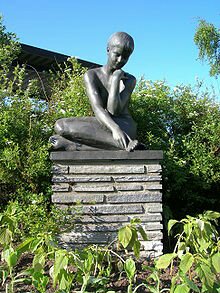

 Above: Statue of Rana Nietja sits in a park in Mo i Rana, Rana, Norway.


 Noel Nichols, Unsplash

 lampmagician
You must be logged in to post a comment.