A characteristic Love story

Standard
My Dad & Mam in the very beginning

Finally, I dare to write about my parents’ love story, as I once announced my intention to do so. I said “to dare” because I never could be fully aware of it; I was a little kid those days, and in those seven years of my beginning to know my environment, I experienced my Dad, and there are vague remembrances in my memories.

As I’m digging in my dusty uncertainty, I can see some pictures of my Dad and Mam in some romantic ways; I was just in my 5th year, told them they should lie down on the ground beside each other, and I pushed their faces towards one another so that their lips met… (what a child!!) And, of course, I can still hear his steps, walking to and fro, up there on the second floor; in these moments, we are commanded to keep silent because he is writing. He had his territory on the second floor, a big office room with books all around on the shelves on the walls, and when he got there, we couldn’t have any claim on our father; our mother was rigorous there about. I understood it after my brother and I had lived alone. He was often portrayed as a father, although he had never agreed with this.
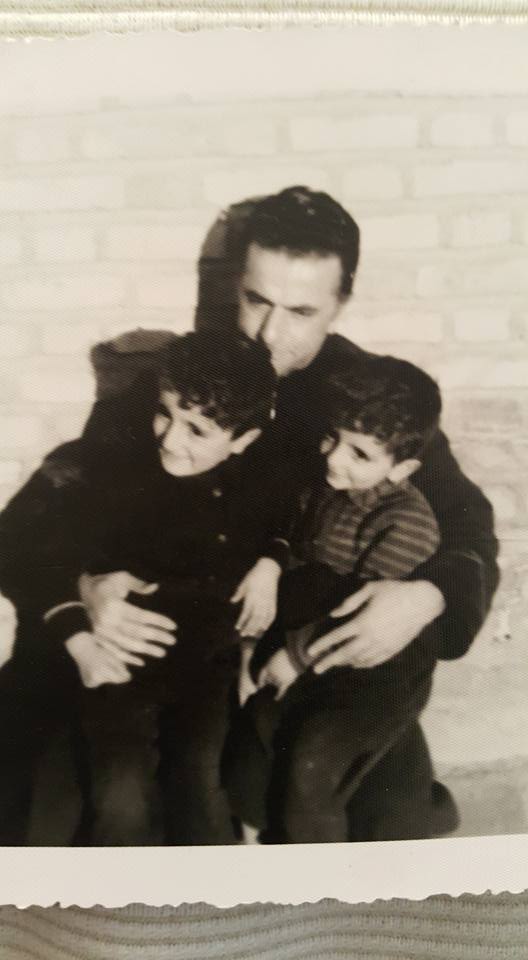
Al, Dad & me,
as you might see, our father looks very pensive!?

Also, I recall how Dad came downstairs with his belt when we, as children, were not quiet enough, and there was my brother Al, who received the most beatings. But also, I remember when he came down as I was sick, and my mother called the doctor to come and give me an injection, and you can swear that I called all gods to help me keep this unfortunate doctor away from me. And yes, there was no chance for my Dad to come downstairs and look for these yellings and chase the doctor out of the house; in this very moment, his heart was more full of love towards me than for my health, or he just wanted to finish this tumult! In any case, he almost threw the doctor out of the house and kissed me in protection; I will never forget his wonderful smiling face as I lay in fever in bed, and his beautiful face came towards mine.

And just a little more: I see him (Dad) sitting on the sofa, wearing his socks in an agitated and furious way, shouting to Mother, who was in the kitchen, “So, then I get outdoors.” I hear Mother shouting back, “GO!” I’m sitting in front of him on the carpet, asking, Where are you going, Father? Nowhere, he backed!

So, having talked enough, let’s get to the love story. Although I don’t know all about it, I’ve heard and read about it. My mother had to get married at a very young age, as it was customary in the 1930s. But her husband was a general and, as it meant to be, a man of brutality. He loved our mother, but in his way, he kissed and beat her! They were no longer than three or four years together and had offspring, Soroosh, till my mother got enough and decided to escape.

She was surely not able to do it as easily as possible today. Therefore, she established a connection with her sister, Rakhshandeh (also known as Khalle Rakhshy). Of course, she was one of, let me count, the eighth of her sisters, but she was also one of the pioneers of fighting for women’s rights in those days.
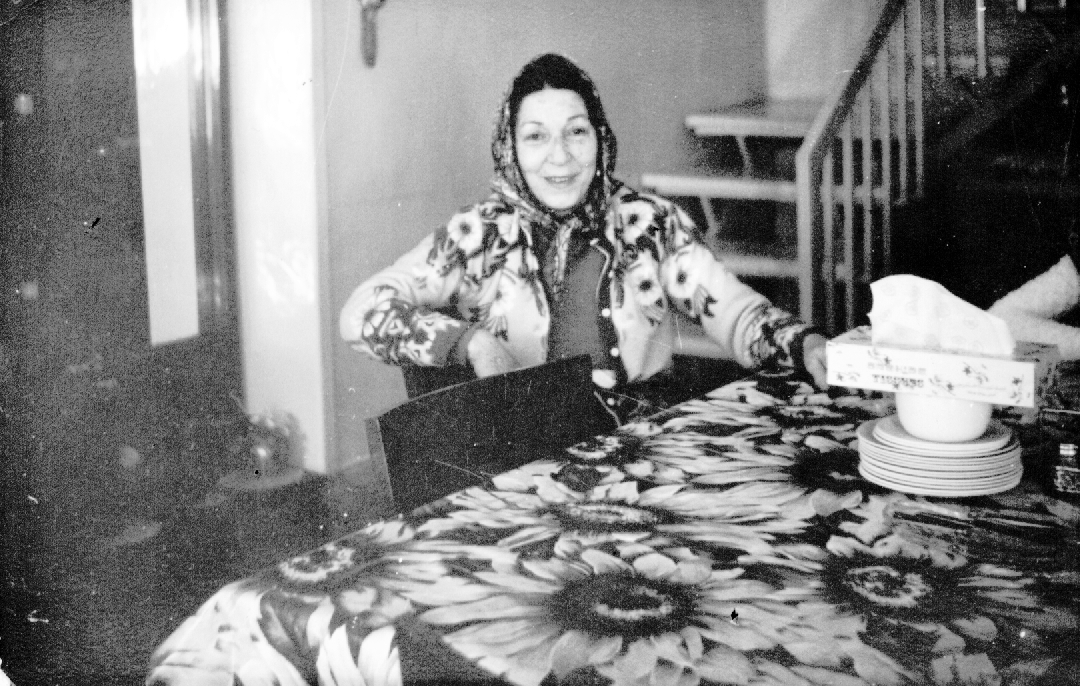
Khalle (aunt) Rakhshy

Although this picture is later from that time, I had seen a pic of her in those days; the picture showed a laughing girl dressed in white, and I tell you, dressed very generously in comparison to that time, she was working as a nurse in one of the vast and famous hospitals in the big town: Mashhad, a city in far eastern Iran, and as my Mom told us once; she had a life like the girls in the Woodstock time! She was a woman of life; nobody could get near her. She was married then, and her husband was a wonderful man who had no objections.

Anyway, in this picture, as you can see, she looks in another way; that is because, as I heard, she had visions and a meeting with the prophets! And I tell you, I believed her because she always knew something happened before it happened! She had the might of a foreseer.
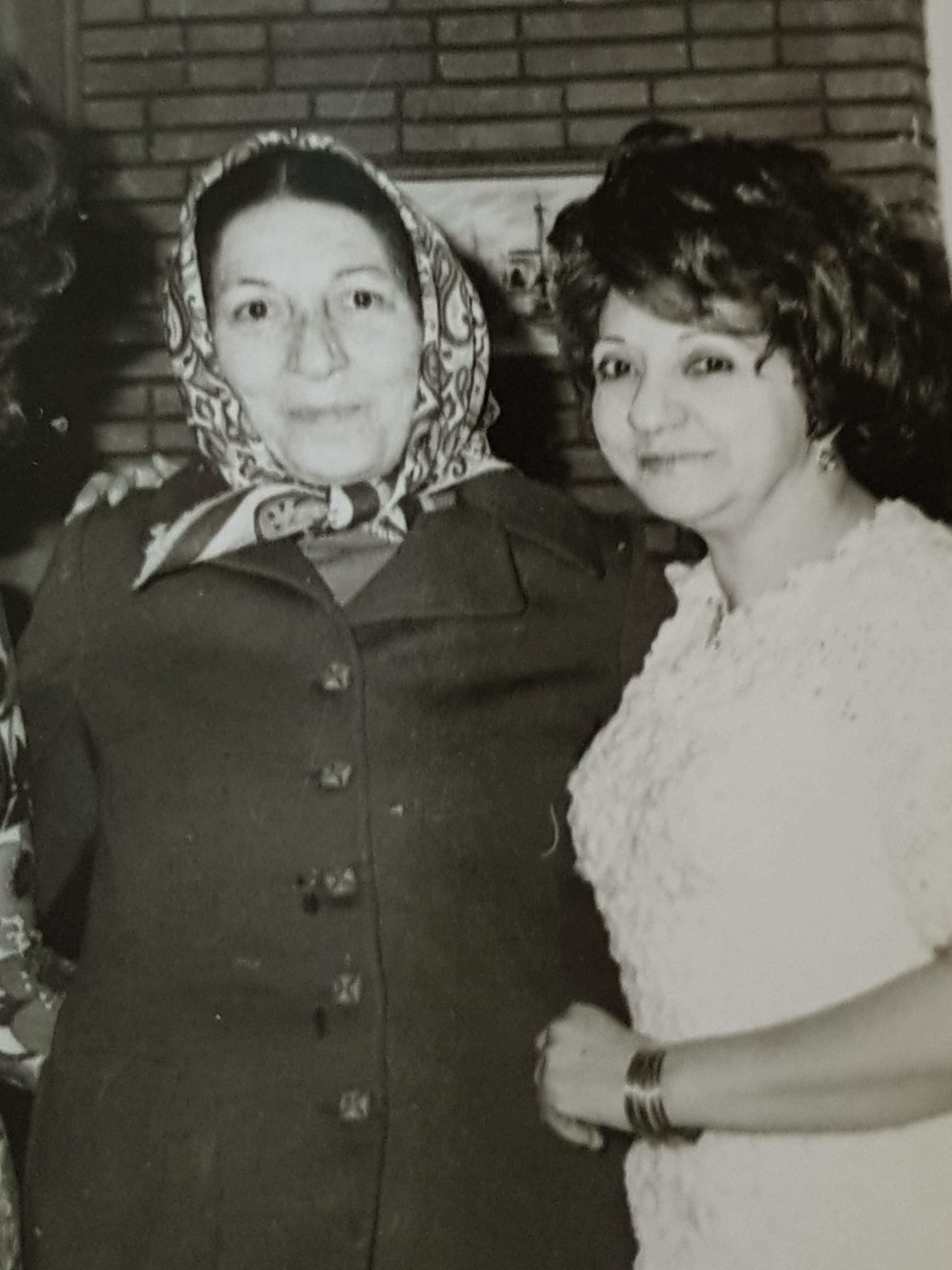
Herewith my Mom

Anyway, she had rescued our mother and got her into her big old house. As I once heard, a snake lived in the attic for many years, protecting the house. To put it bluntly, I was often there, every summer, but never met this snake, though; I had heard some creeping noise on the roof now and then when I stayed there.

So, my aunt got a divorce for Mom, as she knew how to do it back then. Now, she had noticed how sensitive her sister was and found out why: her love for one of the most famous writers of that time, my Dad.

Also, she was clever enough to arrange to let them meet each other, and she was sure it’d work out; my father was a famous writer at that time and almost in her forties, and my mother was just about twenty. In any case, she planned a meeting; she’d heard that my father was just for a short stay in the town and lured him into the house. As he belted the ring, my aunt pushed my mother to open the door, and there it happened. Mother was in love with my father through his books, and my father was amazed at my mom’s beauty when she opened the door. Then they got married.

Both in love

Of course, it’s begun a challenge of love and hate! I think it’s a well-known story in the life of every artist throughout world history. But stunningly, my mother took the patience; I believe she merely contended that her husband is a cherished, renowned writer, and many women admired him, as my mother did. Therefore, everybody must endure the pain!

There, the story of unforgiven love began. My Dad was famous enough to be invited to travel not only around Persian cities but also to foreign countries. It wasn’t enough for my Mom; there was another problem as well. Dad was against the dictatorship. He was against the Shah’s regime and the Mullahs’ existence. He was a Muslim believer, but in a mystical sense. He had even been hated by the Muslim clergy.

Let politics be on the side. Many young girls have adored him, and their affection has inspired him. However, over time, this affection faded somewhat, and his inspiration diminished as well. Thus, my mother, in her genuine love, chose to write him anonymous love letters, encouraging his creativity to produce more stories.
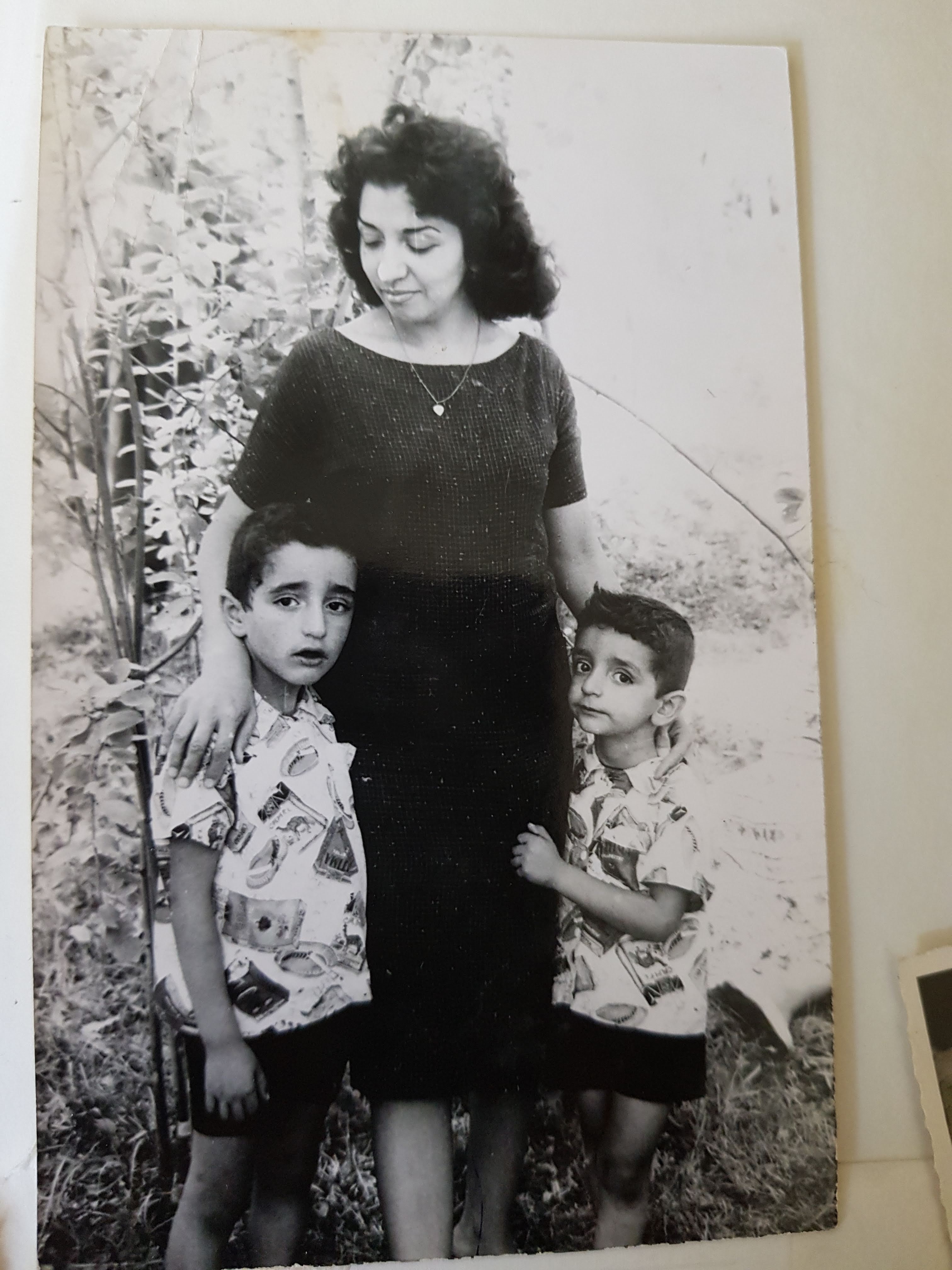
I think my Mom knew there was something, especially with my brother Al

I must mention that my father had to supply all of us, but he could only write, and nothing else. He was, as some artists might be, a man of art and not of money! That was not an easy life, I promise, as in the end, I might say the lasted ten-year love story got its end, as our parents came home after a marriage party and in the middle of the night my father got a brain attack and left us little kids and a young inexperienced beloved wife with owing much!

Wow! I didn’t think that it would get so long! Anyhow, thank you for your patience, and I think you will need it more if you like because, after this, I have much to tell about our life; it goes more dramatically 🙂 Have a wonderful weekend 💖

How can you tell if another person, animal or thing is conscious? Try these 3 tests

Standard

A very interesting question. Do they have some? Or are we aware of our own? I don’t know if I have some 😀 but surely I would wish to have a “Consciousness-Ometer”!

here is an amazing research about that; Take a look, be honest, and be aware of your good “conscience” on your “consciousness” 😉

via https://theconversation.com/uk

Researchers have ideas how to probe consciousness in another. agsandrew/Shutterstock.com

Author: Tam Hunt Affiliate Guest in Psychology, University of California, Santa Barbara

How can you know that any animal, other human beings, or anything that seems conscious, isn’t just faking it? Does it enjoy an internal subjective experience, complete with sensations and emotions like hunger, joy, or sadness? After all, the only consciousness you can know with certainty is your own. Everything else is inference. The nature of consciousness makes it by necessity a wholly private affair.

These questions are more than philosophical. As intelligent digital assistants, self-driving cars and other robots start to proliferate, are these AIs actually conscious or just seem like it? Or what about patients in comas – how can doctors know with any certainty what kind of consciousness is or is not present, and prescribe treatment accordingly?

In my work, often with with psychologist Jonathan Schooler at the University of California, Santa Barbara, we’re developing a framework for thinking about the many different ways to possibly test for the presence of consciousness.

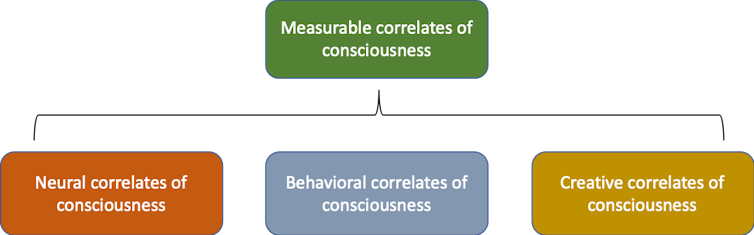
There is a small but growing field looking at how to assess the presence and even quantity of consciousness in various entities. I’ve divided possible tests into three broad categories that I call the measurable correlates of consciousness.

There are three types of ways to gauge consciousness.

You can look for brain activity that occurs at the same time as reported subjective states. Or you can look for physical actions that seem to be accompanied by subjective states. Finally, you can look for the products of consciousness, like artwork or music, or this article I’ve written, that can be separated from the entity that created them to infer the presence – or not – of consciousness.

Neural correlates of consciousness

Over the last two decades, scientists have proposed various ways to probe cognition and consciousness in unresponsive patients. In such cases, there aren’t any behaviors to observe or any creative products to assess.

You can check for the neural correlates of consciousness, though. What’s physically going on in the brain? Neuroimaging tools such as EEG, MEG, fMRI and transcranial magnetic stimulation (each with their own strengths and weaknesses), are able to provide information on activity happening within the brain even in coma and vegetative patients.

Cognitive neuroscientist Stanislas Dehaene has identified what he calls four signatures of consciousness – specific aspects of brain activity he deems necessary for normal consciousness. He focuses on what’s known as the “P3 wave” in the dorsolateral cortex – the part of the brain behind the top of your forehead – because it seems to correlate most reliably with normal conscious states. He also focuses on long-range synchronized electric fields between different parts of the brain as another key signature of consciousness.

In tests which look for these signals in vegetative and minimally conscious patients, Dehaene and his colleagues have successfully predicted which patients are most likely to regain more normal states of consciousness.

Sid Kouider, another cognitive neuroscientist, has examined infants in order to assess the likelihood that very young babies are conscious. He and his team looked for specific neural signatures that go along with subjective experience in adults. They looked specifically for a certain type of brain waves, similar to the P3 wave Dehaene focuses on, that are reliable indicators of consciousness in adults. They found clear analogs of the P3 wave in the brains of babies as young as five months old. Kouider concludes – unsurprisingly – that even young babies are very likely conscious in various complex ways, such as recognizing faces.

Behavioral correlates of consciousness

When considering potentially conscious entities that can’t communicate directly, and that won’t allow neuroscientific measurement tools on their head (if they even have heads), it’s possible to consider physical behaviors as clues for the presence and type of consciousness.

You know that a massive range of human behaviors are accompanied by conscious experience. So when you see similar behaviors in other animals or even non-animals, can you reasonably infer the presence of consciousness?

What’s going on in there? Maggie Villiger, CC BY-ND

For example, are cats conscious? Their brain architecture is a little different than humans’. They have very minimal prefrontal cortex, which some scientists think is the center of many higher-order activities of the human brain. But is a prefrontal cortex necessary for consciousness?

Cat behavior is complex and pretty easy to map onto human behavior in many ways. Cats purr, flex their toes and snuggle when petted, in similar ways to people demonstrating pleasure when physically stimulated – minus the purrs, of course. They meow loudly for food when hungry and stop meowing when fed. They demonstrate curiosity or fear about other cats or humans with various types of body language.

These and many other easily observable behaviors add up to convincing evidence for most people that cats are indeed conscious and have rich emotional lives. You can imagine looking for other familiar behaviors in a rat, or an ant or a plant – if you see things close enough to what you’d expect in conscious humans, you may credit the observed creature with a certain type of consciousness.

Creative correlates of consciousness

If, for whatever reason, you can’t examine neural or behavioral correlates of consciousness, maybe you can look to creative outputs for clues that would indicate consciousness.

For example, when examining ancient megalithic structures such as Stonehenge, or cave paintings created as far back as 65,000 years ago, is it reasonable to assume that their creators were conscious in ways similar to us? Most people would likely say yes. You know from experience that it would take high intelligence and consciousness to produce such items today, so reasonably conclude that our ancient ancestors had similar levels of consciousness.

What if explorers find obviously unnatural artifacts on Mars or elsewhere in the solar system? It will depend on the artifacts in question, but if astronauts were to find anything remotely similar to human dwellings or machinery that was clearly not human in origin, it would be reasonable to infer that the creators of these artifacts were also conscious.

Closer to home, artificial intelligence has produced some pretty impressive art â€“ impressive enough to fetch over US$400,000 in a recent art auction. At what point do reasonable people conclude that creating art requires consciousness?

Researchers could conduct a kind of “artistic Turing Test”: ask study participants to consider various artworks and say which ones they conclude were probably created by a human. If AI artwork consistently fools people into thinking it was made by a person, is that good evidence to conclude that the AI is at least in some ways conscious? So far AI aren’t convincing most observers, but it’s reasonable to expect that they will be able to in the future.

Is a definitive test for consciousness on the horizon? Gorodenkoff/Shutterstock.com

Where’s my ‘consciousness-ometer’?

Can anyone get a definitive answer about the presence of consciousness, and how much? Unfortunately, the answer to both questions is no. There is not yet a “consciousness-ometer,” but various researchers, including Dehaene, have some ideas.

Neuroscientist Giulio Tononi and his colleagues like Christof Koch focus on what they call “integrated information” as a measure of consciousness. This theory suggests that anything that integrates at least one bit of information has at least a tiny amount of consciousness. A light diode, for example, contains just one bit of information and thus has a very limited type of consciousness. With just two possible states, on or off, however, it’s a rather uninteresting kind of consciousness.

In my work, my collaborators and I share this â€œpanpsychist” foundation. We accept as a working hypothesis that any physical system has some associated consciousness, however small it may be in the vast majority of cases.

Rather than integrated information as the key measure of consciousness, however, we focus on resonance and synchronization and the degree to which parts of a whole resonate at the same or similar frequencies. Resonance in the case of the human brain generally means shared electric field oscillation rates, such as gamma band synchrony (40-120 Hertz).

Our consciousness-ometer would then look at the degree of shared resonance and resulting information flows as the measure of consciousness. Humans and other mammals enjoy a particularly rich kind of consciousness, because there are many levels of pervasive shared synchronization throughout the brain, nervous system and body.

Tests for consciousness are still in their infancy. But this field of study is undergoing a renaissance because the study of consciousness more generally has finally become a respectable scientific pursuit. Before too long it may be possible to measure just how much consciousness is present in various entities – including in you and me.

Deep knowledge, daily. Sign up for The Conversation’s newsletter. ]